
South Indian Recipes
A Mild Tomato and Coconut Curry for Idli, Dosa and Rice
Last updated: November 12, 2026
Tomato kurma is what South Indian home cooks reach for when the tomatoes are ripe and breakfast needs a side that tastes like more than its few ingredients. It is a curry of contrasts: sweet, jammy tomato softened by a silky coconut-and-cashew paste, lifted by the pop of mustard seeds and the fragrance of curry leaves. Nothing about it is heavy, yet a bowl of kurma turns a plate of idli or dosa into a proper meal.
The whole thing is built in a single pan. You grind a smooth coconut-cashew masala, temper whole spices in coconut oil, soften onion and tomato into a sauce, then stir the paste in at the end and let it barely simmer. Serve it in a wide bowl beside a stack of chapati or a mound of rice, and let everyone spoon it over whatever is on the plate.
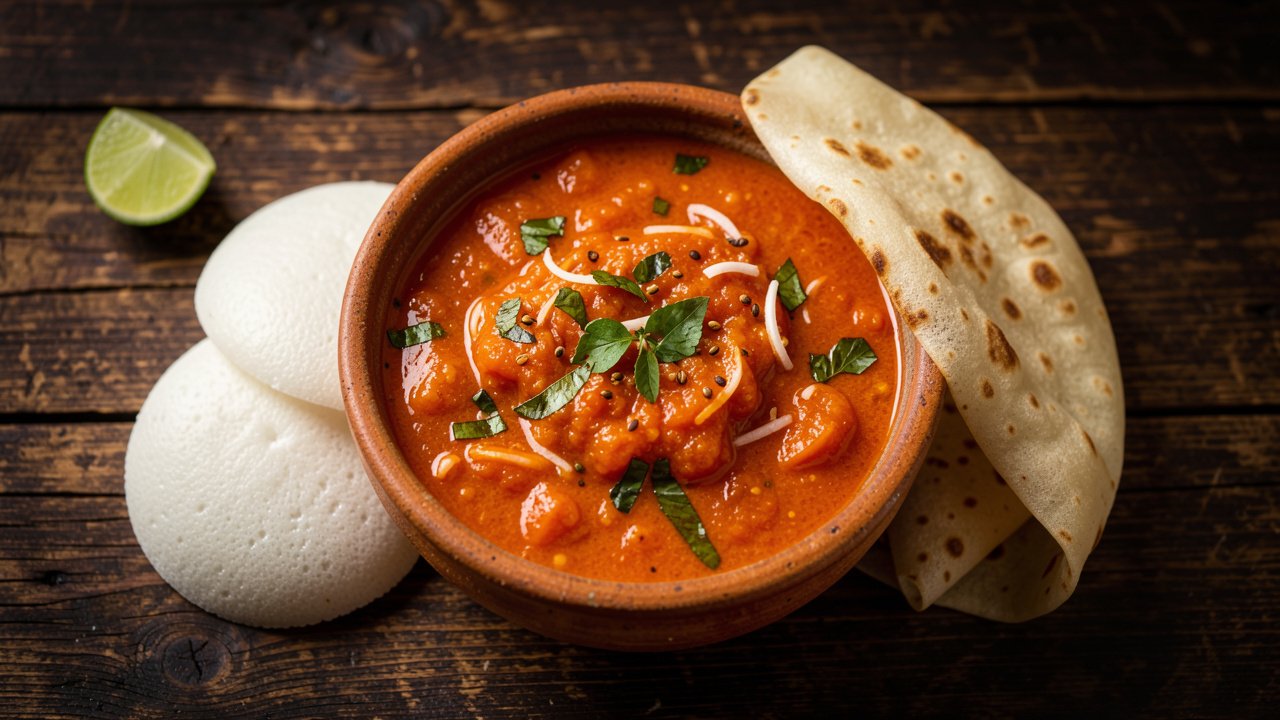
Why This Tomato Kurma Works
Great tomato kurma is really two things done well: a tomato base cooked down until it is soft and sweet, and a coconut paste ground smooth enough to turn that base velvety. Get those two right and everything else takes care of itself. The recipe here builds a quick, full-flavored tomato sauce, then finishes it with a silky ground masala so the curry is mild, creamy, and never grainy.
The base starts the way most good South Indian cooking does, with a tempering of mustard seeds and curry leaves bloomed in hot coconut oil, then onion, ginger, garlic, and green chili softened on top. Chopped tomatoes break down into this aromatic base with a little turmeric, cooking until they lose their raw edge and collapse into a loose, spoonable sauce rather than a thick paste.
The ground paste is the heart of the method. Coconut and cashews blended with a splash of water give the kurma its body and gentle sweetness, standing in for the dairy and cream of a northern korma. Stir it in over low heat and let it barely simmer, so the coconut stays glossy and smooth instead of splitting.
It is also endlessly adaptable. Tomato kurma was built as an everyday side, so you can lean it creamier, hotter, or fuller with vegetables. Keep the tomato and coconut constant, adjust the chili and water to taste, and you will get a pot that tastes like a South Indian kitchen every single time.
Pro observation: Tomato kurma is naturally vegan and fully halal as written, with no forbidden ingredients. The richness comes entirely from ground coconut, cashews, and the tomato itself, so you never miss dairy or cream.
Ingredients
Kitchen Measurement Converter
Need to convert an amount while you measure? Pick a category, enter a value, and the result updates instantly.
Ingredient Notes & Substitutions
Tomatoes
Use ripe, red tomatoes that are soft to the touch; they break down fastest and bring a natural sweetness. Roma or plum tomatoes give the cleanest flavor. Out of season, a cup of good canned chopped tomatoes works well and keeps the curry reliably bright.
Coconut & Cashews
Fresh or frozen grated coconut gives the truest flavor; desiccated coconut works if you soak it in warm water first. The cashews add body and a mild creaminess, standing in for dairy. Soaked melon seeds or a splash of coconut milk make a fine swap.
Aromatics & Heat
Onion, ginger, garlic, and slit green chilies build the savory base. Adjust the chilies up or down to set the heat; remove the seeds for a milder curry. Ginger and garlic are best grated fresh, though a spoon of ginger-garlic paste is a handy shortcut.
Tempering & Spices
Coconut oil, mustard seeds, and curry leaves give the kurma its unmistakable South Indian aroma; a neutral oil works but loses some character. Turmeric colors and warms the base. A finishing handful of fresh coriander keeps every bowl bright and green.
Equipment
- Blender or wet grinder
- Heavy pan or kadai
- Lid for the pan
- Wooden spoon
- Sharp knife and board
- Ladle
Before You Start
1. Grind the coconut-cashew paste smooth before you light the stove. A grainy paste leaves the finished kurma sandy on the tongue instead of velvety, and there is no fixing the texture once it is stirred into the pan, so blend it longer than feels necessary.
2. Soak the cashews in hot water for ten minutes first. Dry cashews refuse to break down into a creamy paste and leave hard flecks that never soften in the curry; a short soak lets them blend into the coconut completely.
3. Chop the tomatoes small so they collapse. Big wedges stay firm and watery through the simmer and leave the kurma thin, while small pieces melt into the sauce in minutes and give the curry its body.
Step-by-Step Instructions
Tomato kurma moves quickly once the pan is hot, so grind the coconut paste and chop the aromatics first. Soak the cashews, blend the masala, chop the tomatoes and onion, and slit the chilies so everything is ready before the mustard seeds hit the oil.
Grind the Coconut Masala
Soak the cashews in hot water for ten minutes, then drain. Blend the grated coconut and cashews with three or four tablespoons of water into a smooth, pourable paste, scraping down the sides so no grit remains. Set it aside, and chop the tomatoes, onion, garlic, and ginger while the blender does its work.
Temper and Soften the Aromatics
Warm the coconut oil in a heavy pan or kadai over medium heat. Add the mustard seeds and curry leaves and let them pop and crackle for a few seconds, until fragrant. Add the onion, slit green chilies, garlic, and ginger with a pinch of salt and cook 4 to 5 minutes, until the onion is soft and golden.

Cook Down the Tomatoes
Add the chopped tomatoes and the turmeric with another small pinch of salt. Stir, then let the tomatoes cook down over medium heat for about 8 to 10 minutes, until they lose their raw edge and collapse into a soft, loose sauce. Mash any stubborn pieces against the side of the pan so the base is smooth.
Stir in the Coconut Paste
Lower the heat so the curry is at a bare simmer, then stir in the ground coconut-cashew paste along with about a cup of water to loosen it. Over high heat the coconut can split and turn grainy, so keep it gentle. Stir until the sauce is smooth, creamy, and an even orange-red.
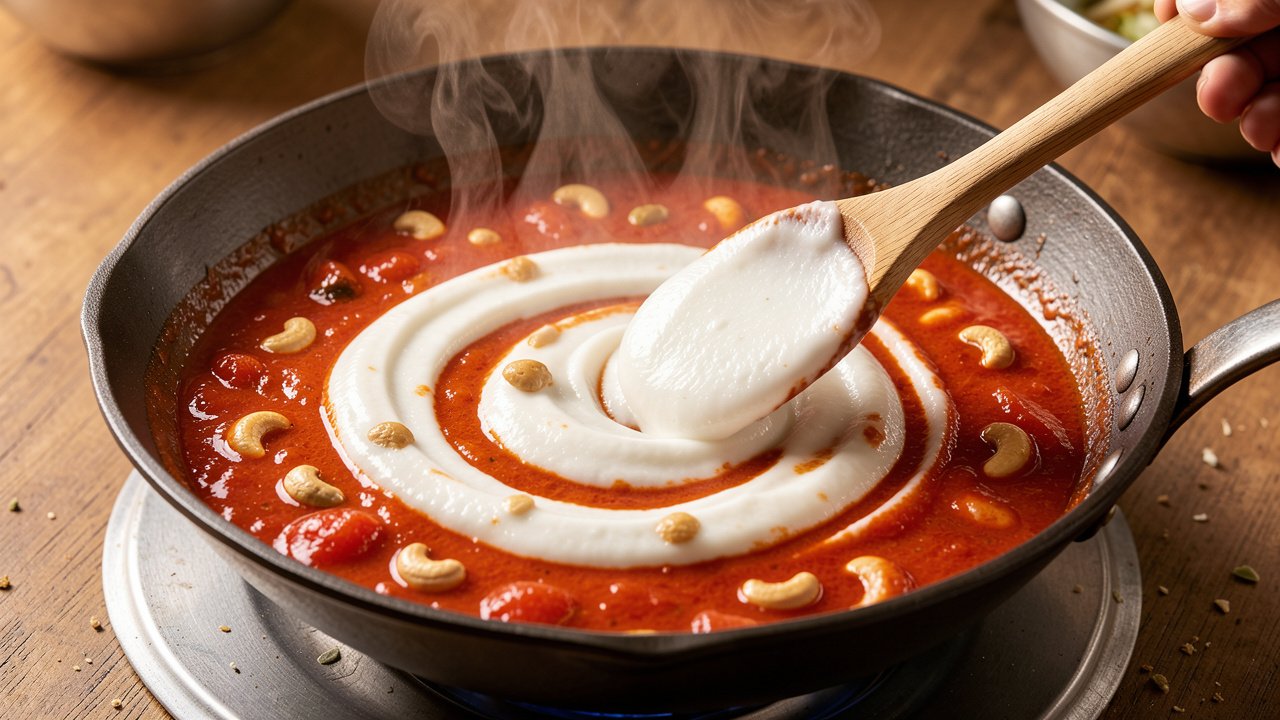
Simmer the Kurma
Let the kurma simmer gently, uncovered, for 8 to 10 minutes, stirring now and then, until it thickens slightly and you see a little oil shimmer at the edges. This is when the flavors marry and the raw taste of the coconut cooks out. Taste and adjust the salt, and add a splash of water if it gets too thick.
Finish and Serve
Take the pan off the heat once the sauce is creamy and the flavors are rounded. Stir in most of the chopped coriander and a squeeze of fresh lime, then taste once more for salt. Ladle into bowls, scatter the last of the coriander over the top, and serve right away with idli, dosa, chapati, or steamed rice.
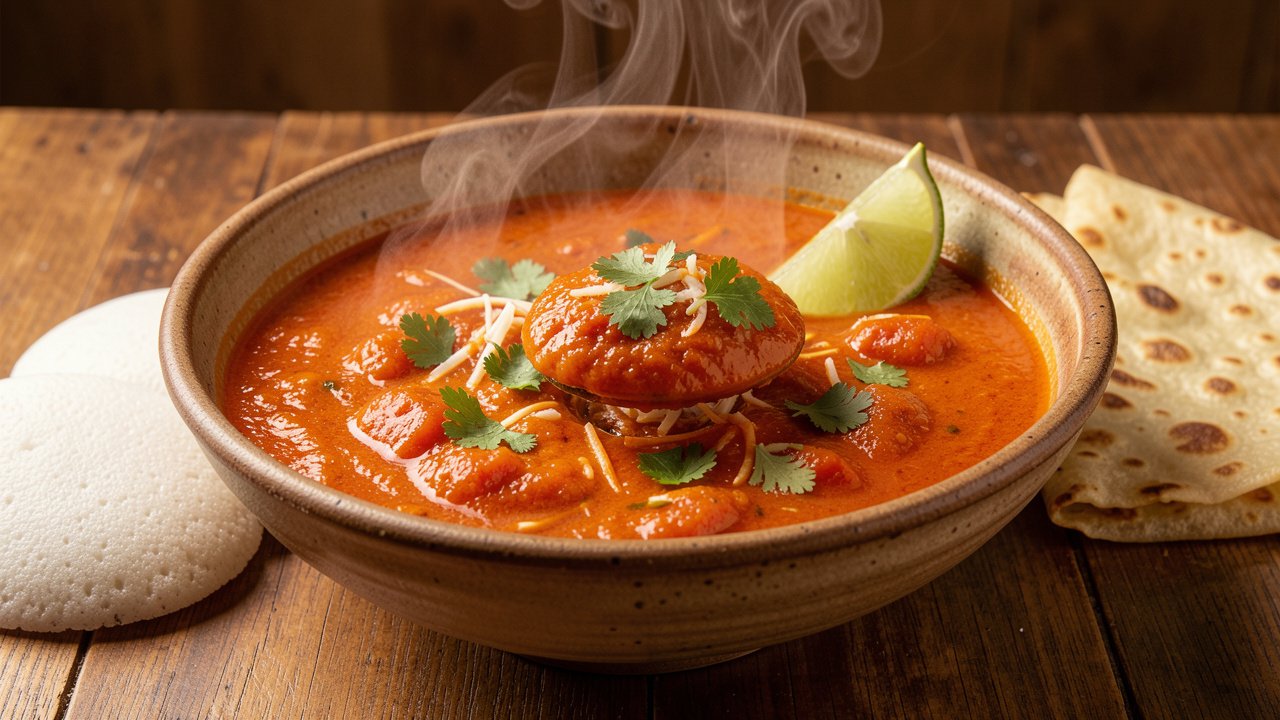
Chef’s Tips From Real Kitchen Testing
Grind the coconut and cashews into a truly smooth paste with a little water. The silkiness of the paste becomes the silkiness of the finished kurma, so blend longer than you think you need and scrape the sides twice.
Bloom the mustard seeds and curry leaves in hot coconut oil before anything else. That toasted, nutty tempering is what makes the dish taste South Indian rather than like a plain tomato sauce.
Keep the pan at a bare simmer once the coconut paste goes in. Gentle heat keeps the sauce glossy and creamy, while a hard boil splits the coconut and turns the whole curry grainy.
Recipe Variations
Serving Suggestions
- Soft steamed idli to soak up the sauce
- Crisp dosa folded over a spoonful
- Warm chapati or flaky parotta
- Plain steamed rice with a wedge of lime
Nutrition Facts
| Nutrient | Amount per serving |
|---|---|
| Calories | 220 |
| Protein | 4 g |
| Carbohydrates | 16 g |
| Fat | 16 g |
| Saturated Fat | 10 g |
| Fiber | 4 g |
| Sugar | 7 g |
| Sodium | 480 mg |
Values are estimates per serving and vary with the exact coconut and brands you use.
Make-Ahead Tips
Tomato kurma is even better made a few hours or a day ahead, as the coconut and spices settle and deepen. Cook it through, cool, and refrigerate. When you are ready to eat, reheat it gently with a splash of water, stirring so the coconut stays smooth, and finish with fresh coriander and lime just before serving.
Storage, Freezing & Reheating
Common Mistakes to Avoid
Troubleshooting
Kurma too thin? Simmer it uncovered a few minutes longer, or stir in an extra spoonful of the ground coconut to thicken and enrich the sauce.
Curry tastes sour? Very ripe tomatoes can run sharp; add a small pinch of sugar or an extra spoon of coconut paste to round out the acidity.
Paste turned grainy? It was ground too coarse or cooked too hot; blend the sauce smooth with a stick blender and return it to a low, gentle simmer.
A Note on South Indian Cooking
The word “kurma” (also spelled korma) comes from a braising technique in which meat or vegetables are cooked slowly in a thickened, ground sauce. In the south of India, that thickener is almost always coconut, and this tomato-led version belongs firmly to the home kitchens of Tamil Nadu and the wider South, where it is a quick, everyday side for breakfast and lunch alike. Ground coconut and cashews do the work that cream and nuts do elsewhere, giving a mild curry that leans on the tomato for its backbone.
It sits in a big family of South Indian tomato dishes. The one it is most often confused with is the North Indian korma: where that version is built on yogurt, cream, and a heavy nut paste, this southern tomato kurma is dairy-free, coconut-based, and much lighter on the plate. It is closer in spirit to the tomato cooking of the south, like a tangy bowl of tomato rasam or a plate of South Indian tomato rice, and it shares a soul with everyday curries like chana masala, all of them pots that turn a few humble ingredients into something generous.
What has kept tomato kurma on South Indian tables is exactly what created it: it is quick, forgiving, and endlessly adaptable. Use ripe tomatoes, keep the coconut paste smooth, and put a stack of idli or chapati alongside, and you have a side dish that tastes like a home kitchen every time.