
Turkish Recipes
Silky Turkish Tomato Soup with a Butter Roux and Kasar Cheese
Last updated: November 12, 2026
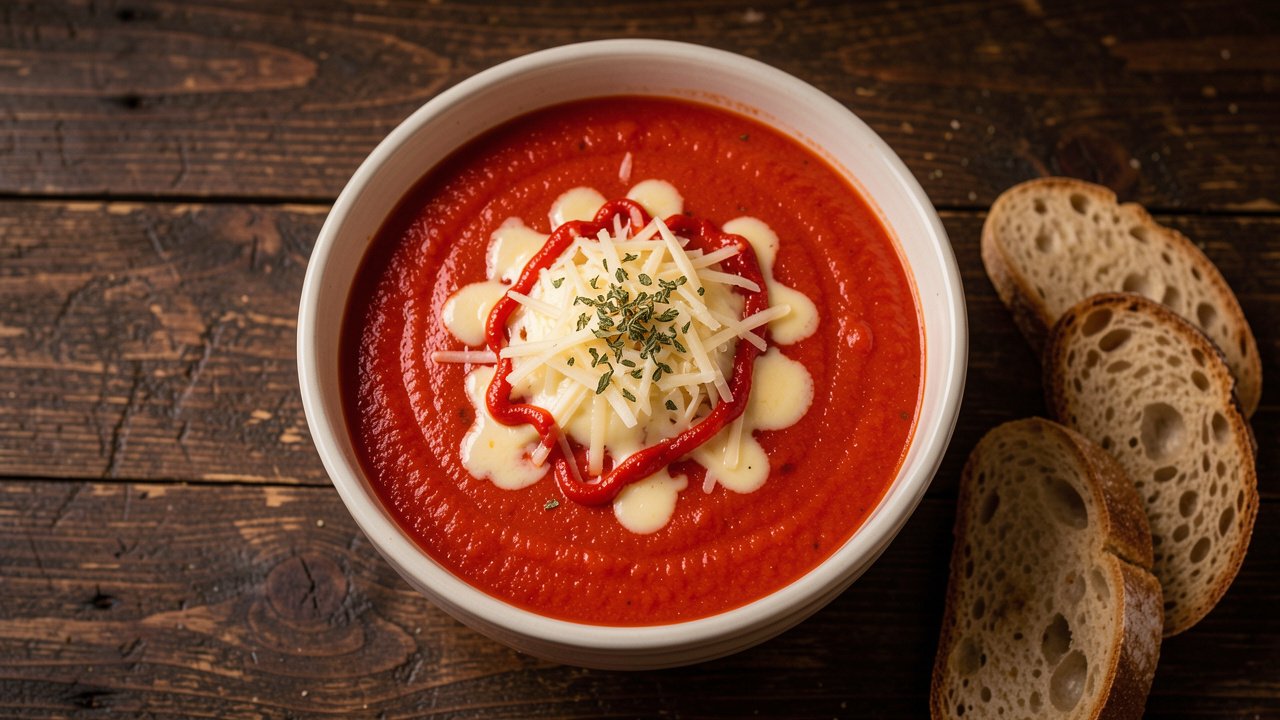
Domates corbasi is the tomato soup Turkish cooks make when they want something that tastes richer than it has any right to. A spoonful of flour cooked in butter turns ordinary tomatoes into a soup with body and sheen, and a handful of grated kasar cheese melted in at the end gives it a gentle, savory pull. It is comfort in a bowl, the kind set down before the main course in homes and lokantas across the country.
The whole thing is built in a single pot. You make a quick butter roux with the onion and tomato paste, add grated tomatoes and hot broth, simmer until everything softens, then blend it silky-smooth. A finish of dried mint, pul biber, and melted kasar is what moves it from plain tomato soup to something unmistakably Turkish. Serve it hot with bread for dunking.
Why This Domates Corbasi Works
Great domates corbasi is really two things done well: a base with deep, sweet tomato flavor, and a texture that is velvety rather than watery or pasty. Get those two right and everything else takes care of itself. The recipe here builds flavor with a proper butter roux, then blends the soup smooth so every spoonful is the same glossy, pourable consistency.
The body comes from a roux. Flour cooked in butter with the onion and tomato paste thickens the soup from the inside, so you get a creamy mouthfeel without reaching for heavy cream. Toasting the tomato paste and flour together for a minute or two cooks out any raw, floury taste and deepens the color to a warm brick red before a drop of liquid goes in.
Blending is the step most home cooks skip, and it is what separates a restaurant-smooth bowl from a rustic one. Simmer the tomatoes until they collapse, then blend the whole pot until it is completely silky. Pass it through a sieve if you want it truly refined, and you will have the drinkable texture that defines this soup.
The finish is where it becomes Turkish rather than generic. Dried mint and pul biber stirred in late keep their fragrance, and a handful of grated kasar cheese melted into the hot soup adds a savory, slightly stretchy richness. Keep the roux, the blend, and the cheese constant, and you get the same comforting bowl every time.
Pro observation: Domates corbasi is fully halal and vegetarian as written, with no forbidden ingredients. All of its richness comes from butter, tomato, and kasar cheese, so there is nothing you need to leave out or work around.
Ingredients
Kitchen Measurement Converter
Need to convert an amount while you measure? Pick a category, enter a value, and the result updates instantly.
Ingredient Notes & Substitutions
Tomatoes
Ripe, deep-red tomatoes make the best soup; grate them on the large holes of a box grater and the skins stay behind in your hand. Out of season, a 28-ounce can of good crushed or whole peeled tomatoes is an honest swap and often sweeter than pale winter fruit.
Butter & Flour Roux
The butter-and-flour roux is what gives this soup its signature body, so do not skip it. For a gluten-free version, whisk in 1 tablespoon of cornstarch slurried in cold water near the end instead of the flour, and use oil in place of the butter if you want it dairy-free too.
Kasar Cheese
Kasar is a mild, semi-hard Turkish cheese that melts smoothly into the hot soup. If you cannot find it, a young provolone, a mild cheddar, or even mozzarella stands in well. Grate it fine so it melts quickly without turning stringy.
Mint & Pul Biber
Dried mint and pul biber (Turkish red pepper flakes) are the classic finish and worth seeking out. Dried mint tastes sweeter and rounder than fresh here; regular chili flakes work for the pepper. A pinch of sugar balances the acidity of sharp tomatoes.
Equipment
- Medium heavy pot or saucepan
- Immersion or jug blender
- Whisk
- Box grater
- Ladle
- Fine sieve (optional)
Before You Start
1. Heat the broth before it hits the roux. Pouring cold liquid onto a hot butter-flour roux makes it seize into lumps that no amount of whisking fully smooths out. Keep the broth hot in a separate pan or kettle and ladle it in warm so the soup stays silky.
2. Grate the tomatoes instead of chopping them. Running halved tomatoes over the large holes of a box grater gives you pure pulp in seconds and leaves the tough skins behind in your palm, so you avoid the bitter curls of peel that chopping drops into the pot.
3. Grate the kasar and set it aside off the heat. The cheese goes in only after the soup is blended and the pot is pulled from the boil; added to a rolling simmer it clumps and turns rubbery, so have it ready to stir in at the very end rather than mid-cook.
Step-by-Step Instructions
Domates corbasi comes together quickly, so prep everything first. Grate the tomatoes, chop the onion, mince the garlic, grate the kasar, and heat the broth so it is ready to ladle in warm the moment the roux needs it.
Prep the Tomatoes and Aromatics
Halve the tomatoes and grate them on the large holes of a box grater into a bowl, discarding the skins left in your hand. Finely chop the onion and mince the garlic. Grate the kasar cheese and set it aside. Warm the vegetable broth in a separate pan or kettle so it is hot and ready.
Build the Roux and Aromatics
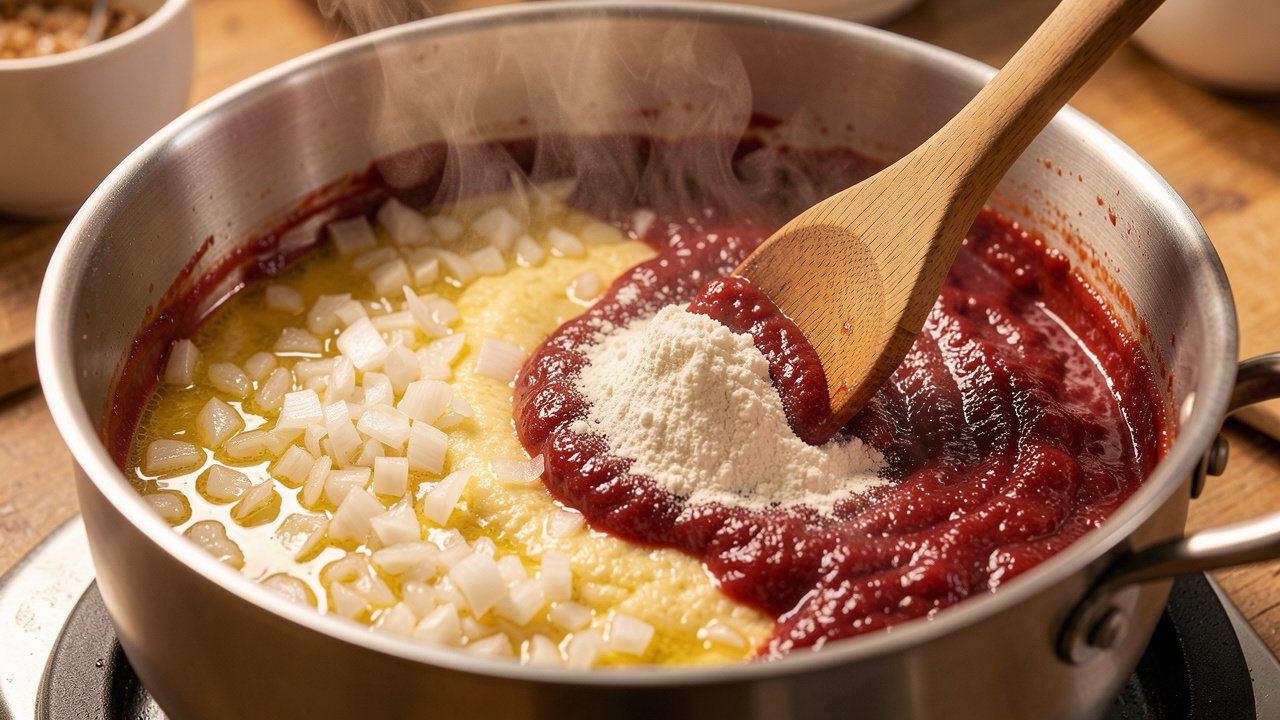
Melt the butter with the olive oil in a medium pot over medium heat. Add the onion with a pinch of salt and cook 4 to 5 minutes until soft, then stir in the garlic for 1 minute. Add the tomato paste and flour and stir constantly for 2 minutes, until the mixture darkens and smells toasty rather than raw.
Add the Tomatoes and Broth
Stir in the grated tomatoes and the sugar, scraping the bottom of the pot. Ladle in the hot broth a little at a time, whisking after each addition so the roux loosens without lumps. Bring to a gentle simmer and cook, uncovered, for about 20 minutes, until the tomatoes have collapsed and the soup has thickened slightly.
Blend Until Silky
Take the pot off the heat and blend the soup until completely smooth with an immersion blender, or in batches in a jug blender with the lid vented. For an extra-refined texture, pass it through a fine sieve back into the pot. The soup should be pourable and glossy, with no visible bits of tomato or onion.

Season and Simmer
Return the pot to low heat. Stir in the dried mint and pul biber, then taste and adjust with salt and black pepper. Let it simmer very gently for 5 minutes to marry the flavors and reach your preferred thickness; add a splash more hot broth if it has reduced too far. Do not let it boil hard once it is blended.
Finish with Kasar and Serve
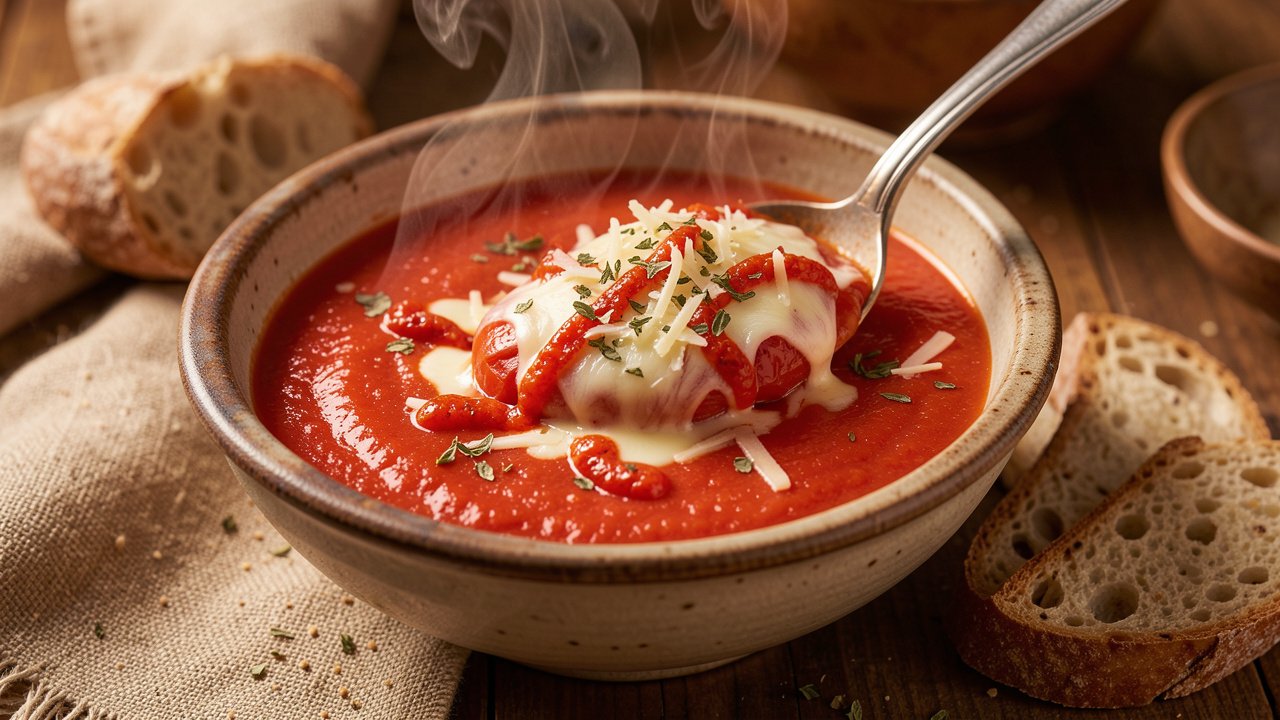
Pull the pot off the heat and stir in most of the grated kasar, whisking until it melts into the soup and leaves it glossy. Ladle into warm bowls and top each with the remaining cheese, a pinch of dried mint, and a drizzle of pepper butter if you like. Serve right away with bread for dunking.
Chef’s Tips From Real Kitchen Testing
Cook the roux until it is toasty before any liquid goes in. Two full minutes of stirring the flour and tomato paste in the butter cooks out the raw taste and deepens the color, which is what gives the finished soup its roundness.
Add the hot broth gradually and whisk between additions. Loosening the thick roux in stages is the surest way to a lump-free soup; dumping it in all at once almost always leaves you with floury specks.
Melt the kasar off the heat, not over a boil. The cheese goes in once the pot is pulled from the flame so it melts into a glossy, savory finish instead of seizing into rubbery strings.
Recipe Variations
Serving Suggestions
- Warm Turkish bread or crusty rolls for dunking
- A drizzle of melted butter bloomed with pul biber
- Extra grated kasar and a sprinkle of dried mint on top
- A squeeze of lemon and a side of green olives
Nutrition Facts
| Nutrient | Amount per serving |
|---|---|
| Calories | 240 |
| Protein | 8 g |
| Carbohydrates | 22 g |
| Fat | 14 g |
| Saturated Fat | 7 g |
| Fiber | 4 g |
| Sugar | 11 g |
| Sodium | 680 mg |
Values are estimates per serving and vary with the exact tomatoes, cheese, and brands you use.
Make-Ahead Tips
The soup is even better made a day ahead, because the flavors settle and deepen overnight. Cook it through the blending stage, cool, and refrigerate without the cheese. When you are ready to eat, reheat gently to a bare simmer, then stir in the grated kasar off the heat so it melts in fresh.
Storage, Freezing & Reheating
Common Mistakes to Avoid
Troubleshooting
Soup too thin? Simmer it a few minutes longer to reduce, or whisk a teaspoon of flour into a little soft butter and stir it in, then cook for a couple of minutes to thicken.
Lumpy after adding broth? Blend the whole pot until smooth; the blender will break up any specks of roux and give you a silky texture again.
Cheese turned stringy? It was added over too much heat. Next time pull the pot off the flame first, then whisk in finely grated kasar so it melts gently.
A Note on Turkish Cooking
Domates corbasi takes its name from two plain Turkish words: “domates,” meaning tomato (which traveled from the Nahuatl word for the fruit into Turkish by way of Spanish), and “corbasi,” meaning its soup. The tomato itself is a relative newcomer to Turkey, but once it arrived it became so woven into the kitchen that a smooth bowl of tomato soup is now one of the first things many Turks learn to cook, served as a starter in homes and in the everyday lokantas that feed workers at lunch.
It sits in a wide family of Turkish tomato dishes, and the one it is most often confused with is menemen: where menemen is soft scrambled eggs cooked in a chunky tomato and pepper base and eaten with a fork, domates corbasi is strained smooth and drunk from a spoon or straight from the bowl. It is a cousin, too, of fresh tomato relishes like ezme, which keeps the tomatoes raw and chopped rather than cooked and blended.
What has kept domates corbasi on Turkish tables is how little it asks for and how much it gives back. A few ripe tomatoes, a spoon of butter and flour, and a handful of cheese turn into something warming and generous, which is exactly why it endures as an everyday comfort rather than a special-occasion dish.