Egyptian Recipes
Rice and Toasted Bread in a Garlicky Tomato Sauce
Last updated: November 12, 2026
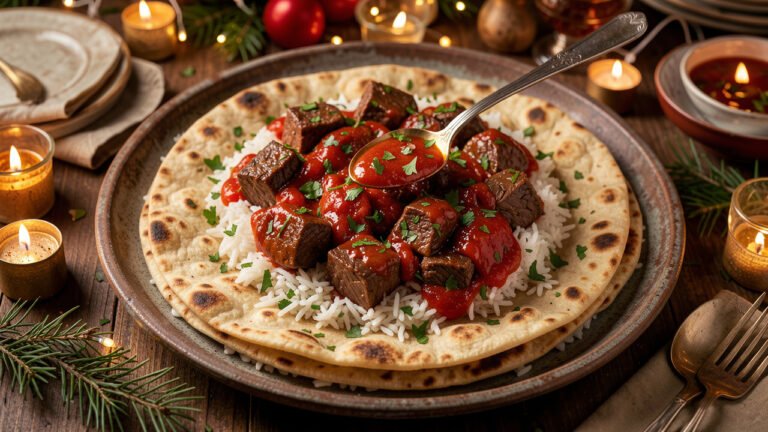
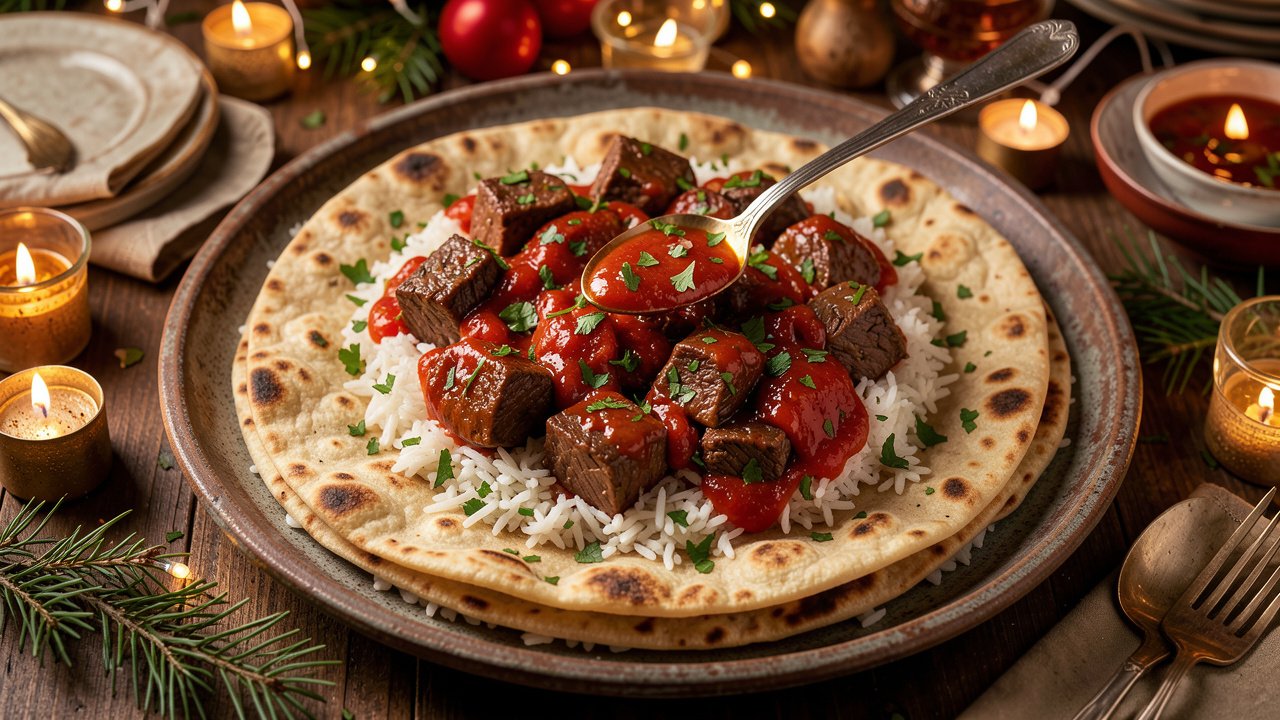
Egyptian fattah is the dish that shows up when there is something to celebrate. Torn flatbread is toasted until crisp, spread over a bed of buttery rice, then crowned with chunks of slow-braised beef and doused in a sharp, garlicky tomato sauce cut with vinegar. It is humble food built from pantry staples, yet a platter of fattah carries the weight of Eid, weddings, and homecomings.
The magic is in the layers and the order you build them. You braise the beef low and slow until it yields, cook the rice separately so it stays fluffy, and make a loud garlic-and-vinegar tomato sauce that ties everything together. Toast the bread last so it keeps some crunch under the sauce, then assemble right before you carry it to the table.
Why This Fattah Works
Great fattah is really three components cooked well and then brought together: beef braised until it surrenders, rice that stays separate and fluffy, and a garlic-vinegar tomato sauce sharp enough to wake up every bite. Keep those three on their own timelines and the assembly takes care of itself. The recipe here builds each one properly, then stacks them so the bread stays crisp instead of turning to mush.
The beef is the backbone. Cubes of chuck or shank are browned, then simmered gently with onion, bay, and cardamom until a fork slides through them, and the braising liquid becomes a light stock you use to moisten the rice. Low heat and time do the work here; rushing it leaves the meat tight and chewy.
The sauce is what makes it fattah rather than just rice and meat. Raw garlic is bloomed in hot ghee until it is fragrant but not brown, then vinegar is added and allowed to hiss and mellow, and finally tomato paste and crushed tomatoes go in to simmer into a thin, punchy sauce. That jolt of garlic and vinegar is the signature of the dish.
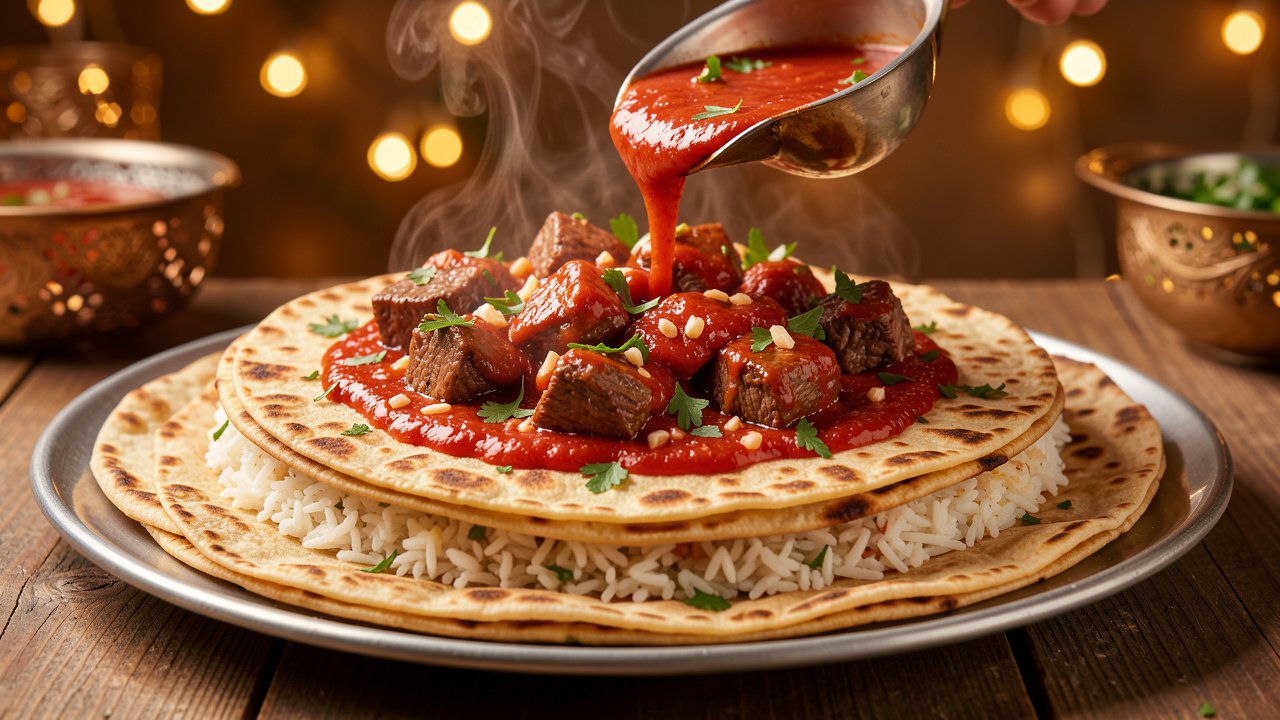
Assembly is the final trick. Crisp toasted bread goes on the bottom, rice over it, beef on top, and the hot sauce spooned over everything just before serving so the bread drinks it in without going soggy. Build it in that order, serve it straight away, and you get the contrast of crunch, fluff, and sauce that defines a good plate of fattah.
Pro observation: Fattah is fully halal as written, with no forbidden ingredients. The sauce gets all of its punch from garlic, white vinegar, and tomato, and the beef braise is built on onion and warm spices, so nothing is missing from the flavor.
Ingredients
Kitchen Measurement Converter
Need to convert an amount while you measure? Pick a category, enter a value, and the result updates instantly.
Ingredient Notes & Substitutions
Beef
Choose a cut with a little connective tissue so it turns meltingly tender: chuck, shank, or brisket all braise beautifully. Cut it into large cubes so it stays juicy. Lamb shoulder is the classic festive alternative and braises on the same timeline.
Rice & Bread
Egyptian or short-grain rice gives the soft, slightly sticky bed that holds the sauce; basmati works for a looser, separate grain. Any sturdy flatbread toasts well, from pita to baladi; day-old bread crisps best and soaks up sauce without collapsing.
Garlic & Vinegar
The garlic-vinegar hit, called da’a, is the soul of fattah, so do not scale it back. White vinegar is traditional and keeps the sauce bright and halal; lemon juice is a gentler swap. Bloom the garlic in hot fat only until fragrant, never browned.
Tomatoes & Fat
Crushed tomatoes plus tomato paste give a thin, punchy sauce rather than a thick one. Ghee carries the most authentic flavor and richness; olive oil keeps the dish dairy-free. A ladle of the beef braising stock loosens the sauce and ties it to the meat.
Equipment
- Large heavy pot or Dutch oven
- Lidded saucepan for rice
- Small frying pan for the sauce
- Sharp knife and board
- Large serving platter
- Ladle and slotted spoon
Before You Start
1. Pat the beef cubes bone-dry before they hit the pot. Wet meat steams instead of browning, and without that seared crust the braise tastes flat and the stock stays pale. Blot every piece with paper towel so it sizzles and colors the moment it touches the hot fat.
2. Rinse the rice until the water runs clear. The surface starch is what glues grains into a gummy clump, so three or four rinses buys you a fluffy, separate bed that holds the sauce instead of turning to paste under it.
3. Toast the bread only once the beef is nearly done. Flatbread crisped too early goes soft and leathery sitting on the counter, so time it for the last fifteen minutes so it is still shattering-crisp when the hot sauce hits it.
Step-by-Step Instructions
Fattah is an assembly of three parts, so stage them in order. Get the beef braising first because it takes the longest, cook the rice while it simmers, make the garlic-vinegar sauce near the end, and toast the bread last so everything meets hot on the platter.
Prep the Beef, Bread, and Garlic
Cut the beef into large cubes and pat them thoroughly dry, finely chop the onion, and mince all the garlic. Tear the flatbread into rough pieces and set it aside. Rinse the rice in several changes of cold water until the water runs clear, then leave it to drain while you start the braise.
Braise the Beef
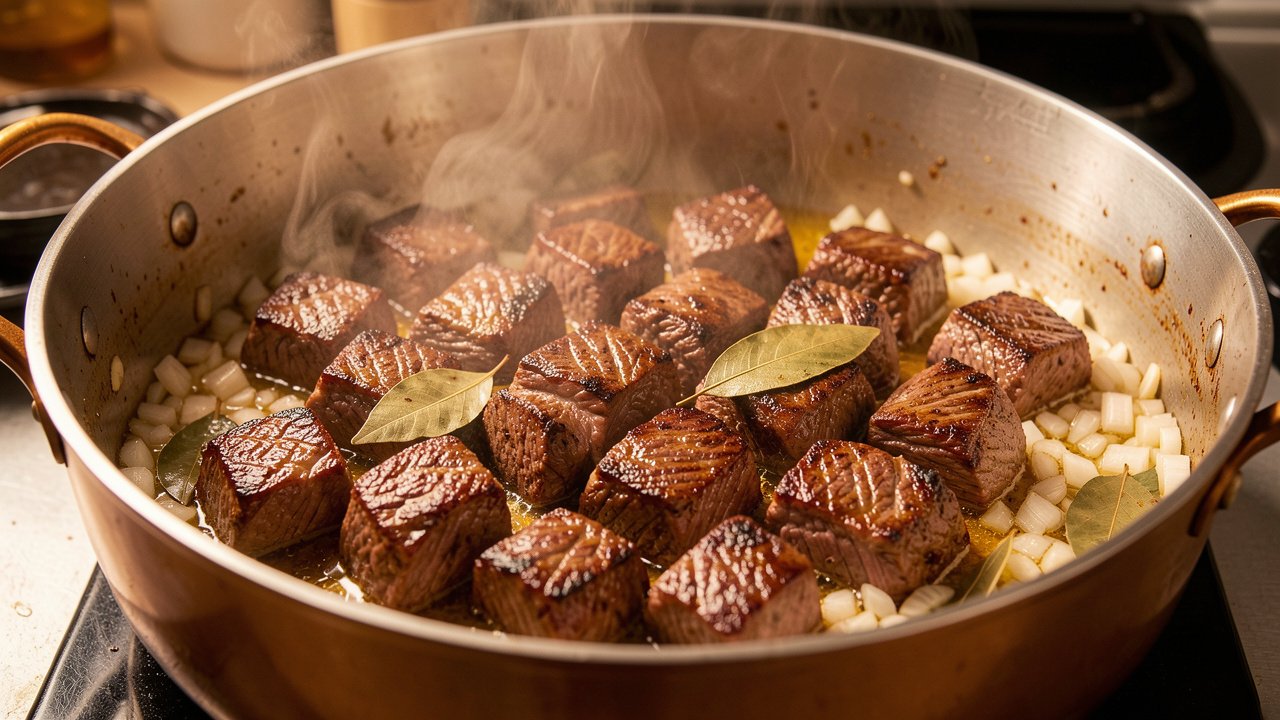
Warm 1 tablespoon of the ghee in a large heavy pot over medium-high heat and brown the beef cubes on all sides, working in batches so they sear rather than steam. Add the onion, bay leaves, cardamom, and 1 teaspoon of the salt, pour in enough water to just cover, and simmer gently, covered, for about 70 minutes until the beef is fork-tender. Keep the strained braising stock.
Cook the Rice
While the beef braises, warm 1 tablespoon of ghee in a saucepan, add the drained rice, and stir for a minute to coat the grains. Pour in about 3 cups of the strained beef stock (topped up with water if needed) and the remaining 1/2 teaspoon salt, bring to a boil, then cover and cook on low for 15 minutes. Rest off the heat for 5 minutes, then fluff with a fork.
Make the Garlicky Tomato Sauce
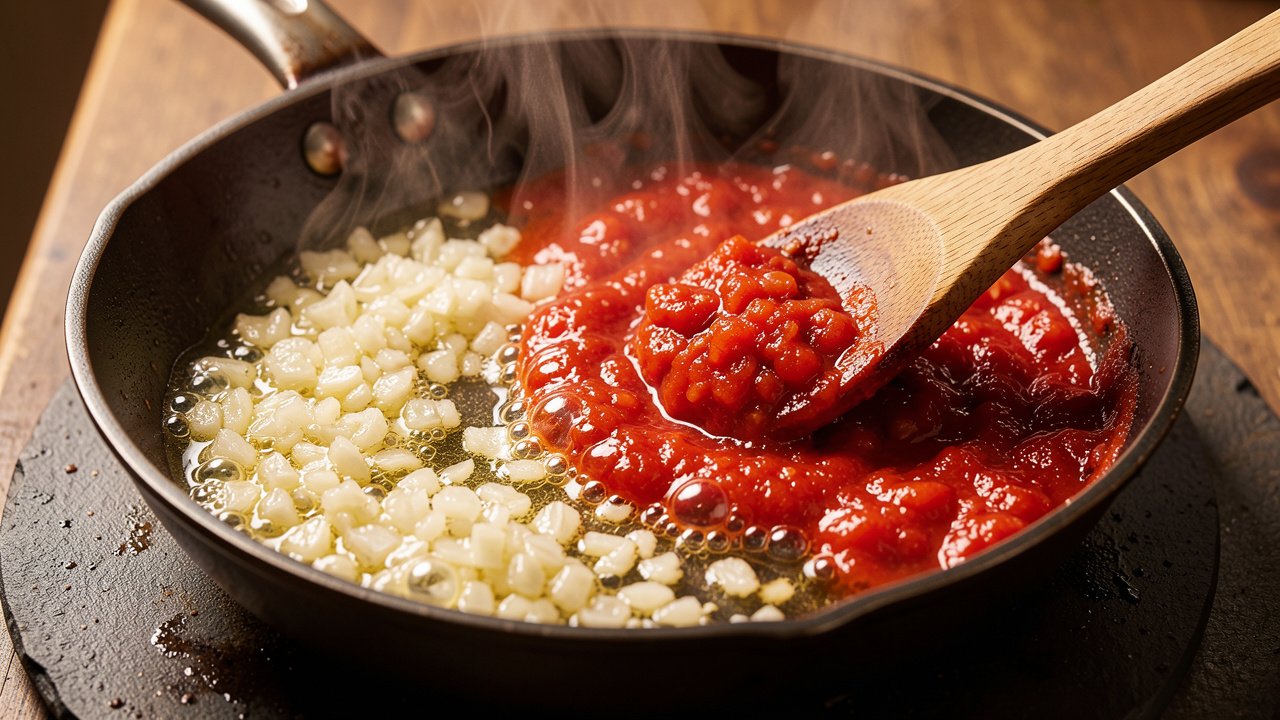
Warm the last tablespoon of ghee in a small pan over medium heat and add the minced garlic, stirring just until fragrant, about 30 seconds, never letting it brown. Pour in the white vinegar and let it hiss and reduce for a few seconds, then stir in the tomato paste and crushed tomatoes. Simmer 8 to 10 minutes into a thin, sharp sauce, loosening with a ladle of beef stock.
Toast and Layer the Bread
Spread the torn flatbread on a tray and toast it in a hot oven or dry pan until crisp and golden, 5 to 7 minutes. Arrange the toasted bread in a single layer across the bottom of a large serving platter, then moisten it with a few spoonfuls of the hot beef stock so it softens just slightly while staying crunchy at the edges.
Assemble and Serve
Spoon the fluffed rice evenly over the bread, then pile the tender beef on top. Ladle the hot garlicky tomato sauce generously over everything just before serving, so the bread drinks it in without going soggy. Scatter with chopped parsley and bring the platter straight to the table while it is hot.
Chef’s Tips From Real Kitchen Testing
Cook the three parts on their own timelines. Braise the beef first, cook the rice in its stock while it simmers, and make the sauce at the very end so each element is at its best when you stack them.
Never brown the garlic for the sauce. Pull it off the heat the second it smells fragrant; browned garlic turns bitter and buries the clean, sharp vinegar note that defines fattah.
Assemble at the last minute and serve it hot. Build the bread, rice, and beef layers ahead if you must, but ladle the hot sauce over only as you carry it to the table so the bread keeps its crunch.
Recipe Variations
Serving Suggestions
- Extra garlicky tomato sauce in a bowl on the side
- A crisp salad of cucumber, tomato, and parsley
- Pickled vegetables and sliced raw onion
- A spoonful of toasted nuts scattered over the top
Nutrition Facts
| Nutrient | Amount per serving |
|---|---|
| Calories | 580 |
| Protein | 34 g |
| Carbohydrates | 62 g |
| Fat | 20 g |
| Saturated Fat | 7 g |
| Fiber | 5 g |
| Sugar | 9 g |
| Sodium | 820 mg |
Values are estimates per serving and vary with the exact cut of beef and brands you use.
Make-Ahead Tips
The beef braise and the garlicky tomato sauce are both better made a day ahead. Cook them through, cool, and refrigerate separately. When you are ready to eat, reheat each to a gentle simmer, cook fresh rice, toast the bread, and assemble the platter at the last moment so the bread stays crisp.
Storage, Freezing & Reheating
Common Mistakes to Avoid
Troubleshooting
Bread turned soggy? It was assembled too far ahead or the sauce was too thin and over-poured. Toast fresh bread, moisten it only lightly, and ladle the sauce on just before serving.
Beef still tough? It needs more time, not more heat. Return it to a low simmer with a little extra stock and cook until a fork slides through without resistance.
Sauce too sharp? The vinegar has not mellowed; simmer it a few minutes longer, or stir in a spoonful more crushed tomato to round out the acidity.
A Note on Egyptian Cooking
The name fattah comes from the Arabic word “fatta,” meaning to crumble or break bread, which is exactly how the dish begins: a layer of torn, toasted flatbread at the base of everything. It is an ancient Egyptian celebration food, eaten above all at Eid al-Adha and at the first meal a new mother shares after childbirth, when a generous platter of bread, rice, meat, and garlicky sauce signals abundance and welcome.
It sits within a wide family of Levantine and Egyptian layered bread dishes, and the one it is most often confused with is fattet hummus: where that Levantine version is built on chickpeas and a cool garlicky yogurt, Egyptian fattah is rice, bread, beef, and a hot tomato sauce. It shares a table and a spirit with other hearty Egyptian staples like koshari, the tomato-and-egg comfort of shakshuka, and the okra stew bamia, all of them built on an unmistakably garlicky tomato base.
What has kept fattah at the center of Egyptian celebrations is exactly what makes it satisfying: it stretches a modest amount of meat across bread and rice to feed a crowd, and the sharp garlic-vinegar sauce turns humble staples into a feast. Braise the beef with patience, keep the sauce loud, and assemble it hot, and you have a dish that still tastes of festival tables.