
Italian Recipes
Spicy Roman Penne in Tomato, Garlic and Chili
Last updated: November 12, 2026
Pasta all’arrabbiata is proof that three humble things, tomato, garlic, and chili, can make a sauce you crave. It is the pasta of Roman trattorias and late-night kitchens: quick, cheap, and loud with heat. The name means “angry,” and one spicy, garlicky forkful tells you exactly why.
The whole dish is built in one pan while the penne boils. You bloom sliced garlic and dried red chili in olive oil, stir in tomato, and let it simmer into a glossy sauce, then toss the drained pasta straight in with a splash of starchy water so every piece gets coated. Scatter parsley over the top and bring it to the table while it is still fierce.

Why This Pasta all’Arrabbiata Works
Great arrabbiata is really two things done well: a sauce with bright tomato depth and a clean, building chili heat, and pasta cooked just to al dente so it keeps its bite. Get those two right and everything else takes care of itself. The recipe here builds a fast but full-flavored sauce, then finishes the penne in the pan so the two become one dish instead of sauce poured over noodles.
The sauce starts where most good Roman cooking does, with sliced garlic and dried red chili warmed gently in olive oil so their flavor blooms into the fat. Tomato paste goes in next and toasts for a minute to concentrate its sweetness, then crushed tomatoes join and simmer into a glossy, clinging sauce rather than a watery one, because arrabbiata is meant to coat every ridge of the penne.
Timing the pasta is the heart of the method. You drain the penne a minute shy of done and let it finish in the simmering sauce with a ladle of starchy pasta water, which emulsifies the oil and tomato into something silky that grips each piece. Finishing the pasta in the sauce, not the pot, is the single step that separates a restaurant plate from a sad one.
It is also endlessly forgiving. Arrabbiata was born as a pantry dish, so the exact heat is up to you. Keep the tomato and garlic constant, dial the chili to your taste, and you will get a pan of pasta that tastes like a Roman trattoria every single time.
Pro observation: Pasta all’arrabbiata is fully vegan and fully halal as written, with no forbidden ingredients. The sauce gets all of its depth from tomato, garlic, chili, and good olive oil, so you never miss a thing.
Ingredients
Kitchen Measurement Converter
Need to convert an amount while you measure? Pick a category, enter a value, and the result updates instantly.
Ingredient Notes & Substitutions
Penne
Penne rigate, with its ridges, is the classic choice because the grooves trap the spicy sauce. Rigatoni, mezze maniche, or spaghetti all work too. Choose a bronze-cut, durum-wheat pasta if you can; its rougher surface grips the sauce far better than a glossy one.
Dried Red Chili
Italian peperoncino flakes give a clean, fruity heat. Standard red pepper flakes or crushed dried arbol chili work just as well. Start with less than you think, because the heat blooms as it cooks; you can always stir more in at the end.
Garlic
Arrabbiata is a garlic-forward sauce, so do not be shy. Slice the cloves thin rather than mincing, so they melt slowly into the oil without scorching. If the heat ever feels harsh, a clove or two fewer and a gentler flame will soften it.
Tomatoes & Oil
Crushed tomatoes give a smooth, clinging sauce, while tomato paste deepens the color and sweetness. A good extra-virgin olive oil is doing real flavor work here, so use one you would happily taste on its own. Finish with fresh parsley for a clean, grassy lift.
Equipment
- Large pot for the pasta
- Large skillet or saute pan
- Colander
- Wooden spoon
- Sharp knife and board
- Measuring cup for pasta water
Before You Start
1. Salt the pasta water like the sea. This is your only chance to season the penne from the inside, and a bland noodle in a fiery sauce tastes hollow no matter how good the tomato is. Use about a tablespoon of salt per four quarts of water.
2. Slice the garlic and measure the chili before the oil heats. Sliced garlic can scorch in under a minute in hot oil and turn the whole sauce bitter, so you cannot be hunting for the chili flakes while it cooks. Have both sitting ready beside the pan.
3. Scoop out a cup of pasta water before you drain. The moment it goes down the sink you lose the one thing that makes the sauce cling to the penne; keep a mugful back so you can loosen and emulsify the sauce at the end.
Step-by-Step Instructions
Arrabbiata moves fast, so have the garlic sliced, the chili measured, and the water heating before you start the pan. The sauce and the pasta finish at nearly the same moment, so the whole dish reaches the table hot and glossy.
Prep and Start the Pasta Water
Bring a large pot of well-salted water to a rolling boil for the penne. While it heats, thinly slice the garlic, measure out the dried red chili flakes, and chop the parsley. Having everything within reach beside the pan keeps the garlic from burning while you scramble later.
Bloom the Garlic and Chili
Warm the olive oil in a large skillet over medium heat. Add the sliced garlic and the chili flakes and cook gently for 1 to 2 minutes, stirring, until the garlic turns pale gold and the oil smells fragrant and spicy. Do not let the garlic brown past gold or it will turn the sauce bitter.

Build the Tomato Sauce
Stir in the tomato paste and let it toast in the hot oil for about a minute, until it darkens slightly and loses its raw edge. Pour in the crushed tomatoes, add the salt and black pepper, and stir to bring the sauce together. Rinse the can with a splash of water and add that too so nothing is wasted.
Simmer the Arrabbiata Sauce
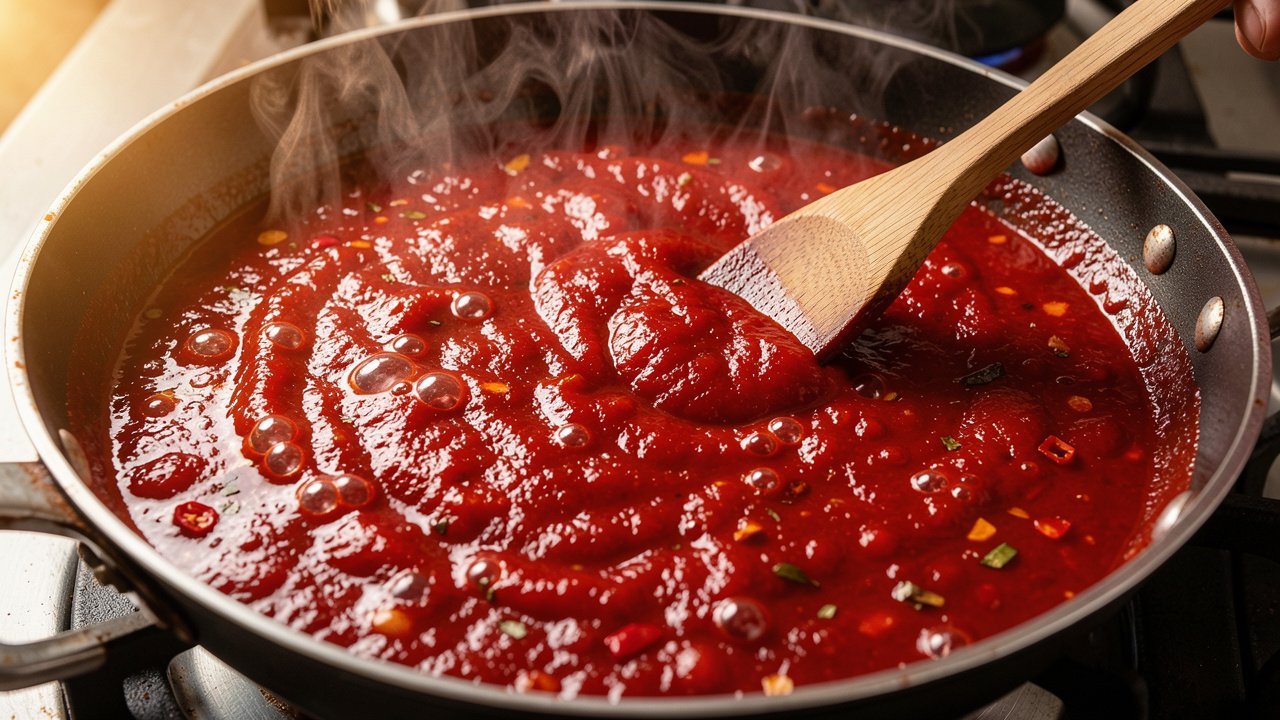
Bring the sauce to a gentle simmer and let it cook, stirring now and then, for about 12 to 15 minutes, until it thickens and turns glossy and deep red. Taste and adjust the salt and chili now. Drop the penne into the boiling water while the sauce finishes so the two are ready together.
Cook the Penne Al Dente
Cook the penne until it is just al dente, usually a minute less than the package says, so it keeps a firm bite. Before draining, scoop out about half a cup of the starchy cooking water and set it aside. Drain the pasta but do not rinse it; that clinging starch helps the sauce grip.
Toss and Finish
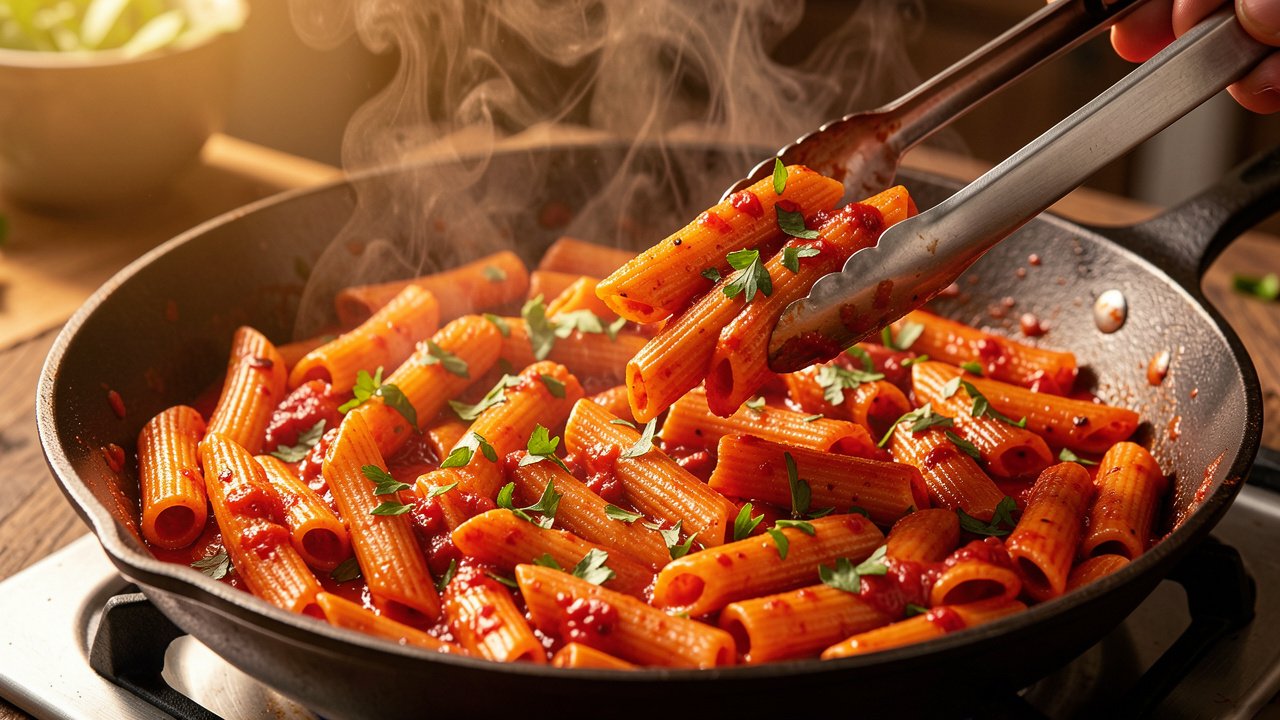
Tip the drained penne straight into the sauce and toss over medium heat for a minute, adding a splash of the reserved pasta water until the sauce turns silky and coats every piece. Stir in most of the parsley, taste for salt and heat, then serve right away with the rest of the parsley scattered over the top.
Chef’s Tips From Real Kitchen Testing
Finish the pasta in the sauce, not the pot. Drain the penne a minute early and let it cook its last minute in the simmering sauce with a splash of pasta water so it drinks in the flavor instead of sitting under it.
Bloom the chili in the oil, not the tomato. Peperoncino releases its heat and aroma into fat, so warming the flakes with the garlic in olive oil gives a rounder, deeper spice than stirring them into the finished sauce.
Save a ladle of pasta water. That starchy water is what emulsifies the oil and tomato and makes the sauce cling; add it a splash at a time as you toss until the sauce glosses every piece of penne.
Recipe Variations
Serving Suggestions
- Warm, crusty bread to mop up the spicy sauce
- A simple green salad with lemon dressing
- Grated pecorino or a vegan hard cheese on the side (optional)
- Garlicky sauteed greens like broccolini or spinach
Nutrition Facts
| Nutrient | Amount per serving |
|---|---|
| Calories | 480 |
| Protein | 14 g |
| Carbohydrates | 88 g |
| Fat | 9 g |
| Saturated Fat | 1.5 g |
| Fiber | 6 g |
| Sugar | 10 g |
| Sodium | 620 mg |
Values are estimates per serving and vary with the exact pasta and brands you use.
Make-Ahead Tips
The arrabbiata sauce is even better made a day ahead. Cook it through the simmer stage, cool, and refrigerate; the garlic and chili mellow and marry overnight. When you are ready to eat, reheat the sauce to a simmer, boil fresh penne, and toss the two together so the pasta is never soggy.
Storage, Freezing & Reheating
Common Mistakes to Avoid
Troubleshooting
Sauce too thin? Simmer it a few minutes longer before the pasta goes in, or toss the drained penne in the pan over heat for a minute so its starch thickens and tightens the sauce.
Sauce too sharp or acidic? Stir in a small pinch of sugar and a thread of good olive oil off the heat to round out the tomato and soften the edge.
Not spicy enough? Warm an extra pinch of chili flakes in a little olive oil in a small pan and stir that through just before serving for a fresh hit of heat.
A Note on Italian Cooking
Pasta all’arrabbiata comes from Rome and the wider Lazio region, part of the family of quick, bold pasta sauces that Roman cooks built from a handful of pantry staples. The name says it all: “arrabbiata” is Italian for “angry,” a nod to the fierce heat of the dried red chili that gives the sauce its bite. Eat a plate that has been generously spiced and your flushed, happy face is said to look a little arrabbiato too.
It sits beside the other great Roman and Southern Italian tomato pastas, and it is most often confused with puttanesca. The difference is simple: spaghetti alla puttanesca piles in olives, capers, and anchovy for a salty, briny punch, while arrabbiata stays pure tomato, garlic, and chili with nothing to distract from the heat. It shares a spirit with bucatini all’amatriciana and the Sicilian pasta alla Norma, all of them proof that a few good ingredients, treated with respect, can carry a whole bowl.
What has kept arrabbiata on tables for generations is exactly what created it: it is fast, cheap, and endlessly forgiving. Keep the tomato and garlic constant, dial the chili to your own taste, and put a loaf of bread on the table, and you have a meal that still tastes of a Roman trattoria.