South Indian Recipes
Tangy Spiced Tomato Broth
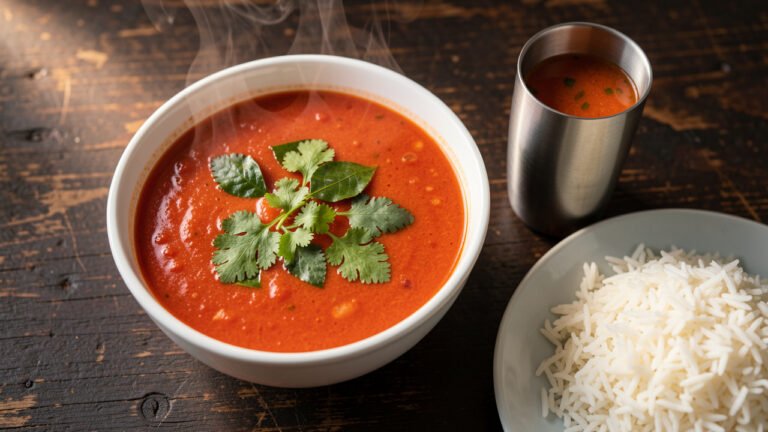
Rasam is the dish South Indian homes reach for when they want comfort in a bowl. It is loose and brothy, not thick like a curry, and its whole personality comes from contrast: sour tamarind against sweet tomato, sharp black pepper against mellow garlic, and that final crackle of mustard seeds in hot ghee. The first few times I made it too thick, and it stopped being rasam. The trick is to keep it thin enough to drink.
Why This Tomato Rasam Works
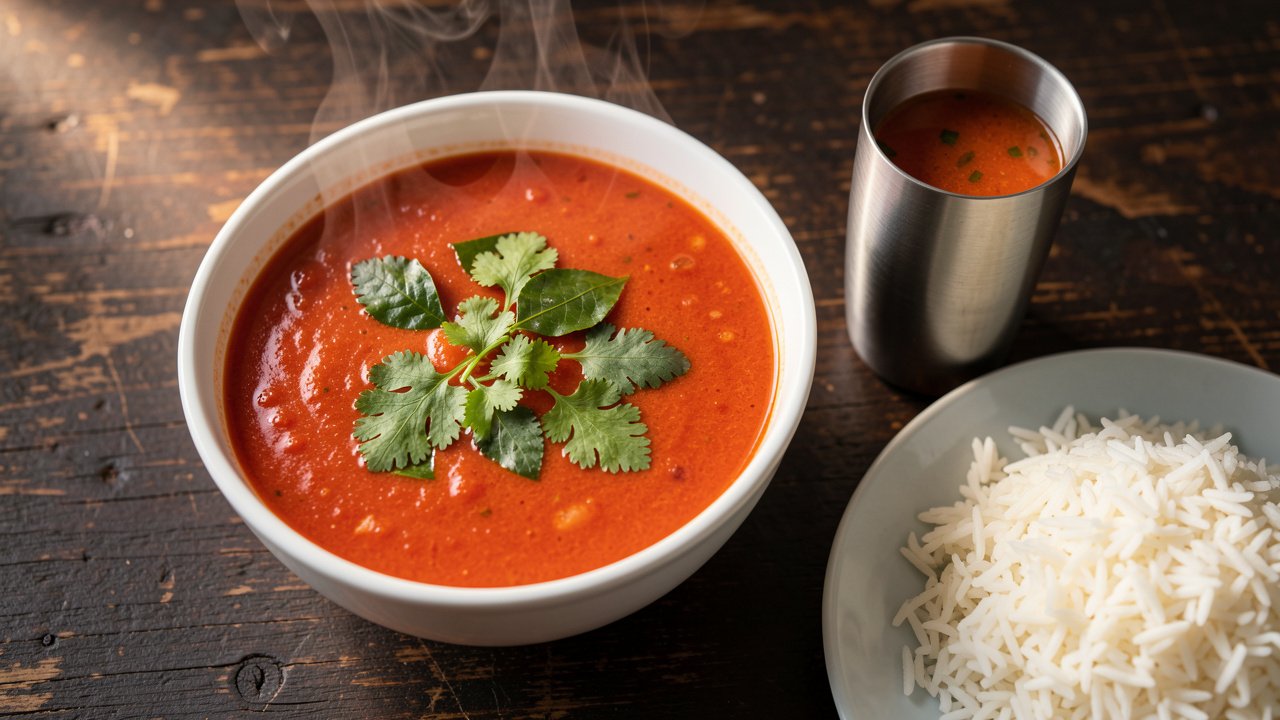
Rasam is a study in balance rather than richness. There is no cream, no coconut, and no long-simmered gravy here. Instead, ripe tomatoes give body and gentle sweetness, tamarind brings the defining sour note, and a heavy hand of freshly cracked black pepper carries the warmth. The whole thing stays thin on purpose, so it can be sipped from a tumbler or ladled over rice and soaked up.
The most important single step is the tempering, or tadka. Mustard seeds, cumin, dried chili, and a pinch of asafoetida crackle in hot ghee for a few seconds, and pouring that over the simmered broth releases an aroma you can smell across the house. Skip it and you are left with a pleasant tomato water; add it and the rasam suddenly tastes complete.
Crushing the garlic rather than mincing it is the other quiet secret. Bruised whole cloves release a mellow, rounded flavor as they simmer, without the sharp bite that finely chopped garlic can leave. Together with the curry leaves, they give rasam its unmistakable South Indian backbone.
It is also forgiving and endlessly adaptable. The same base takes happily to a spoon of cooked lentils for body, to extra pepper for a cold-weather version, or to a whole head of garlic for a punchier bowl. Once you understand the sour, spicy, aromatic triangle, you can adjust any of the three to taste.
Pro observation: Rasam should never come to a hard, rolling boil once the tamarind and tomato broth are combined. A frothy simmer just below boiling keeps the aroma bright; boiling it hard flattens the fresh, tangy top notes you worked to build.
Ingredients
Kitchen Measurement Converter
Quickly convert between common cooking measurements without leaving the recipe. Pick a category, enter a value, and the result updates instantly.
Ingredient Notes & Substitutions
Tomatoes
Use the ripest, reddest tomatoes you can find, since they carry both the color and half the sourness. Overripe, slightly soft tomatoes are ideal here. Out of season, one 14-ounce can of chopped tomatoes gives a reliable, deep base.
Tamarind
Tamarind is what makes rasam taste like rasam. A teaspoon of ready paste is easiest, or soak a lime-sized ball of pulp in warm water and strain. In a pinch, fresh lime juice added off the heat gets you close.
Rasam Powder
A good rasam powder blends coriander, cumin, black pepper, and dried red chili. Store-bought works well. To make it fresh, dry-roast and grind those four with a little toor dal, then use two tablespoons here.
Ghee or Oil
Ghee gives the tempering its classic nutty aroma and keeps the dish vegetarian. For a fully vegan rasam, use a neutral oil or coconut oil instead; the tempering still crackles and carries the spices beautifully.
Equipment
- Medium pot or saucepan
- Small tempering pan or ladle
- Masher or spoon
- Fine sieve for tamarind
- Sharp knife and board
- Measuring spoons
Before You Start
1. Soak the tamarind early. If you are using pulp rather than paste, cover it with warm water at the very start so it has time to soften while you prep everything else.
2. Crack the pepper fresh. Rasam leans on black pepper for its warmth, and coarsely cracked whole peppercorns taste far livelier than fine, pre-ground pepper from a jar.
3. Have the tadka ready last. The tempering takes seconds and burns fast, so measure the mustard seeds, cumin, dried chili, and asafoetida into a small bowl before you heat the ghee.
Step-by-Step Instructions
Cook Down the Tomatoes
Put the chopped tomatoes, crushed garlic, slit green chili, turmeric, and half the curry leaves into a pot with a cup of the water. Bring to a simmer and cook 8 to 10 minutes, mashing now and then, until the tomatoes are completely soft and pulpy. Lightly mash to break them down into a rough, brothy puree.
Add Tamarind, Pepper and Rasam Powder
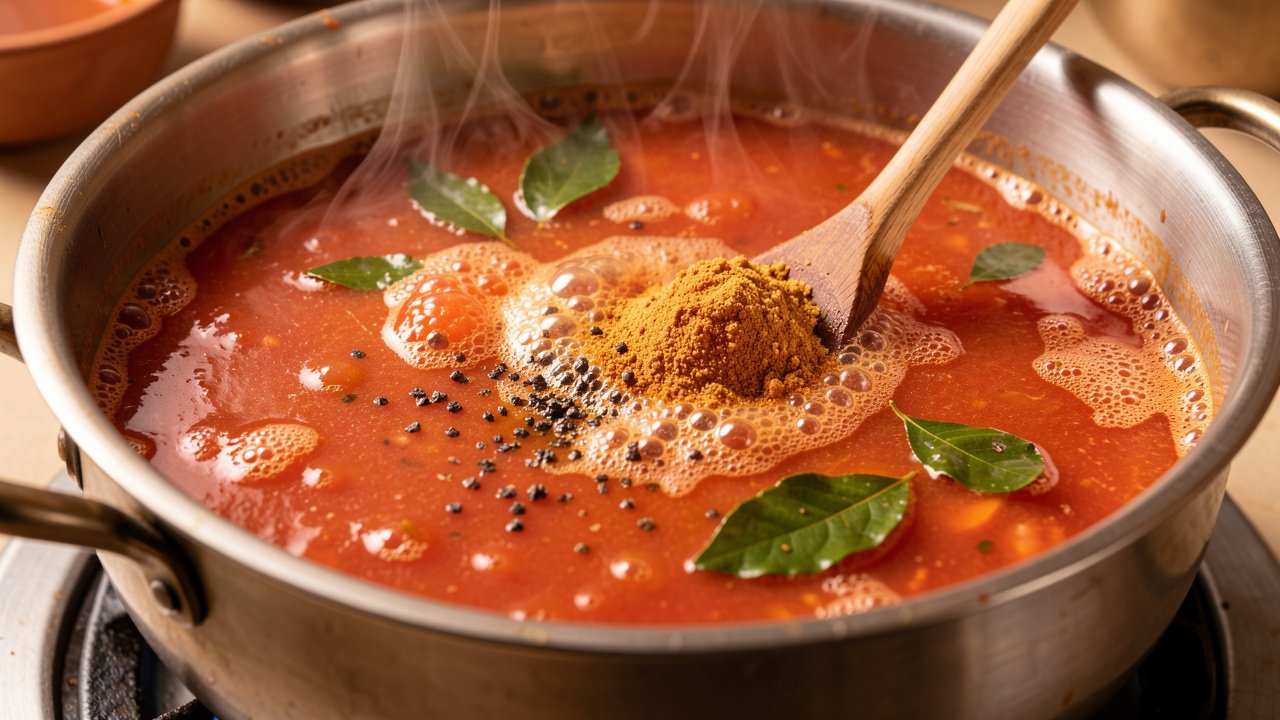
Stir in the tamarind paste, the rasam powder, the coarsely ground black pepper, and the salt. Pour in the remaining water to loosen everything into a thin, drinkable broth. Bring it up to a gentle simmer, not a hard boil, and let it cook 8 minutes so the flavors come together.
Let It Froth, Then Turn Off
Watch for a light foam to rise to the surface, which is the sign a rasam is ready. As soon as it froths up, turn off the heat. Do not let it boil hard or reduce too far; rasam is meant to stay thin enough to sip. Taste and adjust the salt or add a splash more water if it has thickened.
Make the Tempering (Tadka)
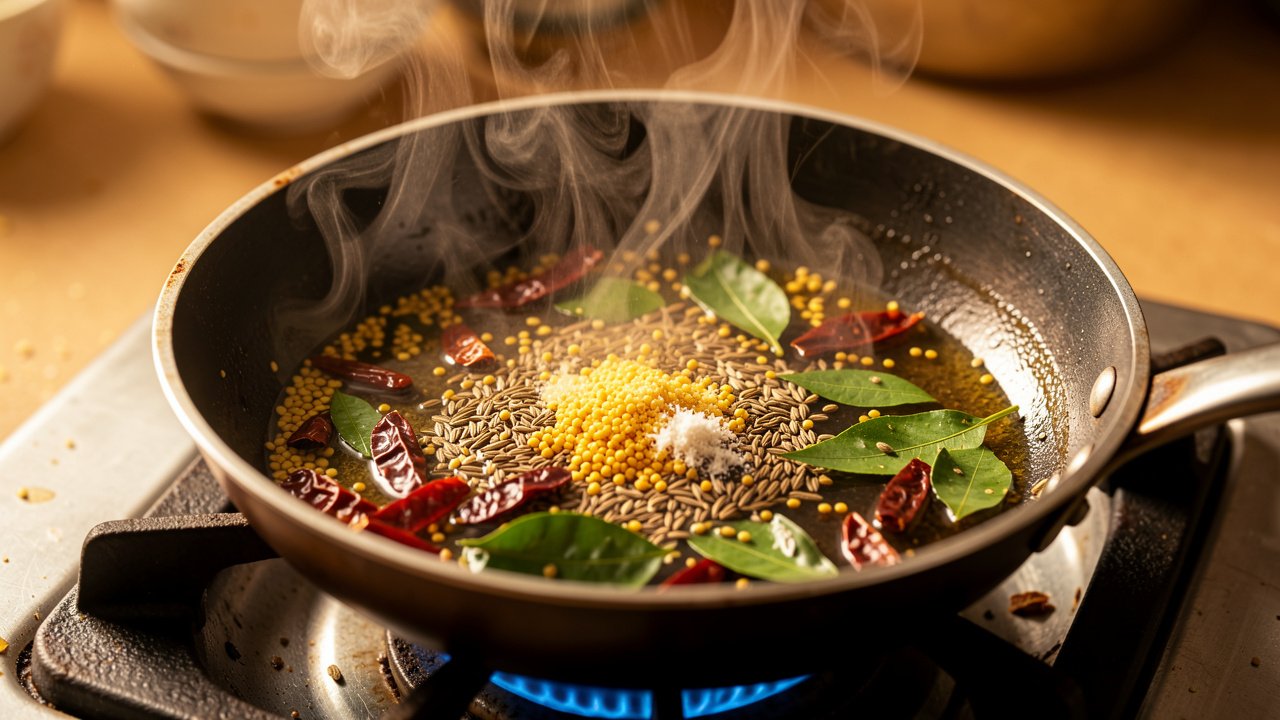
Heat the ghee or oil in a small pan over medium heat. Add the mustard seeds and wait until they pop, about 30 seconds. Add the cumin seeds, dried red chilies, the remaining curry leaves, and the asafoetida, and let them sizzle for 10 seconds until fragrant. Stand back a little, as the curry leaves can spit.
Pour the Tempering Over the Rasam
Pour the hot tempering straight over the pot of rasam and cover it immediately for a few seconds to trap the aroma. This is the moment the whole dish comes alive, so do it just before serving rather than in advance.
Garnish and Serve
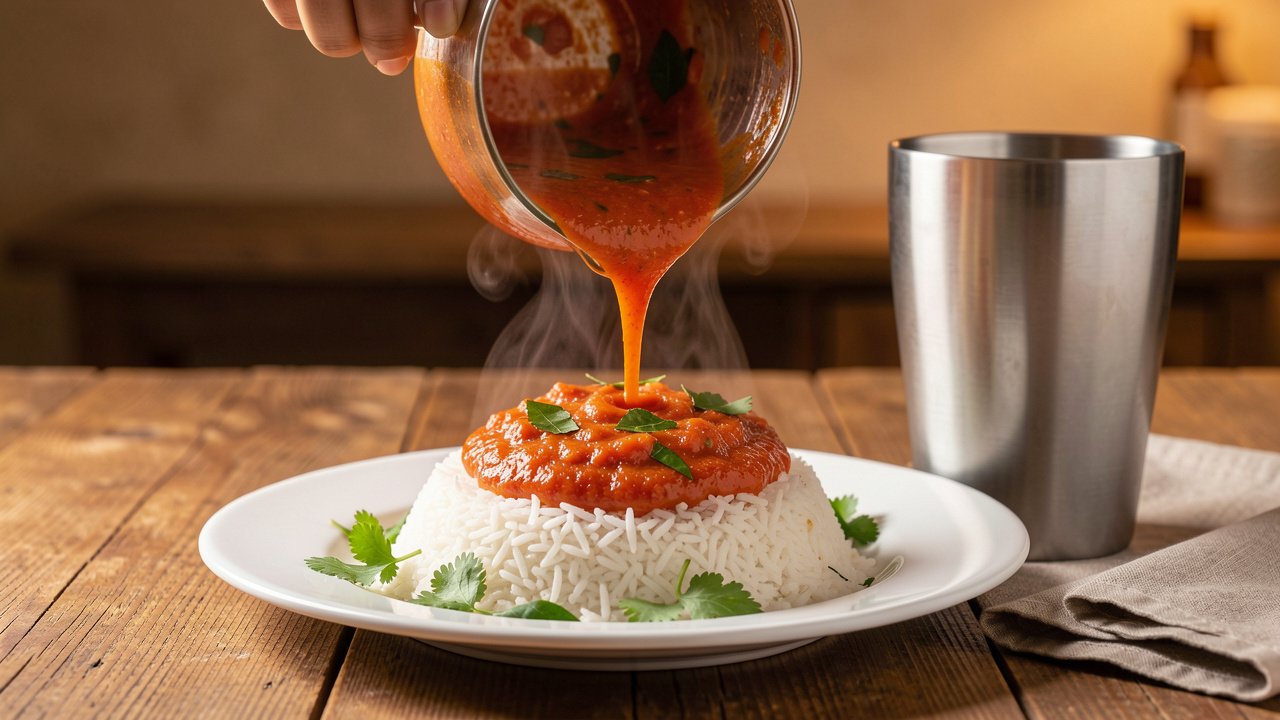
Scatter the fresh cilantro over the top. Serve the rasam hot, either ladled into small bowls or metal tumblers to sip on its own, or poured generously over a mound of plain steamed rice with a little ghee. Taste one last time for salt and tang before it reaches the table.
Chef’s Tips From Real Kitchen Testing
Never let rasam reach a hard, rolling boil once the tamarind goes in. Pull it off the heat the moment it froths; boiling it hard makes it taste dull and cooked-out instead of bright and tangy.
Add the tempering at the very end and cover the pot for a few seconds. Trapping the aroma of the mustard seeds and curry leaves is what separates a great rasam from a flat one.
Keep it thin. If it thickens as it sits, loosen it with hot water rather than reducing it. Rasam should be pourable and sippable, closer to a broth than a soup.
Recipe Variations
Serving Suggestions
- Poured over plain steamed rice with ghee
- Sipped hot from a small bowl or tumbler
- With a crisp papadum on the side
- Alongside a dry vegetable stir-fry
Nutrition Facts
| Nutrient | Amount per serving |
|---|---|
| Calories | 90 |
| Protein | 2 g |
| Carbohydrates | 9 g |
| Fat | 6 g |
| Saturated Fat | 3 g |
| Fiber | 2 g |
| Sugar | 4 g |
| Sodium | 480 mg |
Values are estimates per serving and vary with the exact ingredients and brands you use.
Make-Ahead Tips
The tomato broth can be made a few hours ahead and gently rewarmed, but the tempering is best done fresh, right before serving, so the mustard seeds and curry leaves stay fragrant. If you do prepare the whole rasam early, warm it slowly and add a spoon of fresh ghee tadka on top to revive the aroma. Stir in the cilantro only at the last minute so it stays bright green.
Storage, Freezing & Reheating
Common Mistakes to Avoid
Troubleshooting
Rasam tastes flat? It usually needs more salt, a touch more tamarind for tang, or an extra crack of black pepper to wake it up.
Too sour? Balance it with a small pinch of jaggery or sugar, or dilute it with a little more hot water.
Bitter aftertaste? The mustard seeds or curry leaves in the tempering likely burned. Cook the tadka only until the seeds pop, then pull it off the heat quickly.
A Note on Rasam
In a traditional South Indian meal, rasam has a fixed and cherished place. It usually follows the thicker sambar course, poured over rice midway through lunch, where its thin, tangy broth cuts through the richer dishes and readies the palate for what comes next. Many families also serve it plain in a tumbler to sip, especially when someone is under the weather. The combination of pepper, cumin, garlic, and tamarind has long been considered warming and easy on the stomach, which is why a simple bowl of rasam and rice is the classic comfort food for a cold or a tired appetite. If you enjoy warming, spiced tomato bowls, our creamy Indian tomato soup and hearty tomato lentil soup share the same comforting character.
Frequently Asked Questions
More Tomato Recipes to Try
Last updated: September 29, 2026