
Lebanese Recipes
Lebanese White Beans and Beef in Tomato Sauce
Last updated: November 12, 2026
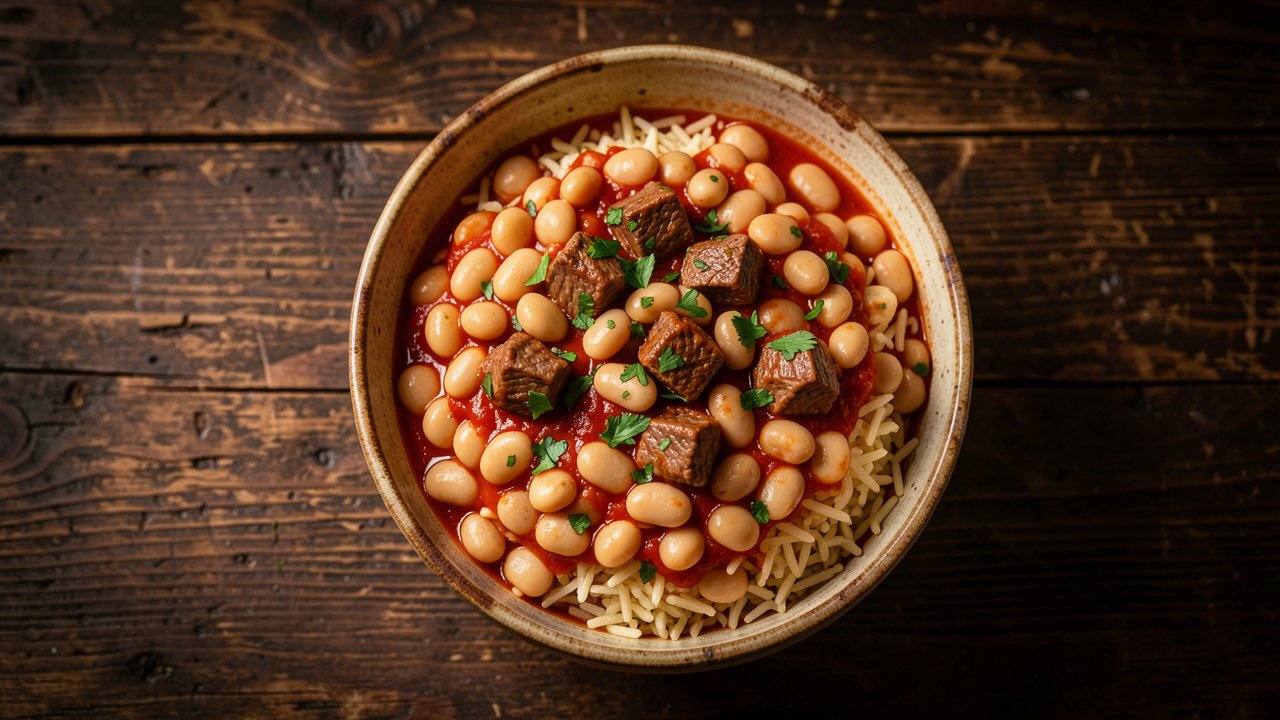
Fasolia bi Lahmeh is the kind of stew that fills a Lebanese kitchen with the smell of garlic and simmering tomato for the better part of an afternoon. It is a dish of soft, creamy white beans and cubes of beef cooked low and slow until the meat gives way at the touch of a fork, all held together in a rich, warmly spiced tomato sauce. Nothing about it is fancy, yet a bowl ladled over rice feels like the heart of a family table.
The whole thing is built in a single pot. You brown the beef for depth, soften onion and garlic into a tomato base, then let the meat simmer until tender before the white beans slip in to turn silky and soak up the sauce. A final hit of garlic and cilantro wakes everything up, and it all goes over a mound of vermicelli rice.
Why This Fasolia bi Lahmeh Works
Great fasolia bi lahmeh is really two things done well: beef cooked slowly until it is fork-tender, and white beans that turn creamy without collapsing into mush. Get those two right and the tomato sauce does the rest. The recipe here browns the meat for a savory base, gives it time to break down, and adds the beans late so they stay whole and soak up the sauce rather than falling apart in it.
The base starts the way most good tomato cooking does, with onion and a generous amount of garlic softened in olive oil, then tomato paste stirred in and toasted for a minute to concentrate its sweetness. Crushed tomatoes and beef broth join to make a loose, saucy stew rather than a thick paste, because fasolia bi lahmeh is meant to be spooned generously over rice.
Timing the beans is the heart of the method. The beef simmers alone until it is almost tender, then the white beans go in for the last stretch so they warm through and turn silky without breaking down. Dropped in too early they dissolve; added late they stay plump and creamy while thickening the sauce.
It is also forgiving and homey. Fasolia bi lahmeh is Lebanese comfort cooking, so the exact spicing is up to you. Keep the beef, beans, garlic, and tomato constant, lean on seven-spice or allspice to taste, and you will get a pot that tastes like a Beirut home kitchen every single time.
Pro observation: Fasolia bi Lahmeh is fully halal as written, with no forbidden ingredients. The sauce gets all of its depth from browned beef, tomato, garlic, and warm spice, so you never miss a thing.
Ingredients
Kitchen Measurement Converter
Need to convert an amount while you measure? Pick a category, enter a value, and the result updates instantly.
Ingredient Notes & Substitutions
Beef
Choose a cut built for slow cooking: chuck, shoulder, or any stewing beef with a little marbling stays juicy and turns fork-tender over time. Cut it into even one-inch cubes so the pieces finish together. Lamb shoulder is a traditional swap and cooks on the same timeline.
White Beans
Canned cannellini keep things quick and stay creamy when added late. Great Northern or butter beans work just as well. If you prefer dried beans, soak them overnight and simmer until tender before they join the stew, then fold them in for the last stretch.
Garlic & Cilantro
The finishing hit of garlic and cilantro is what makes this taste Lebanese, so do not skip it. Flat-leaf parsley stands in if cilantro is not your thing. Keep some of the garlic back from the base to bloom fresh at the end for a brighter, sharper lift.
Tomatoes & Spice
Crushed tomatoes give a smooth, saucy base, while tomato paste deepens the color and flavor. Allspice or a Lebanese seven-spice blend brings the warm, savory background note. A good beef broth carries it all; add a squeeze of lemon at the end for brightness.
Equipment
- Large heavy pot or Dutch oven
- Lid for the pot
- Wooden spoon
- Sharp knife and board
- Ladle
- Colander for the beans
Before You Start
1. Brown the beef in batches, not all at once. Crowd the pot and the cubes release water and steam grey instead of searing, and you lose the deep, savory crust the whole stew is built on. Leave space between the pieces and let each side color before you turn it.
2. Rinse the canned white beans until the water runs clear. The starchy canning liquid clinging to them turns the sauce cloudy and pasty; a good rinse keeps the tomato sauce clean and lets the beans stay plump and whole in the pot.
3. Cut the beef into even one-inch cubes before the pot is hot. Uneven pieces finish at different times, leaving some chewy while others shred apart, so a few minutes with the knife now buys you meat that is uniformly tender at the end.
Step-by-Step Instructions
Fasolia bi Lahmeh is mostly hands-off once it simmers, so prep everything first. Cube and pat the beef dry, chop the onion and garlic, drain and rinse the beans, and start the rice near the end so the whole meal reaches the table together.
Brown the Beef
Pat the beef cubes dry and season them with salt and pepper. Warm the olive oil in a large heavy pot over medium-high heat and sear the beef in batches, giving the pieces room, until they are browned on at least two sides. Transfer the browned beef to a plate and leave the flavorful bits in the pot.
Build the Aromatic Base
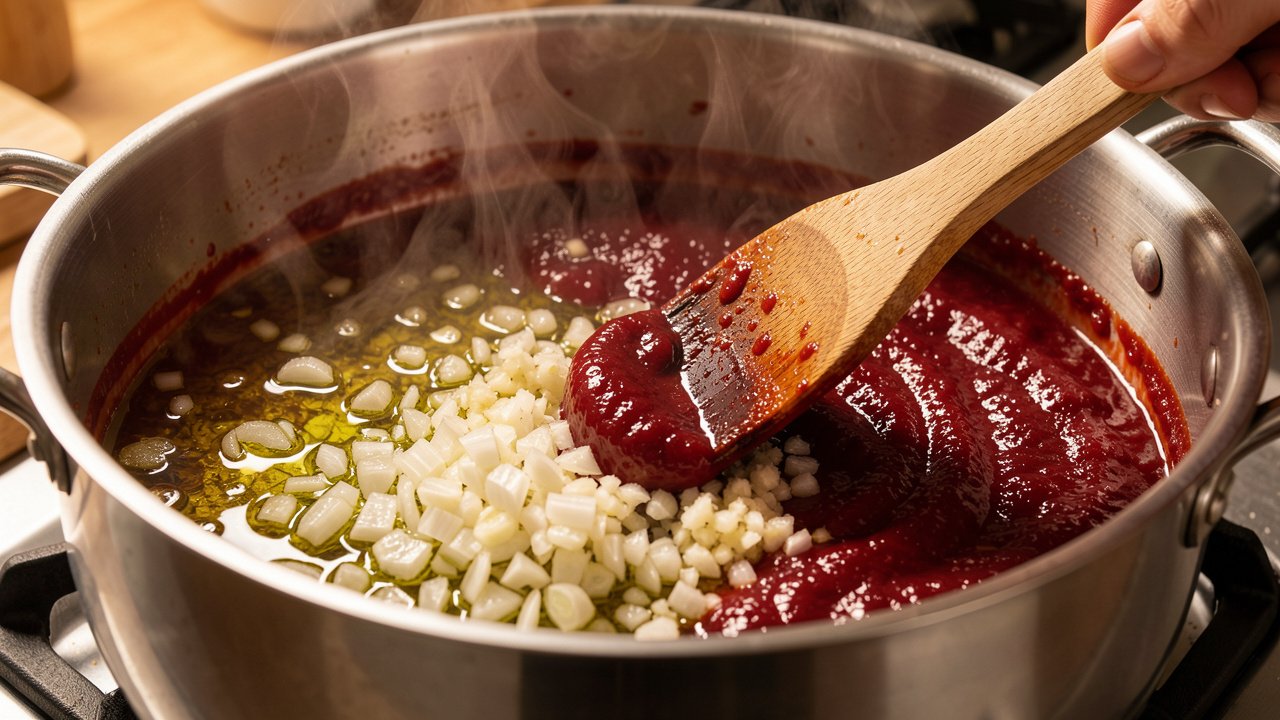
Lower the heat to medium and add the onion to the same pot with a pinch of salt, cooking 4 to 5 minutes until soft. Stir in most of the garlic (keep a little back for the finish) and cook 1 minute until fragrant, then add the tomato paste and stir it around the pot for another minute so it darkens slightly and loses its raw edge.
Simmer the Beef Until Tender
Return the beef and any resting juices to the pot, then pour in the crushed tomatoes and beef broth. Stir in the ground coriander, allspice, bay leaves, and a good pinch of salt and black pepper. Bring to a gentle simmer, cover, and cook on low for about 70 minutes, stirring now and then, until the beef is fork-tender.
Add the White Beans
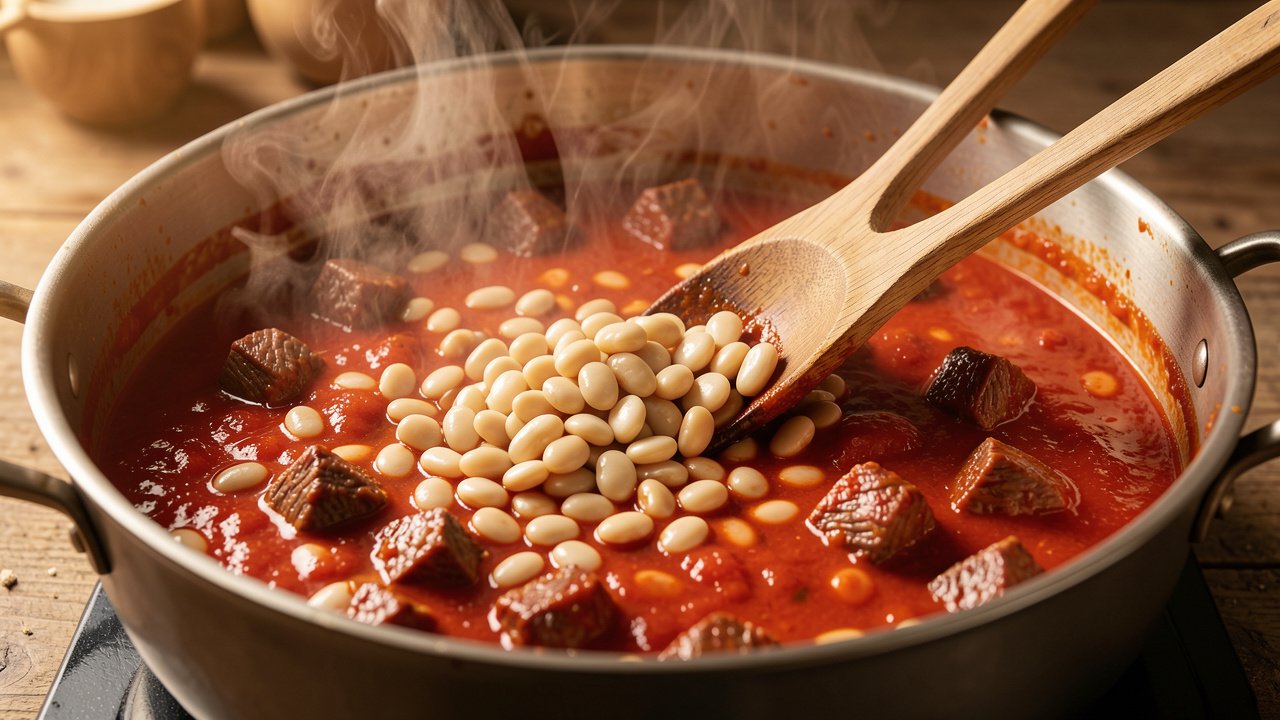
Stir the drained white beans into the tender beef and tomato sauce. Simmer uncovered for about 20 minutes, until the beans are hot through and creamy and the sauce has thickened to a loose, spoonable consistency. Stir gently so the beans stay whole rather than breaking apart into the sauce.
Finish with Garlic and Cilantro
Warm a small spoon of olive oil in a little pan, add the reserved minced garlic, and cook just until fragrant, about 30 seconds, then stir in most of the chopped cilantro. Pour this bright garlic-and-cilantro finish into the stew, fish out the bay leaves, and taste for salt, adding a squeeze of lemon if you like.
Serve Over Vermicelli Rice
Spoon a mound of buttery vermicelli rice into each bowl and ladle the beans, beef, and plenty of sauce over the top. Scatter on the last of the fresh cilantro and serve right away while everything is piping hot. Fasolia bi lahmeh is best eaten with a spoon, so no one misses a drop of the sauce.

Chef’s Tips From Real Kitchen Testing
Give the beef the time it needs. Chuck turns from chewy to tender only after a long, gentle simmer, so resist raising the heat to rush it; a fork should slide in with no resistance before the beans go in.
Add the white beans late and stir gently. Folded in for the last 20 minutes, they stay plump and creamy; dropped in early or stirred hard, they dissolve and turn the sauce starchy.
Keep a little garlic back for the finish. Blooming fresh garlic and cilantro in oil at the very end gives the stew a bright, sharp lift that a long simmer alone can never build.
Recipe Variations
Serving Suggestions
- Buttery vermicelli rice to ladle the stew over
- A simple cucumber and tomato salad with lemon
- Warm pita or flatbread for scooping up the sauce
- A dollop of plain yogurt and extra lemon wedges
Nutrition Facts
| Nutrient | Amount per serving |
|---|---|
| Calories | 480 |
| Protein | 38 g |
| Carbohydrates | 34 g |
| Fat | 20 g |
| Saturated Fat | 6 g |
| Fiber | 9 g |
| Sugar | 7 g |
| Sodium | 780 mg |
Values are estimates per serving and vary with the exact cut of beef and brands you use.
Make-Ahead Tips
Fasolia bi lahmeh is even better made a day ahead, since the beef and beans keep soaking up the sauce overnight. Cook it fully, cool, and refrigerate, then reheat gently with a splash of broth to loosen the sauce. Stir in a fresh hit of garlic and cilantro just before serving to bring it back to life.
Storage, Freezing & Reheating
Common Mistakes to Avoid
Troubleshooting
Beef still tough? It needs more time, not more heat. Keep the lid on and simmer gently another 20 to 30 minutes until a fork slides in with no resistance.
Sauce too thin? Uncover and simmer to reduce, or mash a spoonful of the beans against the side of the pot and stir them back in to thicken the sauce naturally.
Beans falling apart? They cooked too long or boiled too hard; next time add them later and keep the heat at a gentle simmer so they stay whole.
A Note on Lebanese Cooking
Fasolia bi lahmeh is a staple of the Lebanese and wider Levantine home kitchen, the kind of slow stew that shows up on tables from Beirut to the mountain villages. The name is plain and descriptive: “fasolia” means beans, borrowed into Arabic from the Greek “fasoli”, and “bi lahmeh” means “with meat”, which is exactly what sets it apart from its meatless cousins. It belongs to a family of bean stews cooked low and long in a garlicky tomato sauce.
The dish most often confused with it is loubieh bi zeit. The difference is clear once you know it: loubieh bi zeit is made with green beans stewed in olive oil, is completely vegan, and is served cool or at room temperature as a mezze. Fasolia bi lahmeh, by contrast, is built on white beans and cubed beef, is served piping hot over rice, and is a main course rather than a side. The finishing taklia of garlic and cilantro bloomed in oil is the signature that ties it to the Levantine table.
What has kept fasolia bi lahmeh on Lebanese tables for generations is exactly what makes it so good: it is humble, forgiving, and deeply satisfying. Use a well-marbled cut, keep the beans creamy and the tomato sauce generous, and put a bowl of rice beside it, and you have a meal that still tastes of a Lebanese home kitchen.