Indian Recipes
Mumbai Street-Style Buttery Vegetable Mash
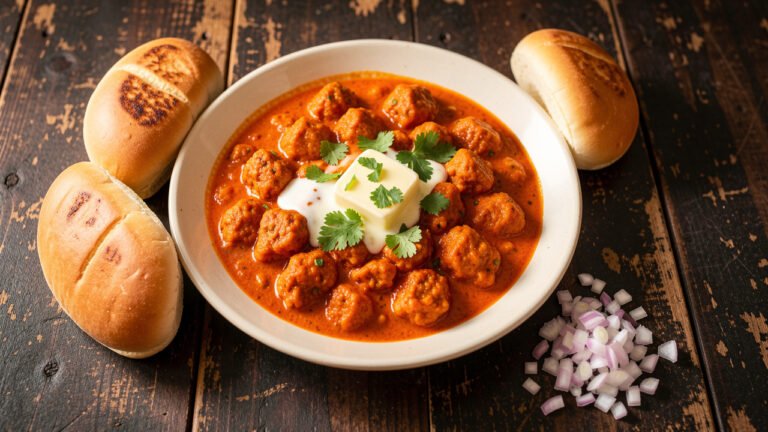
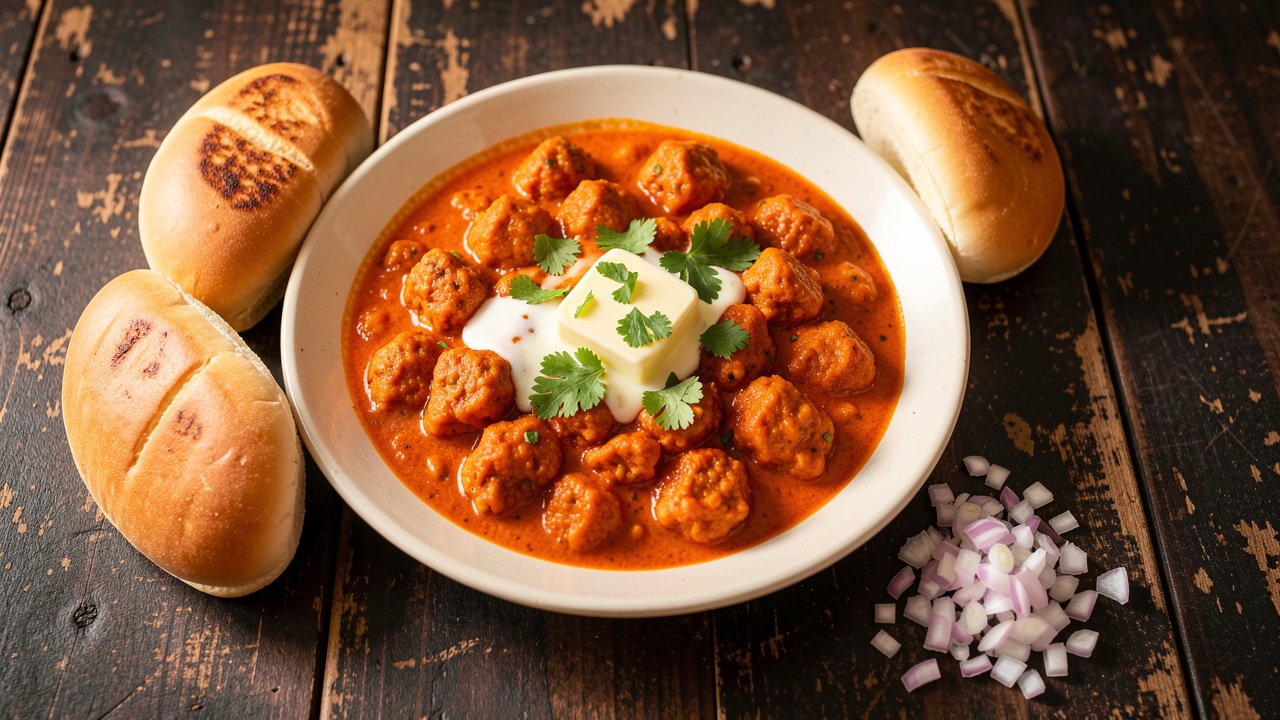
Pav bhaji is what happens when a plate of humble boiled vegetables meets a generous knob of butter and a bold spice blend on a screaming-hot griddle. It is comfort food and street food at once, the kind of dish that fills a whole kitchen with the smell of toasting butter and tomatoes. The magic is not in any one fancy ingredient; it is in the mashing, the butter, and the patience to cook the masala until its raw edge is gone.
Why This Pav Bhaji Works
Great pav bhaji is all about texture and depth. You want the vegetables mashed so finely that no single bite is just potato or just cauliflower; instead everything melts into one smooth, spoonable bhaji. That is why we boil the vegetables until very soft and then keep mashing right in the pan as they simmer with the masala. The more you mash, the more the flavors marry and the more that signature velvety consistency comes through.
The second pillar is the tomato-onion base. Onions cooked down until soft, then a long, patient simmer with plenty of ripe tomatoes, gives the bhaji its deep red-orange color and its slightly sweet, tangy backbone. Pav bhaji masala does the heavy lifting on spice, but it needs time in the hot pan to bloom, or the dish tastes powdery and raw.
Then there is the butter. Pav bhaji is unapologetically buttery, both stirred into the bhaji and slathered on the pav as it toasts. The butter is not a garnish; it carries the spice, rounds the acidity of the tomatoes, and gives the whole plate that glossy street-cart richness. Skimp on it and the dish tastes thin, no matter how good your masala is.
Finally, the finish. A squeeze of fresh lemon, a shower of chopped cilantro, and a mound of raw onion on the side cut through all that richness and keep every bite bright. Toasting the pav in butter until the cut sides are crisp and golden is the last non-negotiable step that turns this from a vegetable mash into a proper Mumbai plate.
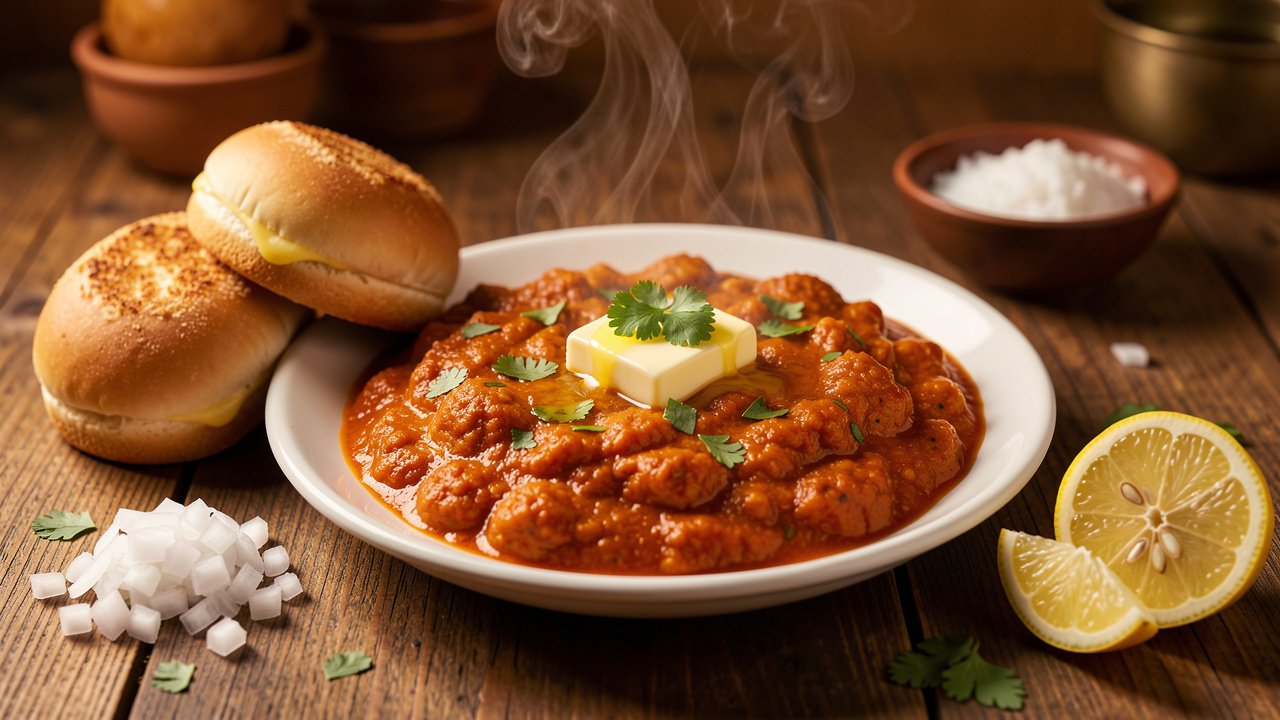
Pro observation: The bhaji is ready when it turns a deep, glossy red-orange and a little butter pools at the edges of the pan. If it still looks dull and watery, keep mashing and simmering; it will darken and thicken as the water cooks off.
Ingredients
Kitchen Measurement Converter
Quickly convert between common cooking measurements without leaving the recipe. Pick a category, enter a value, and the result updates instantly.
Ingredient Notes & Substitutions
Tomatoes
Ripe, red tomatoes are the soul of the bhaji and give it that sweet-tart depth and color. Out of season, add a spoon of tomato paste or use one 14-ounce can of chopped tomatoes to keep the base rich and red.
Pav Bhaji Masala
This ready-made blend is what makes the dish taste like pav bhaji and not a generic curry. Different brands vary in heat and salt, so add it gradually and taste. Kashmiri chili powder is there mainly for a deep red color without too much heat.
The Vegetables
Potatoes, cauliflower, peas, and capsicum are the classic mix, but the bhaji is forgiving. Carrots, beans, or beetroot (for color) all work. Just chop everything small so it boils quickly and mashes smoothly.
Butter and Pav
Use real salted butter for the best flavor. For the pav, any soft dinner roll or burger bun works if you cannot find traditional Indian pav. Toast the cut sides in plenty of butter until golden and crisp.
Equipment
- Wide, heavy pan or tawa
- Potato masher
- Pressure cooker or pot
- Sharp knife and board
- Flat griddle for pav
- Wooden spoon
Before You Start
1. Boil the vegetables first. Potatoes, cauliflower, and peas all need to be very soft so they mash easily, so cook them before you build the base. A pressure cooker makes quick work of this.
2. Chop everything small. Onions, tomatoes, and capsicum should be finely chopped so they cook down fast and blend into a smooth gravy rather than staying chunky.
3. Keep butter close by. You will add it in stages: into the base, into the bhaji as it simmers, and onto the pav. Have it out and ready so nothing waits on the hot pan.
Step-by-Step Instructions
Boil and Mash the Vegetables
Peel and cube the potatoes, break the cauliflower into small florets, and measure out the peas. Boil or pressure-cook them together until very soft, about 10 to 12 minutes. Drain, then mash roughly with a potato masher and set aside. They do not need to be perfectly smooth yet; you will keep mashing later in the pan.
Build the Tomato-Onion Base
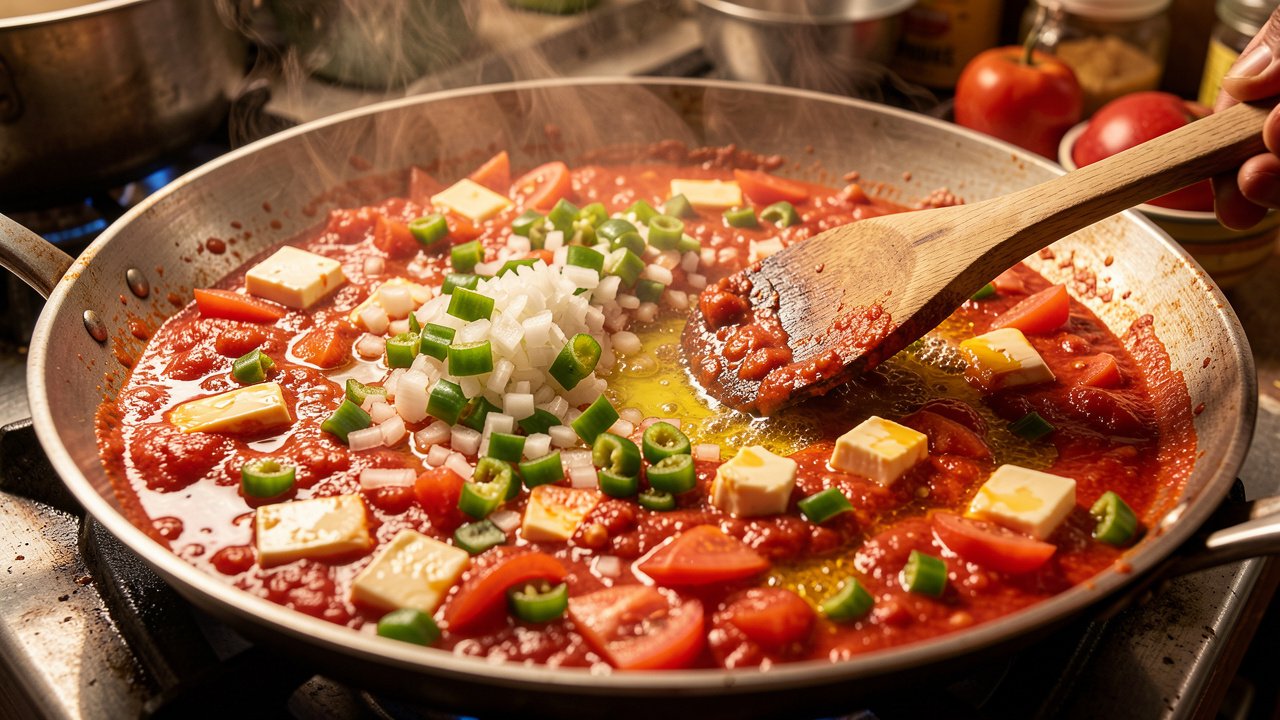
Heat 2 tablespoons of butter and 2 tablespoons of oil in a wide pan over medium heat. Add the chopped onions and green chilies and cook 5 to 6 minutes until soft and translucent. Stir in the ginger-garlic paste and cook 1 minute until fragrant. Add the chopped capsicum and cook 2 minutes, then add the tomatoes and salt and cook 8 to 10 minutes until they collapse into a thick, jammy mass.
Bloom the Masala
Push the base to one side, add a little more butter, and sprinkle in the pav bhaji masala, Kashmiri red chili powder, and turmeric. Stir the spices in the butter for 30 to 40 seconds until they smell toasted and fragrant, then mix everything together. This blooming step is what removes the raw, powdery taste and gives the bhaji its deep color.
Add the Vegetables and Mash
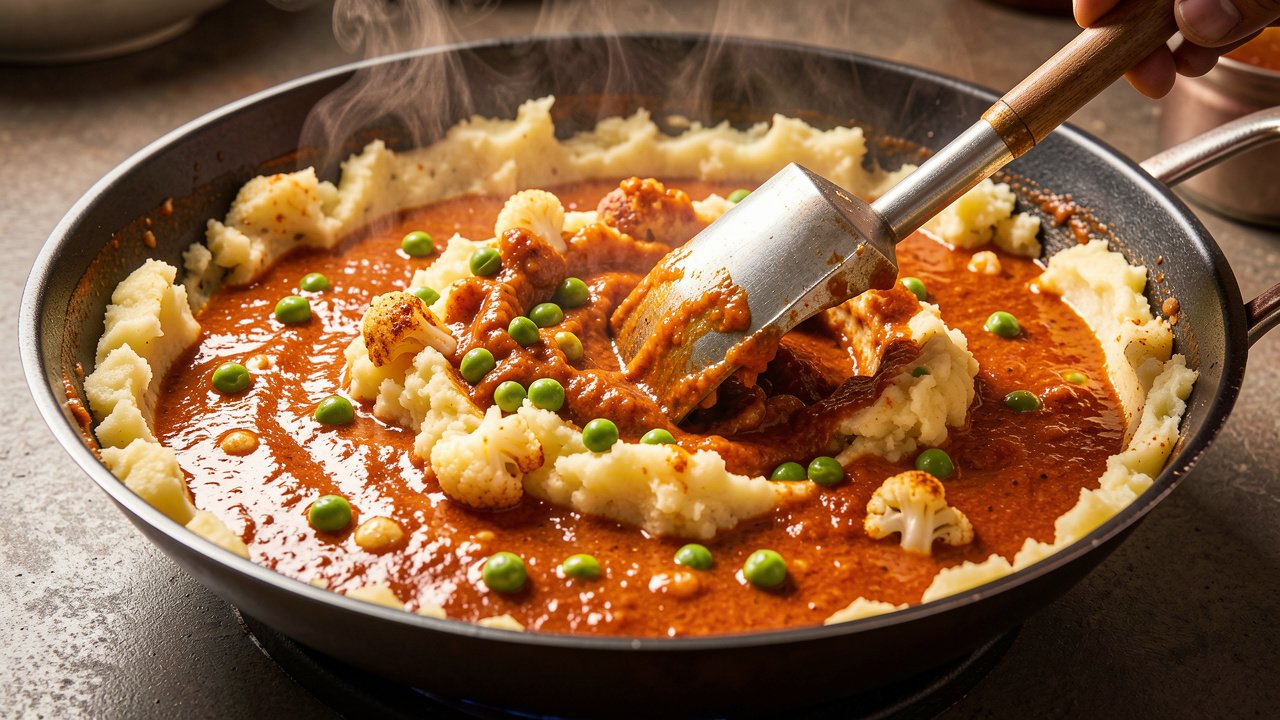
Tip in the mashed potatoes, cauliflower, and peas along with a cup of water. Now start mashing directly in the pan with your masher, pressing and folding the vegetables into the spiced base. Cook 8 to 10 minutes, adding a splash of water whenever it gets too thick, until the bhaji is smooth, glossy, and deep red-orange. Keep mashing; the smoother it gets, the better.
Finish the Bhaji
Stir in the remaining butter and let it melt into the bhaji, then add half the chopped cilantro and a squeeze of lemon. Taste and adjust with more salt, masala, or chili. Lower the heat and let it simmer gently for a couple of minutes so the flavors settle. It should be thick but scoopable, with a little butter glistening on top.
Toast the Pav and Serve
Slice each pav almost through the middle. Heat a flat griddle, melt a little butter with a pinch of pav bhaji masala, and press the cut sides of the pav into it until golden and crisp, 1 to 2 minutes. Serve the hot bhaji topped with a pat of butter, more cilantro, and lemon wedges, with the toasted pav and a pile of raw chopped onion on the side.
Chef’s Tips From Real Kitchen Testing
Mash more than you think you need to. The silky, uniform texture is what separates street-cart pav bhaji from a chunky vegetable curry. A sturdy potato masher does this far better than a spoon.
Do not rush the tomatoes or the masala. Cook the base until it is thick and the masala until it smells toasted, or the bhaji tastes sharp and raw no matter how much butter you add.
Be generous with butter and add it in stages. A little in the base, a little as it simmers, and a final pat on top gives that glossy, restaurant-style finish.
Recipe Variations
Serving Suggestions
- Extra buttered, griddle-toasted pav
- A big pile of raw chopped onion
- Lemon wedges and fresh cilantro
- A cold glass of masala chaas or lassi
Nutrition Facts
| Nutrient | Amount per serving |
|---|---|
| Calories | 520 |
| Protein | 11 g |
| Carbohydrates | 62 g |
| Fat | 26 g |
| Saturated Fat | 14 g |
| Fiber | 9 g |
| Sugar | 10 g |
| Sodium | 900 mg |
Values are estimates per serving, including two pav, and vary with the exact ingredients and brands you use.
Make-Ahead Tips
Pav bhaji is a fantastic make-ahead dish, because the flavors deepen as it sits. You can boil and mash the vegetables a day in advance and keep them in the fridge, or cook the whole bhaji ahead and simply reheat it. The masala mellows overnight, so many cooks think day-two pav bhaji is even better. Toast the pav fresh before serving, and stir in a little extra butter when you reheat.
Storage, Freezing & Reheating
Common Mistakes to Avoid
Troubleshooting
Bhaji tastes raw or powdery? The masala did not cook long enough. Fry it in a little butter for another minute and simmer a few minutes more so it blooms fully.
Too watery and dull? Keep cooking and mashing over medium heat so the extra water evaporates. It will darken and thicken into that glossy red-orange as it reduces.
Too spicy? Stir in an extra knob of butter and a squeeze of lemon, or mash in one more boiled potato to mellow and stretch the heat.
A Note on Mumbai Street Food
Pav bhaji was born on the streets of Mumbai, reportedly as a quick, filling meal for textile mill workers who needed something hearty they could eat fast. The name says it plainly: pav is the soft bread roll, a legacy of Portuguese bakers, and bhaji is the spiced vegetable mash. Today it is cooked on giant flat griddles at street carts across the city, where vendors mash and butter it to order in a cloud of steam and spice. If you enjoy warm, spiced tomato dishes, our creamy Indian tomato soup shares the same comforting spirit, and you can browse more ideas in our full collection of tomato recipes.
Frequently Asked Questions
More Tomato Recipes to Try
Last updated: September 29, 2026