South Indian Recipes
A Quick, Tangy Tomato Rice with Mustard and Curry Leaves
Last updated: September 30, 2026
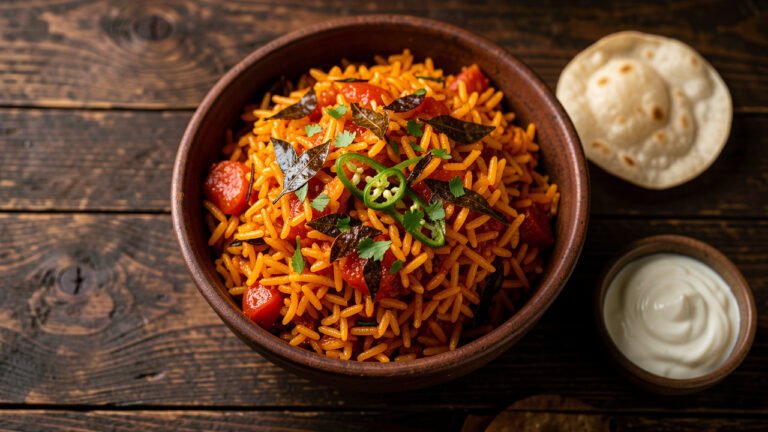
Tomato rice is the dish South Indian kitchens reach for when there is a bowl of cooked rice from yesterday and a few ripe tomatoes on the counter. In minutes it becomes something worth waiting for: a tangy, spiced tomato masala clinging to every grain, brightened with mustard seeds and curry leaves that pop in hot oil. It is humble, thrifty cooking that tastes far better than the sum of its parts.
The whole thing is built in one pan. You crackle a quick tempering, soften onion with green chili and ginger-garlic, cook the tomatoes down into a thick masala, and then fold in the rice. Pack it into a lunchbox, serve it with a papad and yogurt, or eat it straight from the pan; tomato rice is happy any way you like it.
Why This Tomato Rice Works
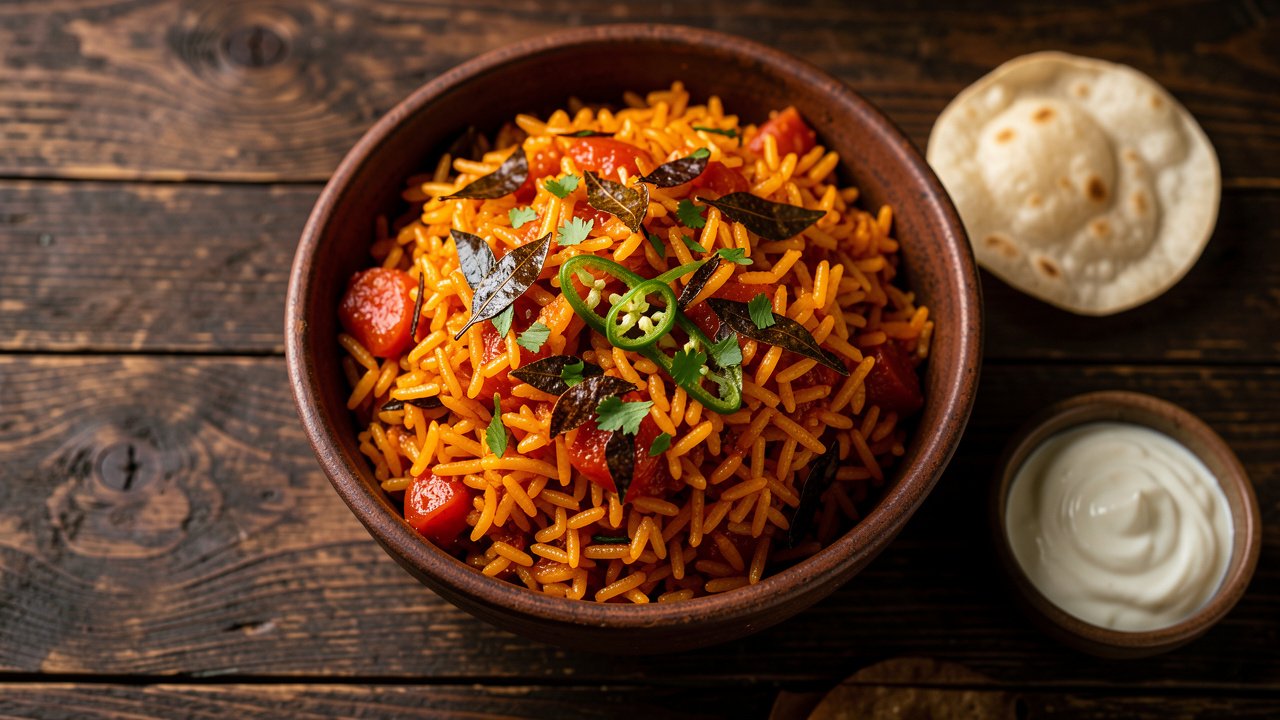
Great tomato rice is really two things done well: a tomato masala cooked until it loses its raw edge, and rice folded in so gently that the grains stay separate. Get those two right and everything else takes care of itself. The recipe here builds a fast but deeply flavored masala, then treats the rice with a light hand so it never turns into a sticky clump.
It starts with a proper tempering, the South Indian move that sets this dish apart. Mustard seeds pop in hot oil, then curry leaves and urad dal go in and turn nutty and fragrant. That crackle perfumes the oil, and every grain of rice that touches it later carries a little of that toasted aroma.
Cooking the tomatoes down is the heart of the method. Onion, green chili, and ginger-garlic soften first, then chopped tomatoes and the spice powders cook together until the mixture darkens, thickens, and the oil begins to separate at the edges. That is your signal that the raw, sour taste is gone and the masala is ready to season the rice.
Folding, not stirring, is the last secret. Cooked rice bruises easily, so the grains go in and get lifted and turned gently until they are just coated in the red masala. Done right, you get rice that is glossy and evenly spiced, with each grain distinct rather than mashed together.
Pro observation: Tomato rice is naturally vegan and fully halal as written, with no forbidden ingredients. All of its depth comes from tomato, onion, ginger-garlic, and the tempered spices, so you never miss a thing.
Ingredients
Kitchen Measurement Converter
Need to convert an amount while you measure? Pick a category, enter a value, and the result updates instantly.
Ingredient Notes & Substitutions
Rice
Cooked, cooled rice is best; day-old rice from the fridge is ideal because the grains have firmed up and stay separate. Sona masoori is traditional, but basmati or any long-grain white rice works. Aim for grains that are fully cooked but still distinct, never mushy.
Tomatoes
Use ripe, red, juicy tomatoes for the deepest color and tang. Chop them fine or blitz to a puree so they break down into a smooth masala. If your tomatoes are pale or out of season, a spoonful of tomato paste boosts both the color and the flavor.
Tempering
Mustard seeds, urad dal, and curry leaves are the backbone of the flavor. Urad dal adds a nutty crunch; leave it out if you do not have it. Fresh curry leaves are worth seeking out, but a small handful of frozen leaves works well too.
Spices & Heat
Green chilies and red chili powder set the heat, so adjust both to taste. Turmeric gives warmth and color. A pinch of garam masala or a teaspoon of sambar powder stirred into the masala deepens it further if you like a more layered spice.
Equipment
- Wide heavy pan or kadai
- Wooden spatula
- Wide plate or tray for cooling rice
- Sharp knife and board
- Measuring spoons
- Lid for the pan
Before You Start
1. Cook the rice ahead and spread it out to cool. Freshly cooked, hot rice is soft and sticky, and it will clump and break into mush the moment you toss it with the masala. Spread it in a thin layer on a wide plate or tray so the grains dry and firm up, and use day-old rice from the fridge if you can.
2. Chop the tomatoes fine, or puree them. Big chunks stay raw and watery in the pan and never coat the rice, whereas a fine chop or a quick blitz breaks down into a smooth masala that clings to every grain. Get this done before the oil goes on the heat.
3. Measure the whole tempering and set it beside the stove. Mustard seeds and curry leaves go from fragrant to burnt in seconds, so there is no time to hunt for jars once the oil is hot. Have the mustard seeds, urad dal, and curry leaves in one small bowl, ready to go in fast.
Step-by-Step Instructions
Tomato rice comes together quickly once the pan is hot, so prep everything first. Cook and cool the rice, chop the tomatoes and onion, slit the chilies, and gather the tempering so the whole dish moves without a pause.
Cook and Cool the Rice
If you do not already have day-old rice, cook it so the grains are tender but separate, then spread it on a wide plate to cool completely. Cooling firms the grains so they hold their shape when folded into the masala. Fluff it gently with a fork to loosen any clumps while it cools.
Temper the Spices
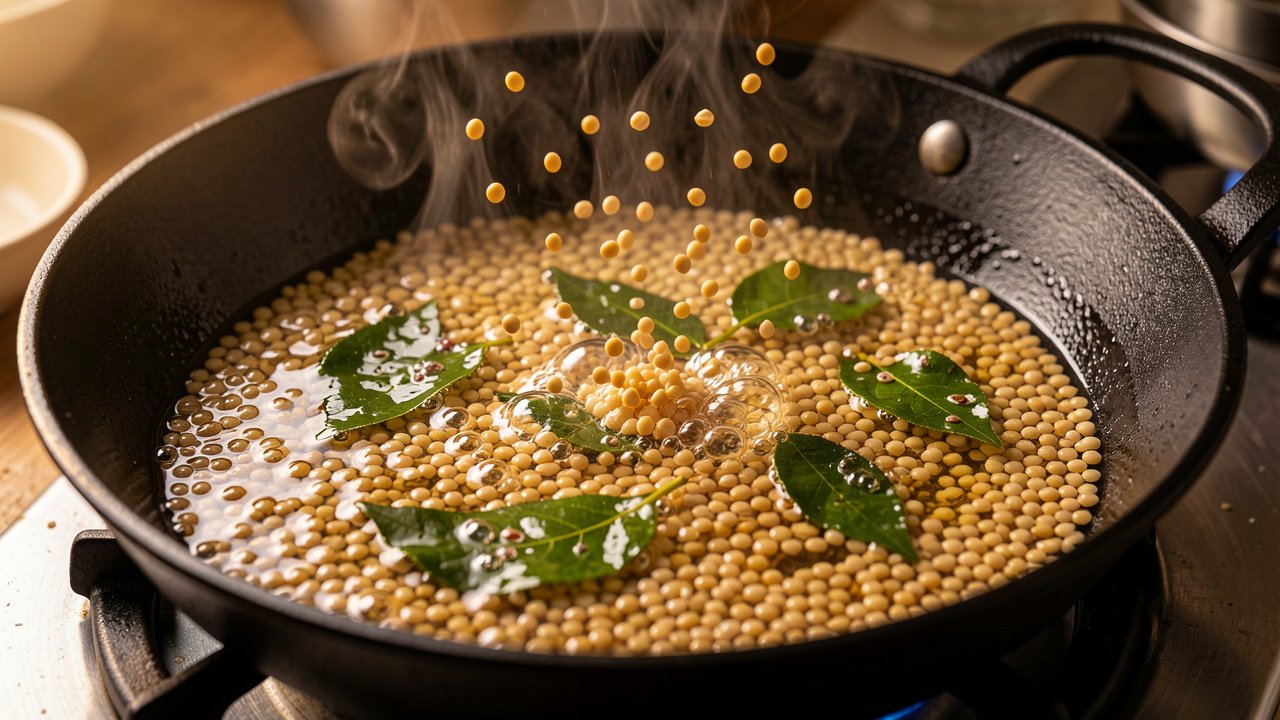
Warm the oil in a wide pan over medium heat. Add the mustard seeds and wait for them to pop, then add the urad dal and curry leaves and let them turn golden and fragrant, about 30 seconds. Keep the heat moderate so the tempering toasts rather than burns.
Saute the Onion and Aromatics
Add the sliced onion and slit green chilies to the pan with a pinch of salt and cook 4 to 5 minutes until the onion turns soft and translucent. Stir in the ginger-garlic paste and cook for another minute, until the raw smell disappears and the mixture smells sweet and aromatic.
Cook Down the Tomatoes
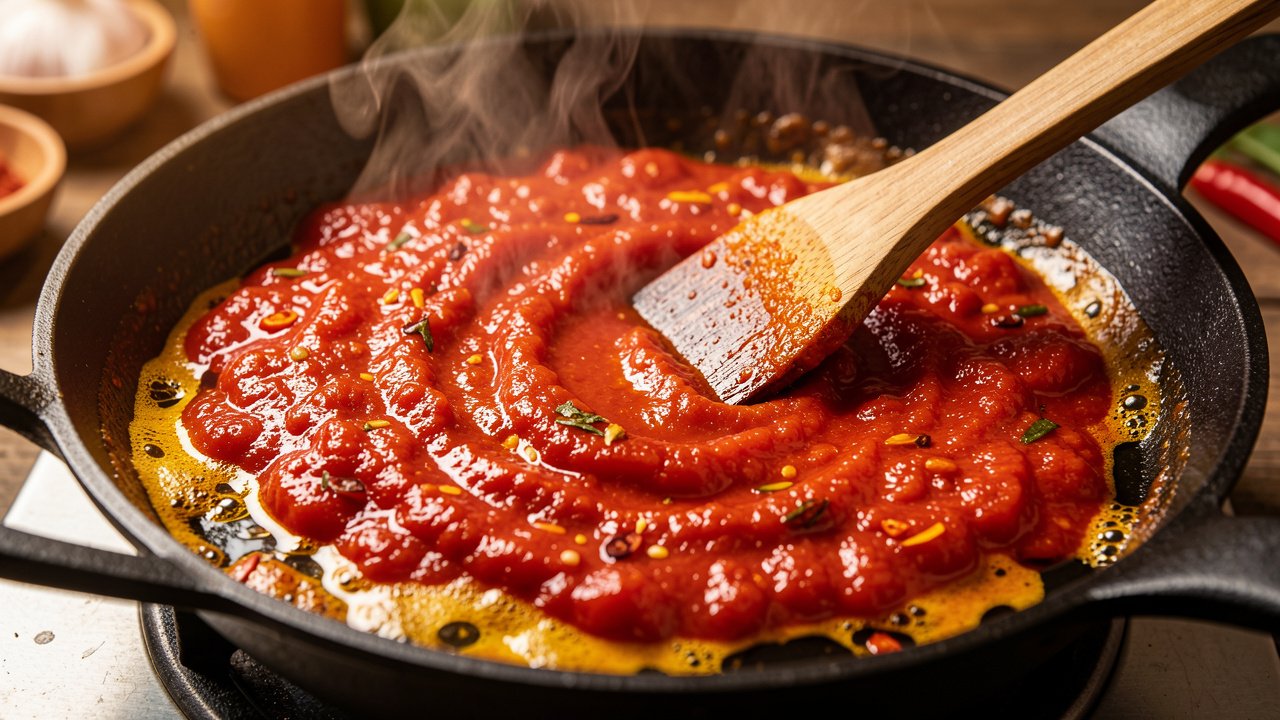
Add the chopped tomatoes along with the turmeric and red chili powder and a good pinch of salt. Cook, stirring now and then, for 8 to 10 minutes, until the tomatoes collapse into a thick masala, the raw smell is gone, and the oil begins to separate at the edges. This is the flavor base, so do not rush it.
Taste and Adjust the Masala
Taste the masala now, while it is still just sauce and easy to correct. Add more salt if it needs it, a little more chili powder for heat, or a pinch of sugar if the tomatoes are very tart. It should taste bold and slightly concentrated, because the rice you add next will mellow it.
Fold in the Rice and Finish
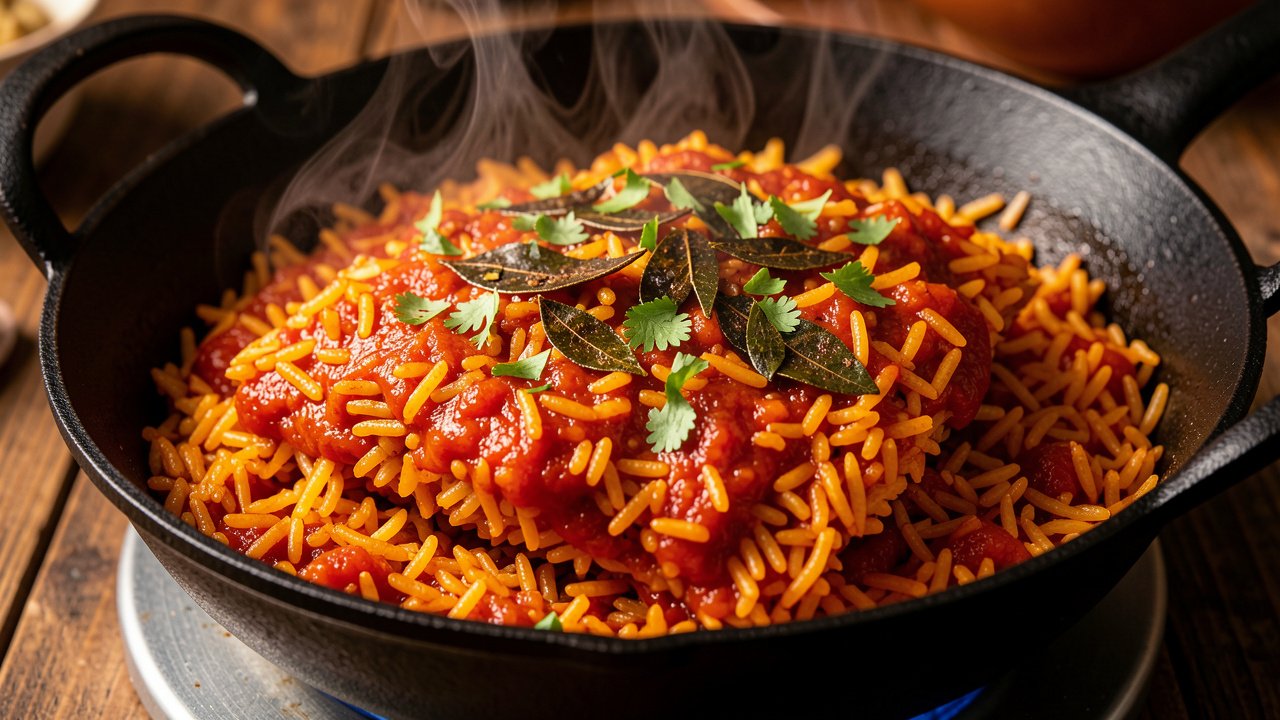
Add the cooled rice to the pan and fold it through gently, lifting from the bottom and turning, until every grain is coated in the red masala. Take care not to mash the grains. Stir in the chopped coriander, warm through for a minute, and serve hot with a papad or a bowl of yogurt.
Chef’s Tips From Real Kitchen Testing
Use cold, day-old rice whenever you can. The grains have firmed up in the fridge, so they stay separate and glossy instead of turning sticky when you toss them with the hot masala.
Wait for the oil to separate before you taste. That ring of oil at the edge of the masala is the sign the raw tomato has cooked out, and it is the difference between a bright dish and a sour one.
Fold, never stir hard. Lift the rice from the bottom and turn it over with a light hand so the grains stay whole; aggressive stirring breaks them and makes the rice gluey.
Recipe Variations
Serving Suggestions
- A crisp papad or appalam on the side
- A cooling bowl of yogurt or coconut yogurt
- A simple onion-and-cucumber salad with lemon
- Coconut chutney for dipping and freshness
Nutrition Facts
| Nutrient | Amount per serving |
|---|---|
| Calories | 340 |
| Protein | 7 g |
| Carbohydrates | 62 g |
| Fat | 8 g |
| Saturated Fat | 1 g |
| Fiber | 4 g |
| Sugar | 6 g |
| Sodium | 480 mg |
Values are estimates per serving and vary with the exact rice, oil, and brands you use.
Make-Ahead Tips
Both parts of this dish are make-ahead friendly. Cook the rice a day early and keep it in the fridge, where the firmed-up grains are actually better for tomato rice. The tomato masala can also be cooked through the reduce stage, cooled, and refrigerated; when you are ready to eat, warm the masala, fold in the cold rice, and finish with fresh coriander.
Storage, Freezing & Reheating
Common Mistakes to Avoid
Troubleshooting
Rice turned mushy? It was too soft or fresh, or folded too hard. Next time use cold day-old rice, spread it to cool, and turn it gently rather than stirring.
Tastes sour or too tangy? The tomatoes did not cook down enough. Simmer the masala longer next time until the oil separates, or stir in a small pinch of sugar to balance the acidity.
Rice too dry or clumpy? Drizzle in a little oil or a splash of water and warm gently, tossing, until the grains loosen and turn glossy again.
A Note on South Indian Cooking
Tomato rice is known in Tamil as thakkali sadam, which simply means “tomato rice”, and versions of it turn up across South India under different names. It belongs to a whole family of mixed rices, alongside lemon rice, tamarind rice, and coconut rice, that South Indian kitchens make to use up cooked rice and pack into lunchboxes. The tomato and chili came to the subcontinent centuries ago and were folded into an older tradition of tempered, spiced rice, and the dish has been a weekday staple ever since.
The one it is most often set beside is biryani, and it is worth being clear: biryani is a layered, slow-cooked, usually meat-forward rice, while tomato rice is a quick tempered stir-through of already-cooked rice. They sit at opposite ends of the effort scale. Tomato rice is closer in spirit to the everyday tomato cooking of the region, like a bowl of tomato rasam or a plate of South Indian tomato upma, and it shares its bright, tempered soul with a fragrant saffron rice with tomatoes.
What has kept tomato rice on so many tables is exactly what created it: it is fast, thrifty, and forgiving. Keep the tempering and the well-cooked tomato masala constant, vary the heat and the add-ins to taste, and you have a bright, satisfying meal that turns yesterday’s rice into something everyone reaches for.