
Portuguese Recipes
Portuguese Fisherman’s Fish and Tomato Stew
Last updated: November 12, 2026
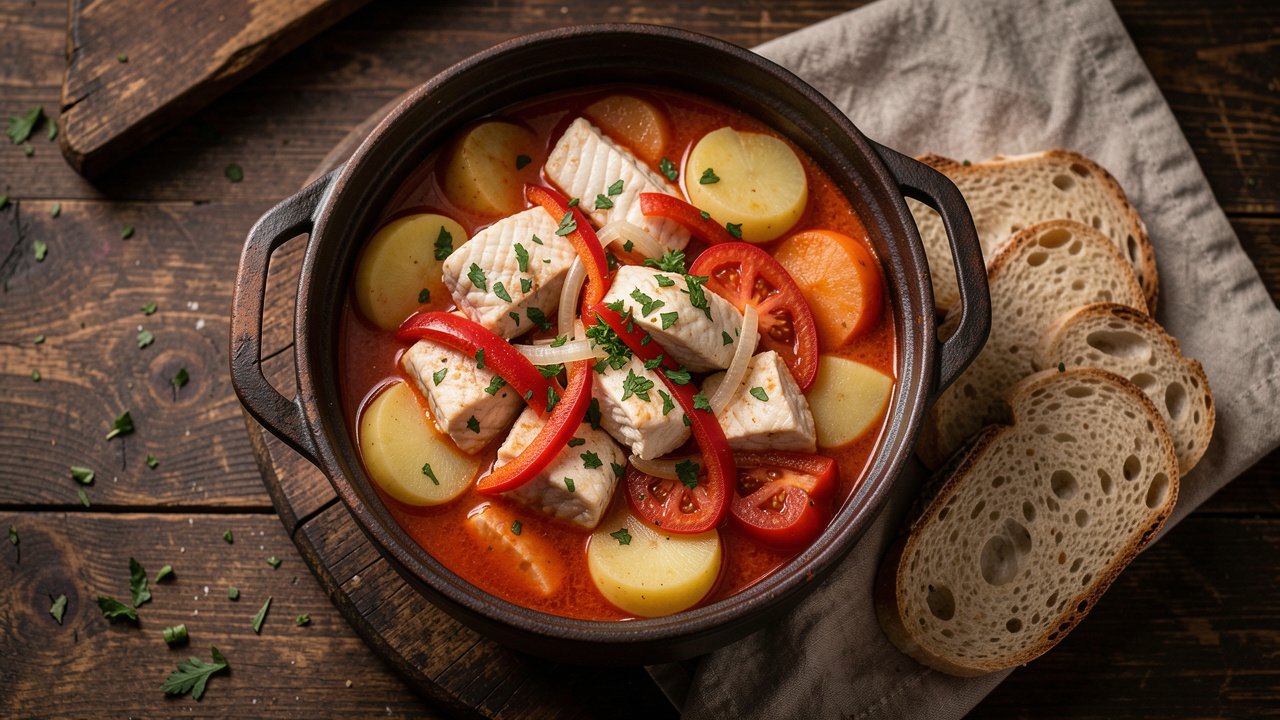
Caldeirada Portuguesa is what happens when a fisherman comes home with a mixed haul and a single pot. It is a layered stew: rounds of potato, sliced onion and pepper, ripe tomato, and whatever firm fish came off the boat, all stacked in a wide pot and left to steam gently into one another. Nothing is browned or fussed over, yet the finished pot tastes deeply of the coast.
The whole thing is built in layers and cooked in one pot. You start the base with olive oil, onion, and garlic, stack the potatoes and vegetables over it, lay the fish on top, add just enough broth to steam everything, and then let it be. A gentle simmer with the lid on does the work, and you serve it straight from the pot with bread to catch the tomato-rich broth.
Why This Caldeirada Works
Great caldeirada is really two things done well: vegetables sliced thin enough to cook through in the steam, and fish added so that it poaches gently and stays in one piece. Get those two right and the layering does the rest. The recipe here keeps the knife work even and the heat low, so the pot turns out tender potato, silky fish, and a tomato broth that tastes of everything in it.
The method is deliberately hands-off. Instead of browning and stirring, you build the pot in layers so each ingredient keeps its own character: potato on the bottom near the heat, onion and pepper to melt down, tomato to break into the broth, and fish laid on top where it only ever steams. A small amount of liquid is all it needs, because the vegetables and tomato give up plenty of their own.
Layering in this order also protects the fish. Sturdy potato rounds take the direct heat and cook first, while the fillets sit above the simmer and turn opaque in minutes without breaking apart. By the time the potato is tender, the fish is just done, and the two finish together with no stirring required.
It is also forgiving by design. Caldeirada was built around a mixed catch, so the exact fish is up to you. Keep the tomato, onion, and potato constant, use whatever firm fish is freshest, and you will get a pot that tastes like the Portuguese coast every single time.
Pro observation: Caldeirada Portuguesa is fully halal as written, with no forbidden ingredients. The broth gets all of its depth from tomato, onion, pepper, garlic, and the juices the fish and vegetables release as they steam, so you never miss a thing.
Ingredients
Kitchen Measurement Converter
Need to convert an amount while you measure? Pick a category, enter a value, and the result updates instantly.
Ingredient Notes & Substitutions
White Fish
Choose a firm fish that holds together in the steam: hake, cod, monkfish, or sea bass all work well. A mix of two kinds is traditional and tastes more of the sea. Cut it into large chunks so the pieces stay whole, and lay them on top of the vegetables rather than burying them.
Potatoes
Waxy potatoes, such as Yukon Gold or red-skinned, hold their shape as rounds and will not collapse into the broth. Slice them a generous quarter-inch thick so they cook through in the steam. Starchy baking potatoes break down too much and cloud the liquid, so avoid them here.
Tomatoes & Pepper
Ripe fresh tomatoes, sliced, melt into the broth and give caldeirada its color. Out of season, use canned whole tomatoes, drained and torn. The red bell pepper adds sweetness and body; a green pepper gives a sharper, more traditional edge if you prefer it.
Broth & Seasoning
A light fish stock is traditional, but a mild vegetable broth keeps things simple and works beautifully. Sweet paprika and bay carry the Portuguese flavor; add a squeeze of lemon at the end for brightness. Keep the liquid modest, since the vegetables release plenty of their own.
Equipment
- Wide heavy pot or Dutch oven
- Lid for the pot
- Sharp knife and board
- Vegetable peeler
- Ladle
- Wide serving spoon
Before You Start
1. Slice the potatoes to an even quarter-inch thickness. If some rounds are thick and others thin, the thin ones turn to mush before the thick ones soften, and the pot cooks unevenly. A steady, even slice means every piece is tender at the same moment the fish is done.
2. Pat the fish chunks dry and salt them lightly before they go in. Wet, unseasoned fish laid onto the layers steams into a bland, watery piece; a dry, lightly salted surface holds together and seasons from the inside as it poaches on top.
3. Taste and season the broth base before you stack the fish on top. Once the fish is layered over the vegetables you cannot stir without breaking it, so fix the salt, paprika, and tomato depth while the pot is still just vegetables and liquid.
Step-by-Step Instructions
Caldeirada is built in layers, so have everything sliced before you begin. Peel and slice the potatoes, slice the onions, pepper, and tomatoes, cut the fish into chunks, and warm the bread while the pot steams so the whole meal reaches the table together.
Prep the Fish and Vegetables
Peel the potatoes and slice them into even quarter-inch rounds. Thinly slice the onions, the red bell pepper, and the tomatoes, and slice the garlic. Cut the fish into large chunks, pat them dry, and season lightly with salt. Having everything sliced and ready is what makes the layering quick and tidy.
Start the Base Layer
Pour the olive oil into a wide heavy pot and scatter in half the sliced onion, the sliced garlic, and the bay leaves. Stir the tomato paste into the oil so it coats the aromatics, then spread the potato rounds over the top in an even layer. This bottom layer sits closest to the heat and cooks first.

Build the Vegetable Layers
Scatter the sliced pepper and the rest of the onion over the potatoes, then lay the sliced tomatoes across the top. Sprinkle with the sweet paprika, a good pinch of salt, and some black pepper. Pour in the fish or vegetable broth around the edges so it pools at the bottom and will steam the layers from below.
Layer the Fish on Top
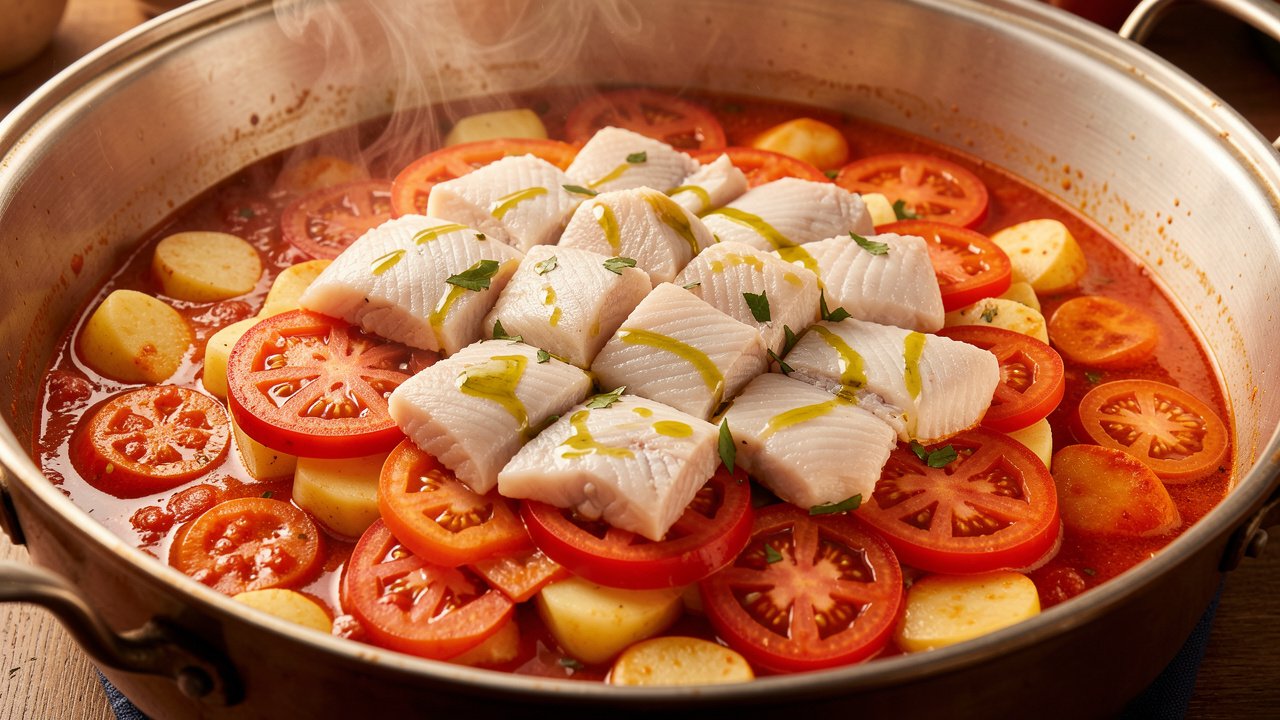
Arrange the fish chunks over the vegetables in a single layer, tucking them into the tomato but keeping them near the surface so they only steam. Drizzle with a little olive oil. Do not stir; the point of caldeirada is to leave the layers intact so the fish stays whole and the broth builds beneath it.
Cover and Steam Gently
Bring the pot to a gentle simmer over medium heat, then lower the heat, cover tightly, and leave it to steam for about 25 minutes. Resist lifting the lid or stirring. The pot is ready when a potato round slips easily off a knife tip and the fish is opaque and flakes at a gentle nudge.
Rest, Finish, and Serve
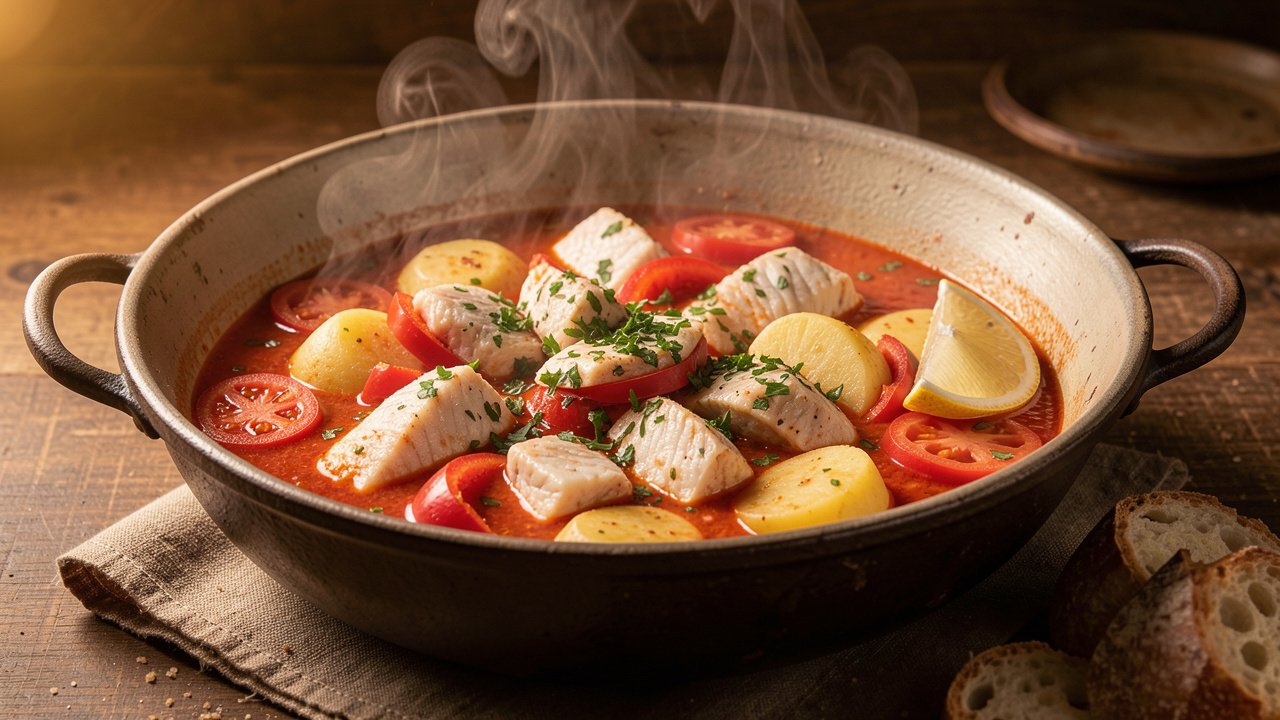
Take the pot off the heat and let it rest, covered, for 5 minutes so the broth settles into the layers. Scatter the chopped parsley over the top and add a squeeze of fresh lemon. Serve straight from the pot, lifting out a portion of fish with its layer of potato and vegetables, with crusty bread for the broth.
Chef’s Tips From Real Kitchen Testing
Build the pot in layers and leave it alone. Potato on the bottom near the heat, vegetables in the middle, fish on top to steam; stirring is what breaks the fish and clouds the broth.
Keep the liquid modest. The tomatoes, onion, and pepper give up a lot of their own juice as they steam, so a single cup of broth is usually enough to keep the pot from drying out.
Hold a steady, gentle simmer, never a hard boil. Soft heat keeps the fish silky and the potato intact, while a rolling boil shreds the fish and turns the rounds to mush.
Recipe Variations
Serving Suggestions
- Thick slices of warm, crusty bread for the broth
- A simple green salad with lemon and olive oil
- Extra lemon wedges for squeezing over each bowl
- A bowl of cured olives on the side
Nutrition Facts
| Nutrient | Amount per serving |
|---|---|
| Calories | 380 |
| Protein | 40 g |
| Carbohydrates | 32 g |
| Fat | 12 g |
| Saturated Fat | 2 g |
| Fiber | 5 g |
| Sugar | 9 g |
| Sodium | 820 mg |
Values are estimates per serving and vary with the exact fish and brands you use.
Make-Ahead Tips
Caldeirada is best made to order, but you can get well ahead on the prep. Slice the potatoes, onion, pepper, and tomatoes and keep them covered in the refrigerator, and layer the pot up to the point before the fish goes in. When you are ready to eat, add the fish on top and steam, so it is never overcooked.
Storage, Freezing & Reheating
Common Mistakes to Avoid
Troubleshooting
Broth too thin? Lift the fish aside, simmer the liquid uncovered for a few minutes to reduce it, or stir an extra spoonful of tomato paste into the broth at the bottom to thicken and deepen it.
Fish falling apart? It cooked too long or too hot, or it was stirred. Keep the heat at a gentle simmer, leave the pot alone, and pull it off the moment the fish turns opaque.
Potatoes still firm? They were sliced too thick or the simmer was too low. Cover and cook a few minutes more, and next time slice the rounds thinner so they keep pace with the fish.
A Note on Portuguese Cooking
Caldeirada takes its name from the “caldeira”, the cauldron or large pot it was cooked in, and the dish is as old as Portugal’s fishing villages. All along the Portuguese coast, crews would cook the unsold part of the day’s catch right on the boat or at the water’s edge, layering whatever fish they had with potato, onion, pepper, and tomato and letting the pot steam itself into a meal. Every stretch of coast has its own version, which is exactly the point.
The dish it is most often confused with is the cataplana. Where a cataplana is sealed inside a domed copper clam-shell pan and leans heavily on shellfish, caldeirada is layered openly in an ordinary wide pot and built around mixed fish. It sits in a big family of tomato-and-fish pots that includes the Brazilian moqueca, the southern Italian acqua pazza, and the island-spiced Seychellois fish curry, each one a coastal cook’s way of turning a catch into something generous. Round out a Portuguese table with a pot of arroz de tomate alongside.
What has kept caldeirada alive for generations is exactly what created it: it is forgiving, communal, and endlessly adaptable. Use what is freshest, keep the tomato, potato, and onion constant, put a loaf of bread on the table, and you have a meal that still tastes of the Portuguese coast.