
Greek Recipes
Greek Braised Beef in a Spiced Tomato Sauce
Last updated: November 12, 2026
Moschari kokkinisto is the kind of dish that fills a Greek kitchen with the smell of cinnamon and slow-cooked tomato for the better part of an afternoon. Chunks of beef go into the pot tough and plain and come out hours later glossy and fork-tender, cloaked in a sauce that is deep red, faintly sweet, and unmistakably Greek. Nothing about it is complicated, yet it tastes like a feast.
The whole thing is built in a single pot. You brown the beef hard for color, soften onions and garlic, then let the meat braise low and slow in crushed tomato and warm spice until a fork slides through it. The sauce reduces around the beef, so by the time it hits the table over a mound of buttery orzo, every spoonful is rich and coating.
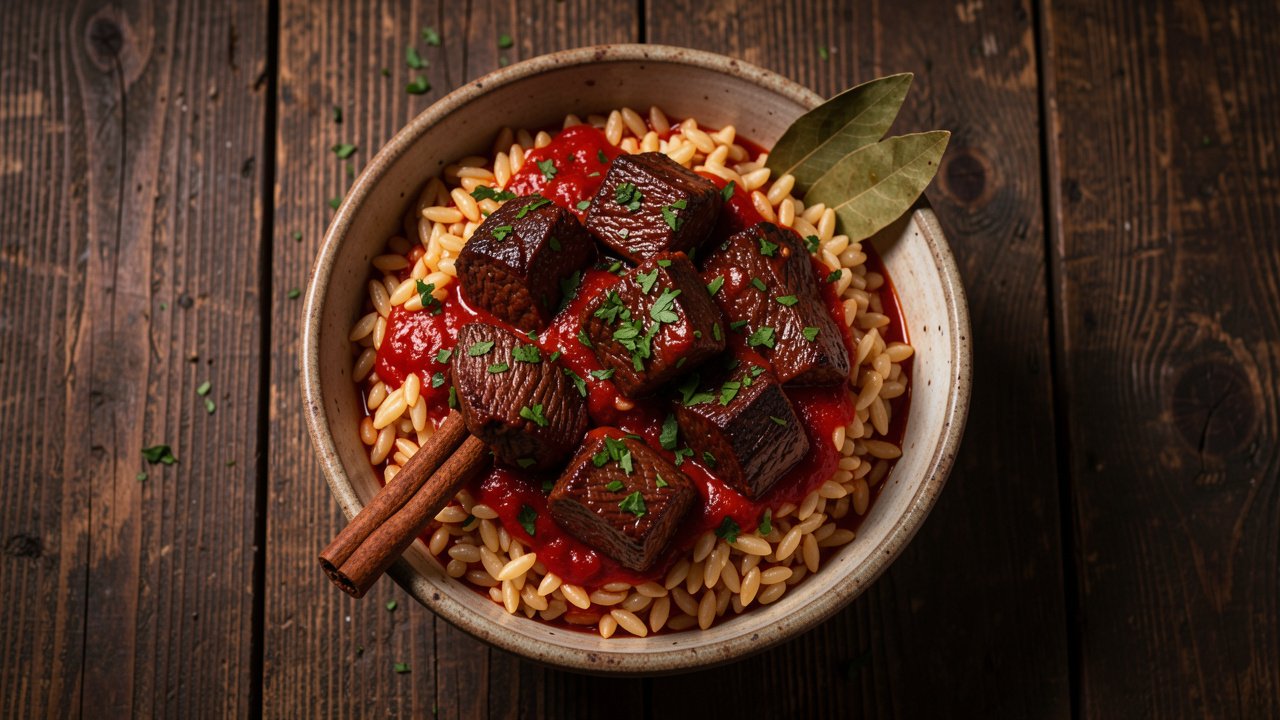
Why This Moschari Kokkinisto Works
Great moschari kokkinisto is really two things done well: beef braised long enough to turn silky, and a tomato sauce built on warm spice rather than heat. Get those two right and everything else takes care of itself. The recipe here browns the beef hard for flavor, then lets it braise gently until the sauce and the meat become one tender, red-stained thing.
It starts with a proper sear. Patting the beef dry and browning it in batches builds a deep, savory crust that dissolves into the sauce as it cooks, giving the whole pot its backbone. Skip that step and you get boiled gray meat in thin tomato water; take the time to brown and you get the roasted depth that makes this dish taste like a celebration.
The spicing is what makes it read as Greek rather than Italian. A cinnamon stick, a few whole cloves, and a couple of bay leaves perfume the tomato with a gentle, almost dessert-like warmth that is the signature of kokkinisto cooking. They season quietly in the background, so the sauce tastes rich and rounded rather than spiced.
And it is forgiving. A long, low braise means you cannot easily overcook it; the beef only gets more tender the longer it sits in the bubbling sauce. Keep the heat gentle, keep the lid mostly on, and come back to a pot of meltingly soft beef in a sauce thick enough to coat a spoon.
Pro observation: Moschari kokkinisto is fully halal as written, with no forbidden ingredients. The sauce gets all of its depth from browned beef, onion, garlic, tomato, and warm whole spices, so you never miss a thing.
Ingredients
Kitchen Measurement Converter
Need to convert an amount while you measure? Pick a category, enter a value, and the result updates instantly.
Ingredient Notes & Substitutions
The Beef
A well-marbled braising cut is what you want: chuck, shoulder, or shin all turn meltingly tender over a long cook. Lean cuts like sirloin stay tough and dry, so avoid them here. Cut the beef into big two-inch chunks so it holds its shape through the braise.
Warm Spices
A cinnamon stick and whole cloves give kokkinisto its signature sweet-savory warmth; use whole spices so you can fish them out later. If you only have ground, use a small pinch of each, added with the tomato, and taste carefully so they do not take over.
Tomatoes & Paste
Crushed tomatoes give a smooth, clingy sauce, while tomato paste deepens the color and adds savory body. Passata or chopped canned tomatoes work too; if your tomatoes taste sharp, a small pinch of sugar rounds the sauce the way Greek cooks often do.
Onion & Broth
Plenty of onion melts into the sauce and sweetens it as it cooks, so do not skimp. Beef broth builds the richest base, but a good vegetable broth keeps it lighter and still works. Add it gradually so the sauce stays thick rather than soupy.
Equipment
- Large heavy pot or Dutch oven
- Lid for the pot
- Tongs for the beef
- Wooden spoon
- Sharp knife and board
- Ladle
Before You Start
1. Pat the beef bone-dry and brown it in batches. Wet or crowded meat steams instead of searing, leaving you with gray chunks and a thin sauce; dry chunks with space between them build the brown crust that gives the whole pot its depth.
2. Keep the whole spices whole and count them in. Drop in the cinnamon stick, four cloves, and two bay leaves as a tally you will reverse at the end, because a stray clove bitten whole at the table is sharp and unpleasant.
3. Set aside two full hours of gentle simmering. Chuck beef only becomes fork-tender after a long, slow braise; rush it on high heat and the meat seizes up tough, so start early and let the pot barely bubble.
Step-by-Step Instructions
Moschari kokkinisto is mostly hands-off once it is simmering, so get your prep done first. Cut and dry the beef, chop the onions, mince the garlic, and measure out the spices so the pot can move from sear to braise without a pause.
Prep the Beef and Aromatics
Cut the beef into large two-inch chunks and pat every piece thoroughly dry with paper towels, then season well with salt and pepper. Finely chop the onions and mince the garlic, and set the cinnamon stick, cloves, and bay leaves within reach so everything is ready before the pot gets hot.
Brown the Beef Hard
Warm the olive oil in a large heavy pot over medium-high heat. Working in batches so the pieces are never crowded, brown the beef on all sides until deeply colored, about 8 minutes per batch. Transfer the browned chunks to a plate; this crust is where most of the sauce’s flavor comes from.

Soften the Onions and Toast the Paste
Lower the heat to medium and add the chopped onions to the same pot with a pinch of salt, cooking 6 to 8 minutes until soft and golden. Stir in the garlic and cook for 1 minute until fragrant, then add the tomato paste and stir it around the pot for another minute so it darkens and loses its raw edge.
Add Tomatoes and Warm Spices
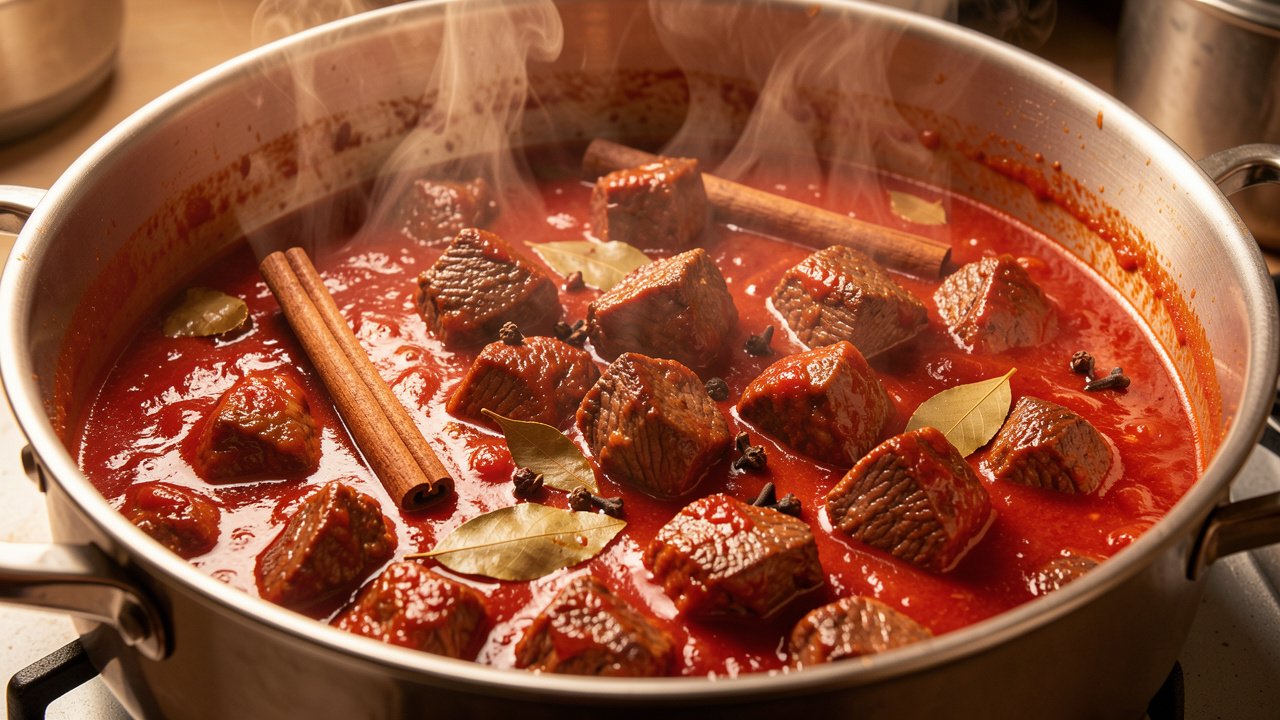
Return the beef and its juices to the pot. Pour in the crushed tomatoes and beef broth, then add the cinnamon stick, cloves, bay leaves, dried oregano, and a good pinch of salt and pepper. Stir, bring to a gentle simmer, and make sure the beef is mostly submerged in the sauce.
Braise Low and Slow
Cover the pot and reduce the heat so the sauce barely bubbles. Braise for about 2 hours, stirring every half hour and adding a splash of broth or water if it looks dry, until the beef is fork-tender and the sauce has thickened and turned glossy. In the last 20 minutes, uncover to let the sauce reduce if it is still thin.
Finish and Serve
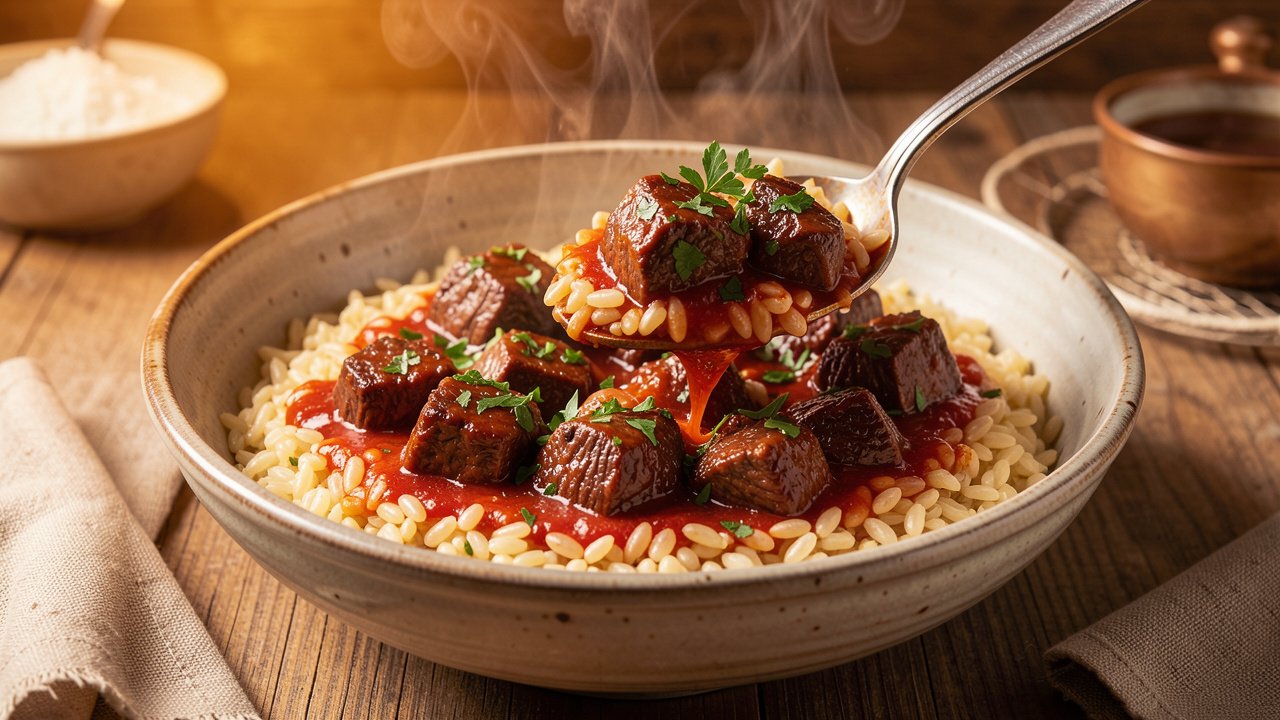
Fish out and discard the cinnamon stick, the four cloves, and the bay leaves. Taste the sauce and adjust the salt, then stir in the chopped parsley. Spoon the beef and plenty of sauce over buttery orzo or potatoes, and serve right away while everything is hot and glossy.
Chef’s Tips From Real Kitchen Testing
Brown the beef in batches, never all at once. Crowding the pot drops the heat and steams the meat gray; a little space and a hot pan build the crust that carries the whole sauce.
Keep the braise at the barest bubble. A hard boil seizes beef up tough and keeps it that way, while a lazy, lid-on simmer is what coaxes chuck into fork-tender softness.
Go easy on the cinnamon and cloves. Their job is a quiet background warmth, not a spiced-cake flavor, so one stick and four cloves for this pot is plenty; you can always add, never remove.
Recipe Variations
Serving Suggestions
- Buttery orzo (manestra) to soak up the sauce
- Creamy mashed or roasted potatoes
- Crumbled feta and a pinch of oregano
- Warm crusty bread for the extra sauce
Nutrition Facts
| Nutrient | Amount per serving |
|---|---|
| Calories | 480 |
| Protein | 45 g |
| Carbohydrates | 20 g |
| Fat | 24 g |
| Saturated Fat | 8 g |
| Fiber | 4 g |
| Sugar | 9 g |
| Sodium | 820 mg |
Values are estimates per serving and vary with the exact cut of beef and brands you use. The figures do not include orzo or potatoes.
Make-Ahead Tips
Moschari kokkinisto is even better made a day ahead. Braise it fully, cool, and refrigerate; overnight the spices settle and the flavor deepens. When you are ready to eat, reheat gently to a simmer, loosen with a splash of broth if needed, and cook the orzo or potatoes fresh to serve alongside.
Storage, Freezing & Reheating
Common Mistakes to Avoid
Troubleshooting
Beef still tough? It simply needs more time. Keep the lid on and let it braise another 20 to 30 minutes at a gentle simmer until a fork slides through without resistance.
Sauce too thin? Uncover the pot for the last 20 minutes so it reduces and concentrates, or stir in an extra spoonful of tomato paste to thicken and deepen it.
Sauce tastes too sharp? Greek cooks often add a small pinch of sugar to balance acidic tomatoes; stir a little in and let it simmer a couple more minutes to round it out.
A Note on Greek Cooking
The name tells you most of what it is: “moschari” means veal or young beef, and “kokkinisto” means “reddened,” the Greek term for any dish cooked down in a tomato sauce. Kokkinisto is less a single recipe than a whole method, applied to beef, rabbit, octopus, and more across the mainland and islands of Greece, with each cook’s sauce set apart by its share of warm spice.
What marks a Greek kokkinisto out from an Italian tomato braise is that quiet thread of cinnamon and clove, a legacy of the eastern Mediterranean spice trade that runs through much of Greek cooking. The dish it is most often confused with is kotopoulo kokkinisto: the same red-tomato braise, but built on chicken and cooked far more quickly, where moschari uses beef and the long, slow braise that tenderizes it.
What has kept moschari kokkinisto on Greek tables for generations is exactly what makes it so welcoming: it is humble, forgiving, and built for a crowd. Brown your beef, let the spiced tomato do its slow work, and spoon it over orzo or potatoes, and you have a Sunday dinner that tastes of a whole afternoon of cooking.