Greek Recipes
Greek Chicken Braised in Cinnamon-Scented Tomato Sauce
Last updated: November 4, 2026
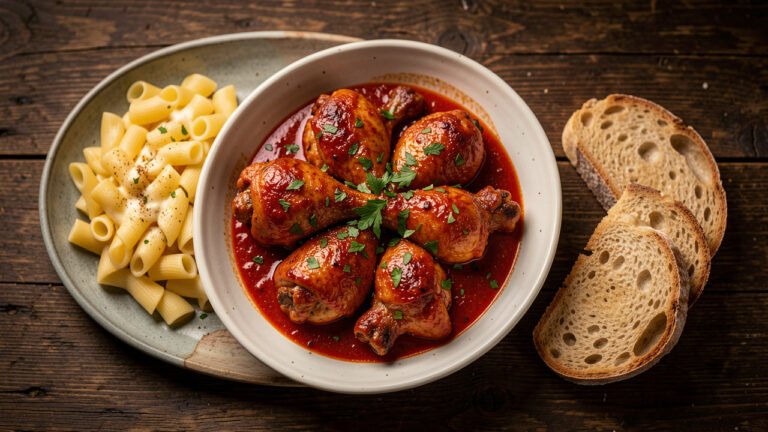
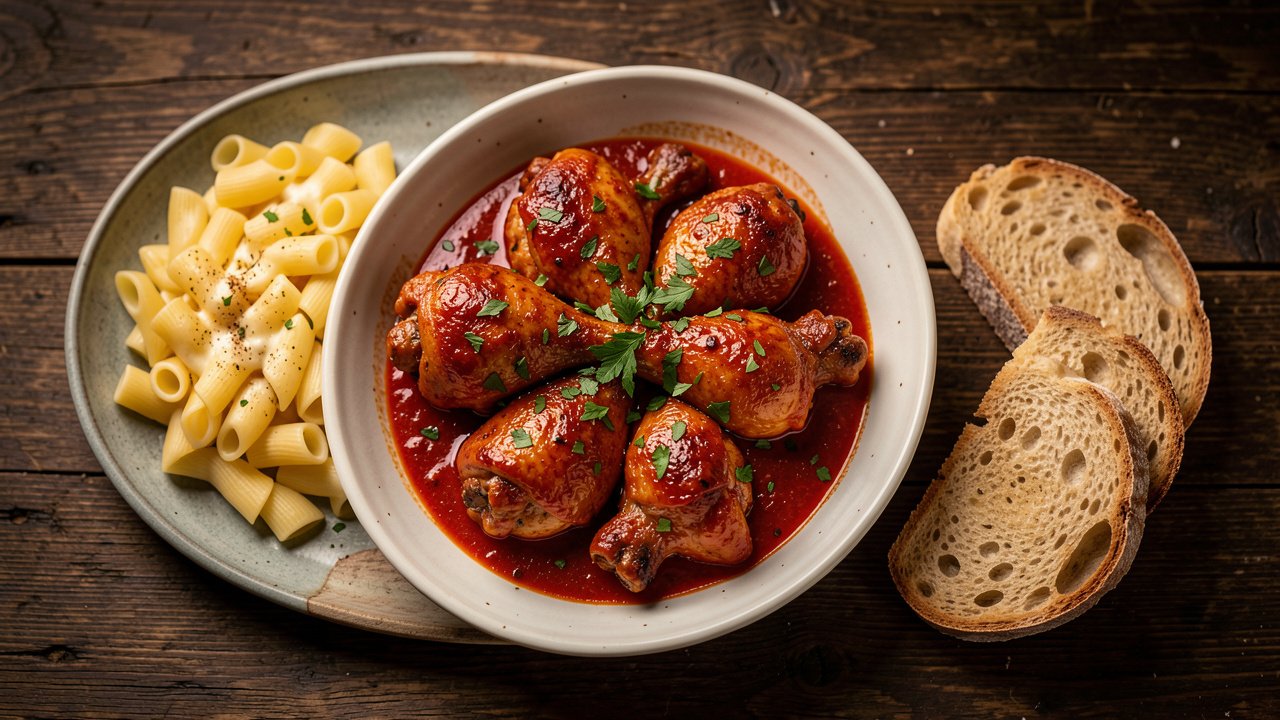
Kotopoulo kokkinisto is Sunday-lunch cooking at its most Greek: a pot of chicken left to braise gently in tomato until the sauce turns thick and glossy and the meat slides off the bone. The word “kokkinisto” means “reddened”, and that red is the whole point, a sauce built on ripe tomato, sweet onion, and a quiet warmth of cinnamon and bay that makes the kitchen smell like a grandmother’s house.
It is honest, unhurried food. You brown the chicken, soften the onion and garlic, then let everything simmer together low and slow while you do something else. The chicken flavors the sauce, the sauce flavors the chicken, and after an hour you have a dish that tastes far more involved than the short list of steps suggests. Serve it over pasta or with potatoes and plenty of bread.
Why This Kotopoulo Kokkinisto Works
Great kokkinisto is really two things done well: chicken browned deeply enough to build flavor, and a tomato sauce cooked long enough to lose its raw sharpness and turn sweet and thick. Get those two right and the dish more or less makes itself. The recipe here browns bone-in chicken for color, then braises it slowly so the sauce reduces and the meat turns meltingly tender.
The base starts the way most good Greek tomato cooking does, with onion softened slowly in olive oil and a generous amount of garlic, then tomato paste stirred in and toasted for a minute to concentrate its sweetness. Crushed tomatoes and a splash of chicken broth make the braising liquid, and a cinnamon stick and bay leaves steep in it, lending the warm, faintly sweet spice note that sets kokkinisto apart from a plain tomato stew.
Using bone-in, skin-on chicken is the heart of the method. The bones enrich the sauce as it simmers, and the meat stays juicy over a long braise where boneless breast would dry out. Browning the skin first leaves fond in the pot, and that browned flavor dissolves into the sauce for real depth.
It is also forgiving and made for a crowd. The chicken is happy to sit in its sauce and only improve, so kokkinisto reheats beautifully and often tastes better the next day. Keep the tomato and cinnamon constant, use whatever bone-in chicken pieces you like, and you will get a rich Sunday pot every single time.
Pro observation: Kotopoulo kokkinisto is fully halal as written, with no forbidden ingredients. Some cooks splash in something extra to deglaze, but this version uses chicken broth instead, and the sauce loses nothing, its depth coming from browned chicken, tomato, and warm spice.
Ingredients
Kitchen Measurement Converter
Need to convert an amount while you measure? Pick a category, enter a value, and the result updates instantly.
Ingredient Notes & Substitutions
Chicken
Bone-in, skin-on thighs and drumsticks are ideal, staying juicy over a long braise and enriching the sauce as they cook. A whole chicken cut into pieces is traditional. Boneless thighs work in a pinch, but reduce the braise time so they do not dry out.
Tomatoes & Paste
Crushed tomatoes give a smooth, thick sauce, while tomato paste deepens the color and adds concentrated sweetness. Passata or a can of whole tomatoes crushed by hand both work. The teaspoon of sugar tames any sharpness in the tomatoes.
Cinnamon & Bay
A whole cinnamon stick steeped in the sauce is the signature of kokkinisto; it is warm and savory, never dessert-sweet. If you only have ground cinnamon, use a small pinch, since it is stronger. A little allspice or a clove can join the bay leaves.
Broth, Not Anything Forbidden
Some old recipes deglaze the pot with a splash of something to lift the browned bits. This version uses chicken broth instead, which keeps the dish fully halal and gives a rich, savory base without any forbidden ingredients. Vegetable broth works too.
Equipment
- Large heavy pot or Dutch oven
- Lid for the pot
- Tongs for turning chicken
- Wooden spoon
- Sharp knife and board
- Ladle
Before You Start
1. Pat the chicken bone-dry before it hits the pot. A wet surface steams instead of browning, so it stays pale and greasy and never builds the fond that gives the sauce its depth. Blot every piece with paper towels and salt it right before searing.
2. Brown in batches, not a crowded single layer. Pack the pot and the pieces release steam that traps them in a lukewarm sweat; leave finger-width gaps so each side gets a real golden crust. Two batches take five extra minutes and pay it back in flavor.
3. Fish the cinnamon stick and bay leaves out before serving. Left in too long the cinnamon turns medicinal and someone always bites a bay leaf. Note where you dropped them so you can lift them out cleanly once the sauce is done.
Step-by-Step Instructions
Kotopoulo kokkinisto is a slow braise, so most of the work is up front and then the pot does the rest. Have the chicken patted dry, the onions and garlic chopped, and the cinnamon and bay within reach before you start, and warm your pasta or potatoes toward the end so everything lands together.
Brown the Chicken
Pat the chicken pieces very dry and season them all over with salt and pepper. Warm 2 tablespoons of the olive oil in a large heavy pot over medium-high heat, then brown the chicken in batches, skin side down first, 3 to 4 minutes a side, until deeply golden. Transfer the pieces to a plate; they will finish cooking in the sauce.
Build the Aromatic Base
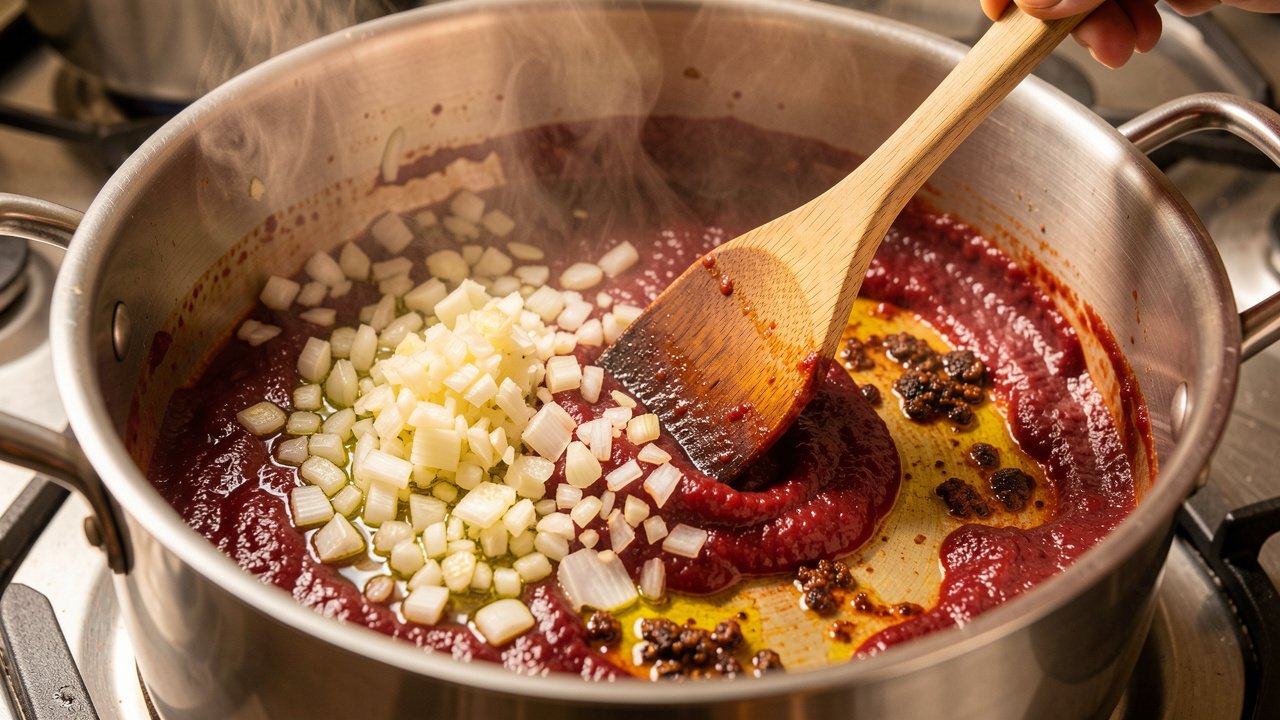
Lower the heat to medium and add the remaining oil to the pot. Add the onions with a pinch of salt and cook 6 to 8 minutes until soft and golden, scraping up the browned bits, then stir in the garlic and cook 1 minute until fragrant. Add the tomato paste and stir it around the pot for another minute so it darkens and loses its raw edge.
Build the Tomato Sauce
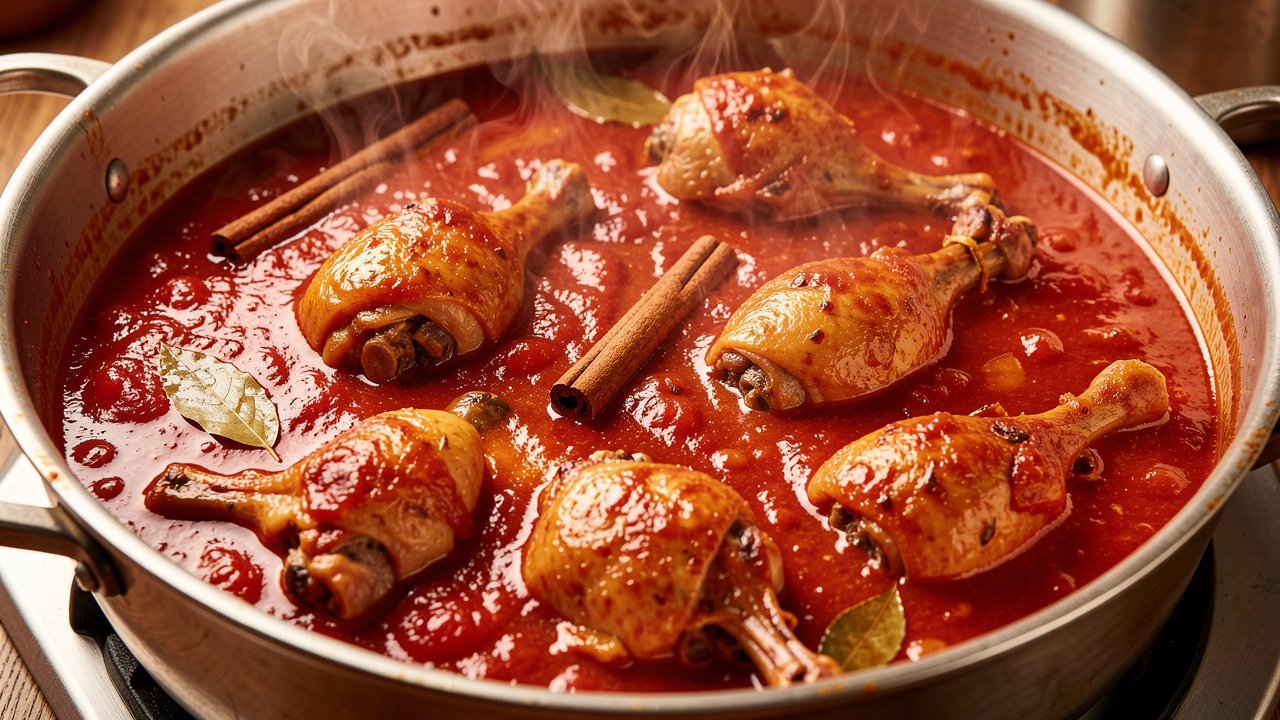
Pour in the chicken broth and scrape up any browned bits from the bottom of the pot. Add the crushed tomatoes, then tuck in the cinnamon stick and bay leaves and stir in the dried oregano, the sugar, and a good pinch of salt and pepper. Bring to a gentle simmer and let it bubble for 5 minutes so the flavors begin to marry.
Braise the Chicken
Return the chicken and any resting juices to the pot, nestling the pieces into the sauce so they are mostly submerged. Cover, lower the heat to a bare simmer, and braise 40 to 45 minutes, turning the pieces once, until the chicken is very tender and pulls easily from the bone. Keep the heat low so the sauce reduces slowly rather than scorching.
Reduce the Sauce
Uncover the pot, lift out the cinnamon stick and bay leaves, and let the sauce simmer 8 to 10 minutes more, spooning it over the chicken now and then, until it thickens and turns glossy and clings to the pieces. Taste and adjust the salt; if it tastes a little sharp, add a small pinch more sugar to round it out.
Finish and Serve
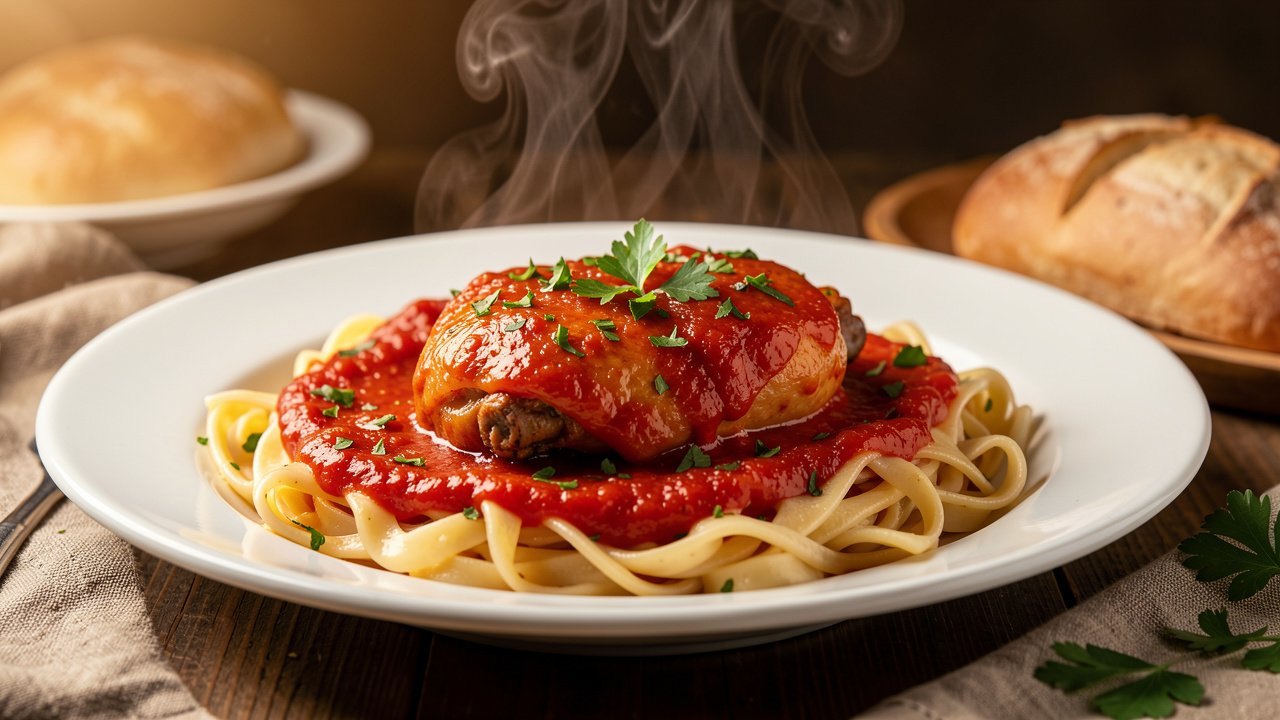
Take the pot off the heat and scatter the chopped parsley over the top. Let it rest a couple of minutes so the sauce settles, then serve the chicken and its thick red sauce over pasta or alongside potatoes, spooning extra sauce over everything. Put bread on the table for wiping the plates clean.
Chef’s Tips From Real Kitchen Testing
Brown the chicken skin properly before it goes into the sauce. That deep golden crust and the fond it leaves behind are the backbone of the flavor, and you cannot get them once the meat is submerged.
Keep the braise at a bare simmer, never a hard boil. Gentle heat lets the meat turn tender and the sauce reduce slowly; a rolling boil dries the chicken and can catch and scorch on the bottom.
Make it a day ahead if you can. Kokkinisto is one of those braises that deepens overnight, the cinnamon and tomato settling into the chicken, so leftovers often taste even better than the first night.
Recipe Variations
Serving Suggestions
- Buttered pasta or spaghetti to catch the sauce
- Roasted or pan-fried potatoes on the side
- Thick crusty bread for wiping the plate clean
- A simple Greek salad with olives and tomato
Nutrition Facts
| Nutrient | Amount per serving |
|---|---|
| Calories | 430 |
| Protein | 38 g |
| Carbohydrates | 20 g |
| Fat | 22 g |
| Saturated Fat | 5 g |
| Fiber | 4 g |
| Sugar | 9 g |
| Sodium | 720 mg |
Values are estimates per serving and vary with the exact cuts and brands you use.
Make-Ahead Tips
Kokkinisto is a natural make-ahead dish. Braise it fully, cool, and refrigerate; the cinnamon and tomato deepen overnight and the flavor is often better the next day. Reheat gently on the stove, adding a splash of broth if the sauce has thickened too much, and cook your pasta or potatoes fresh just before serving.
Storage, Freezing & Reheating
Common Mistakes to Avoid
Troubleshooting
Sauce too thin? Uncover and simmer it a few minutes longer to reduce, or stir in an extra spoonful of tomato paste to thicken and deepen it.
Sauce tastes sharp or acidic? The tomatoes need rounding; add another small pinch of sugar and a little salt, and give it a few more minutes to mellow.
Chicken still tough? It simply needs more time. Cover and keep braising at a low simmer; bone-in pieces turn tender only once the connective tissue has fully softened.
A Note on Greek Cooking
“Kokkinisto” comes from the Greek word for red, and it describes a method rather than a single dish: any meat braised slowly in a red tomato sauce is kokkinisto. Pair it with “kotopoulo”, the Greek word for chicken, and you have this dish by name, chicken reddened in tomato. The same technique gives you the octopus version, octapodi kokkinisto, which uses the identical red-tomato braise with octopus in place of chicken.
It sits in a big family of Greek tomato-braised comfort food. It shares its soul with youvetsi, the tomato braise baked with orzo, and with stuffed gemista, where tomatoes and peppers are filled with herbed rice. What sets kokkinisto apart from a plain tomato stew is that warm whisper of cinnamon and bay, a signature of Greek red sauces that carries over into moussaka and pastitsio too.
What has kept kokkinisto on Greek tables for generations is exactly what makes it easy: it is forgiving, it feeds a crowd, and it only improves with time. Brown your chicken, build a good tomato sauce, let the cinnamon do its quiet work, and put bread and pasta on the table, and you have a Sunday lunch that tastes of a Greek kitchen.