Greek Recipes
Slow-Braised Coastal Classic
Last updated: September 29, 2026
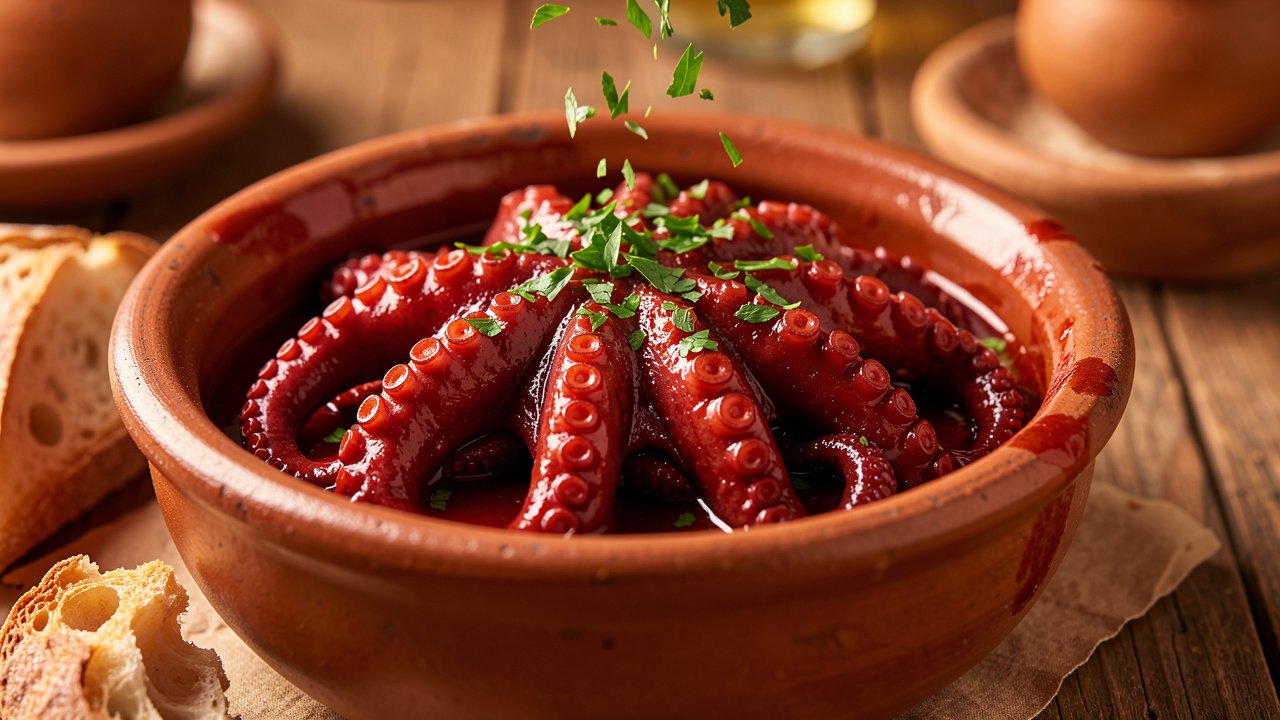
I treat this as a patient dish, not a fast one. Octopus turns rubbery when it is rushed, but with gentle heat and a little time it becomes meltingly tender in a deep, dark tomato sauce. My one firm rule is simple. Never add water too early, or you wash the flavor straight out.
Why This Octapodi Kokkinisto Works
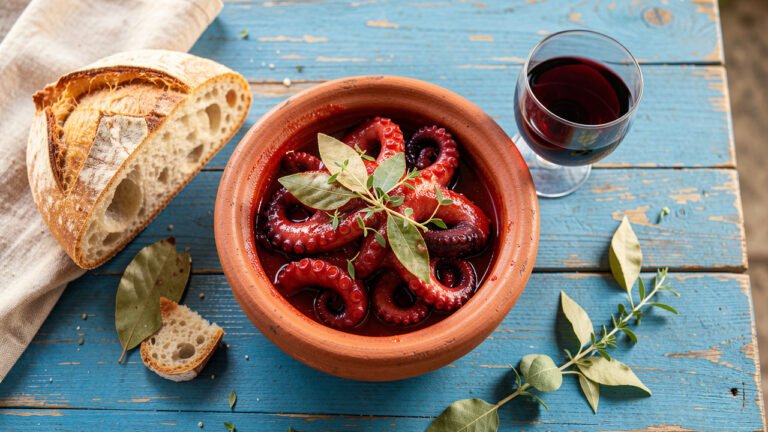
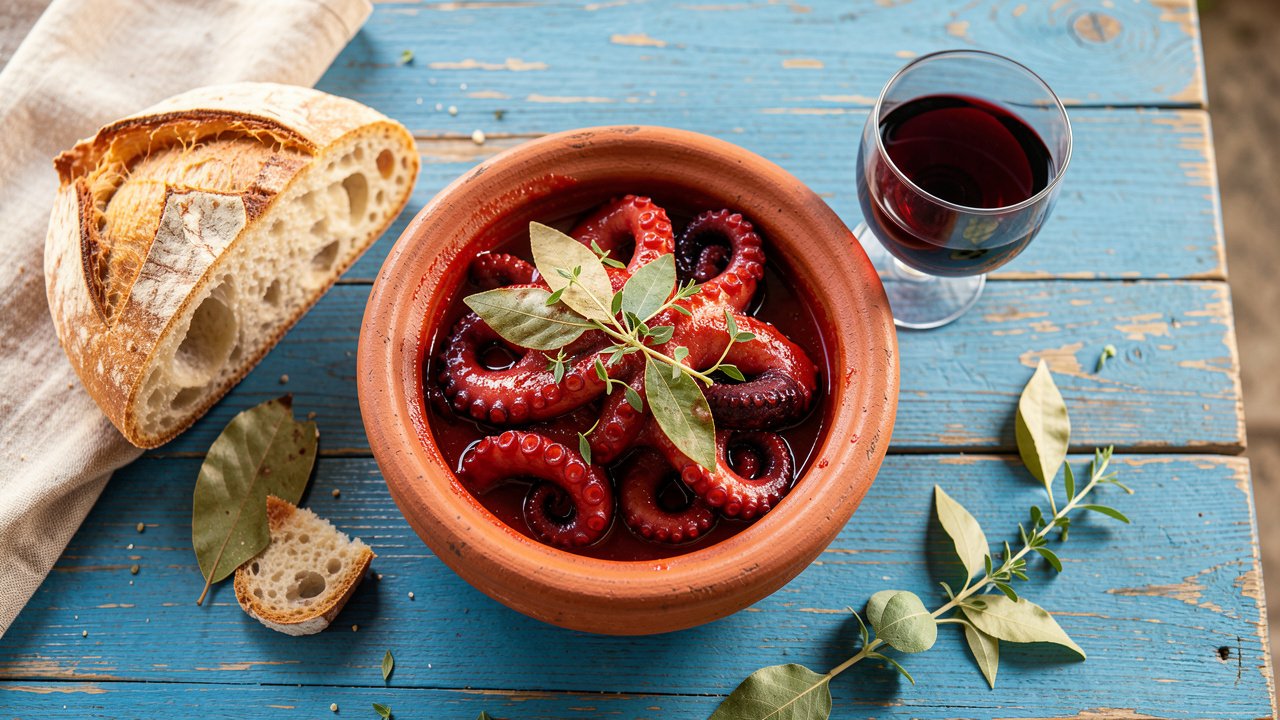
The word kokkinisto means “reddened,” and it describes any Greek dish braised in a rich, reddened tomato sauce. With octopus, I lean on that slow braise for more than flavor. It is the surest way I know to break down the tough muscle so the tentacles turn silky instead of chewy.
What surprises most home cooks is how much moisture octopus holds. Set it in a dry pot over low heat and it slowly gives up a pool of its own briny liquor. I treat that liquid as the first real layer of the sauce, since it carries far more flavor than any water could.
A savory broth does the heavy lifting on taste. It cooks down with the tomato into something dark, glossy, and faintly sweet, the kind of sauce I want to mop up with bread. A splash of red wine vinegar keeps it bright, while bay leaves and dried oregano keep it firmly Greek rather than just Mediterranean.
Best of all, I find the dish forgiving once you commit to low heat. There is no sear to nail and no sauce to emulsify. You mostly leave it alone, check it now and then, and let time do the work.
Pro observation: The octopus is done when a fork slides into the thickest part of a tentacle with almost no resistance. If it still feels springy or squeaky, it simply needs more time, not more heat.
Ingredients
Kitchen Measurement Converter
Quickly convert between common cooking measurements without leaving the recipe. Pick a category, enter a value, and the result updates instantly.
Ingredient Notes & Substitutions
Octopus
I buy a whole octopus around 2 pounds, and either fresh or frozen works for me. Frozen is often the more tender choice, since the freeze-and-thaw cycle helps rupture the tough muscle fibers before you ever start cooking. Ask the fishmonger to clean it, or rinse it well and pull out the beak and ink sac yourself.
Broth and Vinegar
I use a good seafood or vegetable broth for savory depth, plus a splash of red wine vinegar for a bright, tangy edge. Skip overly salty boxed stock, and taste as you go. The broth reduces right down, so its quality shows up plainly in the finished sauce.
Tomatoes
Crushed canned tomatoes give me a smooth, reliable base all year. A spoon of tomato paste deepens the color and adds real body. In summer, I switch to grated ripe fresh tomatoes when I can get them.
Aromatics
Bay leaves, dried oregano, and a small piece of cinnamon are my classic Greek trio. I like a splash of red wine vinegar at the end for brightness. Go easy on salt, since octopus is already briny on its own.
Equipment
- Wide heavy pot with lid
- Wooden spoon
- Sharp knife and board
- Kitchen tongs
- Fork for testing doneness
- Ladle
Before You Start
1. Clean the octopus well. Rinse it under cold water, remove the beak from the center of the tentacles, and cut away the eyes and any innards. Pat it dry so it browns rather than steams later.
2. Cut it into big pieces. Separate the tentacles and halve the head. The pieces shrink a lot as they cook, so keep them large or they can turn stringy.
3. Clear your schedule. This is a slow braise. Once it is simmering, you only need to check it every 20 minutes, but plan for roughly an hour and a half at the stove.
Step-by-Step Instructions
Sweat the Octopus Dry
Place the cleaned octopus pieces in a dry heavy pot over medium-low heat, with no oil and no water yet. Cover and let them cook 10 to 12 minutes. You will hear a gentle bubbling as the octopus releases a surprising amount of pinkish liquid. This is the flavor base, so do not pour it away.
Add Oil and Onion
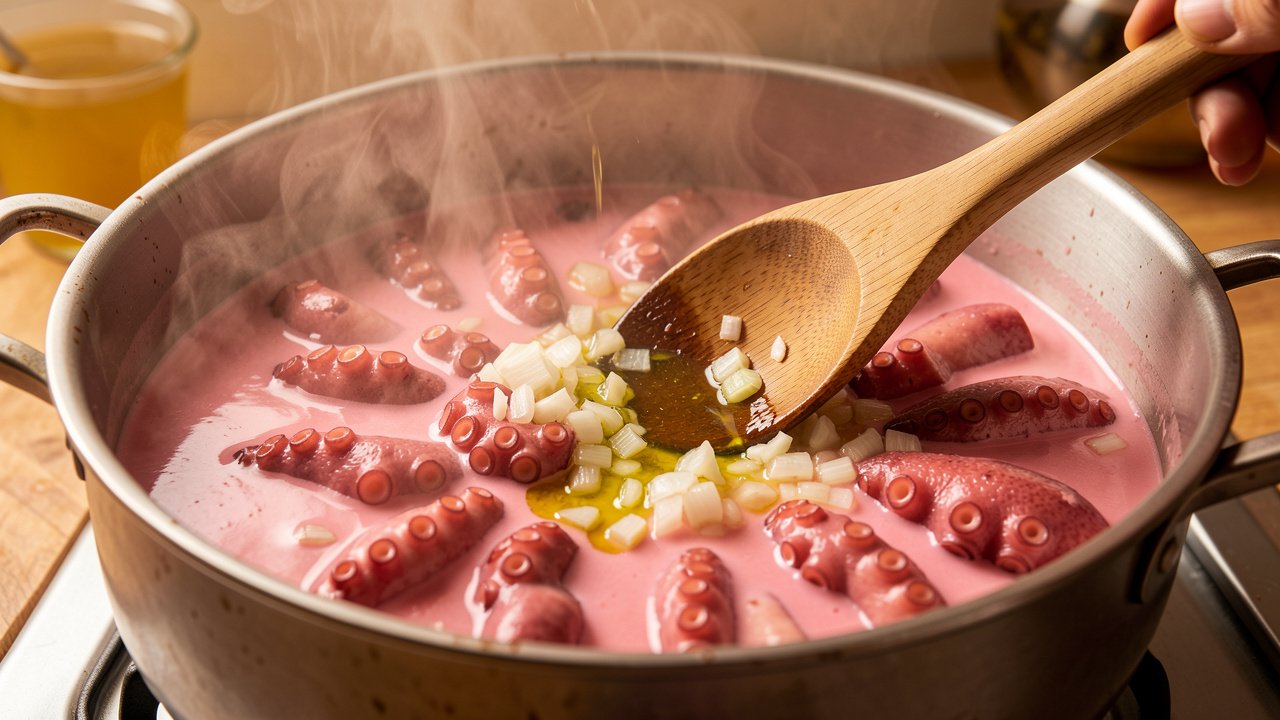
Push the octopus to one side, pour in the olive oil, and add the chopped onion. Cook 5 to 6 minutes until the onion softens and turns translucent in the octopus liquor. Stir in the garlic and cook one more minute, until it smells sweet and fragrant rather than raw.
Pour in the Broth
Raise the heat to medium and pour in the seafood or vegetable broth along with the red wine vinegar. Let it bubble hard for 2 to 3 minutes so the sharp edge softens and the sauce mellows. Scrape the bottom of the pot with your spoon to lift any tasty browned bits into the liquid.
Build the Tomato Sauce
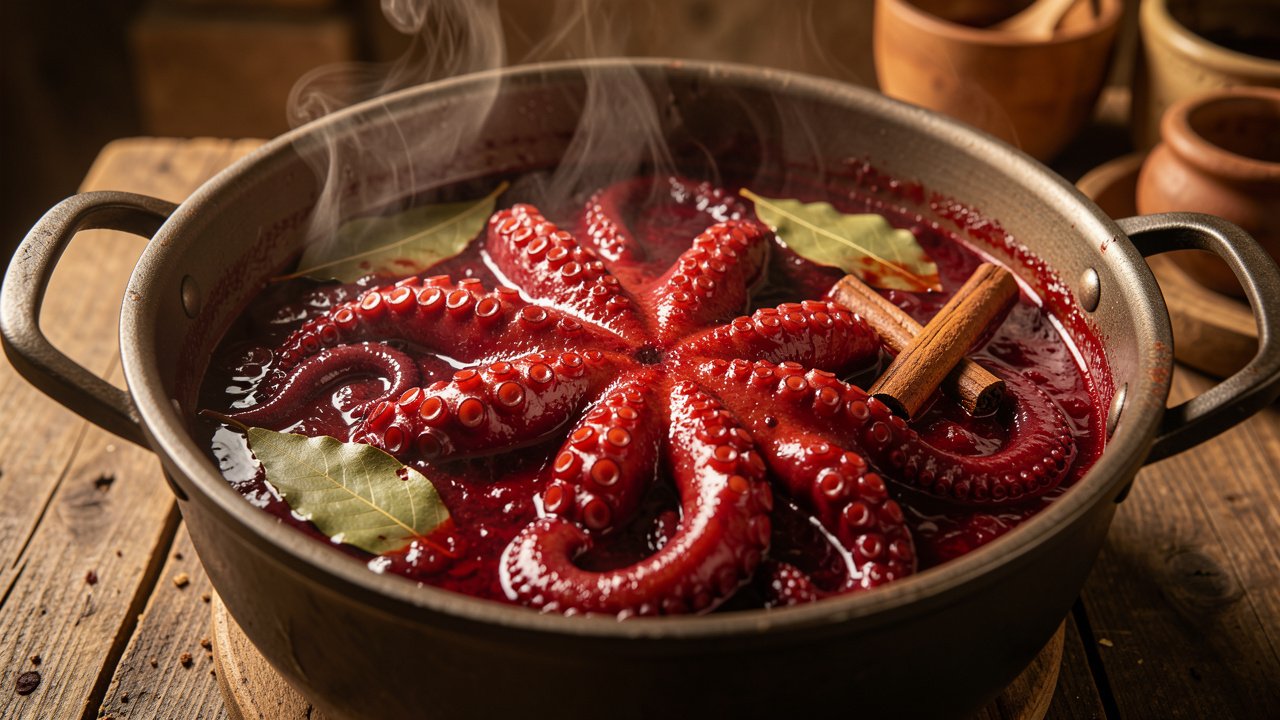
Stir in the tomato paste and let it darken for a minute, then add the crushed tomatoes, bay leaves, oregano, cinnamon, and a good grind of black pepper. Bring it to a simmer. The pot should smell deeply savory now, with broth and tomato mingling together.
Braise Low and Slow
Lower the heat to a bare simmer and partly cover the pot. Cook 60 to 90 minutes, stirring every 20 minutes so nothing catches on the bottom. If the sauce reduces too far before the octopus is tender, add a splash of warm water. Test with a fork; the tentacles should feel soft, not springy.
Rest, Thicken, and Serve
Once the octopus is tender, uncover and let the sauce reduce for a final few minutes until it clings to the pieces and the oil glistens on top. Taste and adjust with a pinch of salt or a splash of red wine vinegar. Turn off the heat, let it rest 10 minutes, then scatter with parsley and serve.
Chef’s Tips From Real Kitchen Testing
When I start with fresh octopus, I freeze it overnight and thaw it fully before cooking. That single freeze-thaw cycle gets me noticeably more tender tentacles with less time at the stove.
I hold the heat at a lazy simmer and never let it reach a rolling boil. Hard bubbling tightens octopus and can make it seize, so patient beats fast every time here.
I cook this a day ahead whenever my schedule allows. Like most braises, it eats even better after a night in the fridge, once the sauce and octopus settle into each other.
Recipe Variations
Serving Suggestions
- Crusty bread to soak up the sauce
- Steamed white rice or buttery orzo
- A simple horiatiki Greek salad
- A glass of sparkling water with lemon
Nutrition Facts
Values are estimates per serving of octopus and sauce, without bread or rice, and vary with the size of the octopus.
Make-Ahead Tips
This dish is built for making ahead, so I plan for it. Braise it fully, cool it, and keep it covered in the fridge until you are ready to eat. When you reheat, warm it slowly on the stove over low heat with a splash of water, since the sauce firms up as it sits. I stir the fresh parsley in only at serving time, so it stays green and lively.
Storage, Freezing & Reheating
Common Mistakes to Avoid
Troubleshooting
Octopus still chewy? It is undercooked, not overcooked. Return it to a low simmer and give it another 20 to 30 minutes until a fork slides in easily.
Sauce too thin? Uncover the pot and simmer to reduce, or lift the octopus out and boil the sauce down before returning it.
Tastes too sharp? The vinegar may need more time to mellow. Simmer a little longer, and balance with a pinch of sugar.
A Note on Greek Coastal Cooking
To me, octapodi kokkinisto tastes of the tavernas along the Greek islands and coast, where octopus is sun-dried and then grilled, stewed, or simmered into red sauces like this one. It is a favorite during Lent, when many Greeks skip meat but still eat seafood, and it sits comfortably in the tomato-and-olive-oil heart of the region. If you love these flavors, explore the role of tomatoes in the Mediterranean diet, browse more tomato sauce recipes, or try our spicy tomato shrimp pasta for another seafood-and-tomato pairing.