Greek Recipes
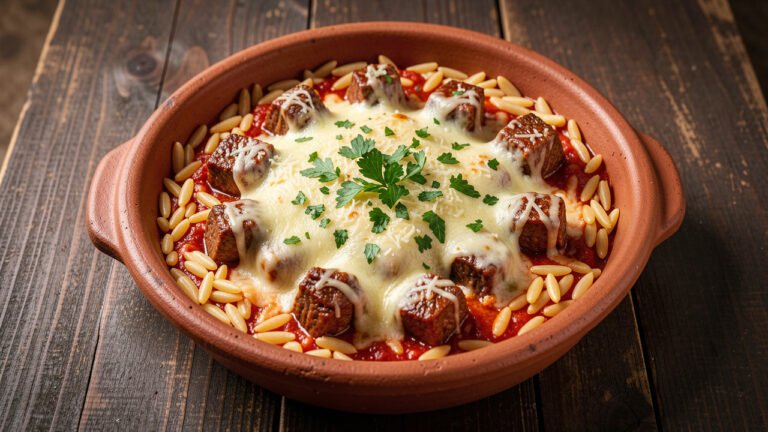
Baked Beef or Lamb with Orzo
Youvetsi is the dish I make when the weather turns and everyone wants something warm and generous on the table. The meat goes meltingly tender in the slow braise, and the orzo bakes right in the same pot, soaking up every bit of the spiced tomato sauce so nothing is wasted. It tastes like it took all day, even though most of that time is hands-off.
The first time I made it I cooked the orzo separately and stirred it in at the end, which felt safer. It was fine, but it was not youvetsi. The magic is in baking the raw orzo directly in the sauce, so each grain turns plump and glossy and carries the flavor of the braise. Once I understood that, the dish clicked.
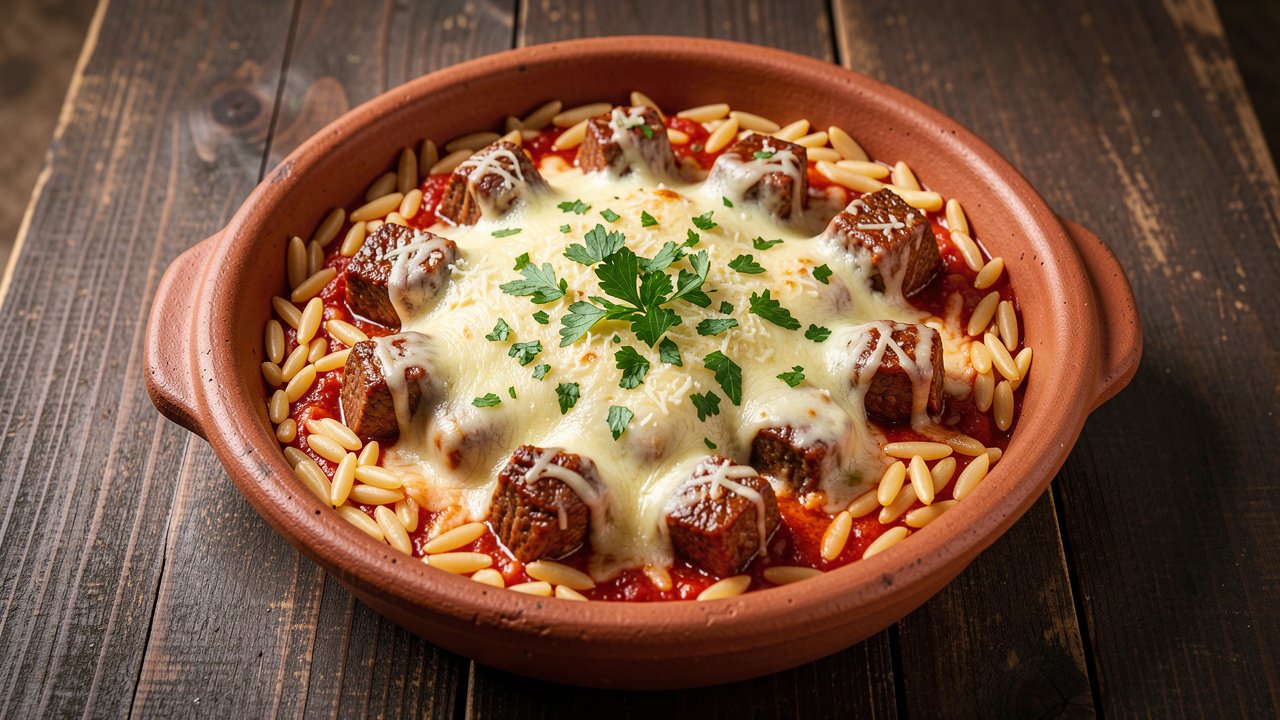
Why This Greek Youvetsi Works
Youvetsi rewards patience with almost no fuss. The meat is browned first to build a savory crust, then it braises gently in a tomato sauce warmed with cinnamon until it is fork-tender. That slow simmer does two jobs at once: it softens tougher cuts of beef or lamb, and it builds a deep, rounded sauce that the orzo will later drink up. Nothing here is complicated; it just needs time and a low oven.
The cinnamon is the detail that makes people ask what the secret is. Used with a light hand, it does not read as sweet or dessert-like. Instead it adds a warm, almost floral background note that makes the tomato taste richer and the meat taste more savory. This quiet use of warm spice in savory braises is a hallmark of Greek home cooking.
Baking the raw orzo in the sauce is the real technique. As the little rice-shaped pasta cooks, it releases starch that thickens the sauce and, in return, absorbs all that cinnamon-tomato flavor. You end up with plump, glossy grains that taste of the whole dish rather than plain boiled pasta stirred in at the end.
Finally, the grated cheese on top ties it together. A hard, salty Greek cheese like kefalotyri melts into a savory crown, but a good aged Parmesan works beautifully too. It adds a final layer of umami and a little richness that makes each spoonful feel complete.
Pro observation: The braise is ready for the orzo when the sauce has reduced enough to coat the back of a spoon and the meat pulls apart easily with light pressure. If it still looks thin and watery, give it another ten minutes uncovered before the pasta goes in.
Ingredients
Kitchen Measurement Converter
Quickly convert between common cooking measurements without leaving the recipe. Pick a category, enter a value, and the result updates instantly.
Ingredient Notes & Substitutions
Beef or Lamb
Use a well-marbled stewing cut of halal beef, such as chuck or shoulder, or halal lamb shoulder for a richer flavor. Both go tender with slow braising. Cut into even 1 to 1.5 inch cubes so they cook at the same rate.
Orzo (Kritharaki)
Orzo, called kritharaki in Greek, is a small rice-shaped pasta. Do not swap in actual rice, which cooks differently. If you cannot find orzo, a small pasta like ditalini works, though the texture changes slightly.
Cinnamon & Spice
Ground cinnamon and allspice give youvetsi its warm signature. A cinnamon stick added to the braise works too; just fish it out before baking. Keep the spicing gentle so it supports the meat rather than dominating it.
Cheese
Kefalotyri is the traditional hard, salty topping, but aged Parmesan or a firm pecorino-style cheese are excellent stand-ins. Grate it fresh for the best melt and the sharpest flavor over the finished dish.
Equipment
- Oven-proof pot or Dutch oven
- Wooden spoon
- Sharp knife and board
- Box grater
- Measuring cups
- Foil for covering
Before You Start
1. Pat the meat dry. Dry cubes brown far better than wet ones. Blot them with paper towels before they hit the hot oil, and do not crowd the pot or the meat will steam instead of sear.
2. Warm your broth. Have the beef broth hot or at least warm before it goes in. Adding cold liquid to a hot braise slows everything down and can toughen the meat.
3. Measure the orzo carefully. The orzo-to-liquid ratio is what makes or breaks the texture, so measure both the pasta and the broth rather than eyeballing them.
Meat safety note: Keep raw halal beef or lamb refrigerated until you are ready to cook, and wash hands, boards, and knives well after handling it. Brown the meat thoroughly, and braise until it is fork-tender and cooked all the way through, reaching an internal temperature of at least 145F for whole cuts before the long simmer finishes it to tender. Refrigerate leftovers within two hours.
Step-by-Step Instructions
Brown the Meat
Pat the beef or lamb cubes dry and season with some of the salt and pepper. Heat the olive oil in an oven-proof pot over medium-high heat. Working in batches so the pot is not crowded, brown the meat on all sides until it has a deep golden crust, about 6 to 8 minutes per batch. Transfer the browned meat to a plate and set it aside.
Build the Cinnamon-Tomato Sauce
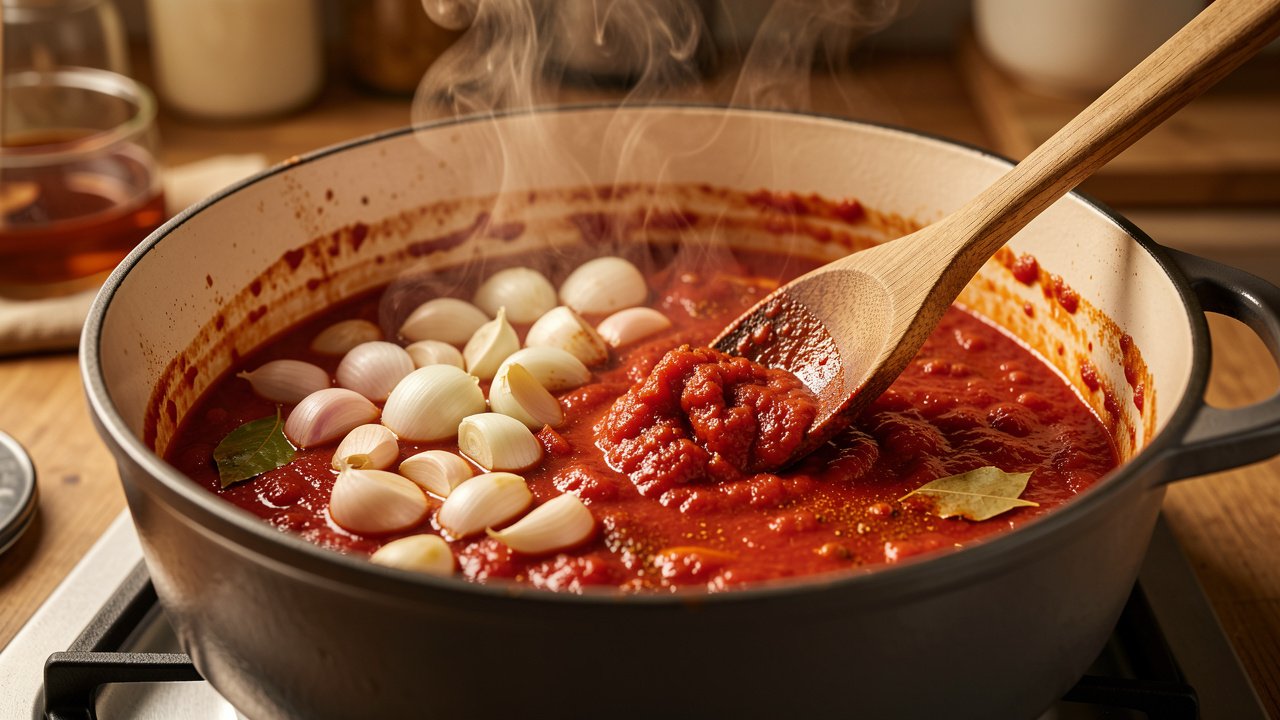
Lower the heat to medium and add the chopped onion to the same pot. Cook 5 to 6 minutes until soft, scraping up the browned bits from the bottom. Stir in the garlic and cook 1 minute, then add the tomato paste and let it darken for a minute. Add the crushed tomatoes, cinnamon, allspice, bay leaf, sugar, and the remaining salt and pepper, and stir into a fragrant, deep red sauce.
Braise Low and Slow
Return the browned meat and any juices to the pot. Pour in 2 cups of the beef broth, stir, and bring to a gentle simmer. Cover and cook on low heat, or in a 325F oven, for about 1 hour and 15 minutes, until the meat is fork-tender and the sauce has thickened. Stir occasionally and add a splash of broth if it looks dry. Remove the bay leaf.
Stir in the Orzo
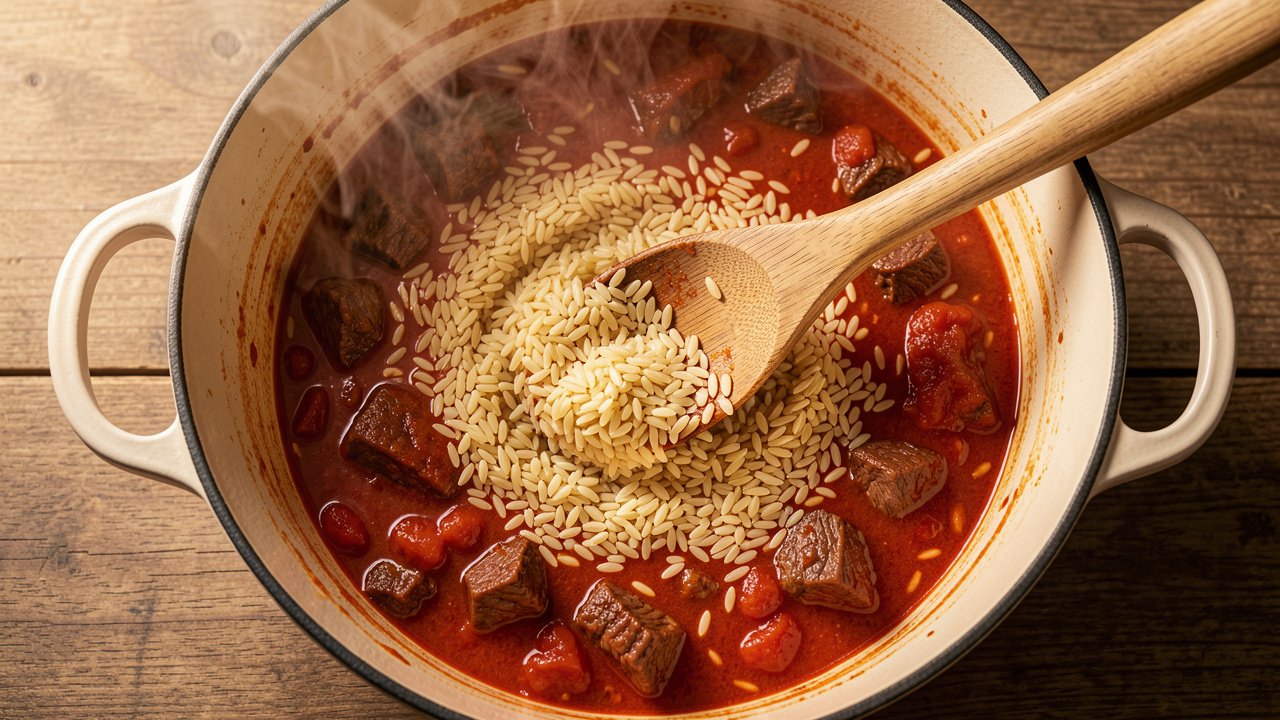
Raise the oven to 375F. Pour the remaining 2 cups of hot broth into the pot and stir in the raw orzo, making sure the pasta is submerged in the liquid and spread evenly. Taste the liquid now and adjust the salt, because this is the last easy chance to season before the orzo drinks it all up.
Bake Until the Orzo is Plump
Cover the pot and bake for 15 minutes, then uncover and bake 10 to 15 minutes more, until the orzo is tender and has absorbed most of the liquid. Stir once halfway through so the pasta cooks evenly and does not stick to the bottom. The finished texture should be moist and saucy, not dry, so pull it while it still looks a little loose.
Top with Cheese and Rest
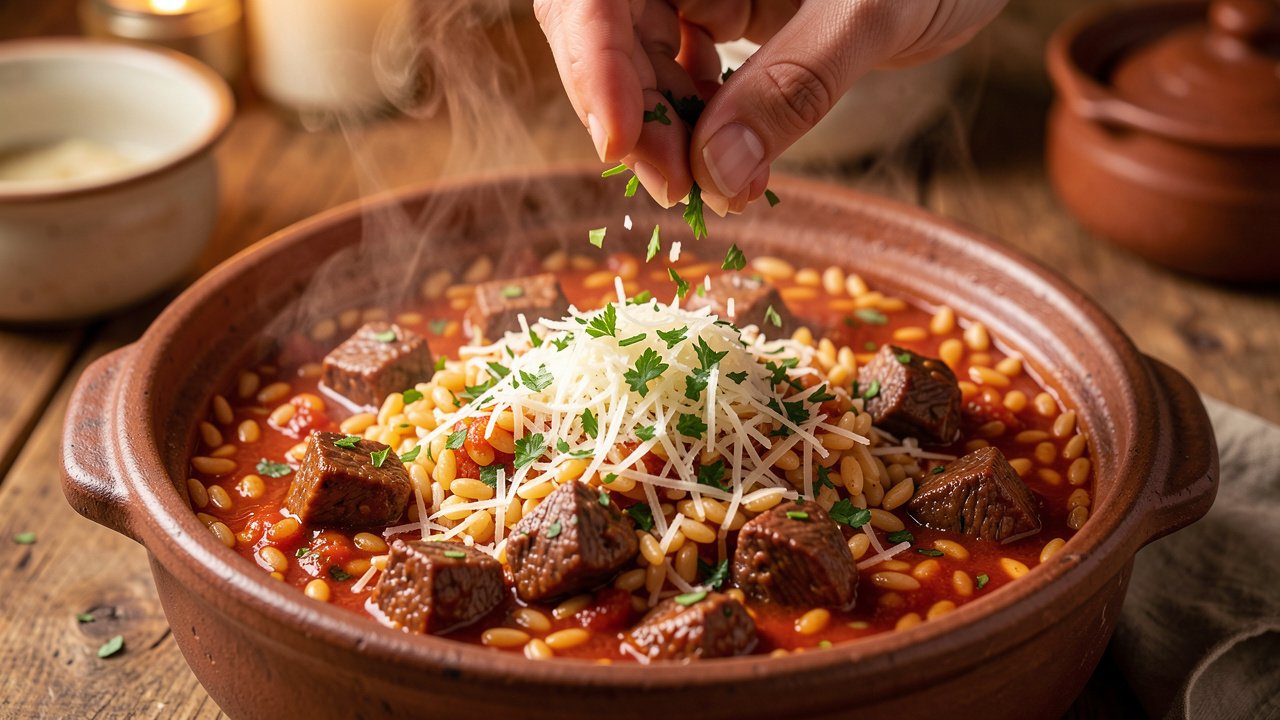
Scatter the grated kefalotyri or Parmesan generously over the top and return the pot to the oven, uncovered, for 3 to 5 minutes until the cheese softens and melts. Take it out and let it rest 5 to 10 minutes; the orzo firms up and the sauce settles. Shower with fresh parsley and serve hot from the pot.
Chef’s Tips From Real Kitchen Testing
Pull the orzo while it still looks slightly loose and saucy. It keeps absorbing liquid as it rests, and a dish that looks perfect in the oven often turns stodgy on the plate.
Brown the meat in patient batches. A hard sear on dry cubes is the single biggest flavor builder in the whole dish, so resist the urge to crowd the pot.
Keep the cinnamon restrained. A single teaspoon warms the sauce without making it taste sweet; too much tips the dish toward dessert and overwhelms the meat.
Recipe Variations
Serving Suggestions
- A crisp Greek village salad with cucumber and olives
- Warm crusty bread to mop up the sauce
- A spoonful of thick strained yogurt on the side
- Extra grated cheese and fresh parsley to finish
Nutrition Facts
| Nutrient | Amount per serving |
|---|---|
| Calories | 520 |
| Protein | 34 g |
| Carbohydrates | 42 g |
| Fat | 22 g |
| Saturated Fat | 8 g |
| Fiber | 4 g |
| Sugar | 7 g |
| Sodium | 680 mg |
Values are estimates per serving and vary with the exact cut of meat, cheese, and brands you use.
Make-Ahead Tips
The braise itself is a wonderful make-ahead component. Cook the meat in the cinnamon-tomato sauce a day in advance, cool, and refrigerate; the flavor only deepens overnight. When you are ready to serve, bring the braise back to a simmer, stir in the orzo and hot broth, and finish the baking step fresh. This keeps the pasta from turning soft and lets you get dinner on the table in about half an hour.
Storage, Freezing & Reheating
Common Mistakes to Avoid
Troubleshooting
Orzo came out mushy? It baked too long or had too much liquid. Next time reduce the braise a little more before adding the pasta and pull it from the oven while it still looks loose.
Meat still chewy? It needed more braising time. Return it to a low oven with a splash of broth and cook until it yields easily; tough cuts simply take longer.
Dish tastes flat? It usually wants more salt and a small pinch more cinnamon or a squeeze of lemon at the table to brighten the whole pot.
A Note on Greek Cooking
Youvetsi takes its name from the earthenware dish it was traditionally baked in, and it belongs to a wider Greek love of baked one-pot meals that feed a crowd. The gentle use of cinnamon and warm spice in a savory tomato braise runs through many Greek classics, a quiet reminder of the country’s long crossroads of Mediterranean and Eastern flavors. Kritharaki, the rice-shaped orzo at its heart, turns the dish into something between a stew and a bake, hearty enough to stand alone. If you love spiced tomato dishes, browse our full library of tomato recipes for more comforting ideas built on the same ripe, savory base.
Frequently Asked Questions
More Tomato Recipes to Try
Last updated: September 29, 2026