Italian Recipes
Oven-Roasted Tomato Chicken Parmesan Recipe Crisp Crust, Roasted Tomato Sauce
Last updated: September 29, 2026
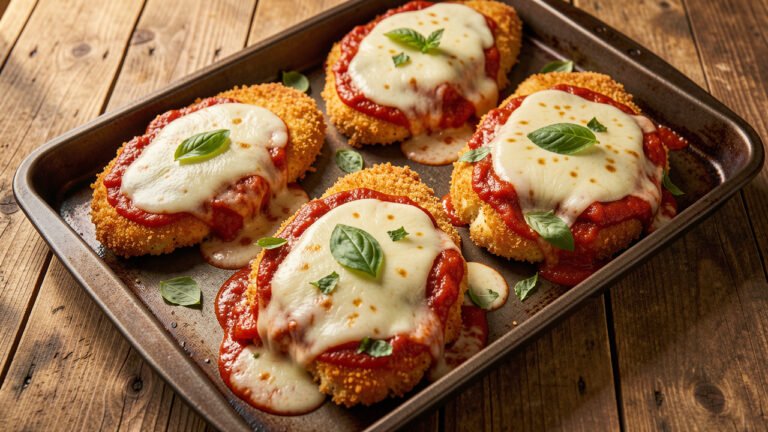
Every soggy chicken parm I have eaten failed the same way: too much wet sauce, spread edge to edge, sitting under a long bake. Roasting the tomatoes first fixes half of that, because roasting drives off water and leaves you with a sauce that clings instead of soaks. The rest is restraint at the assembly stage.
Why Oven-Roasted Tomatoes Change This Dish
Canned tomatoes carry a lot of packing liquid. Even after you simmer them, the sauce holds enough water to steam a breaded crust from underneath within minutes. Roasted tomatoes go the other direction. Forty-five minutes at 400 F cooks off maybe a third of their weight in water and caramelizes the sugars at the cut edges, so what you scrape off the pan is already halfway to a sauce.
Thickness is the practical payoff. Roasted tomatoes also lose the tinny sharpness canned ones have and turn sweet and slightly smoky, so the sauce needs no long reduction to taste deep. A spoonful of roasted tomato sauce sits on a cutlet in a mound and holds its shape. A spoonful of canned sauce spreads, runs to the edges, and finds every seam in the breading. Once liquid gets under the crust, nothing in the oven brings it back.
The chicken side matters just as much. A breast that tapers from one inch down to a quarter inch cannot cook evenly, so you either burn the crust waiting for the thick end or serve the thin end dry. Pounding to a flat half inch means the whole cutlet hits 165 F at the same moment the breading turns deep golden.
Pro observation: Roasted tomatoes are ready when the edges have shrunk back and browned and the skins have collapsed and wrinkled. If they still look plump and glossy, they are still full of water. Give them another 10 minutes.
Ingredients
Kitchen Measurement Converter
Quickly convert between common cooking measurements without leaving the recipe. Pick a category, enter a value, and the result updates instantly.
Ingredient Notes & Substitutions
Tomatoes
Plum or Roma tomatoes roast best: thick walls, few seeds. Round slicing tomatoes work but release more juice, so drain the pan liquid before blending.
Chicken
Two large breasts split horizontally give four cutlets. Store-bought thin cutlets save a step but are often uneven, so pound the thick spots flat anyway.
Panko and Parmesan
Panko stays crisp longer than fine dry breadcrumbs because the flakes are larger and hold less oil. Grate the Parmesan finely so it disappears into the crumbs instead of clumping into patches that scorch.
Mozzarella
Use low-moisture shredded mozzarella. Fresh mozzarella tastes better on its own but leaks whey as it melts, and that whey is exactly the liquid you spent an hour roasting out of the tomatoes.
Equipment
- Rimmed sheet pan
- Wire cooling rack
- Meat mallet or heavy pan
- Wide skillet
- Three shallow bowls
- Instant-read thermometer
Before You Start
1. Roast the tomatoes first, everything else after. The roast is the long part and it is completely hands-off, so pound and bread the chicken while the pan is in the oven.
2. Set the rack up before you fry. Have a wire rack sitting inside or over a sheet pan and ready on the counter. You will not have time to find one with a hot cutlet in your tongs.
3. Get a thermometer out. Crust color tells you nothing about the inside on a fried cutlet. The only reliable read is 165 F in the thickest part.
Step-by-Step Instructions
Roast the Tomatoes
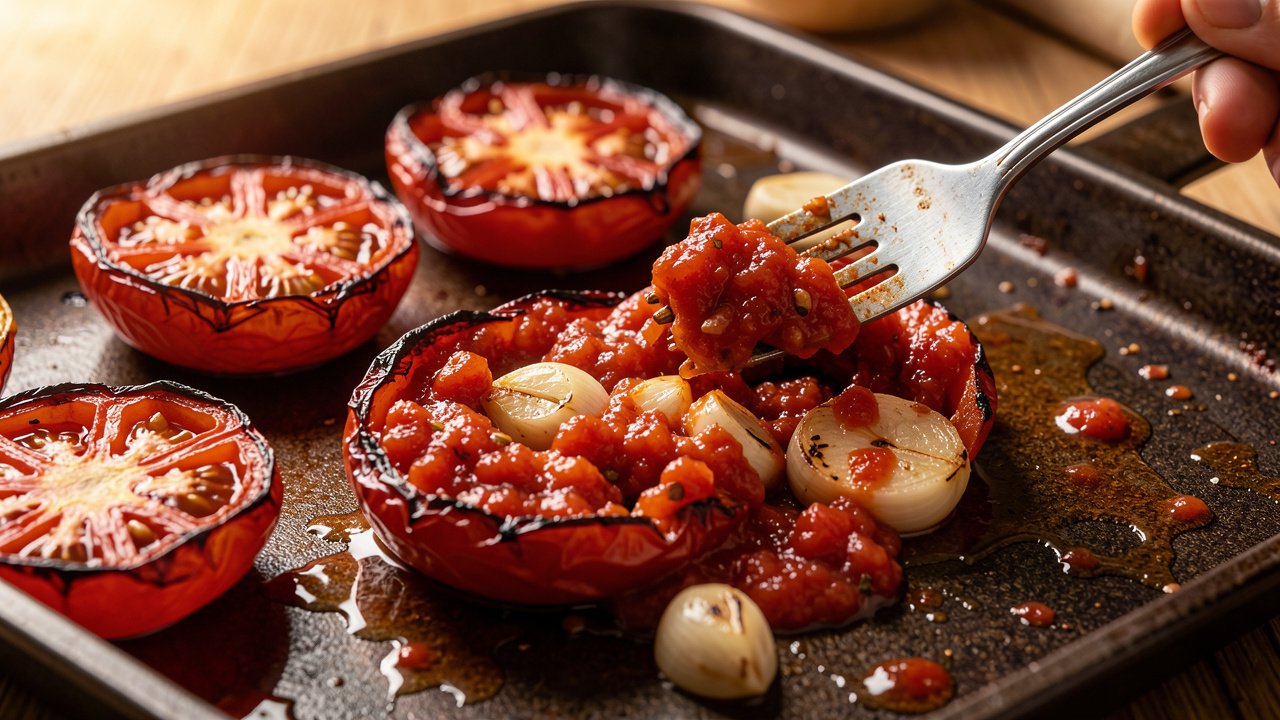
Heat the oven to 400 F. Halve the tomatoes lengthwise and lay them cut side up on a rimmed sheet pan with the garlic cloves. Drizzle with the olive oil, sprinkle with 1 teaspoon salt and the oregano, and roast 45 minutes. They are done when the halves have shrunk, the skins are wrinkled and blistered, and the cut faces have gone dark red-brown at the edges. The kitchen should smell sweet, closer to jam than salad.
Build the Roasted Tomato Sauce
Scrape everything on the pan, tomatoes, garlic, and the sticky browned bits, into a bowl and crush it with a fork or pulse it briefly in a blender. Leave some texture; this is not a smooth marinara. Stir in the sugar and taste for salt. The sauce should mound on a spoon and barely spread when you tip it. If it looks loose, simmer it 3 to 4 minutes until it tightens.
Pound the Cutlets to an Even Half Inch
Lay each breast flat and slice it horizontally into two thin pieces. Put a cutlet between two sheets of plastic wrap and pound from the center outward with the flat side of a mallet, using firm pushing blows rather than sharp downward whacks, which tear the meat. Stop at an even half inch across the whole surface. Run your fingertips over it; you will feel a high spot you cannot see. Season both sides with the remaining salt and the pepper.
Bread the Chicken and Press It On
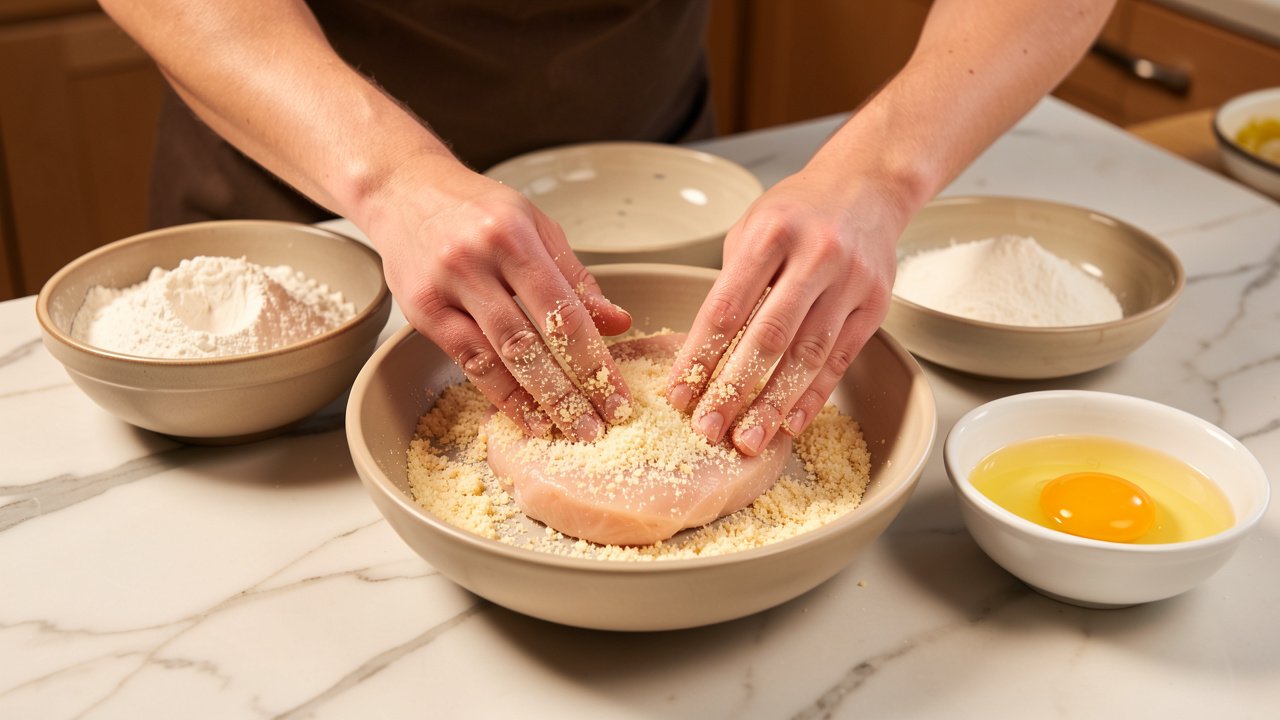
Set up three shallow bowls: flour, beaten eggs, and panko mixed with the Parmesan and garlic powder. Dredge a cutlet in flour and shake off every loose speck, because dry flour under the egg turns to paste and the crust slides off in the pan. Dip in egg and let the excess drip a few seconds. Lay it in the crumbs, pile more on top, and press down hard with your whole palm. Rest the breaded cutlets 10 minutes so the coating sets.
Shallow-Fry, Then Move to a Rack
Pour the neutral oil into a wide skillet to a depth of about a quarter inch and heat it to 350 F. A crumb dropped in should sizzle steadily, not sit quietly and not spit violently. Fry two cutlets at a time, 3 to 4 minutes per side, until deep golden. Crowding drops the oil temperature and gives you pale, greasy breading. Move each finished cutlet straight to a wire rack. Not a plate, not paper towels; trapped steam softens the underside within a minute and no oven time will crisp it again.
Sauce the Centers and Bake Short
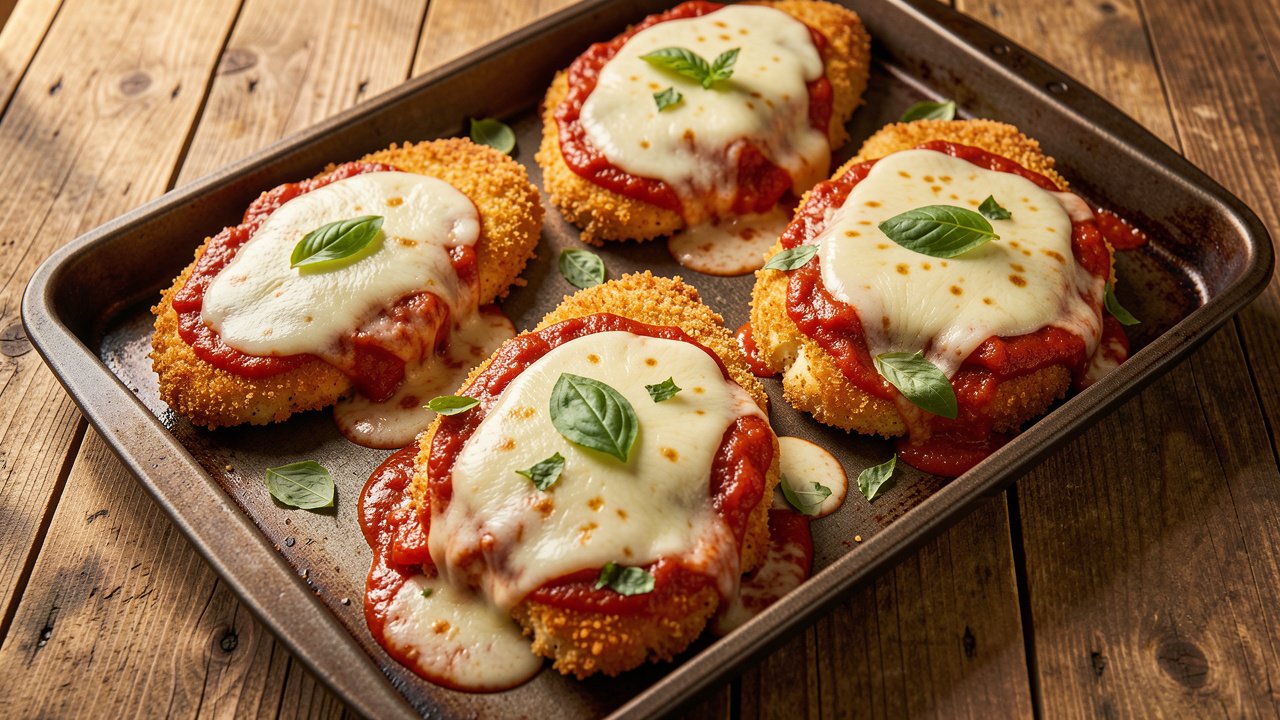
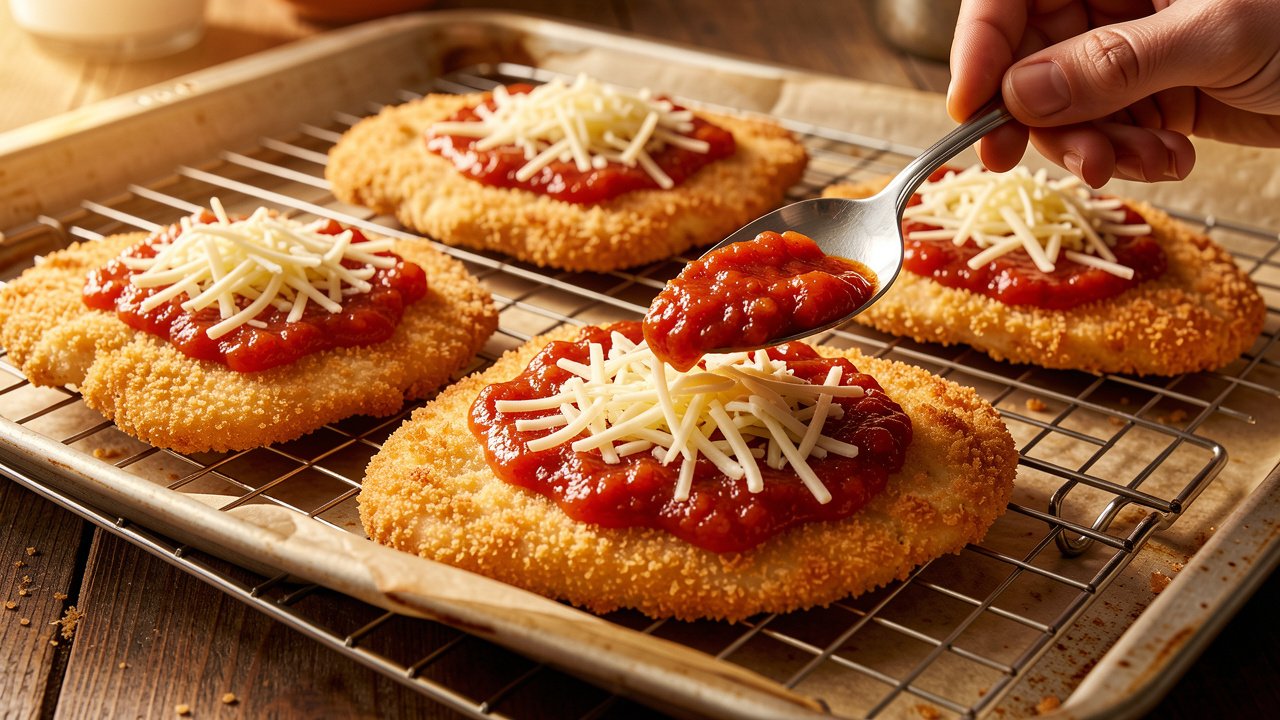
Raise the oven to 425 F. Leave the cutlets on the rack and set the rack on a sheet pan. Spoon about 3 tablespoons of roasted tomato sauce onto the center of each one and stop well short of the edges, leaving a clear inch of bare breading all the way around. Top only the sauced area with mozzarella. Bake 10 to 12 minutes, just until the cheese is melted and blistered in spots and a thermometer reads 165 F. Tear basil over the top and serve immediately.
Chef’s Tips From Real Kitchen Testing
Roast the tomatoes a day ahead. Cold sauce out of the fridge is thicker than warm sauce, which makes it even easier to keep inside the center of the cutlet.
Use one hand for the wet bowl and one for the dry bowls. Two-handed breading builds a glove of dough on your fingers and pulls crumbs off the chicken.
Salt the cutlets right before breading, not 20 minutes earlier. Salt pulls moisture to the surface, and a damp cutlet will not hold a coating.
Recipe Variations
Serving Suggestions
- Spaghetti dressed separately, served alongside not underneath
- Garlicky sauteed broccoli rabe or green beans
- A sharp lemon and arugula salad to cut the richness
- Crusty bread for the extra roasted tomato sauce
Nutrition Facts
Values are estimates for one cutlet with sauce and cheese, without pasta, and vary with how much frying oil the crust absorbs.
Make-Ahead Tips
The roasted tomato sauce is worth making early. It keeps five days in the fridge and tastes better on day two, once the roasted garlic has spread through it. Breaded raw cutlets can sit uncovered on a rack in the fridge for up to four hours, and that dry chill helps the coating grip.
You can also fry the cutlets an hour ahead and leave them on the rack, then sauce and bake when you want to eat. What you cannot do is assemble in advance. Sauce sitting on breading for even 20 minutes has already soaked in.
Storage, Freezing & Reheating
Common Mistakes to Avoid
Troubleshooting
Breading fell off in the pan? Usually too much loose flour, or the cutlet went into the oil straight after breading. Shake the flour off hard and let breaded cutlets rest 10 minutes.
Crust dark but chicken still pink? The cutlet was too thick or the oil too hot. Drop to 350 F, and pound the next batch thinner.
Sauce still watery after roasting? The tomatoes were underdone or were a juicy slicing variety. Simmer the crushed sauce a few minutes to drive off the rest.
Cheese browned before it melted? The pan sat too close to the top element. Bake on the middle rack and shred the mozzarella instead of slicing it.
A Note on Chicken Parmesan and Tomatoes
Chicken parmesan is an Italian-American invention, adapted from southern Italian melanzane alla parmigiana by immigrants who found chicken cheap here. The original was never swimming in sauce, which is worth remembering every time a restaurant version arrives under a red flood. Roasting is just a shortcut to what older cooks got from hours of simmering: less water, more flavor. Our guide to tomato sauce recipes covers the full range, and the same roasted base works on a tomato and cheese pizza or through tomato basil pasta. For the vegetable original, see our tomato and eggplant lasagna.