Georgian Recipes
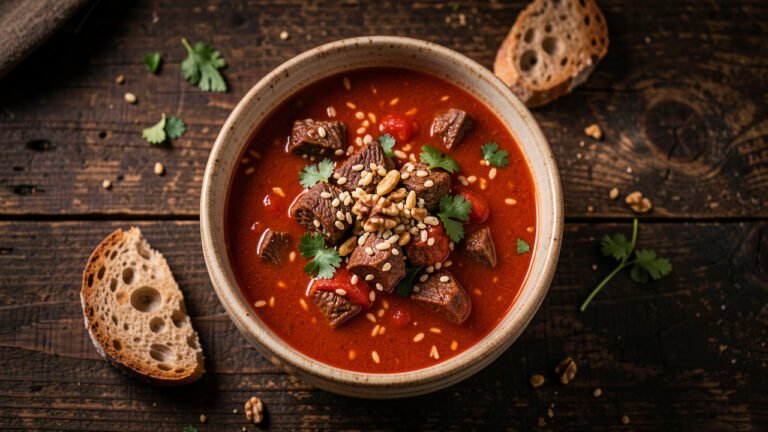
Hearty Georgian Beef Soup with Walnuts and Tomato
Last updated: November 4, 2026
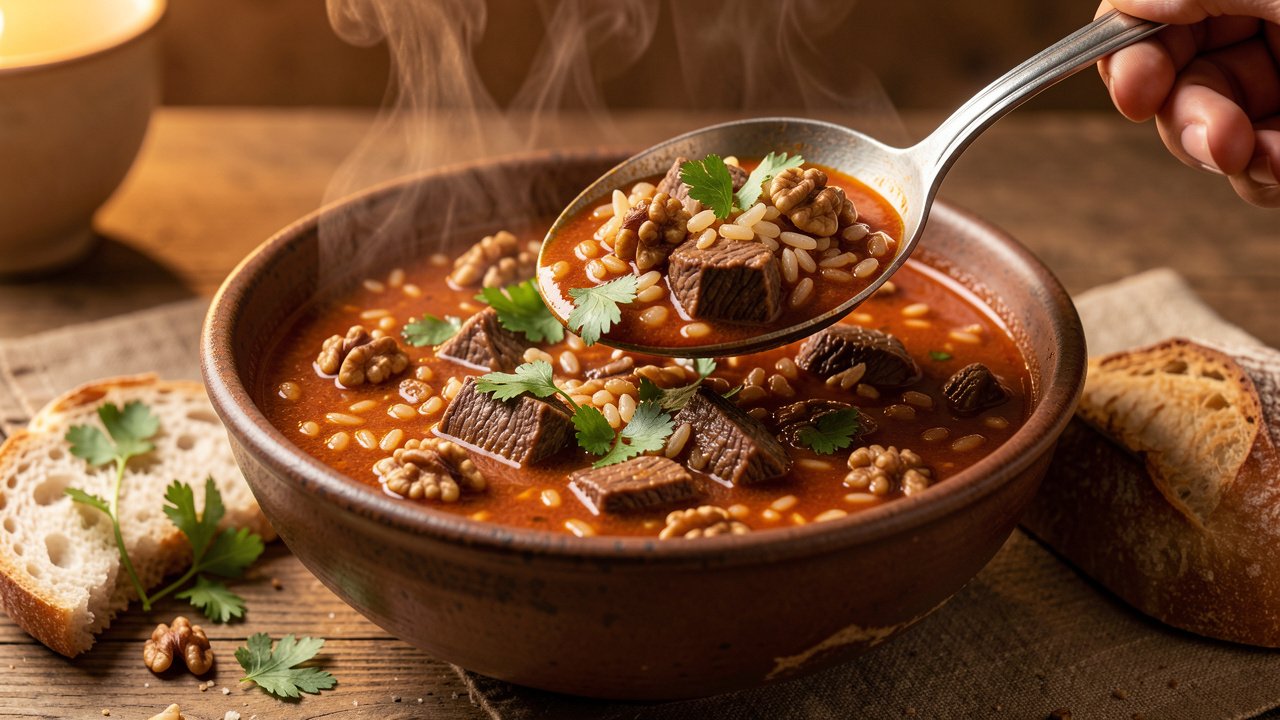
Kharcho is Georgia’s answer to a cold day: a thick, sour, walnut-heavy beef soup that eats almost like a stew. It is built on cubes of slow-simmered beef, but what sets it apart is the trio of ground walnuts, tart sour plum, and the fragrant spice blend khmeli suneli, which together give the broth its unmistakable depth and its bright, mouth-watering tang.
The whole thing cooks in a single pot. You brown the beef, build a tomato and onion base, simmer the meat until it surrenders, then stir in rice and a generous handful of ground walnuts to thicken the soup to a velvety body. A last-minute hit of sour plum and fresh cilantro pulls everything into focus.
Why This Kharcho Works
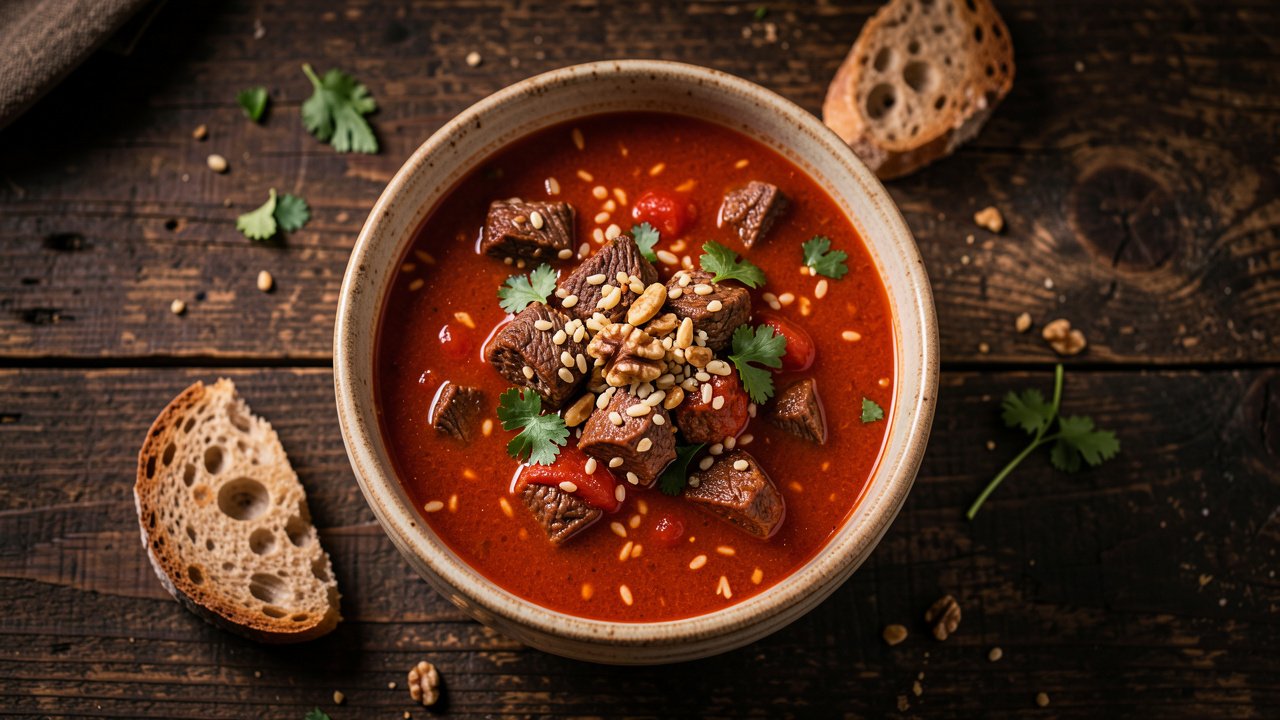
Great kharcho balances three things: fork-tender beef, a broth thickened to a velvety body, and a sourness sharp enough to make your mouth water. Get those right and the soup tastes exactly as it should, deep and rich yet bright and lively. The method here treats each element on its own timeline so nothing is rushed and nothing turns muddy.
The beef leads. Chuck or another well-marbled stewing cut is browned hard first, because those seared edges are where the broth gets its roasted backbone, then it simmers low and slow until the fibers give way. A base of onion, garlic, tomato paste, and crushed tomatoes builds underneath it, toasted just enough to lose any raw, tinny edge.
The thickening is what makes kharcho kharcho. Ground walnuts and a little rice go in partway through, and as they cook they release starch and oil that turn a thin brothy soup into something with real body, silky rather than floury. Add too few walnuts and the soup stays watery; add a proper cup and it becomes the dish it is meant to be.
Sourness is the final key. Traditional cooks reach for tkemali, a tart sour-plum sauce, stirred in near the end so its brightness survives. If you cannot find it, pomegranate molasses or a good squeeze of lemon does the same job. That late acid, plus a confident hand with khmeli suneli, is what lifts the whole pot.
Pro observation: Kharcho is fully halal as written, with no forbidden ingredients. Its sourness comes entirely from sour plum, pomegranate, or lemon, and its depth from beef, tomato, walnuts, and spice, so you never miss a thing.
Ingredients
Kitchen Measurement Converter
Need to convert an amount while you measure? Pick a category, enter a value, and the result updates instantly.
Ingredient Notes & Substitutions
Beef
Choose a well-marbled stewing cut that rewards a long simmer: chuck, shin, or short rib all turn meltingly tender. Cut it into even one-inch cubes so it cooks at the same rate. Bone-in pieces add extra body to the broth; just simmer a little longer.
Walnuts
Walnuts are the soul of kharcho, not an optional garnish. Grind them fresh to a coarse meal in a food processor for the best flavor and a silky, thickened broth. Do not swap in another nut; walnuts give the specific richness and gentle bitterness the soup needs.
Souring: Tkemali & Alternatives
Tkemali, a tart Georgian sour-plum sauce, is traditional and worth seeking at a Caucasian or Eastern European grocer. No luck? Pomegranate molasses or a generous squeeze of lemon delivers the same bright, mouth-watering tang. Add it late so the sourness stays lively.
Khmeli Suneli & Rice
Khmeli suneli is the classic Georgian blend of coriander, fenugreek, marigold, and herbs; a good curry-free spice shop stocks it. A little long-grain rice thickens the soup and adds gentle bite. Rinse it first so it does not turn the broth gluey.
Equipment
- Large heavy pot or Dutch oven
- Lid for the pot
- Food processor or grinder
- Wooden spoon
- Sharp knife and board
- Ladle
Before You Start
1. Brown the beef in batches until deeply colored. Crowding the pot steams the meat gray and robs the broth of the roasted depth that carries kharcho. Sear the cubes in a single uncrowded layer and let each side darken before you turn it, working in two or three batches if you must.
2. Grind the walnuts fresh, right before they go in. Walnuts ground and left sitting turn bitter and oily, and that off flavor spreads through the whole pot. Pulse them to a coarse meal only when you are ready to add them, so they thicken the soup silky instead of greasy.
3. Rinse the rice until the water runs clear. Unrinsed rice sheds a cloud of surface starch that clumps and turns a brothy soup into gluey porridge. Rinse it in a few changes of cold water before it goes in so the grains stay separate and the broth stays clean.
Step-by-Step Instructions
Kharcho rewards a little patience up front, so prep everything before you light the burner. Cube the beef, chop the onions and garlic, grind the walnuts, and rinse the rice so each addition drops in at the right moment while the beef quietly simmers to tenderness.
Brown the Beef
Pat the beef cubes dry and season with salt. Warm a little oil in a large heavy pot over medium-high heat, then brown the beef in batches, giving each piece room and letting the surfaces darken before turning. Lift the browned meat out to a plate and set it aside while you build the base.
Build the Aromatic Base
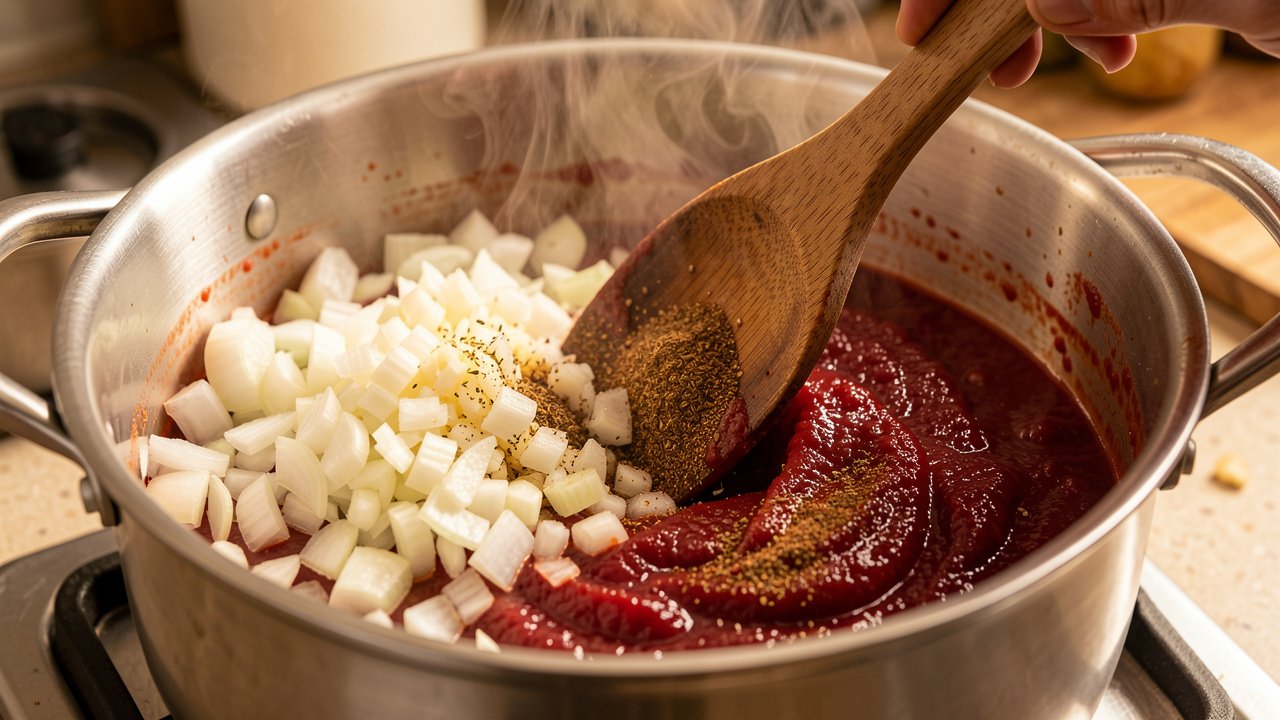
Lower the heat to medium and add the chopped onions to the same pot with a pinch of salt, scraping up the browned bits. Cook 6 to 7 minutes until soft and golden, then stir in the garlic and cook 1 minute. Add the tomato paste and the khmeli suneli and ground coriander, and stir for a minute so the paste darkens and the spices bloom in the fat.
Simmer the Beef Tender
Return the beef and any juices to the pot, add the crushed tomatoes, and pour in the beef broth or water. Bring to a boil, then lower to a gentle simmer, cover, and cook for about 75 minutes, until the beef is fork-tender. Skim any foam that rises in the first few minutes and top up with a little water if it reduces too far.
Add the Rice and Walnuts
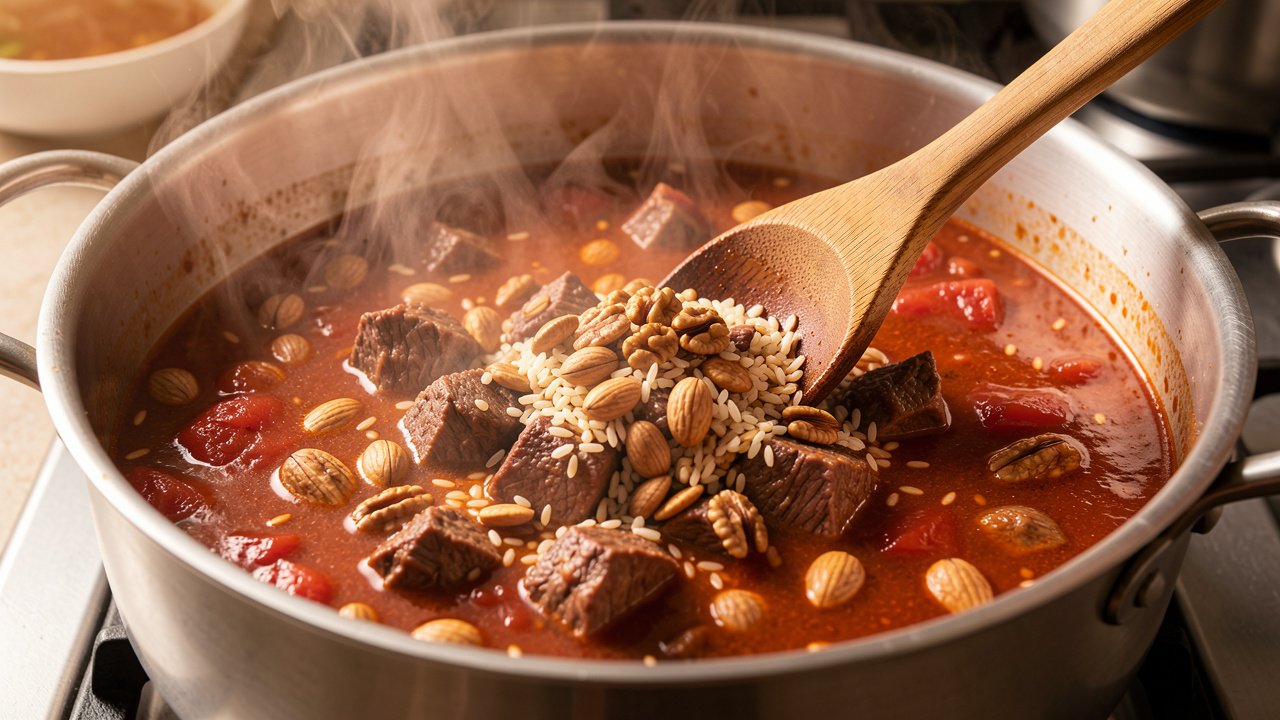
Stir in the rinsed rice and the ground walnuts. Simmer, partly covered, for about 15 minutes, until the rice is tender and the broth has thickened to a velvety body. Stir now and then so the walnuts do not settle and catch on the bottom of the pot.
Sour and Season
Stir in the tkemali sour-plum sauce, or your pomegranate molasses or lemon, a little at a time, tasting as you go until the soup is pleasantly tart. Add half the minced garlic now for a fresh, pungent lift. Taste and adjust the salt and khmeli suneli; kharcho should taste boldly of its spice and its sourness.
Rest and Serve
Take the pot off the heat and stir in most of the chopped cilantro and the remaining garlic. Let the soup rest, covered, for 5 to 10 minutes so the flavors settle and the broth thickens further. Ladle into deep bowls, scatter the last of the cilantro over the top, and serve hot with bread.
Chef’s Tips From Real Kitchen Testing
Add the sourness in two stages. Stir in most of the tkemali near the end, then taste right before serving and add the last splash, since the tang softens as it sits and you want it bright in the bowl.
Split the garlic. Cook some early with the onions for a mellow, sweet base, and stir the rest in raw at the very end for a sharp, fragrant lift that is classic in Georgian cooking.
Let the finished soup rest before serving. Ten quiet minutes off the heat lets the walnuts and rice keep thickening and the spices settle, so the broth turns rounder and richer than it tastes straight off the boil.
Recipe Variations
Serving Suggestions
- Warm crusty bread or Georgian shoti for dipping
- A small dish of extra tkemali on the side
- A handful of fresh cilantro and parsley to scatter
- A scatter of pomegranate seeds for tang and color
Nutrition Facts
| Nutrient | Amount per serving |
|---|---|
| Calories | 380 |
| Protein | 28 g |
| Carbohydrates | 20 g |
| Fat | 22 g |
| Saturated Fat | 5 g |
| Fiber | 3 g |
| Sugar | 6 g |
| Sodium | 780 mg |
Values are estimates per serving and vary with the exact cut of beef and brands you use.
Make-Ahead Tips
Kharcho is even better the next day, once the walnuts and spices have fully mingled. Cook it a day ahead, cool, and refrigerate. It thickens as it sits, so loosen it with a splash of broth or water when you reheat, and brighten it with a fresh squeeze of lemon or a little more tkemali just before serving.
Storage, Freezing & Reheating
Common Mistakes to Avoid
Troubleshooting
Broth too thin? Simmer a few minutes longer to reduce, or stir in a little more ground walnut, which thickens the soup as it cooks without turning it floury.
Beef still tough? It simply needs more time. Keep the pot at a low, lazy simmer and give it another 20 to 30 minutes; tough chuck only turns tender once the connective tissue melts.
Too sour, or not sour enough? Balance a sharp pot with a pinch of sugar or a little more broth; a flat one comes alive with another spoonful of tkemali or a squeeze of lemon stirred in at the end.
A Note on Georgian Cooking
Kharcho comes from Georgia, the country in the Caucasus where walnuts, herbs, and pointed sourness define the table. The name descends from the Georgian for a beef soup, and the dish is inseparable from tkemali, the tart sauce made from wild sour plums that gives kharcho its signature tang. Ground walnuts and the fragrant blend khmeli suneli, both cornerstones of Georgian cooking, do the rest of the work.
It is easy to confuse kharcho with its cousin ostri, but the two are not the same: ostri is a saucier, saucepan-thick beef braise, while kharcho is unmistakably a soup, thick with walnuts and rice and far more sour. It belongs to the same family of hearty tomato-and-meat pots as the Georgian chicken braise chakhokhbili and the sour, brothy Russian solyanka, and it shares a soul with slow, paprika-rich stews like Hungarian goulash.
What has kept kharcho on Georgian tables for generations is its balance: rich enough to be a full meal in a bowl, yet bright enough to never feel heavy. Keep the beef tender, the walnuts generous, and the sourness lively, and you have a soup that tastes exactly of where it comes from.