
Ghanaian Recipes
Fluffy Cassava Granules in a Spiced Tomato and Egg Sauce
Last updated: November 12, 2026
Gari foto is Ghanaian comfort food at its most resourceful: a bag of gari, a few eggs, and a quick tomato sauce turned into a warm, fluffy plate in minutes. The granules drink up the spiced tomato base and swell into tender, separate grains, carrying heat from the scotch bonnet and richness from the egg in every forkful.
The whole dish is built in one wide pan. You bloom the gari with a little water so it softens, fry a bright tomato, onion, and pepper sauce until the oil separates, scramble in the eggs, then fold the gari through until it is coated and fluffy. It is quick, forgiving, and deeply satisfying, the kind of meal a Ghanaian kitchen can turn out at a moment’s notice.
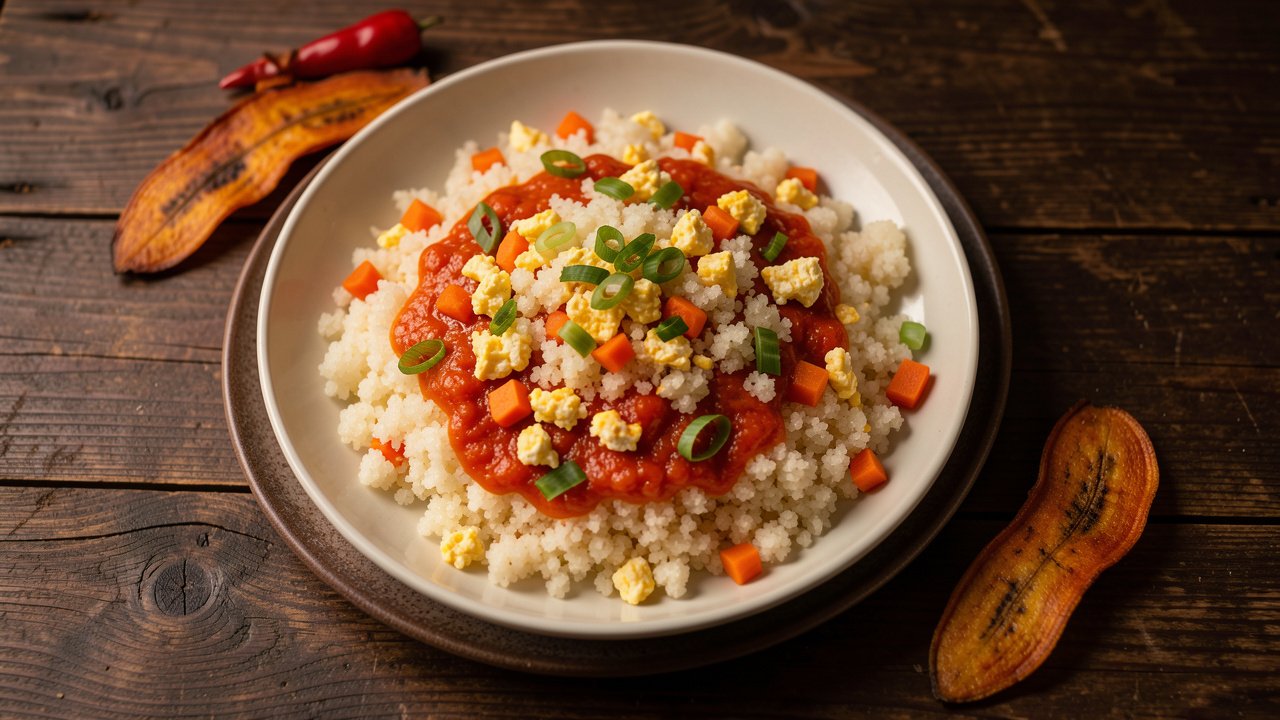
Why This Gari Foto Works
Great gari foto is really two things done well: a tomato sauce fried down until it is sweet and glossy, and gari softened just enough that the granules stay separate and fluffy rather than clumping into a paste. Get those two right and everything else takes care of itself. The recipe here builds a fast but full-flavored sauce, then folds in gari that has been bloomed with a little water so it swells evenly.
The base starts the way most good tomato cooking does, with onion softened in oil, then garlic, ginger, and a minced scotch bonnet for warmth. Tomato paste goes in and toasts for a minute to concentrate its sweetness, followed by chopped ripe tomatoes that fry down until the oil separates and the raw, sour edge is gone. That reduced sauce is what coats every granule later.
Blooming the gari is the heart of the method. Toasted cassava granules are thirsty; sprinkled with water and left for a couple of minutes, they swell into soft, damp crumbs that fold cleanly into the sauce. Skip that step and the dry granules pull all the moisture out of the pan at once and seize into hard lumps.
It is also endlessly adaptable. Gari foto was born as a use-what-you-have dish, so the mix-ins are up to you. Keep the tomato sauce and the gari constant, add carrot, extra egg, or beans as you like, and you will get a plate that tastes like a Ghanaian home kitchen every single time.
Pro observation: Gari foto is fully halal and vegetarian as written, with no forbidden ingredients. The sauce gets all of its depth from tomato, onion, ginger, and scotch bonnet, while the egg adds richness, so you never miss a thing.
Ingredients
Kitchen Measurement Converter
Need to convert an amount while you measure? Pick a category, enter a value, and the result updates instantly.
Ingredient Notes & Substitutions
Gari
Gari is toasted, fermented cassava granules, a West African staple sold at African and Caribbean groceries. Fine or medium grind both work. There is no exact substitute, but the dish lives or dies on blooming the granules with a little water so they soften instead of staying gritty.
Eggs
Eggs bind the gari and add richness, turning a plain granule dish into a satisfying meal. Four eggs suit four servings; add one more for an eggier plate. Scramble them into soft curds so they stay tender rather than drying into crumbs.
Tomatoes & Paste
Ripe plum tomatoes, chopped or lightly blended, give the sauce its body, while tomato paste deepens the color and flavor. Out of season, a cup of good canned chopped tomatoes works fine. Fry the sauce until the oil separates for the fullest flavor.
Peppers & Aromatics
A minced scotch bonnet brings the fruity heat that defines the dish; use a habanero if that is what you have, or half a bell pepper for a mild version. Onion, garlic, and fresh ginger build the savory base, and sliced scallions finish it bright.
Equipment
- Wide frying pan or wok
- Wooden spoon or spatula
- Mixing bowl for the gari
- Sharp knife and board
- Small bowl for the eggs
- Grater for the ginger
Before You Start
1. Sprinkle the gari with water and let it bloom before it touches the pan. Dry gari dumped into the sauce drinks up every drop at once, clumps into hard lumps, and stays gritty. Stir a few tablespoons of water through the granules and leave them two minutes so they swell soft and fluffy.
2. Chop the tomatoes, onion, and scotch bonnet before you heat the oil. Once the sauce is frying it moves fast and the base can scorch in seconds. A cutting board of waiting vegetables lets you add each one on time instead of burning the onion while you mince the pepper.
3. Beat the eggs in a bowl and set them right by the stove. They go into the hot sauce in one pour and set within a minute, so having them ready means you fold them into soft curds instead of overcooking a half-beaten mess while you reach for the carton.
Step-by-Step Instructions
Gari foto comes together quickly once the sauce is frying, so prep everything first. Bloom the gari, chop the vegetables, mince the scotch bonnet, and beat the eggs so the whole dish moves from pan to plate without a pause.
Bloom the Gari
Put the gari in a bowl and sprinkle it with about a third of a cup of water, tossing with a fork so every granule is lightly dampened. Let it sit for two to three minutes while you start the sauce. The gari should swell into soft, damp, crumbly grains, not a wet paste; add water a little at a time so you do not overdo it.
Fry the Aromatics and Tomato Base
Warm the vegetable oil in a wide pan over medium heat. Add the onion with a pinch of salt and cook 3 to 4 minutes until soft, then stir in the garlic, ginger, and minced scotch bonnet and cook 1 minute until fragrant. Add the tomato paste and stir it around the pan for another minute so it darkens and loses its raw edge.
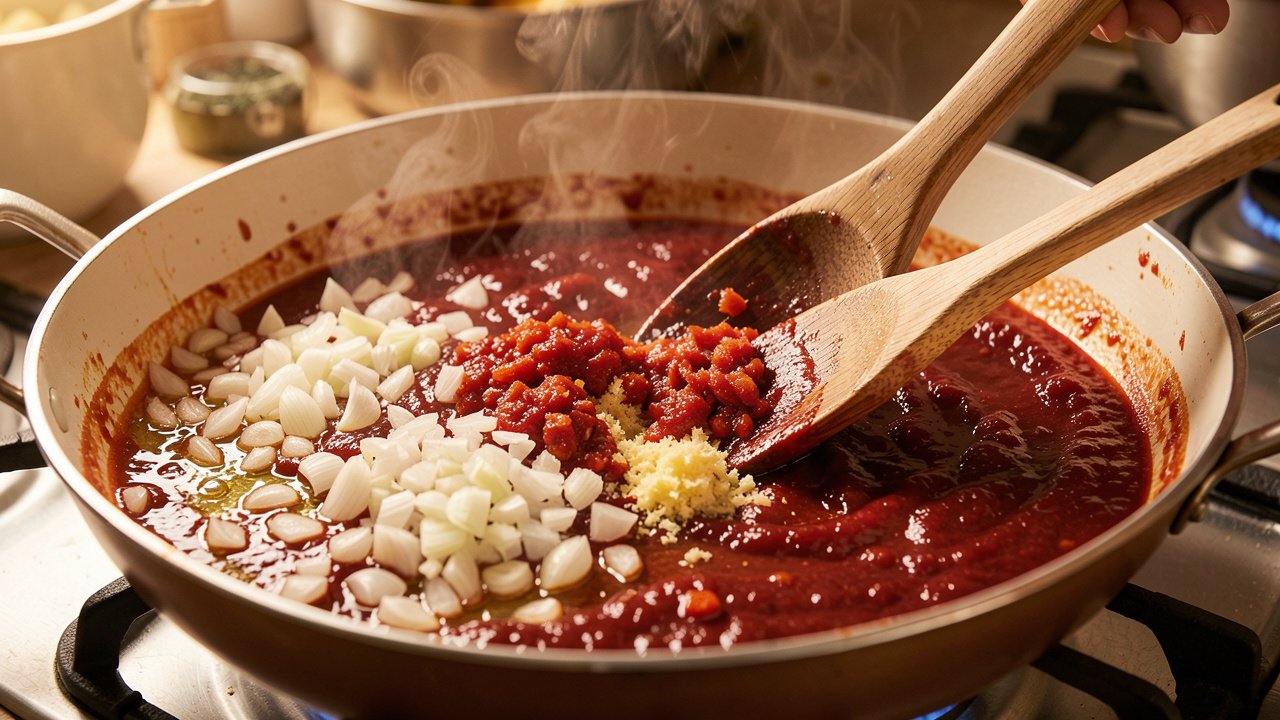
Simmer the Sauce
Stir in the chopped tomatoes, the diced carrot, and a good pinch of salt. Let the sauce fry and simmer, stirring now and then, for about 8 to 10 minutes, until the tomatoes break down, the carrot softens, and the oil starts to separate at the edges. Taste and adjust the salt now, before the gari goes in.
Scramble in the Eggs
Push the sauce to one side of the pan and pour the beaten eggs into the cleared space. Let them set for about 30 seconds, then gently fold them through the sauce in soft curds. Cook just until the egg is no longer runny; stirring too hard or too long breaks it into dry crumbs instead of tender pieces.
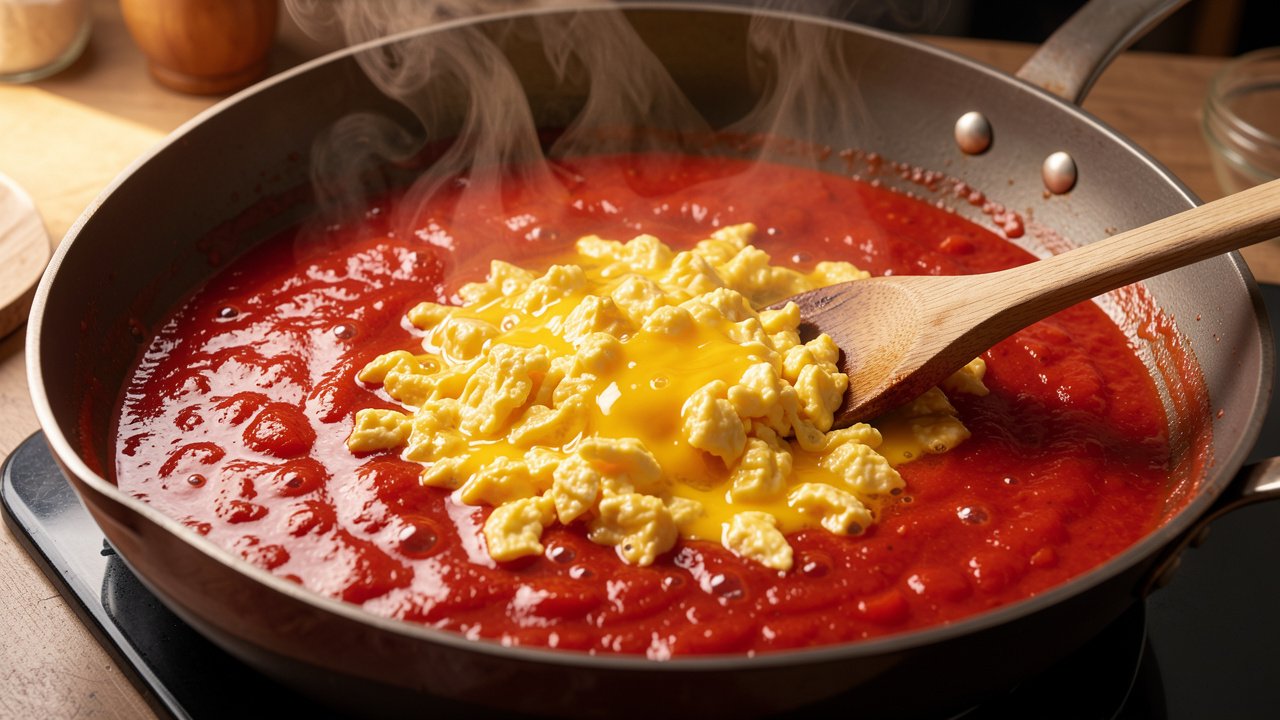
Fold in the Gari
Lower the heat and add the bloomed gari to the pan in a few additions, folding gently after each so the granules take on the sauce evenly. Work quickly and lightly; gari keeps absorbing liquid, so you want it coated and warmed through, not cooked down into a stiff mass. It is ready the moment every granule is tinted orange-red and fluffy.
Fluff and Serve
Take the pan off the heat and scatter the sliced scallions over the top, folding them through lightly. Taste one last time and add a pinch more salt if it needs it. If the gari feels a touch dry, sprinkle in a little warm water and fluff again. Serve right away while warm, with fried plantain or avocado alongside.

Chef’s Tips From Real Kitchen Testing
Bloom the gari with water first and fold it in last. Dampened granules swell soft and stay separate, while dry gari added straight to the sauce seizes into hard lumps you cannot break up.
Fry the tomato sauce until the oil separates before the gari goes in. That reduced, glossy base is what coats every granule; a thin, watery sauce leaves the gari pale and bland.
Keep the heat low once the gari is in and work fast. Gari keeps drinking up liquid, so a minute too long on high heat turns a fluffy plate into a stiff, heavy mass.
Recipe Variations
Serving Suggestions
- Fried ripe plantain for a sweet contrast
- Sliced avocado on the side
- A simple garden salad of lettuce, tomato, and onion
- An extra boiled or fried egg on top
Nutrition Facts
| Nutrient | Amount per serving |
|---|---|
| Calories | 390 |
| Protein | 12 g |
| Carbohydrates | 52 g |
| Fat | 16 g |
| Saturated Fat | 3 g |
| Fiber | 4 g |
| Sugar | 6 g |
| Sodium | 520 mg |
Values are estimates per serving and vary with the exact brands and amounts you use.
Make-Ahead Tips
The tomato sauce is even better made ahead. Fry it through the simmer stage, cool, and refrigerate for up to two days. When you are ready to eat, reheat the sauce, scramble in the eggs, and fold in freshly bloomed gari, so the granules are never sitting and turning stodgy.
Storage, Freezing & Reheating
Common Mistakes to Avoid
Troubleshooting
Gari too dry or hard? It went in too dry or cooked too long. Sprinkle in a little warm water a spoonful at a time and fold gently off the heat until the granules soften and fluff again.
Dish tastes flat? The tomato sauce likely needed more time to fry down, or a bigger pinch of salt. Next time cook the sauce until the oil separates and the raw tomato edge is gone before the gari goes in.
Gari turned mushy? Too much water bloomed into it. Use a lighter hand next time; the granules should feel damp and crumbly, not wet, before they meet the sauce.
A Note on Ghanaian Cooking
Gari foto comes from Ghana, where gari, the toasted granules of fermented cassava, is one of the most important staples in the pantry. The word “gari” names those dried cassava granules themselves, a cornerstone of West African eating, while “foto” comes from the everyday street-food and home-cooking usage for this quick fried gari dish. Cooks reach for it when they want something hot, filling, and ready in minutes from ingredients that are always on hand.
It sits in a big family of West African tomato cooking. The dish it is most often set beside is jollof rice: where jollof is rice cooked in a deep tomato stew, gari foto uses cassava gari rather than rice and comes together quicker and drier, with egg folded through. It shares a soul with other tomato-rich staples of the region, from Ghanaian red red bean stew to Nigerian efo riro, all of them built on a fried tomato and pepper base.
What has kept gari foto on Ghanaian tables is exactly what created it: it is cheap, fast, and endlessly adaptable. Keep the fried tomato sauce and the bloomed gari constant, add whatever vegetables or protein you have, and put a plate of plantain alongside, and you have a meal that still tastes of home.