Nigerian Recipes
Nigerian Spinach Stew in a Tomato-Pepper Base
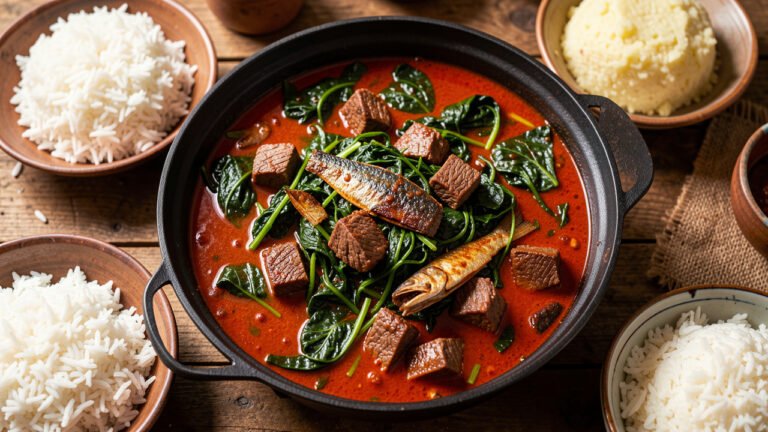
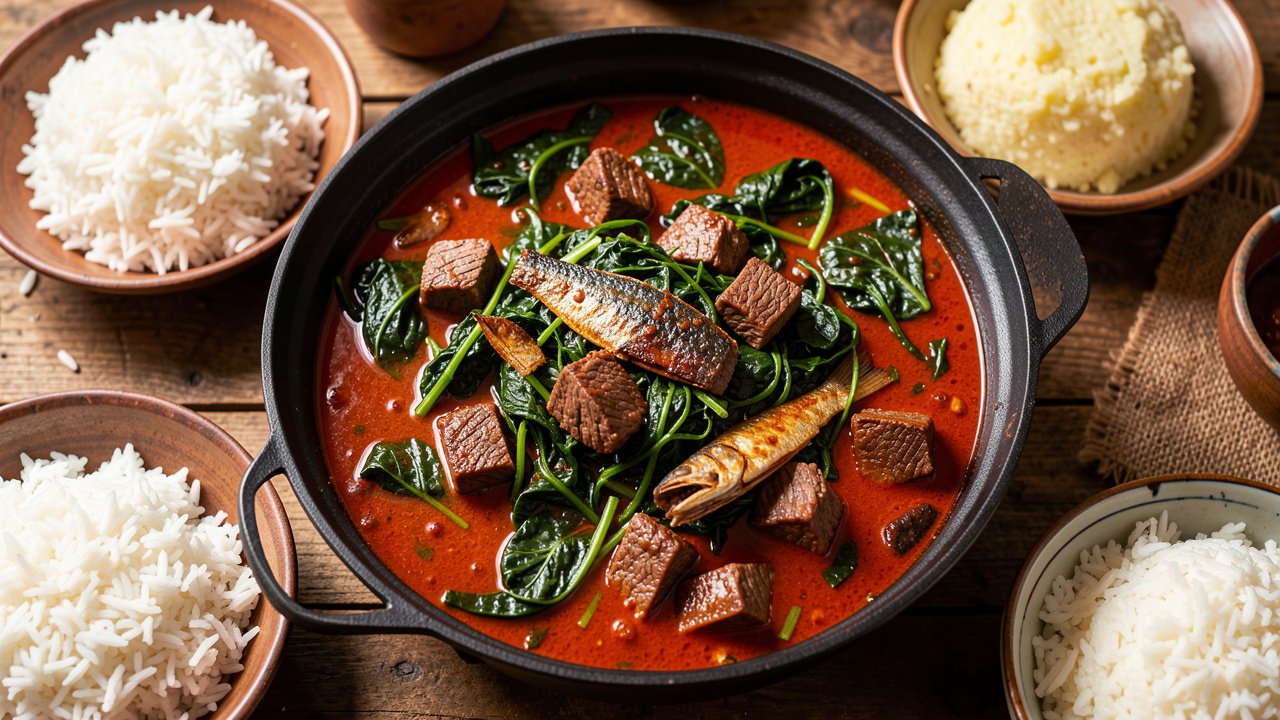
Efo riro is one of those dishes that tastes like a whole kitchen worked on it, even though the method is simple once you understand the order. The name means “stirred leafy greens” in Yoruba, but the soul of the dish is the fried pepper base underneath the greens. Get that base right and everything else falls into place.
The mistake I made the first few times was treating it like a soup. I added too much water, dumped in wet spinach, and ended up with a thin, watery pot that ran off the rice. The fix was learning to reduce the blended base until the palm oil floats back to the top, and to drain the greens well before they go in. That single change turned a loose stew into the thick, glossy efo riro I was chasing.
Why This Efo Riro Works
Efo riro is built in layers, and each layer has a job. The blended tomatoes, red bell pepper, and Scotch bonnet give the sauce its color and gentle heat. The palm oil carries flavor and gives the classic deep-red sheen. The iru and ground crayfish bring the funky, savory depth that separates a real efo riro from a plain vegetable saute. The greens go in last so they keep their body instead of collapsing into mush.
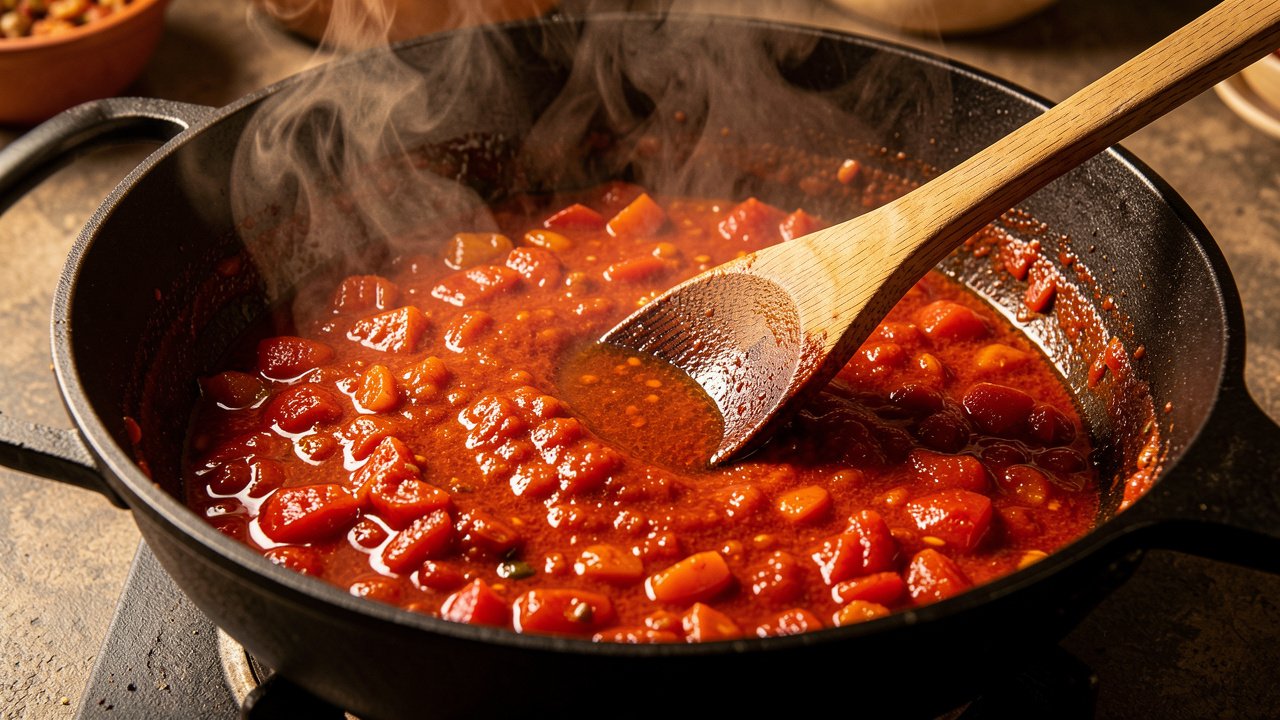
The single most important step is frying the blended base until it reduces and thickens. Raw blended peppers taste sharp and sour; cooked-down peppers taste sweet, round, and concentrated. When the palm oil starts to rise back to the surface, you know the base has cooked through and the raw edge is gone. That is the moment the stew turns from a watery mixture into something rich.
The second secret is draining the spinach. Leafy greens hold a surprising amount of water, and if you stir wet greens into your careful base, you undo all that reducing in seconds. A quick blanch or a firm squeeze keeps the final stew thick enough to sit proudly on a scoop of pounded yam.
It is also flexible. The same base welcomes just halal beef, just smoked fish, both together, or neither for a fully plant-forward pot. Once you know the method, you can build a different version every week without ever losing the character of the dish.
Pro observation: The base is ready for the greens when you tilt the pot and see red palm oil pooling clear at the edges. That floating oil is your signal the peppers have fried, not just simmered.
Ingredients
Kitchen Measurement Converter
Quickly convert between common cooking measurements without leaving the recipe. Pick a category, enter a value, and the result updates instantly.
Ingredient Notes & Substitutions
Spinach or Efo
Traditional efo riro uses African spinach (efo tete) or shoko. Outside West Africa, regular spinach, kale, or callaloo all work well. Kale holds its shape a little firmer; regular spinach is softer and cooks in seconds.
Palm Oil
Palm oil gives the authentic deep-red color and nutty flavor. Warm it gently and do not let it smoke. If you cannot find it, a neutral vegetable oil works, though the color and taste will be milder.
Iru & Crayfish
Locust beans (iru) and ground crayfish are the savory backbone. Iru adds a fermented, umami depth; crayfish adds a smoky seafood note. If you must skip iru, add a little extra crayfish and a seasoning cube to keep the depth.
Halal Protein
Use halal beef cut into bite-size chunks, smoked fish, or both. Keep everything halal; avoid any non-halal meat or offal. Smoked mackerel or smoked catfish are classic choices for that deep, smoky layer.
Equipment
- Blender or food processor
- Wide, heavy pot
- Wooden spoon
- Sharp knife and board
- Colander or sieve
- Measuring spoons
Before You Start
1. Chop and drain the greens early. Wash and chop the spinach, then let it drain fully in a colander. Wet greens are the number one cause of a watery stew, so give them time to shed water.
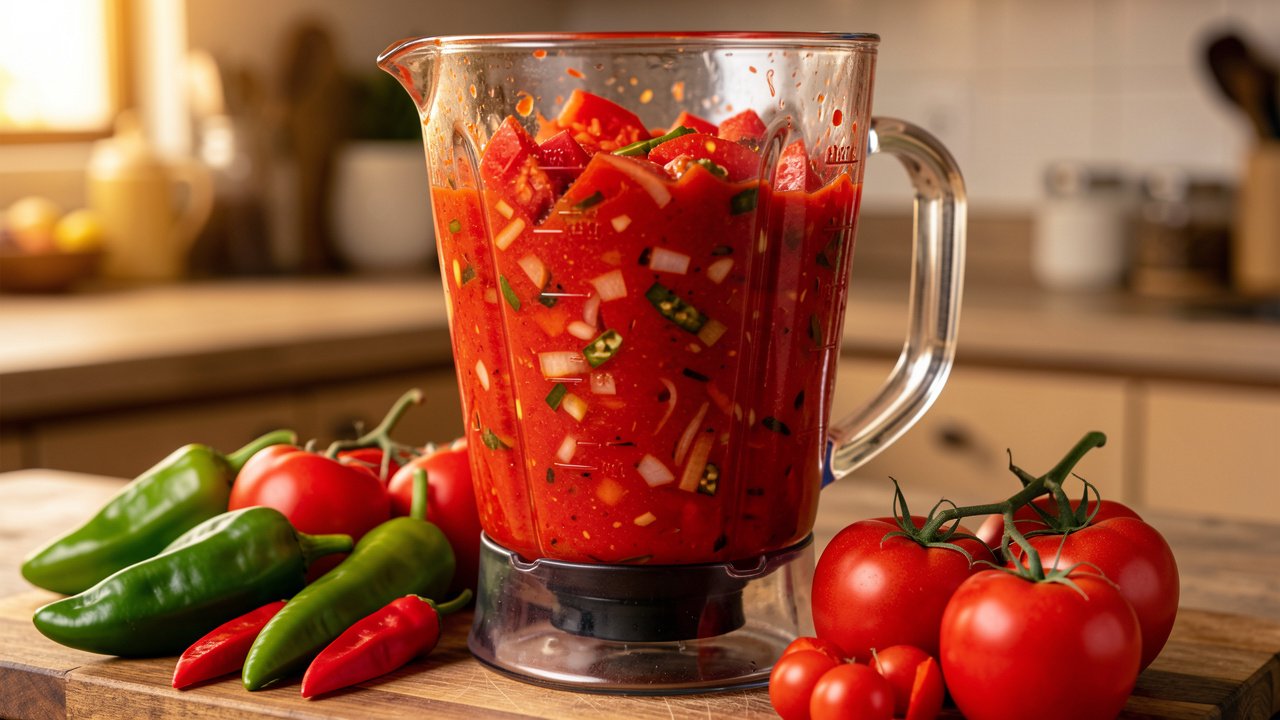
2. Blend the peppers ahead. Blend the tomatoes, red bell pepper, Scotch bonnet, and one onion into a coarse base before you turn on the heat. You want it thick, not runny, so blend without extra water.
3. Cook the beef first. Season and simmer the halal beef so you have both tender meat and a flavorful stock ready to build the stew.
Step-by-Step Instructions
Season and Cook the Halal Beef
Put the halal beef in a pot with half of the sliced onion, one seasoning cube, and a little salt. Add just enough water to barely cover, then simmer 20 to 25 minutes until the beef is tender and cooked through with no pink at the center. Keep the beef and its stock; you will use both. For food safety, cook the beef until it is fully done and reaches a safe internal temperature rather than leaving it rare.
Blend the Pepper Base
Roughly chop the tomatoes, red bell peppers, Scotch bonnet, and one onion, then blend them into a thick, coarse puree. Do not add water; you want a paste that will fry down, not a thin liquid. Set the blended base aside near the stove.
Fry the Blended Base
Warm the palm oil in a wide pot over medium heat, then add the remaining sliced onion and cook 2 minutes until soft. Pour in the blended pepper base and fry 12 to 15 minutes, stirring often, until it darkens, thickens, and the palm oil starts to float back to the surface. This frying step is what gives efo riro its deep, sweet flavor; do not rush it.
Build the Savory Layer
Stir in the locust beans (iru), ground crayfish, ground cayenne pepper, and the second seasoning cube. Add the cooked halal beef along with a few spoons of its reserved stock, then the flaked smoked fish. Simmer 5 to 7 minutes so the flavors marry and the sauce thickens again. Keep it thick; add stock only a spoon at a time if it looks too dry.
Stir in the Spinach
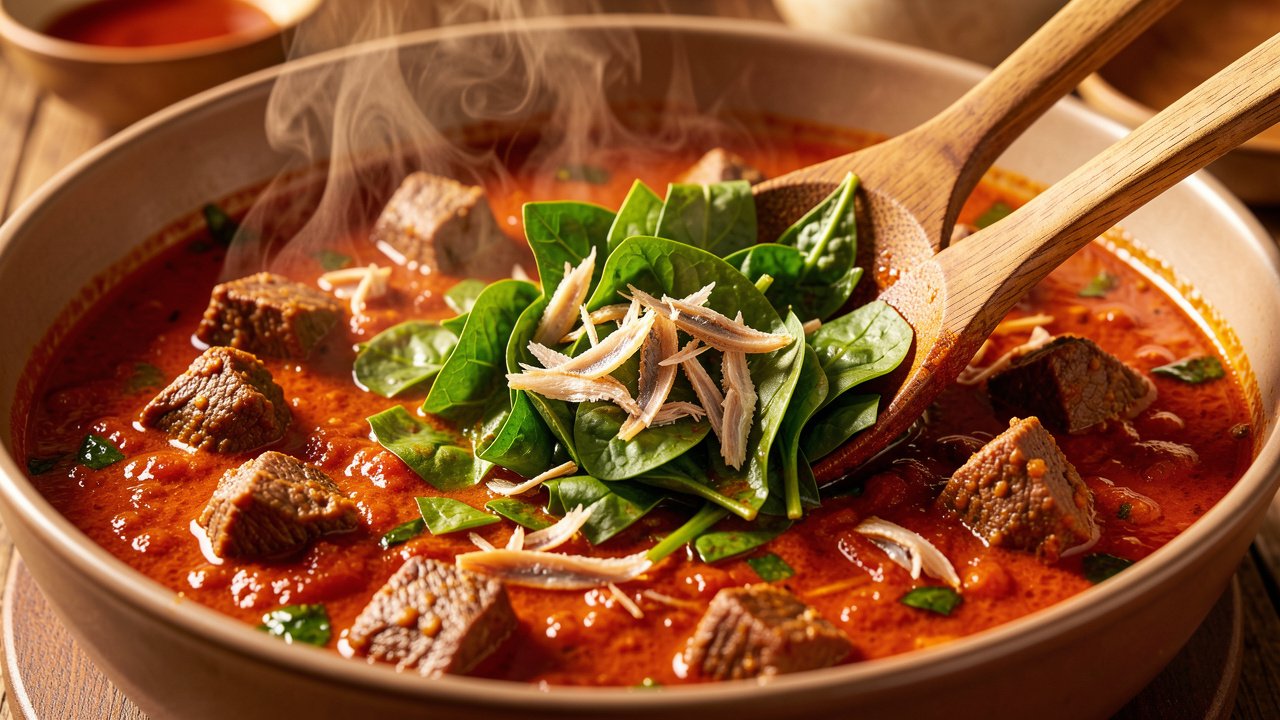
Add the well-drained chopped spinach in batches, folding it into the hot base rather than stirring in water. Let each batch wilt down before adding the next. Cook just 3 to 5 minutes, only until the greens are tender and glossy. Taste and adjust with salt.
Rest and Serve
Turn off the heat and let the efo riro rest 5 minutes so the flavors settle and any extra oil rises. Give it one last gentle stir. Serve hot with white rice, pounded yam, or eba, spooning some of the beef and smoked fish onto every plate.
Chef’s Tips From Real Kitchen Testing
Blend the base thick and fry it hard. The frying, not boiling, is what develops the sweet, deep flavor and stops the stew from tasting sharp.
Drain your greens like you mean it. Squeeze out or blanch away the water so the finished efo riro stays thick and clings to rice or yam.
Add the spinach last and cook it briefly. Overcooked greens turn dull and watery; a few minutes is all they need to wilt and stay vibrant.
Recipe Variations
Serving Suggestions
- Fluffy white rice or jollof rice
- Pounded yam, eba, or amala
- Boiled or fried plantain on the side
- A wedge of lime and extra Scotch bonnet for heat
Nutrition Facts
| Nutrient | Amount per serving |
|---|---|
| Calories | 340 |
| Protein | 24 g |
| Carbohydrates | 10 g |
| Fat | 24 g |
| Saturated Fat | 9 g |
| Fiber | 4 g |
| Sugar | 5 g |
| Sodium | 620 mg |
Values are estimates per serving and vary with the exact ingredients and brands you use.
Make-Ahead Tips
Efo riro is a great make-ahead dish because the flavors deepen overnight. Cook the pot a day ahead, cool it, and refrigerate. For the freshest color, you can stop just before the spinach goes in, refrigerate the base with the beef and smoked fish, then reheat and fold in the greens the day you serve. Reheat gently so the greens do not overcook.
Storage, Freezing & Reheating
Common Mistakes to Avoid
Troubleshooting
Stew too watery? Keep simmering with the lid off so the extra liquid cooks away, and next time drain the greens more firmly before they go in.
Tastes flat or sharp? It usually needs more iru, crayfish, or a seasoning cube, plus a little salt. A longer fry on the base also rounds out sharpness.
Too spicy? Stir in a little more oil and greens to mellow the heat, and use fewer Scotch bonnets next time.
A Note on Nigerian Cooking
Efo riro comes from the Yoruba kitchens of southwestern Nigeria, where leafy greens are treated with as much care as the proteins around them. It is often confused with efo elegusi, but they are different dishes: efo elegusi is thickened with ground melon (egusi) seeds, while efo riro leans entirely on the fried pepper base for body. The trio of palm oil, iru, and ground crayfish is the flavor signature that ties Yoruba stews together, and the habit of frying the pepper base before anything else is a technique you will see across jollof rice and many Nigerian stews. If you enjoy deep, savory tomato-based dishes, browse more ideas in our tomato recipes collection or try the comforting hearty tomato lentil soup for a different take on the same warming spirit.
Frequently Asked Questions
More Tomato Recipes to Try
Last updated: September 29, 2026