Colombian Recipes
Braised Flank Steak in Tomato Criolla Sauce
Last updated: November 12, 2026
Sobrebarriga is Colombian comfort food at its most generous: a thin, often-overlooked cut of beef coaxed over hours into something so tender you can cut it with the side of a fork. It braises quietly in a tomato-scented pot until the meat gives way, then it is sliced and bathed in hogao, the garlicky tomato-and-scallion sauce that runs through so much Colombian cooking.
The whole dish rewards patience rather than skill. You brown the beef, build a simple braise around it, and let time do the heavy lifting while the flank cut slowly surrenders. At the end you spoon over a bright, fresh criolla sauce, and what started as a tough, cheap cut arrives at the table tasting like a special-occasion roast.
Why This Sobrebarriga Works
Great sobrebarriga is really two things done well: a long, gentle braise that turns a tough flank cut meltingly tender, and a fresh tomato criolla sauce spooned over at the end to wake the whole plate up. Get those two right and the dish takes care of itself. The recipe here builds an easy braise, then finishes with a quick hogao that tastes of garlic, tomato, and scallion.
The braise starts the way most good tomato cooking does, with onion and a generous amount of garlic softened in oil, then tomato paste stirred in and toasted for a minute to concentrate its sweetness. Beef broth, chopped tomato, cumin, and bay go in to make a loose, savory braising liquid, and the browned flank steak settles in to cook low and slow until it is fork-tender.
Keeping the steak whole is the heart of the method. Instead of cutting it into cubes, you braise the flank as one slab so it stays juicy, then slice it across the grain at the end. That is exactly what separates sobrebarriga from a shredded beef: it is served as tender, sauced slices, not pulled strands.
It is also forgiving and make-ahead friendly. The braise only gets better with a rest, so you can cook the beef a day ahead, then warm it and make the bright criolla sauce fresh. Keep the braise and the garlic constant, and you will get a pot of sobrebarriga that tastes like a Bogota Sunday lunch every single time.
Pro observation: Sobrebarriga is fully halal as written, with no forbidden ingredients. The braise gets all of its depth from beef, tomato, garlic, scallion, cumin, and bay, so you never miss a thing.
Ingredients
Kitchen Measurement Converter
Need to convert an amount while you measure? Pick a category, enter a value, and the result updates instantly.
Ingredient Notes & Substitutions
The Beef Cut
Sobrebarriga is traditionally the thin flank cut that lies over the belly, but a whole flank steak or skirt steak is the easy supermarket swap. Choose a piece with a little fat cap for flavor, and keep it whole so it braises into tender slices rather than falling apart.
Tomatoes & Paste
Ripe red tomatoes give the criolla its fresh backbone, while tomato paste deepens the braise and its color. Out of season, a cup of good canned chopped tomatoes stands in nicely. A splash of the braising liquid loosens the finished sauce if it tightens up.
Scallions & Onion
Scallions, called cebolla larga in Colombia, are the signature note of hogao, so do not skip them. Yellow onion builds the braise base, while the scallions go into the bright sauce at the end. If scallions are scarce, a mild white onion plus extra cilantro will carry it.
Spices & Herbs
Ground cumin and bay leaves are the quiet backbone of the braise, and sweet paprika lends warmth and a ruddy color. Fresh cilantro stirred in at the end keeps everything lively. A squeeze of lime over the finished platter brightens each slice beautifully.
Equipment
- Large heavy pot or Dutch oven
- Lid for the pot
- Tongs for the beef
- Sharp knife and board
- Skillet for the sauce
- Ladle
Before You Start
1. Pat the flank steak bone-dry before it meets the pot. A wet surface steams instead of browning, so blot both sides with paper towels until they look matte. A proper deep-brown sear is what gives the braising liquid its savory color and backbone.
2. Pour enough broth to come halfway up the meat, no higher. Sobrebarriga braises, it does not boil in soup; liquid past the halfway mark washes out the flavor and leaves you reducing for ages at the end. Top up with a splash only if the pot runs dry.
3. Build the criolla sauce last, while the beef rests. Hogao is meant to taste fresh and green, so it loses its lift if it sits and stews. Cook the scallions and tomato for just ten minutes right before serving, so the sauce hits the sliced beef bright.
Step-by-Step Instructions
Sobrebarriga is a slow braise, so set aside an unhurried afternoon. Brown the beef, build the pot, and let it simmer gently while you get on with other things, making the fresh criolla sauce only near the end so it reaches the table bright.
Prep the Beef and Aromatics
Pat the flank steak completely dry on both sides and season it well with salt and pepper. Finely chop the onion, mince the garlic, chop the scallions, and dice the tomatoes, keeping the scallions and half the tomato aside for the criolla sauce later. Having everything ready makes the rest of the cooking calm.
Brown the Flank Steak
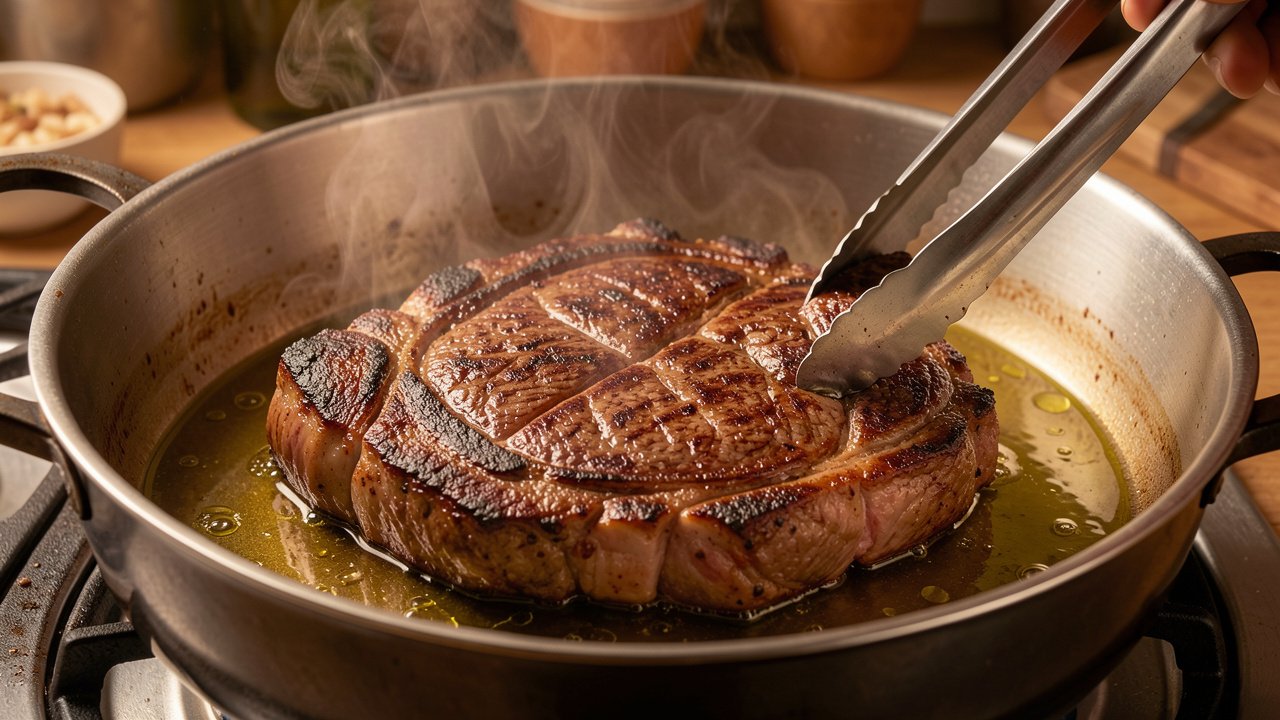
Warm 2 tablespoons of the olive oil in a large heavy pot over medium-high heat. Lay in the flank steak and sear it without moving it for 3 to 4 minutes per side, until a deep brown crust forms. Lift the beef out to a plate; this browning is where much of the dish’s savory depth comes from.
Build the Braise
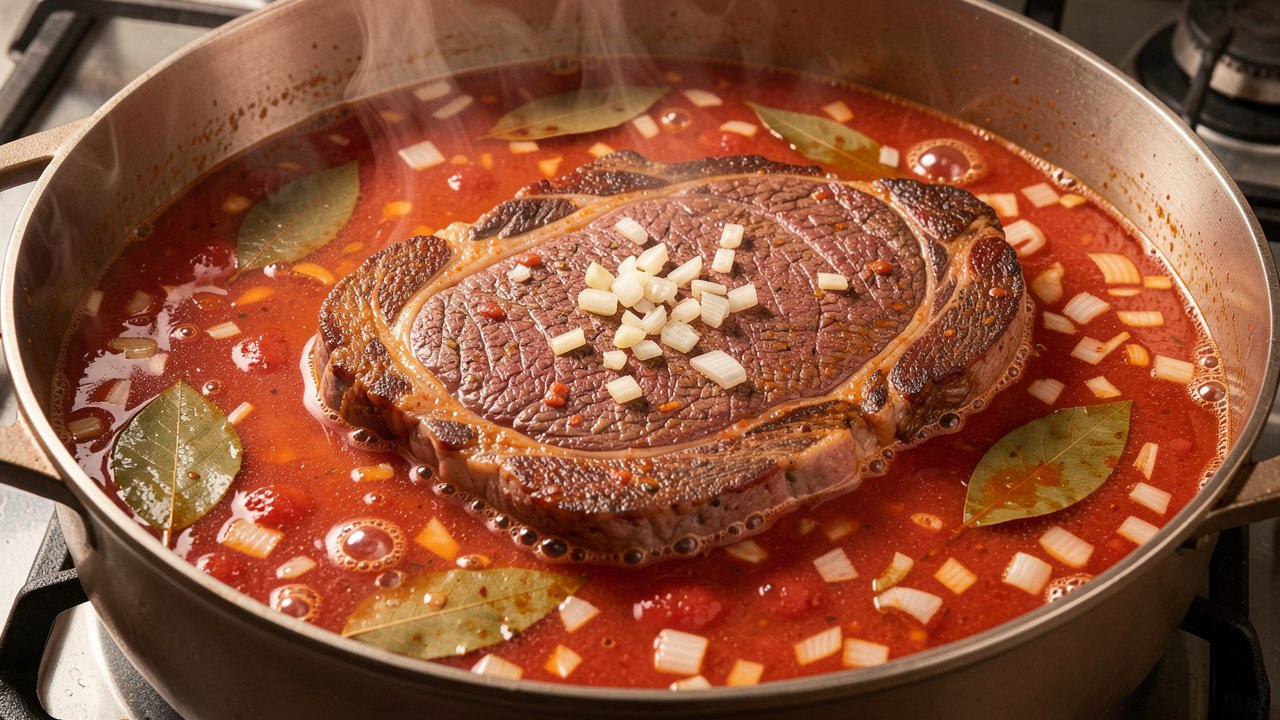
Lower the heat to medium and add the chopped onion with a pinch of salt, cooking 4 to 5 minutes until soft. Stir in the garlic and cook 1 minute until fragrant, then add the tomato paste and stir it around the pot for another minute so it darkens. Add half the chopped tomato, the cumin, paprika, and bay leaves, then pour in the beef broth.
Braise Until Fork-Tender
Return the browned flank steak to the pot, tucking it down so the liquid comes about halfway up the meat. Bring to a gentle simmer, cover, and cook low for 2 to 2.5 hours, turning the beef once, until it is fork-tender and a knife slides in with no resistance. Top up with a little broth only if the pot runs dry.
Make the Tomato Criolla Sauce
While the beef rests, warm the last tablespoon of oil in a skillet over medium heat. Add the chopped scallions and cook 2 minutes until soft, then stir in the remaining chopped tomato and a pinch of salt. Simmer 8 to 10 minutes into a loose, glossy hogao, then stir in the fresh cilantro off the heat.
Slice, Sauce, and Serve
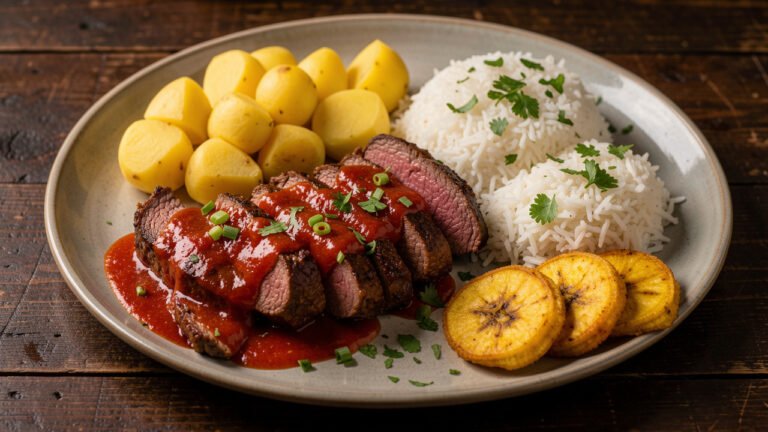
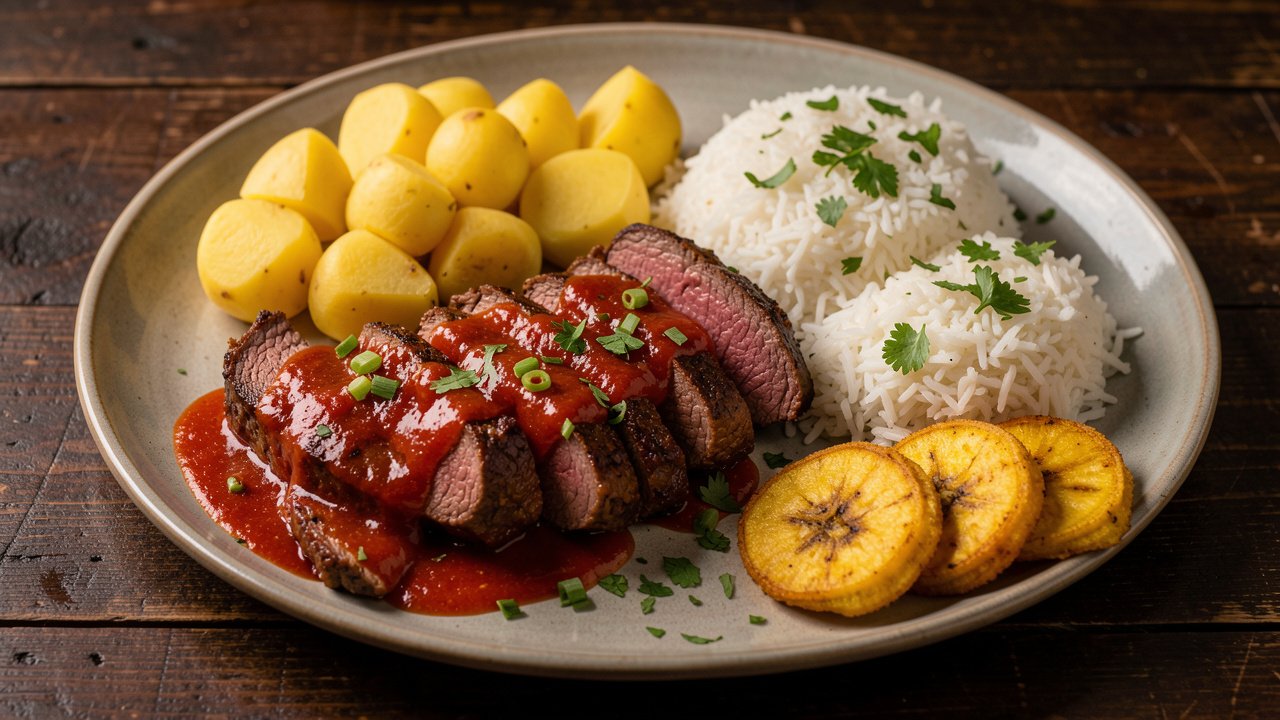
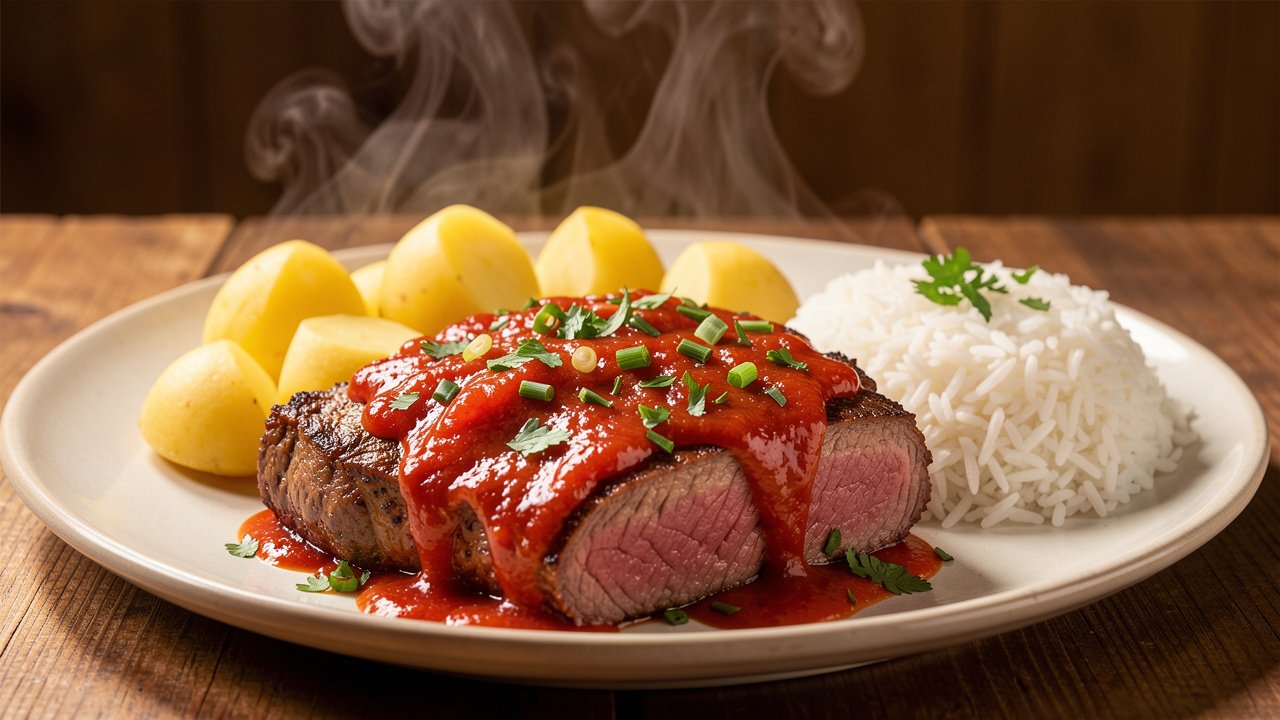
Lift the rested flank steak onto a board and slice it across the grain into thick, tender pieces. Arrange the slices on a platter, spoon over several ladles of the braising liquid to keep them moist, then nap generously with the fresh tomato criolla sauce. Serve right away with potatoes, rice, and plantain.
Chef’s Tips From Real Kitchen Testing
Treat the braise and the sauce on separate timelines. Let the flank steak cook low and slow for hours, then make the criolla fresh at the end so it stays bright instead of stewed down and dull.
Always slice the rested beef across the grain. Cutting against those long muscle fibers is what makes each piece feel tender; slicing with the grain leaves it stringy no matter how long it braised.
Keep the pot at a bare simmer, never a hard boil. A rolling boil toughens the outside of the meat before the inside gives way, while a soft simmer coaxes the flank cut into silky tenderness.
Recipe Variations
Serving Suggestions
- Boiled yellow potatoes to soak up the braising liquid
- A mound of fluffy white rice
- Golden fried sweet plantain (platano maduro)
- A simple avocado and tomato salad on the side
Nutrition Facts
| Nutrient | Amount per serving |
|---|---|
| Calories | 380 |
| Protein | 46 g |
| Carbohydrates | 14 g |
| Fat | 16 g |
| Saturated Fat | 5 g |
| Fiber | 3 g |
| Sugar | 7 g |
| Sodium | 820 mg |
Values are estimates per serving and vary with the exact cut of beef and brands you use.
Make-Ahead Tips
The braise is even better made a day ahead. Cook the flank steak through until tender, cool it in its liquid, and refrigerate. When you are ready to eat, warm the beef gently in the braising liquid, slice it, and make the fresh tomato criolla sauce at the last minute so it stays bright.
Storage, Freezing & Reheating
Common Mistakes to Avoid
Troubleshooting
Beef still tough? It simply needs more time. A flank cut can take well over two hours; keep it at a bare simmer with the lid on and test again every twenty minutes until a knife slides in freely.
Braising liquid too thin? Lift the beef out and simmer the liquid uncovered for a few minutes to reduce, or stir in an extra spoonful of tomato paste to thicken and deepen it.
Sauce tastes flat? Brighten it with a squeeze of lime and an extra pinch of salt, and stir in a little more fresh cilantro off the heat to lift the whole platter.
A Note on Colombian Cooking
Sobrebarriga takes its name from plain Spanish: “sobre barriga” means “over the belly”, the thin flank cut that lies across the cow’s belly. It is a cornerstone of the cooking of the Andean interior, especially Bogota and the department of Boyaca, where tough, cheap cuts were traditionally braised for hours into tender Sunday fare. The finishing sauce, hogao or salsa criolla, is the garlicky tomato-and-scallion base that runs through much of Colombian home cooking.
It sits in a big family of Latin American braised-beef dishes, and the one it is most often confused with is Cuban ropa vieja. The difference is in the finish: ropa vieja is shredded into strands and served loose, while sobrebarriga is kept as a braised slab and sliced across the grain, then sauced with Colombian hogao. It shares a soul with other tomato-braised classics like pabellon criollo and Puerto Rican carne guisada, all of them cooks turning an inexpensive cut into something generous.
What has kept sobrebarriga on Colombian tables is exactly what created it: it is thrifty, forgiving, and deeply comforting. Braise a humble cut low and slow, keep the tomato and garlic constant, finish with a fresh criolla sauce, and you have a plate that still tastes of a long, unhurried Andean lunch.