Nigerian Recipes
Rich Fried Tomato and Pepper Stew
Last updated: September 30, 2026
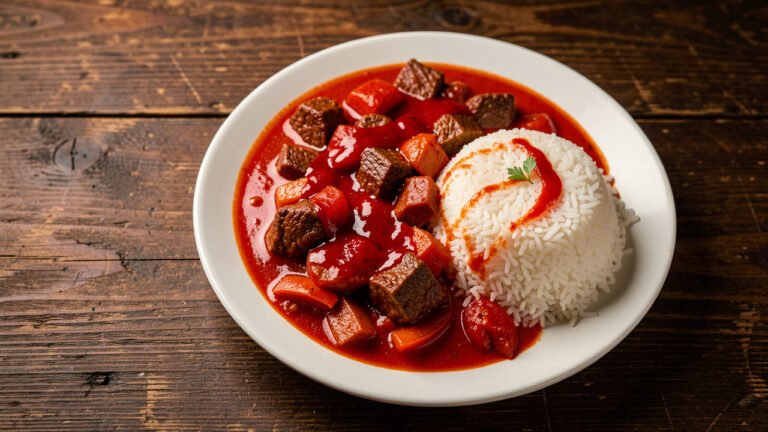
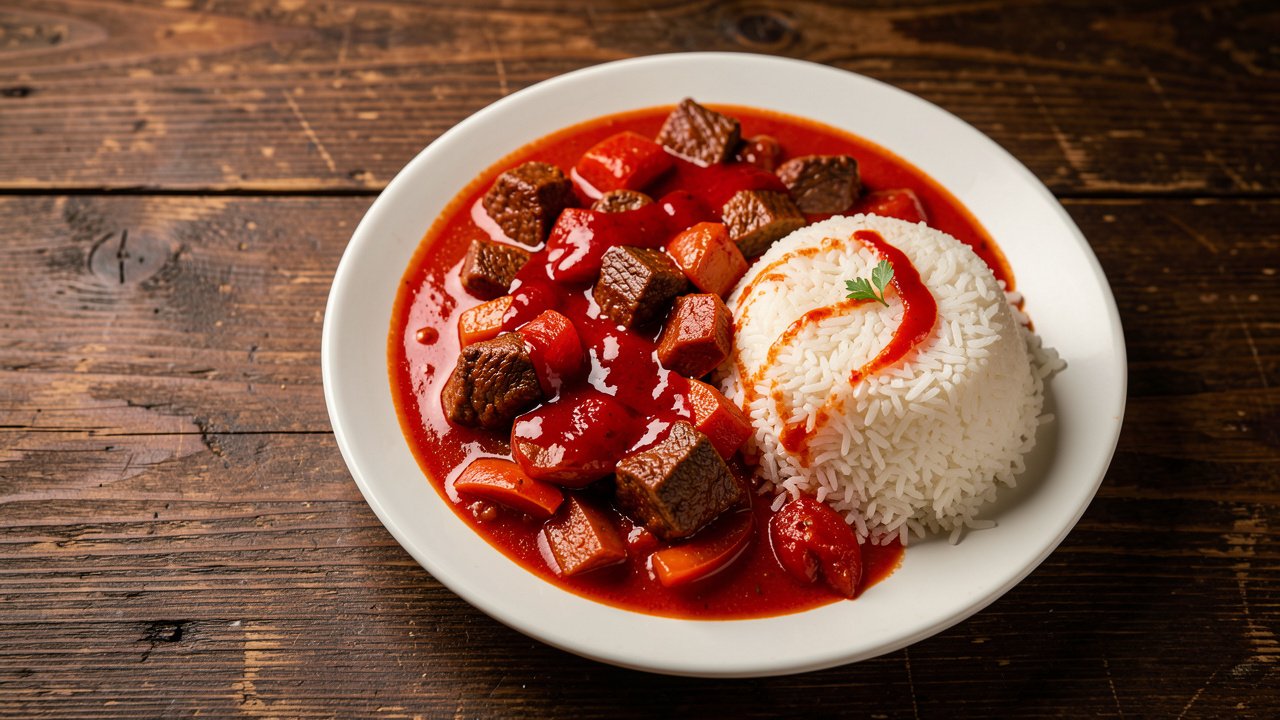
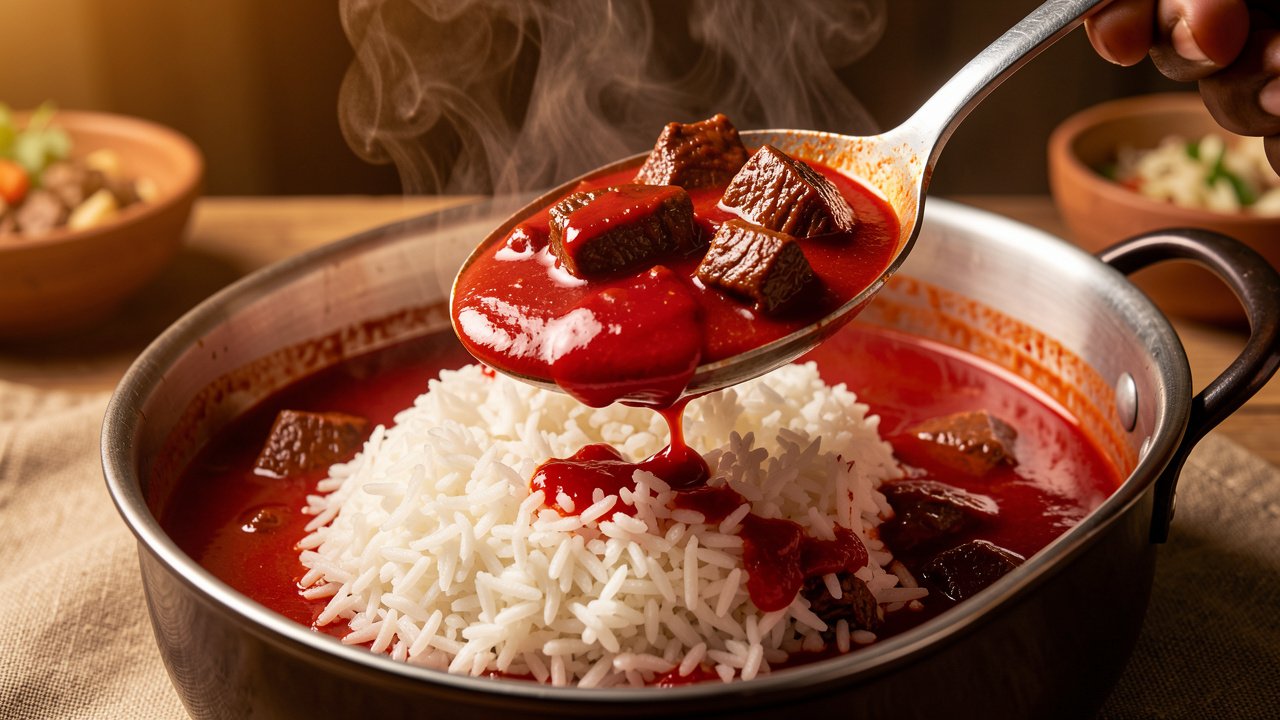
Buka stew is the stew you smell before you see, the one bubbling in a heavy pot at a roadside eatery where the oil has fried the peppers down to a deep, sweet, smoky red. It is built from a simple blended base of red bell pepper, tomato, and hot pepper, but the character comes from patience: you fry that base long and low until the raw edge is gone and the oil floats bright at the surface. Beef simmers in it until tender, and the whole thing goes over a plate of plain white rice.
Why This Buka Stew Works
Buka stew looks simple on paper, but the difference between a flat pot and a deep, restaurant-style one comes down to a single idea: fry the base, do not just simmer it. The blended peppers and tomato are cooked in oil over steady heat until their raw brightness turns sweet and jammy and the oil separates and rises to the top. That fried stage, obe ata dindin, is exactly what the name promises, and it is where nearly all the flavor lives.
Start by boiling the beef with onion and seasoning so it turns tender and leaves behind a rich stock. That stock goes back into the pot later, so nothing is wasted and the stew tastes of meat all the way through. Boiling first also means the beef is already cooked before it ever meets the sauce, so you can concentrate on frying the base properly.
The blend itself is mostly red bell pepper, called tatashe, which gives the stew its glossy red body and gentle sweetness, with a smaller amount of Scotch bonnet for the signature heat. Tomatoes round it out and add tang. Blending them smooth and then reducing hard is what gives buka stew its thick, clinging texture rather than a watery one.
Finally, it is forgiving and made for a crowd. The pot only gets better as it sits, the heat is entirely in your control, and the beef can be swapped for chicken or fish without changing the method. Once you learn to read the oil rising to the surface, you can cook this without measuring at all, which is exactly how it is done in a busy buka kitchen.
Pro observation: The base is properly fried when a thin layer of oil floats clear and bright on top and the sauce no longer smells sharp or raw. If it still tastes like raw pepper, it needs more frying time, not more salt.
Ingredients
Kitchen Measurement Converter
Need to convert an amount while you measure? Pick a category, enter a value, and the result updates instantly.
Ingredient Notes & Substitutions
Beef
Bone-in cuts or a mix of stewing beef and a little shin give the best flavor, since the connective tissue melts and enriches the stock. Cut it into generous chunks. Chicken or firm fish both work in place of beef and keep the dish naturally halal.
Red Peppers
Red bell peppers, known as tatashe, are the body of the stew and give it a deep red color with almost no heat. If you can find long red romano peppers, they blend even smoother. The Scotch bonnet is what brings the fire, so adjust its amount to your taste.
Oil
A neutral vegetable oil gives a clean, glossy finish and is the everyday choice. Palm oil brings a traditional earthy depth and a redder color; if you use it, bleach it gently first by heating until it just turns clear. Buka stew is meant to be generous with oil.
Aromatics & Seasoning
Onions go into both the blend and the frying. Bouillon cubes, curry powder, and dried thyme are the classic Nigerian seasoning trio, while tomato paste deepens the color and thickens the base. Season the stew, taste, and adjust before it comes off the heat.
Equipment
- Heavy pot or Dutch oven
- Blender
- Frying pot or deep pan
- Wooden spoon
- Sharp knife and board
- Sieve or colander
Before You Start
1. Get the beef boiling first. Put it on before you touch the blender. It needs 25 to 30 minutes to turn tender, and the stock it leaves behind is what loosens the finished stew, so it has to be ready before the base is done frying.
2. Boil the blend down before it meets the oil. Give the blended peppers 10 to 15 minutes in a pot on their own. A watery blend poured straight into hot oil spits hard, then stews instead of fries, and you never get that deep, jammy red.
3. Pick your widest heavy pot and keep a lid close. A wide base lets the water steam off so the pepper actually fries, and heavy metal keeps the bottom from scorching over a 30-minute fry. The lid is your shield when the blend first hits hot oil.
Step-by-Step Instructions
Buka stew is not quick, but almost all of the time is hands-off simmering and frying. The key is to give the base a real fry rather than a short simmer, so plan for a slow, steady half hour at the stove for that stage and do not rush it.
Blend the Pepper Base
Roughly chop the red bell peppers, tomatoes, Scotch bonnet, and one of the onions. Add them to a blender with a splash of water and blend until smooth. For the deepest color and thickest stew, pour the blend into a pot and boil it on its own for 10 to 15 minutes to drive off some of the water before frying. Set it aside.
Boil and Season the Beef
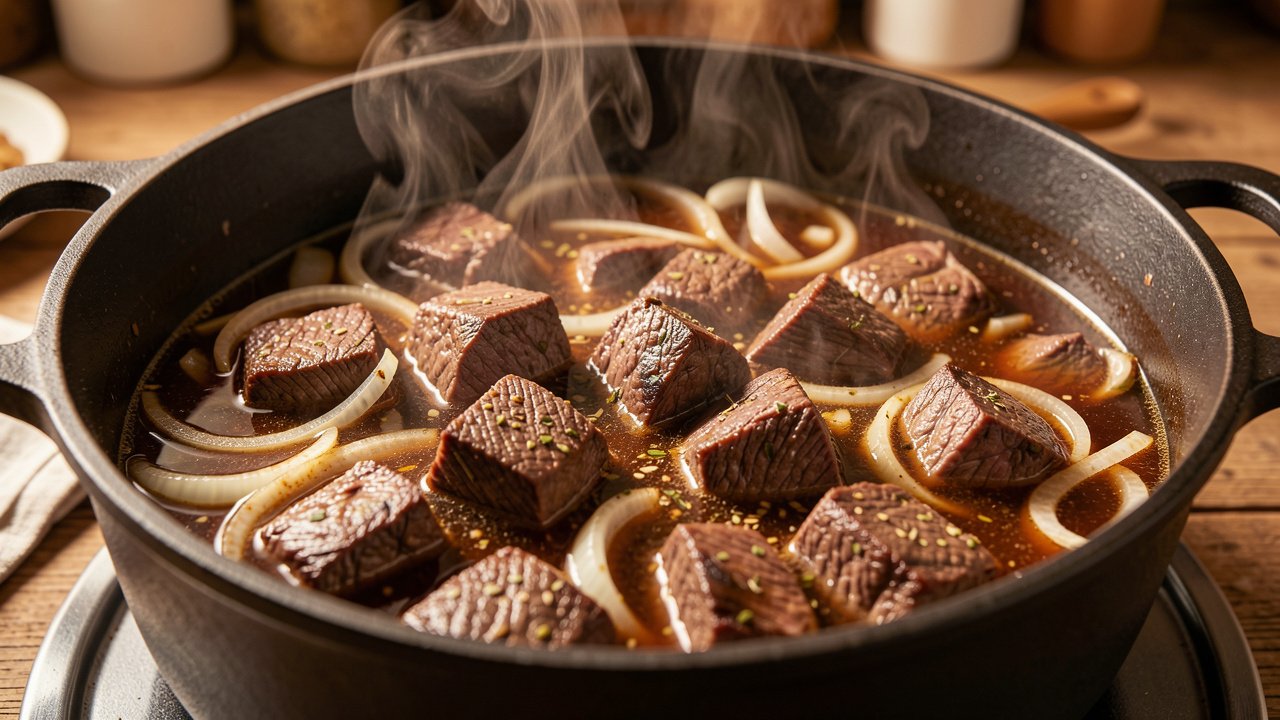
Put the beef chunks in a pot with the second onion sliced, one bouillon cube, the curry powder, thyme, and salt. Add just enough water to barely cover, bring to a boil, then simmer 25 to 30 minutes until the beef is tender. Lift out the beef and reserve the dark, savory stock; you will use it to loosen the stew later.
Start the Oil and Paste
Heat the vegetable oil in a wide, heavy pot over medium heat. Add the tomato paste and fry it for 2 to 3 minutes, stirring constantly, until it darkens slightly and loses its raw, tinny smell. This quick step builds a deeper color and a rounder tomato flavor before the blended base goes in.
Fry the Pepper Base
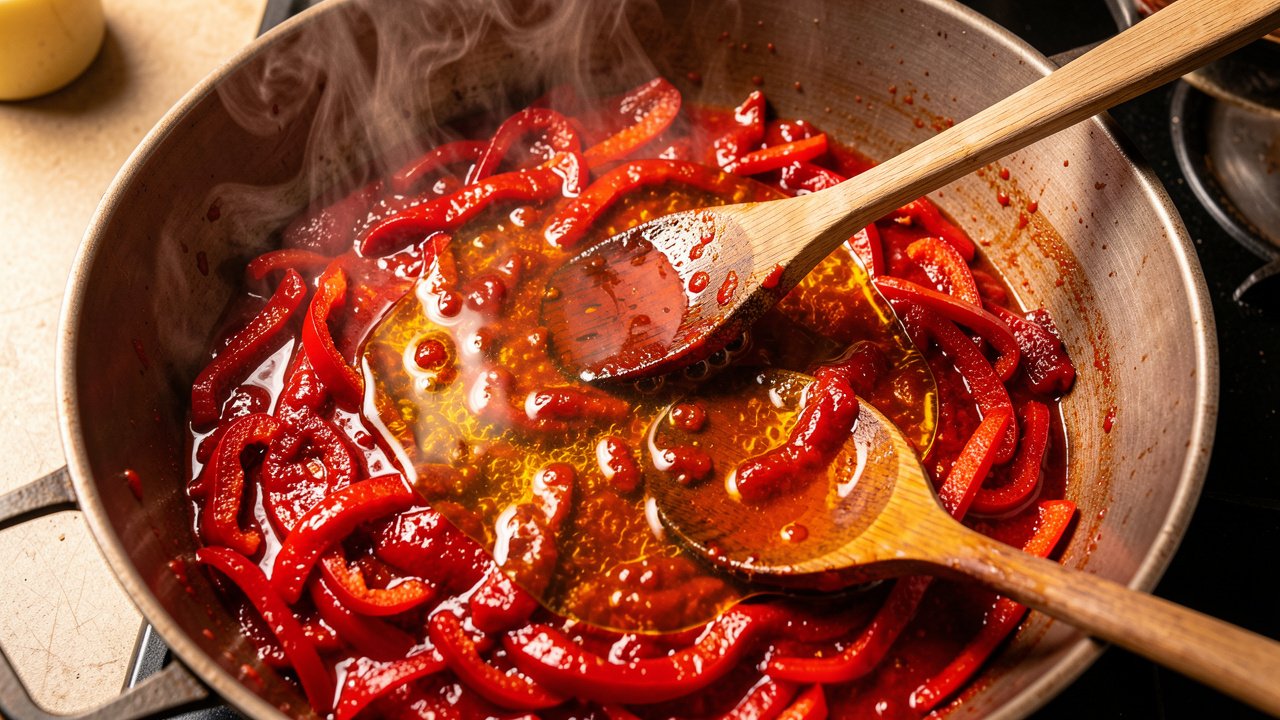
Pour the reduced pepper blend into the pot with the fried paste and stir well. Lower the heat to medium-low and let it fry, stirring every few minutes so it does not catch, for 20 to 30 minutes. It is ready when the sauce is thick and jammy and a layer of oil rises clear and bright to the surface. This long fry is the heart of obe ata dindin.
Add the Beef and Simmer
Stir the cooked beef into the fried base along with the second bouillon cube and enough of the reserved stock to bring the stew to a thick, spoonable consistency. Cover and simmer gently for 10 to 15 minutes so the beef soaks up the sauce and the flavors marry. Taste and adjust the salt and heat now.
Finish and Serve
Give the stew a final taste; it should be rich, a little sweet from the peppers, and as hot as you like. If it looks tight, loosen it with a splash more stock. Take it off the heat and let it rest a few minutes so the oil settles on top, then serve it generously over plain white rice or with your favorite swallow.
Chef’s Tips From Real Kitchen Testing
Reduce the blended base before you fry it. Boiling out some water first shortens the frying time and gives a thicker, glossier stew that clings to the beef and rice.
Watch for the oil to rise. When a clear layer floats to the top and the sauce stops smelling raw, the base is fried. That visual cue is more reliable than the clock.
Add heat gradually. Start with less Scotch bonnet, taste as the stew simmers, and blend in more only if you want it hotter, since you cannot take the fire back out.
Recipe Variations
Serving Suggestions
- Ladled generously over plain white rice
- With a swallow such as pounded yam, eba, or fufu
- Alongside boiled yam or plantain
- With fried sweet plantain on the side
Nutrition Facts
| Nutrient | Amount per serving |
|---|---|
| Calories | 390 |
| Protein | 30 g |
| Carbohydrates | 10 g |
| Fat | 26 g |
| Saturated Fat | 7 g |
| Fiber | 3 g |
| Sugar | 6 g |
| Sodium | 620 mg |
Values are estimates per serving and vary with the exact ingredients and brands you use.
Make-Ahead Tips
Buka stew actually improves overnight as the flavors settle. Make it a day ahead, cool it, and refrigerate; the fried base and beef only get better. You can also blend and reduce the pepper base in advance and keep it chilled until you are ready to fry.
Storage, Freezing & Reheating
Common Mistakes to Avoid
Troubleshooting
Watery or thin? The base was not fried long enough. Keep it on medium-low and let it reduce until it is thick and the oil separates before you add the beef.
Tastes sharp or raw? The peppers are under-fried. More salt will not fix it; give the base another 10 minutes of frying until it turns sweet and mellow.
Too oily on the plate? Let the pot rest so the oil rises, then spoon off any excess before serving. Buka stew is rich, but you control how much oil stays in.
A Note on Nigerian Cooking
Buka stew takes its name from the buka, or bukateria, the bustling Nigerian roadside eatery where big pots of stew simmer all day and a plate of rice and stew is served fast and cheap. The stew that comes out of those kitchens is what home cooks then try to recreate, and it is also known by its Yoruba name, obe ata dindin, which translates literally as fried pepper stew. That word dindin, fried, is the whole secret: the peppers are cooked in oil far longer than in a quick tomato sauce, which is what gives buka stew its deep, mellow, slightly smoky character.
It sits at the center of a whole family of Nigerian and West African pepper dishes. It shares its fried tomato-pepper base with the sauce that makes jollof rice, and it is a close cousin of the leafy efo riro, which folds the same kind of base into spinach and assorted meat. Across the region you will find echoes of it in dishes like Ghanaian red red and the Ivorian chicken stew kedjenou, each with its own twist on cooking peppers and tomato down into something rich.
The most common mix-up is between buka stew and jollof rice. In jollof, the rice is cooked directly in the tomato-pepper base so it absorbs all that color and flavor as it steams. Buka stew is the base itself, fried and simmered as a stew, and then ladled over plain white rice that is cooked separately. Same soul, two very different plates.