Spanish Recipes
Mallorcan Layered Vegetables in Tomato Sauce
Last updated: November 12, 2026
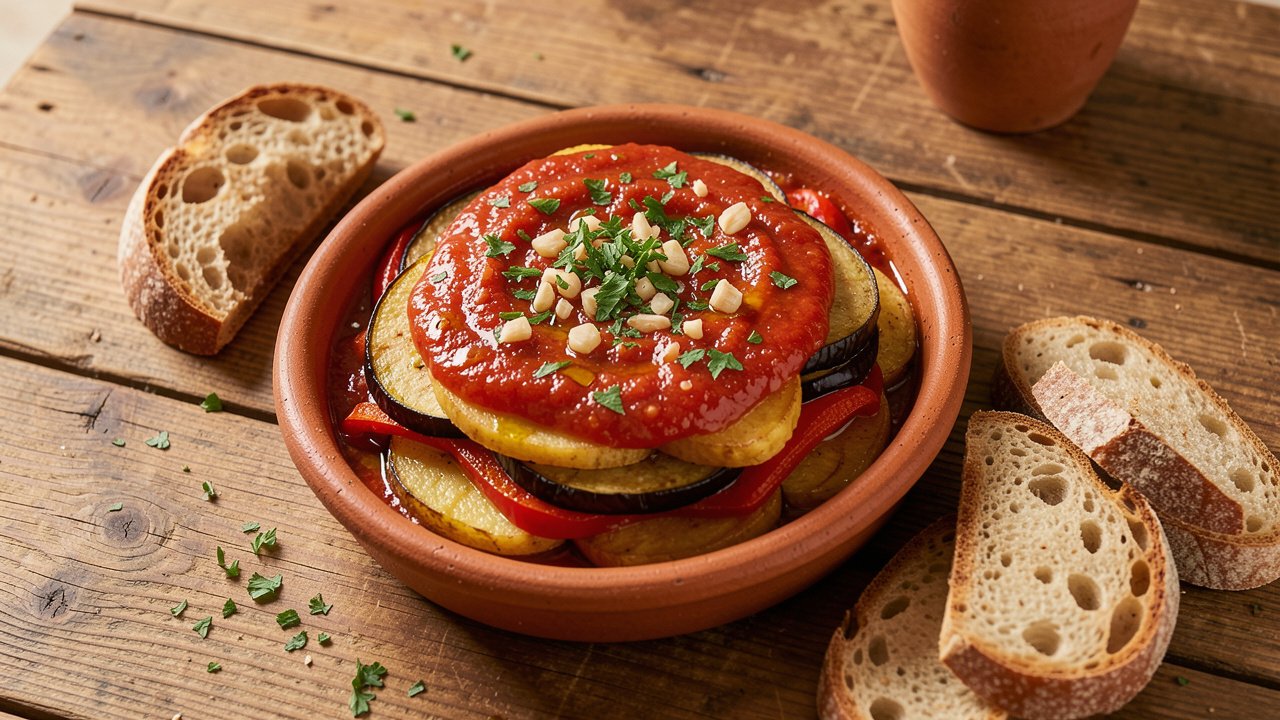
Tumbet is what a Mallorcan kitchen does with a summer glut of vegetables: fry each one until it is sweet and golden, stack them in patient layers, then drown the whole thing in a garlicky tomato sauce. It is humble food, built from potato, eggplant, and red pepper, yet a dish of tumbet tastes richer and more composed than the sum of its parts.
The method is simple but unhurried. You fry the vegetables separately so each keeps its own flavor, build a quick sauce from ripe tomatoes and plenty of garlic, then layer and bake until everything settles together. Serve it warm from the oven, or let it cool to room temperature the way Mallorcans do, with good bread alongside.
Why This Tumbet Works
Great tumbet is really two things done well: vegetables fried until each one is tender and sweet, and a tomato sauce with deep garlic flavor to tie them together. Get those two right and the layering takes care of itself. The recipe here fries each vegetable on its own so nothing turns to mush, then blankets the stack in a bright, garlicky sauce.
Frying separately is the whole secret. Potato, eggplant, and red pepper cook at different speeds and soak up oil differently, so cooking them in one pan gives you some pieces raw and others collapsed. Fried in batches, the potato turns creamy, the eggplant goes silky, and the pepper softens to a sweet, smoky strip, and each keeps its character in the finished dish.
The sauce is just ripe tomatoes, onion, and a generous amount of garlic, cooked down until thick and glossy. It is loose enough to seep between the layers but concentrated enough to cling, which is what turns three separate fried vegetables into a single savory casserole rather than a plate of odds and ends.
It is also forgiving and make-ahead friendly. Tumbet tastes even better the next day, once the layers have rested and the sauce has soaked through, and Mallorcans happily eat it warm, cool, or at room temperature. Build it once and you have a dish that works as a side, a light main, or a filling for bread.
Pro observation: Tumbet is naturally vegan and fully halal as written, with no forbidden ingredients. Every bit of richness comes from the olive oil, the sweet fried vegetables, and the garlicky tomato sauce, so you never miss a thing.
Ingredients
Kitchen Measurement Converter
Need to convert an amount while you measure? Pick a category, enter a value, and the result updates instantly.
Ingredient Notes & Substitutions
Potato & Eggplant
Use a waxy or all-purpose potato that holds its shape once fried; floury baking potatoes can fall apart. For the eggplant, a firm, glossy globe variety works best. Slice both a scant quarter-inch thick so they cook through without soaking up too much oil.
Red Peppers
Sweet red bell peppers are traditional and give the dish its mellow, smoky layer. Romano or other long red peppers work beautifully too. Cut them into wide, flat strips so they lie neatly between the potato and eggplant and fry into soft, sweet ribbons.
Tomatoes & Garlic
Ripe, grated fresh tomatoes make the most authentic sauce, but a can of good crushed tomatoes works year-round. Do not skimp on the garlic; it is the backbone of the sauce. A spoonful of tomato paste deepens the color and body when your tomatoes are pale.
Olive Oil
Tumbet is a fried dish, so use a generous amount of olive oil and keep it hot enough to crisp rather than steam the vegetables. A plain olive oil is fine for frying; save a drizzle of good extra-virgin for finishing the dish just before it goes to the table.
Equipment
- Large frying pan or skillet
- Baking dish or casserole
- Box grater (for the tomatoes)
- Sharp knife and board
- Slotted spoon or spider
- Paper towels for draining
Before You Start
1. Salt the eggplant slices and let them drain for 20 minutes. Lay the rounds on paper towels, salt both sides, and let the beads of liquid rise, then pat dry. Skip this and the eggplant soaks up oil like a sponge and turns greasy instead of silky.
2. Slice the potatoes a scant quarter-inch thick and dry them well. Thicker rounds stay raw in the center by the time the outside browns, and wet slices spit and steam in the oil; pat them dry so they fry to a creamy, golden finish.
3. Get the oil shimmering-hot before the first batch goes in. Cool oil is absorbed straight into the vegetables and leaves them limp and oily; a hot pan sears the surface so each slice crisps, stays tender inside, and drains cleanly.
Step-by-Step Instructions
Tumbet takes a little patience at the stove because the vegetables fry in batches, so set up a tray lined with paper towels first. Slice everything, salt the eggplant, and grate the tomatoes before you start, and the frying and layering go quickly from there.
Prep and Salt the Vegetables
Peel and slice the potatoes into scant quarter-inch rounds and pat them dry. Slice the eggplant the same thickness, salt both sides, and let it drain on paper towels for 20 minutes, then pat dry. Cut the red peppers into wide, flat strips. Grate the tomatoes, and mince the garlic and onion so everything is ready.
Fry the Vegetables in Batches
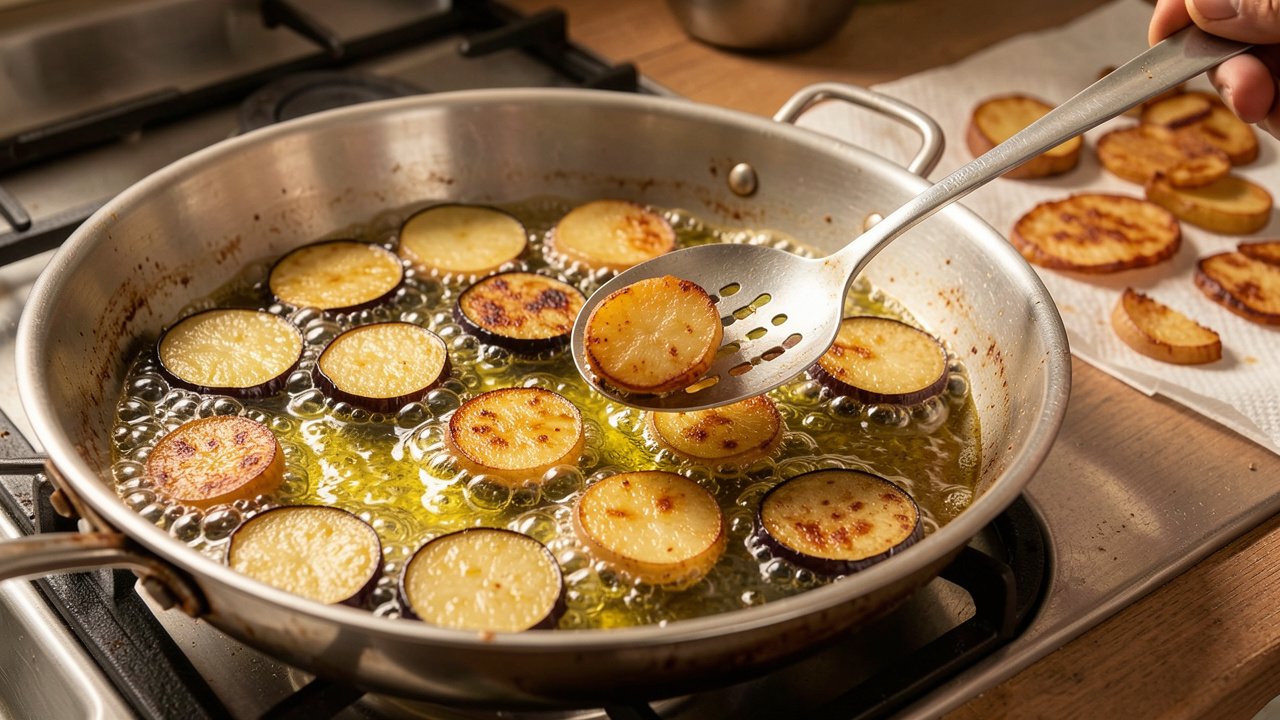
Heat a generous layer of olive oil in a large pan over medium-high heat. Fry the potato rounds until tender and golden, then the eggplant until soft, and finally the peppers until they slump and sweeten. Work in single-layer batches and lift each one onto paper towels to drain, salting lightly as you go.
Make the Garlicky Tomato Sauce
Pour off most of the oil, leaving a thin film, and gently cook the onion until soft. Add the garlic and stir for a minute until fragrant, then add the tomato paste and toast it briefly. Pour in the grated tomatoes, oregano, sugar, bay leaf, and a good pinch of salt, and simmer 12 to 15 minutes until thick and glossy. Discard the bay leaf.
Layer the Fried Vegetables
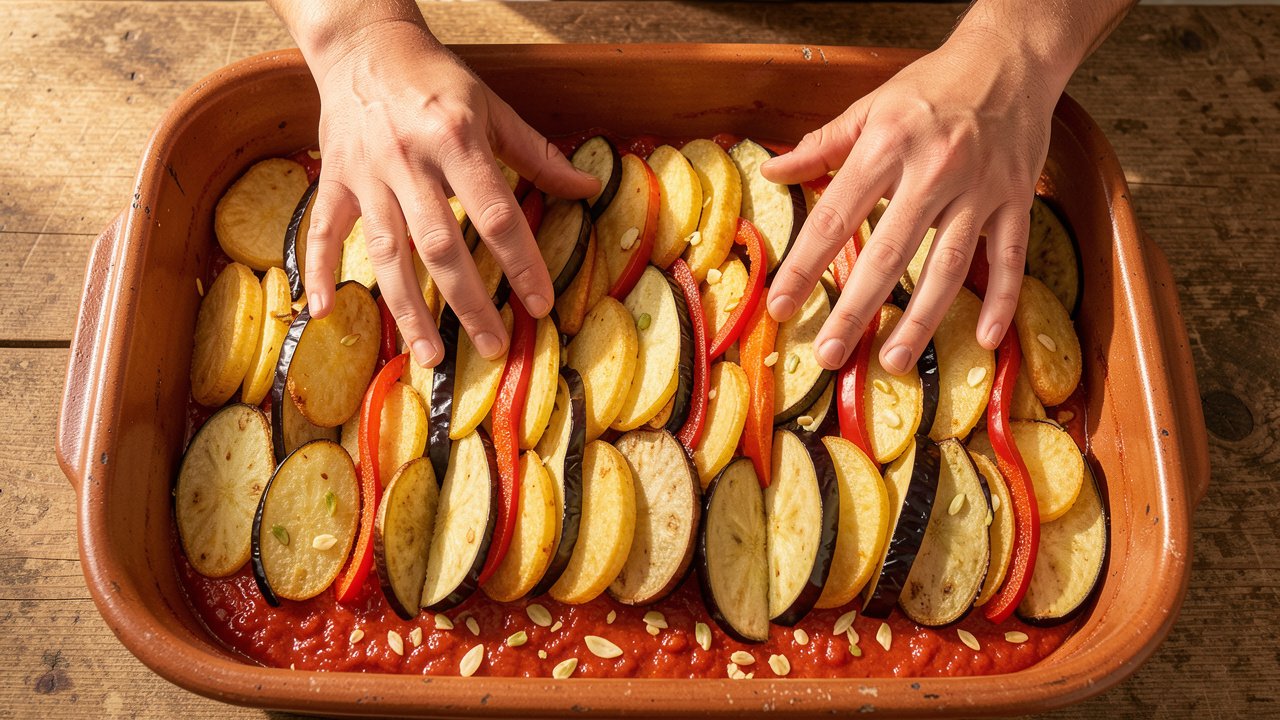
Spoon a thin layer of sauce into a baking dish. Lay the potato slices in an even layer, then the eggplant, then the peppers, seasoning lightly between each. Press the layers gently so they settle together into a neat, snug stack that will hold its shape once baked.
Top with Sauce and Bake
Spoon the rest of the tomato sauce over the top so it covers the vegetables and seeps between the layers. Bake at 375 F (190 C) for about 20 minutes, until the sauce is bubbling at the edges and everything is hot through and settled into a single casserole.
Rest and Serve
Let the tumbet rest for at least 10 minutes out of the oven so the layers firm up and slice cleanly instead of sliding apart. Scatter the chopped parsley over the top and add a drizzle of good olive oil. Serve it warm, or let it cool to room temperature, with plenty of crusty bread alongside.
Chef’s Tips From Real Kitchen Testing
Fry each vegetable on its own timeline. Potato needs the longest to turn creamy, eggplant goes silky in the middle, and peppers slump fastest, so cooking them in batches keeps every layer at its best.
Drain every batch well on paper towels before it goes into the dish. Excess oil pools at the bottom of the casserole and makes the layers greasy instead of tender and clean.
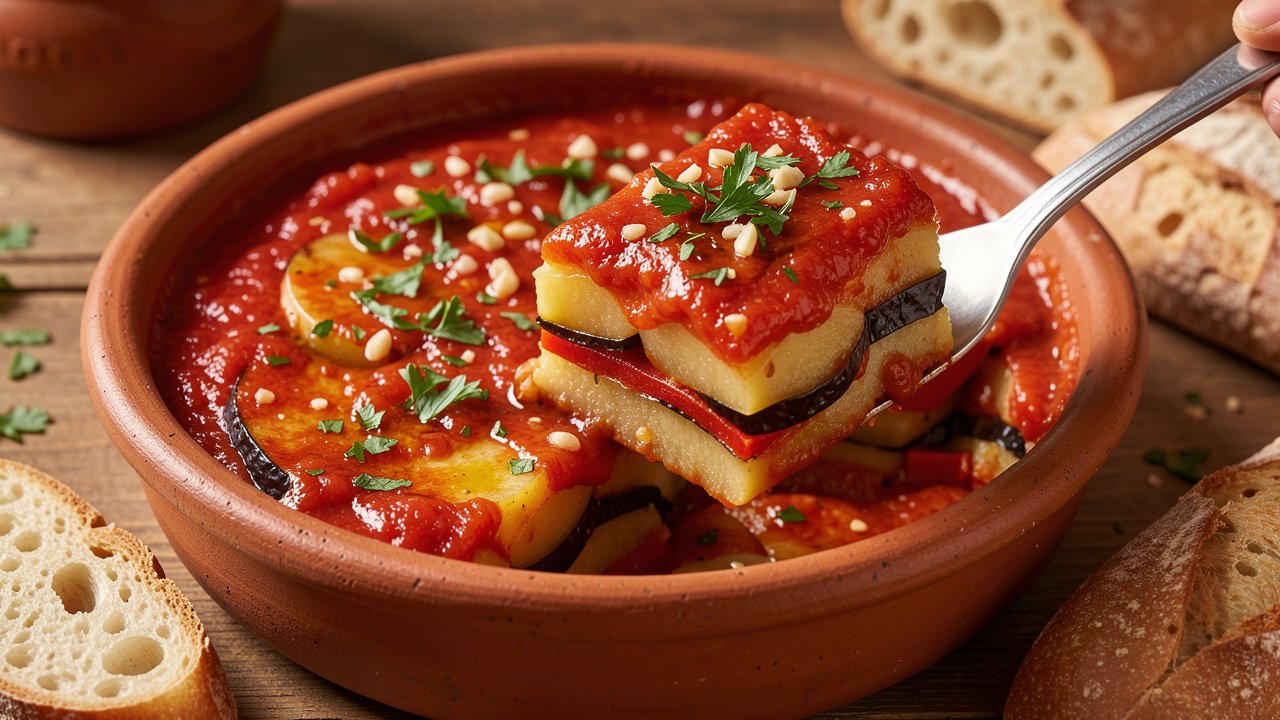
Always rest the tumbet before cutting. Straight from the oven the layers slide apart, but after ten minutes they settle and you get neat squares that show off every colorful stripe.
Recipe Variations
Serving Suggestions
- Thick slices of warm, crusty bread for the sauce
- A fried or poached egg set on top of each portion
- A simple green salad with a sharp vinegar dressing
- Grilled or baked fish for a heartier plate
Nutrition Facts
| Nutrient | Amount per serving |
|---|---|
| Calories | 340 |
| Protein | 6 g |
| Carbohydrates | 38 g |
| Fat | 20 g |
| Saturated Fat | 3 g |
| Fiber | 8 g |
| Sugar | 12 g |
| Sodium | 480 mg |
Values are estimates per serving and vary with how much frying oil the vegetables absorb and the brands you use.
Make-Ahead Tips
Tumbet is a natural make-ahead dish and arguably tastes better the next day. Assemble it completely, cover, and refrigerate, then bake it when you are ready to eat, adding a few extra minutes since it starts cold. The rested layers soak up the sauce overnight and slice even more cleanly.
Storage, Freezing & Reheating
Common Mistakes to Avoid
Troubleshooting
Dish too oily? The vegetables went in before they drained, or the oil was not hot enough. Drain each batch on paper towels and tip off any oil pooled in the dish before adding the sauce.
Layers falling apart? The sauce was too thin or you cut it too soon. Simmer the sauce until thick, and rest the baked tumbet at least ten minutes so the layers set before slicing.
Potato still firm in the middle? The slices were too thick or fried too fast. Cut them a scant quarter-inch thick and fry over steady medium-high heat until a slice gives easily when pierced.
A Note on Mallorcan Cooking
Tumbet comes from Mallorca, the largest of Spain’s Balearic Islands, where it is a cornerstone of summer cooking built on whatever the garden is giving. The name is Mallorquin, the island’s dialect of Catalan, and is linked to the verb “tombar”, to tip or turn out, a nod to the way the dish was once turned out of its earthenware mould onto the plate. It is peasant food raised to something memorable by nothing more than good oil and patience.
It belongs to the big Mediterranean family of fried-and-stewed vegetable dishes, and the one it is most often confused with is French ratatouille. The difference is in the method: ratatouille stews its vegetables together in one pot, while tumbet fries each one separately and layers them, with potato in the mix, under a tomato sauce. It is a close cousin of Spanish pisto and shares a soul with dishes like Sicilian caponata and Moroccan zaalouk, all of them ways of turning a glut of summer vegetables into something generous.
What has kept tumbet on Mallorcan tables is exactly what created it: it is thrifty, meatless, and endlessly useful. Serve it warm as a main, cool as a side, or spooned onto bread, and you have a dish that still tastes of a Balearic summer.