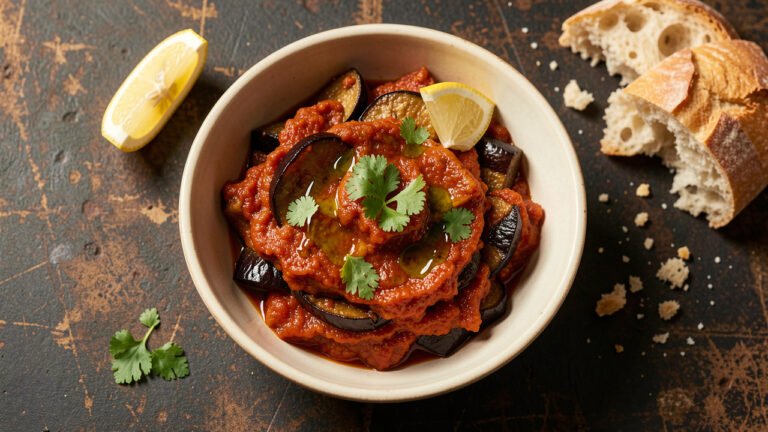
Moroccan Recipes
Cooked Eggplant and Tomato Salad
Zaalouk is the dish that taught me eggplant and tomatoes were made for each other. The eggplant cooks down until it is meltingly soft and almost buttery, the tomatoes turn jammy and sweet-tart, and the garlic and warm spices tie the whole thing together into something you want to keep dipping into long after you meant to stop. It is humble, thrifty, and quietly addictive.
On any Moroccan table it usually arrives as part of a spread of small cooked salads, but it is just as happy as a light lunch with warm flatbread, or spooned alongside a bigger main. I learned the hard way that the two things that make or break it are cooking the tomatoes down enough and seasoning it bravely; a timid, watery zaalouk is a sad thing, but a well-reduced, well-salted one is unforgettable.
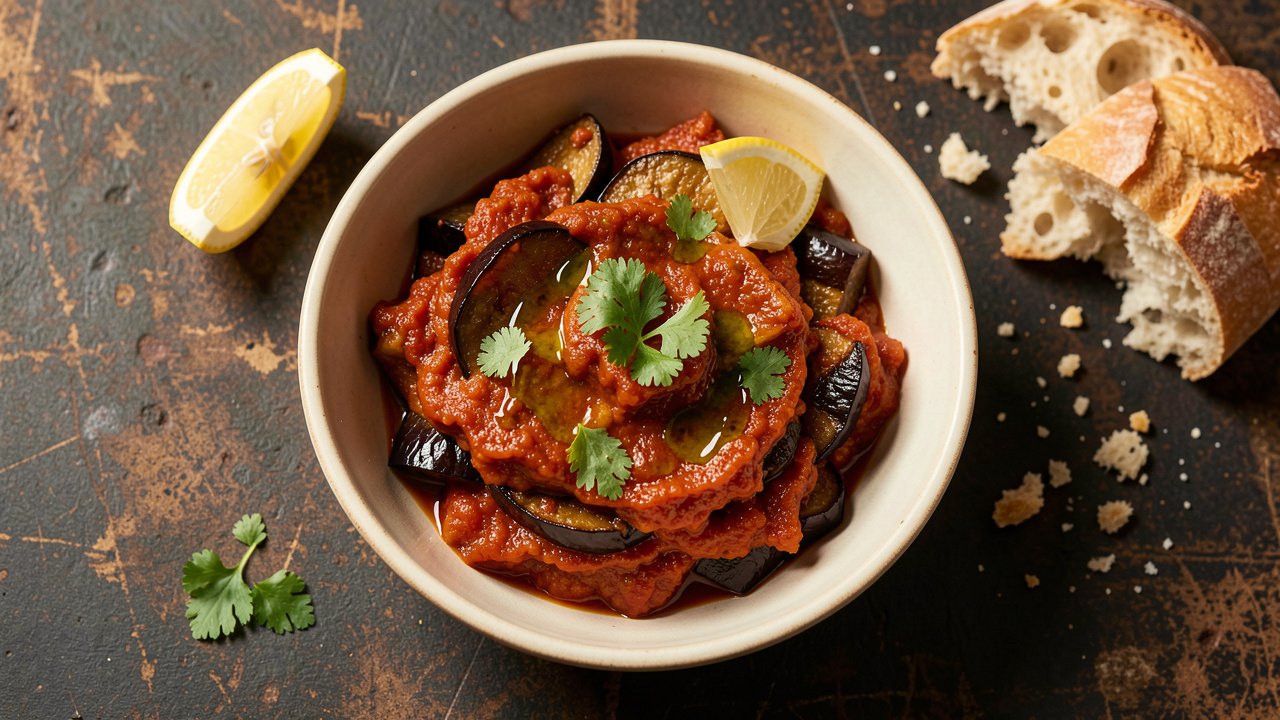
Why This Moroccan Zaalouk Works
Zaalouk works because it does a lot with very little. There is no long list of hard-to-find ingredients here, just eggplant, tomatoes, garlic, olive oil, and a small handful of warm spices. The magic is entirely in the technique: cook each element until it gives up its water and concentrates, then mash everything together so the flavors fuse into one deep, savory whole. What you get back is far greater than the sum of the parts.
The eggplant is the heart of the dish. When it is properly softened, it loses any spongy or bitter edge and turns silky, almost creamy, which is what gives zaalouk its luxurious texture without a drop of dairy. That is why it stays satisfying even though it is light and plant-based. Rushing the eggplant is the single most common way people end up disappointed.
The tomatoes bring the acidity and brightness that keep the dish from feeling heavy. As they cook down, their sweetness comes forward and their raw sharpness fades, leaving a jammy base that clings to the eggplant. Cooking them until the excess liquid has evaporated is what separates a proper zaalouk from a wet, sloppy version that slides off your bread.
Cumin and paprika do the seasoning work, and they punch above their weight. Cumin gives an earthy, toasty backbone, while paprika lends color and a mild, fruity warmth. Bloomed briefly in the oil with the garlic, they perfume the whole pan. A finishing squeeze of lemon lifts everything and makes the flavors ring clear.
Pro observation: Zaalouk is done reducing when you can drag a spoon across the bottom of the pan and the trail holds for a second before the mixture slowly closes back over it. That means the water has cooked off and the flavor is concentrated.
Ingredients
Kitchen Measurement Converter
Quickly convert between common cooking measurements without leaving the recipe. Pick a category, enter a value, and the result updates instantly.
Ingredient Notes & Substitutions
Eggplant
Choose firm, glossy eggplants that feel heavy for their size, since those are the freshest and least bitter. Large globe eggplants or slimmer varieties both work. Peeling is optional; leaving some skin on adds color and holds the pieces together as they soften.
Tomatoes
Ripe, red tomatoes give the best sweet-tart base. Out of season, one 14-ounce can of chopped tomatoes works well and is often more reliable than pale fresh ones. Grating fresh tomatoes on a box grater is a traditional shortcut that skips peeling.
Spices
Ground cumin and sweet paprika are the core. Use fresh, fragrant spices, since stale ones taste dusty. Smoked paprika adds a deeper, grilled note if you like it. Add hot paprika or cayenne only if you want gentle heat.
Herbs and Lemon
Fresh cilantro is classic; flat-leaf parsley adds a second green note. Stir most of it in at the end so it stays bright. A squeeze of lemon just before serving sharpens the whole dish, so add it to taste rather than all at once.
Equipment
- Wide, heavy skillet or pan
- Wooden spoon or masher
- Sharp knife and board
- Colander for salting
- Measuring spoons
- Small bowl for spices
Before You Start
1. Salt the eggplant early. Tossing the cubes with salt and letting them sit while you prep the tomatoes draws out moisture and any bitterness, so they cook down faster and taste sweeter.
2. Chop the tomatoes small. Smaller pieces break down faster into a smooth, jammy base, which shortens the cooking time and helps the sauce reduce evenly.
3. Measure the spices first. The garlic and spices go into hot oil and can scorch in seconds, so have the cumin, paprika, and minced garlic ready by the stove before you start.
Step-by-Step Instructions
Prep and Salt the Eggplant
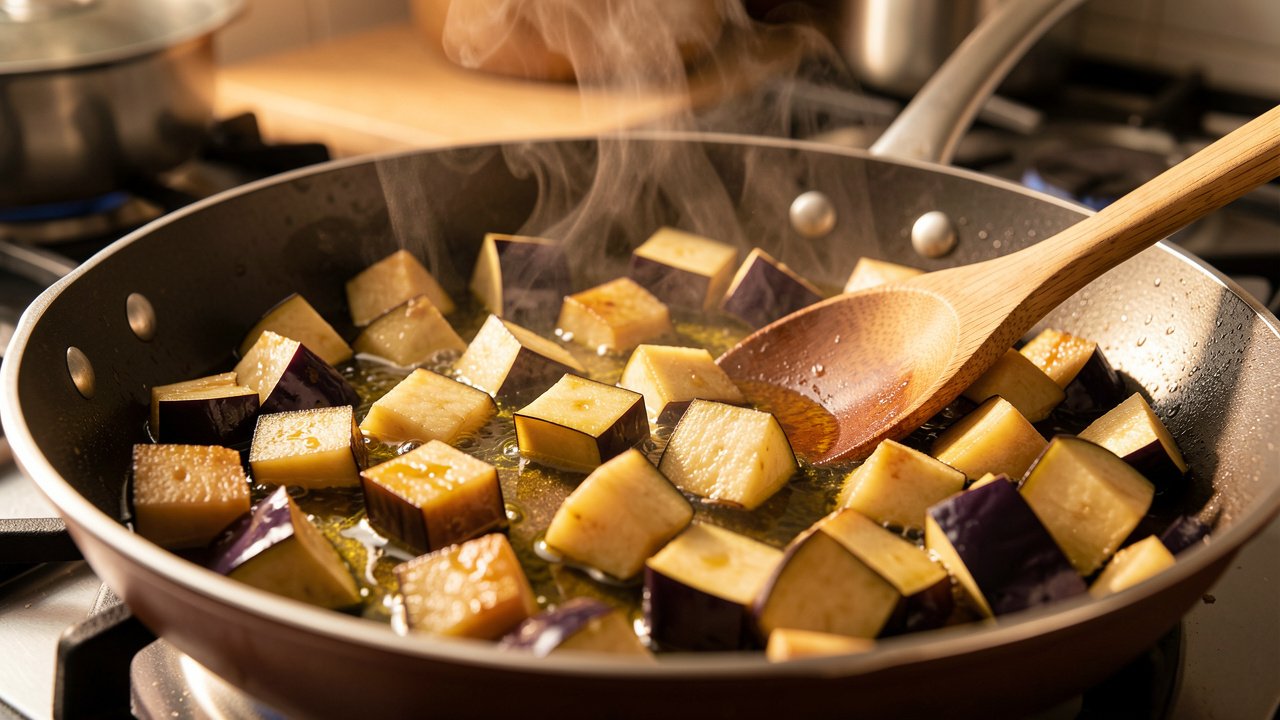
Cut the eggplant into rough 3/4-inch cubes, leaving some skin on if you like. Toss the cubes with half a teaspoon of the salt in a colander and let them sit for 10 to 15 minutes while you chop the tomatoes and garlic. Blot away the beads of moisture that appear on the surface with a clean towel.
Soften the Eggplant
Heat 2 tablespoons of the olive oil in a wide pan over medium heat. Add the eggplant cubes and cook, stirring often, for 8 to 10 minutes until they collapse and turn soft and golden. If the pan looks dry, add a splash of water rather than more oil so the eggplant steams and softens fully.
Bloom the Garlic and Spices
Push the eggplant to one side and add the remaining 2 tablespoons of olive oil. Stir in the minced garlic, cumin, sweet paprika, and hot paprika if using, and cook for about 30 seconds until fragrant. Keep it moving so the garlic and spices bloom in the oil without catching or turning bitter.
Add the Tomatoes and Simmer
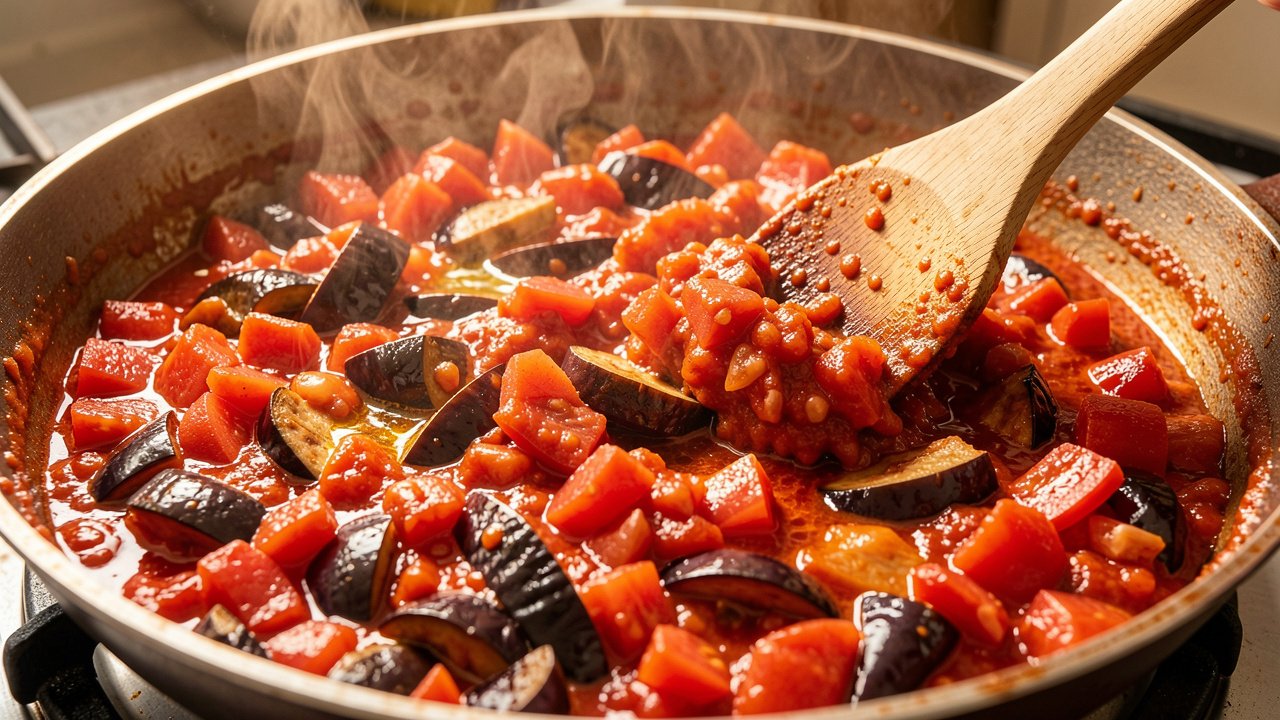
Add the chopped tomatoes and the remaining half teaspoon of salt. Stir everything together, then cook uncovered for 12 to 15 minutes, mashing occasionally, until the tomatoes collapse and most of the liquid has cooked off. The mixture should look thick, glossy, and deep red, not watery.
Mash and Meld
Use the back of your spoon or a potato masher to break the eggplant and tomatoes down into a rough, spreadable mash. Lower the heat and let it cook gently for another 5 minutes so the flavors meld and any last moisture cooks off. Taste and adjust with more salt or a pinch more cumin.
Finish with Lemon and Herbs
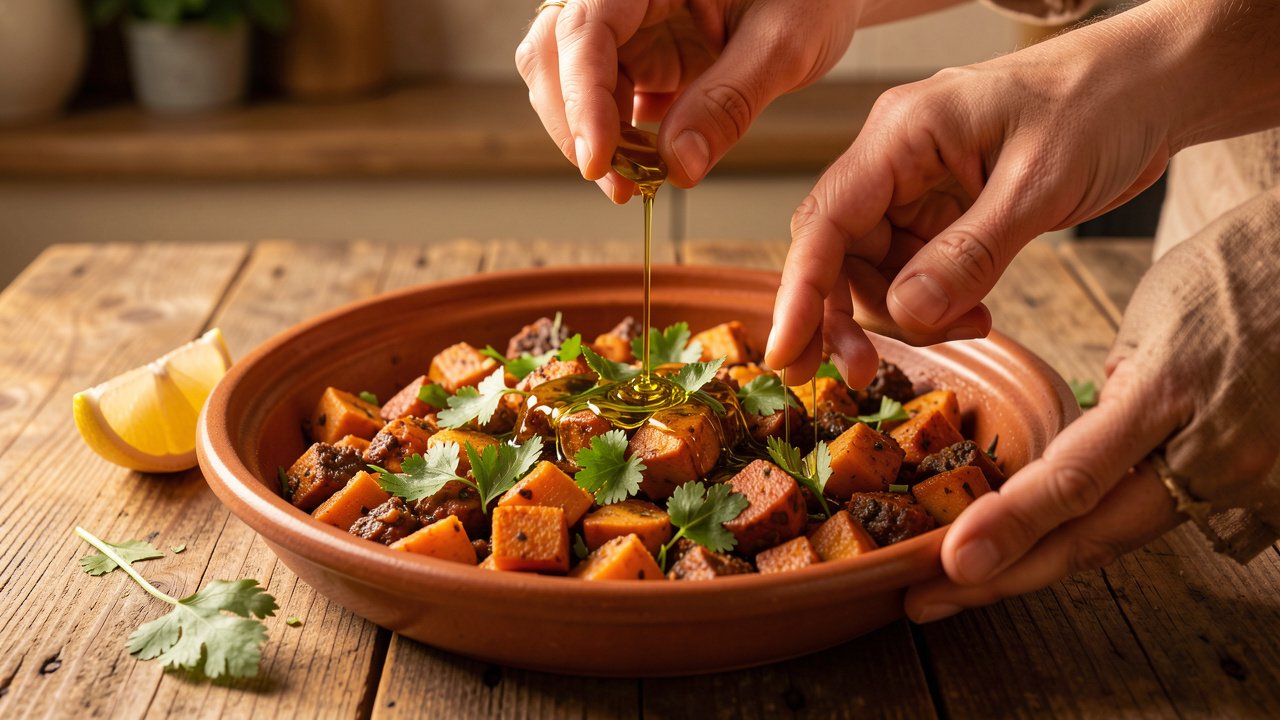
Turn off the heat and stir in the lemon juice and most of the chopped cilantro and parsley. Taste one more time and balance the tang and salt. Spoon into a shallow dish, drizzle with a little extra olive oil, and scatter the remaining herbs over the top. Serve warm or at room temperature with bread.
Chef’s Tips From Real Kitchen Testing
Do not rush the eggplant. It needs to be genuinely soft, not just browned, or the finished zaalouk will feel chewy instead of silky. A splash of water helps it steam through.
Reduce until it holds together. If a spoon dragged across the pan leaves a trail, you are there. A watery mixture will taste thin and slide off the bread.
Season and acidify at the end. Salt to taste and add the lemon in stages, tasting as you go, so the flavors are bright and balanced rather than flat.
Recipe Variations
Serving Suggestions
- Warm crusty bread or Moroccan khobz for scooping
- As part of a mezze spread of small cooked salads
- Alongside grilled vegetables or a simple grain
- Topped with extra olive oil and a lemon wedge
Nutrition Facts
| Nutrient | Amount per serving |
|---|---|
| Calories | 160 |
| Protein | 3 g |
| Carbohydrates | 14 g |
| Fat | 12 g |
| Saturated Fat | 2 g |
| Fiber | 6 g |
| Sugar | 7 g |
| Sodium | 590 mg |
Values are estimates per serving and vary with the exact ingredients and brands you use.
Make-Ahead Tips
Zaalouk is one of those dishes that is arguably better the next day, which makes it perfect for making ahead. Cook it fully, cool it, and refrigerate in an airtight container; overnight, the garlic mellows and the spices settle into the eggplant so every bite tastes rounder. Bring it back to room temperature or warm it gently before serving, and refresh it with a squeeze of lemon and a little fresh cilantro so it tastes lively again.
Storage, Freezing & Reheating
Common Mistakes to Avoid
Troubleshooting
Zaalouk tastes flat? It usually needs more salt and a squeeze of lemon to wake up the flavors, and sometimes a pinch more cumin.
Too watery or loose? Keep cooking it uncovered over medium heat until the excess liquid evaporates and the mixture holds its shape.
Tastes bitter? The eggplant was likely undercooked, or old and seedy. Salting before cooking and softening it fully both help prevent bitterness.
A Note on Moroccan Cooking
Zaalouk belongs to a beloved family of Moroccan cooked salads and dips, small dishes served at the start of a meal to be shared and scooped with bread. It sits happily beside taktouka, a cooked pepper and tomato salad, and various other seasonal vegetable preparations that make the most of ripe produce and generous olive oil. What ties them together is warm spicing, patient cooking, and a love of bright, sunny flavor. Cumin, paprika, and garlic recur again and again, and a final hit of fresh herbs and lemon keeps everything lively. If you enjoy cooked tomato dishes like this, browse our full library of tomato recipes, or try a fresh, chunky tomato salsa for a different kind of scoopable dip.
Food Safety & Kitchen Hygiene
Because zaalouk is often served at room temperature and made ahead, a few simple habits keep it safe. Wash the eggplant, tomatoes, and fresh herbs well under running water before prepping, and use a clean board and knife for the produce. Cool any leftovers within about two hours of cooking, then refrigerate them promptly in a sealed container rather than leaving the dish out on the counter. When serving as part of a spread, avoid leaving it at room temperature for more than a couple of hours, and use a clean spoon each time you go back for more.
Frequently Asked Questions
More Tomato Recipes to Try
Last updated: September 29, 2026