
Tunisian Recipes
Fried Vegetables and Egg in Spiced Tomato with Harissa
Last updated: November 12, 2026
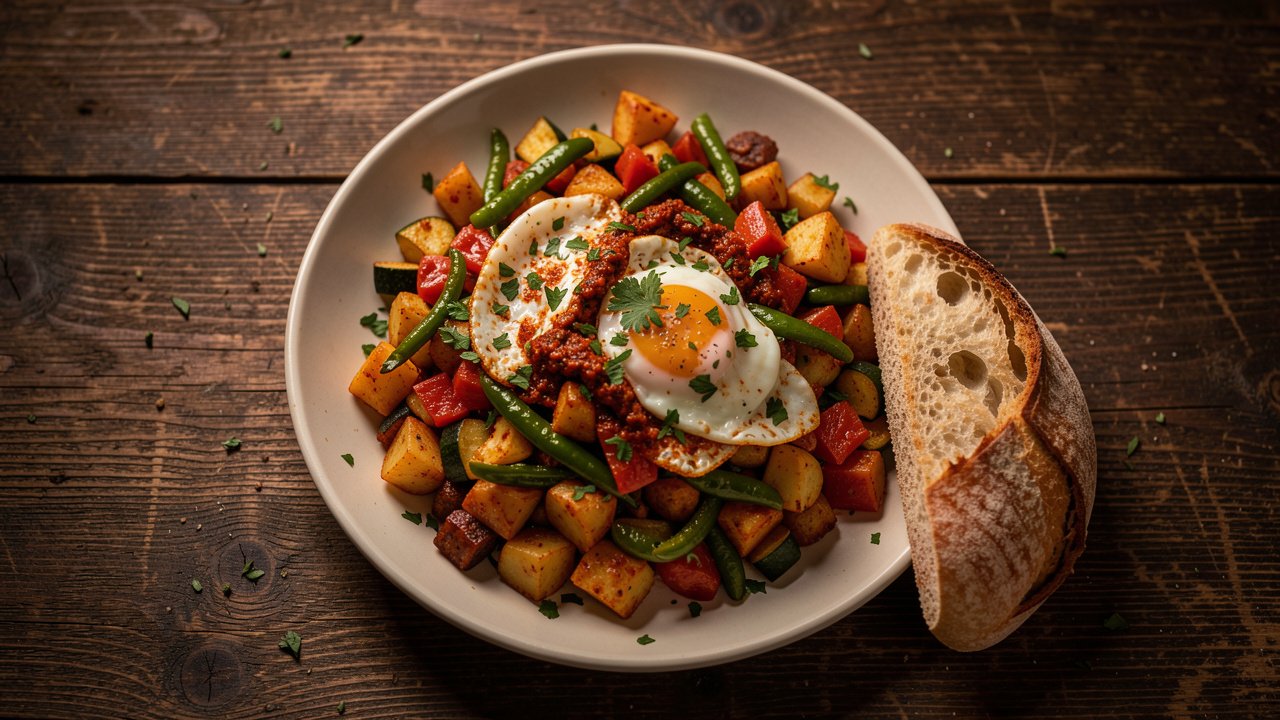
Kafteji is a Tunisian street-food classic built from the humblest vegetables and a jar of harissa. Peppers, tomatoes, zucchini, and potato are fried until soft and a little charred, eggs are fried alongside them, and then everything is heaped onto a board and chopped together into a rough, spicy tangle. It is smoky, garlicky, and deeply satisfying, the kind of thing a Tunisian cook makes to feed a crowd from almost nothing.
What makes kafteji sing is the chopping. Rather than a smooth stew, you want a coarse mix where you still catch a piece of soft potato here and a ribbon of sweet pepper there, all bound by harissa and the fried egg. Pile it onto warm bread, or stuff it into a baguette, and you have a meal that tastes like a Tunis market stall at lunchtime.
Why This Kafteji Works
Great kafteji is really two things done well: each vegetable fried on its own until it is soft and lightly caramelized, and a bold harissa-and-garlic seasoning worked through at the very end. Fry everything together in one crowded pan and the vegetables steam into mush; fry them in batches and each one keeps its own character in the finished chop.
Frying separately matters because the vegetables cook at wildly different speeds. Potato needs the longest in the oil to turn tender and golden, zucchini softens fast and weeps water, and peppers and tomatoes collapse into sweetness in just a few minutes. Giving each its own turn in the pan means nothing is raw and nothing is scorched when they all come together.
The chopping is the signature move. Once the fried vegetables and eggs are tipped onto a board and chopped together, the harissa, garlic, caraway, and coriander coat every piece, and the soft egg binds the mix into a spreadable tangle. It is this rough texture, never a puree, that marks real kafteji.
It is also endlessly forgiving. Kafteji began as a way to use up a basket of market vegetables, so the exact mix is up to you. Keep the harissa and the frying method constant, swap in whatever is freshest, and you will get a smoky, spicy plate that tastes of a Tunisian street stall every single time.
Pro observation: Kafteji is fully halal as written, with no forbidden ingredients. All of its depth comes from fried vegetables, eggs, garlic, and the chili heat of harissa, so you never miss a thing.
Ingredients
Kitchen Measurement Converter
Need to convert an amount while you measure? Pick a category, enter a value, and the result updates instantly.
Ingredient Notes & Substitutions
Peppers
Green bell peppers are the usual choice for their grassy sweetness, but long Mediterranean or Anaheim peppers are even more authentic. For a smokier plate, add a pointed red pepper. Whatever you use, fry it until the edges blister and soften before chopping.
Zucchini & Potato
Zucchini fries quickly and adds a creamy softness; a firm, waxy potato holds its shape and gives the chop its body. Cut both into even cubes so they cook at a predictable pace. A sweet potato works for a sweeter, softer version.
Eggs & Harissa
Fried eggs are traditional and bind the chopped vegetables together. Harissa is the heart of the dish, so use a good Tunisian paste and adjust the amount to your heat tolerance. No harissa on hand? Stir in tomato paste with smoked paprika and a pinch of chili.
Tomatoes & Spices
Ripe tomatoes fry down into a jammy sweetness that balances the chili. Ground caraway and coriander are the classic Tunisian warm spices here; a little cumin is a fine stand-in. Finish with plenty of chopped parsley for freshness and color.
Equipment
- Large frying pan or skillet
- Slotted spoon
- Paper towels for draining
- Large cutting board
- Sharp knife
- Mixing bowl
Before You Start
1. Cut the potato into small, even cubes no bigger than half an inch. It is the slowest vegetable in the pan, so oversized chunks stay raw in the middle while the peppers and tomatoes have already collapsed and need to come out.
2. Set a paper-towel-lined plate next to the stove before you heat the oil. Each batch of fried vegetables has to drain the moment it leaves the pan, or the trapped oil turns the finished chop greasy and heavy instead of soft and bright.
3. Taste your harissa on a spoon before you add it. Jarred pastes swing from mild to fierce, so knowing its heat lets you start with half a tablespoon and build up, rather than wrecking the whole plate with one aggressive scoop.
Step-by-Step Instructions
Kafteji is a batch-frying job, so cut all the vegetables before you heat the oil. Keep a draining plate beside the stove, fry each vegetable in turn, and have your board and knife ready so you can chop everything together while it is still warm.
Prep the Vegetables
Cut the green peppers into strips, halve the tomatoes, and cut the zucchini and peeled potato into small, even cubes. Mince the garlic and chop the parsley. Keeping the pieces uniform means each vegetable fries evenly, so nothing turns out raw in the center or burnt at the edges.
Fry the Potato and Zucchini
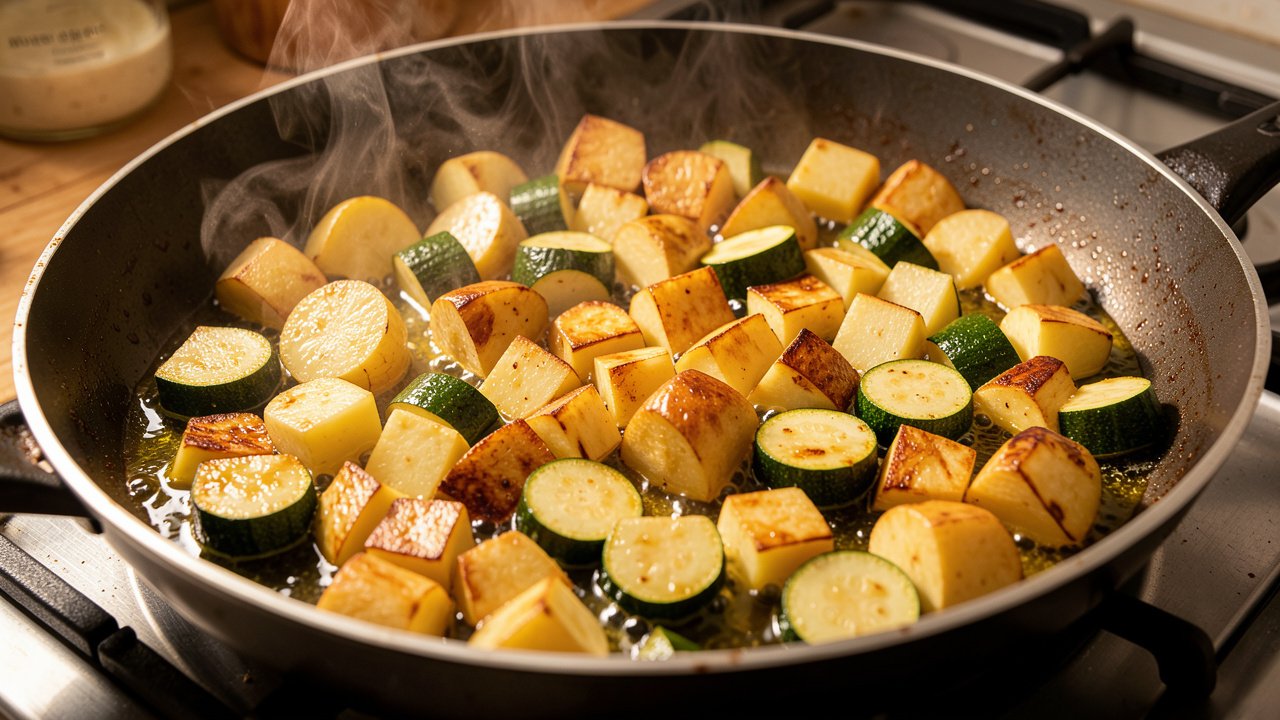
Warm the olive oil in a large pan over medium-high heat. Fry the potato cubes first for 8 to 10 minutes, turning until golden and tender, then lift them onto the draining plate. Add the zucchini and fry 4 to 5 minutes until soft and lightly colored, then drain it with the potato.
Fry the Peppers and Tomatoes
In the same oil, fry the pepper strips for 4 to 5 minutes until blistered and soft, then drain them. Add the halved tomatoes cut-side down and fry 3 to 4 minutes until their skins loosen and the flesh goes jammy. Drain the tomatoes with the rest of the vegetables.
Fry the Eggs
Lower the heat to medium and crack the eggs straight into the same pan, frying them 2 to 3 minutes until the whites are set but the yolks are still a little soft. The soft yolk is what binds the chopped vegetables together, so do not cook the eggs hard.

Chop Everything Together
Pile the drained vegetables and the fried eggs onto a large cutting board. Using a sharp knife, chop through the whole heap again and again until you have a coarse, rough mixture, never a paste. You should still see distinct pieces of potato, pepper, and egg bound by the soft tomato.
Season with Harissa and Serve
Scrape the chopped mixture into a bowl and stir in the minced garlic, harissa, ground caraway, ground coriander, and salt. Taste and add more harissa if you want it hotter. Scatter over the parsley, pile onto warm bread, and serve right away while it is still warm.
Chef’s Tips From Real Kitchen Testing
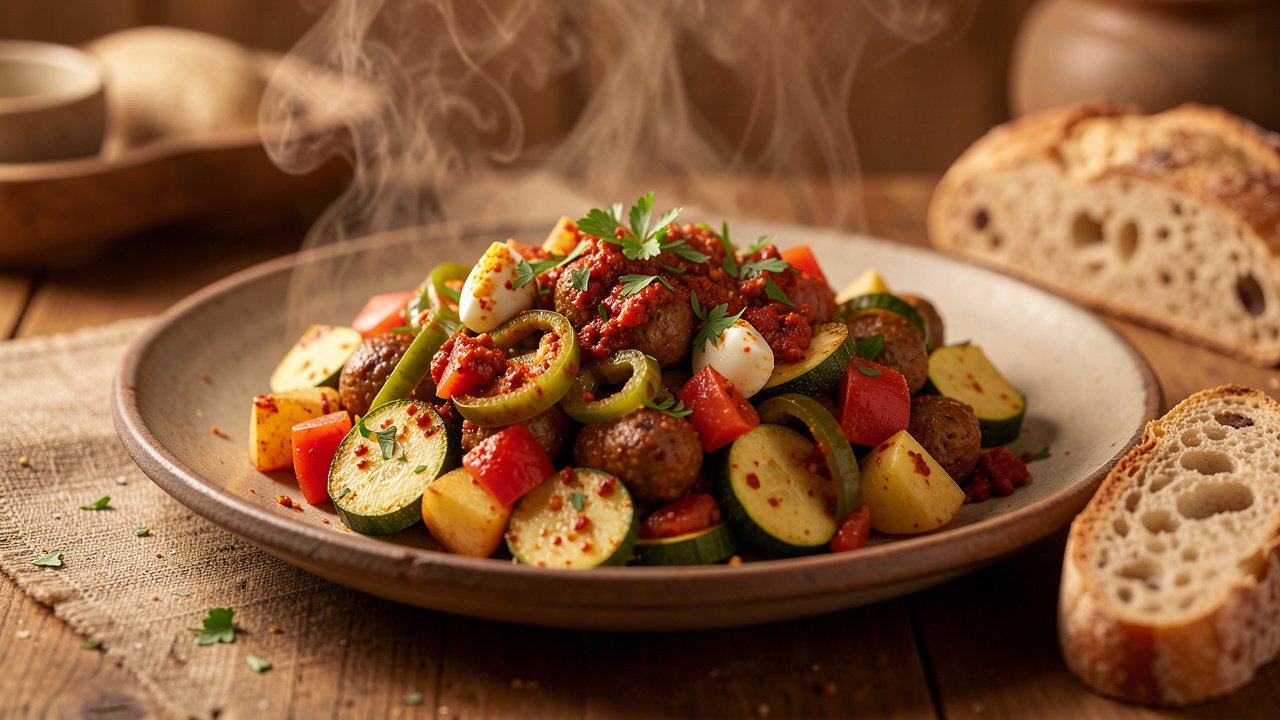
Fry the vegetables in batches, never all at once. A crowded pan drops in temperature and steams the vegetables soft and gray instead of giving them the golden, blistered edges that make kafteji taste fried rather than boiled.
Chop by hand on a board, not in a food processor. The machine purees everything into baby food, while a knife leaves the coarse, chunky texture that lets you taste each vegetable in the finished plate.
Add the harissa and garlic only after chopping, off the heat. Stirred into the warm mix at the end, they stay bright and punchy; fried in the oil, the garlic scorches and the harissa turns dull and bitter.
Recipe Variations
Serving Suggestions
- Warm flatbread or a split baguette for scooping
- A drained can of tuna flaked over the top
- Black olives and a wedge of lemon on the side
- A simple salad of cucumber and tomato
Nutrition Facts
| Nutrient | Amount per serving |
|---|---|
| Calories | 280 |
| Protein | 11 g |
| Carbohydrates | 24 g |
| Fat | 17 g |
| Saturated Fat | 3.5 g |
| Fiber | 5 g |
| Sugar | 8 g |
| Sodium | 620 mg |
Values are estimates per serving and vary with the exact vegetables and brands you use.
Make-Ahead Tips
You can fry all the vegetables up to a day ahead and keep them covered in the fridge. When you are ready to eat, fry the eggs fresh, chop everything together, and season with harissa so the plate tastes just-made. The seasoning is always best stirred in at the last minute.
Storage, Freezing & Reheating
Common Mistakes to Avoid
Troubleshooting
Kafteji too greasy? The vegetables were not drained well enough. Spread each fried batch on paper towels and press lightly to blot the oil before chopping.
Too spicy? Stir in an extra fried tomato or a spoonful of plain yogurt on the side to cool the heat, and go lighter on the harissa next time.
Mixture too wet or soupy? The tomatoes released a lot of juice. Chop and return the mix to a warm pan for a minute or two to drive off the extra moisture.
A Note on Tunisian Cooking
Kafteji is a cornerstone of Tunisian street food, sold from pans and griddles in markets across the country and often eaten stuffed into bread for a quick, cheap lunch. The name traces back through Ottoman influence to the Turkish “kofte” or “kefte” root, the word for something chopped or minced, which here describes not meatballs but the chopped-together fry-up of vegetables and egg itself.
It sits in a lively family of North African and Mediterranean egg-and-tomato dishes, and the one it is most often confused with is Tunisian ojja. The difference is texture: ojja is a saucy, shakshuka-style dish of eggs poached in a simmering tomato and harissa sauce, while kafteji is drier, with everything fried first and then diced. It shares a soul with the tomato-and-egg cooking of the region, from a loose shakshuka to the smoky Moroccan zaalouk, all of them turning a basket of vegetables into something generous and spiced.
What has kept kafteji on Tunisian tables is exactly what created it: it is cheap, fast, and endlessly adaptable. Use whatever vegetables the market offers, keep the harissa and the frying method constant, and tuck it into warm bread, and you have a plate that still tastes of a Tunis lunchtime.