Spanish Recipes
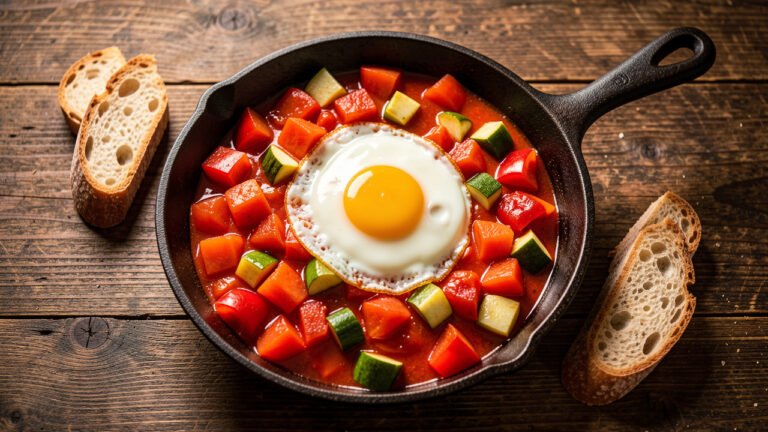
Rustic Vegetable Stew, Topped with a Fried Egg
If ratatouille and shakshuka had a quieter, more patient cousin, it would be pisto. This is peasant cooking at its best: a handful of summer vegetables, good olive oil, ripe tomatoes, and time. Nothing fancy, nothing rushed. The magic is entirely in how long and how gently you cook everything down, until the vegetables lose their edges and melt into a thick, glossy tomato stew that tastes far richer than its short ingredient list suggests.
I learned the hard way that pisto punishes impatience. The first time I made it I cranked the heat to save fifteen minutes, and I ended up with crunchy peppers swimming in watery tomato juice. Done properly, on a low flame with an unhurried hand, it becomes something you want to eat straight from the pan with a spoon and a piece of bread, no plate required.
Why This Spanish Pisto Works
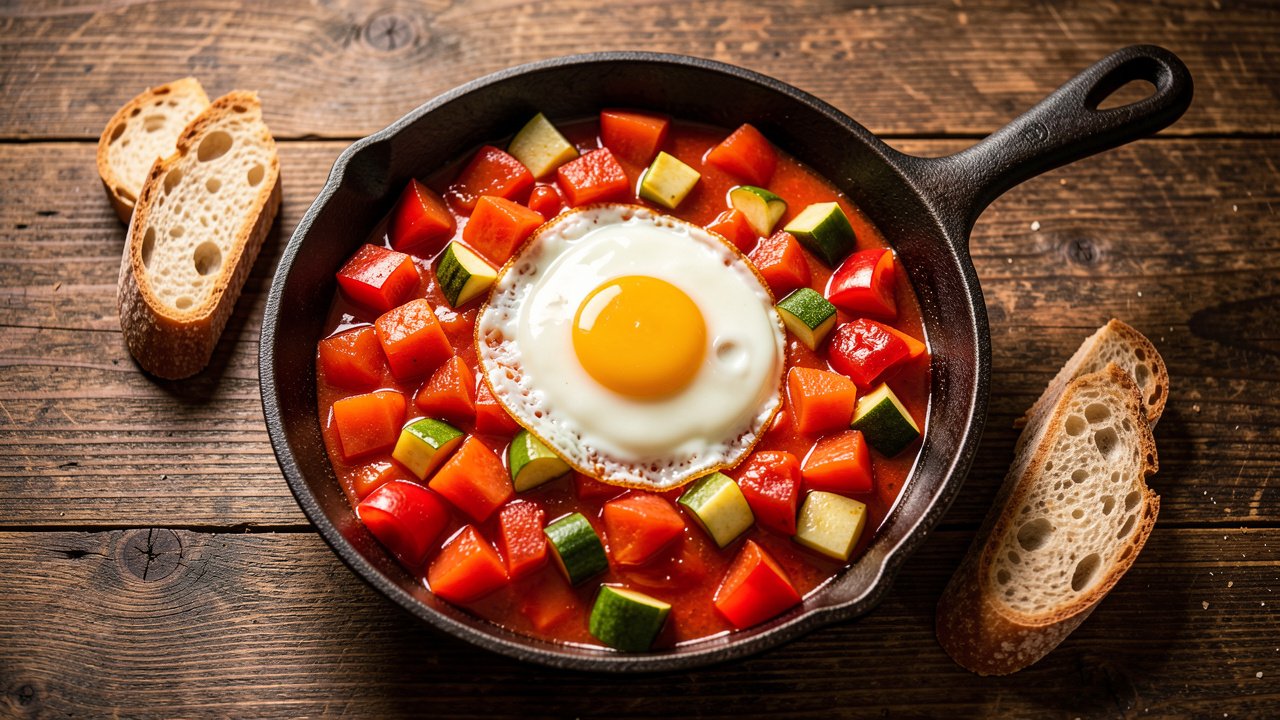
Pisto proves that you do not need a long ingredient list to make something memorable. Zucchini, peppers, onion, garlic, and tomatoes are humble, cheap, and available almost year-round, yet cooked slowly in olive oil they turn into a stew with real depth. The secret is not any single component; it is the method of coaxing sweetness out of each vegetable before they come together.
The single most important idea here is layering. You do not throw everything into the pan at once. You start the onion and garlic, add the peppers, then the zucchini, and finally the tomatoes, giving each stage time to soften and concentrate. By the time the tomatoes have collapsed, every vegetable has already contributed its own sweetness to the base.
Cooking the tomatoes down properly is the other quiet secret. You want them broken down and jammy, not loose and watery, so the finished pisto holds together on the bread instead of running off it. That reduction is where a good pisto separates itself from a sad, soupy one.
It is also endlessly forgiving and adaptable. The same base welcomes an extra pepper, a handful of eggplant, or a fried egg on top for a light supper. Once you have the rhythm of the slow saute down, you can make it with whatever the market gives you and it will always taste like it belongs.
Pro observation: The pisto is ready when you can drag a spoon across the bottom of the pan and the sauce holds the trench open for a second before closing. That means the water has cooked off and the flavor is concentrated.
Ingredients
Kitchen Measurement Converter
Quickly convert between common cooking measurements without leaving the recipe. Pick a category, enter a value, and the result updates instantly.
Ingredient Notes & Substitutions
Tomatoes
Ripe, red tomatoes give the sweetest, most authentic base. Out of season, two 14-ounce cans of good chopped tomatoes work well and are often more reliable than pale winter ones. Grated fresh tomato is the most traditional route in Spain.
Zucchini
Small to medium zucchini have fewer seeds and firmer flesh, so they hold their shape better than large watery ones. Leave the skin on for color and texture, and dice it the same size as the peppers so everything cooks evenly.
Bell Peppers
A mix of green and red peppers gives the classic sweet-and-slightly-bitter balance. Green brings a fresh, grassy note; red brings sweetness. Use two of one color if that is what you have, but the mix is worth it.
Olive Oil
This is olive-oil country cooking, so do not skimp. A generous glug of extra-virgin olive oil is what carries the flavor and gives the stew its silky, glossy body. It is the single ingredient you should be most generous with.
Equipment
- Wide, heavy saute pan
- Wooden spoon
- Sharp knife and board
- Box grater (optional)
- Measuring spoons
- Small frying pan for eggs
Before You Start
1. Dice everything the same size. Aim for a uniform half-inch dice on the peppers and zucchini so they finish cooking at the same time and the stew looks tidy.
2. Have the tomatoes ready. Chop or grate the tomatoes before you start the pan, because once the peppers are in you will not want to step away for long.
3. Commit to low and slow. Pisto is a gentle simmer, not a quick fry. Clear an hour, put on some music, and let the pan do the work.
Step-by-Step Instructions
Prep the Vegetables
Finely chop the onion and mince the garlic. Dice the green and red bell peppers and the zucchini into even, half-inch pieces. Chop or grate the tomatoes and keep them in a bowl with their juices nearby. Having everything cut before you turn on the heat makes the slow layering effortless.
Start the Sofrito
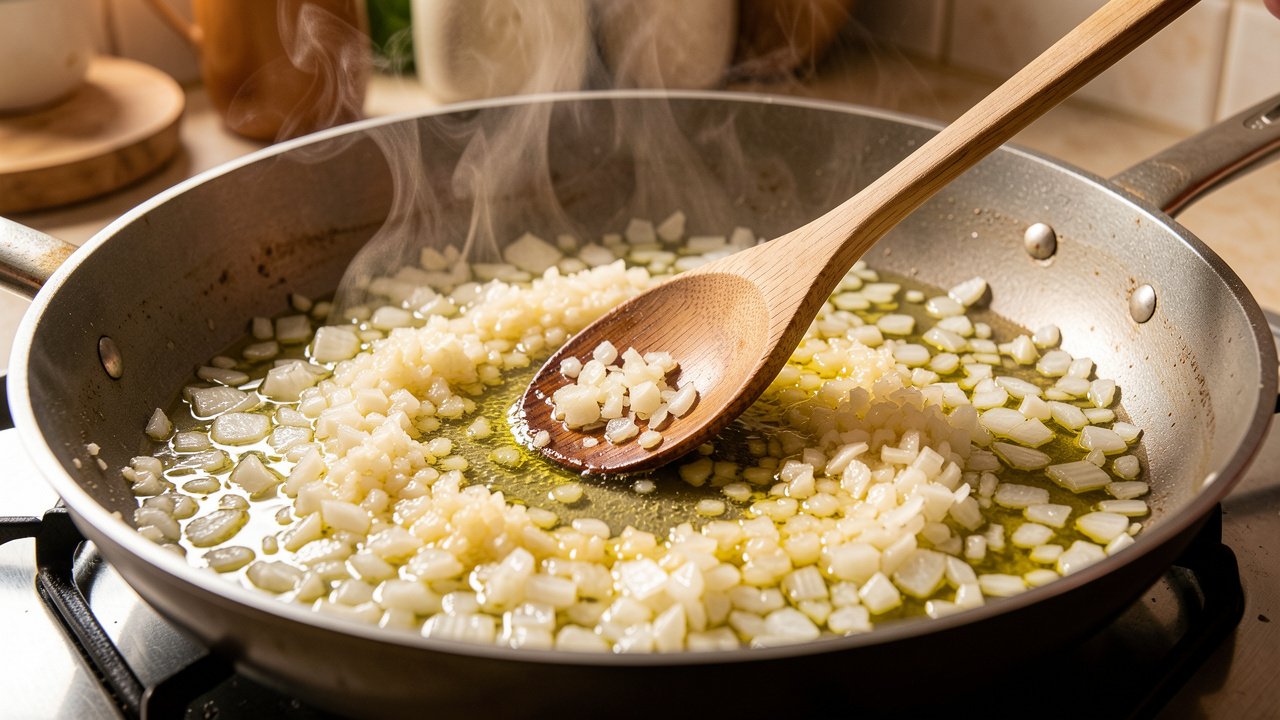
Warm the olive oil in a wide pan over medium-low heat. Add the onion with a pinch of salt and cook gently for 8 to 10 minutes until soft and translucent, stirring now and then. Add the garlic and cook 1 minute more, just until fragrant. This slow, golden onion base is the sofrito, the flavor foundation of the whole dish.
Add the Peppers
Stir in the diced green and red bell peppers. Cook over medium-low heat for about 10 minutes, stirring occasionally, until they soften and their edges start to catch a little color. Do not rush this; softening the peppers fully now means they will be tender and sweet, not squeaky, in the finished stew.
Add the Zucchini and Tomatoes
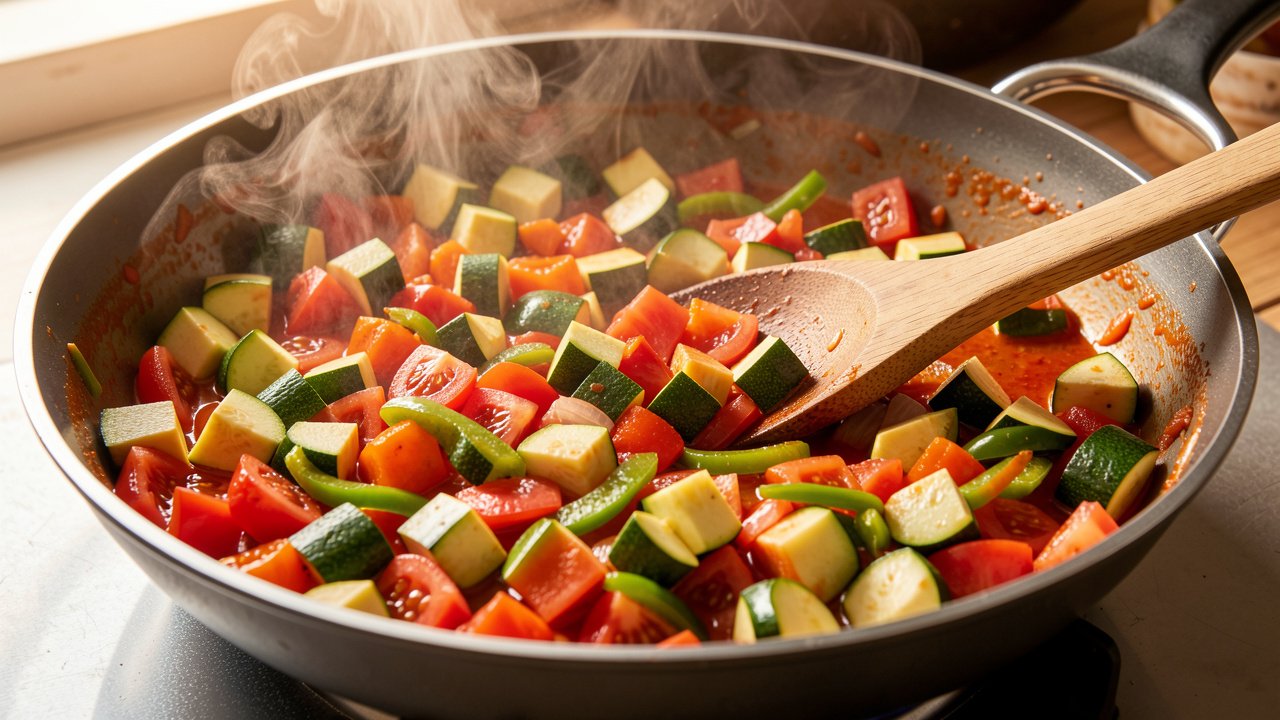
Add the diced zucchini and cook 5 minutes to soften. Then add the chopped tomatoes, the bay leaf, sugar, salt, and black pepper. Stir well and bring to a gentle simmer. The sugar balances the natural acidity of the tomatoes and rounds out the flavor.
Slow Simmer to Silky
Lower the heat and let the pisto simmer uncovered for 20 to 25 minutes, stirring every few minutes so nothing sticks. It is ready when the vegetables are meltingly tender and the tomato has reduced to a thick, jammy sauce that no longer pools with liquid. Fish out the bay leaf and taste for salt.
Fry the Eggs and Serve
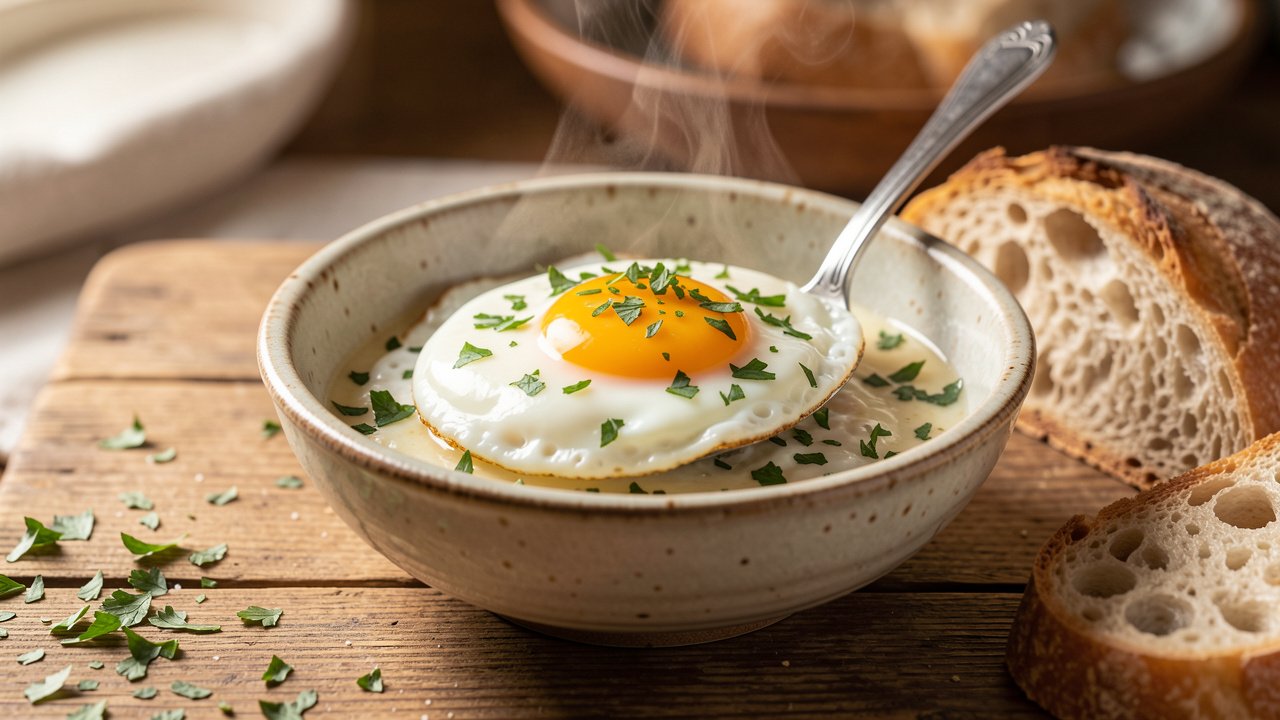
If using eggs, fry them in a little olive oil in a separate pan until the whites are fully set and no longer translucent. Spoon the warm pisto into shallow bowls, slide an egg on top of each, and scatter with fresh parsley. Serve right away with plenty of crusty bread for scooping.
Chef’s Tips From Real Kitchen Testing
Keep the heat low the whole way through. Pisto is defined by slow, gentle cooking; a hard fry gives you scorched edges and raw centers instead of that even, melting tenderness.
Let the liquid cook off before you decide it is done. If it still looks soupy, keep simmering. A finished pisto is thick enough to sit on a slice of bread without soaking through.
Be generous with the olive oil and add a fresh drizzle at the end. It is the backbone of the flavor and gives the stew its glossy, restaurant-quality sheen.
Recipe Variations
Serving Suggestions
- Crusty country bread for scooping
- A fried or poached egg on top
- A simple green salad on the side
- Spooned over rice or into an omelet
Nutrition Facts
| Nutrient | Amount per serving |
|---|---|
| Calories | 220 |
| Protein | 8 g |
| Carbohydrates | 18 g |
| Fat | 14 g |
| Saturated Fat | 3 g |
| Fiber | 5 g |
| Sugar | 11 g |
| Sodium | 480 mg |
Values are estimates per serving and vary with the exact ingredients and brands you use. Figures include one fried egg per serving.
Make-Ahead Tips
Pisto is one of those dishes that tastes even better the next day, so it is ideal to make ahead. Cook the vegetable base a day in advance, cool it, and refrigerate; the flavors settle and deepen overnight. Reheat it gently on the stove and fry the eggs fresh just before serving, since a reheated egg is never as good as one cooked to order. A splash of water loosens the stew if it has thickened in the fridge.
Storage, Freezing & Reheating
Common Mistakes to Avoid
Troubleshooting
Pisto tastes flat? It almost always needs more salt, and a pinch more sugar or a splash of extra olive oil to round out the acidity of the tomatoes.
Too watery? Turn up the heat slightly and keep simmering uncovered. Watery vegetables and underripe tomatoes both release extra liquid that just needs time to reduce.
Too acidic or sharp? Add another pinch of sugar and a little more olive oil, and let it cook a few minutes longer so the flavors mellow.
A Note on Spanish Cooking
Pisto comes from La Mancha, the sun-baked plateau of central Spain, and it is the kind of dish born from a summer glut of garden vegetables. At its heart sits the sofrito, the slow-cooked base of onion, garlic, and often peppers gently fried in olive oil that anchors so much of Spanish cooking. That patient, low-heat foundation is what turns a pile of raw vegetables into something greater than the sum of its parts. Serve it as a starter, a light main with an egg and bread, or a side to almost anything. If you love spooning big flavor onto bread, our fresh tomato salsa shares the same generous, tomato-forward spirit, and you will find plenty more ideas in our full collection of tomato recipes.
A Quick Note on Eggs and Food Safety
The fried egg on top is traditional and delicious, but cook it to your comfort level. For the widest food safety margin, fry the eggs until both the white and the yolk are firm; a fully set egg is the safest choice for young children, older adults, pregnant people, and anyone with a weakened immune system. If you prefer a runnier yolk, use the freshest, well-refrigerated eggs you can find, ideally pasteurized. Never leave the finished pisto or the eggs sitting out at room temperature for more than two hours, and refrigerate leftovers promptly.
Frequently Asked Questions
More Tomato Recipes to Try
Last updated: September 29, 2026