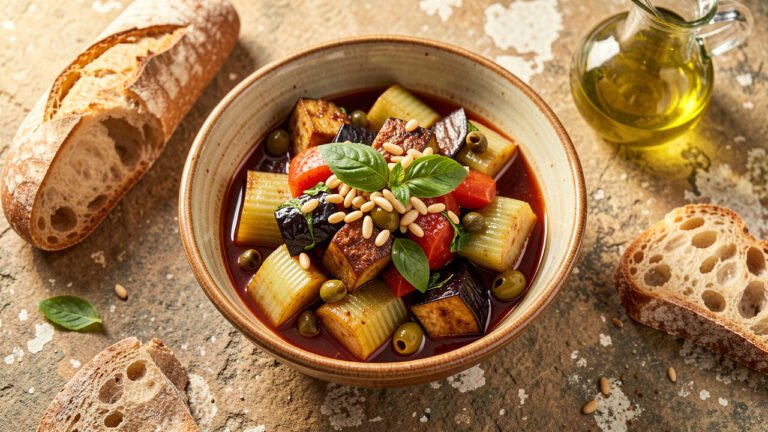
Sicilian Recipes
Sweet-and-Sour Eggplant and Tomato Antipasto
Caponata rewards patience twice: once when you fry the eggplant properly, and again when you let the finished bowl sit so the vinegar and sugar settle in. Rush either stage and you get oily cubes in a sharp sauce.
The first time I made it I served it straight off the stove and could not understand why it tasted so aggressive. Sicilians are right about this one. Warm caponata is unfinished caponata.
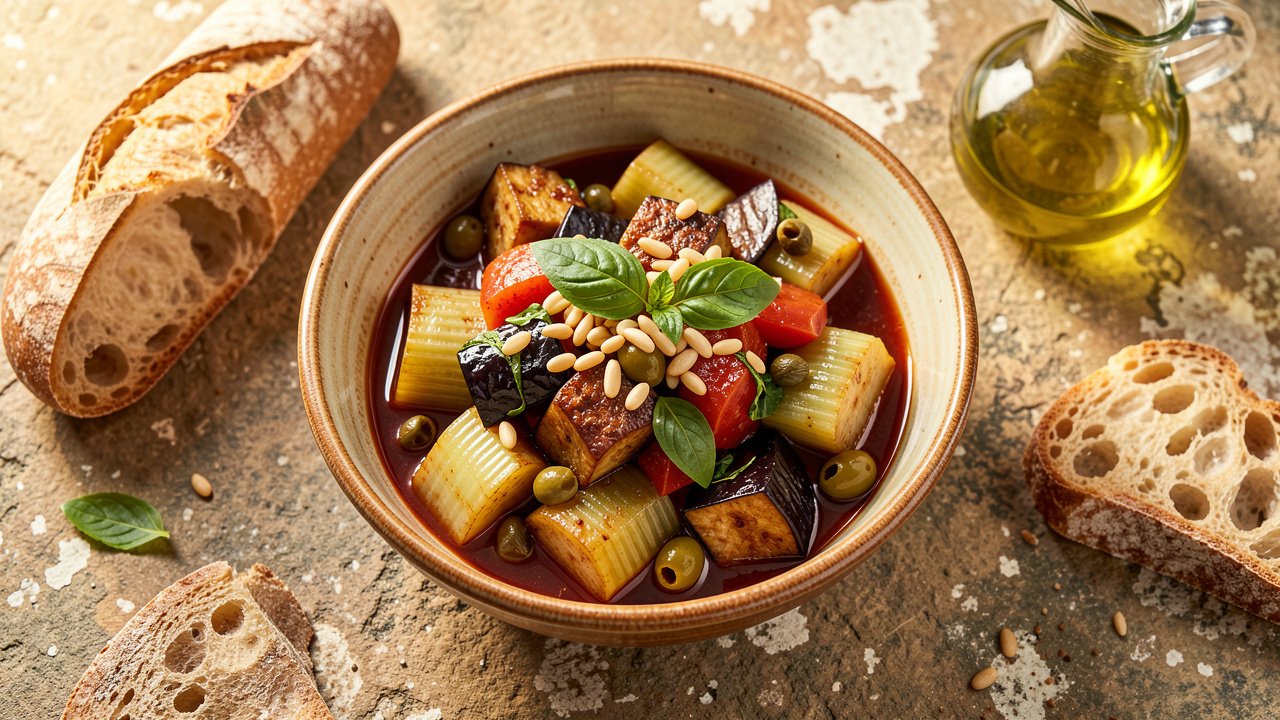
Why This Sicilian Caponata Works
Caponata is an exercise in balance, and each job goes to a different ingredient. Tomatoes and sugar bring the sweet side, red wine vinegar the sharp side, olives and capers the briny backbone, and celery the crunch that stops the bowl turning to mush.
The frying matters most. Eggplant is full of air pockets that drink oil in a lukewarm pan. Salting first draws out water and collapses that structure, so the cubes brown instead of soaking, ending up creamy inside with a burnished crust.
Cooking the vegetables separately is the second secret. Celery and onion need slow softening, tomatoes need to concentrate, eggplant needs high heat, and combining them only at the end keeps each element recognizable. The agrodolce is then added deliberately: reducing vinegar and sugar together takes the raw bite off the acid and turns it syrupy enough to coat every cube.
Pro observation: Taste the agrodolce on its own before it goes into the pan. It should make you wince slightly. If it tastes pleasant by itself, it will taste flat once the eggplant and tomato mellow it.
Ingredients
Kitchen Measurement Converter
Caponata moves between cups, spoons and grams depending on whose recipe you follow, so convert here without leaving the page. Pick a category, enter a value, and the result updates instantly.
Ingredient Notes & Substitutions
Eggplant
Choose firm, glossy eggplants that feel heavy for their size. Globe eggplant is standard; slim Italian ones are sweeter and need less salting time.
Tomatoes
Ripe plum or Roma tomatoes have the flesh-to-juice ratio you want. Out of season, one 14-ounce can of chopped tomatoes, partly drained, beats pale winter fresh ones.
Red Wine Vinegar
This is the traditional acid here and is simply a vinegar. Apple cider vinegar is the closest substitute. Balsamic is sweeter, so if you use it, cut the sugar roughly in half.
Olives and Capers
Use firm green olives such as Castelvetrano, pitted and halved. Salt-packed capers taste best but need a soak; brined capers just need a rinse.
Equipment
- Large heavy skillet or saute pan
- Colander and large bowl
- Sharp knife and board
- Slotted spoon
- Paper towels or a rack
- Wide serving bowl or platter
Before You Start
1. Salt the eggplant first. Budget 45 minutes of draining time and start it before you prep anything else.
2. Plan for resting, not serving. Caponata is eaten at room temperature after at least two hours of sitting. Make it in the morning for lunch, or the day before for a dinner party.
3. Get your oil properly hot. Have the pan shimmering before the first cube goes in, and fry in batches. Crowding drops the temperature and guarantees greasy eggplant.
Step-by-Step Instructions
Salt and Drain the Eggplant
Cut the eggplant into even cubes about three quarters of an inch across. Toss with the coarse salt in a colander set over a bowl and leave 45 minutes, until beads of brown liquid appear and the cubes look deflated. Rinse briefly, squeeze gently in a clean towel, and pat thoroughly dry. Wet eggplant steams instead of frying.
Fry the Eggplant in Batches
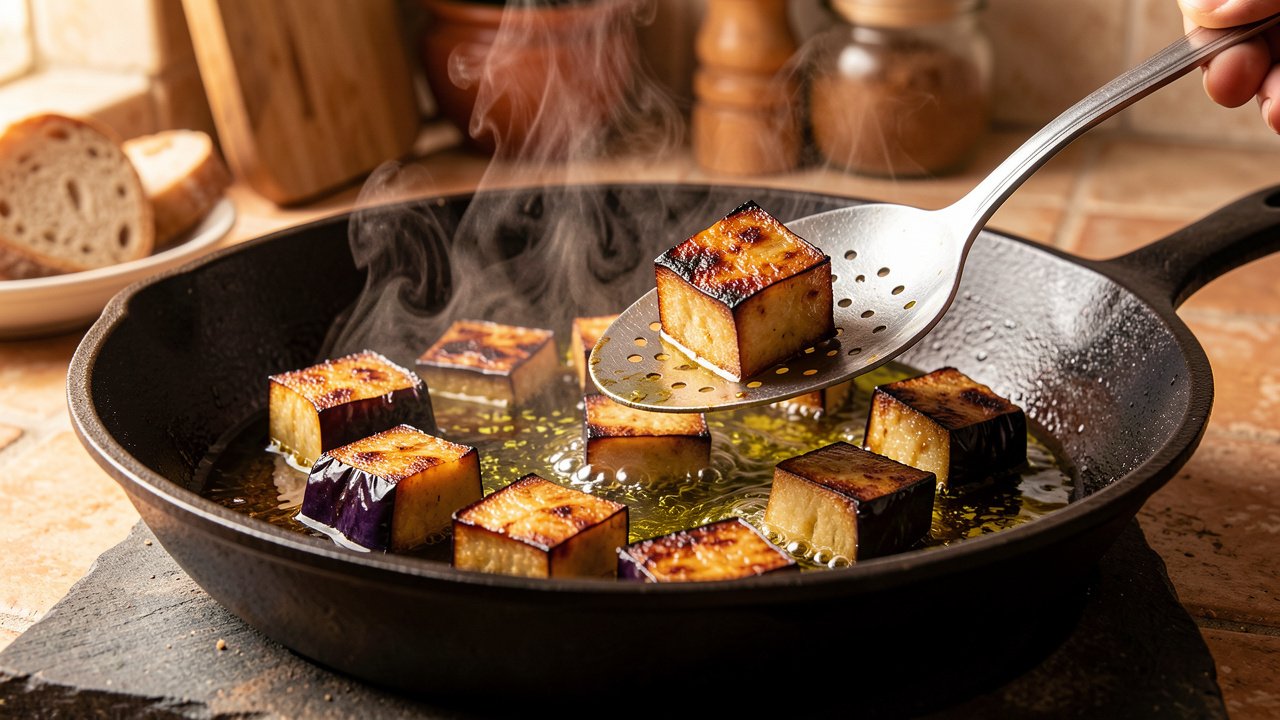
Heat a third of the olive oil in a large heavy skillet over medium-high heat until it shimmers. Add a single uncrowded layer of eggplant and fry 6 to 8 minutes, turning occasionally, until deep golden and tender in the middle. Lift out onto paper towels and repeat. Resist adding extra oil mid-batch; the eggplant releases some back as it browns.
Soften the Celery and Onion
Pour off all but roughly two tablespoons of oil and lower the heat to medium. Add the celery and cook 4 minutes, then add the onion and cook 6 to 7 minutes more until both are soft and the onion is translucent. The celery should keep a faint bite. Season with a pinch of the sea salt here.
Build the Tomato Base
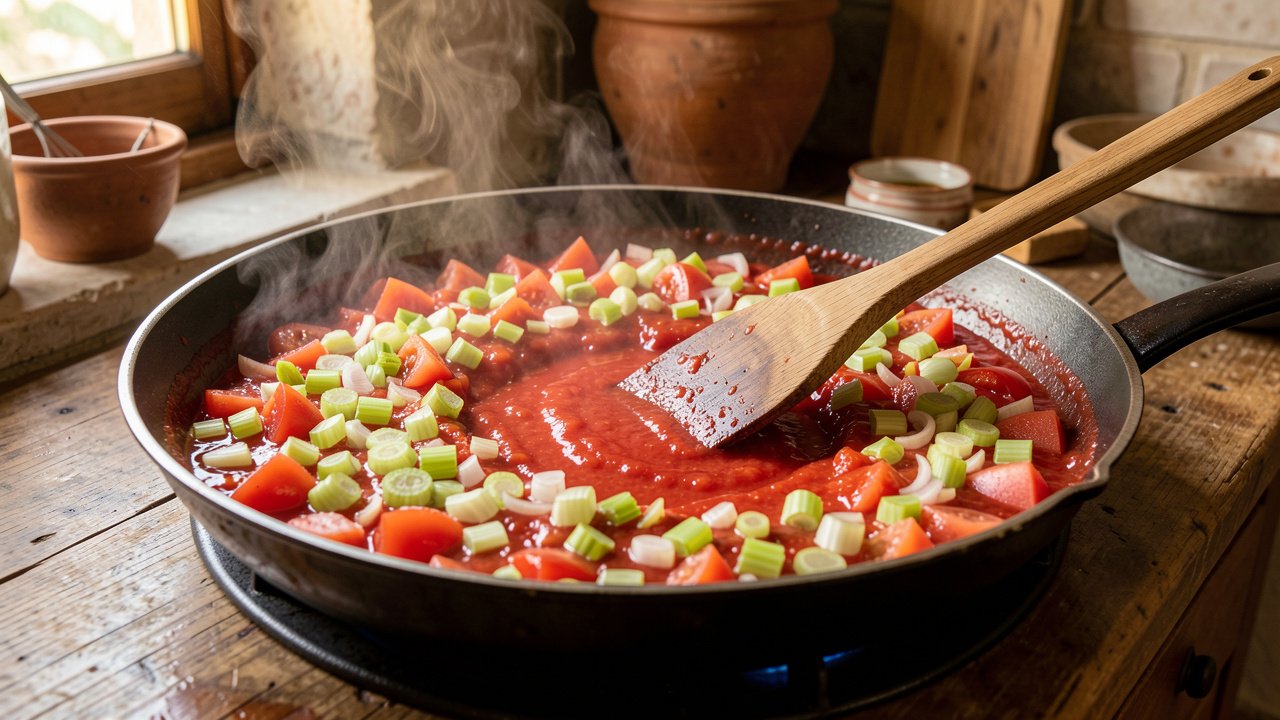
Stir in the tomato paste and fry it against the hot pan for a minute until it darkens and smells sweet rather than metallic. Add the tomatoes and cook 10 to 12 minutes until they collapse into a thick, jammy sauce and the watery liquid has cooked away. You want a base that holds its shape under a spoon.
Make the Agrodolce
Stir the olives and capers into the tomato base and cook 2 minutes so their brine works into the sauce. Mix the red wine vinegar with the sugar until dissolved, then pour it in. Raise the heat slightly and bubble 2 to 3 minutes until the sharp smell softens and the sauce turns glossy. This reduction is what makes the dish agrodolce rather than merely sour.
Fold Together, Rest, and Finish
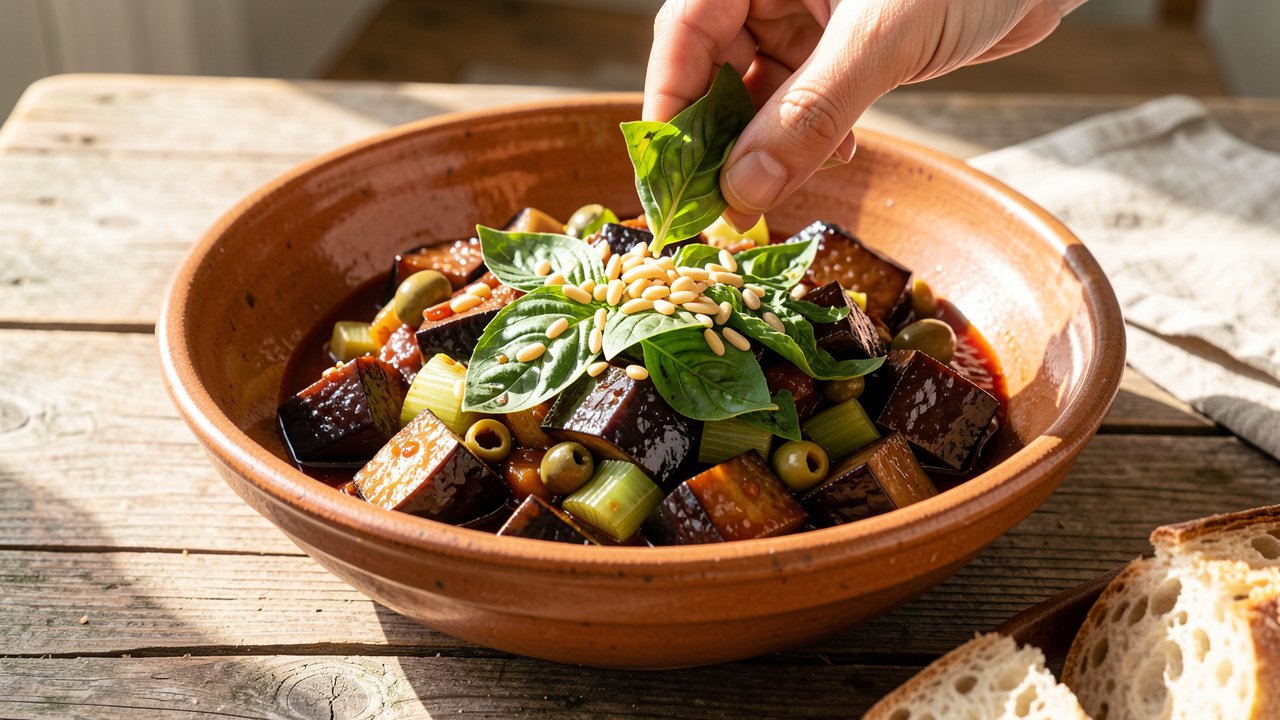
Return the eggplant to the pan and fold it through gently so the cubes stay whole. Cook 3 to 4 minutes, then season with the remaining sea salt and the black pepper and taste. Transfer to a wide bowl and cool to room temperature for at least two hours. Just before serving, scatter over the basil and pine nuts.
Chef’s Tips From Real Kitchen Testing
Dry the eggplant obsessively after rinsing off the salt. Surface water drops the oil temperature and turns frying into steaming.
Season the dish again once it is cool. Room-temperature food reads as less salty and less sweet, so a mix that tasted perfect in the pan will taste muted two hours later.
Fold, never stir. Use a flexible spatula and turn the mixture over from the bottom; vigorous stirring breaks the cubes into paste and you lose all texture contrast.
Recipe Variations
Serving Suggestions
Caponata is at its best as an antipasto, spooned into a shallow bowl with bread alongside. It is also a natural side for grilled vegetables or roasted fish.
- Crusty bread or grilled sourdough
- Alongside grilled fish or roast chicken
- Spooned over creamy polenta or ricotta
- Piled onto bruschetta as a starter
- As part of a mezze or antipasto board
- Tossed through short pasta with olive oil
Nutrition Facts
| Nutrient | Amount per serving |
|---|---|
| Calories | 240 |
| Protein | 3 g |
| Carbohydrates | 18 g |
| Fat | 18 g |
| Saturated Fat | 2.5 g |
| Fiber | 6 g |
| Sugar | 11 g |
| Sodium | 620 mg |
Values are estimates and vary with the ingredients you use, especially how much frying oil the eggplant absorbs.
Make-Ahead Tips
Caponata is genuinely better made in advance, which makes it a gift when cooking for guests. Prepare it through the folding step, cool, cover and refrigerate overnight so the vinegar and sugar keep working into the eggplant. Hold back only the garnish: basil blackens in the fridge and pine nuts go soft, so add both on the day you serve, and take the bowl out a full hour before eating.
Storage, Freezing & Reheating
Common Mistakes to Avoid
Troubleshooting
Too sour? Stir in half a teaspoon of sugar at a time and wait ten minutes before tasting again. Extra chopped tomato also absorbs sharpness.
Too sweet or flat? Add vinegar in quarter-teaspoon increments plus a few extra capers. Brine is often what a dull caponata is missing, not more acid.
Watery in the bowl? The tomatoes were not reduced enough. Tip everything back into the pan, simmer uncovered a few minutes, then cool again.
Tastes greasy? Drain briefly in a sieve, then fold back together with a fresh splash of vinegar.
A Note on Sicilian Cooking
Sicily has been a crossroads for as long as anyone has been writing things down, and its food carries the fingerprints of everyone who passed through. The agrodolce principle at the heart of caponata, that deliberate pairing of vinegar with sugar, arrived with Arab rule between the ninth and eleventh centuries, along with the sugarcane, citrus, raisins and pine nuts that still define the island’s cooking. Eggplant came the same way. Dozens of regional caponata versions exist, and nearly all share one shape: something fried, something briny, and a sweet-sour sauce holding it together.
The room-temperature tradition is practical as much as cultural. In a hot climate, a dish that improves as it sits and needs no reheating is exactly what belongs on an antipasto table. For more ideas, browse our collection of tomato recipes or try a brighter dish like this fresh tomato salsa.
Frequently Asked Questions
More Tomato Recipes to Try
Last updated: September 29, 2026