Vietnamese Recipes
Pan-Fried Fish Braised in Tomato Sauce
Last updated: September 30, 2026
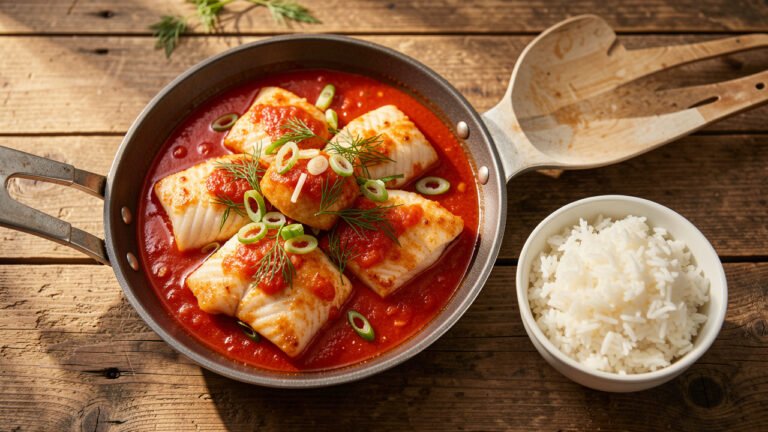
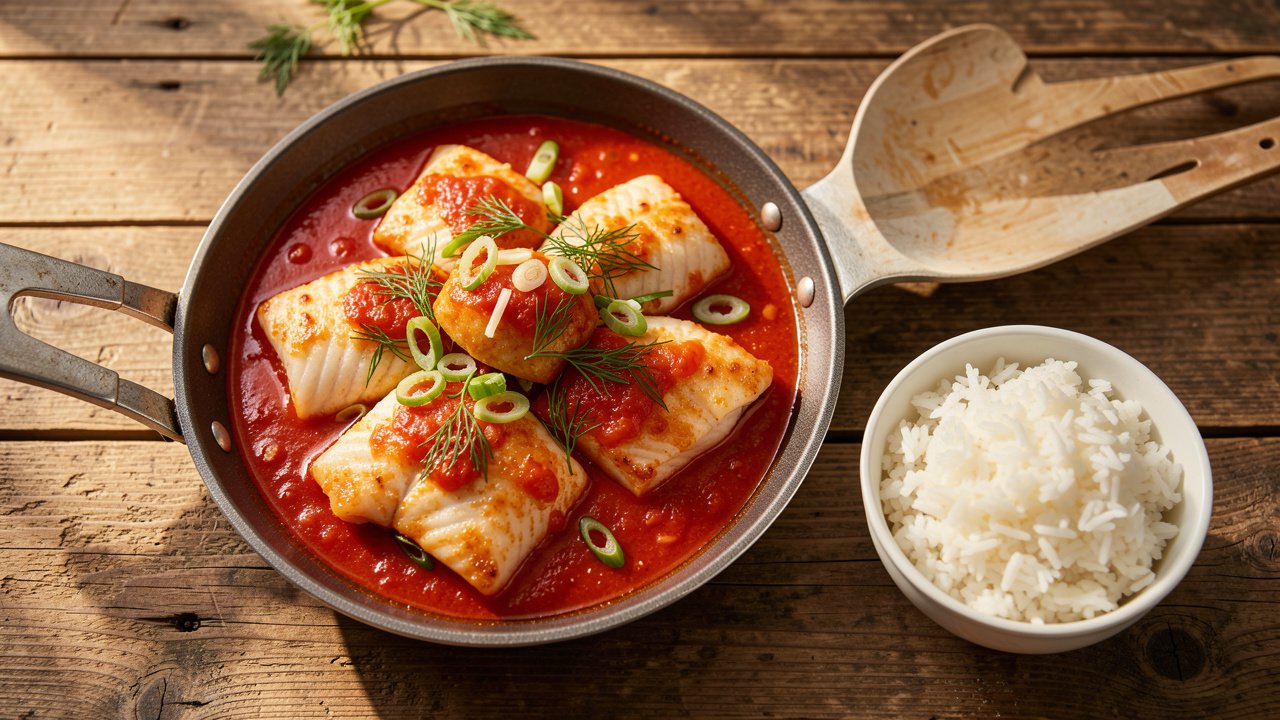
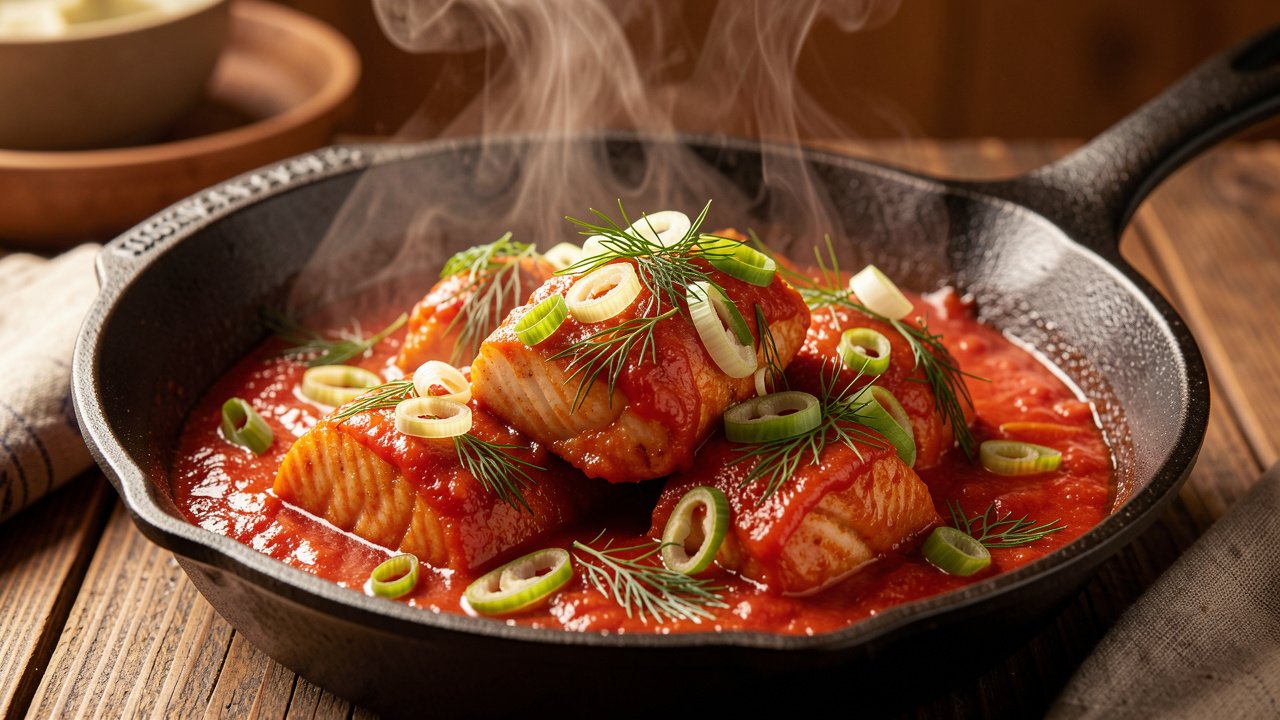
Ca sot ca chua is the kind of dish that turns up on Vietnamese family tables on an ordinary weeknight. Fish is pan-fried until its edges crisp, then gently braised in a tomato sauce built from shallot, garlic, and ripe tomatoes, with fish sauce for depth and a shower of scallion and dill at the end. It is quick, thrifty, and comforting, and the sauce is made for spooning over a bowl of hot rice.
Why This Ca Sot Ca Chua Works
This dish leans on two simple techniques that reward a little attention. First you pan-fry the fish so it develops a golden, lightly crisp surface; then you build a quick tomato sauce and let the fish finish in it. Frying first keeps the fillets from disintegrating in the sauce and gives them flavor that a plain simmer never would.
The sauce is deliberately light. Ripe tomatoes are cooked down with shallot and garlic until they soften and turn glossy, loosened with a little water or broth so it stays saucy rather than dry. Fish sauce and a pinch of sugar bring the classic Vietnamese balance of savory and gently sweet, so the tomato tastes rounded rather than sharp.
Timing protects the fish. Once the fillets go back into the sauce, they only need a few minutes to warm through and soak up flavor. Braise them too long and they toughen and break apart, so you spoon the sauce over them, let them simmer briefly, and pull the pan while the fish is still tender and moist.
The finish is where it comes alive. Scallion and a generous handful of fresh dill go in off the heat, staying bright and fragrant. That fresh, herbal lift against the warm tomato sauce is the signature of this homestyle plate, and it is what makes a simple pan of fish taste like something special over rice.
Pro observation: The sauce is ready for the fish when the tomatoes have collapsed into a glossy base and a spoon dragged through it leaves a brief trail. If it looks thin and watery, let it bubble a minute longer before the fillets go back in.
Ingredients
Kitchen Measurement Converter
Need to convert an amount while you measure? Pick a category, enter a value, and the result updates instantly.
Ingredient Notes & Substitutions
Fish
Firm white fish holds up best. Cod, tilapia, basa, pollock, or halibut all work, either as fillets or thick steaks. In Vietnam mackerel and pomfret are traditional favorites. Choose pieces of even thickness so they fry and braise at the same rate.
Tomatoes
Ripe, red tomatoes give the sweetest, most glossy sauce. If yours are pale or watery, add a spoonful of tomato paste for color and body, or use drained chopped canned tomatoes when good fresh ones are out of season.
Fish Sauce & Sugar
Fish sauce is the backbone of the seasoning, giving the sauce its savory depth. The pinch of sugar rounds the tomatoes and balances the salt. Start with the amounts listed, then taste and adjust; brands of fish sauce vary in saltiness.
Scallion & Dill
Scallion and fresh dill are the classic finish and are worth seeking out. Dill is used generously in northern Vietnamese fish cooking and gives the dish its fragrance. If you cannot find dill, cilantro is a fair everyday substitute.
Equipment
- Nonstick or seasoned skillet
- Fish spatula or turner
- Sharp knife and board
- Plate for dusting
- Small bowl
- Measuring spoons
Before You Start
1. Dry the fish twice, and dust it last. Blot the pieces with paper towels, wait five minutes, and blot again as moisture beads back up. Season with the pepper, but add the cornstarch only right before the pan; left sitting, it turns into a damp paste that glues the fish to the skillet.
2. Squeeze a tomato before you commit. The sauce gets only 6 to 8 minutes to collapse into a glossy base, and firm, pale tomatoes will not break down in that time. If yours feel hard or watery, set out a spoonful of tomato paste now to rescue the color and body.
3. Pick a pan that fits every piece in one layer. A crowded skillet drops the oil temperature, so the fish steams, sticks, and never crisps, and the same pan later has to hold every piece flat in the sauce. For 1.5 lb of fish, use a 12-inch skillet or fry in two batches.
Step-by-Step Instructions
Have everything chopped and the fish patted dry before you start, since the dish moves quickly once the pan is hot. Start the rice first so it is ready when the fish is.
Prep the Fish and Aromatics
Pat the fish very dry and cut it into serving-size pieces. Season lightly with a little of the black pepper and dust the pieces with cornstarch, shaking off the excess. Chop the tomatoes, mince the shallots and garlic, cut the scallions into short lengths, and chop the dill. Keeping everything ready means the fish never overcooks while you catch up.
Pan-Fry the Fish
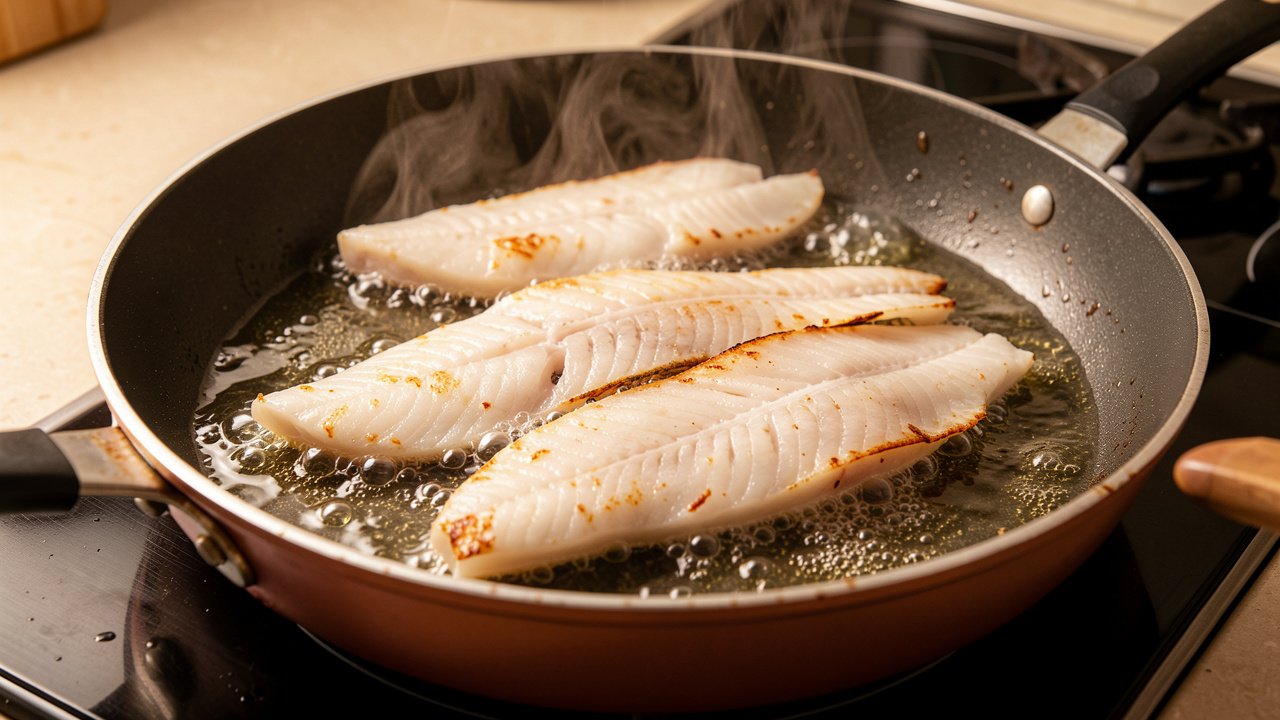
Heat the oil in a nonstick skillet over medium-high heat. Lay the fish in and fry, undisturbed, for 2 to 3 minutes per side until golden and lightly crisp. It does not need to cook through here; it will finish in the sauce. Lift the pieces out onto a plate and set aside.
Cook the Shallots and Garlic
Pour off all but about a tablespoon of oil from the pan. Lower the heat to medium, add the minced shallots and garlic, and cook for about 1 minute until soft and fragrant. Keep them moving so the garlic softens without browning and turning bitter.
Build the Tomato Sauce
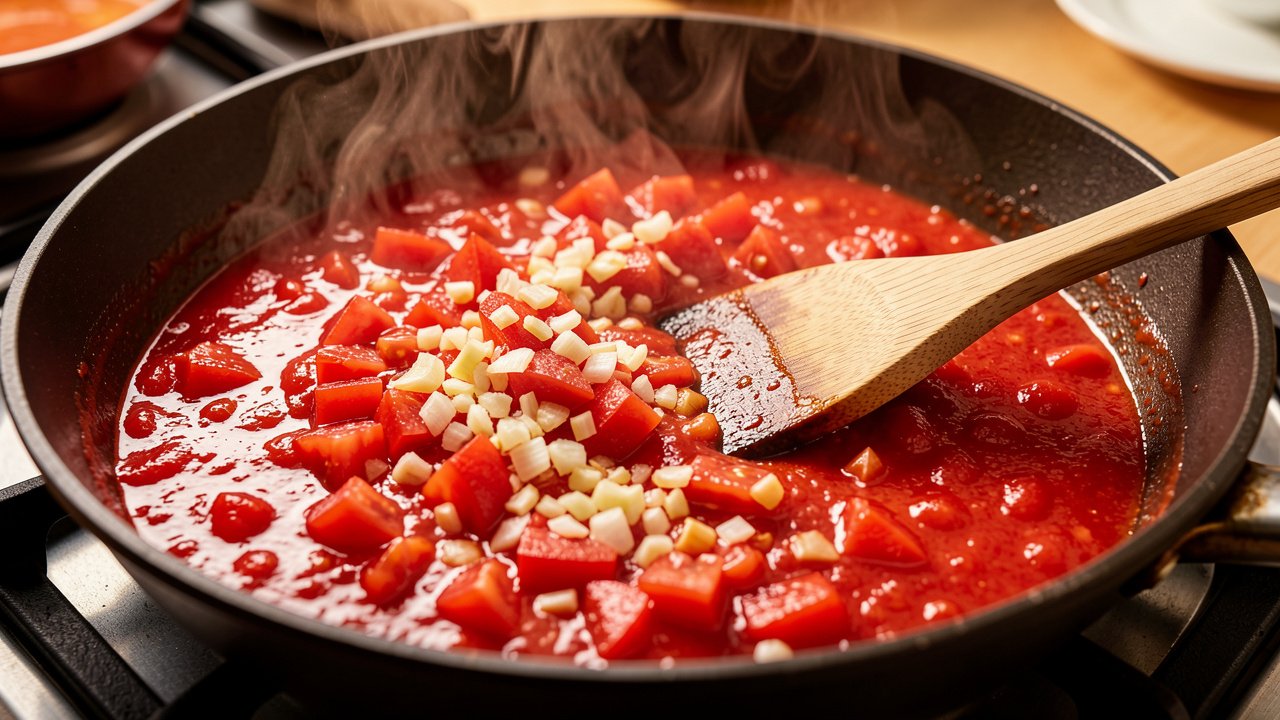
Add the chopped tomatoes, fish sauce, sugar, and the rest of the black pepper. Cook 6 to 8 minutes, stirring, until the tomatoes collapse into a soft, glossy sauce. Pour in the water or broth and let it come to a gentle simmer, loosening the sauce so it is saucy enough to spoon over rice.
Braise the Fish
Slide the fried fish back into the sauce in a single layer and spoon some sauce over the top. Simmer gently for 4 to 5 minutes, turning the pieces once, until the fish is cooked through and has soaked up the flavor. Handle it carefully so the fillets stay whole.
Finish and Serve
Turn off the heat and scatter the scallions and fresh dill over the fish, letting the residual warmth wilt them just slightly. Taste the sauce and adjust with a little more fish sauce or a pinch of sugar if needed. Serve hot over steamed rice, spooning plenty of sauce on top.
Chef’s Tips From Real Kitchen Testing
Pat the fish thoroughly dry and dust it with cornstarch before frying. A dry, lightly coated surface browns better and is far less likely to stick to the pan.
Fry first, braise briefly. The frying gives flavor and structure, and a short simmer in the sauce keeps the fish tender instead of dry and flaky.
Season the sauce and taste it before the fish goes back in. Fish sauce brands differ in saltiness, so adjust the fish sauce and sugar to your own balance early.
Recipe Variations
Serving Suggestions
- A bowl of hot steamed jasmine rice to catch the sauce
- A simple side of stir-fried greens or water spinach
- Sliced cucumber and fresh herbs on the side
- A bowl of clear vegetable broth to round out the meal
Nutrition Facts
| Nutrient | Amount per serving |
|---|---|
| Calories | 280 |
| Protein | 32 g |
| Carbohydrates | 12 g |
| Fat | 12 g |
| Saturated Fat | 2 g |
| Fiber | 2 g |
| Sugar | 6 g |
| Sodium | 720 mg |
Values are estimates per serving and vary with the exact fish, brands, and amount of rice you serve.
Make-Ahead Tips
You can make the tomato sauce a day ahead and refrigerate it. When you are ready to eat, fry the fish fresh, reheat the sauce, and braise the fish in it for a few minutes.
Chopping the scallion and dill in advance makes the final dish come together very quickly.
Storage, Freezing & Reheating
Common Mistakes to Avoid
Troubleshooting
Fish falling apart? The fillets were moved too much or braised too long. Fry them firm first, then turn only once in the sauce and pull the pan as soon as they are cooked through.
Sauce too thin? The tomatoes needed longer or too much liquid went in. Simmer uncovered to reduce, and add water gradually until the sauce just coats a spoon.
Tastes too salty or too sharp? Balance it. A pinch more sugar softens the tomatoes; a splash of water dilutes salty fish sauce. Taste as you adjust.
A Note on Vietnamese Cooking
Ca sot ca chua belongs to the everyday, home-style side of Vietnamese cooking, the food that fills a family rice table rather than a restaurant menu. The name is a plain description of the plate: it literally means fish sauced with tomato, from ca for fish, sot from the French word for sauce, and ca chua for tomato. That borrowed word for sauce is a small reminder of the French influence woven into the Vietnamese pantry, where the tomato itself became a fixture.
It is easy to mix up with canh chua, but the two are quite different: canh chua is a brothy, sour tamarind soup, while ca sot ca chua is a dry-ish braise where the fish is coated in a thick tomato sauce, not swimming in liquid. If you love the tomato-and-fish combination, it sits in good company with dishes like the beefy Vietnamese bo kho and the fiery Malaysian asam pedas, both of which build big flavor around a tomato base.
What keeps ca sot ca chua on the weeknight rotation is how practical it is. It uses affordable fish and pantry basics, comes together in about half an hour, and turns a modest fillet into a full, satisfying meal over rice, which is exactly the spirit of Vietnamese home cooking.