Georgian Recipes
Spicy Beef and Tomato Stew
Last updated: September 30, 2026
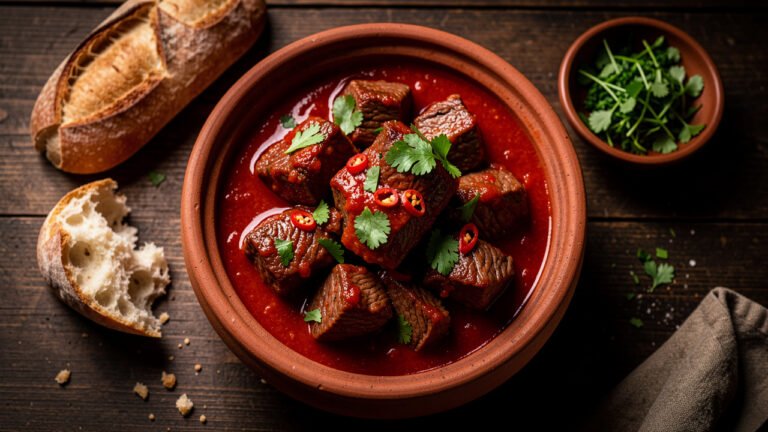
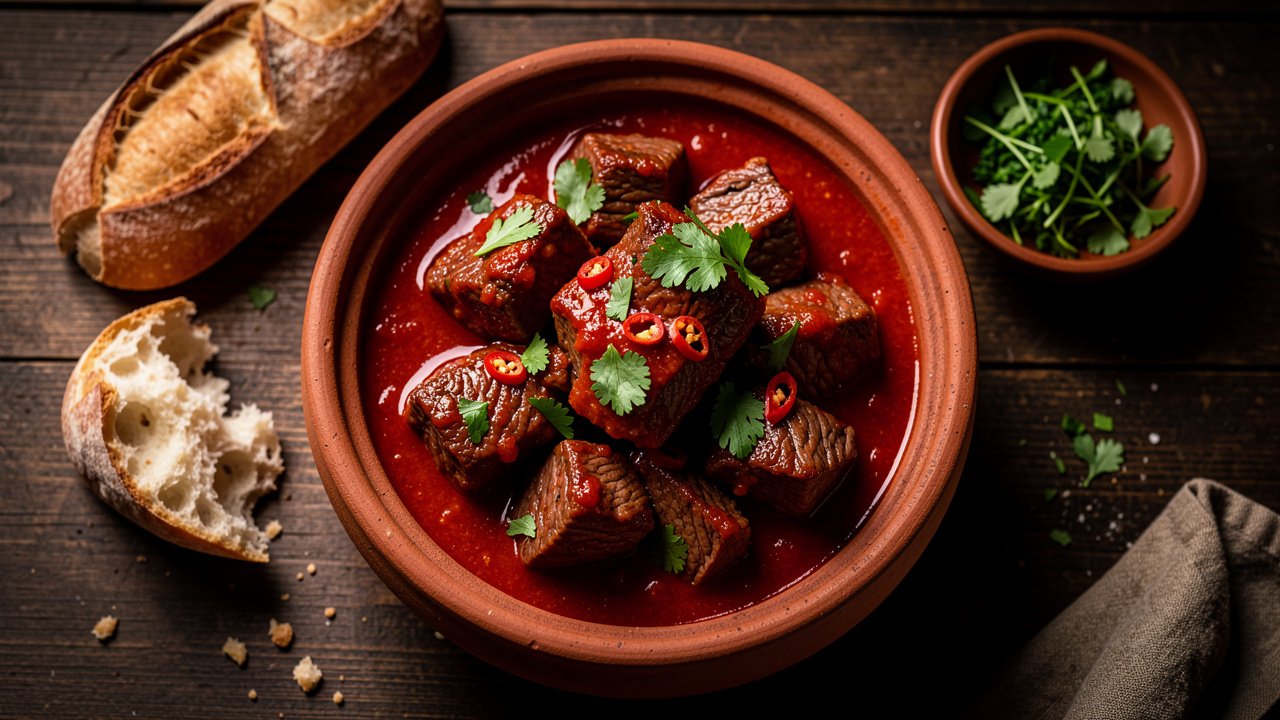
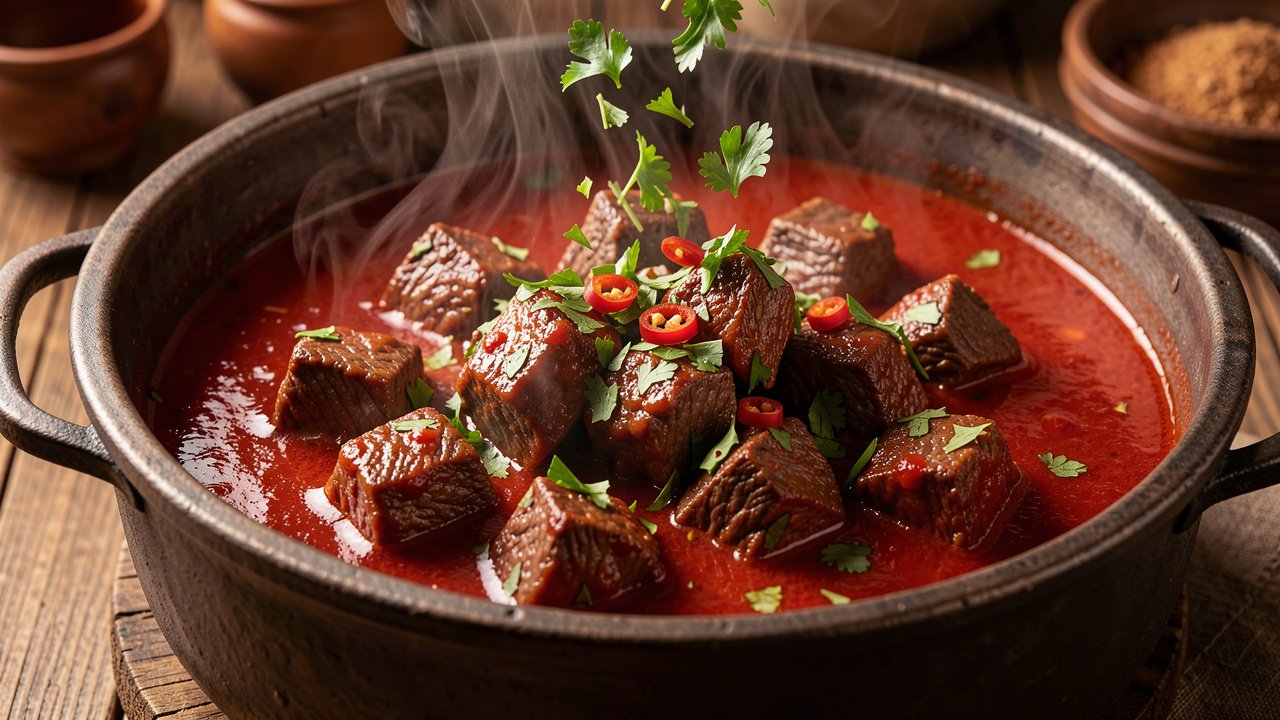
Ostri is the kind of stew that fills a whole kitchen with its smell. Beef browns until deeply savory, then onions, garlic, and ripe tomatoes cook down around it into a loose, glossy sauce that gets its lift from cilantro, blue fenugreek, and a good hit of chili. It is bold, warming, and unapologetically saucy, built to be mopped up with bread rather than eaten with a fork alone. This is home cooking from the Caucasus at its most generous.
Why This Ostri Works
Ostri is a dish about layers of flavor built in the right order. You start by browning the beef hard, because that fond stuck to the bottom of the pot is the backbone of the whole sauce. Skip the sear and you get a pale, thin stew; take the time and you get depth that no amount of spice can fake later.
The sauce itself is a marriage of two things Georgians love: tomatoes and garlic, cooked until the raw edge is gone and they turn sweet and mellow. Fresh tomatoes give the brightest result, but a spoon of tomato paste alongside them deepens the color and rounds out the body so the sauce clings to every piece of meat.
Then comes the signature Georgian move: the herbs and spice go in at two moments, not one. Some blue fenugreek and coriander cook into the sauce for a warm, nutty backbone, while a fistful of fresh cilantro and chili are stirred in at the very end so they stay bright and lively. That contrast between deep and fresh is what makes ostri taste unmistakably Georgian.
Finally, it is a forgiving stew. It only gets better as it sits, the beef turns more tender the longer it goes, and the heat is entirely in your hands. Make it as sharp as its name suggests, or pull it back for the table, and it will still taste like the real thing.
Pro observation: The sauce is ready when it coats the back of a spoon and a swipe across the pot leaves a brief clear trail. If it still looks thin and watery, simmer uncovered a few minutes longer; ostri should be saucy but never soupy.
Ingredients
Kitchen Measurement Converter
Need to convert an amount while you measure? Pick a category, enter a value, and the result updates instantly.
Ingredient Notes & Substitutions
Beef
A well-marbled braising cut is ideal, such as chuck or shoulder, cut into generous bite-size cubes. These cuts turn meltingly tender over a long simmer. Leaner cuts will work but need gentle heat and a little extra time so they do not toughen.
Tomatoes & Paste
Ripe red tomatoes give the freshest, sweetest sauce. Out of season, use good drained canned tomatoes. The spoonful of tomato paste is what deepens the color and thickens the body, so do not skip it even when the fresh tomatoes are excellent.
Blue Fenugreek
Blue fenugreek is the classic Georgian spice here, warm and gently nutty. If you cannot find it, ground fenugreek seed works, or use a Georgian khmeli suneli blend. In a pinch, a little extra ground coriander keeps the sauce fragrant.
Garlic, Chili & Cilantro
Plenty of garlic and a fresh red or green chili give ostri its sharp bite. Adjust the chili to taste and remove the seeds for less heat. A generous handful of cilantro stirred in at the end keeps the whole dish bright and lively.
Equipment
- Heavy pot or Dutch oven
- Wooden spoon
- Sharp knife and board
- Tongs
- Measuring spoons
- Ladle
Before You Start
1. Take the chill off the beef and blot it dry. Pull the cubes from the fridge 20 minutes early and pat every side dry. Cold, wet meat drops the oil temperature and turns grey instead of brown, and that crust is where the sauce gets its depth.
2. Keep the cilantro and chili in their own bowl. Chop them now but park them well away from the garlic and spices. They go in only for the final two minutes, and tipping them in early out of habit cooks away the sharp, bright finish ostri is named for.
3. Budget the full 90-minute braise, or cook it a day ahead. Chuck needs a covered, barely bubbling pot for about an hour and a half to go fork-tender, and turning up the heat will not rush it. Short on time tonight? Make it tomorrow’s dinner; it reheats even better.
Step-by-Step Instructions
Ostri is not fussy, but it rewards patience. Give the beef a real sear, then let the sauce simmer low and slow until the meat is fork-tender. Have your herbs and chili chopped and ready for the finish so they go in fresh at the very end.
Sear the Beef
Pat the beef cubes dry and season with a little of the salt and black pepper. Heat the oil in a heavy pot over medium-high heat and brown the beef in batches, without crowding, until deeply colored on several sides. Do not rush this; the browned bits left in the pot are the flavor base of the whole stew. Remove the beef and set it aside.
Soften the Onions
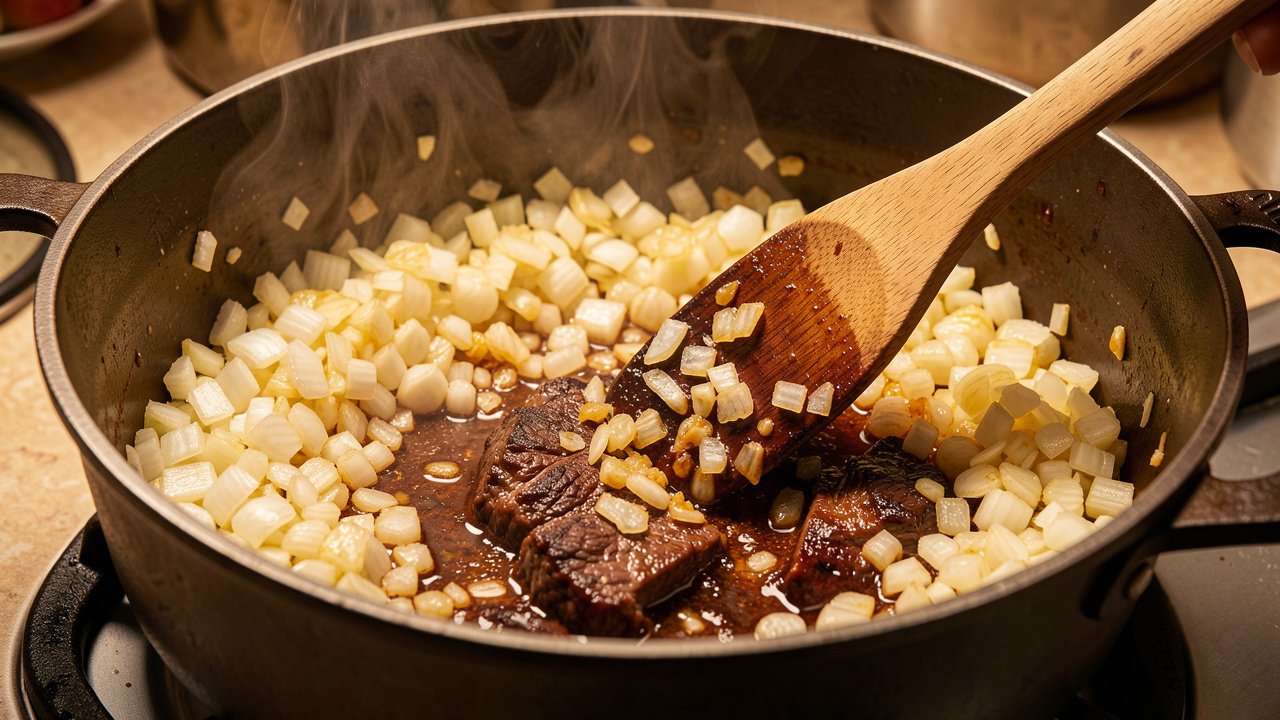
Lower the heat to medium and add the chopped onions to the same pot. Cook 6 to 8 minutes, stirring and scraping up the browned bits from the bottom, until the onions are soft and golden. This is where the sauce gets its sweetness, so let them take on color before moving on.
Add Garlic and Spices
Stir in the minced garlic along with the ground blue fenugreek and ground coriander. Cook for about 1 minute, until fragrant, keeping the heat moderate so the garlic and spices do not scorch. Blooming the spices now, in the hot oil, is what draws out their warm, nutty aroma.
Build the Tomato Sauce
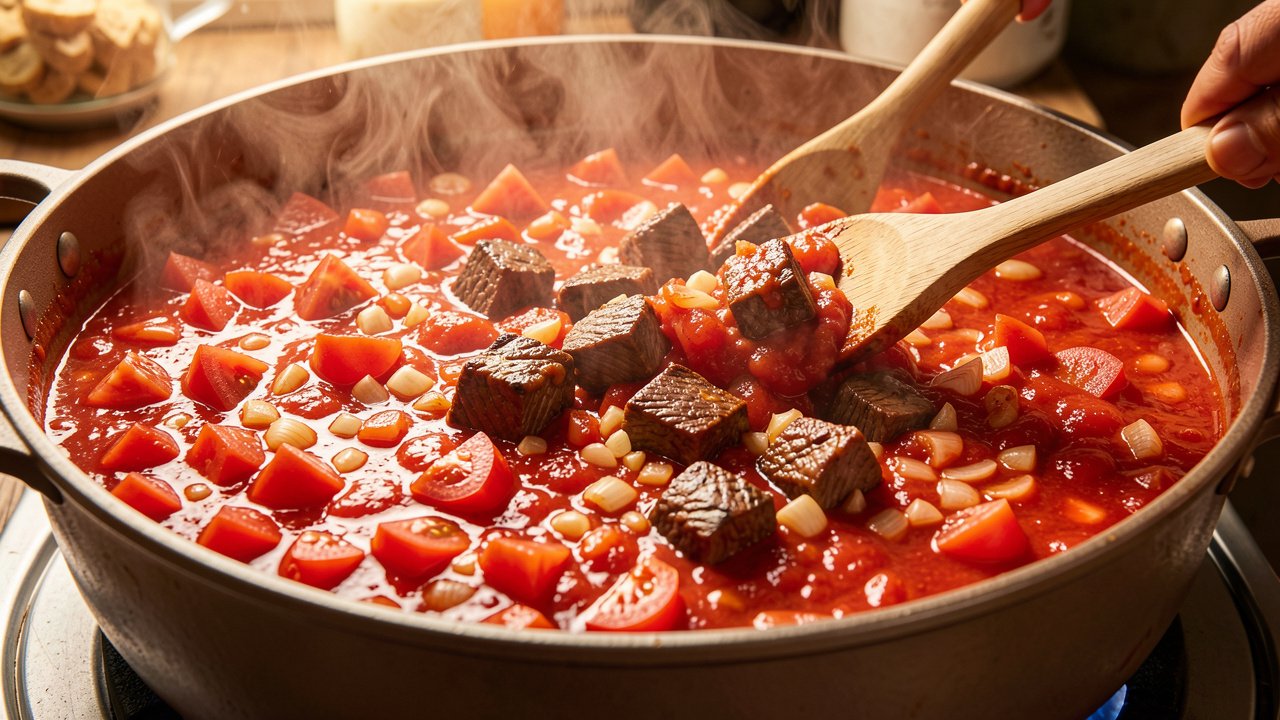
Stir in the tomato paste and cook it for a minute to take off the raw edge, then add the chopped tomatoes and the remaining salt and black pepper. Cook 5 to 7 minutes, stirring, until the tomatoes break down into a thick, glossy sauce. Return the seared beef and any resting juices to the pot and stir to coat.
Simmer Until Tender
Pour in just enough water to almost cover the beef, about a cup, and bring to a gentle simmer. Cover and cook on low for 1.5 hours, stirring occasionally, until the beef is fork-tender and the sauce is rich. If it looks thin near the end, uncover and let it reduce until it coats a spoon.
Finish and Serve
Stir in most of the chopped cilantro and the fresh chili, saving a little cilantro for the top. Simmer for 2 more minutes so the flavors meld while the herbs stay bright, then taste and adjust the salt and heat. Scatter the reserved cilantro over the top and serve hot, with plenty of bread to soak up the sauce.
Chef’s Tips From Real Kitchen Testing
Brown the beef in batches and never crowd the pot. Crowded meat steams instead of searing, and that dark crust is the single biggest source of flavor in the finished stew.
Add the fresh cilantro and chili only at the end. Cooking them for a long time dulls their color and aroma, and it is that fresh finish that makes ostri taste sharp and lively.
Keep the simmer low and slow. A hard boil toughens the beef, while a gentle bubble over more than an hour is what turns it fork-tender.
Recipe Variations
Serving Suggestions
- Warm crusty bread or Georgian flatbread for the sauce
- Fluffy steamed rice to make it a fuller meal
- A crisp cucumber, tomato, and herb salad
- Extra fresh cilantro and sliced chili on the side
Nutrition Facts
| Nutrient | Amount per serving |
|---|---|
| Calories | 430 |
| Protein | 34 g |
| Carbohydrates | 14 g |
| Fat | 26 g |
| Saturated Fat | 8 g |
| Fiber | 3 g |
| Sugar | 7 g |
| Sodium | 720 mg |
Values are estimates per serving and vary with the exact ingredients and brands you use.
Make-Ahead Tips
Ostri is even better the next day, so it is an ideal make-ahead dish. Cook it fully, cool it, and refrigerate; reheat gently and add the fresh cilantro and chili just before serving to keep the finish bright.
Storage, Freezing & Reheating
Common Mistakes to Avoid
Troubleshooting
Beef still tough? It simply needs more time. Add a splash of water, cover, and keep simmering gently until the meat gives easily under a fork.
Sauce too thin? Uncover the pot and simmer to reduce until the sauce coats a spoon, or stir in a little extra tomato paste to thicken and enrich it.
Not sharp enough? Ostri should live up to its name. Stir in more fresh chili and garlic at the end, and check the salt, which lifts every other flavor.
A Note on Georgian Cooking
Georgian food is built on bold, herb-forward flavor, and ostri sits right at its heart. The name comes from the Georgian word for sharp or spicy, and the dish is meant to carry real heat and bite. It belongs to a family of hearty tomato stews across the Caucasus, where garlic, fresh herbs, and warm spices like blue fenugreek and coriander define the table as much as any single ingredient.
The dish most often confused with ostri is chakhokhbili, and the difference is worth knowing: chakhokhbili is made with chicken cooked down until the tomatoes almost cling to the meat with little liquid, while ostri is a saucier, spicier beef stew built to be eaten with bread. Ostri also shares its DNA with other great meat-and-tomato braises, from a paprika-rich Hungarian goulash to a tangy Russian solyanka, each one a regional answer to the same comforting idea.
What makes ostri so enduring is how communal it is. It is a pot set in the middle of the table, ladled generously, and shared with bread and conversation. That spirit of abundance, spice, and freshness is exactly what Georgian home cooking is known for.