Malaysian Recipes
Sour and Spicy Fish Stew
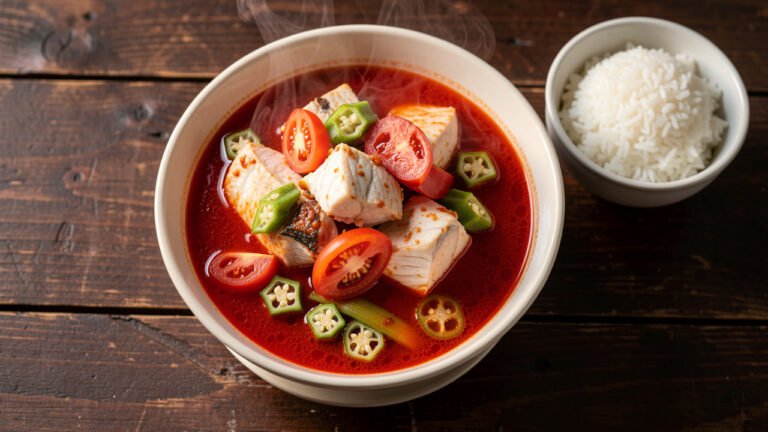
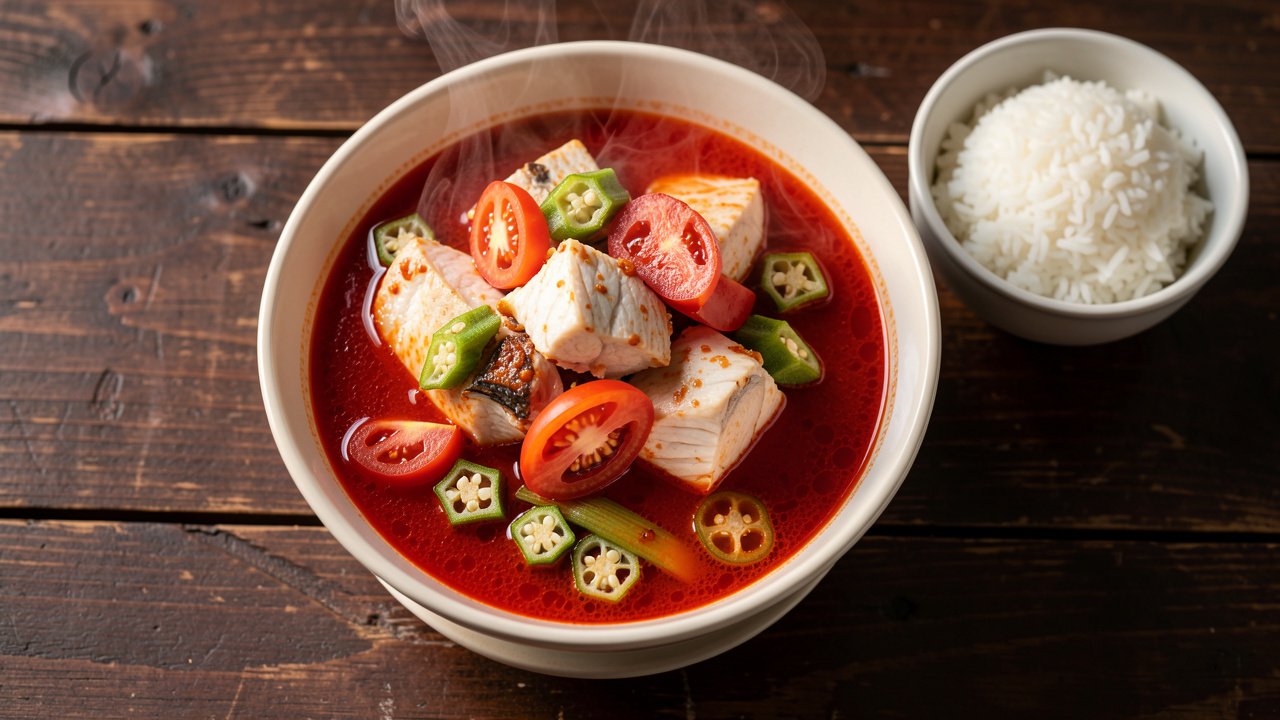
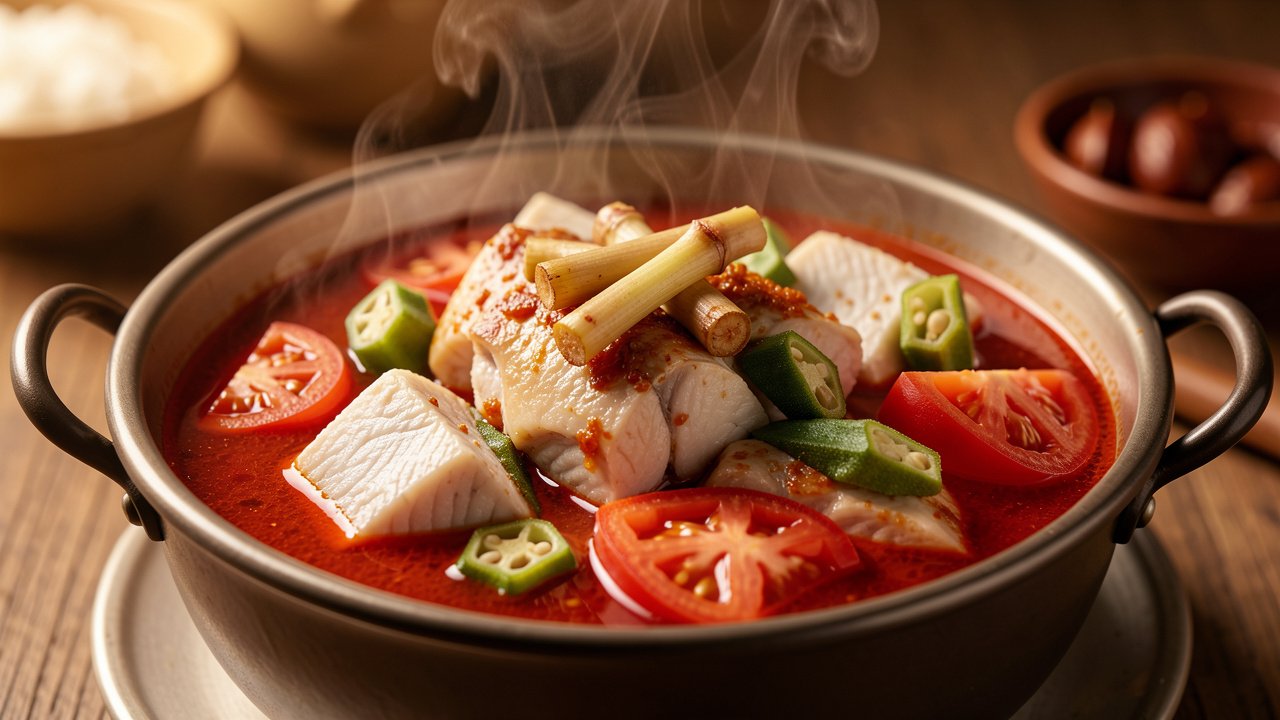
Asam pedas is the kind of dish that makes you sit up at the first spoonful. It is loud in the best way: sharply sour from tamarind, hot from a fistful of chilies, and deeply savory underneath. This is Malaysian home cooking at its most honest, a pot of fish stewed in a red, tangy broth with okra and torch ginger, meant to be spooned generously over rice.
Why This Asam Pedas Works
Great asam pedas is a balancing act between three big flavors: sour, spicy, and savory. Tamarind supplies the mouth-watering tang, the blended chili paste brings both heat and a smoky depth, and a small amount of shrimp paste rounds everything out with a savory backbone. When those three are in balance, the broth tastes alive rather than simply hot or simply sour.
The single most important step is frying the rempah, the blended spice paste of dried chilies, shallots, garlic, lemongrass, and turmeric. Cooking it slowly in oil until it darkens and the oil separates transforms it from a raw, harsh mixture into something deeply fragrant. Skip or rush this and the whole pot tastes flat and dusty, no matter how good your fish is.
Tomatoes do quiet but important work here. They melt into the tamarind broth, softening its sharpness with a gentle sweetness and giving the stew its glossy red body. They keep the sourness from feeling one-note, which is exactly the trap that catches most home cooks the first time they try this dish.
Finally, the aromatics carry the dish across the finish line. Okra thickens the broth slightly and adds a tender bite, while torch ginger perfumes the whole pot with a floral, almost citrusy note that is unmistakably Malaysian. Together they turn a simple sour stew into something layered and memorable.
Pro observation: The rempah is ready for the broth when the oil starts to bead and pool at the edges of the pan and the paste smells sweet rather than sharp. That glossy split is your signal that the raw edge is gone.
Ingredients
Kitchen Measurement Converter
Quickly convert between common cooking measurements without leaving the recipe. Pick a category, enter a value, and the result updates instantly.
Ingredient Notes & Substitutions
The Fish
Choose firm, meaty halal fish that hold together in a simmering broth, such as mackerel, snapper, or catfish. Steaks on the bone add the most flavor, but thick fillets work too. Avoid delicate, flaky fish that will fall apart.
Tamarind
Tamarind pulp gives the signature sourness. Soak it in warm water and strain out the seeds. If you only have concentrated tamarind paste, use about half the amount and adjust to taste, since it is much stronger.
Torch Ginger
Torch ginger, known as bunga kantan, adds a floral, citrusy aroma. It is worth seeking out at an Asian market, fresh or frozen. If you cannot find it, an extra bruised stalk of lemongrass gives a hint of that fragrance.
Belacan
Belacan, a fermented shrimp paste, adds deep savory flavor. Toast it briefly for the best aroma, and use a light hand as it is intense. For a milder stew you can reduce it, though a little is what makes the broth taste authentic.
Equipment
- Wide pot or deep pan
- Blender or spice grinder
- Sharp knife and board
- Fine strainer
- Measuring spoons
- Wooden spoon
Before You Start
1. Soak the tamarind and chilies early. Both need about 10 minutes in warm water. Get them soaking before anything else so they are ready when you need them.
2. Prep the fish gently. Pat the fish dry, cut it into large pieces, and season it lightly with salt. Handling it as little as possible keeps the pieces intact in the broth.
3. Start the rice. Asam pedas is built to be eaten with steamed white rice, so get the rice cooking before you fry the paste.
Step-by-Step Instructions
Make the Tamarind Water
Put the tamarind pulp in a bowl and pour over the warm water. Let it soak for about 10 minutes, then squash it with your fingers or the back of a spoon to release the sour pulp. Strain out the seeds and fibers, keeping the cloudy, tangy liquid. This tamarind water, or asam, is the backbone of the broth.
Blend the Rempah
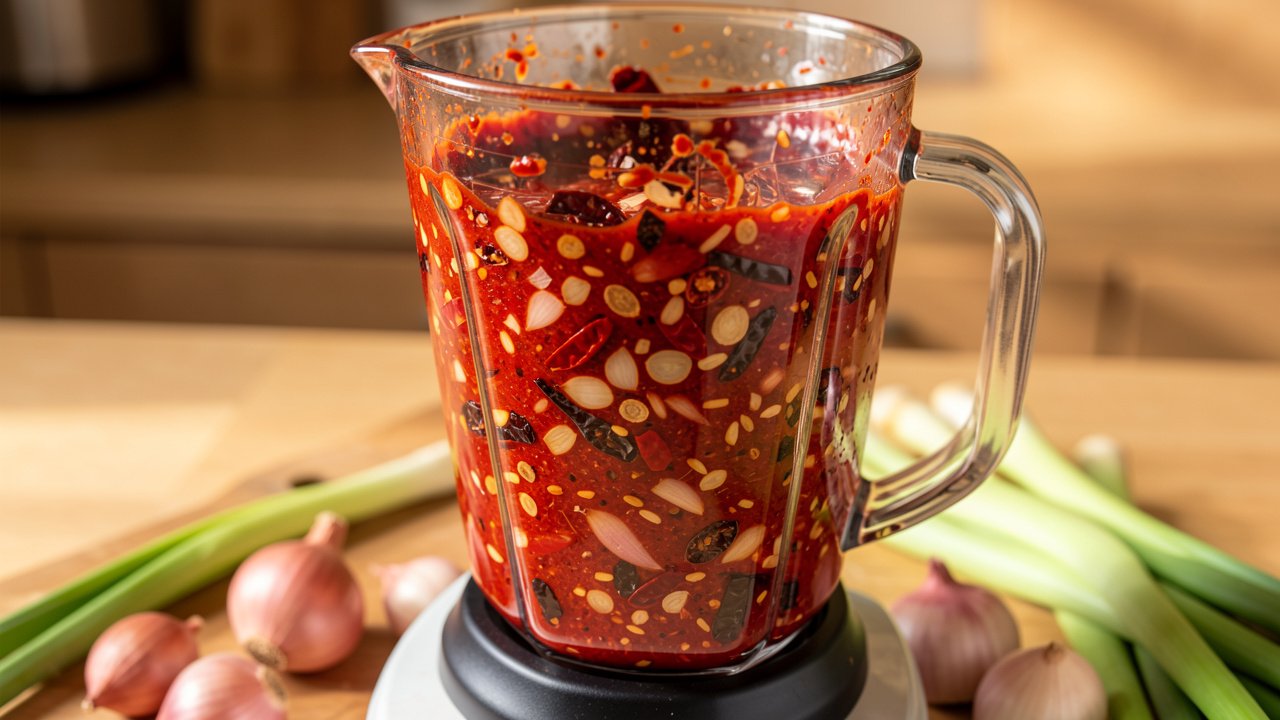
Drain the soaked dried chilies. Put them in a blender with the shallots, garlic, fresh ginger, lemongrass, ground turmeric, and belacan. Add a splash of water and blend to a smooth red paste. This spice paste, the rempah, is what carries all the flavor of the dish.
Fry the Paste
Heat the oil in a wide pot over medium heat. Add the rempah and fry, stirring often, for 8 to 10 minutes until it darkens, smells deeply fragrant, and the oil begins to separate at the edges. Do not rush this step, as a raw-tasting paste is the most common flaw in asam pedas.
Build the Sour Broth
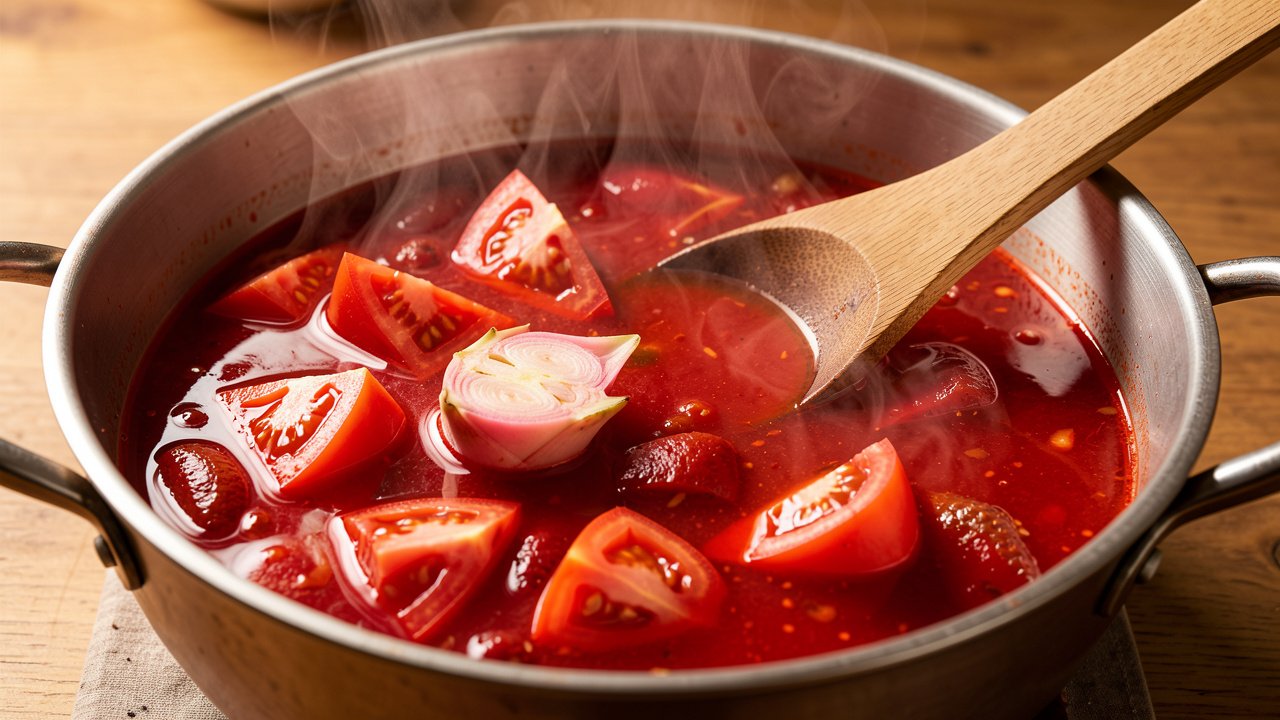
Pour in the tamarind water and bring it to a simmer. Add the quartered tomatoes, the halved torch ginger bud, the sugar, and the salt. Simmer for about 5 minutes so the broth turns tangy, savory, and aromatic, and the tomatoes just begin to soften into the liquid.
Add the Fish and Okra
Gently slide the fish pieces and the trimmed okra into the simmering broth. Spoon some broth over the top, cover the pot loosely, and simmer gently for 8 to 10 minutes, turning the fish once, until it is opaque and flakes easily. Keep the heat low so the fish stays in whole pieces.
Food safety: Cook the fish until it reaches an internal temperature of 145 degrees F (63 degrees C) at its thickest point. At that point it turns opaque and flakes cleanly, which usually takes 8 to 10 minutes of gentle simmering.
Season and Serve
Taste the broth and adjust with more salt, a little sugar, or an extra spoonful of tamarind water for sharper sourness. It should be bright, sour, spicy, and savory all at once. Serve hot in bowls with plenty of steamed white rice on the side.
Chef’s Tips From Real Kitchen Testing
Fry the rempah until the oil visibly splits from the paste. That glossy sheen means the paste is cooked through and the harsh, raw edge is gone.
Slide the fish in and barely stir it. Asam pedas fish should stay in whole pieces, so turn each piece just once instead of stirring the pot.
Season in layers and taste right at the end. The balance of sour, salty, sweet, and spicy is the whole point, so make your final adjustment just before serving.
Recipe Variations
Serving Suggestions
- Steamed white rice or fragrant jasmine rice
- A simple stir-fried green vegetable
- Crisp cucumber slices to cool the heat
- Lime wedges and extra sliced chilies
Nutrition Facts
| Nutrient | Amount per serving |
|---|---|
| Calories | 320 |
| Protein | 34 g |
| Carbohydrates | 12 g |
| Fat | 15 g |
| Saturated Fat | 3 g |
| Fiber | 3 g |
| Sugar | 6 g |
| Sodium | 680 mg |
Values are estimates per serving and vary with the exact ingredients and brands you use.
Make-Ahead Tips
The broth for asam pedas is a great make-ahead component, because the sour and spicy flavors deepen as they sit. Fry the rempah and build the tamarind broth a day ahead, then cool and refrigerate it. When you are ready to eat, bring the broth back to a gentle simmer and add the fresh fish and okra so they cook to order and do not turn mushy. Add torch ginger fresh for the brightest aroma.
Storage, Freezing & Reheating
Common Mistakes to Avoid
Troubleshooting
Broth tastes harsh or bitter? The rempah was probably under-fried, or the tamarind is too concentrated. Simmer a few minutes longer and balance with a pinch of sugar and a little more salt.
Not sour enough? Stir in more tamarind water a spoonful at a time, tasting as you go, until the tang is where you want it.
Fish falling apart? It was stirred too much or simmered too hard. Keep the heat gentle and turn each piece only once.
A Note on Malaysian Cooking
In Malay, asam means sour and pedas means spicy, so asam pedas is literally a sour and spicy dish. The sourness traditionally comes from asam, the local word for tamarind, sometimes joined by dried tamarind slices for an even sharper tang. This love of bright, tangy heat runs through Malay, Nyonya, and Minangkabau kitchens, and different states each have their own beloved version.
At the center of it all is the rempah, the pounded or blended spice paste of chilies, shallots, garlic, lemongrass, and turmeric that forms the base of countless Malaysian dishes. Frying it patiently is the technique that separates a good pot from a great one. If you enjoy building deep, spiced tomato bowls like this, browse more ideas in our tomato recipes collection.
Frequently Asked Questions
More Tomato Recipes to Try
Last updated: September 29, 2026