Vietnamese Recipes
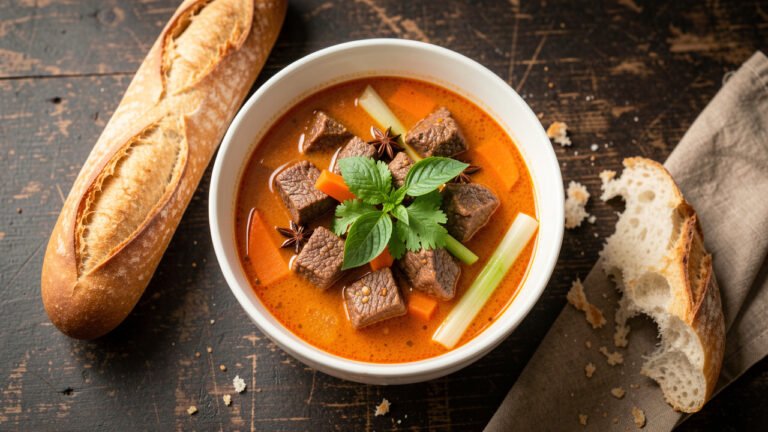
Fragrant Lemongrass Beef Stew
Bo kho is the kind of stew that fills the whole kitchen with the smell of lemongrass and star anise long before it is ready. It is Vietnam’s answer to a slow-cooked beef stew, but where a European braise leans on rich stock and herbs, bo kho leans on warm spices and a tomato-stained broth that stays light on its feet. The first time I made it I rushed the beef, and it stayed chewy and stubborn; the second time I let it go low and slow, and the meat gave way at the touch of a spoon.
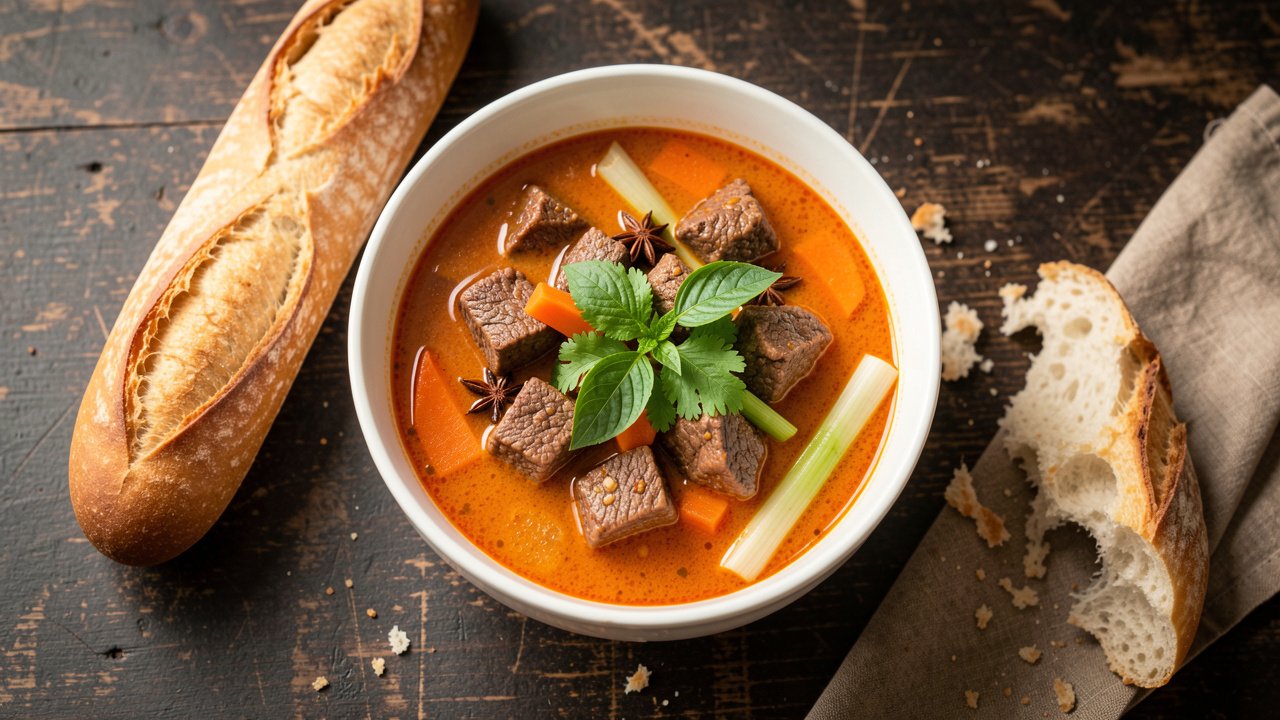
What makes it special is the balance. The broth is deeply spiced but never heavy, the carrots turn silky and sweet, and the annatto oil gives everything a warm, sunset-orange glow without adding heat. Serve it with a torn baguette or a nest of rice noodles, and you have a bowl that feels both like street food and like something someone’s grandmother has been simmering all afternoon.
Why This Vietnamese Bo Kho Works
Bo kho succeeds because it treats spices as a slow build rather than a quick hit. Whole star anise, a cinnamon stick, and bruised lemongrass steep in the broth for the full simmer, releasing their aroma gently instead of all at once. The result is a stew that smells and tastes layered, with each spoonful carrying warmth, sweetness, and a savory depth from the beef.
The single most important choice is the cut of beef. Chuck or brisket, both well-marbled and full of connective tissue, are what turn a thin broth into a stew with body. As they simmer, that collagen melts into the liquid, giving it a silky, lip-coating quality that leaner cuts simply cannot match. Rushing this is the classic mistake; the meat needs time to relax.
Tomato does quiet but essential work here. A little tomato paste plus fresh tomatoes gives the broth its ruddy color, a gentle acidity that keeps the richness in check, and a savory backbone that makes the whole pot taste more complete. It is not a tomato stew, but without the tomato the broth would taste flat.
Finally, the annatto oil is the finishing flourish that makes bo kho look as good as it tastes. Steeping annatto seeds in warm oil draws out a natural sunset color that stains the broth a glowing orange-red, all without any heat or bitterness. It is a small step that transforms the bowl from brown stew to something you want to photograph.
Pro observation: The stew is ready when a piece of beef surrenders to gentle pressure from the back of a spoon and the broth has thickened just enough to cling to the carrots. If the meat still resists, it simply needs more time, not more heat.
Ingredients
Kitchen Measurement Converter
Quickly convert between common cooking measurements without leaving the recipe. Pick a category, enter a value, and the result updates instantly.
Ingredient Notes & Substitutions
Halal Beef
Use a well-marbled cut like halal chuck or brisket. These tougher, collagen-rich cuts become meltingly tender over a long simmer, where lean cuts would only dry out. Cut into large 1.5-inch cubes so they hold their shape.
Lemongrass & Aromatics
Fresh lemongrass is worth seeking out for its citrusy perfume. Bruise the stalks with the back of a knife to release the oils, then leave them whole to fish out later. Ginger and garlic round out the aromatic base.
Whole Spices
Star anise, a cinnamon stick, and Chinese five-spice give bo kho its signature warmth. Add them whole where possible so you can remove them at the end; ground five-spice blends right into the broth.
Annatto Oil
Annatto oil, made by steeping annatto seeds in warm oil, gives the broth its glowing orange-red color without any heat. If you cannot find it, a pinch of sweet paprika stirred into plain oil is a workable stand-in.
Equipment
- Large heavy pot or Dutch oven
- Wooden spoon
- Sharp knife and board
- Tongs for searing
- Ladle
- Fine sieve or slotted spoon
Before You Start
1. Marinate if you have time. Tossing the beef with the five-spice, a little garlic, and a splash of fish sauce for 30 minutes deepens the flavor. Even a short rest helps.
2. Bruise the lemongrass and pat the beef dry. Crush the lemongrass stalks to release their oils, and blot the beef so it sears rather than steams.
3. Decide on bread or noodles. Bo kho is served either way, so put a baguette in to warm or soak your rice noodles before the stew finishes.
Step-by-Step Instructions
Marinate and Prep
Cut the halal beef into large 1.5-inch cubes and toss with the five-spice, ground coriander, half the garlic, and a spoonful of the fish sauce. Let it sit while you slice the ginger, bruise the lemongrass, chop the onion and tomatoes, and cut the carrots into chunky pieces.
Sear the Beef
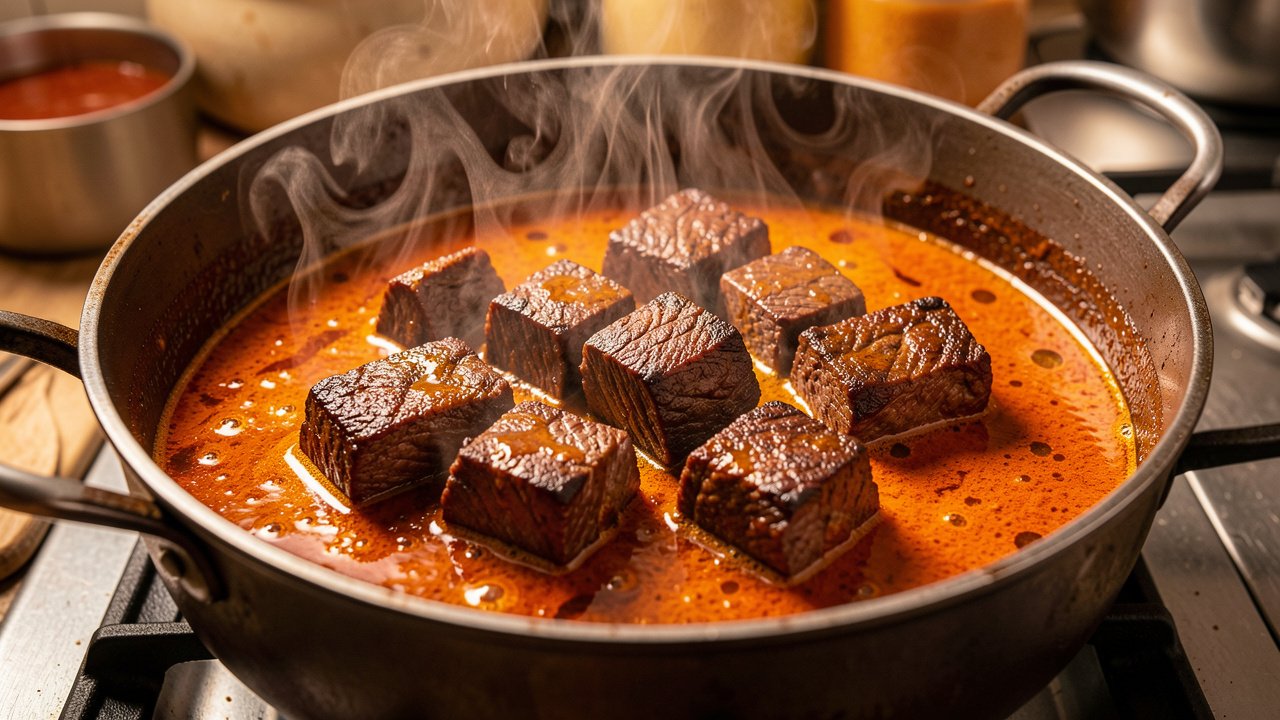
Heat the annatto oil in a large heavy pot over medium-high heat. Working in batches so the pot is not crowded, brown the beef cubes on all sides until they have a deep crust, about 6 to 8 minutes per batch. Set the seared beef aside; this browning is where much of the stew’s savory depth begins.
Bloom the Aromatics
Lower the heat to medium and add the onion, ginger, and remaining garlic to the same pot. Cook 4 to 5 minutes until softened. Stir in the tomato paste and cook it for a minute until it darkens slightly and smells sweet, scraping up the browned bits from the bottom of the pot.
Build the Broth
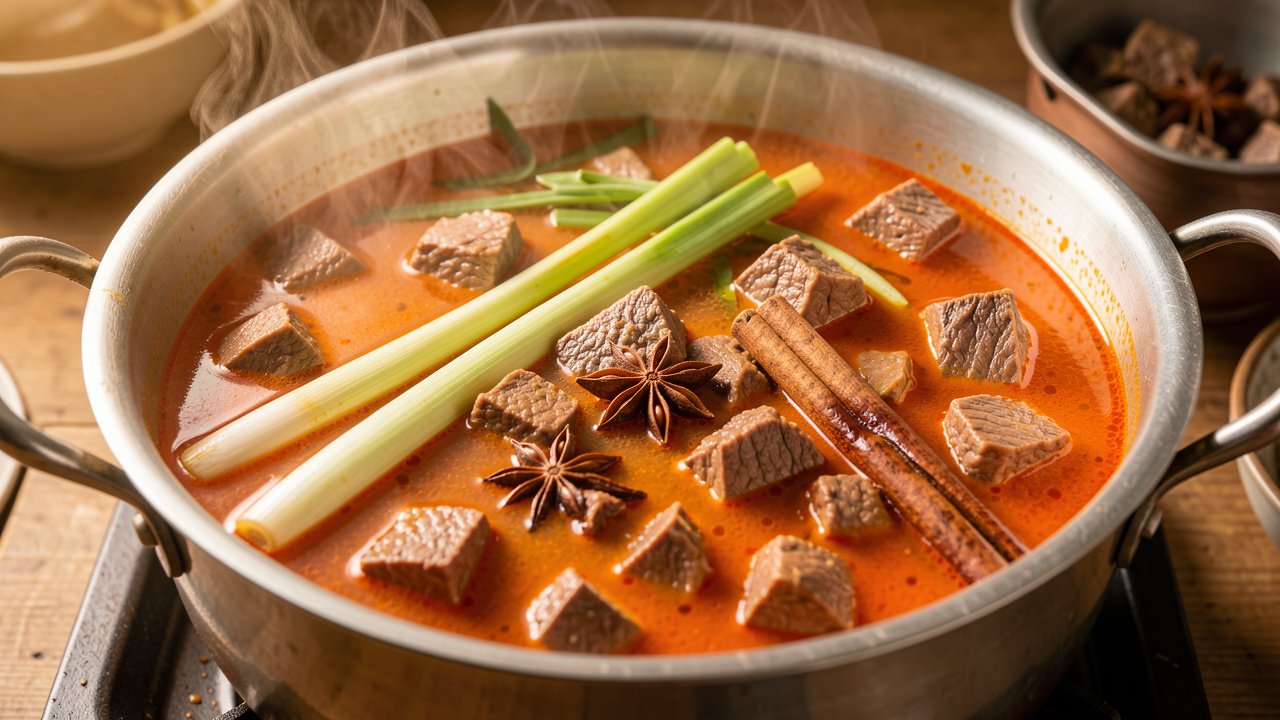
Return the beef to the pot and add the chopped tomatoes, lemongrass stalks, star anise, and cinnamon stick. Pour in the beef broth so the meat is just covered, then add the remaining fish sauce and the sugar. Bring it to a boil, then drop to the gentlest simmer.
Simmer Low and Slow
Cover partially and let the stew simmer gently for about 1 hour 30 minutes, stirring occasionally, until the beef is fork-tender. Add the carrot chunks in the last 30 minutes so they turn silky and sweet without falling apart. Keep the heat low; a hard boil toughens the meat and clouds the broth.
Finish and Serve
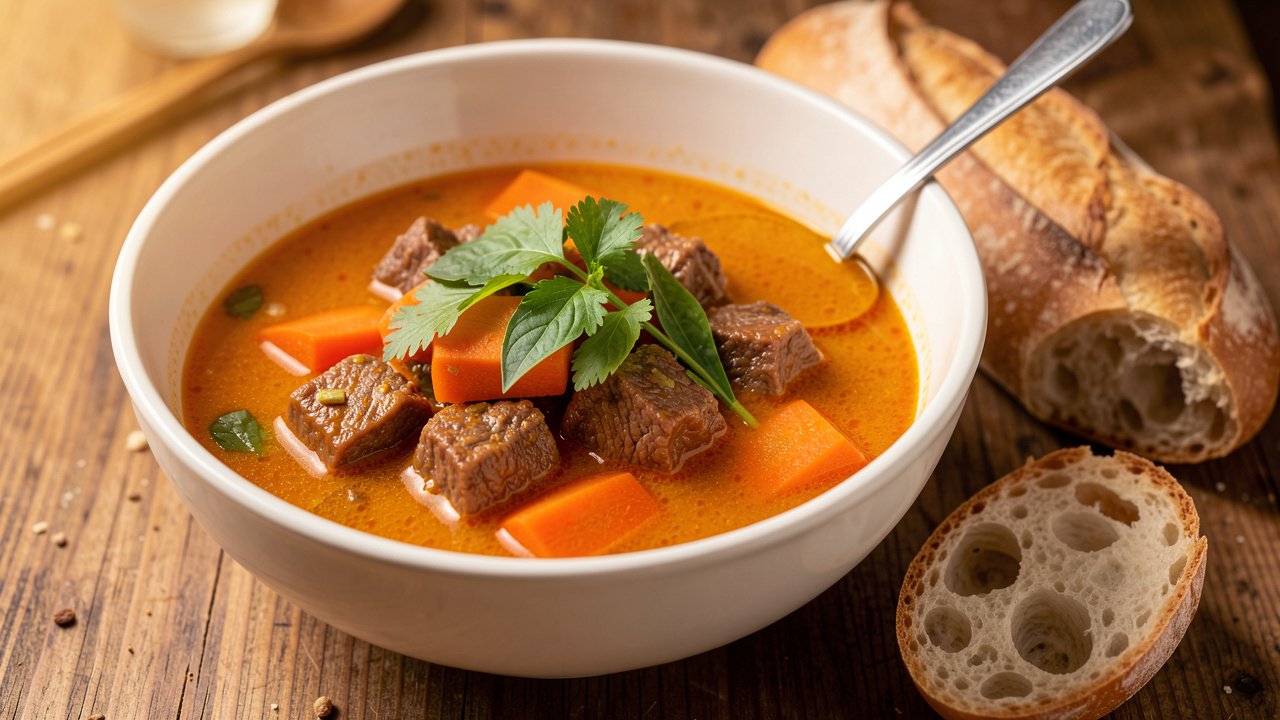
Fish out the lemongrass, star anise, and cinnamon stick. Taste the broth and adjust with a little more salt, fish sauce, or sugar until it is balanced and savory. Scatter fresh cilantro over the top and serve hot in deep bowls with a torn crusty baguette or a nest of rice noodles.
Chef’s Tips From Real Kitchen Testing
Do not rush the simmer. Tough cuts like chuck and brisket need a slow, gentle heat to break down; give them the full time and the beef turns spoon-tender.
Bruise the lemongrass but keep it whole. Crushing releases the oils, and leaving the stalks intact means you can lift them out cleanly at the end.
Add the carrots late. Stirring them in for only the final half hour keeps them sweet and intact instead of mushy and broken down.
Recipe Variations
Serving Suggestions
- A torn crusty baguette for dunking
- Wide rice noodles or thin banh pho
- Fresh herbs: cilantro, Thai basil, and sawtooth
- Lime wedges and thinly sliced chili
Nutrition Facts
| Nutrient | Amount per serving |
|---|---|
| Calories | 380 |
| Protein | 30 g |
| Carbohydrates | 18 g |
| Fat | 20 g |
| Saturated Fat | 7 g |
| Fiber | 3 g |
| Sugar | 6 g |
| Sodium | 780 mg |
Values are estimates per serving and vary with the exact ingredients and brands you use.
Make-Ahead Tips
Bo kho is a superb make-ahead dish, because a night in the fridge lets the spices settle and the broth deepen. Cook it a day ahead, cool, and refrigerate; the fat rises and sets, so you can lift off any excess before reheating for a cleaner broth. Warm it gently on the stove and add the fresh herbs only when you are ready to serve, so they stay bright and fragrant.
Storage, Freezing & Reheating
Common Mistakes to Avoid
Troubleshooting
Beef still chewy? It simply needs more time. Keep it at a bare simmer and check again in 20 to 30 minutes; tough cuts turn tender only when they are ready.
Broth tastes flat? Reach for salt, a little more fish sauce, and a pinch of sugar to balance the savory and sweet notes before adding more spice.
Broth too thin? Uncover the pot and let it reduce over low heat for 10 to 15 minutes, or mash a couple of the softened carrots into the liquid to add body.
A Note on Vietnamese Cooking
Bo kho sits at a fascinating crossroads of Vietnamese and French cooking. The slow-braised beef and the crusty baguette on the side are echoes of the French colonial era, while the lemongrass, star anise, and fish sauce are unmistakably Vietnamese. That fusion is the whole point: a European braising technique reimagined through Southeast Asian aromatics, so a familiar comfort dish becomes something brighter and more perfumed.
The magic lies in how those aromatics are handled. Vietnamese cooks tend to layer flavor gently, letting whole spices steep rather than pounding everything into a paste, and they finish bowls with a generous handful of fresh herbs added raw at the table. If you love spiced tomato-based dishes, browse more ideas in our tomato recipes collection to keep the pantry busy.
A Note on Beef Food Safety
Because bo kho relies on a long, low simmer, food safety mostly takes care of itself, but a few habits keep things safe. Keep raw halal beef refrigerated until you are ready to sear, and use a separate board and knife for the raw meat to avoid cross-contamination with the vegetables and herbs. Once the stew is done, the beef should be fully tender and cooked well through, with the broth having held a steady simmer for well over an hour.
Cool leftovers within two hours and refrigerate them promptly in a shallow, airtight container so the stew chills quickly. When reheating, bring it back to a steaming, piping-hot temperature all the way through before serving, and only reheat the portion you plan to eat rather than the whole pot repeatedly.
Frequently Asked Questions
More Tomato Recipes to Try
Last updated: September 29, 2026