Venezuelan Recipes
Venezuela’s National Plate
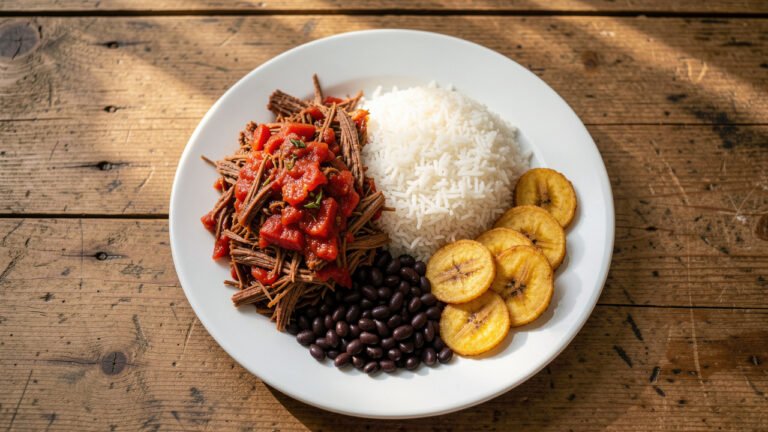
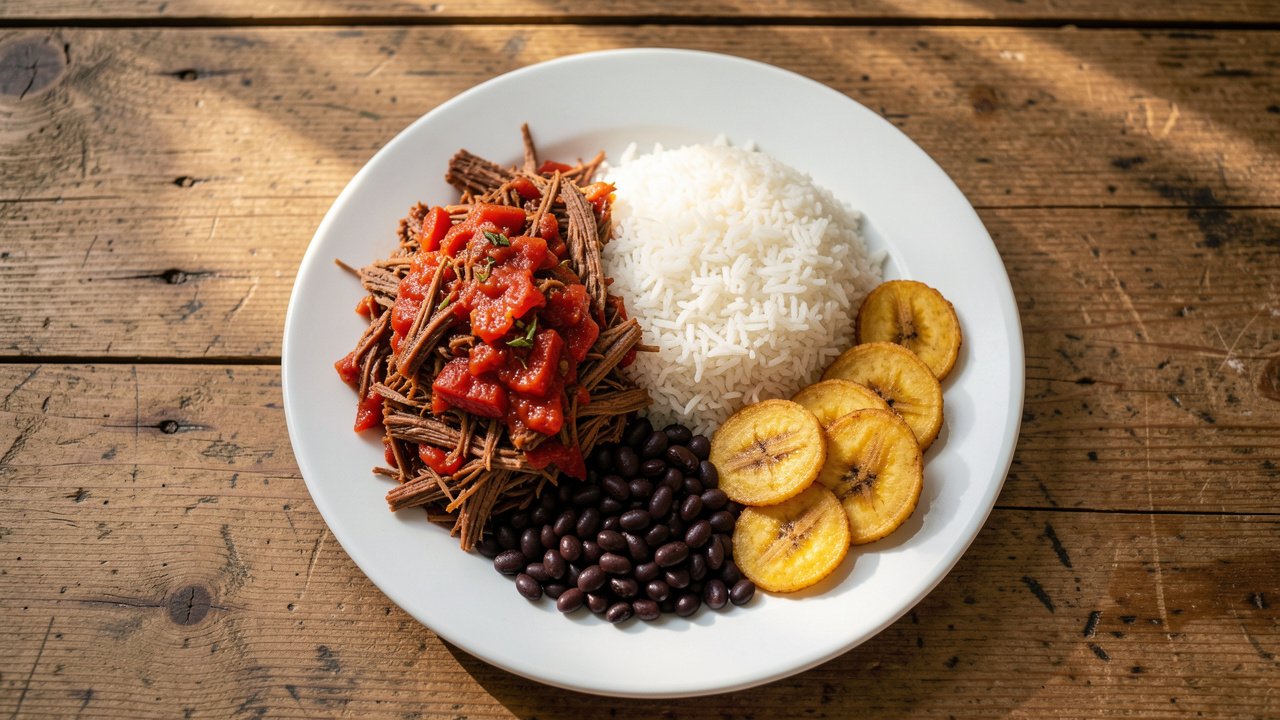
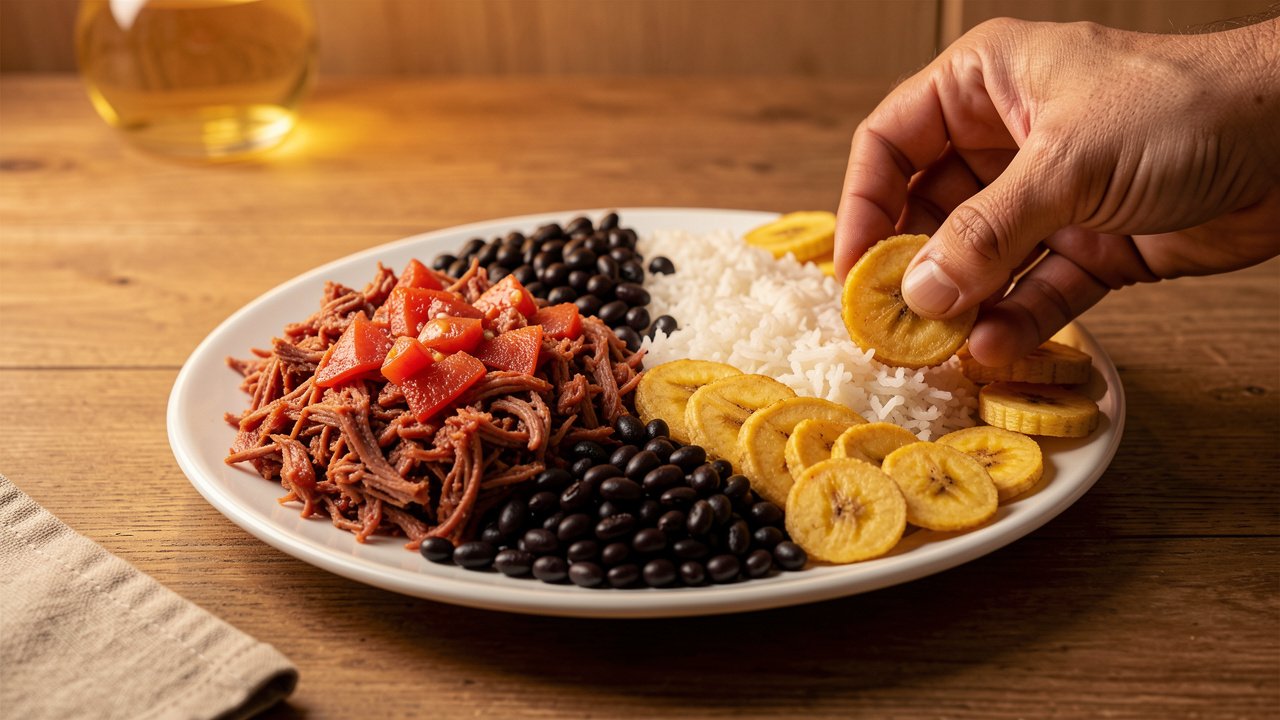
Pabellon criollo is comfort food with a sense of occasion. The heart of it is carne mechada, halal beef simmered slow until it falls into soft threads, then folded back into a bright tomato sofrito so every strand tastes of sweet pepper, garlic, and cumin. Piled next to white rice, black beans, and caramelized plantains, it becomes a plate that looks like the Venezuelan flag and eats like a Sunday tradition.
Why This Pabellon Criollo Works
Pabellon criollo works because each part is cooked for its own texture, then brought together on one plate. The halal beef is braised low and slow so its connective tissue melts and the meat pulls apart into tender threads. That long, gentle cook is the difference between beef that shreds like silk and beef that stays tough no matter how hard you tug at it with two forks.
The second secret is the sofrito. Once the beef is shredded, it goes back into a tomato base built on onion, red and green bell pepper, garlic, and toasted cumin. This is where carne mechada gets its color and its soul, turning glossy and deep red as the tomato reduces and clings to every strand. Without a proper sofrito, the beef tastes plain and boiled; with it, the beef tastes like Venezuela.
The plate is also a study in contrast, which is why it never gets boring. Fluffy white rice is the neutral cushion, seasoned black beans bring earthy depth, and fried sweet plantains add a caramelized edge that plays against the savory beef. You get sweet, savory, soft, and crisp in a single forkful.
Finally, it is a make-ahead dream. The carne mechada actually improves after a night in the fridge, and the beans reheat beautifully, so you can spread the work over two days and still serve a plate that tastes like it took all afternoon.
Pro observation: The carne mechada is ready when the tomato sofrito has reduced enough that a spoon dragged across the pan leaves a brief clear trail. That thick, clinging sauce is what keeps the shredded beef moist and glossy on the plate.
Ingredients
Kitchen Measurement Converter
Quickly convert between common cooking measurements without leaving the recipe. Pick a category, enter a value, and the result updates instantly.
Ingredient Notes & Substitutions
Halal Beef
Flank or skirt is traditional because the long fibers pull apart into clean threads. Halal beef brisket or chuck also works well for braising; both need the full slow cook to shred properly. Trim heavy surface fat before braising.
Tomatoes
Ripe, red tomatoes give the sofrito its color and sweet-tart backbone. Out of season, one 14-ounce can of chopped tomatoes is more reliable than pale fresh ones. The tomato paste deepens the color and body.
Bell Peppers
A mix of red and green pepper is classic. Red brings sweetness, green brings a slight grassy bite. If you only have one color, use two of that; the sofrito still carries plenty of flavor.
Plantains
Use very ripe plantains with blackened, spotty skins for sweet tajadas. Firm yellow plantains fry up starchier and less sweet. If plantains are hard to find, a ripe cooking banana is the closest stand-in.
Equipment
- Large heavy pot or Dutch oven
- Wide skillet for sofrito
- Frying pan for plantains
- Two forks for shredding
- Sharp knife and board
- Rice pot with lid
Before You Start
1. Give the beef time. The braise is hands-off but slow, so start the halal beef first and prep everything else while it simmers toward tender.
2. Save the braising liquid. Once you shred the beef, keep a cup of the cooking broth. Splashing it back into the sofrito keeps the carne mechada juicy instead of dry.
3. Let the plantains ripen. For sweet tajadas you want skins that are mostly black. Buy them a few days ahead if yours are still yellow and firm.
Step-by-Step Instructions
Braise the Halal Beef
Place the halal beef in a large pot with the bay leaf, half an onion, a pinch of salt, and enough water to cover by an inch. Bring to a boil, then lower to a gentle simmer, cover, and cook 1 hour 30 minutes, until the beef is fork-tender and pulls apart easily. Skim any foam that rises in the first few minutes so the broth stays clean.
Shred the Beef
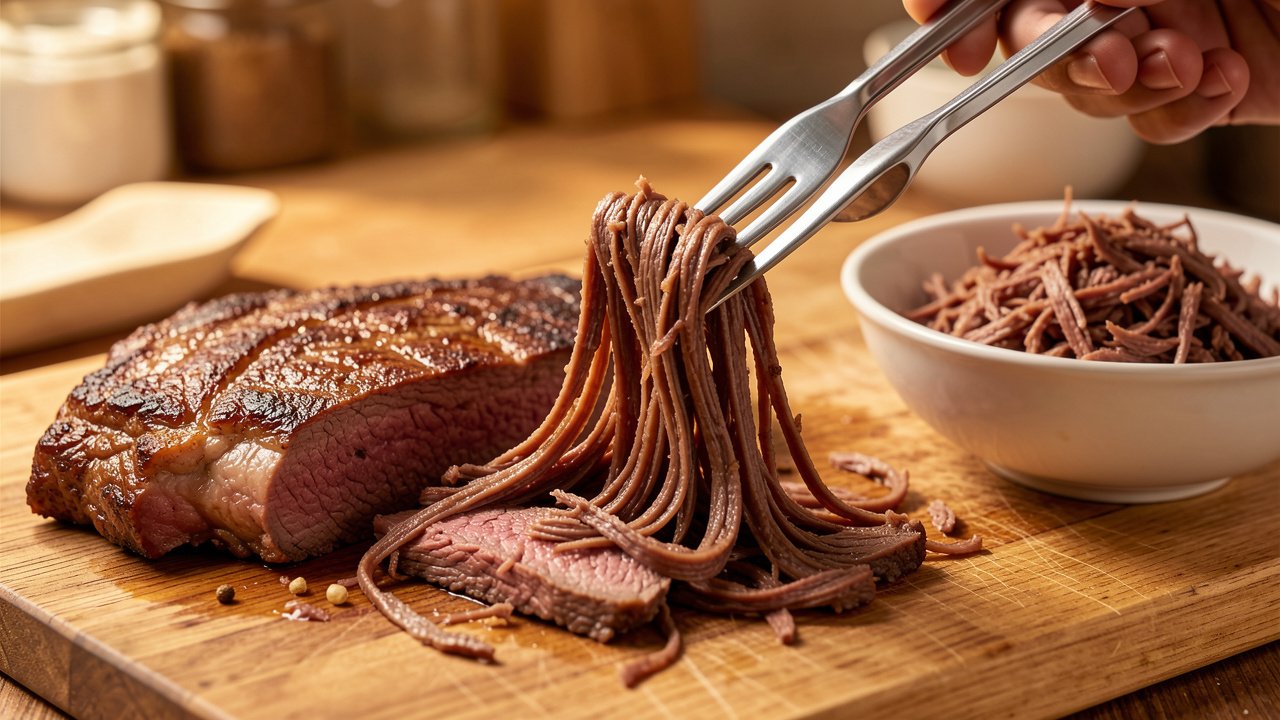
Lift the beef out and let it rest until cool enough to handle. Working along the grain, pull it into thin threads with two forks or your fingers. Strain and reserve about one cup of the braising broth. The threads should be fine and even so they soak up the sofrito.
Build the Tomato Sofrito
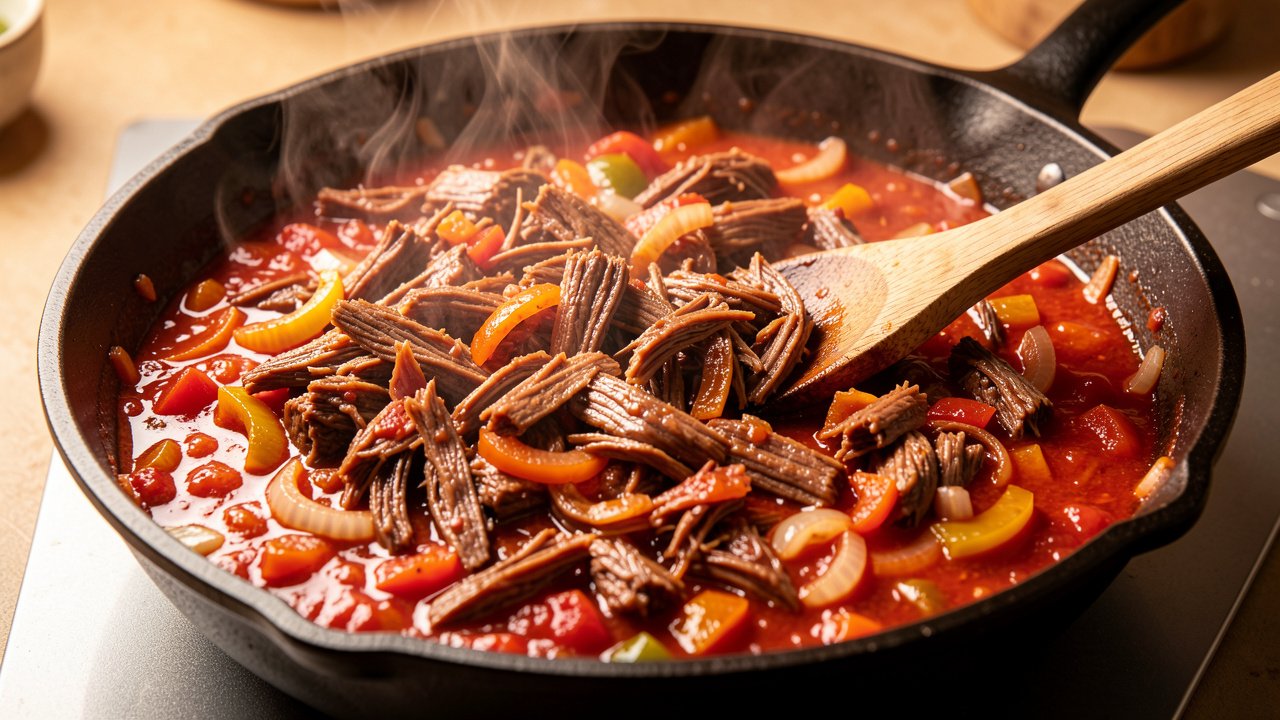
Chop the remaining onion, both bell peppers, and the garlic. Heat the olive oil in a wide skillet over medium heat and cook the onion and peppers 6 to 8 minutes until soft. Add the garlic, cumin, and paprika and stir 1 minute until fragrant, then stir in the tomato paste and cook 1 minute more to take off its raw edge.
Simmer the Carne Mechada
Add the chopped tomatoes and a teaspoon of salt to the sofrito and cook 8 to 10 minutes, until they collapse into a thick sauce. Fold in the shredded beef and a splash of the reserved broth. Simmer 12 to 15 minutes, adding more broth as needed, until the beef is glossy, deep red, and coated in clinging sauce.
Cook Rice, Beans, and Plantains
While the beef simmers, cook the white rice until fluffy and warm the black beans with a pinch of salt and cumin until thick and glossy. Peel the ripe plantains, slice on a diagonal, and fry in a little oil over medium heat until golden and caramelized on both sides, about 2 minutes per side. Drain on paper towels.
Plate the Pabellon
On each plate, spoon a mound of white rice, a portion of black beans, and a generous pile of the tomato carne mechada, keeping them in their own sections like the stripes of a flag. Tuck the fried plantains along the edge. Scatter fresh cilantro over the beef and serve hot.
Chef’s Tips From Real Kitchen Testing
Do not rush the braise. If the beef resists when you pull it, it needs more time in the pot. Simmering another 20 to 30 minutes is what turns tough fibers into silky threads.
Keep the reserved broth close. Adding a splash as the carne mechada simmers is the single best trick for beef that stays moist instead of drying into stringy clumps.
Taste the sofrito before the beef goes in. This is your chance to balance salt, cumin, and tomato so the finished carne mechada is seasoned all the way through.
Recipe Variations
Serving Suggestions
- A fried egg on top for pabellon a caballo
- Warm arepas or casabe on the side
- A wedge of queso blanco or fresh avocado
- A squeeze of lime and extra cilantro
Nutrition Facts
| Nutrient | Amount per serving |
|---|---|
| Calories | 650 |
| Protein | 38 g |
| Carbohydrates | 72 g |
| Fat | 22 g |
| Saturated Fat | 6 g |
| Fiber | 10 g |
| Sugar | 14 g |
| Sodium | 720 mg |
Values are estimates per serving and vary with the exact ingredients and brands you use.
Make-Ahead Tips
Pabellon criollo is built for making ahead, because the carne mechada tastes even better the next day once the tomato sofrito has settled into the beef. Braise and shred the beef, then finish it in the sofrito up to two days in advance and refrigerate. The black beans also keep well. On serving day, simply reheat the beef and beans, cook fresh rice, and fry the plantains at the last minute so they stay hot and caramelized.
Storage, Freezing & Reheating
Common Mistakes to Avoid
Troubleshooting
Beef will not shred? It is undercooked. Return it to the simmering broth, cover, and cook another 20 to 30 minutes until it pulls apart with almost no effort.
Carne mechada tastes dry? Fold in more of the reserved braising broth over low heat until the strands look glossy and coated again.
Plate tastes flat? The sofrito likely needs salt and a bit more cumin. Season the beef, and salt the rice and beans on their own so each component tastes complete.
A Note on Venezuelan Cooking
Pabellon criollo is often called Venezuela’s national dish, and part of its charm is how the plate mirrors the national flag: red and brown carne mechada, white rice, and dark black beans, with golden tajadas tucked alongside. Carne mechada, the tomato-braised shredded beef, is the centerpiece, while the caraotas (black beans) and tajadas (fried sweet plantains) round the plate into a full, satisfying meal. Every Venezuelan family seasons it a little differently, but the rhythm of slow-braised beef, a patient sofrito, and contrasting sides stays the same. If you love building meals around a good tomato base, browse more ideas in our collection of tomato recipes, or try the cozy hearty tomato lentil soup for another warming bowl.
Frequently Asked Questions
More Tomato Recipes to Try
Last updated: September 29, 2026