West African Recipes
Ivorian Sealed-Pot Chicken
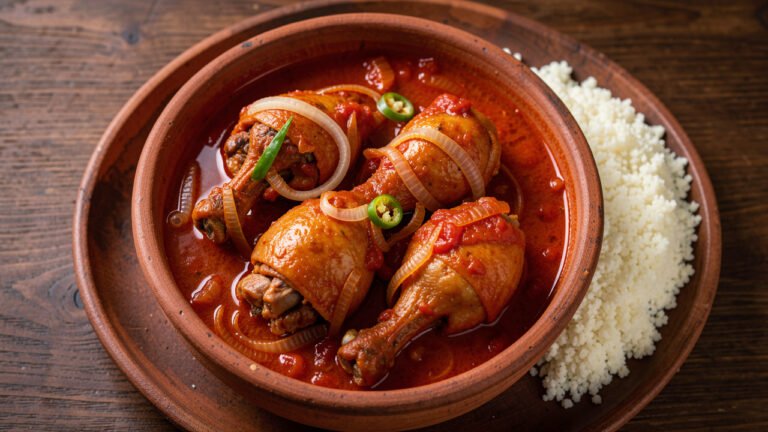
Kedjenou is one of those dishes that feels almost like a magic trick the first time you make it. You pile everything into a pot, seal the lid, and add not a single drop of water, yet twenty minutes later the pot is full of a rich, savory broth that came entirely from the chicken and the tomatoes. The name itself comes from an Agni phrase describing this shaking, jostling method of cooking without stirring.
The first time I tried it, I could not resist lifting the lid every few minutes to check, and I lost most of that precious steam. The version I make now stays sealed and gets a firm shake every so often, and the difference in tenderness is night and day.
Why This Kedjenou Works
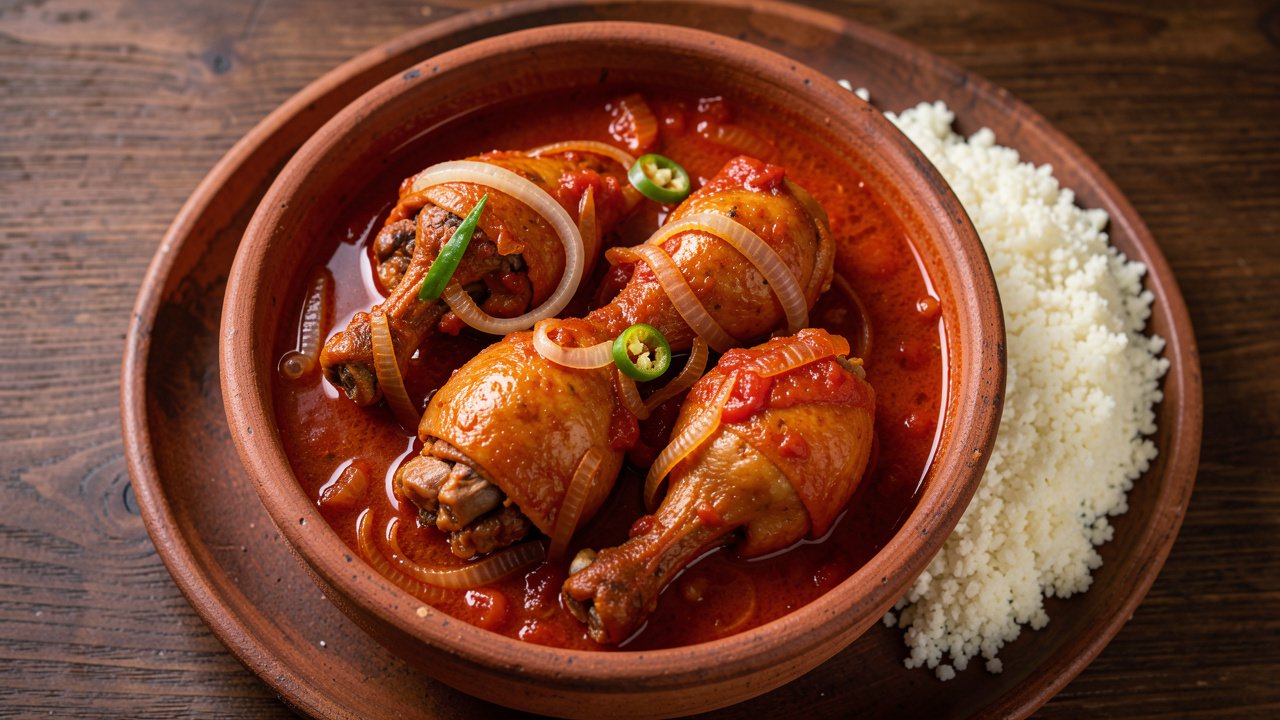
Kedjenou proves that you do not need a long list of ingredients or a splash of stock to build a deeply savory dish. Chicken and tomatoes are both packed with water and natural juices, and when you trap that moisture inside a sealed pot, it turns to steam, condenses on the lid, and drips back down as a flavorful broth. Nothing is diluted, so every spoonful tastes concentrated and clean.
The single most important idea is the seal. A tight lid keeps the steam working for you instead of escaping into the kitchen. Traditionally the pot is a clay canari sealed with a paste of flour and water, but a heavy pot with a snug lid, or even a sheet of foil crimped under the lid, does the same job at home.
The second secret is that you shake, not stir. Gripping the sealed pot and giving it a firm swirl every ten minutes redistributes the chicken and stops it catching, all without letting a wisp of steam out. Stirring means lifting the lid, and lifting the lid means losing the very thing that makes the dish work.
Finally, the aromatics do the heavy lifting. Ginger, garlic, onion, chili, bay, and thyme are gentle when raw but bloom into something layered and warming once they have steamed with the chicken for an hour. The result is tender, fall-apart poultry in a fragrant tomato broth, and it is naturally dairy-free and halal from start to finish.
Pro observation: After about ten minutes sealed on the heat, you should hear a soft bubbling inside and see steam trying to escape the rim. That is your sign the pot has built its own liquid and you can turn the heat down to a gentle steam.
Ingredients
Kitchen Measurement Converter
Quickly convert between common cooking measurements without leaving the recipe. Pick a category, enter a value, and the result updates instantly.
Ingredient Notes & Substitutions
Halal Chicken
Bone-in, skin-on pieces give the most flavor and the richest broth, since the bones and skin release gelatin as they steam. Use halal chicken throughout. A whole halal bird cut into serving pieces is the most traditional choice.
Tomatoes
Ripe, juicy tomatoes are essential because they supply most of the liquid. Out of season, one 14-ounce can of whole or chopped tomatoes works and is often juicier than pale fresh ones. Quarter fresh tomatoes so they collapse quickly.
Chili
A whole Scotch bonnet steamed alongside gives fragrance and a slow heat without shredding it into the pot. Leave it whole for aroma, or chop it for real fire. A milder chili works if you are sensitive to heat.
Ginger, Garlic & Herbs
Fresh ginger and garlic are the backbone of the aroma, so use them generously. Bay leaves and fresh thyme round out the savory notes. A crumbled chicken bouillon cube deepens the broth, but you can leave it out and simply add more salt.
Equipment
- Heavy pot with a tight lid
- Foil to seal the rim
- Sharp knife and board
- Box grater or microplane
- Oven mitts for shaking
- Measuring spoons
Before You Start
1. Choose a pot that seals well. The whole method depends on trapping steam, so pick a heavy pot whose lid sits snugly. If the lid is loose, keep a sheet of foil ready to crimp under it.
2. Cut the chicken into even pieces. Similar-sized pieces cook at the same rate, so nothing is dry while the rest is still done. Bone-in pieces stay juicier than boneless.
3. Have your aromatics prepped and ready. Everything goes into the pot at once, so slice the onions, quarter the tomatoes, and grate the ginger and garlic before you start.
Step-by-Step Instructions
Combine Everything in the Pot
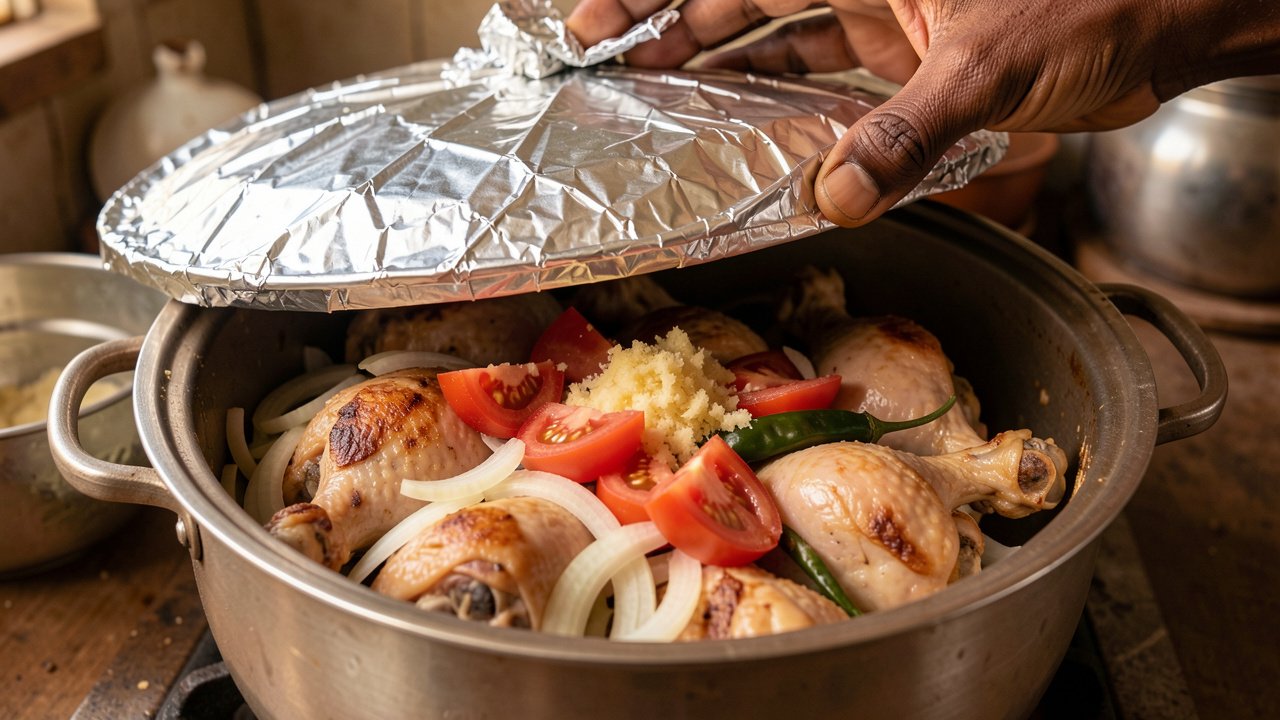
Put the halal chicken pieces into a heavy pot and add the sliced onions, quartered tomatoes, minced garlic, grated ginger, bay leaves, thyme, crumbled bouillon cube, salt, and black pepper. Nestle the whole Scotch bonnet on top. If you like, add the optional oil now for a slightly richer broth. Do not add any water at all.
Seal the Pot Tightly
Toss everything gently with your hands so the seasonings coat the chicken. Press a sheet of foil over the top of the pot and crimp it down around the rim, then set the lid firmly on top. The goal is a seal tight enough that steam cannot easily escape. This is what lets the chicken and tomatoes steam in their own juices.
Start the Steam
Set the sealed pot over medium heat and leave it undisturbed for about 10 minutes. During this time the tomatoes and chicken begin to release their juices and the pot fills with steam. You may hear a gentle bubbling and see a little steam at the rim, which tells you liquid is building inside without any water added.
Shake, Do Not Stir
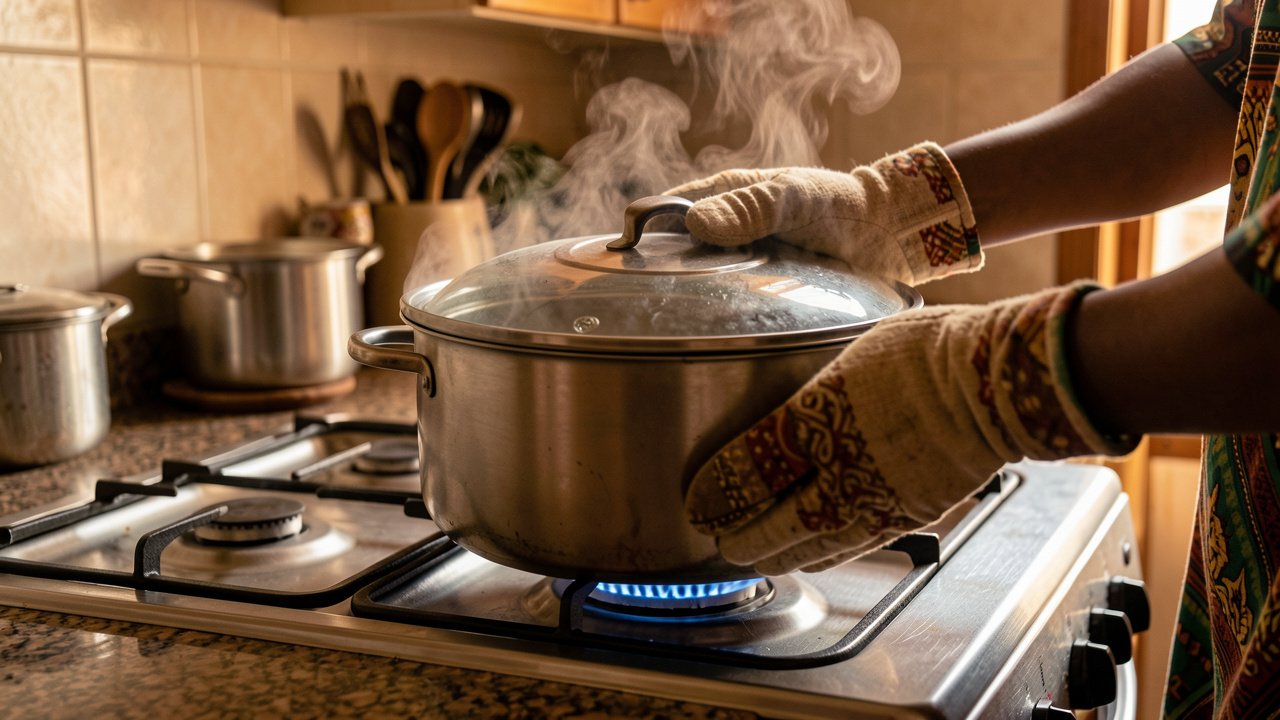
Lower the heat to medium-low. Instead of opening the pot to stir, grip it firmly with oven mitts and give it a steady swirl and shake to move the chicken around. Repeat this shake every 10 minutes or so. Shaking keeps the pieces from sticking and cooks them evenly while keeping all the precious steam locked inside.
Steam Until Tender
Continue steaming and shaking for about 45 to 55 minutes total, until the chicken is fall-apart tender and swimming in a fragrant red broth. Bone-in pieces are ready when the meat pulls easily from the bone and juices run clear. For food safety, the chicken should reach an internal temperature of 165F (74C) at the thickest part before you serve it.
Rest, Adjust, and Serve
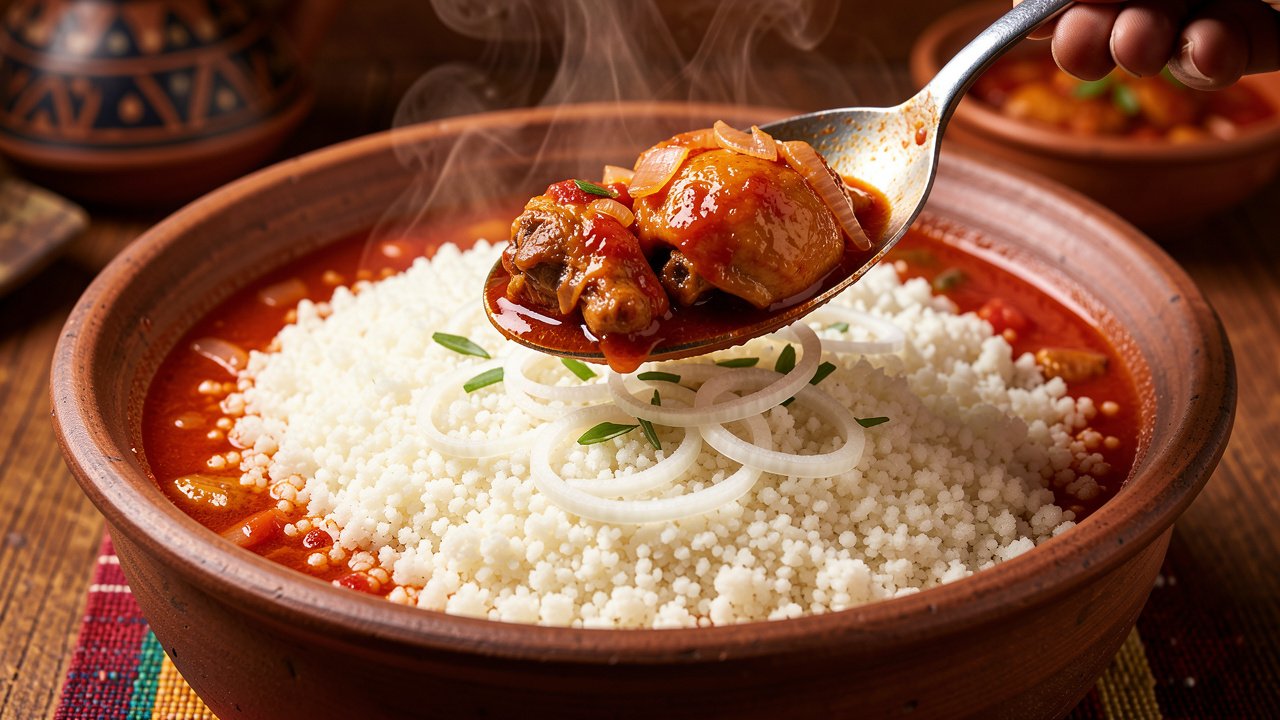
Uncover the pot at last and breathe in the aroma. Fish out the bay leaves and the whole chili. Taste the broth and adjust with a little more salt if needed. If you want a bolder heat, mash a little of the softened chili back into the sauce. Serve the chicken and its broth hot over attieke or steamed rice, with fried plantains on the side if you like.
Chef’s Tips From Real Kitchen Testing
Trust the seal and resist peeking. Every time you open the lid you release steam and add cooking time. Judge progress by sound and by the steam at the rim instead.
Shake with confidence but keep it flat. A firm horizontal swirl moves the chicken; a wild jostle can crack the seal. Two hands and good mitts make it easy.
Choose the juiciest tomatoes you can find. They are the main source of liquid, so watery, ripe tomatoes give you a generous broth while firm, underripe ones leave the pot dry.
Recipe Variations
Serving Suggestions
- Attieke, the classic fermented cassava couscous
- Steamed white rice to soak up the broth
- Fried plantains, known as alloco, on the side
- Sliced onion and fresh chili for garnish
Nutrition Facts
| Nutrient | Amount per serving |
|---|---|
| Calories | 340 |
| Protein | 34 g |
| Carbohydrates | 10 g |
| Fat | 18 g |
| Saturated Fat | 5 g |
| Fiber | 3 g |
| Sugar | 6 g |
| Sodium | 720 mg |
Values are estimates per serving and vary with the exact ingredients and brands you use.
Make-Ahead Tips
Kedjenou is even better the next day, because the broth keeps drawing flavor from the chicken and aromatics overnight. Make it fully a day ahead, cool it, and refrigerate in a sealed container. Reheat it gently on the stove until the chicken is piping hot all the way through, adding a small splash of water only if the broth has reduced too far. Fish out the bay leaves before storing so the flavor stays balanced.
Storage, Freezing & Reheating
Common Mistakes to Avoid
Troubleshooting
Pot looks dry? Your tomatoes were probably underripe or the seal leaked. Add a small splash of water, reseal, and lower the heat so it steams gently rather than catching.
Broth tastes thin? Steam a few minutes longer with the lid off to reduce and concentrate it, then check the salt and add a little crumbled bouillon.
Chicken not tender yet? It simply needs more time. Reseal and keep steaming; tough bone-in pieces often need the full 55 minutes to turn meltingly soft.
A Note on Ivorian Cooking
Kedjenou is a signature of Ivory Coast home cooking, and it captures a very West African idea: coax the deepest flavor from simple ingredients with patience rather than a crowded pantry. Traditionally it is cooked in a canari, an earthenware pot whose lid is sealed shut with a paste of flour and water so no steam can escape, then set over embers and shaken now and then. That no-water steaming is what makes the chicken so tender and the broth so pure. It is almost always served with attieke, the tangy fermented cassava couscous that is a staple across the country, or with plain rice. If you enjoy slow, savory tomato dishes, our hearty tomato lentil soup shares the same comforting, build-it-in-one-pot spirit.
Frequently Asked Questions
More Tomato Recipes to Try
Last updated: September 29, 2026