Peruvian Recipes
Red Spaghetti in Slow-Cooked Tomato Sauce
Last updated: September 30, 2026
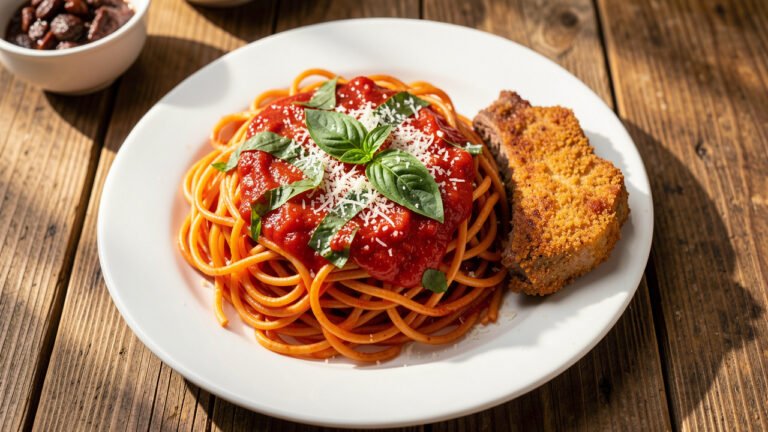
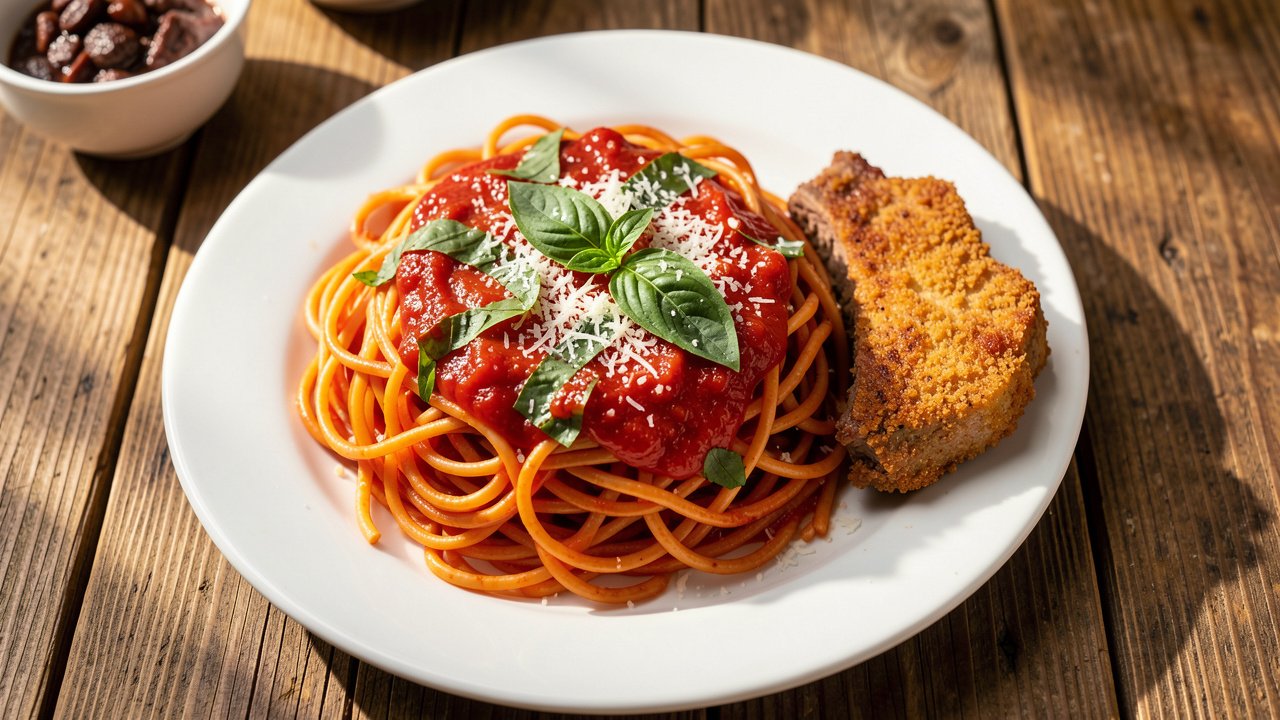
Tallarines rojos is Sunday lunch in a Peruvian home: a big pot of spaghetti draped in a rich, long-simmered tomato sauce that fills the whole kitchen with the smell of onion, garlic, and basil. It is Italian pasta reimagined through a Peruvian lens, where a soffritto of grated carrot and slow-cooked tomatoes builds a sauce that is sweet, savory, and a deep, glossy red. Simple ingredients, a little patience, and you get a plate that tastes like a celebration.
Why This Tallarines Rojos Works
The whole personality of tallarines rojos lives in the sauce, and the sauce is made by patience. A base of onion, garlic, and grated carrot is softened slowly until sweet, then pureed tomatoes and a little tomato paste go in and cook down for a good half hour. That long, gentle simmer is what turns a thin, sharp tomato sauce into something deep, round, and almost jammy, with the acidity mellowed and the sweetness brought forward.
Grated carrot is the quiet secret. It melts into the sauce as it cooks, adding natural sweetness and body without any sugar, which is why traditional Peruvian red sauce tastes richer than a quick weeknight marinara. Fresh basil, stirred in near the end, keeps its fragrance instead of cooking away, and gives the finished plate its signature aroma.
Timing the pasta matters too. The spaghetti is boiled in well-salted water until just al dente, then tossed straight into the warm sauce with a splash of its starchy cooking water. That starch helps the sauce cling to every strand, so you get red noodles rather than plain pasta with a puddle of sauce on top.
Best of all, the sauce is meat-free and endlessly friendly. It is the centerpiece on its own, but it is also the classic partner to a crisp piece of breaded beef on the side, so one pot of sauce can feed a whole table however each person likes it. If you love a good tomato pasta, it sits happily next to a simple tomato basil pasta in your regular rotation.
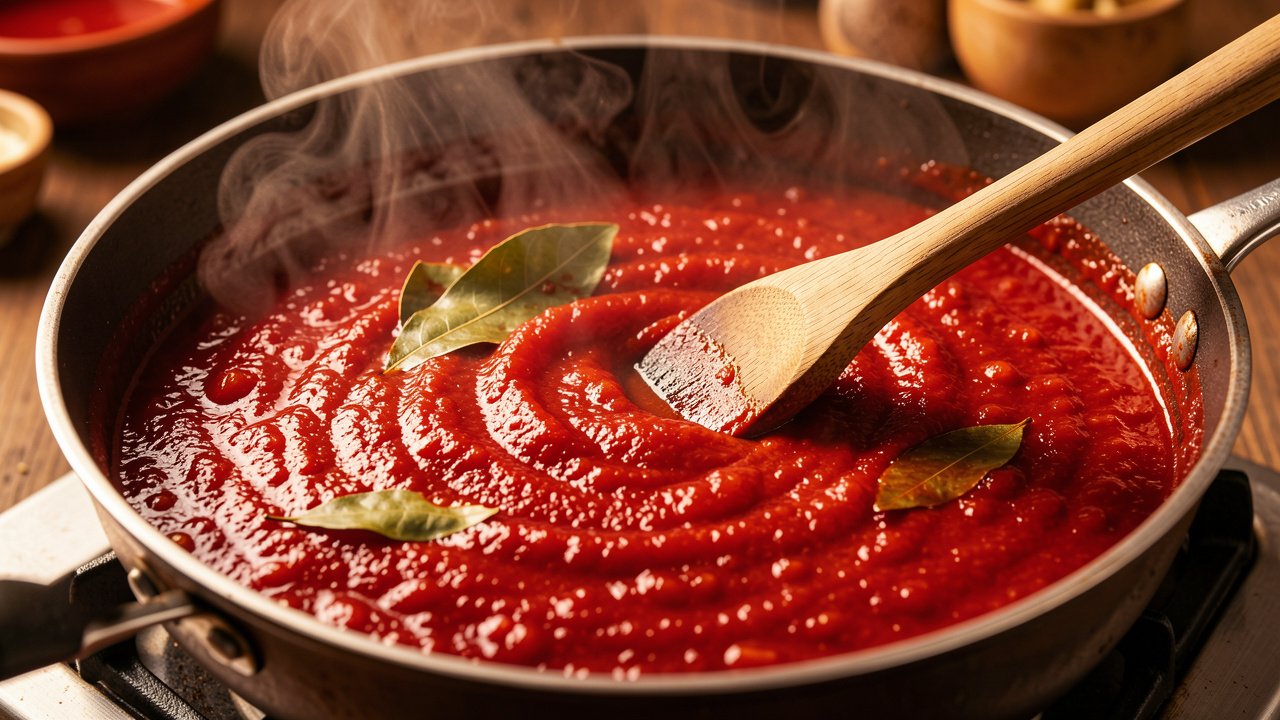
Pro observation: The sauce is ready when a wooden spoon dragged across the pan leaves a trail that fills back in slowly. If it still looks thin and watery, keep simmering; a thick, glossy sauce is what makes the noodles turn a proper deep red.
Ingredients
Kitchen Measurement Converter
Need to convert an amount while you measure? Pick a category, enter a value, and the result updates instantly.
Ingredient Notes & Substitutions
Tomatoes
Ripe red tomatoes, pureed in a blender, give the sweetest and most authentic sauce. When good fresh tomatoes are out of season, a 28-ounce can of quality crushed or pureed tomatoes is a reliable stand-in that keeps the sauce deep and consistent.
Carrot
Finely grated carrot is the traditional touch that gives Peruvian red sauce its natural sweetness and body. Grate it fine so it melts into the sauce as it cooks. Do not skip it; it is what balances the acidity of the tomatoes without any added sugar.
Basil & Oregano
Fresh basil is stirred in near the end for fragrance, echoing the dish’s Italian roots. Dried oregano goes in earlier to build a savory backbone. If you have fresh oregano, add it at the finish alongside the basil for an even brighter herb note.
Pasta
Spaghetti is the classic choice, but any long noodle such as linguine or fettuccine works. Cook it just to al dente, since it keeps warming in the hot sauce. Save a cup of the starchy pasta water before draining to help the sauce cling.
Equipment
- Large pot for pasta
- Wide saucepan or skillet
- Blender or food processor
- Box grater
- Wooden spoon
- Colander
Before You Start
1. Start the sauce before the pasta water. The sofrito and the 25 to 30 minute simmer take the better part of 40 minutes, while spaghetti needs about 10. Put the water on only once the sauce has dropped to low, or the noodles will sit waiting and turn gummy.
2. Use your widest pan for the sauce. Reduction happens at the surface. Six pureed tomatoes in a narrow, deep pot will still be watery after 30 minutes; spread across a wide saucepan or skillet, they thicken to that glossy, spoon-trail consistency on schedule.
3. Park a mug next to the colander. A cup of starchy pasta water is what makes the sauce grip every strand, and it disappears down the drain in one distracted second. Set the mug by the sink before the spaghetti goes in and you will scoop it on autopilot.
Step-by-Step Instructions
The sauce is the slow part, so start it first and let it simmer while you get everything else ready. Puree the tomatoes, chop the onion and garlic, and grate the carrot before you turn on the heat so the sauce can go straight together.
Prep and Puree
Puree the ripe tomatoes in a blender until smooth. Finely chop the onion, mince the garlic, and grate the carrot on the fine side of a box grater. Tear or chop the basil and set it aside. Having the sauce ingredients ready means it can build in a single unbroken cook.
Build the Sofrito
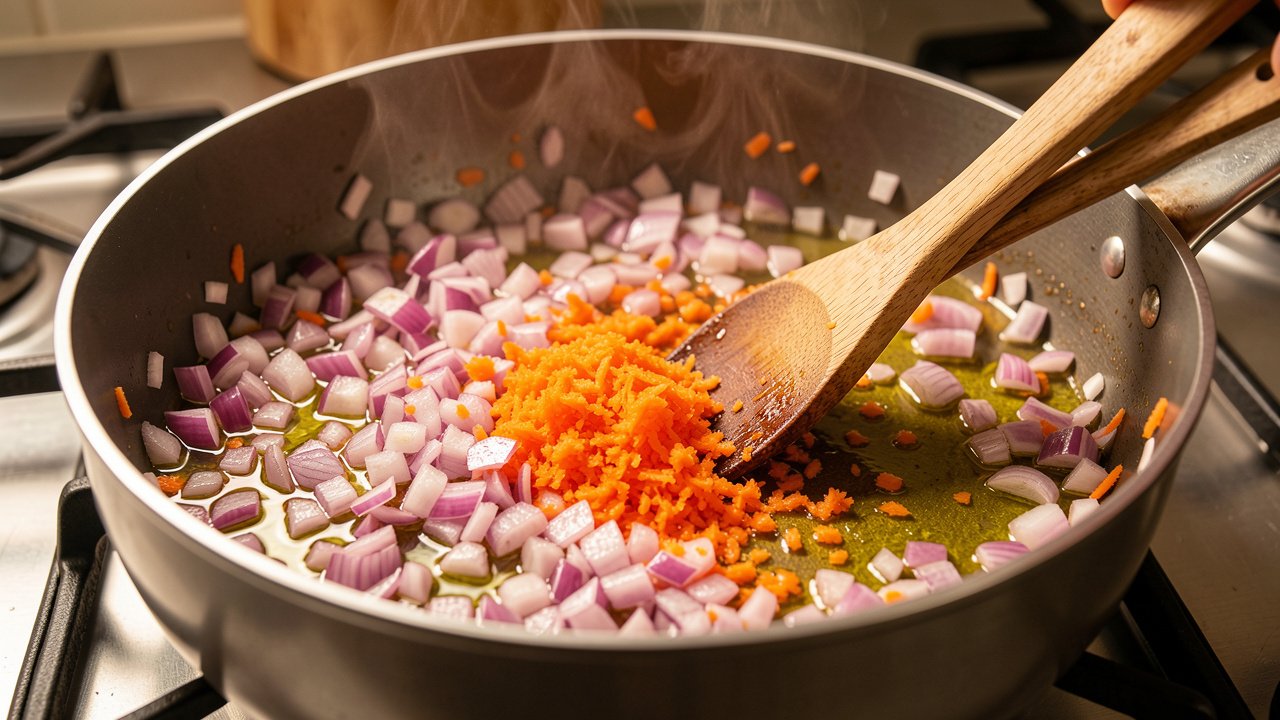
Warm the olive oil in a wide saucepan over medium heat. Add the chopped onion and grated carrot with a pinch of salt and cook 5 to 6 minutes, stirring, until soft and sweet. Stir in the minced garlic and dried oregano and cook 1 minute more, until fragrant. This aromatic base is the foundation of the whole sauce.
Add the Tomato
Stir in the tomato paste and cook for about 1 minute to deepen its color, then pour in the pureed tomatoes. Add the bay leaf, salt, and black pepper, and stir to combine. Bring the sauce up to a gentle bubble before lowering the heat.
Simmer Low and Slow
Reduce the heat to low and let the sauce simmer, uncovered, for 25 to 30 minutes, stirring now and then, until it thickens, darkens, and turns glossy. This slow reduction is where the magic happens; it cooks off the raw edge and concentrates the tomato into a deep, sweet red. If it thickens too fast, add a splash of water.
Cook the Spaghetti
While the sauce simmers, bring a large pot of well-salted water to a boil and cook the spaghetti until just al dente, following the package time. Before draining, scoop out a cup of the starchy pasta water and set it aside; it is the key to a sauce that clings.
Toss and Finish
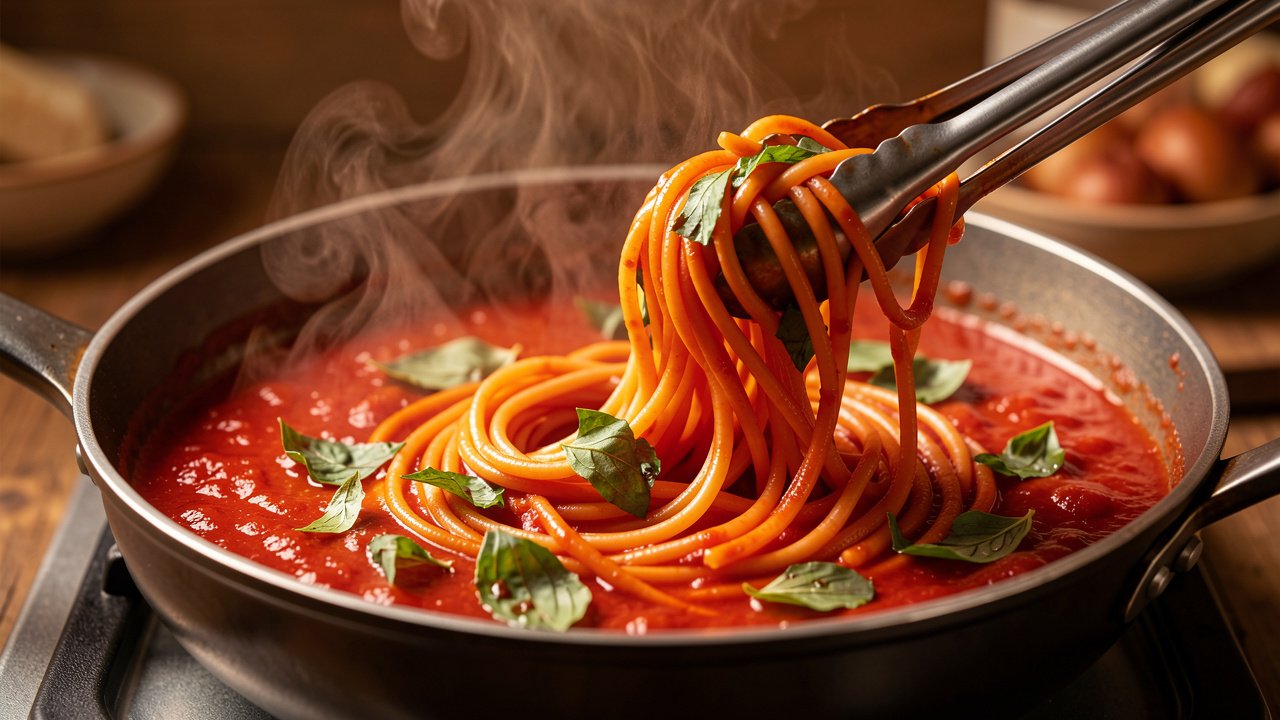
Fish out the bay leaf and stir most of the fresh basil into the sauce. Add the drained spaghetti and toss over low heat for a minute, adding a splash of the reserved pasta water until every strand is coated in glossy red sauce. Taste and adjust the salt, scatter the remaining basil over the top, and serve hot with grated cheese and, if you like, breaded beef on the side.
Chef’s Tips From Real Kitchen Testing
Do not rush the simmer. The difference between an ordinary tomato sauce and a real tallarines rojos is that slow 25 to 30 minute reduction that deepens the color and sweetens the flavor.
Grate the carrot fine so it dissolves into the sauce. That hidden sweetness is what balances the tomatoes, so you rarely need to add any sugar.
Save the starchy pasta water. A splash or two loosens the sauce and helps it coat the spaghetti evenly instead of sliding off into a puddle.
Recipe Variations
Serving Suggestions
- A crisp piece of halal breaded beef on the side
- Grated cheese scattered over the top
- Extra fresh basil for fragrance
- A simple green salad to round out the plate
Nutrition Facts
| Nutrient | Amount per serving |
|---|---|
| Calories | 420 |
| Protein | 13 g |
| Carbohydrates | 72 g |
| Fat | 9 g |
| Saturated Fat | 1.5 g |
| Fiber | 6 g |
| Sugar | 11 g |
| Sodium | 580 mg |
Values are estimates per serving and vary with the exact ingredients and brands you use.
Make-Ahead Tips
The red sauce actually improves overnight, so it is ideal to make ahead. Cook it up to 3 days in advance and refrigerate, then reheat gently and boil fresh pasta when you are ready to eat.
Storage, Freezing & Reheating
Common Mistakes to Avoid
Troubleshooting
Sauce too thin? It needed more time. Keep simmering uncovered until a spoon dragged across the pan leaves a slow-filling trail.
Sauce too sharp or acidic? The carrot balances this, so make sure it is well cooked in. A longer simmer also mellows the acidity naturally.
Pasta clumping? Toss it in the sauce right after draining and add a little reserved pasta water. Do not let drained spaghetti sit and dry out.
A Note on Peruvian Cooking
Tallarines rojos is one of the clearest examples of how deeply Italian immigration shaped Peruvian food. Waves of Italian families who settled along the coast in the nineteenth and twentieth centuries brought their pasta and tomato sauces, and over generations those dishes were folded into the Peruvian kitchen and made new. The result is a criollo pasta that feels both familiar and distinctly Peruvian, built on the same soffritto instinct behind a good spaghetti alla puttanesca but sweetened and softened with grated carrot.
The name is refreshingly literal. “Tallarines” is the Spanish word for noodles or spaghetti, and “rojos” simply means “red,” pointing straight to the deep tomato sauce that gives the dish its color. So tallarines rojos translates to nothing more than “red noodles,” named for the sauce that stains every strand. Its close cousin, tallarines verdes, is the “green noodles,” dressed instead in a bright green basil-and-spinach sauce, so the pair are quickly told apart by color alone: tallarines rojos is tomato-based and red, while tallarines verdes is herb-based and green.
What keeps tallarines rojos on Peruvian tables is how generous and adaptable it is. One pot of sauce stretches to feed a crowd, it costs little, and it welcomes whatever each family likes to serve alongside, which is exactly the spirit of home cooking across Peru.