North African Recipes
Slow-Cooked Moroccan Tomato and Pepper Dip
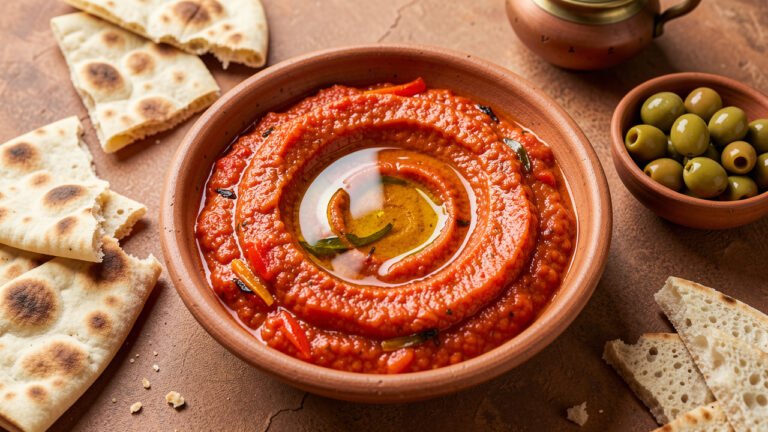
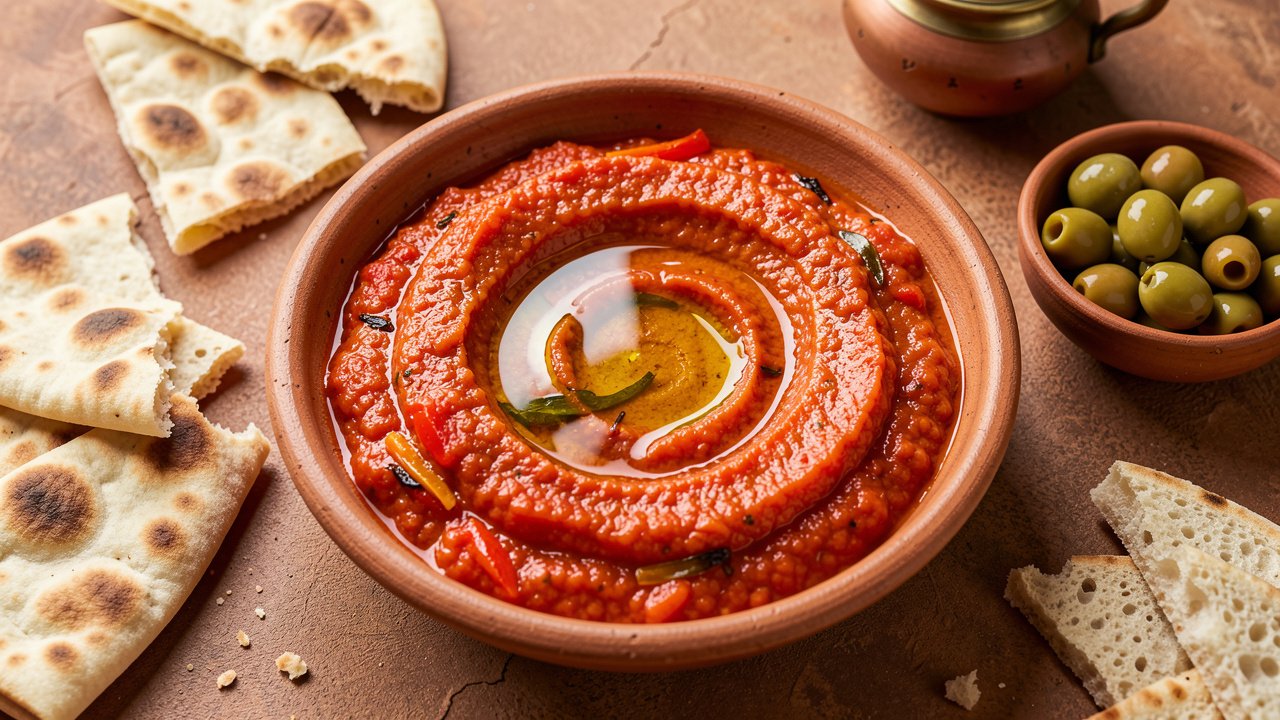
Matbucha is one of those humble dishes that tastes far more than the sum of its parts. A handful of tomatoes, a few peppers, garlic, and spice collapse over a slow flame into something deep, glossy, and almost sweet, the kind of dip people scoop up with bread until the bowl is scraped clean. It is the anchor of a North African meze table, and it teaches you the value of not rushing.
I learned that lesson the hard way. My first attempt was watery and bright, nothing like the dark jam my neighbor served. The fix was simple and humbling: cook it longer, on lower heat, and let the water cook out until the oil comes back to the surface.
Why This Matbucha Works
Matbucha lives or dies on reduction. The whole point is to drive off the water in the tomatoes and peppers so what remains is concentrated, jammy, and rich with olive oil. Cooked properly, the flavor turns almost caramelized, sweet from the peppers and deep from the slow-cooked garlic and paprika. There is no shortcut for this, which is exactly why it tastes so good.
Roasting the peppers first is the second thing that sets a great matbucha apart. Charring the skins and peeling them away leaves behind soft, smoky flesh with none of the raw, grassy edge that raw pepper brings. That smokiness threads through the whole dish and gives it a savory backbone.
The spicing is restrained and warm rather than fiery. Sweet paprika brings color and gentle depth, cumin adds an earthy note, and a single chili gives just enough of a tingle. Everything is built on olive oil, which is not just fat here but a flavor and a texture, keeping the dip glossy and spoonable.
Best of all, it improves with time. Made a day ahead and served cold or at room temperature, the flavors settle and deepen. It is a dish designed for sharing, for scooping, and for the unhurried pace of a meze table.
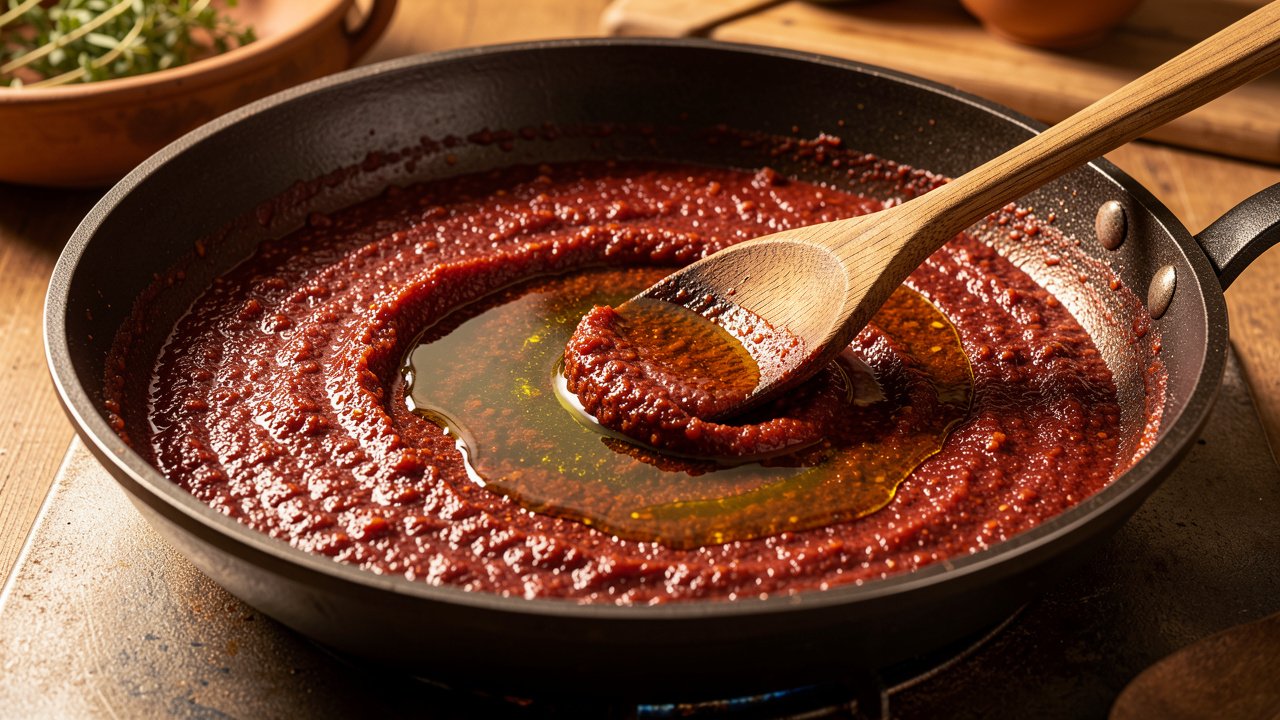
Pro observation: Matbucha is done when a spoon dragged across the pan leaves a clean trail that fills back in slowly, and a slick of olive oil pools on the surface. That is the sign the water has cooked out.
Ingredients
Kitchen Measurement Converter
Quickly convert between common cooking measurements without leaving the recipe. Pick a category, enter a value, and the result updates instantly.
Ingredient Notes & Substitutions
Tomatoes
Use the ripest, reddest tomatoes you can find, since they carry the whole dish. Out of season, two 14-ounce cans of good chopped tomatoes make a reliable matbucha and often beat pale winter fruit.
Red Peppers
Red bell peppers give sweetness and body. Roast and peel them for the classic smoky, silky texture. Jarred roasted red peppers are a fine shortcut when you are short on time.
Olive Oil
This is not the place to skimp. A generous, fruity extra-virgin olive oil carries the flavor and gives matbucha its signature glossy finish. It should look rich, never dry.
Chili and Paprika
One fresh red chili keeps the heat gentle; add more for a fiery version. Sweet paprika brings color and depth. A spoon of harissa can stand in for both if you like a bolder, smokier edge.
Equipment
- Wide, heavy skillet or pan
- Sheet pan for roasting peppers
- Wooden spoon
- Sharp knife and board
- Bowl and lid for steaming peppers
- Airtight jar for storage
Before You Start
1. Roast the peppers ahead. Char and peel the peppers before anything else, since they need time to steam and cool before you can slip off the skins.
2. Chop the tomatoes small. Smaller pieces break down faster and give you a smoother, jammier dip in less time.
3. Give yourself an hour. Matbucha is not a dish to hurry. Plan for a long, low simmer and stir it now and then while you do other things.
Step-by-Step Instructions
Roast and Peel the Peppers
Roast the whole red peppers under a hot broiler or over a flame, turning until the skins are blackened and blistered all over. Transfer them to a bowl, cover, and let them steam for 10 minutes. Once cool enough to handle, slip off the charred skins, discard the seeds and stems, and slice the flesh into strips.
Bloom the Garlic and Spices
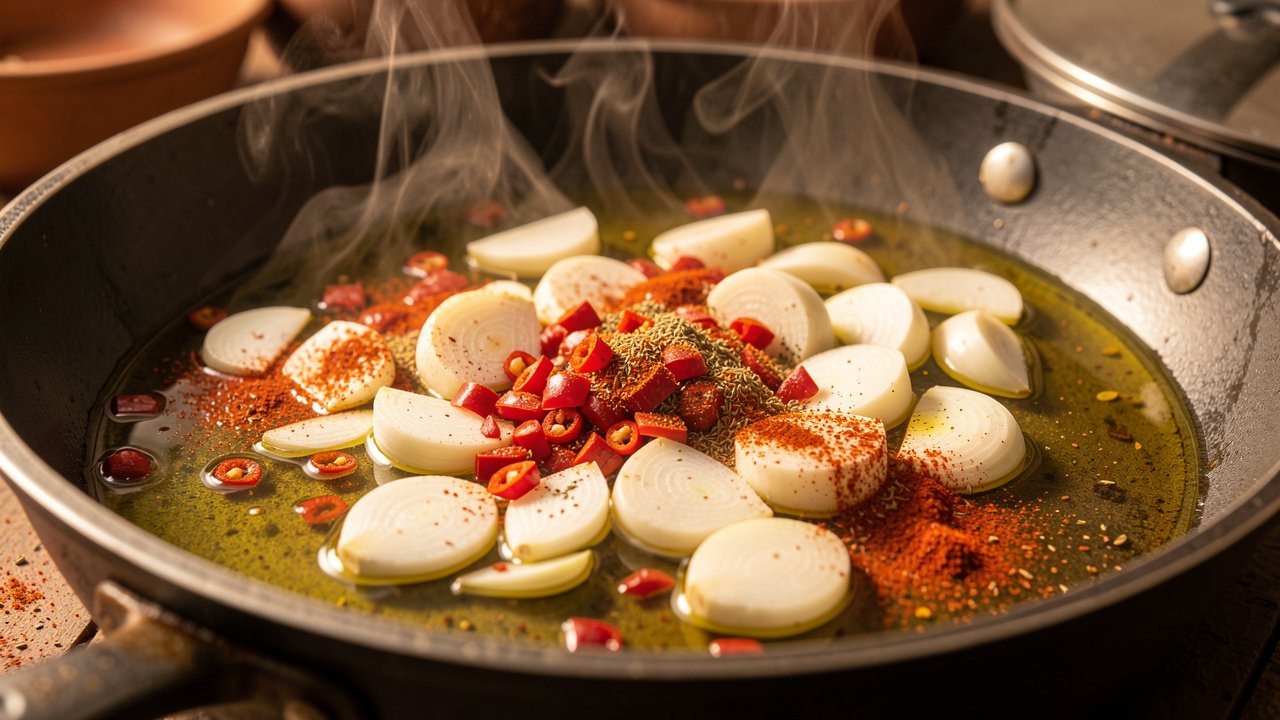
Warm the olive oil in a wide pan over medium-low heat. Add the sliced garlic and chopped chili and cook gently for 1 to 2 minutes until fragrant but not browned. Stir in the sweet paprika and cumin and let them bloom in the oil for about 20 seconds, just until they smell toasty.
Add the Tomatoes and Peppers
Stir in the chopped tomatoes, the roasted pepper strips, the tomato paste, salt, and black pepper. Bring everything to a gentle bubble, then lower the heat so it simmers quietly. Stir occasionally to stop it catching on the bottom.
Simmer Low and Long
Let the matbucha cook uncovered for 45 to 60 minutes, stirring now and then. The mixture will slowly darken and thicken as the water cooks out. Do not rush it with high heat; the low, patient simmer is what gives matbucha its deep, jammy character.
Balance and Rest
Taste the matbucha and adjust. If the tomatoes are sharp, stir in the sugar to round out the acidity; add more salt or a pinch more paprika as needed. Take it off the heat and let it cool. The flavor settles and deepens as it rests, so it is even better after an hour or overnight.
Serve as Meze
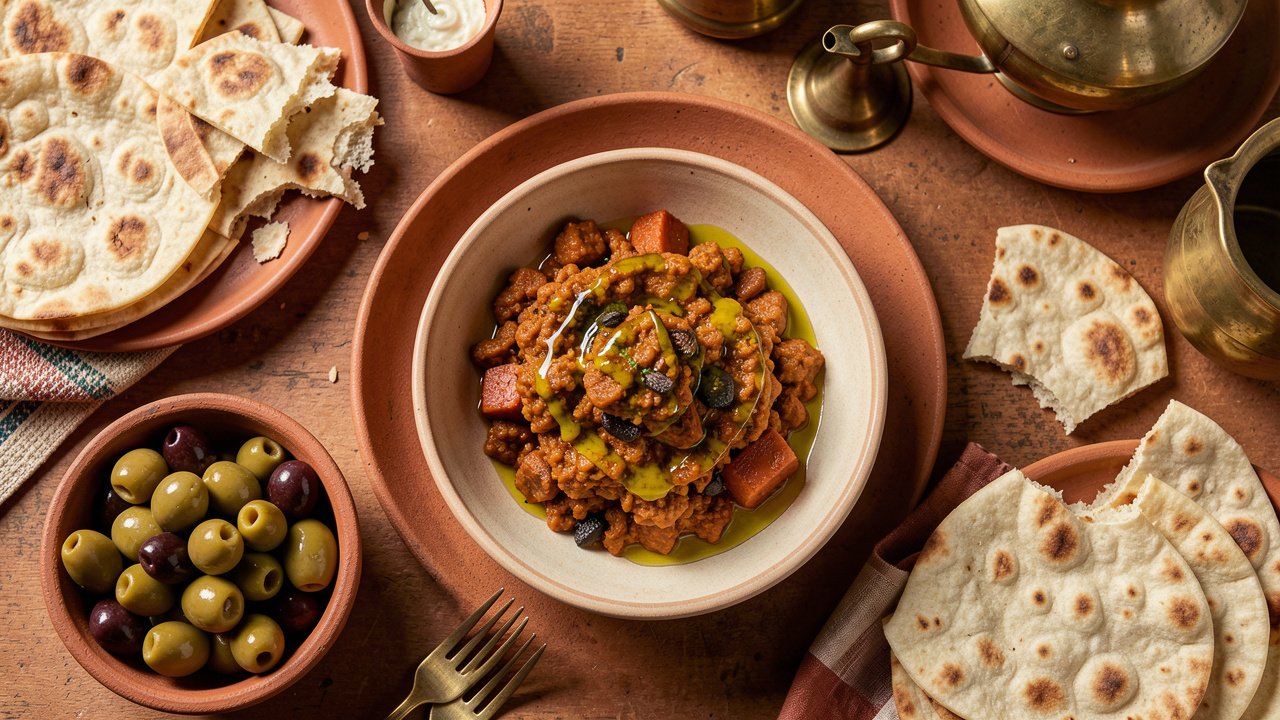
Spoon the cooled matbucha into a shallow bowl, drizzle a little extra olive oil over the top, and serve at room temperature or cold. Set it out with warm flatbread, pita, or crusty bread for scooping, alongside olives and other small dishes for a proper meze spread.
Chef’s Tips From Real Kitchen Testing
Do not walk away from the reduction entirely. As matbucha thickens it can catch and scorch, so stir it every few minutes once it starts to look jammy.
Always peel the roasted peppers. The charred skins turn bitter and rubbery in the finished dip, and slipping them off takes only a minute.
Be generous with the olive oil. It is a defining feature, not a garnish, and a final drizzle at serving keeps the surface glossy and rich.
Recipe Variations
Serving Suggestions
- Warm pita, flatbread, or crusty bread for scooping
- Part of a meze spread with olives and hummus
- Spooned over eggs or alongside shakshuka
- As a relish beside grilled vegetables or rice
Nutrition Facts
| Nutrient | Amount per serving |
|---|---|
| Calories | 150 |
| Protein | 2 g |
| Carbohydrates | 12 g |
| Fat | 11 g |
| Saturated Fat | 1.5 g |
| Fiber | 3 g |
| Sugar | 7 g |
| Sodium | 490 mg |
Values are estimates per serving and vary with the exact ingredients and brands you use.
Make-Ahead Tips
Matbucha is a natural make-ahead dish because resting only makes it better. Cook it a day or two in advance, cool completely, and keep it in an airtight jar in the fridge. Bring it back to room temperature before serving, or warm it gently, and finish with a fresh drizzle of olive oil to revive its shine.
Storage, Freezing & Reheating
Common Mistakes to Avoid
Troubleshooting
Matbucha still watery? Keep simmering uncovered. It is not finished until the water cooks out and the oil pools back on the surface.
Tastes flat? It usually needs salt, and a pinch of sugar can balance sharp tomatoes. A little more paprika adds warmth and depth.
Too acidic or sharp? Stir in the optional sugar a little at a time, and make sure the peppers are fully soft and sweet, not underdone.
A Note on Matbucha
Matbucha belongs to the Maghreb, the North African stretch of Morocco, Tunisia, and Algeria, and traveled with Jewish and Arab communities to tables across the region and into Israel, where it is a fixture of the meze and salatim spread. The name points to its method, a slow-cooked mixture, and that patience is the whole tradition: peppers charred and peeled by hand, tomatoes reduced for the better part of an hour until they turn to jam. It is peasant cooking at its best, turning a few cheap summer vegetables into something you fight over. If you love this kind of cooked tomato dish, our tomato salsa offers a fresher, brighter cousin, and you can browse more ideas in our full collection of tomato recipes.
Frequently Asked Questions
More Tomato Recipes to Try
Last updated: September 29, 2026