Middle Eastern Recipes
Okra and Tomato Stew with a Garlic-Cilantro Tarka
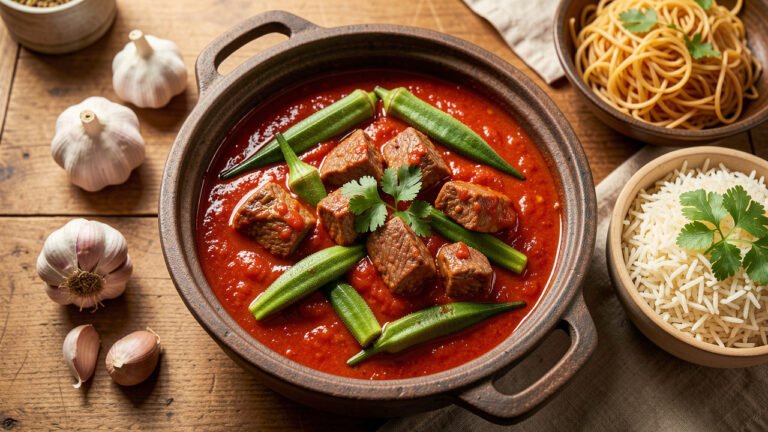
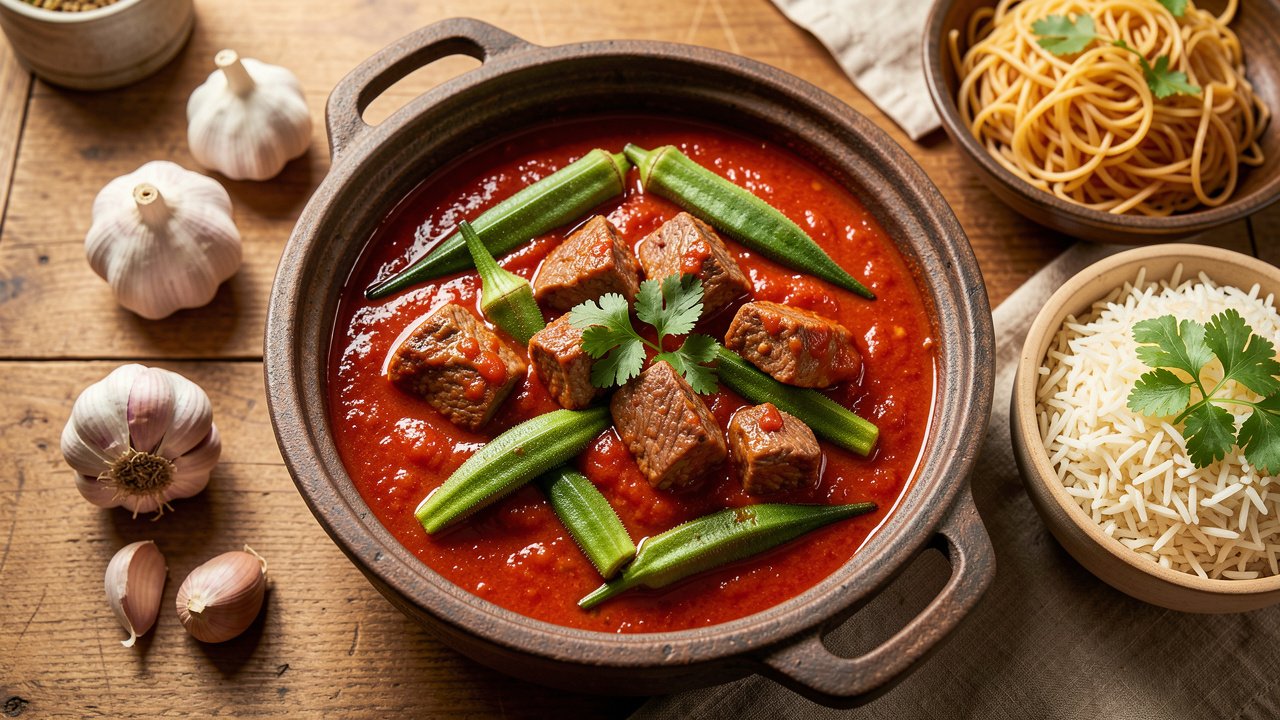
Bamia, sometimes spelled bamya, is one of those homely, deeply savory stews that shows up on tables from Egypt to Iraq to the Levant, each region claiming its own version. Whole okra pods sit in a rich red tomato sauce that has been perfumed with garlic and softened onion, and the meat, when you use it, turns fork-tender from a patient simmer.
The dish taught me that okra rewards a light hand. The first time I made it, I stirred the pot every few minutes like it was a risotto, and the okra turned ropy and slick. Left mostly alone in a gentle simmer, the same pods stay whole, tender, and clean-tasting. That single lesson is the difference between a stew people ask for again and one they push around the plate.
Why This Bamia Works
Good bamia balances three things: sweet, softened tomato; sharp, fragrant garlic; and a bright, sour finish that keeps the whole pot from tasting heavy. When those three land together, the okra becomes a soft, savory partner to the sauce rather than the star that people are nervous about.
The meat, when you use halal lamb or beef, gets its own quiet moment early on. Searing the cubes and then simmering them low and slow builds a broth that the okra later soaks up. That broth is the backbone of the dish, so it is worth giving the meat the time it needs to turn genuinely tender before the okra ever goes in.
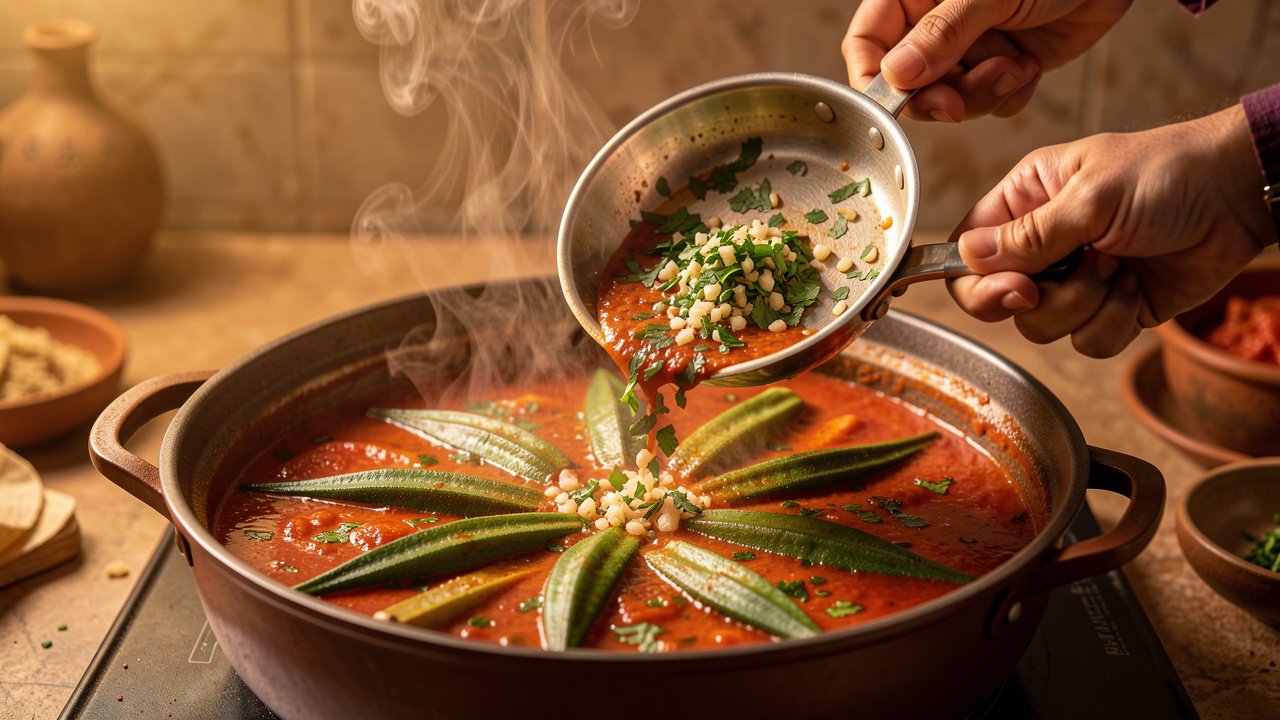
The finishing garlic-cilantro tarka, known across the region as taqleyah, is the flourish that separates a home cook’s bamia from a restaurant one. A quick sizzle of minced garlic and chopped cilantro in a little oil, stirred through at the very end, lifts the whole pot with a green, garlicky perfume you cannot get by adding garlic at the start.
It is also flexible. Make it with halal lamb or beef for a rich Friday-lunch stew, or leave the meat out entirely for a lighter vegetarian version that still tastes complete. Either way, the method stays the same, so once you have it down you can cook to whoever is at the table.
Pro observation: The sauce is ready for the okra when the oil starts to bead and pool at the edges and the raw tomato smell has given way to something jammy and sweet. That is your signal the base has cooked through.
Ingredients
Kitchen Measurement Converter
Quickly convert between common cooking measurements without leaving the recipe. Pick a category, enter a value, and the result updates instantly.
Ingredient Notes & Substitutions
Okra
Small, firm pods are best, ideally no longer than your thumb, since large okra can be woody and more prone to sliminess. Fresh is ideal, but whole frozen okra works well and needs no thawing. Trim the stem cap without cutting into the pod so it stays sealed.
The Meat
Use halal lamb or beef, cut into bite-size cubes from a stewing cut like shoulder or chuck. These reward slow cooking and turn meltingly tender. For a vegetarian pot, leave the meat out and lean on a good broth for depth.
Tomatoes
Ripe fresh tomatoes plus tomato paste give the sauce both freshness and body. Out of season, a 14-ounce can of chopped tomatoes stands in reliably. The paste is what deepens the color and rounds the flavor.
The Sour Note
Lemon juice is the everyday brightener; pomegranate molasses adds a deeper, fruity tang common in Iraqi and Levantine kitchens. Use one or both, added near the end, and taste as you go so the sourness stays gentle.
Equipment
- Wide, heavy pot or Dutch oven
- Small frying pan for the tarka
- Sharp knife and board
- Wooden spoon
- Garlic press or mortar
- Measuring spoons
Before You Start
1. Trim the okra carefully. Pare the tough cap off the stem end without slicing into the pod itself. Keeping the pods whole and sealed is the main defense against slimy okra.
2. Give the meat a head start. If you are using halal lamb or beef, sear and simmer it until tender before the okra goes in, since the okra only needs a short, gentle cook.
3. Prep the tarka last. Mince the garlic and chop the cilantro for the finishing taqleyah and set them aside, so they are ready the moment the stew is done.
Step-by-Step Instructions
Prep and Trim
Finely chop the onion and half of the garlic, keeping the other half aside for the finishing tarka. Chop the tomatoes. Trim the okra by paring the cap off each stem end, careful not to cut into the pod so the pods stay whole and sealed. Pat the okra dry.
Sear the Meat
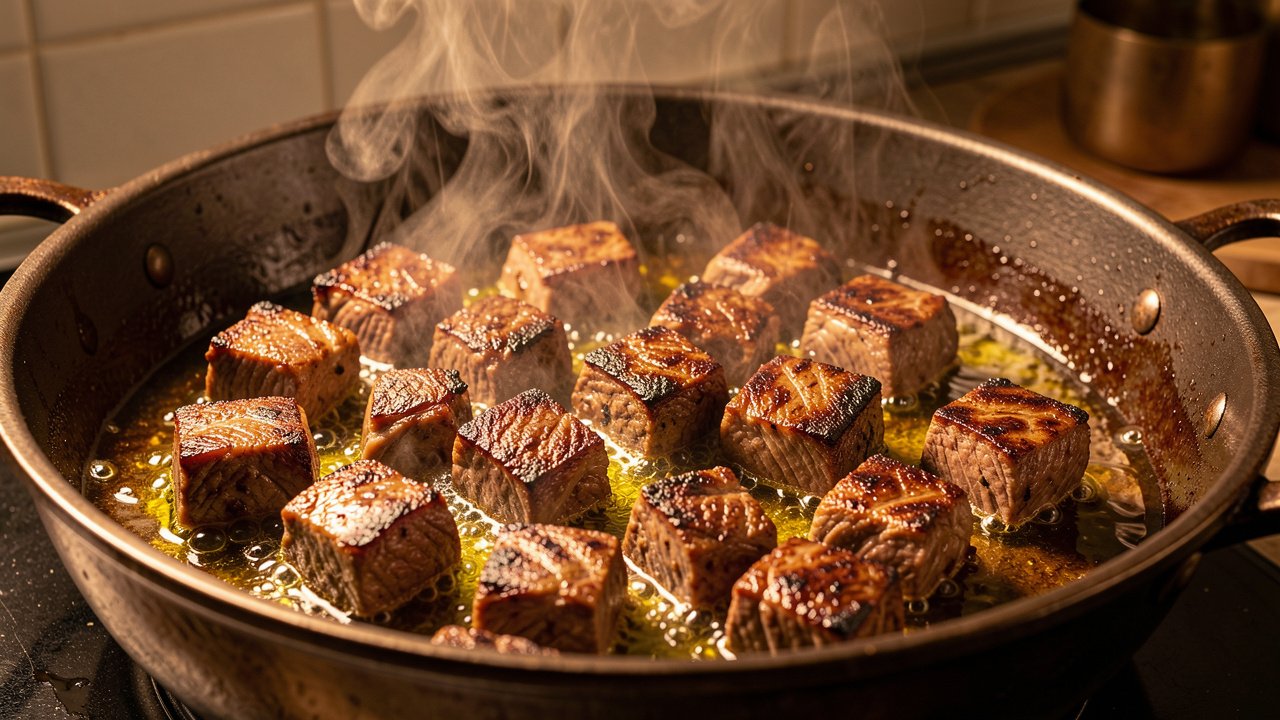
Heat 2 tablespoons of the olive oil in a wide, heavy pot over medium-high heat. If you are using halal lamb or beef, pat the cubes dry and sear them in batches until browned on all sides, about 5 minutes per batch. Do not crowd the pot, or the meat steams instead of browning. Remove the seared meat and set it aside.
Build the Tomato Base
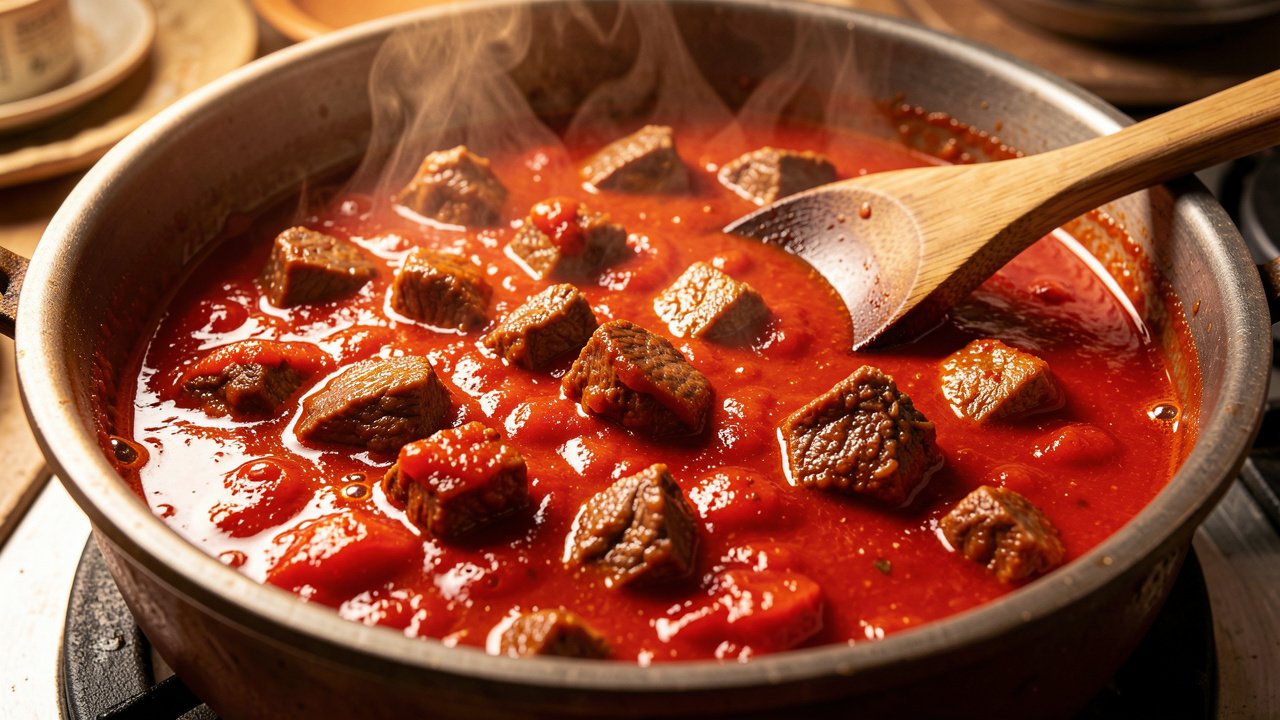
Lower the heat to medium and add the chopped onion to the same pot, cooking 6 to 7 minutes until soft and golden. Stir in the reserved chopped garlic and cook 1 minute until fragrant. Add the tomato paste, ground coriander, baharat, cumin, and black pepper and stir for 1 minute to toast the spices and darken the paste.
Simmer the Meat Until Tender
Return the seared meat to the pot along with the chopped tomatoes, 1 teaspoon of the salt, and the water or broth. Bring to a boil, then lower to a gentle simmer, cover, and cook until the meat is fork-tender, about 40 minutes for beef and 45 to 50 minutes for lamb. The sauce should look jammy and the oil should start to bead at the edges.
Add the Okra Gently
Nestle the whole okra pods into the sauce in a single layer, spooning some sauce over the top rather than stirring. Add the remaining 1/2 teaspoon salt. Cover and simmer gently for 15 to 18 minutes, until the okra is tender but still holds its shape. Resist the urge to stir; a few careful shakes of the pot are all it needs.
Make the Tarka and Finish
In a small pan, heat the remaining 1 tablespoon olive oil over medium heat and fry the reserved minced garlic for 30 to 40 seconds until just golden and fragrant, then stir in most of the chopped cilantro and cook 10 seconds more. Pour this taqleyah over the stew, add the lemon juice and pomegranate molasses, and taste for salt and sourness. Scatter the last of the cilantro on top and serve hot over rice.
Chef’s Tips From Real Kitchen Testing
Stir the okra as little as possible. Once the pods are in, coax the pot with a gentle shake instead of a spoon, which keeps them whole and stops them from turning slimy.
Get the meat tender before the okra goes in. Okra only needs a short cook, so the meat has to be almost done first or you will overcook the pods while you wait.
Add the sour note last. Lemon juice and pomegranate molasses can dull if boiled too long, so stir them in near the end and taste before adding more.
Recipe Variations
Serving Suggestions
- Vermicelli rice or plain steamed rice
- Warm flatbread or pita to mop the sauce
- A simple cucumber and yogurt salad
- Lemon wedges and extra fresh cilantro
Nutrition Facts
| Nutrient | Amount per serving |
|---|---|
| Calories | 340 |
| Protein | 24 g |
| Carbohydrates | 18 g |
| Fat | 20 g |
| Saturated Fat | 6 g |
| Fiber | 5 g |
| Sugar | 8 g |
| Sodium | 640 mg |
Values are estimates per serving and vary with the exact ingredients and brands you use.
Make-Ahead Tips
Bamia is a natural make-ahead dish, because the flavors settle and deepen after a night in the fridge. Cook it a day ahead through the simmer, cool, and refrigerate. Reheat gently on the stove and add a splash of water if it has thickened. For the freshest result, make the garlic-cilantro tarka just before serving and stir it through the reheated pot so the garlic stays bright.
Storage, Freezing & Reheating
Common Mistakes to Avoid
Troubleshooting
Okra turned slimy? It was likely stirred too much or the pods were cut open. Next time trim only the cap, keep the pods whole, and stir as little as possible; a splash of lemon added during cooking also helps.
Sauce too thin? Uncover the pot and let it simmer down for a few minutes, or stir in an extra spoon of tomato paste to tighten and enrich it.
Meat still tough? It simply needs more time. Add a little water, cover, and keep simmering gently until the cubes give way easily.
Too sour? Balance it with a pinch of sugar or a little more sauce, and go easier on the lemon and pomegranate molasses next time.
A Note on Middle Eastern Cooking
Okra travels well across the Middle East, and nearly every kitchen has its own take. In Egypt, bamia often leans heavily on garlic and cilantro; in Iraq, pomegranate molasses or dried lime lends a distinctive sour depth; and across the Levant, small whole pods are prized and cooked with care. What ties them together is that finishing garlic-cilantro tarka, the taqleyah, sizzled in oil and poured over the pot at the last minute to wake everything up.
The other shared wisdom is respect for the okra itself. Cooks who grew up with the dish know to keep the pods whole, trim only the cap, and stir with restraint so the okra stays tender and clean rather than ropy. If you enjoy warming, tomato-forward bowls, our hearty tomato lentil soup shares the same comforting spirit, and you can browse more ideas in our full collection of tomato recipes.
Food-safety note: Cook halal lamb or beef until it is fully tender and no longer pink inside, reaching a safe internal temperature of at least 145 F (63 C) for whole cuts with a short rest, or 160 F (71 C) if using ground meat. A gentle simmer well past that point is what gives bamia its signature melt-in-the-mouth texture.
Frequently Asked Questions
More Tomato Recipes to Try
Last updated: September 29, 2026