Greek Recipes
Hearty Greek White Bean and Tomato Soup
Last updated: November 4, 2026
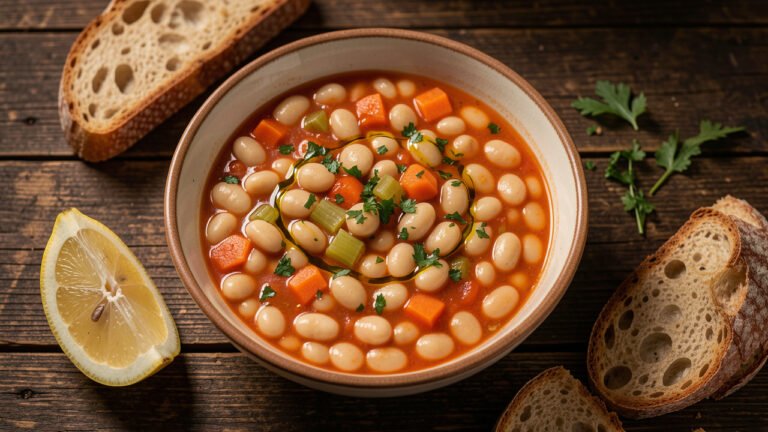
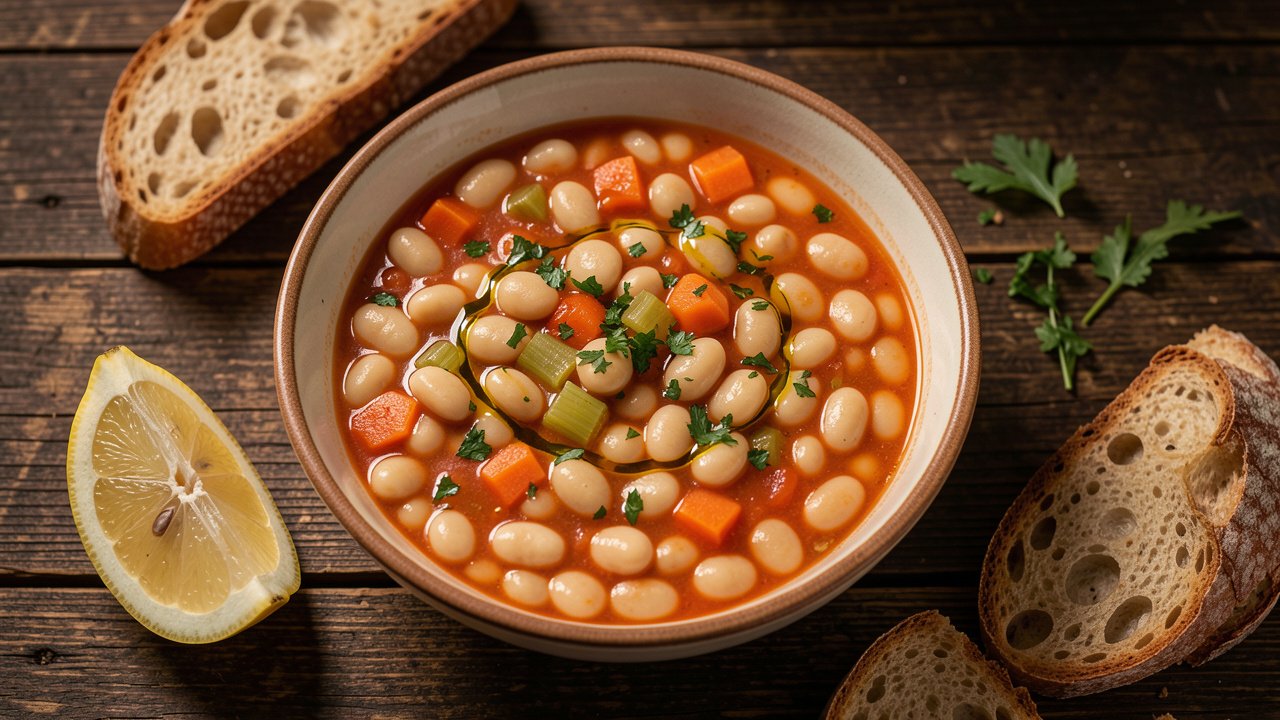
Fasolada is the soup Greeks grew up on: a pot of white beans simmered with sweet carrots, celery and a bright tomato base until it is thick, silky and deeply satisfying. It asks for almost nothing from the pantry, yet a bowl of it tastes like home. For generations it has been cooked on weekdays across the country, which is exactly why it is so often called Greece’s national dish.
The whole thing is built in one pot and rewards patience rather than skill. You sweat the vegetables in olive oil, give the beans a long, gentle simmer, then stir in the tomato and let everything melt together. A final glug of good olive oil and a squeeze of lemon at the table are what lift it from humble to memorable. Like the Argentine guiso de lentejas, it proves how far a pot of beans and tomato can go.
Why This Fasolada Works
Great fasolada is really two things done well: beans cooked all the way to creamy, and a vegetable-tomato base with enough olive oil to give the soup body. Get those two right and everything else falls into place. The method here takes its time with the beans, then layers in the tomato late so the soup turns silky instead of grainy.
It starts the way most good Greek cooking does, with onion, carrot and celery softened slowly in plenty of olive oil until sweet. That trio is the backbone of the flavor, so it gets room to cook down before anything else goes in. Garlic follows for a minute, just long enough to turn fragrant without scorching.
Timing the tomato is the quiet trick. Acid slows dried beans from softening, so the beans get a head start in plain broth and the crushed tomatoes and tomato paste join only once the beans are nearly tender. That way you get full tomato flavor without ending up with hard beans swimming in a thin, sour broth.
It is also forgiving and endlessly cheap. Fasolada was born as a frugal, use-the-pantry dish, so the exact vegetables are flexible. Keep the beans, the olive oil and the tomato constant, and you will get a thick, warming pot that tastes authentically Greek every single time.
Pro observation: Fasolada is naturally vegan and fully halal as written, with no forbidden ingredients. All of its richness comes from the beans, the slow-cooked vegetables and a generous pour of good olive oil, so you never miss a thing.
Ingredients
Kitchen Measurement Converter
Need to convert an amount while you measure? Pick a category, enter a value, and the result updates instantly.
Ingredient Notes & Substitutions
White Beans
Dried cannellini or navy beans are classic and cook up creamy. Great Northern beans work too. If you are short on time, two cans of drained white beans can stand in; add them with the tomato and simmer just 20 minutes, since they are already tender.
Olive Oil
This is where fasolada gets its soul, so do not skimp. Use a good extra-virgin olive oil, some for cooking and a generous raw drizzle at the end. The finishing pour is traditional and carries much of the flavor and body of the finished soup.
Vegetables
Onion, carrot and celery are the holy trinity here. Dice them small and even so they soften into the broth. Many Greek cooks add a little celery leaf for extra aroma, and a diced potato is a common way to make the pot even heartier.
Tomatoes & Lemon
Crushed tomatoes plus a spoon of tomato paste give a brothy, tangy base without making it a heavy sauce. A squeeze of fresh lemon at the table is essential; it brightens the beans and balances the sweetness of the carrots and tomato.
Equipment
- Large heavy pot or Dutch oven
- Lid for the pot
- Wooden spoon
- Sharp knife and board
- Ladle
- Colander for the beans
Before You Start
1. Soak the beans overnight in plenty of cold water. Beans that go in dry can simmer for hours and still stay chalky in the center, and they cook unevenly. A full overnight soak cuts the cooking time roughly in half and lets them turn creamy right through.
2. Hold back the salt until the beans are tender. Salt added at the start firms up the skins and the beans can refuse to soften no matter how long they cook, leaving the whole pot grainy. Season only once a bean crushes easily between two fingers.
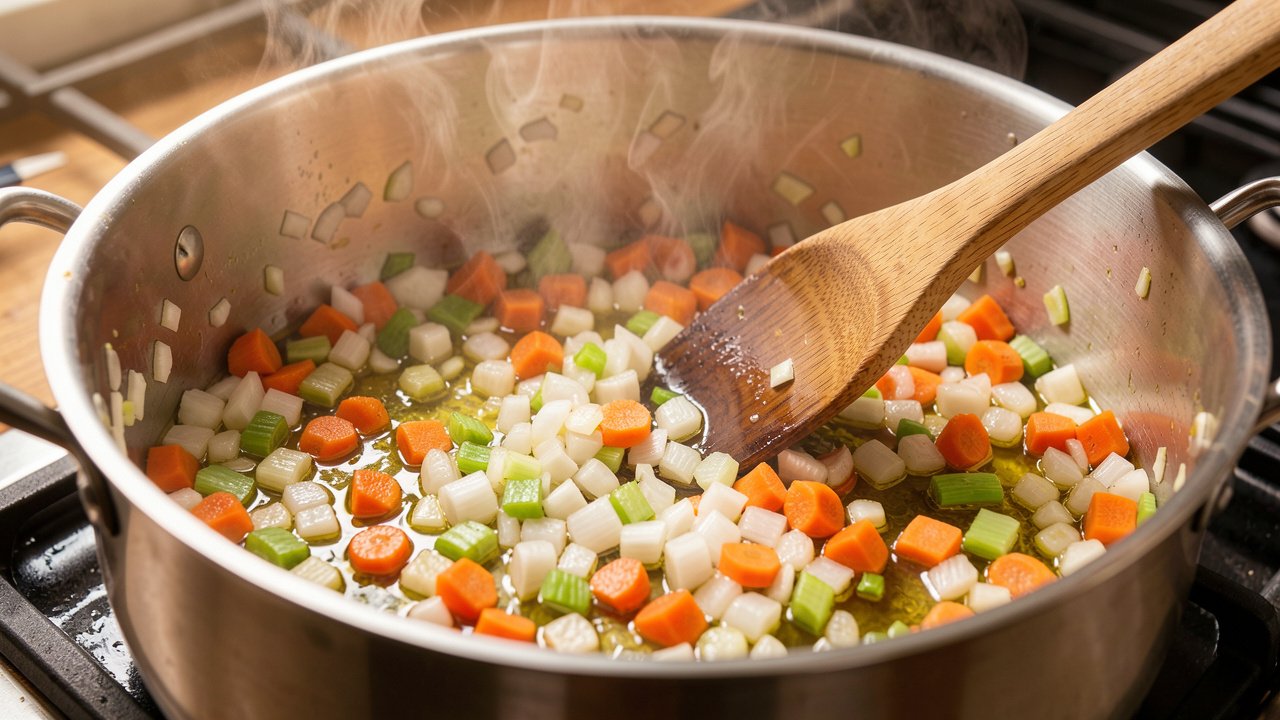
3. Dice the carrots and celery small and even. Large chunks stay crunchy long after the beans are done, so cut them to a scant half-inch; at that size they melt into the broth on the same timeline the beans finish and help thicken the soup.
Step-by-Step Instructions
Fasolada is mostly hands-off once it simmers, so set yourself up first. Soak and drain the beans the night before, dice the vegetables, and have the tomato and broth measured so you can add each one at the right moment and let the pot do the work.
Soak and Prep
The night before, cover the dried beans with plenty of cold water and leave them to soak overnight, then drain and rinse. Finely chop the onion, dice the carrots and celery small and even, and mince the garlic. Measure out the broth and tomatoes so everything is ready to add in turn.
Sweat the Vegetables
Warm about half the olive oil in a large heavy pot over medium heat. Add the onion, carrots and celery with a small pinch of salt and cook 8 to 10 minutes, stirring now and then, until soft and sweet. Stir in the garlic and cook 1 minute more, just until fragrant.
Simmer the Beans
Add the drained beans, the vegetable broth or water, the bay leaf and the oregano. Do not add salt yet. Bring to a boil, skim off any foam that rises, then lower to a gentle simmer and cook partly covered for about 40 minutes, until the beans are beginning to turn tender but still hold their shape.
Stir in the Tomato
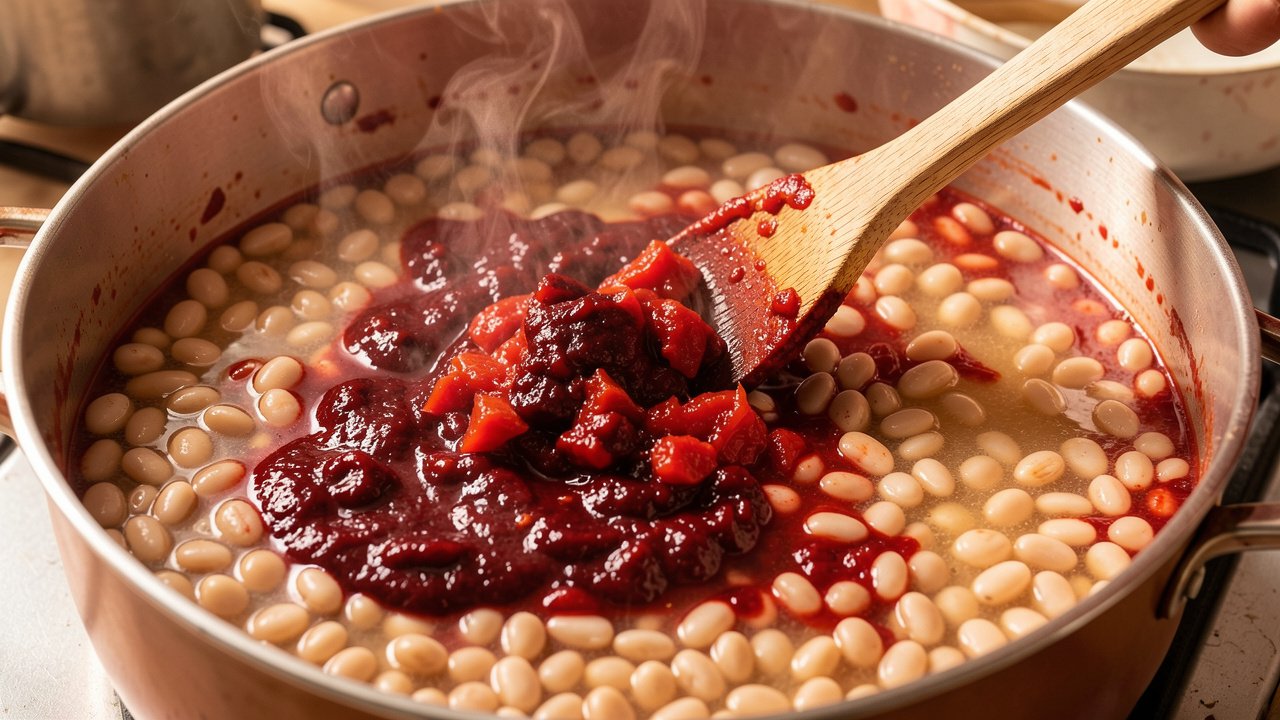
Once the beans are nearly tender, stir in the tomato paste and the crushed tomatoes. Adding the tomato now, rather than at the start, keeps its acidity from toughening the beans. Simmer another 20 to 30 minutes, until the beans are fully creamy and the broth has thickened.
Thicken and Season
When the beans are soft all the way through, crush a ladleful against the side of the pot and stir them back in to thicken the broth naturally. Now add salt and plenty of black pepper to taste. Simmer a few minutes more so the seasoning settles, then fish out the bay leaf.
Finish and Serve
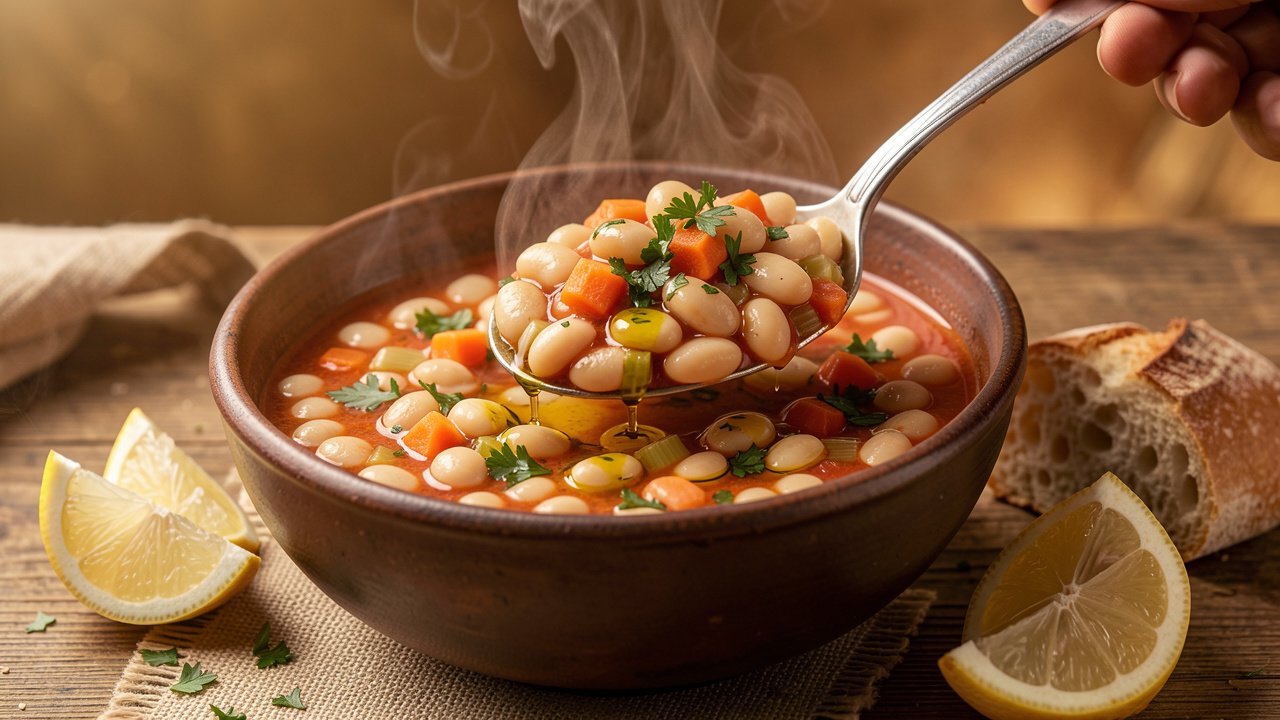
Take the pot off the heat and stir in the chopped parsley and the remaining raw olive oil; that finishing pour is what makes fasolada taste Greek. Ladle into deep bowls and serve with a wedge of lemon to squeeze over the top and plenty of crusty bread alongside.
Chef’s Tips From Real Kitchen Testing
Add the tomato late, after the beans are nearly soft. Acid slows dried beans from softening, so an early can of tomatoes can leave you with hard beans even after a long simmer.
Crush a ladle of beans against the pot to thicken the soup. It gives you that creamy, almost velvety body without flour, cream, or reaching for a blender.
Save the best olive oil for the very end. A raw drizzle stirred in off the heat tastes brighter and more peppery than oil that has cooked, and it is the signature of real fasolada.
Recipe Variations
Serving Suggestions
- Thick slices of warm, crusty bread for dipping
- A handful of Kalamata olives on the side
- Extra lemon wedges to squeeze over each bowl
- A drizzle of good olive oil poured at the table
Nutrition Facts
| Nutrient | Amount per serving |
|---|---|
| Calories | 380 |
| Protein | 16 g |
| Carbohydrates | 52 g |
| Fat | 14 g |
| Saturated Fat | 2 g |
| Fiber | 14 g |
| Sugar | 8 g |
| Sodium | 700 mg |
Values are estimates per serving and vary with the exact beans and brands you use.
Make-Ahead Tips
Fasolada is one of those soups that tastes even better the next day, so it is ideal to make ahead. Cook it fully, cool, and refrigerate; the beans keep absorbing flavor overnight. Reheat gently with a splash of water to loosen it, then add a fresh drizzle of olive oil and lemon just before serving.
Storage, Freezing & Reheating
Common Mistakes to Avoid
Troubleshooting
Beans still hard after a long simmer? They were likely salted or hit with tomato too early, or they are simply old. Keep simmering with extra water and hold the salt; if they refuse to soften, the beans were past their prime.
Soup too thin? Crush a ladleful of beans against the pot and stir them back in, or simmer uncovered a little longer to reduce and concentrate the broth.
Tastes flat? It almost always needs salt, a final drizzle of good olive oil, and a squeeze of lemon. That bright, oily finish is what pulls the whole bowl together.
A Note on Greek Cooking
The name says it all: fasolada comes from the Greek word fasoli, meaning bean, so the dish is quite literally “the bean soup.” It is one of the oldest foods on the Greek table, with roots reaching back to antiquity, and for centuries it was everyday peasant food, cheap, filling and made almost entirely from pantry staples. That humble pedigree is exactly why Greeks claim it as their national dish.
It sits in a wide family of Mediterranean bean dishes, and the one it is most often confused with is Italian pasta e fagioli. The difference is simple: fasolada is a pure bean-and-vegetable soup with no pasta, brightened with olive oil and lemon, while pasta e fagioli folds small pasta into the beans for a starchier bowl. Fasolada keeps the focus squarely on the beans and the olive oil.
Like the best Greek home cooking, it belongs to a tradition of slow, vegetable-forward pots. If you love it, you will feel right at home with a tray of briam, Greek mixed vegetables in tomato sauce, or a Sunday pot of kotopoulo kokkinisto, chicken braised in tomato. Keep the beans, the olive oil and the tomato constant, put bread and lemon on the table, and you have a meal that still tastes of a Greek kitchen.