Indonesian Recipes
Fiery Manadonese Chicken in a Chili-Tomato Paste
Last updated: November 4, 2026
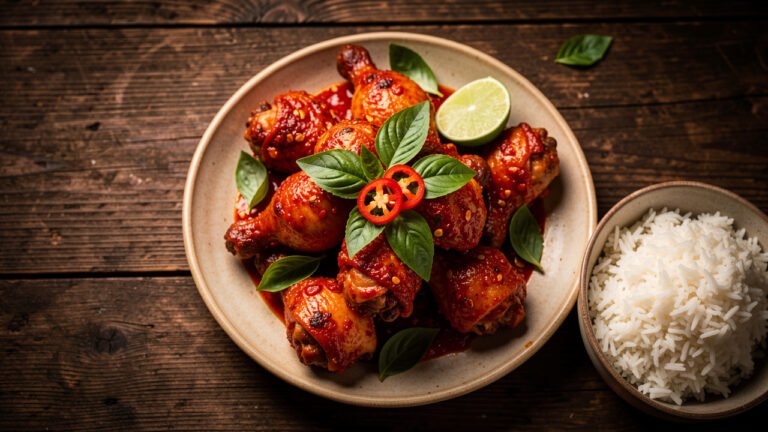
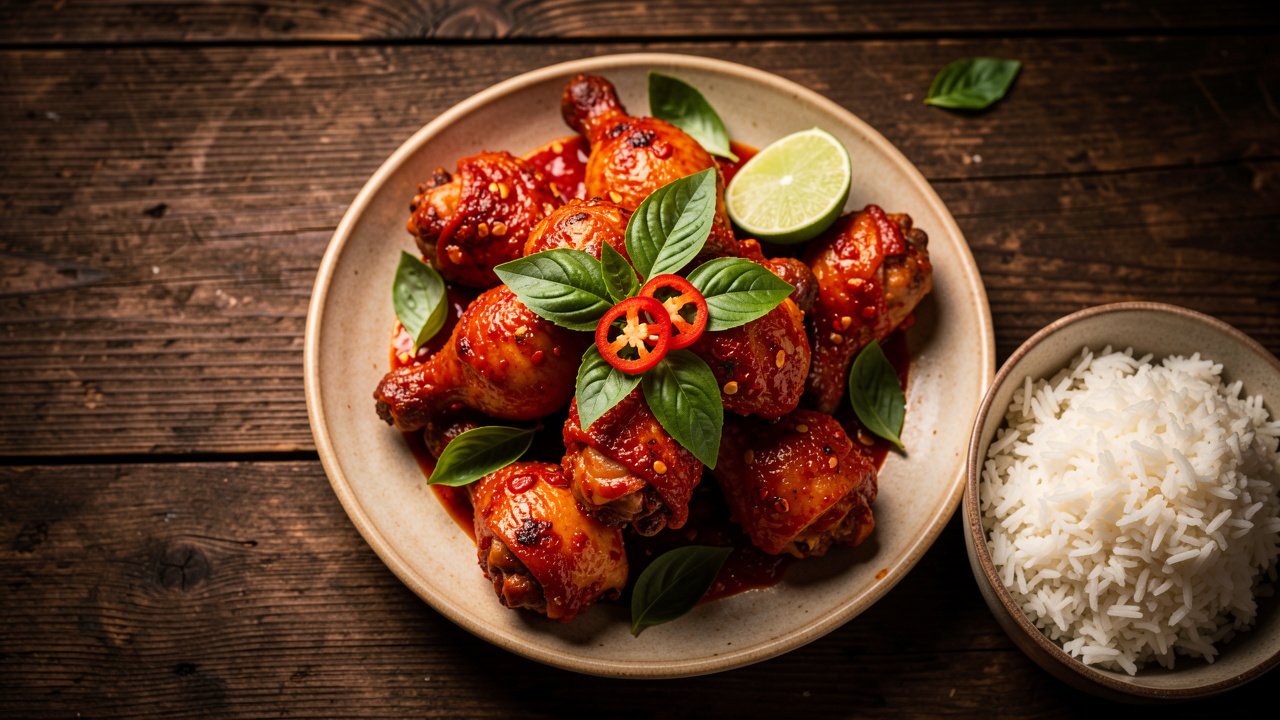
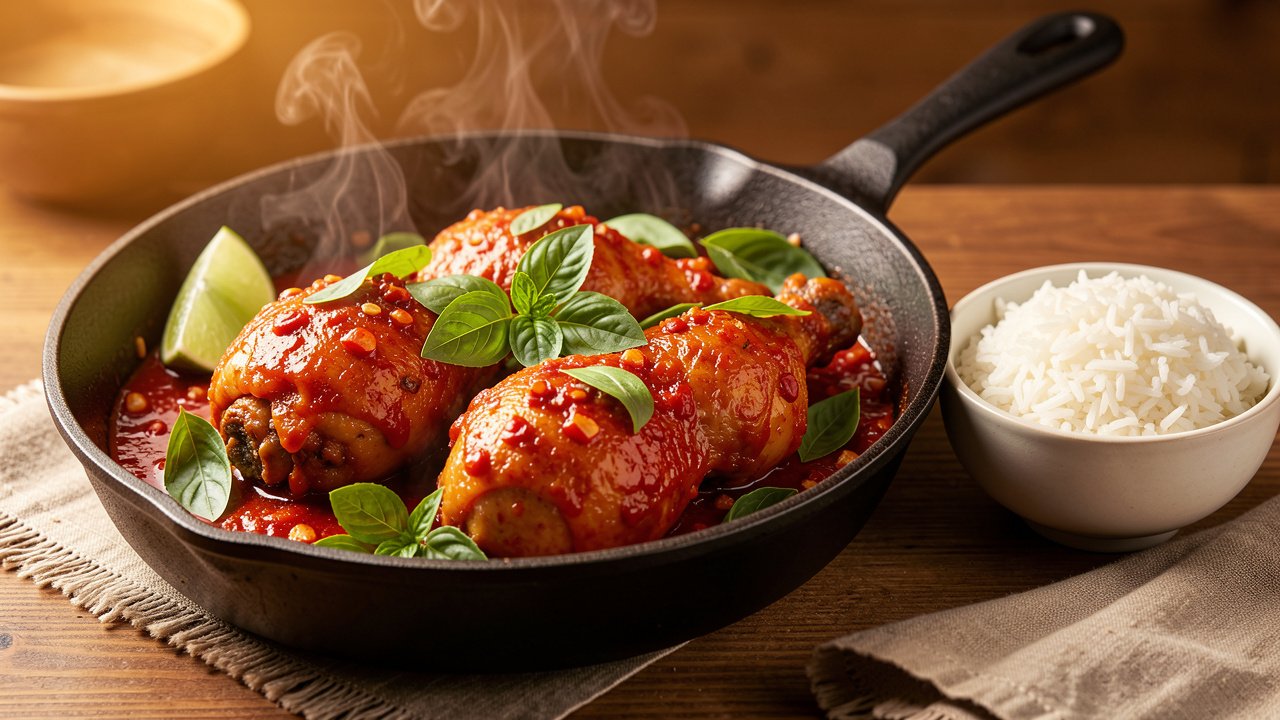
Ayam rica-rica is one of the boldest dishes to come out of the Manado kitchen, and it makes no apology for its heat. The name says it all: “rica” means chili in the local Manado dialect, doubled up to rica-rica for emphasis, so you know exactly what you are getting into. Chicken is simmered in a coarse, glossy paste of red chilies, tomato, shallot, garlic, and lemongrass until the sauce clings to every piece.
What keeps it from being merely hot is how bright it is. The tomato gives the paste body and a gentle sweetness, the lemongrass and lime leaves lift it, and a squeeze of lime with a fistful of fresh basil stirred in at the end pulls the whole pan into focus. It is a one-pan braise, built on a paste you fry down first, and it rewards patience far more than fuss.
Why This Ayam Rica-Rica Works
Great rica-rica is really two things done well: a spice paste fried until it is sweet and deep instead of raw and harsh, and chicken braised long enough to go tender while the sauce reduces to a clinging coat. Get those two right and the dish takes care of itself. The method here builds a coarse, fragrant paste, fries it down properly, then lets the chicken simmer in it until everything comes together.
The paste is the engine. Red chilies, shallots, garlic, ginger, and tomato are pounded or blended coarse, then fried in oil with bruised lemongrass and lime leaves until the mixture darkens and the oil separates at the edges. That frying step is not optional; it is what cooks off the raw bite of the shallot and chili and turns the paste round and savory.
Bone-in chicken is the right cut for this. It holds up to the braise without drying out, and the bones enrich the sauce as it reduces. The chicken goes into the fried paste, gets coated, then simmers with just a splash of water until it is cooked through and the sauce is thick and glossy rather than soupy.
The finish is what makes it sing. Off the heat you stir through fresh lime juice and a generous handful of basil, which stay bright because they never really cook. That last hit of acid and herb is the difference between a one-note hot dish and the layered, aromatic bowl that rica-rica is meant to be.
Pro observation: Ayam rica-rica is fully halal as written, with no forbidden ingredients. All of its depth comes from chili, tomato, shallot, garlic, lemongrass, lime, and basil, so you never miss a thing.
Ingredients
Kitchen Measurement Converter
Need to convert an amount while you measure? Pick a category, enter a value, and the result updates instantly.
Ingredient Notes & Substitutions
Chicken
Bone-in, skin-on pieces are best: thighs, drumsticks, or a whole bird cut into serving pieces. The bones enrich the sauce and the meat stays juicy through the braise. Boneless thighs work if you prefer, but shorten the simmer so they do not dry out.
Chilies
Fresh red chilies drive the dish. Long red Fresno or cayenne types give color and moderate heat; add small red bird’s eye chilies to push it toward the true Manado fire. For a milder pan, remove the seeds and membranes before blending.
Lemongrass & Lime Leaves
Use the pale lower third of the lemongrass stalk, bruised so it splits. Fresh or frozen lime leaves add the citrus perfume that defines the dish; if you cannot find them, a little extra lime zest is a fair stand-in.
Basil & Tomato
Lemon basil (kemangi) is traditional, but Thai or sweet basil both work beautifully stirred in at the end. Ripe fresh tomatoes give the paste its body and gentle sweetness; a few tablespoons of crushed tomato can fill in out of season.
Equipment
- Wide heavy skillet or wok
- Blender or mortar and pestle
- Wooden spoon
- Sharp knife and board
- Box grater or microplane
- Tongs
Before You Start
1. Wear gloves and open a window when you handle the chilies. Rica-rica leans on a big handful of hot chilies pounded raw, and their oils cling to your skin and sting for hours. The fumes that rise when you fry the paste can catch in your throat, so protect your hands and get the air moving before you begin.
2. Pat the chicken pieces completely dry. Any surface water makes the pieces steam and slide around instead of taking on color, leaving you with a pale, watery braise. Dry skin grips the fried paste and lets each piece pick up a proper sear.
3. Bruise the lemongrass, do not chop it fine. Crush the pale lower stalks with the flat of your knife so they split and release their oil into the sauce, then lift them out before serving. Left whole and uncrushed, they stay woody and give up almost no flavor.
Step-by-Step Instructions
Rica-rica is a paste-first braise, so get the paste made and the chicken dried before the pan goes on. Once the paste is frying it moves quickly, and steamed rice on the side means the whole meal reaches the table together.
Make the Rica Paste
Roughly chop the red chilies, shallots, garlic, and tomatoes, then blend them with the grated ginger and ground turmeric into a coarse, thick paste. Do not puree it silky smooth; a little texture helps it fry down properly. Pat the chicken pieces dry and season them lightly with salt while the paste waits.
Fry the Spice Paste
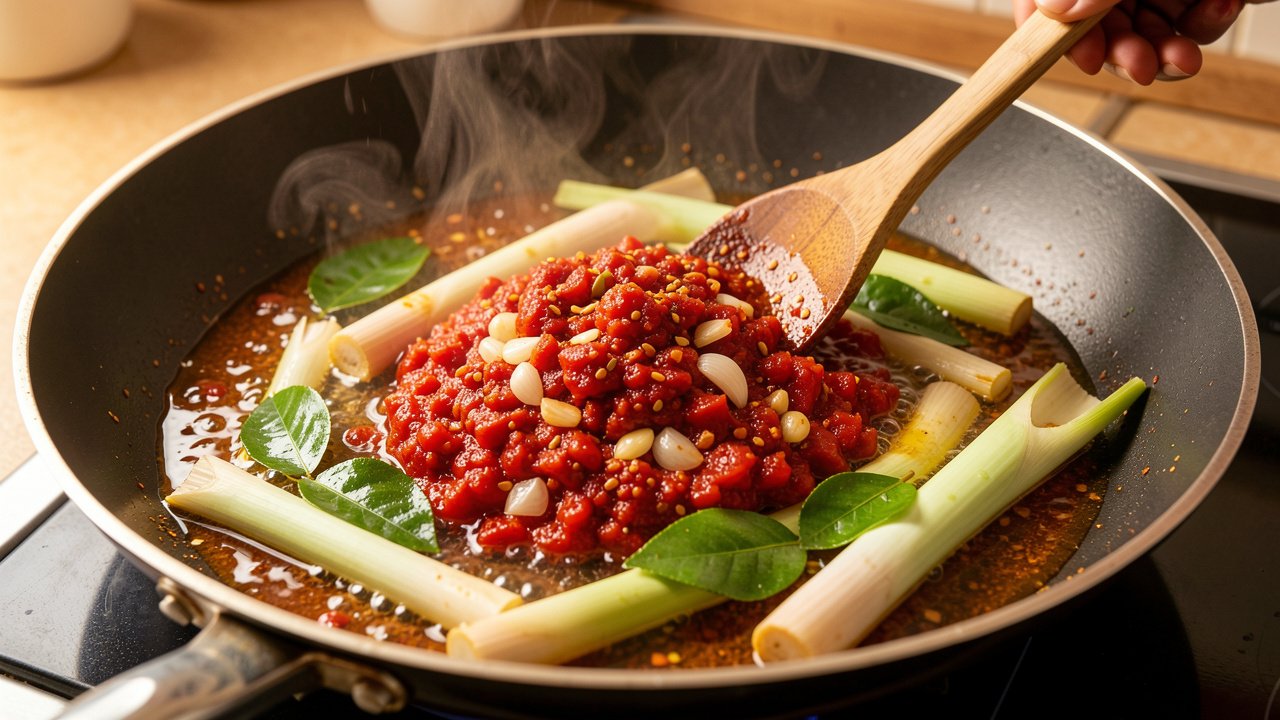
Warm the cooking oil in a wide heavy skillet over medium heat, then add the paste along with the bruised lemongrass and lime leaves. Fry, stirring often, for 6 to 8 minutes until the paste darkens, smells sweet and toasty, and the oil starts to separate at the edges. This step cooks off the raw bite, so do not rush it.
Add and Coat the Chicken
Raise the heat to medium-high and add the chicken pieces to the pan in a single layer, giving them room. Let them sit for a couple of minutes on each side to take on color, then turn them to coat every piece in the fragrant red paste. The chicken does not need to cook through here; you are just building the sear and coating.
Braise Until Tender
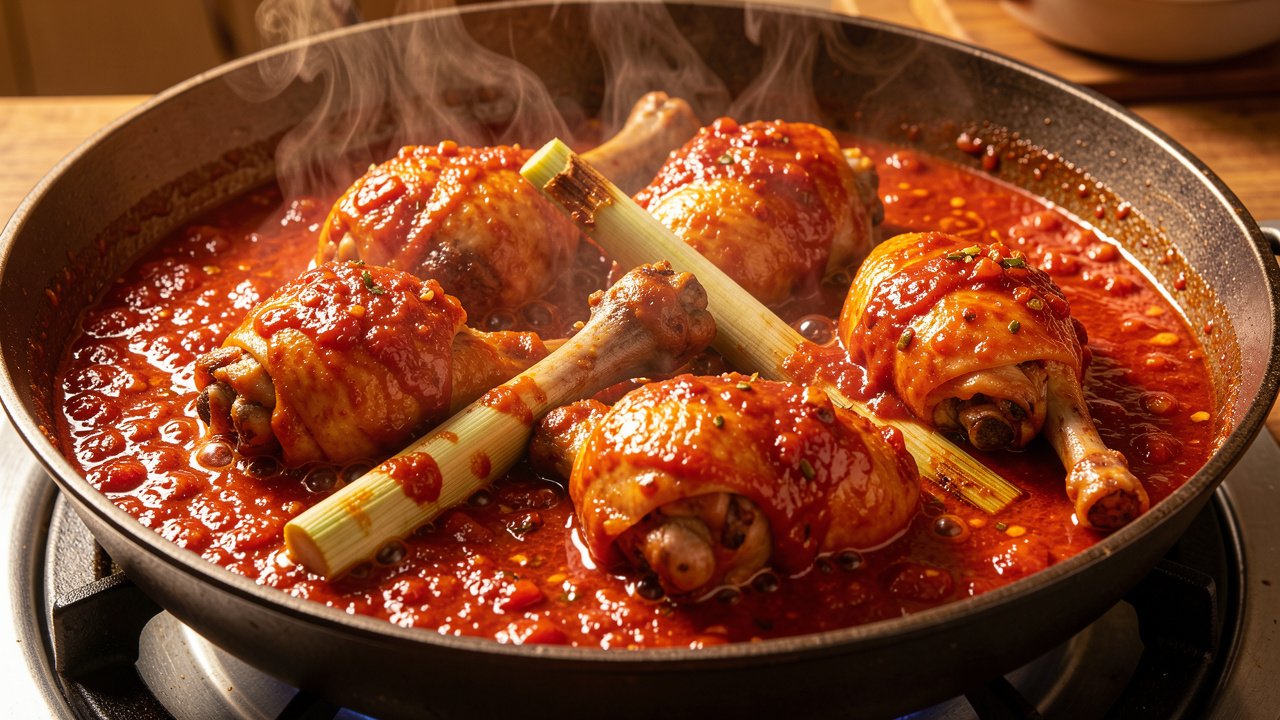
Pour in about half a cup of water, stir to loosen the paste, and bring it to a gentle simmer. Lower the heat, cover partly, and braise for 20 to 25 minutes, turning the pieces now and then, until the chicken is cooked through and tender and the sauce has thickened around it. Add a splash more water if it tightens too soon.
Reduce the Sauce
Uncover and raise the heat a little for the last few minutes, stirring gently, to cook off any thin liquid so the sauce turns glossy and clings to the chicken. Taste and adjust the salt now, while the pan is still on the heat. You want a thick, coating sauce rather than a soupy one.
Finish With Lime and Basil
Take the pan off the heat and fish out the lemongrass stalks. Squeeze in the fresh lime juice and stir through the basil leaves so they wilt just slightly in the residual heat and stay bright green. Taste one last time, then serve hot with steamed rice to soak up the fiery sauce.
Chef’s Tips From Real Kitchen Testing
Fry the paste until the oil separates and beads at the edges. That visual cue, not the clock, tells you the raw shallot and chili have cooked off and the flavor has turned round and sweet.
Keep the paste coarse, not smooth. A little texture lets it fry down into a clinging, glossy coat instead of a thin sauce that just boils the chicken.
Add the lime and basil only off the heat at the very end. Cooked, they turn dull and flat; stirred in last, they keep the dish bright, fresh, and aromatic against all that chili.
Recipe Variations
Serving Suggestions
- A mound of hot steamed white rice
- Sliced cucumber and tomato to cool the heat
- A squeeze of extra lime over each plate
- Stir-fried greens such as kangkung or spinach
Nutrition Facts
| Nutrient | Amount per serving |
|---|---|
| Calories | 360 |
| Protein | 34 g |
| Carbohydrates | 12 g |
| Fat | 20 g |
| Saturated Fat | 4.5 g |
| Fiber | 3 g |
| Sugar | 6 g |
| Sodium | 620 mg |
Values are estimates per serving and vary with the exact cut of chicken and brands you use.
Make-Ahead Tips
The rica paste is the perfect make-ahead. Blend and fry it a day or two in advance, then cool and refrigerate it in a sealed jar; the flavor only deepens. When you are ready to eat, warm the paste, add the chicken, and braise as usual. The whole dish also reheats well, so it is happy cooked ahead for a crowd.
Storage, Freezing & Reheating
Common Mistakes to Avoid
Troubleshooting
Sauce too thin? Uncover and simmer a few minutes longer over higher heat to drive off the extra liquid, so the paste tightens and clings to the chicken instead of pooling.
Too fiery to eat? Stir in a spoonful of tomato or a little more grated ginger to round it out, and serve with extra rice and cooling cucumber alongside.
Chicken still tough? It simply needs more time. Add a splash of water, cover, and keep it at a gentle simmer until the meat gives easily near the bone.
A Note on Indonesian Cooking
Rica-rica comes from Manado, the capital of North Sulawesi, and from the wider Minahasan kitchen that is famous across Indonesia for its love of chili. The name is disarmingly literal: “rica” means chili, or spicy, in the Manado dialect, and doubling it to rica-rica is the local way of saying very spicy indeed. It began as a way of cooking whatever protein was on hand in a fiery fresh-chili paste, and chicken, or ayam, became one of its best-loved homes.
It is easy to confuse rica-rica with the many chili dishes of the archipelago, but it has its own signature. Where a Sumatran balado is a milder fried-chili sambal spooned over its main ingredient, rica-rica is a fresh, herb-lifted braise built on lemongrass, lime leaves, and basil as much as on heat. It sits in a big family of Southeast Asian sour-and-spicy cooking, close in spirit to a Malaysian asam pedas and to the bright, tangy broths of Vietnam.
What keeps rica-rica alive on tables far beyond Manado is that balance of fire and freshness. Keep the chili and the fried paste at its heart, lift it with lime and basil at the end, and put a bowl of rice on the table, and you have a dish that tastes unmistakably of North Sulawesi.