Indonesian Recipes
Fried Eggs in Spicy Tomato Sambal
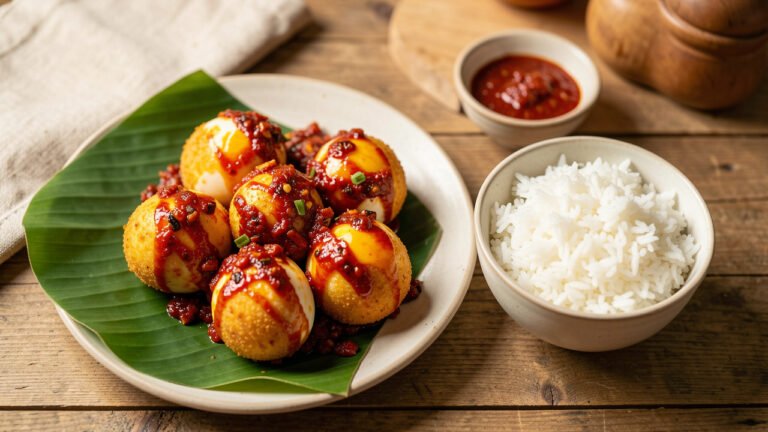
This is one of those dishes that turns a few humble eggs into something you crave. Frying the boiled eggs gives them a blistered, golden skin that grips the sambal, and the sambal itself is where the magic lives: sweet, sour, savory, and hot all at once. I learned the hard way that you cannot rush the paste. The first time I made it, I pulled it off the heat too soon and the sambal tasted sharp and raw, like uncooked chili.
Why This Telur Balado Works
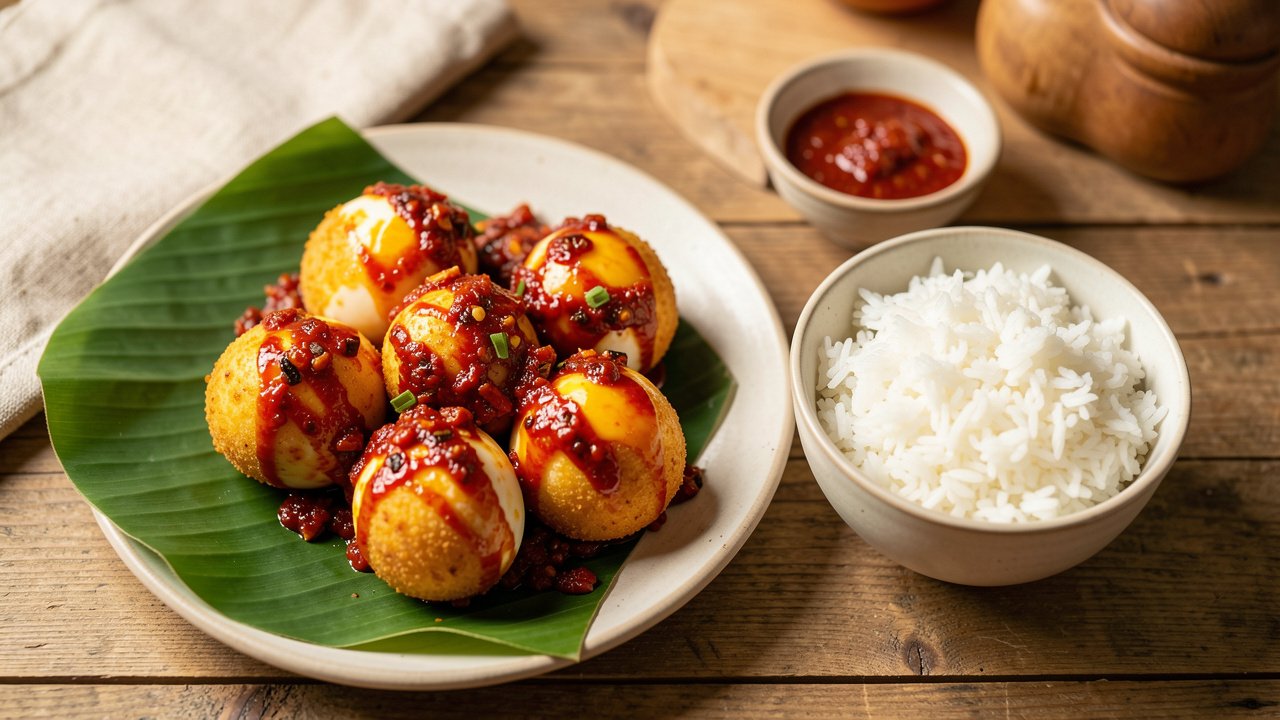
Balado is one of the cornerstone flavors of Minang cooking from West Sumatra, and it works because it layers four tastes onto a single plate: heat from the chilies, sweetness from a little palm sugar, sourness from lime and tomato, and a deep savory backbone from shallot and garlic fried slowly in oil. When those elements are balanced, no single one shouts over the others.
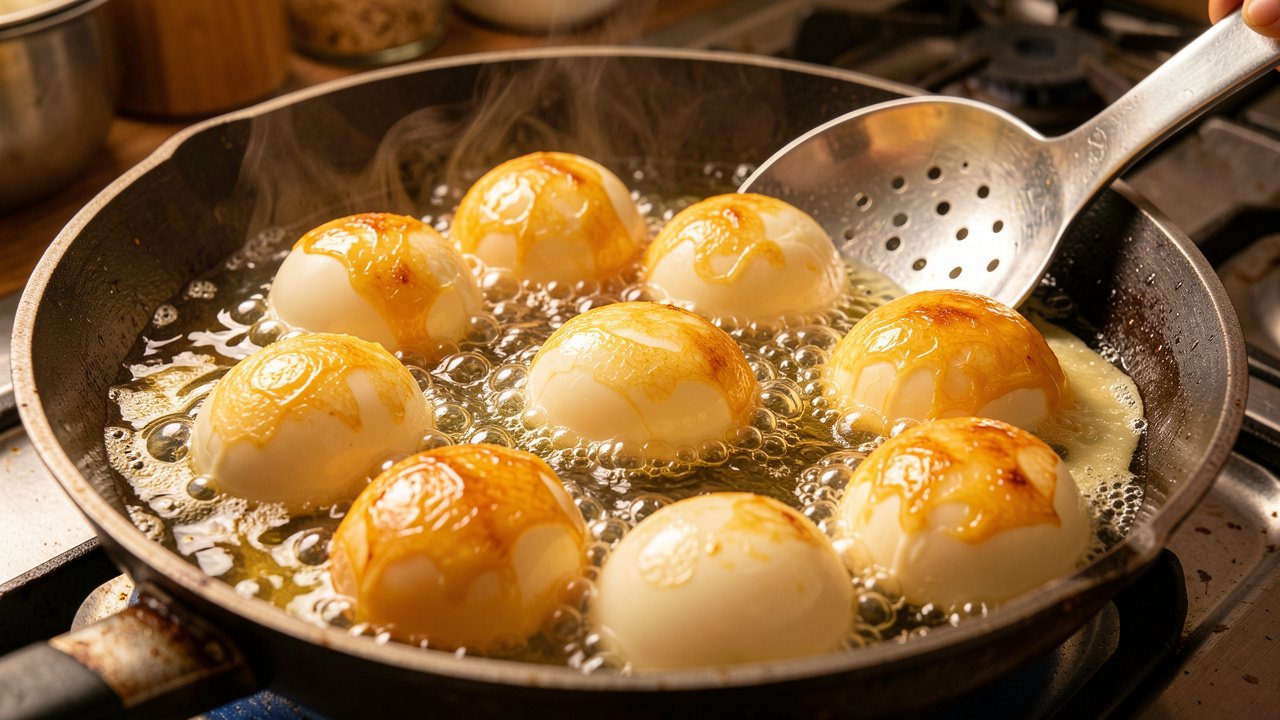
Frying the eggs first is not just for looks. As the whites hit the hot oil they blister and firm into a slightly chewy, golden skin with tiny bubbles all over the surface. That texture does two things: it stops the eggs from feeling soft and plain, and it gives the sambal countless little pockets and ridges to cling to, so every bite carries sauce.
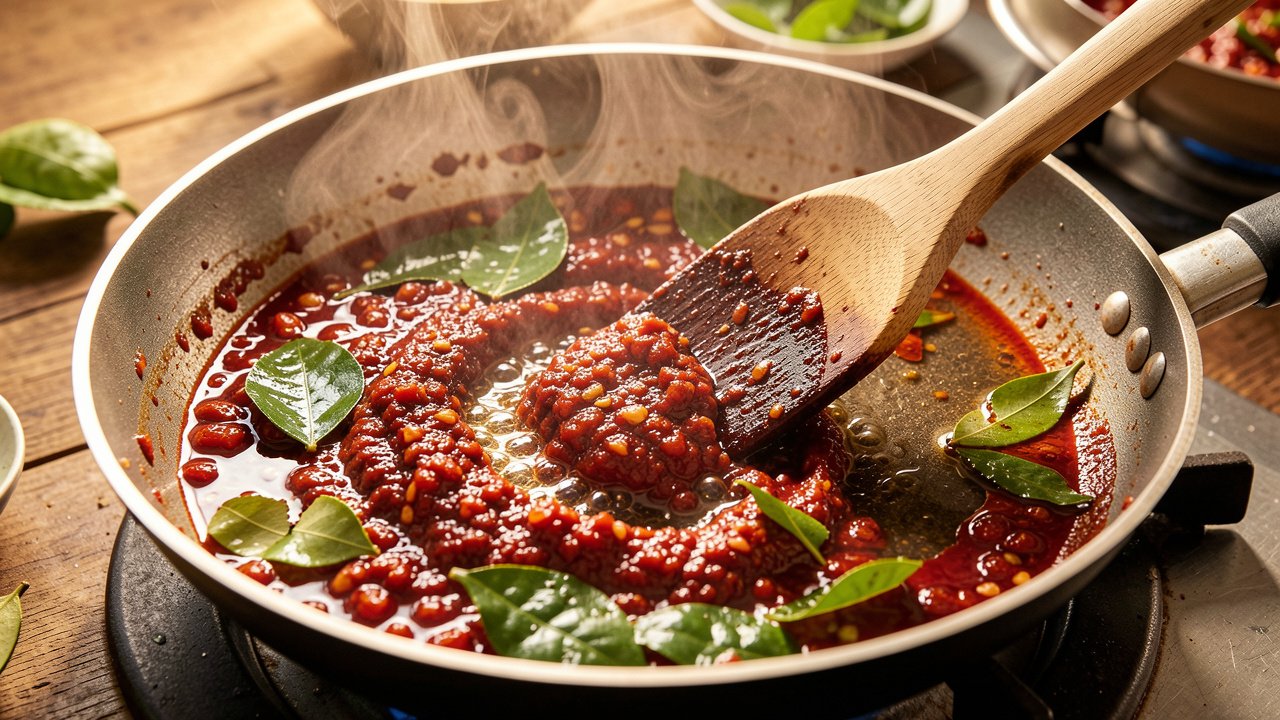
The other quiet secret is patience with the sambal. You want to fry the ground paste in enough oil, over medium heat, until it darkens, thickens, and the oil starts to seep back out around the edges. That is the signal that the raw chili edge has cooked off and the flavors have concentrated into something jammy and glossy rather than sharp and watery.
It is also forgiving and flexible. The same sambal balado welcomes fried tofu, tempeh, or par-fried potatoes in place of or alongside the eggs, so once you have the method down you can build a different plate from whatever is in the kitchen. Best of all, it comes together in one pan with a short list of ingredients.
Pro observation: The sambal is ready when it looks darker and thicker than when it went in and a thin film of red-tinted oil pools at the edges of the pan. That sheen means the paste is properly fried, not raw.
Ingredients
Kitchen Measurement Converter
Quickly convert between common cooking measurements without leaving the recipe. Pick a category, enter a value, and the result updates instantly.
Ingredient Notes & Substitutions
Eggs
Use eggs boiled until fully firm, then peeled and patted dry. Dry surfaces blister better and spit less in the oil. Six to eight eggs suit four people, depending on appetite and sides.
Red Chilies & Tomato
Large mild red chilies give color and gentle heat, while the tomato adds body and tang to the sambal. For a milder plate, seed the chilies; for more fire, keep some bird’s eye chilies in the paste.
Shallot, Garlic & Lime Leaf
Shallots and garlic are the savory base and should fry until soft and sweet. A couple of torn kaffir lime leaves lift the whole sambal with a floral, citrus aroma that is worth seeking out.
Palm Sugar & Lime
Palm sugar rounds off the heat and deepens the color; brown sugar works in a pinch. A squeeze of fresh lime at the end sharpens everything. Shrimp paste is a traditional, halal savory boost and stays optional here.
Equipment
- Wide frying pan or wok
- Small saucepan for boiling
- Blender or mortar and pestle
- Slotted spoon
- Sharp knife and board
- Paper towels
Before You Start
1. Dry the eggs well. After peeling, pat the boiled eggs completely dry so they blister instead of steaming and spitting when they hit the oil.
2. Grind the paste ahead. Blend the chilies, shallot, garlic, and tomato into a coarse paste before you start cooking, so the pan is never waiting.
3. Cook your rice alongside. Telur balado is built to sit on steamed white rice, so get the rice going before you fry the eggs.
Step-by-Step Instructions
Boil and Peel the Eggs
Boil the eggs until fully set, about 10 minutes, then cool them under running water. Peel carefully and pat each one completely dry. Any surface moisture will cause spitting in the next step, so take your time here.
Fry the Eggs Until Golden
Heat the oil in a wide pan over medium heat. Gently lower in the dried eggs and fry, turning now and then, for 4 to 5 minutes until the skins blister and turn golden all over. Stand back a little, as they can pop. Lift them out with a slotted spoon and set aside.
Grind the Sambal Paste
Blend the red chilies, bird’s eye chilies if using, shallots, garlic, and chopped tomato into a coarse, textured paste. Do not puree it smooth; a little texture gives the finished sambal a better mouthfeel. A mortar and pestle works beautifully if you have the patience.
Fry the Sambal Paste
Pour off all but about 3 tablespoons of the frying oil and return the pan to medium heat. Add the ground paste, the torn kaffir lime leaves, and the shrimp paste if using. Fry, stirring often, for 10 to 12 minutes until the sambal darkens, thickens, and the oil begins to seep back out at the edges. This slow fry is what cooks off the raw chili taste, so do not hurry it.
Season the Sambal
Stir in the palm sugar and salt and cook for another minute, tasting as you go. The sambal should taste balanced: spicy, gently sweet, savory, and just a touch tart from the tomato. Adjust with a pinch more salt or sugar until it sings.
Coat the Eggs and Finish
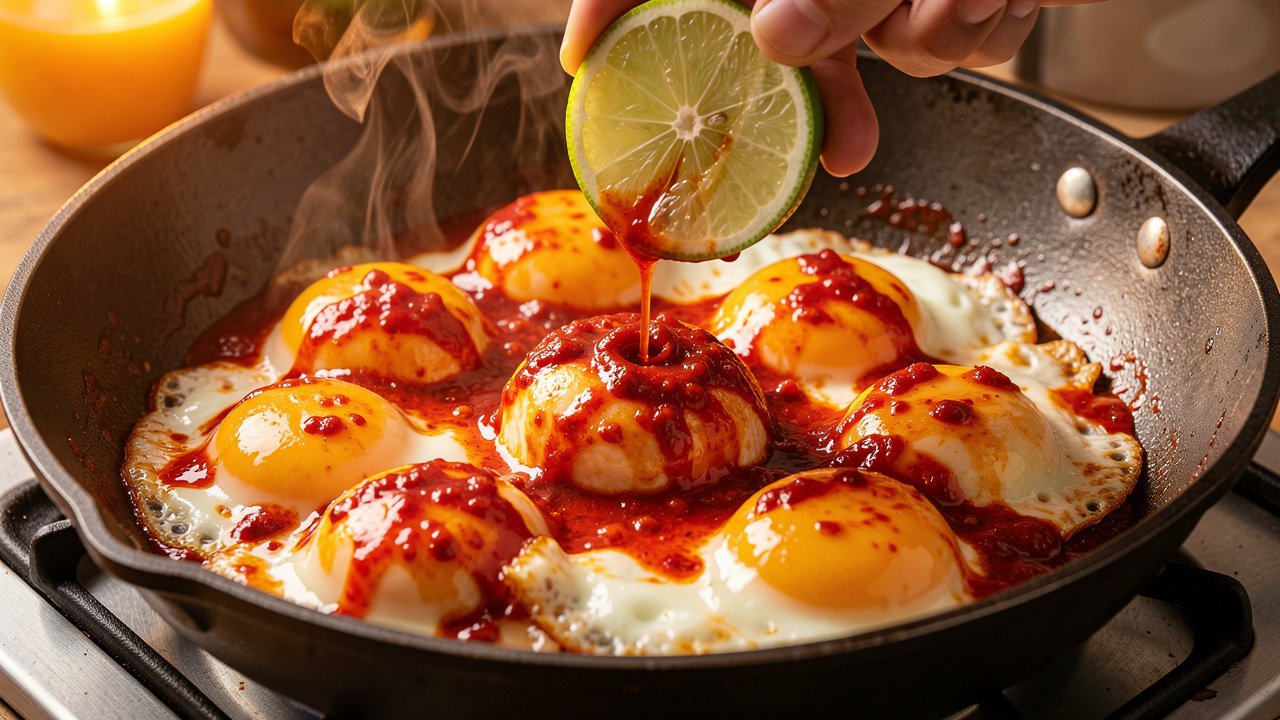
Return the fried eggs to the pan and turn them gently in the sambal until every one is glossy and fully coated. Take the pan off the heat, squeeze over the fresh lime juice, and give it one last gentle turn. Serve hot over steamed white rice.
Chef’s Tips From Real Kitchen Testing
Dry the eggs thoroughly before frying. Wet eggs steam instead of blistering and make the hot oil spit violently.
Give the sambal the full frying time. If it still smells sharp and looks bright and watery, it needs a few more minutes to darken and mellow.
Add the lime off the heat. Cooking it dulls the fresh, bright tang you want as the final lift on the plate.
Recipe Variations
Serving Suggestions
- Steamed white rice or fragrant jasmine rice
- Sliced cucumber and fresh tomato on the side
- Stir-fried water spinach or green beans
- Extra lime wedges and fried shallots to finish
Nutrition Facts
| Nutrient | Amount per serving |
|---|---|
| Calories | 250 |
| Protein | 13 g |
| Carbohydrates | 10 g |
| Fat | 18 g |
| Saturated Fat | 4 g |
| Fiber | 2 g |
| Sugar | 5 g |
| Sodium | 480 mg |
Values are estimates per serving and vary with the exact ingredients and brands you use.
Make-Ahead Tips
The sambal balado is a great make-ahead component, because the flavors deepen as it rests. Fry the sambal a day ahead, cool, and refrigerate in an airtight jar. When you are ready to eat, fry the eggs fresh, warm the sambal in a pan with a splash of oil, and turn the eggs through it. Keeping the eggs freshly fried gives you the best blistered texture.
Storage, Freezing & Reheating
Common Mistakes to Avoid
Troubleshooting
Sambal tastes harsh or raw? It has not fried long enough. Keep cooking over medium heat until it darkens, thickens, and the oil pools at the edges.
Too sour or too flat? Balance the tomato and lime with a little more palm sugar and a pinch of salt until the flavors round out.
Eggs splitting in the pan? The oil was too hot or the eggs too wet. Lower the heat, dry them thoroughly, and add them one at a time.
A Note on Indonesian Cooking
Balado comes from the Minang people of West Sumatra and is a defining style of Padang food, the beloved cuisine served in restaurants across Indonesia where dozens of small dishes crowd the table. At its heart, balado means something cooked with a fried chili paste, and the technique of slowly frying the ground chilies, shallot, and garlic until the raw edge cooks away is what gives every balado dish its rich, glossy depth. Telur balado is the everyday hero of the style, but the same sambal transforms potatoes, tofu, tempeh, and fish. If you love bold, spiced tomato flavors, browse more ideas in our tomato recipes collection or try a fresh tomato salsa for a cooler contrast.
Frequently Asked Questions
More Tomato Recipes to Try
Last updated: September 29, 2026