Balkan Recipes
Sour-Cabbage Rolls Braised in Paprika-Tomato Sauce
Last updated: November 4, 2026
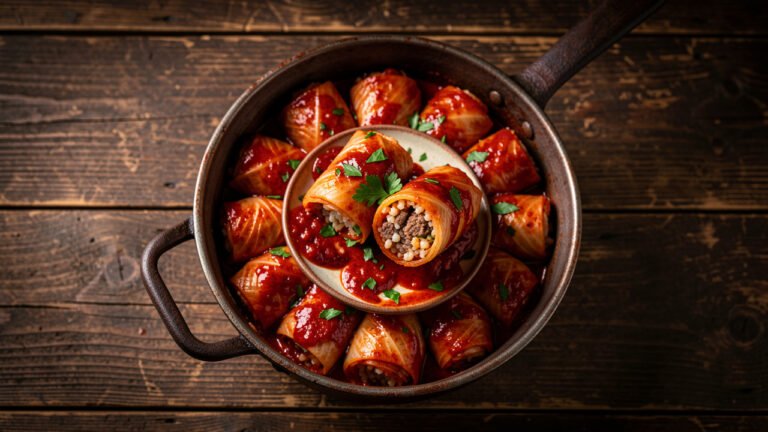
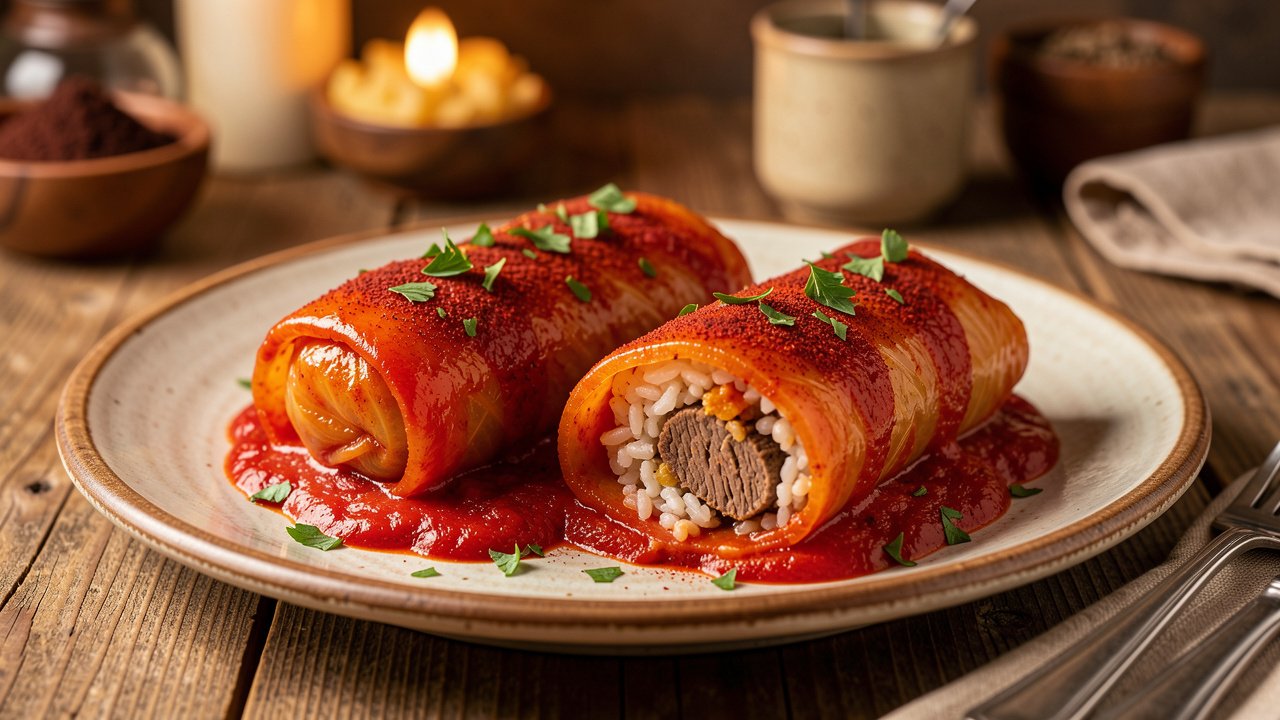
Sarma is the dish that carries a Balkan winter. Neat parcels of sour cabbage are wrapped around a spiced mix of beef and rice, packed shoulder to shoulder in a heavy pot, and left to braise slowly in a smoky paprika and tomato sauce until the leaves turn silky and the filling drinks up all that flavor. It is patient, generous food, made in a big batch and shared around a crowded table.
The magic is in the sour cabbage. Whole heads are cured until the leaves turn tangy and pliable, and that gentle sourness is what sets sarma apart from every other stuffed-cabbage dish. Rolled snug, weighted down, and cooked low and slow, the parcels emerge tender and tomato-rich, and they taste even better the day after you make them.
Why This Sarma Works
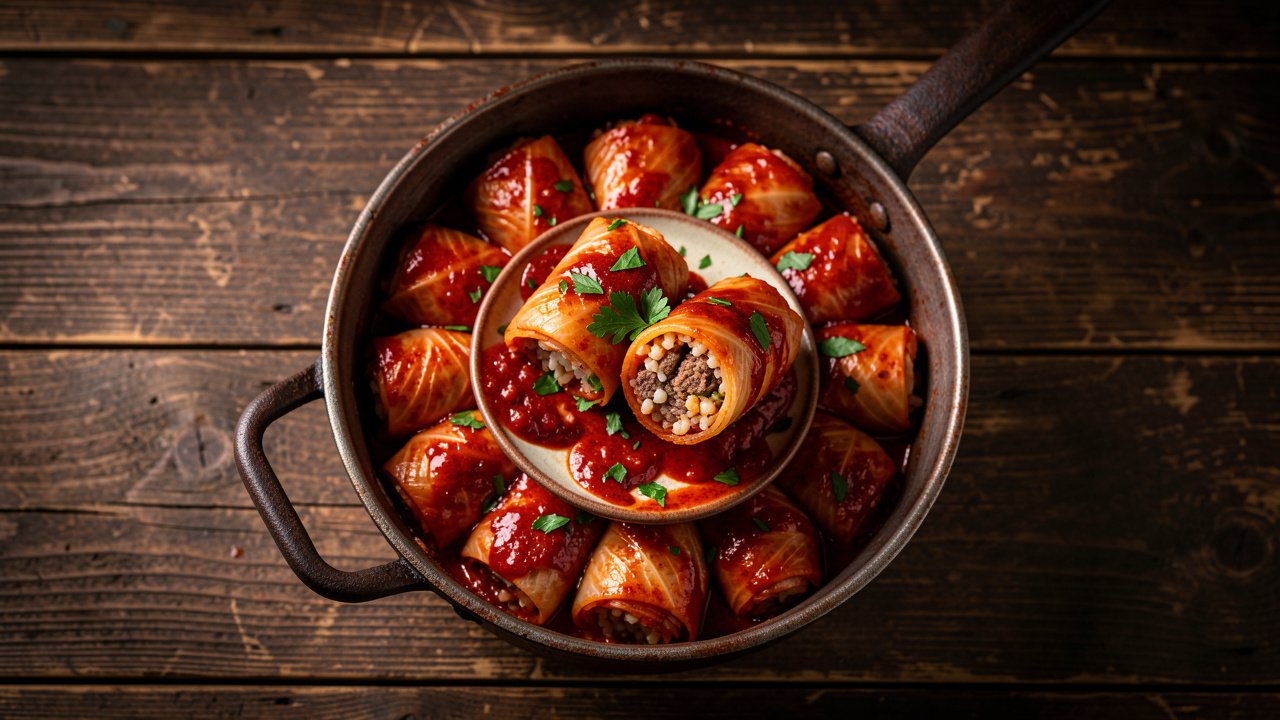
Great sarma rests on three things: pliable sour cabbage that rolls without cracking, a filling that stays loose and juicy, and a long, gentle braise that lets everything meld. Get those right and the rolls come out tender, tangy, and rich, with a sauce that clings to every parcel. This recipe is built to hit all three without any fuss.
The filling stays deliberately loose. Raw rice is folded into the seasoned beef with softened onion and garlic, then only lightly packed into each leaf. As the rolls braise, the rice swells and soaks up the sauce, binding the filling into something tender rather than dense. Underfill and roll snug, and every parcel cooks evenly from edge to center.
The sauce carries the whole pot. Onion and garlic soften in olive oil, then smoked and sweet paprika and tomato paste are toasted for a minute to lose their raw edge and turn sweet and deep. Crushed tomatoes and beef broth loosen it into a braising liquid that keeps the rolls submerged, so they stew slowly instead of drying out on top.
Most of all, sarma rewards patience. A low, steady simmer under a weight of an hour or more is what turns tough sour cabbage silky and marries the tangy leaves with the savory filling. Make it a day ahead and the flavor only deepens, which is exactly why it is a dish for feasts and cold weekends.
Pro observation: Sarma is fully halal as written, with no forbidden ingredients. Its smoky depth comes entirely from smoked paprika, toasted tomato, and slow-cooked beef, so you never miss a thing.
Ingredients
Kitchen Measurement Converter
Need to convert an amount while you measure? Pick a category, enter a value, and the result updates instantly.
Ingredient Notes & Substitutions
Sour Cabbage
A whole head of soured (pickled) cabbage is traditional and gives sarma its signature tang. Look for it at Balkan, Eastern European, or Turkish grocers, whole or as separated leaves. If you can only find fresh cabbage, see the fresh-cabbage note in the FAQ for how to soften and lightly sour it.
Ground Beef
Use a well-marbled ground beef so the filling stays moist through the long braise; very lean meat can turn dry. A blend of beef with a little ground lamb is common in the region and adds richness. Keep it cold until you mix, and season it generously.
Rice
Medium- or long-grain white rice works best, added raw so it swells inside the rolls and thickens the filling. Rinse it first to wash off loose starch. Avoid instant or pre-cooked rice, which turns mushy over the long cook and leaves the filling pasty.
Paprika & Tomatoes
Smoked paprika is what gives this sarma its deep, savory backbone, rounded out with a little sweet paprika for color. Crushed tomatoes and tomato paste build the braising sauce; a spoonful of the sour cabbage brine stirred in at the end sharpens everything beautifully.
Equipment
- Large heavy pot or Dutch oven
- Heatproof plate to weight the rolls
- Large mixing bowl
- Sharp knife and board
- Ladle
- Tongs
Before You Start
1. Rinse and taste the sour cabbage before rolling. Leaves straight from the head can be aggressively sharp and salty. Rinse them under cool water and taste an edge; if it is too fierce, soak the leaves in warm water for 15 minutes, because that tang only concentrates over the long braise.
2. Rinse the rice but keep it raw. Wash the rice until the water runs clear to strip loose surface starch that would turn the filling gluey, then leave it uncooked. Raw rice swells and drinks up the sauce as the rolls braise; pre-cooked rice collapses into paste.
3. Shave the thick central rib of each leaf flat. The tough spine at the base of a sour-cabbage leaf resists rolling and leaves a hard, crunchy edge in the finished parcel. Lay your knife flat and pare the rib down level with the leaf so it wraps snug around the filling.
Step-by-Step Instructions
Sarma is mostly hands-on at the rolling stage and then patient at the pot, so set yourself up first. Separate and trim the cabbage leaves, mix the filling, and have the sauce ingredients measured before you start rolling, so the assembly line moves quickly and the pot goes on to braise undisturbed.
Prepare the Sour Cabbage Leaves
Carefully separate the sour cabbage into whole leaves, keeping them intact. Rinse them under cool water and taste for sharpness, soaking briefly in warm water if they are very sour. Lay each leaf flat and shave the thick central rib level with the leaf so it will roll smoothly. Set the leaves aside and finely shred any torn or leftover cabbage.
Make the Beef-and-Rice Filling
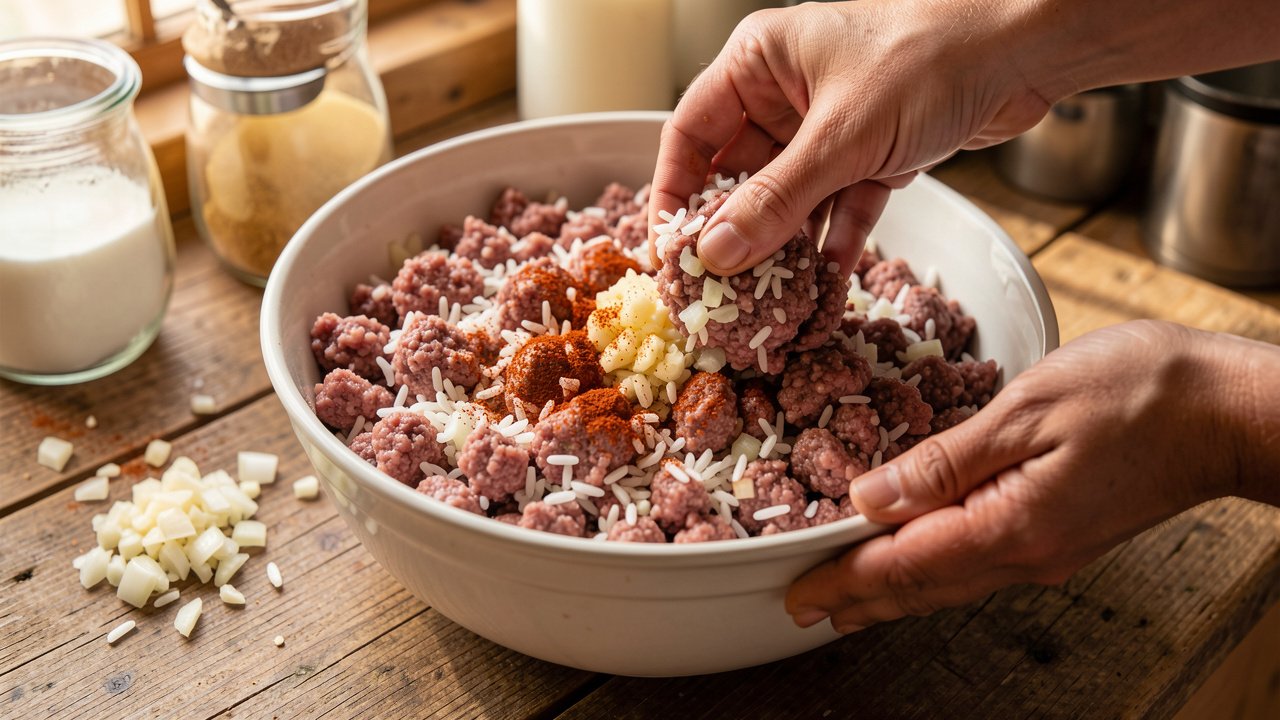
Warm 1 tablespoon of the olive oil in a pan and soften half of the chopped onion with the garlic for 3 to 4 minutes, then let it cool slightly. In a large bowl, combine the ground beef, rinsed raw rice, the softened onion and garlic, a teaspoon of the smoked paprika, and a good pinch of salt and pepper. Mix with your hands just until evenly blended; do not overwork it.
Roll the Sarma Parcels
Lay a leaf flat with the trimmed rib nearest you. Place a small log of filling, about two tablespoons, along the base, leaving the leaf only about two-thirds full so the rice has room to swell. Fold the base over the filling, tuck the two sides in, and roll it up snugly into a tight parcel. Repeat with the rest, keeping the rolls a similar size.
Layer the Rolls in the Pot
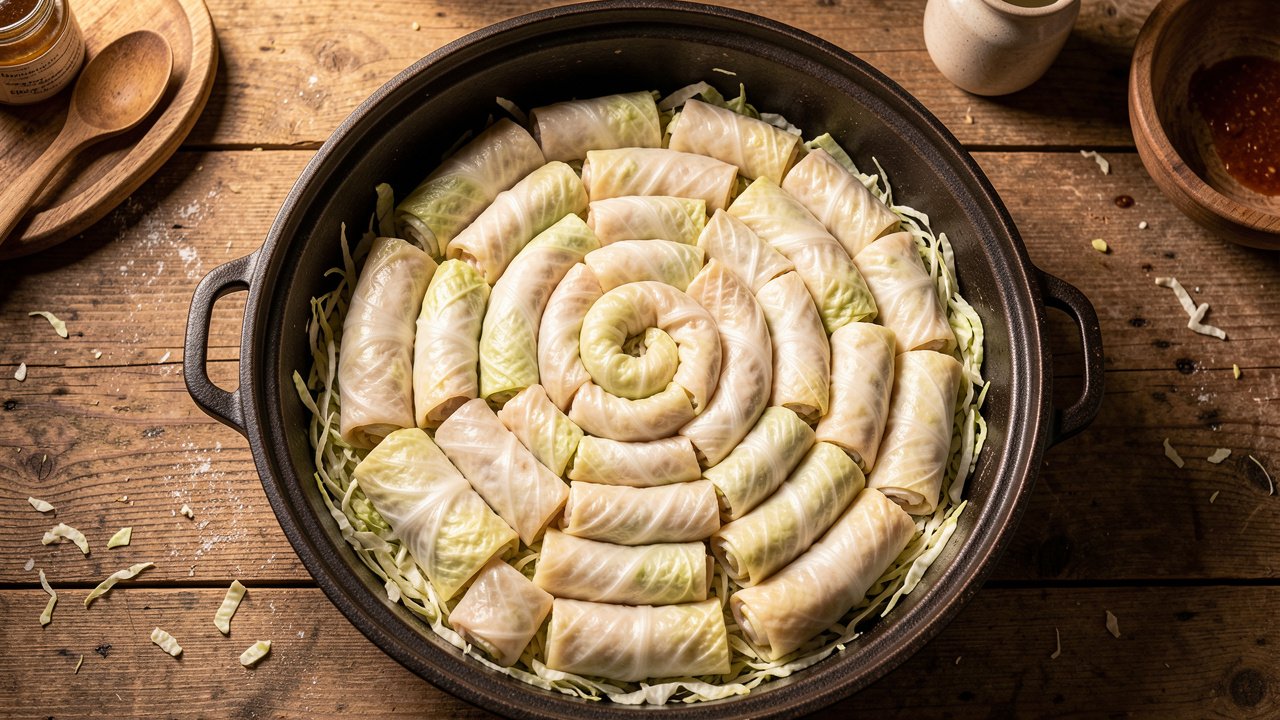
Scatter the shredded leftover cabbage across the bottom of a heavy pot to cushion the rolls. Pack the parcels in tightly, seam-side down, in snug layers so they cannot unroll, tucking the bay leaves between them. Crowding the rolls is what keeps them whole and submerged during the long braise, so leave as little gap as you can.
Build the Paprika-Tomato Sauce
In a separate pan, warm the remaining olive oil and soften the rest of the onion for 4 to 5 minutes. Stir in the tomato paste, the remaining smoked paprika, and the sweet paprika, and toast for a minute until fragrant and deepened in color. Add the crushed tomatoes and beef broth, season with salt and pepper, bring to a simmer, then pour the hot sauce evenly over the rolls until they are just covered.
Slow-Braise and Serve
Set an inverted heatproof plate on top of the rolls to hold them under the sauce. Bring the pot to a bare simmer, cover, and cook gently for about 90 minutes, until the cabbage is silky and the rice is tender, adding a splash of broth if the level drops. Turn off the heat and let it rest at least 20 minutes, then serve the rolls with plenty of sauce spooned over.
Chef’s Tips From Real Kitchen Testing
Pack the rolls in tight and seam-side down. Crowding them shoulder to shoulder keeps them from unrolling and holds them under the sauce, so they braise evenly and stay whole instead of drifting apart.
Weight the rolls with an inverted heatproof plate. It keeps every parcel submerged so the top layer never dries out and the raw rice cooks through uniformly from edge to center.
Cook it low and long, then let it rest. Sarma is better after a rest off the heat and better still the next day, once the sour cabbage and smoky paprika sauce settle into the filling.
Recipe Variations
Serving Suggestions
- A dollop of thick plain yogurt on each serving
- Warm crusty bread for the sauce
- Boiled or mashed potatoes alongside
- A simple pickled-vegetable salad
Nutrition Facts
| Nutrient | Amount per serving |
|---|---|
| Calories | 340 |
| Protein | 22 g |
| Carbohydrates | 26 g |
| Fat | 16 g |
| Saturated Fat | 5 g |
| Fiber | 5 g |
| Sugar | 7 g |
| Sodium | 720 mg |
Values are estimates per serving and vary with the exact meat, rice, and cabbage you use.
Make-Ahead Tips
Sarma is a make-ahead dream, because it genuinely tastes better the next day. Braise it fully, cool, and refrigerate; overnight the sour cabbage and smoky sauce settle deeper into the filling. Reheat gently before serving. You can also assemble and layer the raw rolls a day ahead and braise them fresh when you need them.
Storage, Freezing & Reheating
Common Mistakes to Avoid
Troubleshooting
Rice still firm? The braise needs more time or more liquid. Add a splash of hot broth, re-cover, and simmer another 15 to 20 minutes until the grains are fully tender.
Sauce too thin? Uncover the pot for the last 15 minutes so it reduces, or lift out the rolls and stir an extra spoonful of tomato paste into the sauce before returning them.
Rolls falling apart? The simmer was too vigorous or the parcels were rolled loosely. Keep the heat at a bare simmer, weight the rolls with a plate, and roll them snug and seam-side down next time.
A Note on Balkan Cooking
The name sarma comes from the Turkish verb “sarmak”, meaning to wrap, and the dish traveled with the Ottoman table across the Balkans, where nearly every country claims its own version. In Serbia, Bosnia, Croatia, and beyond it is winter and holiday food above all, a big pot made in advance so the cook can sit at the table too. What ties the regional versions together is soured cabbage and a long, gentle braise rather than any single filling.
It is easy to confuse sarma with the Polish golabki, but the two part ways at the cabbage: golabki uses fresh cabbage and a lighter tomato sauce, while sarma leans on soured (pickled) leaves and a smoky paprika-tomato braise that gives it a deeper, tangier character. The same instinct for tucking a savory filling into a wrapper or a hollow runs through Balkan and Mediterranean cooking, from Greek gemista stuffed with rice to a whole tray of vegetables baked in tomato.
Sarma rarely travels alone. It is at home beside other slow-simmered Balkan staples like the baked-bean dish tavce gravce and the layered rice-and-vegetable bake Serbian djuvec, all of them generous, tomato-touched pots built for a crowd and a cold day. Make it ahead, keep the cabbage sour and the braise slow, and you have a dish that tastes of a whole regional winter.