Armenian and Georgian Recipes
South Caucasian Eggplant and Tomato Summer Stew
Last updated: November 12, 2026
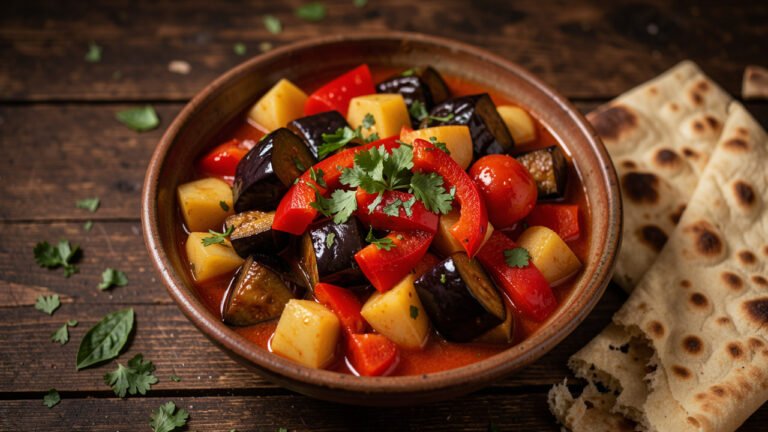
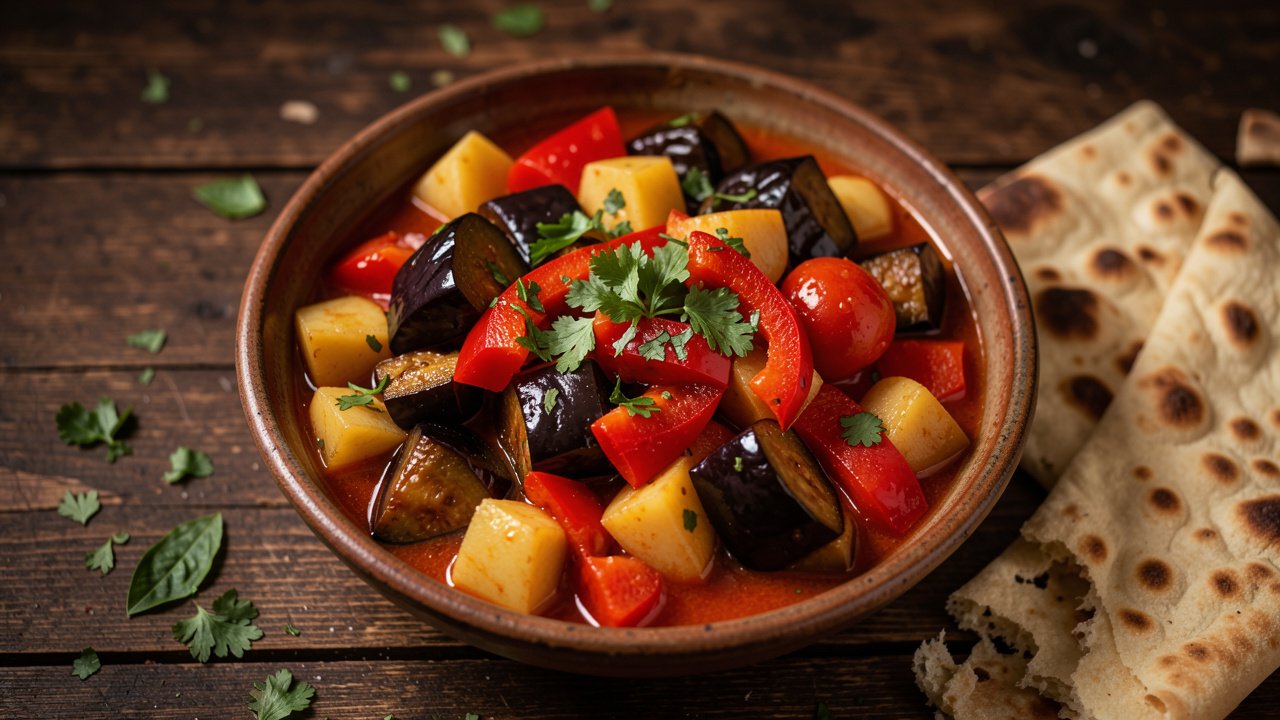
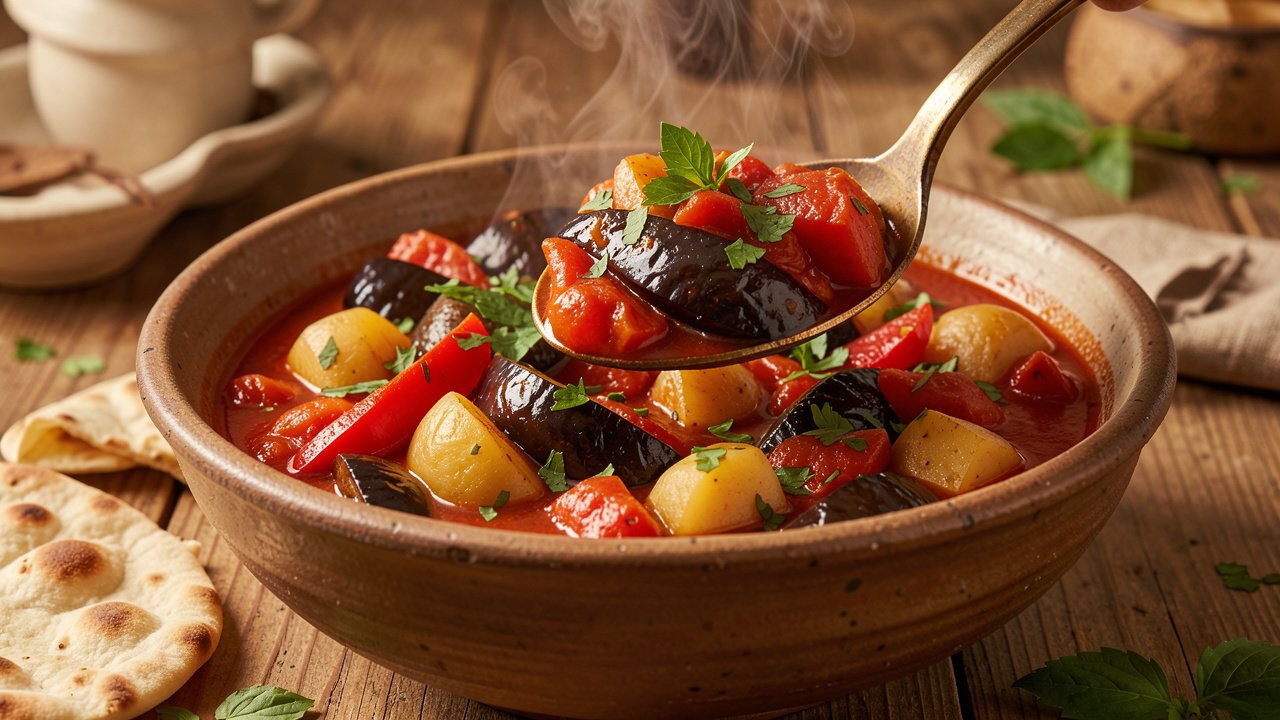
Ajapsandali is what the Caucasus does with a late-summer glut of vegetables: everything ripe and plentiful tipped into one pot and cooked until it turns silky. It is a stew of soft eggplant, tender potato, sweet bell pepper, and ripe tomato, pulled together by garlic and a generous handful of cilantro and basil. Nothing in it is expensive, yet a bowl of ajapsandali tastes rich and layered.
The whole thing is built in a single pot. You fry the eggplant and potato first so they turn golden and creamy, soften the peppers and onion into a tomato base, then fold everything back together to simmer until the flavors melt into one another. Stir in the fresh herbs off the heat and serve it warm or at room temperature with flatbread.
Why This Ajapsandali Works
Great ajapsandali is really two things done well: eggplant fried to a creamy, golden softness, and a tomato base with deep garlic and herb flavor. Get those two right and the rest takes care of itself. The recipe here fries the sturdy vegetables first, then builds a quick but full-flavored tomato base, so every spoonful is soft and savory rather than watery.
The texture starts with the eggplant. Cubed and fried in hot oil until the edges turn gold, it loses its spongy rawness and takes on an almost buttery smoothness that carries the whole dish. Frying the potato alongside it gives the stew body and keeps the pieces from falling apart later when everything simmers together.
Cooking the vegetables in stages is the heart of the method. The eggplant and potato come out once they are browned, the peppers and onion soften into the tomato with the garlic and ground coriander, and only then does everything go back in to simmer gently. That way each vegetable keeps its shape instead of collapsing into mush.
It is also endlessly adaptable. Ajapsandali is a use-the-garden dish, so the exact mix is up to you. Keep the eggplant, tomato, and herbs constant, add or swap peppers, chili, and potato to taste, and you get a pot that tastes of a Caucasian summer every single time.
Pro observation: Ajapsandali is naturally vegan and fully halal as written, with no forbidden ingredients. All of its depth comes from fried eggplant, ripe tomato, garlic, ground coriander, and a big finishing handful of cilantro and basil, so you never miss a thing.
Ingredients
Kitchen Measurement Converter
Need to convert an amount while you measure? Pick a category, enter a value, and the result updates instantly.
Ingredient Notes & Substitutions
Eggplant
Choose firm, glossy eggplants that feel heavy for their size, with no soft spots. Globe or Italian eggplant both work; cut them into one-inch cubes so they fry evenly. Young, slim eggplants have fewer seeds and almost no bitterness, so you can skip the salting step if you use them.
Peppers & Chili
Red bell peppers add sweetness and color, but a mix of red and green is traditional and good. For heat, a fresh red chili stirred into the base is classic; leave it out for a mild stew, or add more if you like it lively. Seed the chili to tame the burn.
Tomatoes
Ripe, in-season tomatoes give the best flavor and melt into a loose sauce; peel them if you prefer a smoother base. Out of season, a can of good whole or chopped tomatoes works well. The spoonful of tomato paste deepens the color and savoriness either way.
Herbs & Potato
Cilantro and basil are the signature finish; purple basil is traditional, but any fresh basil works. Add them off the heat so they stay bright. Waxy potatoes hold their shape best; leave the potato out for a lighter dish, or add more for a heartier, stew-like bowl.
Equipment
- Large heavy pot or Dutch oven
- Wide frying pan
- Lid for the pot
- Wooden spoon
- Sharp knife and board
- Colander for salting the eggplant
Before You Start
1. Salt the eggplant cubes and let them drain 20 minutes. Toss the cubes with a teaspoon of salt in a colander so they weep out their bitter moisture, then blot them dry. Skip this and the eggplant soaks up oil like a sponge and fries greasy instead of golden.
2. Fry the eggplant and potato in batches, not crowded. A packed pan drops the oil temperature and the cubes steam in their own moisture and turn soggy. Give them room in a single layer so each side browns and the eggplant goes creamy rather than spongy.
3. Chop the cilantro and basil but hold them until the very end. Stirred in off the heat they keep their fresh, grassy perfume; boiled in the stew they go grey and taste flat. Have them ready on the board so you can scatter them in the moment the pot comes off the burner.
Step-by-Step Instructions
Ajapsandali comes together in stages, so prep everything first. Salt and drain the eggplant, dice the potato, slice the peppers and onion, chop the tomatoes, and mince the garlic, chili, and herbs so each one is ready when the pot needs it.
Prep and Salt the Vegetables
Cut the eggplant into one-inch cubes, toss with a teaspoon of salt in a colander, and leave to drain 20 minutes, then blot dry. Peel and dice the potatoes, slice the peppers and onion, chop the tomatoes, and mince the garlic, chili, cilantro, and basil so everything is within reach.
Fry the Eggplant and Potato
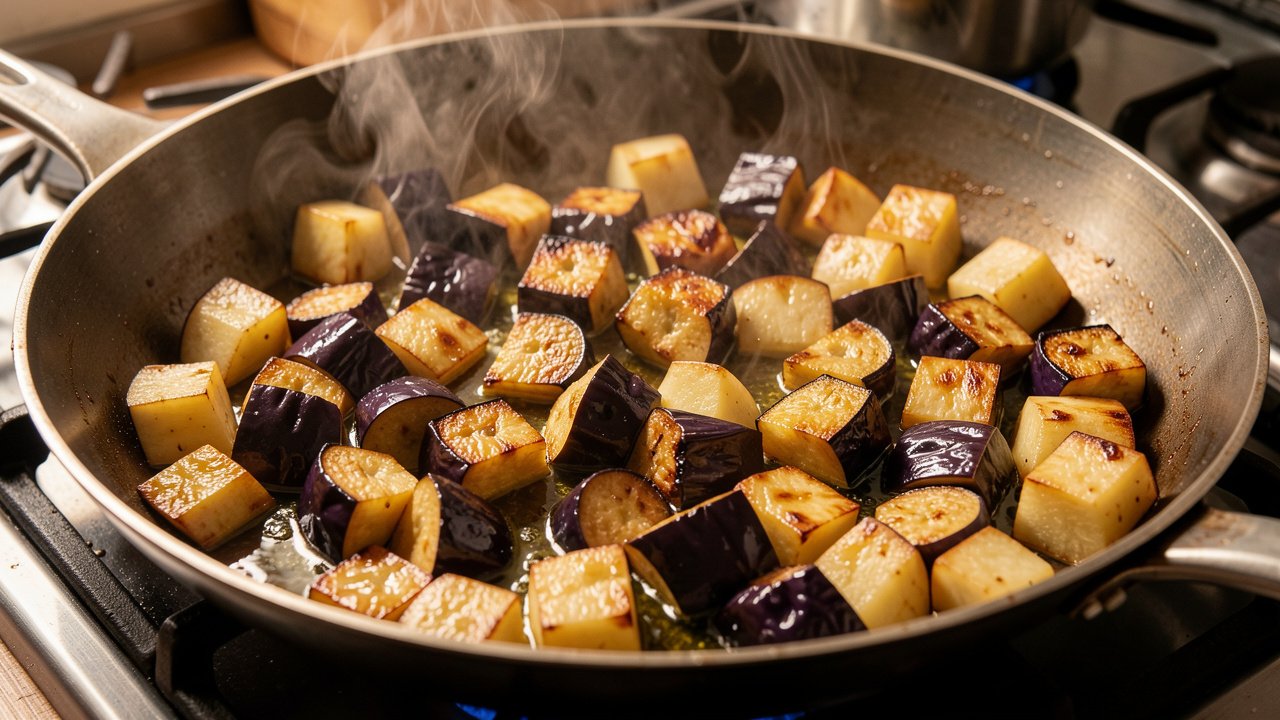
Warm half the olive oil in a wide pan over medium-high heat. Fry the eggplant cubes in a single layer until golden and soft on all sides, then lift them out. Add the diced potato and fry until the edges brown and a knife slips in easily. Set the eggplant and potato aside together.
Soften the Peppers and Aromatics
Add the rest of the oil to the pot and cook the onion with a pinch of salt for 4 to 5 minutes until soft. Stir in the sliced peppers and cook until they slump, then add the garlic, chili, and ground coriander and cook for 1 minute. Stir in the tomato paste and let it toast for another minute until it darkens.
Build the Tomato Base
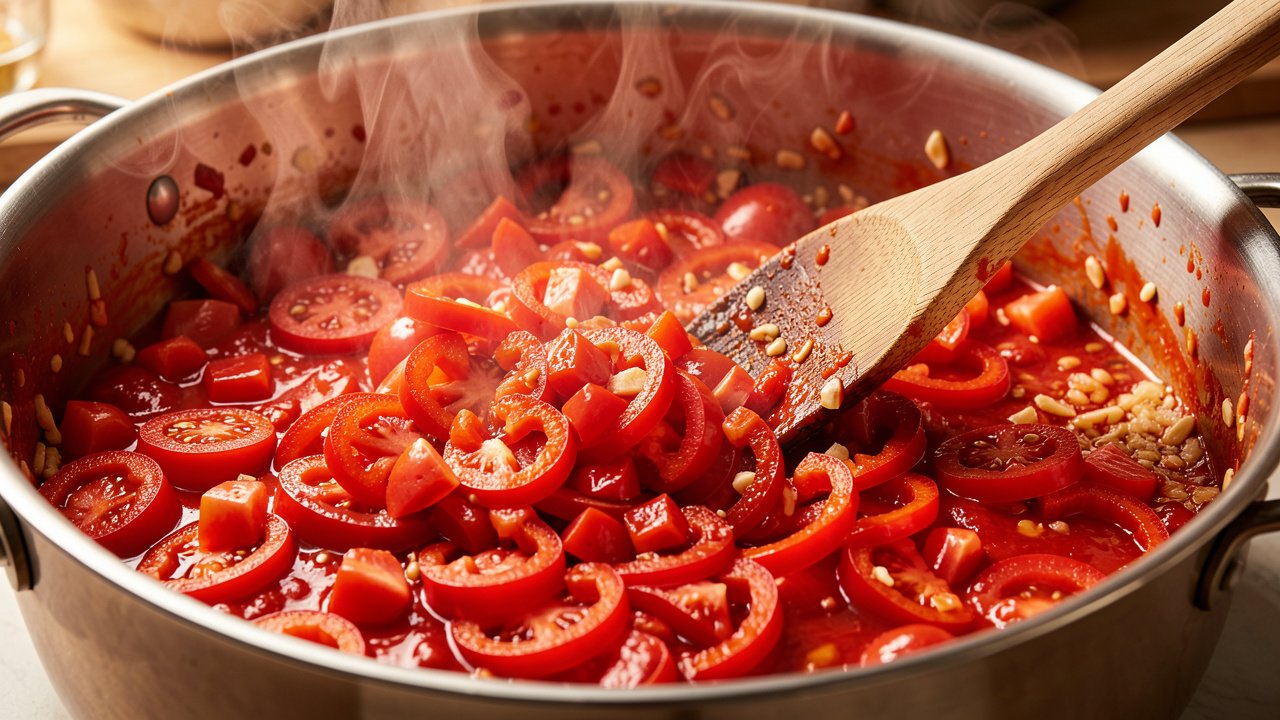
Add the chopped tomatoes with a good pinch of salt and black pepper. Bring to a gentle simmer and cook, uncovered, for about 10 minutes, until the tomatoes break down into a loose, glossy sauce. Taste and adjust the seasoning now, while the base is easy to stir without breaking the vegetables.
Combine and Simmer Soft
Return the fried eggplant and potato to the pot and fold them gently through the tomato base. Cover and simmer over low heat for 12 to 15 minutes, stirring once or twice, until the potato is fully tender and the flavors have melted together. The stew should be thick and glossy, not soupy.
Stir in the Herbs and Serve
Take the pot off the heat and stir in most of the chopped cilantro and basil, saving a little to scatter on top. Taste and add more salt if it needs it. Let it rest a few minutes, then serve warm or at room temperature with flatbread, scattering the reserved herbs over each bowl.
Chef’s Tips From Real Kitchen Testing
Fry the eggplant in a single layer in genuinely hot oil. Crowded or cooked too gently, it steams and turns greasy; given room and heat, it browns and goes silky, which is the whole point of the dish.
Cook the vegetables in stages rather than dumping everything in at once. The sturdy eggplant and potato fry first, the tomato base builds on its own, and only then do they reunite, so each keeps its shape.
Keep the final simmer gentle and the lid on. A hard boil smashes the soft eggplant into mush, while a low, covered simmer lets the potato finish cooking and the flavors marry without wrecking the texture.
Recipe Variations
Serving Suggestions
- Warm flatbread or lavash for scooping
- A spoonful of thick yogurt or a vegan alternative
- Fluffy rice or bulgur pilaf alongside
- A plate of fresh herbs, scallions, and radishes
Nutrition Facts
| Nutrient | Amount per serving |
|---|---|
| Calories | 220 |
| Protein | 5 g |
| Carbohydrates | 30 g |
| Fat | 11 g |
| Saturated Fat | 1.5 g |
| Fiber | 8 g |
| Sugar | 12 g |
| Sodium | 480 mg |
Values are estimates per serving and vary with the exact vegetables and amount of oil you use.
Make-Ahead Tips
Ajapsandali is even better made a few hours ahead, since the flavors deepen as it rests. Cook it through completely, but stir in only half the herbs; cool and keep it at room temperature or in the fridge. Warm it gently before serving and fold in the reserved fresh cilantro and basil at the last moment.
Storage, Freezing & Reheating
Common Mistakes to Avoid
Troubleshooting
Stew too watery? Simmer it uncovered for a few more minutes to drive off the extra liquid, or stir in an extra spoonful of tomato paste to thicken and deepen it.
Eggplant bitter or spongy? It was under-salted or under-fried. Next time salt and drain the cubes, then fry them in hot oil until deeply golden so they turn creamy.
Potatoes still firm? Give them more time in the covered simmer; the potato needs to finish cooking gently in the tomato base until a knife slides through without resistance.
A Note on Georgian and Armenian Cooking
Ajapsandali is a shared dish of the South Caucasus, claimed with equal affection in both Georgia and Armenia. The name itself is shared across the two cuisines and is usually traced to a Persian phrase for a mixed, hot dish, which is a fitting description for a pot that throws the whole late-summer garden together. It belongs to the region’s deep tradition of vegetable cooking, where eggplant, tomato, pepper, and a storm of fresh herbs do the heavy lifting.
It sits in a big family of Mediterranean and Middle Eastern vegetable stews. The one it is most often confused with is ratatouille: where the French dish leans on herbes de Provence and leaves out potato, ajapsandali is spiced with garlic, ground coriander, and cilantro and very often includes potato for heft. It shares a soul with dishes like Sicilian caponata and Moroccan zaalouk, as well as its Caucasian cousins the tomato-sauced ostri and the herb-laced chakhokhbili.
What has kept ajapsandali on Caucasian tables is exactly what created it: it is thrifty, generous, and endlessly adaptable. Use whatever is ripest, keep the eggplant, tomato, and herbs constant, and put flatbread on the table, and you have a dish that tastes of a Caucasian summer whether you serve it hot, warm, or cold.