Tuscan Italian Recipes
Tuscan Tomato and Bread Soup from Cucina Povera
Last updated: November 12, 2026
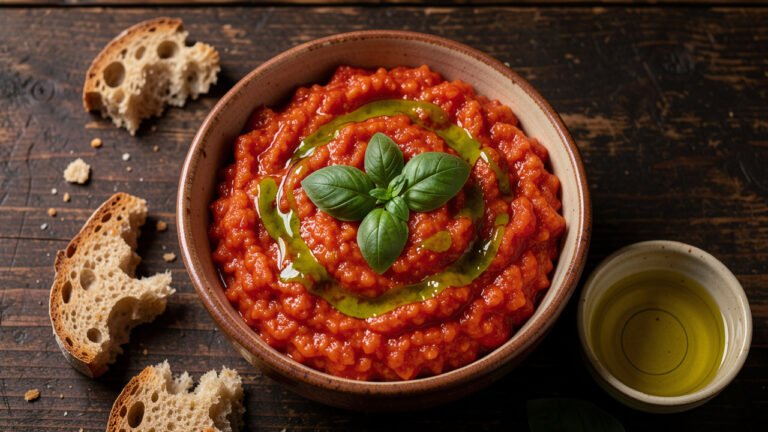
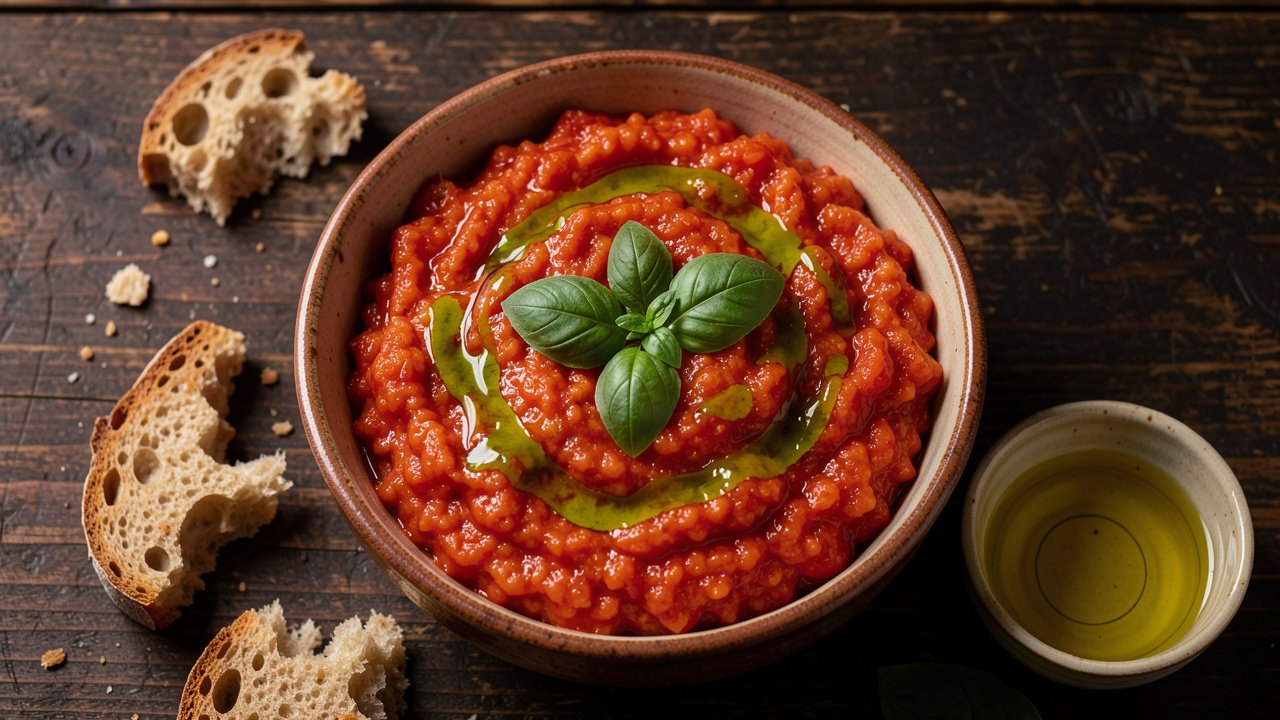
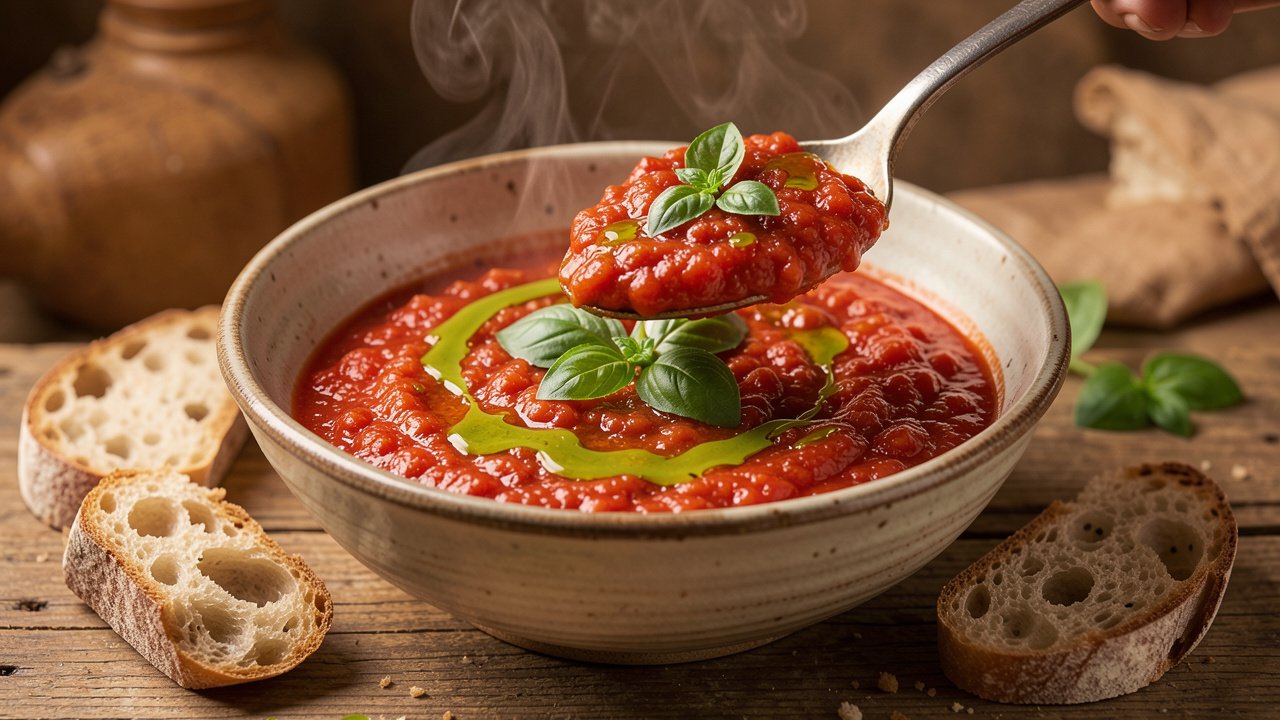
Pappa al pomodoro is proof that the humblest pantry can turn out one of the most comforting bowls in Italy. It is a thick Tuscan soup built from nothing more than ripe tomatoes, stale rustic bread, garlic, fresh basil, and a generous pour of good olive oil, cooked slowly until the bread dissolves into a soft, spoonable porridge. Nothing is wasted, and nothing is missed.
The whole dish comes together in one pot. You soften garlic in olive oil, simmer the tomatoes into a loose sauce, then stir in torn stale bread and let it melt down as the soup thickens. A handful of basil and a final drizzle of raw olive oil at the table are what make it sing. It is rustic, forgiving, and deeply satisfying.
Why This Pappa al Pomodoro Works
Great pappa al pomodoro is really two things done well: a tomato base with real depth, and bread that melts completely into it instead of sitting in chewy lumps. Get those two right and the rest takes care of itself. The recipe here builds a fast but full-flavored tomato soup, then uses genuinely stale bread so it drinks up the liquid and breaks down into that signature porridge texture.
The base starts the way most good Tuscan cooking does, with sliced garlic softened gently in a generous amount of olive oil until it is sweet and fragrant but never browned. Ripe tomatoes and a little tomato paste join with hot vegetable broth to make a loose, brothy soup rather than a tight sauce, because the bread you add next needs plenty of liquid to soak up and swell.
Timing the bread is the heart of the method. Stale, crustless bread goes in once the tomatoes are simmering, then you let it sit and soften before stirring it to a rough, spoonable mush. Rushing this with fresh bread gives you glue; giving dried bread time gives you silk. A short rest off the heat lets every piece swell to its fullest.
It is also wonderfully frugal and adaptable. Pappa al pomodoro was born to use up yesterday’s loaf and the last ripe tomatoes of summer, so the exact amounts are forgiving. Keep the tomato, garlic, bread, and olive oil in balance, adjust the thickness to your liking, and you will get a bowl that tastes like a Tuscan kitchen every single time.
Pro observation: Pappa al pomodoro is fully halal and naturally vegan as written, with no forbidden ingredients. All of its richness comes from ripe tomato, sweet softened garlic, fresh basil, and a generous finish of good olive oil, so you never miss a thing.
Ingredients
Kitchen Measurement Converter
Need to convert an amount while you measure? Pick a category, enter a value, and the result updates instantly.
Ingredient Notes & Substitutions
Stale Bread
The soul of the dish. Use a rustic, chewy loaf such as sourdough, ciabatta, or a saltless Tuscan-style bread, dried out for a day or two. Avoid soft sandwich bread, which turns gluey. If your bread is fresh, tear it and toast the pieces in a low oven until dry and firm first.
Tomatoes
In late summer, ripe fresh tomatoes peeled and chopped are unbeatable. Out of season, lean on a good can of crushed or whole peeled tomatoes for reliable sweetness and color. The small amount of tomato paste deepens the flavor and warms up the red no matter which you use.
Olive Oil
Do not skimp here, as olive oil carries the flavor and gives the soup its silky body. Use a good extra virgin oil for cooking, then keep back a bright, peppery one to pour raw over each bowl at the table. That final drizzle is a signature of the dish, not an optional extra.
Basil & Garlic
Fresh basil is essential and goes in mostly at the end so it stays green and fragrant. Slice the garlic rather than mincing it for a sweeter, gentler flavor that melts into the oil. A pinch of red pepper flakes is traditional in many Tuscan kitchens for a faint warmth.
Equipment
- Large heavy pot or Dutch oven
- Lid for the pot
- Wooden spoon
- Sharp knife and board
- Ladle
- Box grater or food mill (optional)
Before You Start
1. Use genuinely stale, dried-out bread, not fresh. Fresh bread collapses into a gummy paste that never sets into the silky porridge texture, while day-old crusty bread drinks the broth and keeps enough body to give the soup its spoonable structure.
2. Cut the thick bottom crusts off the bread before you tear it. Left on, the hard crusts stay chewy and leathery in the finished soup instead of dissolving, so you end up biting tough knots in an otherwise smooth bowl.
3. Heat the vegetable broth before it meets the bread. Cold stock drops the pot off the simmer and the bread sits in lukewarm liquid without breaking down, so pour it in already steaming and the bread melts in minutes.
Step-by-Step Instructions
Pappa al pomodoro moves quickly once the bread goes in, so get everything ready first. Tear the stale bread, peel and chop the tomatoes, slice the garlic, and keep the broth hot on a back burner so the soup thickens evenly without stalling.
Prep the Bread and Tomatoes
Cut the crusts off the stale bread and tear the inside into rough, bite-size chunks. Peel and chop the ripe tomatoes, or open the can of crushed tomatoes. Thinly slice the garlic, pick the basil leaves, and warm the vegetable broth in a separate pot so it is hot and ready when you need it.
Soften the Garlic in Olive Oil
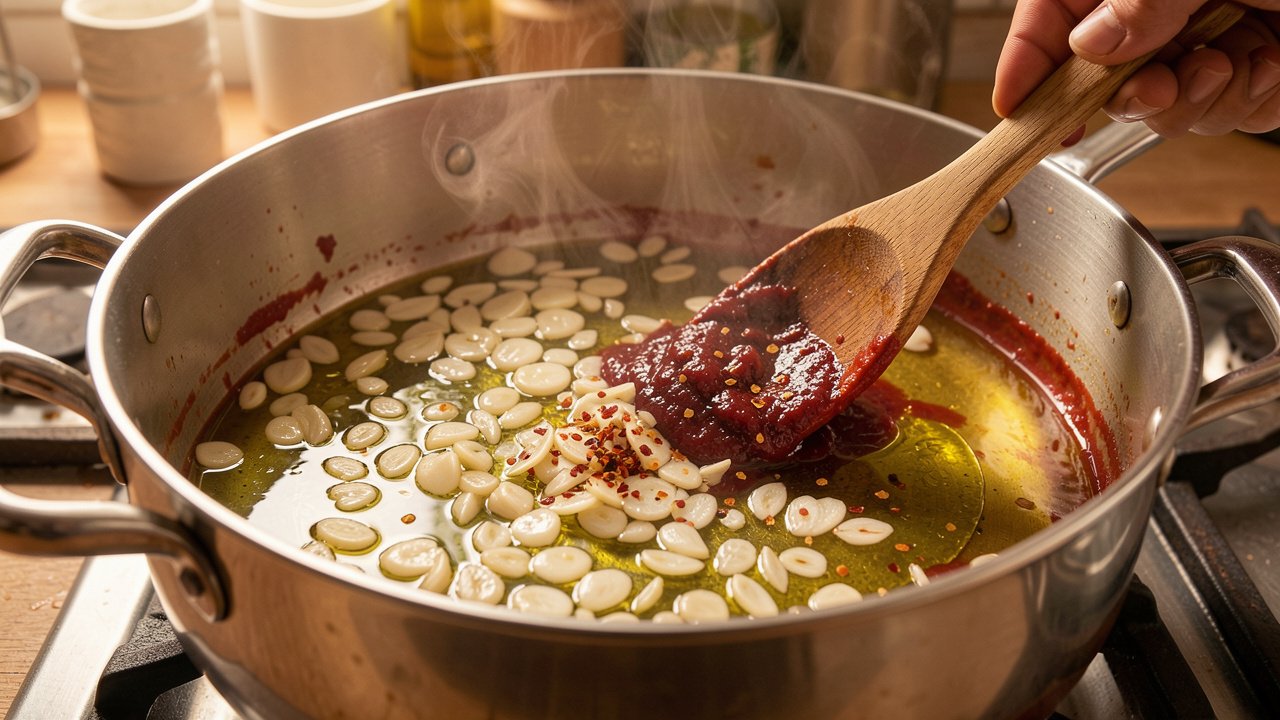
Warm the olive oil in a large heavy pot over medium-low heat. Add the sliced garlic and the red pepper flakes and cook gently for 2 to 3 minutes, stirring, until the garlic is soft and fragrant but not browned. Stir in the tomato paste and let it toast for a minute so it darkens slightly and loses its raw edge.
Simmer the Tomato Soup
Add the chopped fresh tomatoes and the crushed tomatoes, then pour in the hot vegetable broth. Season with the salt and black pepper, bring to a gentle simmer, and cook uncovered for about 15 minutes so the tomatoes break down and the flavors concentrate. Taste and adjust the seasoning now, before the bread goes in.
Stir In the Stale Bread
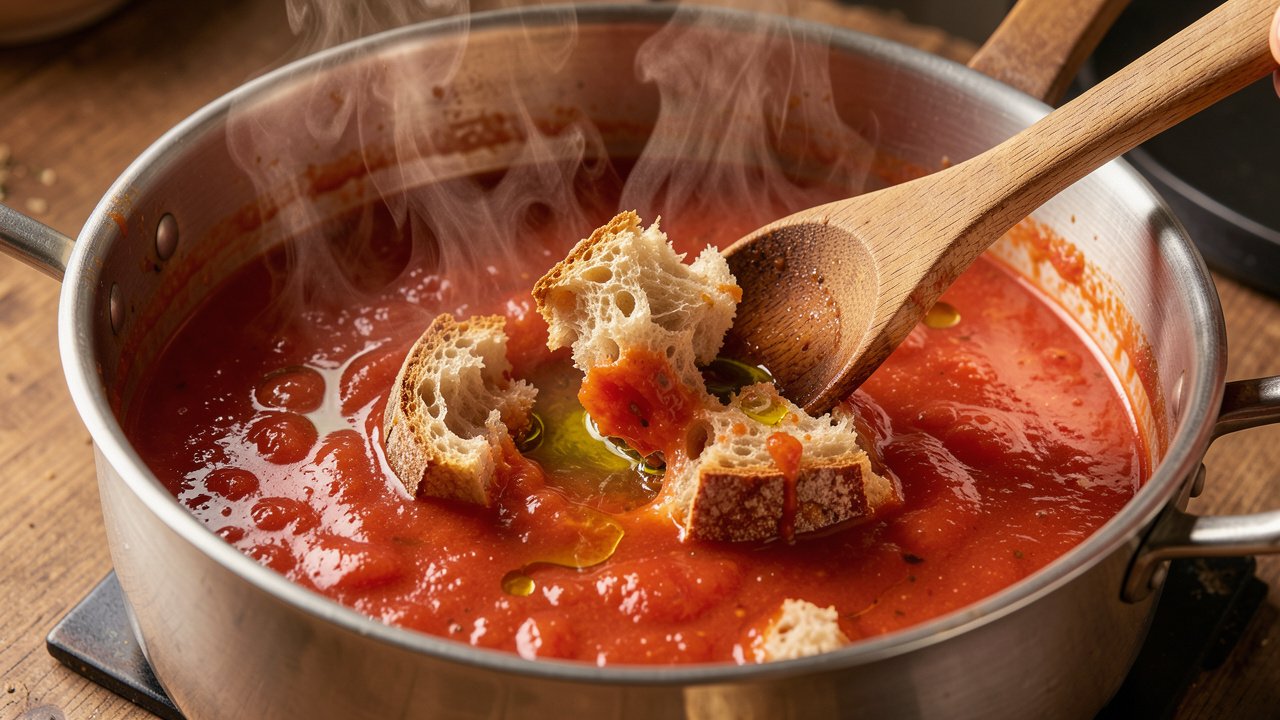
Add the torn bread to the simmering tomato soup, pushing it down so every piece is submerged in the liquid. Let it sit for a couple of minutes to drink up the broth, then stir well. As the bread absorbs the tomato and softens, the soup turns thick and rustic, which is exactly what you want.
Melt the Bread Into Porridge
Lower the heat and cook gently for 10 to 12 minutes, stirring often, until the bread dissolves and the soup looks like a soft, spoonable porridge. If it gets too thick, loosen it with a splash more hot broth; if it is too loose, let it simmer a few minutes longer. Stir most of the basil in at the very end.
Rest, Finish, and Serve
Take the pot off the heat and let it rest for about 10 minutes so the bread swells fully and the flavors settle. Stir in a final glug of olive oil, then ladle into bowls. Top each with the reserved basil leaves and a generous drizzle of raw extra virgin olive oil. Serve warm or at room temperature.
Chef’s Tips From Real Kitchen Testing
Dry truly stale bread even further in a low oven if you are unsure. The drier the bread, the more tomato broth it drinks, and the silkier and more cohesive the finished porridge turns out.
Always rest the soup off the heat for about 10 minutes before serving. The bread keeps swelling as it sits, and the texture goes from loose and soupy to thick and spoonable, which is how it should be.
Finish every bowl with raw, good-quality olive oil poured over the top. The cold, peppery oil against the warm tomato is the signature taste of Tuscan pappa al pomodoro, so never skip it.
Recipe Variations
Serving Suggestions
- A final pour of peppery extra virgin olive oil on top
- A scattering of torn fresh basil leaves
- A simple green salad with lemon dressing on the side
- Extra toasted rustic bread rubbed with raw garlic
Nutrition Facts
| Nutrient | Amount per serving |
|---|---|
| Calories | 310 |
| Protein | 8 g |
| Carbohydrates | 42 g |
| Fat | 13 g |
| Saturated Fat | 2 g |
| Fiber | 5 g |
| Sugar | 9 g |
| Sodium | 720 mg |
Values are estimates per serving and vary with the exact bread, tomatoes, and amount of olive oil you use.
Make-Ahead Tips
Pappa al pomodoro is one of those dishes that often tastes better the next day. Cook it fully, cool, and refrigerate; the bread and tomato continue to meld overnight. It will thicken considerably in the fridge, so loosen it with a little hot broth or water when you reheat, and refresh it with new basil and olive oil before serving.
Storage, Freezing & Reheating
Common Mistakes to Avoid
Troubleshooting
Too thick or stodgy? Stir in a ladle of hot vegetable broth or water, a little at a time, until it loosens to a soft, spoonable consistency. It thickens as it sits, so expect to loosen leftovers.
Too thin and watery? Add a little more torn stale bread and simmer a few minutes longer, or cook it uncovered so some liquid evaporates and the soup tightens up.
Tastes flat or sharp? It usually needs more salt, a finishing pour of good olive oil, and a pinch of sugar if the tomatoes were very acidic, which rounds out the flavor and balances the bite.
A Note on Tuscan Cooking
The name pappa al pomodoro is wonderfully plain-spoken. “Pappa” is the Tuscan word for a baby’s soft mush or pap, the kind of spoonable, comforting food you give a child, and “pomodoro” simply means tomato. Put together, the name describes the dish exactly: a soft tomato porridge. It belongs to Tuscany, to the kitchens of Florence and Siena and the countryside around them, and it is a cornerstone of cucina povera, the frugal “cooking of the poor” that turned stale bread and ripe tomatoes into something you look forward to.
It sits in a close family of Tuscan bread dishes, and the one it is most often confused with is ribollita. The difference is simple: ribollita is a hearty stew of beans, cavolo nero kale, and vegetables thickened with bread, while pappa al pomodoro is tomato and bread only, with no beans or greens in sight. If you love this style, a brothy acqua pazza and a comforting bowl of creamy tomato soup make natural next cooks, and a Tuscan tomato bread soup with mussels shows how the same bread-and-tomato idea stretches into a seafood supper.
What has kept pappa al pomodoro on Tuscan tables for generations is exactly what created it: it is thrifty, forgiving, and deeply comforting. Use yesterday’s bread and the ripest tomatoes you can find, keep the garlic and olive oil generous, and you have a bowl that still tastes of a summer kitchen in Florence.