Turkish Recipes
Turkish Tomato Bulgur Pilaf
Last updated: November 4, 2026
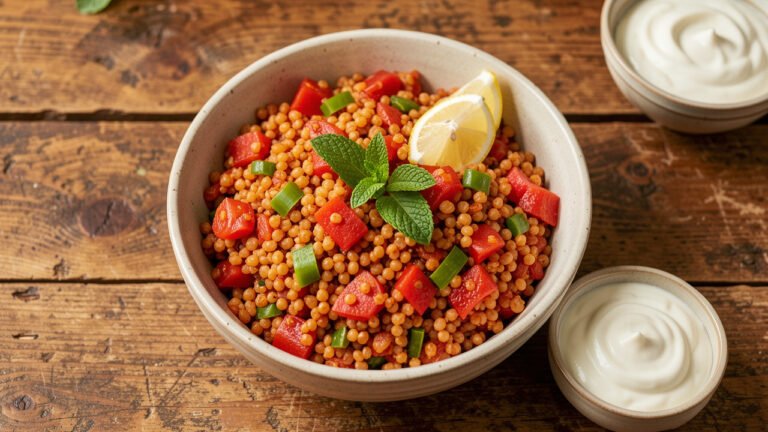
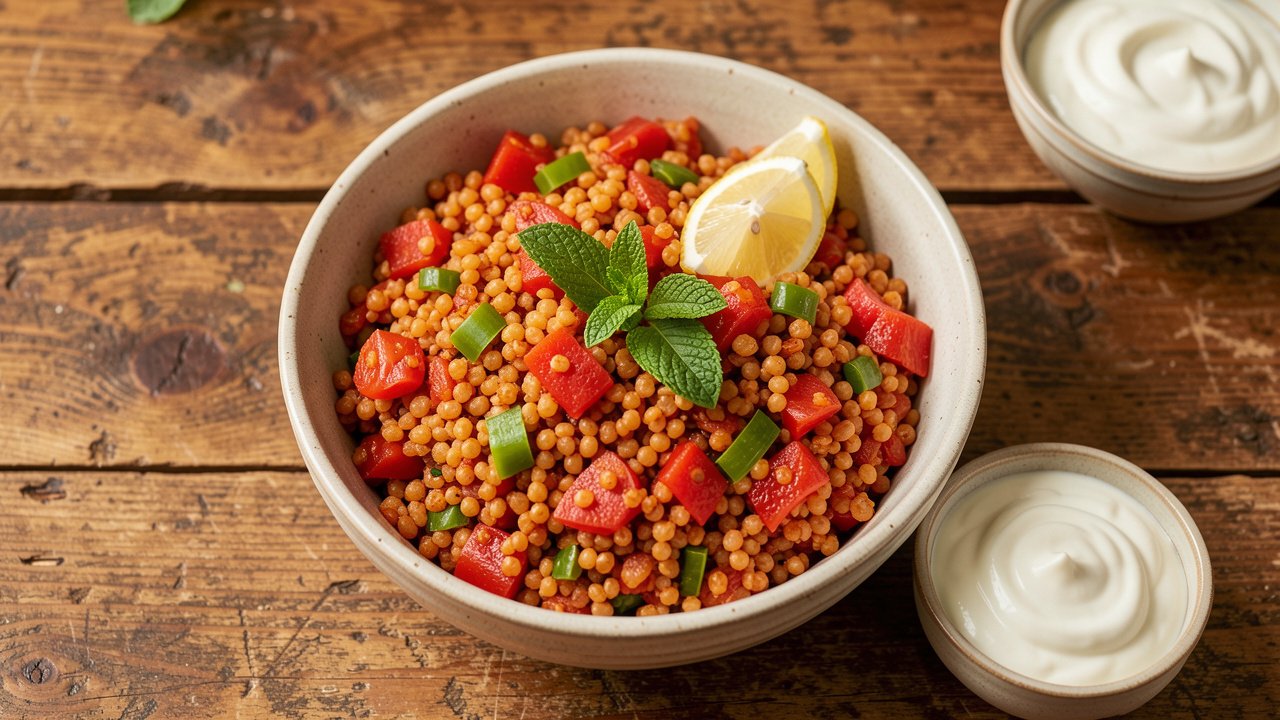
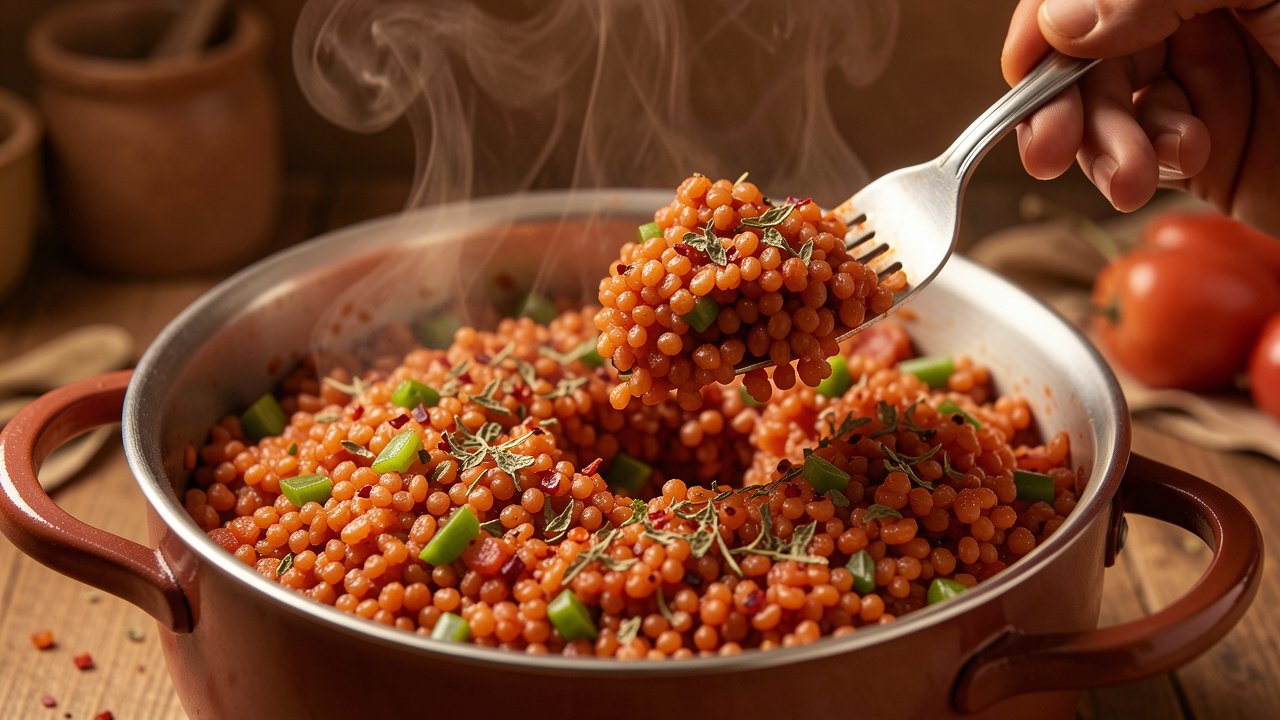
Domatesli bulgur pilavi is the everyday pilaf of Turkish home kitchens, the pot that turns up beside grilled vegetables, bean stews, and yogurt on tables from Gaziantep to Istanbul. Coarse bulgur is toasted in a tomato-stained base of onion and green pepper, then left to steam quietly until it drinks up the liquid and swells into tender, nutty grains.
It is built in one pot and asks for almost nothing special. You soften the aromatics, toast the tomato and pepper paste until it smells sweet, stir in the bulgur to coat every grain, and pour over hot liquid. A gentle simmer and a short covered rest do the rest, leaving you with a glossy, brick-red pilaf that is satisfying enough to eat on its own.
Why This Domatesli Bulgur Pilavi Works
A good bulgur pilavi is really two things done well: a deeply flavored tomato base, and grains that steam up fluffy and separate instead of clumping into a sticky mass. Get those two right and the dish is effortless. The method here builds a quick, concentrated base, then lets the bulgur cook undisturbed so every grain stays intact and chewy.
The base starts the way most good Turkish cooking does, with onion and chopped green pepper softened in oil, then tomato paste (and a little pepper paste, if you have it) stirred in and toasted for a minute to concentrate its sweetness and lose any raw edge. Grated fresh tomato joins to loosen it into a sauce before the bulgur ever touches the liquid.
Toasting the bulgur in that base is the heart of the technique. Coating each grain in the hot oil and paste seals the surface, so the bulgur absorbs the tomato liquid evenly and swells without turning gummy. It is the same logic that keeps a rice pilav separate, applied to cracked wheat.
Then comes the part that takes patience, not effort: a gentle covered simmer followed by a short rest off the heat. The rest lets the grains finish drinking in the last of the moisture and relax, which is why a pilaf that looked slightly wet in the pot turns out perfectly fluffy on the plate.
Pro observation: This pilaf is naturally vegan and fully halal as written, with no forbidden ingredients. All of its depth comes from tomato, pepper, onion, and toasted paste, so a knob of butter at the end is a flourish, never a necessity.
Ingredients
Kitchen Measurement Converter
Need to convert an amount while you measure? Pick a category, enter a value, and the result updates instantly.
Ingredient Notes & Substitutions
Coarse Bulgur
Reach for coarse bulgur, labeled pilavlik, the grind made for pilaf. The fine grind (koftelik) is for salads and kofte and will turn to paste here. No soaking is needed; coarse bulgur cooks straight in the simmering liquid and keeps its signature chew.
Tomato & Pepper Paste
Turkish domates salcasi (tomato paste) brings the color and depth, while biber salcasi (red pepper paste) adds a mild, fruity warmth. If you cannot find pepper paste, use an extra spoon of tomato paste and a little sweet paprika in its place.
Fresh Tomatoes & Pepper
Grated ripe tomato melts into the base and loosens the paste into a sauce; in winter a few spoons of canned crushed tomato stand in well. A slim Turkish or Italian green pepper is traditional, but any mild green pepper works.
Liquid & Finishing
Hot vegetable broth adds savor, though plain hot water keeps it purely vegan and simple. Dried mint and pul biber are the classic finish. A knob of butter stirred in at the end is optional and keeps the dish fully halal either way.
Equipment
- Heavy pot with a lid
- Box grater for tomatoes
- Wooden spoon
- Sharp knife and board
- Measuring cups
- Clean kitchen towel
Before You Start
1. Leave the coarse bulgur unrinsed. The light starch coating on the grains is what lets them toast and stay separate; rinsing it away makes the bulgur clump into a sticky mass as it cooks.
2. Have the liquid boiling hot before it meets the toasted bulgur. Pouring cold or lukewarm water onto the hot, oil-coated grains halts the toast and leaves a gummy, unevenly cooked pilaf with hard centers.
3. Measure the ratio exactly at 2 cups bulgur to 3 cups liquid. Go over and the pilaf collapses into mush; go under and the liquid absorbs before the grains soften, leaving them chalky in the middle.
Step-by-Step Instructions
This pilaf moves quickly once the liquid goes in, so have your onion and pepper chopped, your tomatoes grated, and your broth or water heating in a kettle before you start. Working with a hot pot and hot liquid from the first step is what gives you light, separate grains.
Prep the Aromatics and Tomatoes
Finely chop the onion and green pepper. Grate the ripe tomatoes on the coarse side of a box grater, discarding the skins left in your hand. Measure out the bulgur without rinsing it, and set the broth or water to heat so it is boiling hot when you need it.
Soften the Aromatics and Toast the Paste
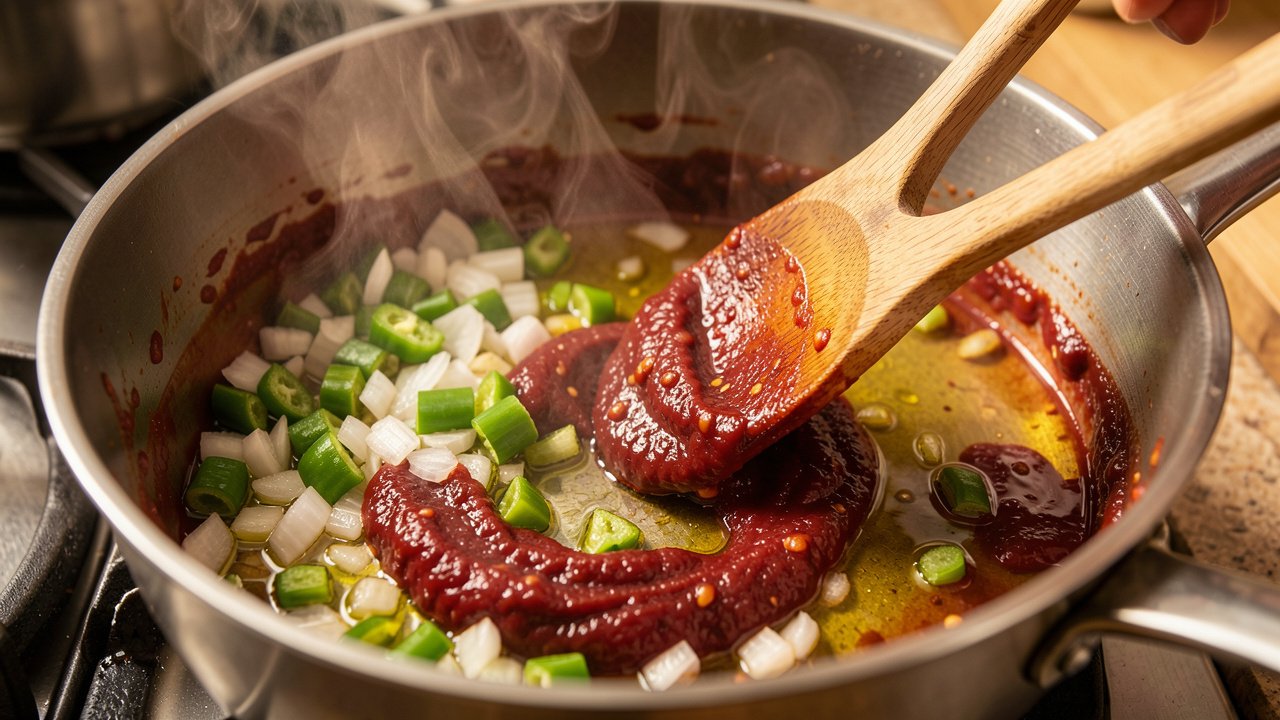
Warm the olive oil in a heavy pot over medium heat. Add the onion with a pinch of salt and cook 4 to 5 minutes until soft, then stir in the green pepper for 2 minutes more. Add the tomato paste and red pepper paste and stir them around the pot for a full minute, until they darken slightly and smell sweet.
Add the Tomatoes and Toast the Bulgur
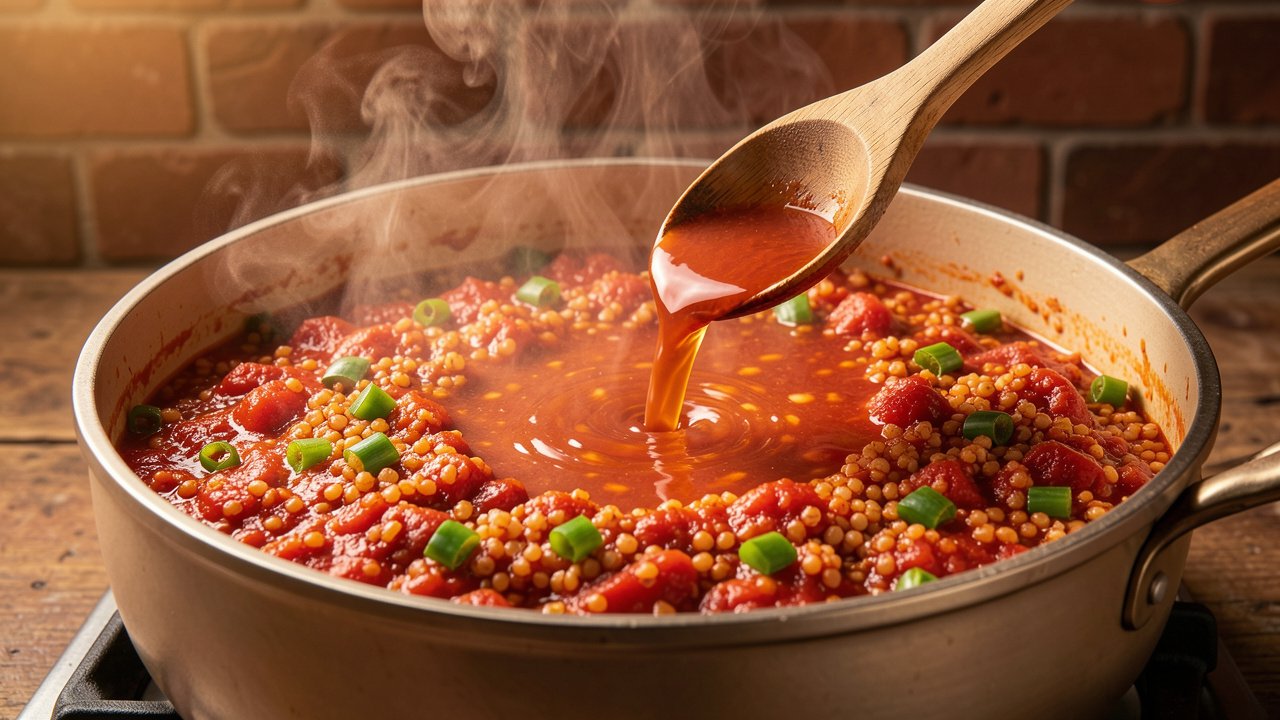
Stir in the grated tomatoes and let them cook down for 2 to 3 minutes until the mixture thickens into a glossy sauce. Add the coarse bulgur and stir for 2 minutes, turning the grains through the hot base so every one is coated and lightly toasted. This seal is what keeps the pilaf fluffy.
Pour in the Hot Liquid
Pour in the boiling-hot broth or water, then add the salt, black pepper, and dried mint. Give it one gentle stir to settle the grains into an even layer, then bring it to a simmer. Taste the liquid now and adjust the salt, because you will not stir the pilaf again.
Simmer Covered Until Absorbed
Lower the heat to its gentlest setting, cover the pot, and let the bulgur simmer undisturbed for about 15 minutes, until the liquid is absorbed and small steam holes appear across the surface. Resist lifting the lid; the trapped steam is what cooks the top layer of grains evenly.
Rest and Fluff
Take the pot off the heat, lay a clean kitchen towel over the rim, replace the lid, and let the pilaf rest for 10 minutes. The towel absorbs excess steam while the grains finish swelling. Stir in the pul biber and a knob of butter if using, fluff gently with a fork, and serve warm.
Chef’s Tips From Real Kitchen Testing
Toast the bulgur in the hot paste and oil for a couple of minutes before any liquid goes in. Coating the grains is what makes the difference between a nutty, separate pilaf and a sticky one.
Always add boiling-hot liquid, never cold. Cold water shocks the toasted grains and the pilaf cooks unevenly, with a gummy top and hard centers.
Give it the full 10-minute towel rest off the heat. This is when the grains drink the last of the moisture and relax, turning a slightly wet pot into a light, fluffy pilaf.
Recipe Variations
Serving Suggestions
- A bowl of plain yogurt or garlicky cacik on the side
- A crisp shepherd’s salad of tomato, cucumber, and onion
- Grilled or roasted vegetables as a vegan main
- Warm flatbread and extra lemon wedges for squeezing
Nutrition Facts
| Nutrient | Amount per serving |
|---|---|
| Calories | 310 |
| Protein | 9 g |
| Carbohydrates | 58 g |
| Fat | 7 g |
| Saturated Fat | 1 g |
| Fiber | 12 g |
| Sugar | 6 g |
| Sodium | 480 mg |
Values are estimates per serving and vary with the exact brands and amount of oil you use.
Make-Ahead Tips
The tomato base can be made a day ahead through the paste-toasting stage; cool and refrigerate it, then reheat with the grated tomato before adding the bulgur. The finished pilaf also reheats well, so you can cook it fully in the morning and warm it gently at mealtime with a splash of water to loosen the grains.
Storage, Freezing & Reheating
Common Mistakes to Avoid
Troubleshooting
Pilaf turned out mushy? There was too much liquid, or it was stirred during cooking. Spread it on a wide tray to let steam escape, and next time cut the liquid by a few spoonfuls.
Grains still hard in the center? The liquid absorbed before the bulgur was done. Add a splash of hot water, cover, and steam off direct heat for a few more minutes until tender.
Bottom scorched? The heat was too high. Lift the good grains off the top without scraping the burnt layer, and keep the simmer gentler next time.
A Note on Turkish Cooking
The name says exactly what the dish is: domatesli means “with tomato” and bulgur pilavi means “bulgur pilaf”, so domatesli bulgur pilavi is simply a tomato bulgur pilaf. Bulgur itself is one of the oldest foods of Anatolia, parboiled and dried wheat that has fed the region for thousands of years, and in much of southeastern Turkey it is eaten even more often than rice.
It is most often set against rice pilav, and the difference is the whole point: where rice pilav is soft, pale, and buttery, bulgur pilavi is nuttier and chewier, its coarse grains cooked in a tomato and pepper base that stains them brick red. The technique is cousin to Turkish stuffed and layered dishes that lean on the same salca-rich base, like karniyarik and the stuffed kousa mahshi, and it sits in the same family as tomato-stained grain dishes further afield, such as South Indian tomato rice.
What keeps domatesli bulgur pilavi on the table is how dependable and generous it is. It costs little, feeds a crowd, reheats beautifully, and works as a side beside almost anything or as a vegan main with a bowl of yogurt and a salad. Toast the grains, respect the ratio, and give it a rest, and you have a pot that tastes like a Turkish home kitchen every time.