
Italian Recipes
Pappa al Pomodoro, Coastal Version
Last updated: September 29, 2026
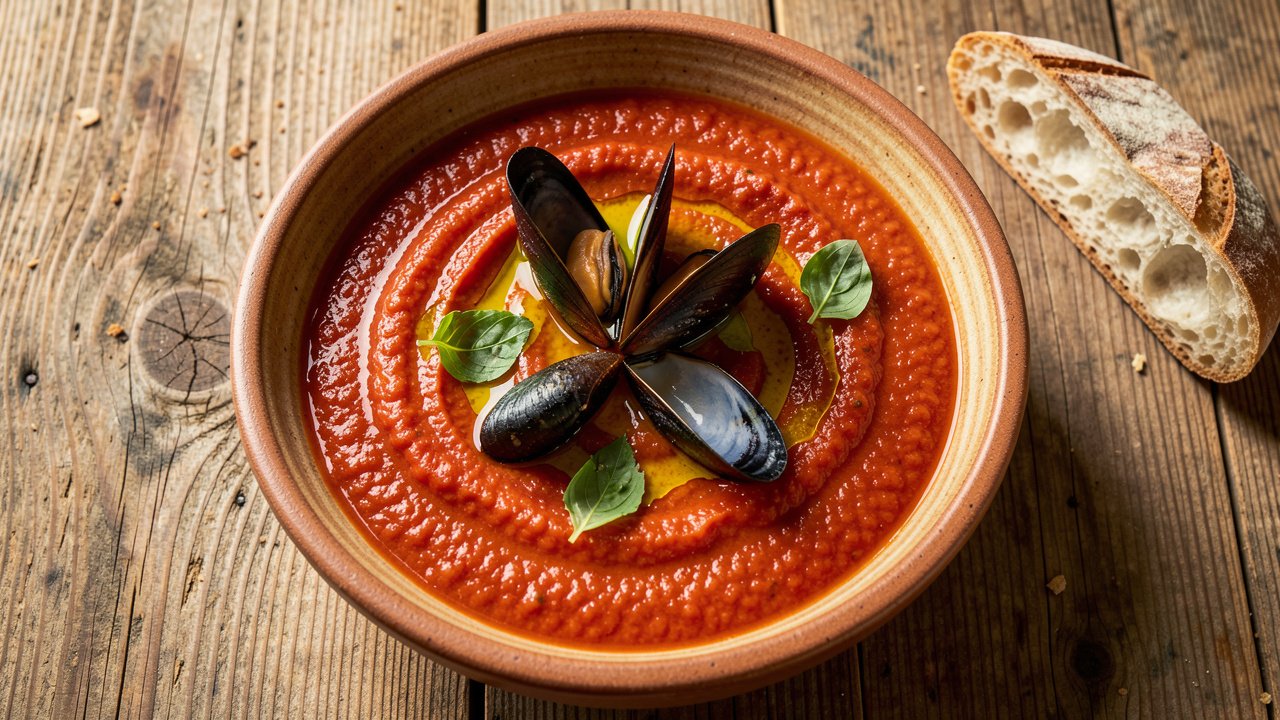
Tuscan cooks did not invent this soup to be clever. They invented it because bread went hard by day three and throwing food away was unthinkable. What they found is that stale bread does something fresh bread cannot: it drinks liquid and holds its shape. Add mussels and their briny steaming liquor, and a frugal inland soup turns coastal.
Why This Tuscan Tomato Bread Soup Works
Nothing thickens this soup except bread and olive oil. There is no flour, no cream, no cornstarch. When stale bread meets warm tomato liquid, the dried starch rehydrates and swells, and the crumb releases just enough starch into the broth to bind it. Beat the pot hard with a wooden spoon at the end and that starch grabs the olive oil, pulling it into a loose emulsion. That is the whole trick, and it is why the soup tastes rich while containing no dairy at all.
Fresh bread cannot do this. A soft crumb is already saturated with its own moisture, so it collapses into wallpaper paste the moment it hits liquid. Stale bread has lost that water. It behaves like a sponge that has dried out completely: it takes on tomato broth greedily, then holds a soft but distinct structure in the spoon. You want to feel bread, not eat pudding.
The mussels earn their place twice. Once as sweet, plump meat, and once as liquor. Steaming them separately in broth gives you a small amount of intensely savory liquid that carries salt, shellfish sweetness, and a little bright acidity. Strained and stirred into the tomato base, it seasons the soup more interestingly than salt alone ever could.
Keeping the two cooking processes apart is deliberate. Mussels cooked in the soup would shed grit into the bread and toughen over the long simmer. Cooked apart and folded in at the very end, they stay tender and the soup stays clean.
Pro observation: The soup is done when a spoon dragged across the bottom of the pot leaves a track that closes slowly, over about two seconds. Faster and it needs more bread or more reduction; slower and it is verging on porridge.
Ingredients
Kitchen Measurement Converter
Quickly convert between common cooking measurements without leaving the recipe. Pick a category, enter a value, and the result updates instantly.
Ingredient Notes & Substitutions
The Bread
Use a plain country loaf, sourdough or saltless Tuscan style, at least two days old and dry enough to resist your thumb. Trim most of the crust; it never softens fully and leaves leathery bits. Enriched breads with milk, sugar, or butter turn gummy and sweet. If your loaf is only one day old, tear it and dry the pieces in a 300 F oven for 12 minutes.
Tomatoes
Ripe summer tomatoes, peeled and chopped, are ideal. Out of season, canned whole plum tomatoes crushed by hand beat pale fresh ones every time. Avoid pre-seasoned passata, since the mussel liquor already brings salt and you need control over it.
Mussels
Buy rope-grown or farmed mussels where you can; they carry far less grit than wild ones. They should smell of clean seawater and feel heavy. Store them in the fridge in a bowl covered with a damp cloth, never sealed in a plastic bag or sitting in fresh water, which kills them.
Olive Oil and Broth
This soup is mostly bread, tomato, and oil, so the oil is a main ingredient, not a lubricant. Use a peppery extra-virgin you would happily taste on its own. For the broth, any crisp dry white you would drink works; skip anything oaky or sweet.
Equipment
- Wide heavy soup pot
- Lidded pan for mussels
- Fine mesh sieve
- Muslin or coffee filter
- Sturdy wooden spoon
- Stiff brush for shells
Before You Start
1. Sort the mussels first. This is the step people skip and regret. Do it while the bread soaks so nothing is rushed later.
2. Tear the bread, do not cube it. Torn edges are ragged and irregular, so they grab broth and melt into the soup better than knife-cut faces.
3. Warm the stock. Cold liquid poured into a hot tomato base stalls the pot and stretches the cooking time for no benefit.
Step-by-Step Instructions
Sort and Clean the Mussels
Tip the mussels into a colander and rinse under cold running water, scrubbing any barnacles off with a stiff brush. Pull off the beards, the wiry threads at the hinge, by tugging them toward the hinge end. Now check every shell. Any mussel that is open should close when you tap it firmly on the counter; give it ten seconds. If it stays open, it is dead. Throw it out. Discard cracked or crushed shells too. Keep the sorted mussels cold until you steam them.
Steam the Mussels in Broth
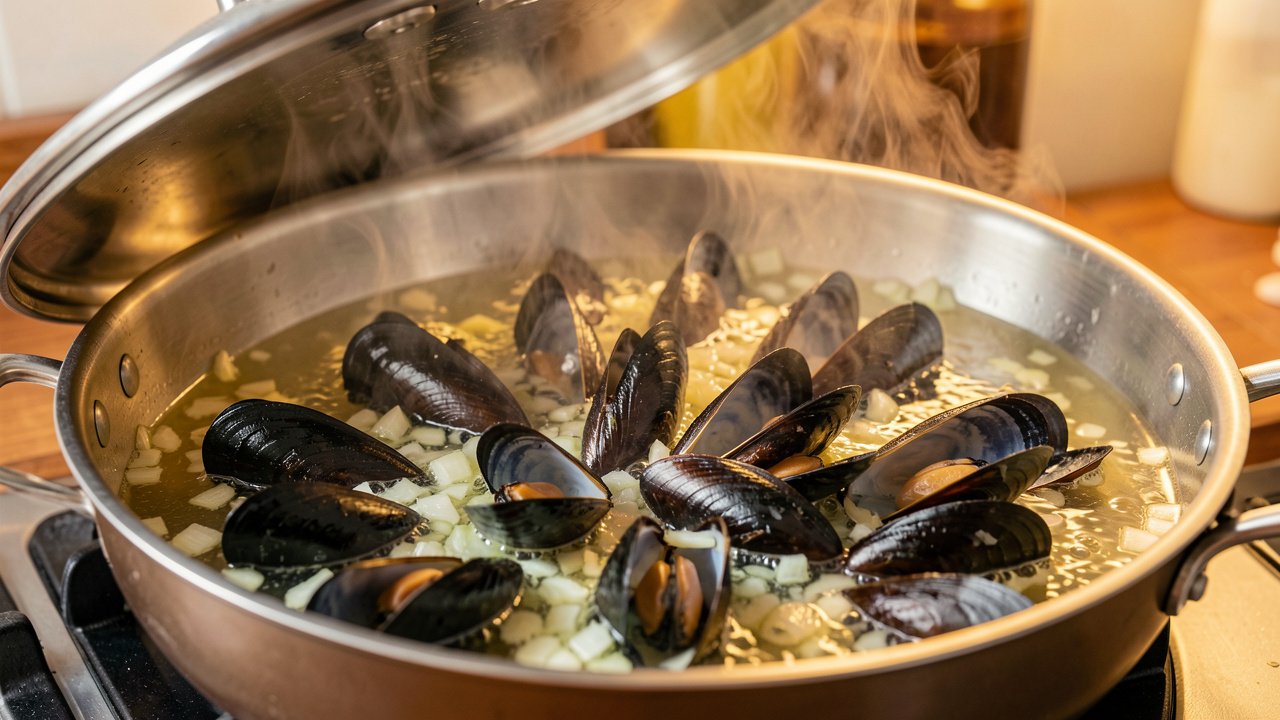
Sweat the chopped shallot in a tablespoon of the olive oil in a lidded pan over medium heat for two minutes, then pour in the broth and bring it to a hard boil. Add the mussels, clamp the lid on, and steam for 4 to 6 minutes, shaking the pan once. Listen for the shells knocking; when the rattling settles, they are opening. Pull the pan off as soon as most have opened, because another two minutes turns the meat rubbery.
Strain the Liquor and Pick the Meat
Lift the mussels out with a slotted spoon into a bowl. Discard any that stayed shut after steaming; a mussel that never opened does not get a second chance, no matter what anyone tells you about prying them. Let the pan liquid settle for a minute so sand sinks, then pour it slowly through a fine sieve lined with muslin or a coffee filter, stopping before the gritty last spoonful. Shell about three-quarters of the meat and leave the rest in their shells for the bowls.
Build the Tomato Base
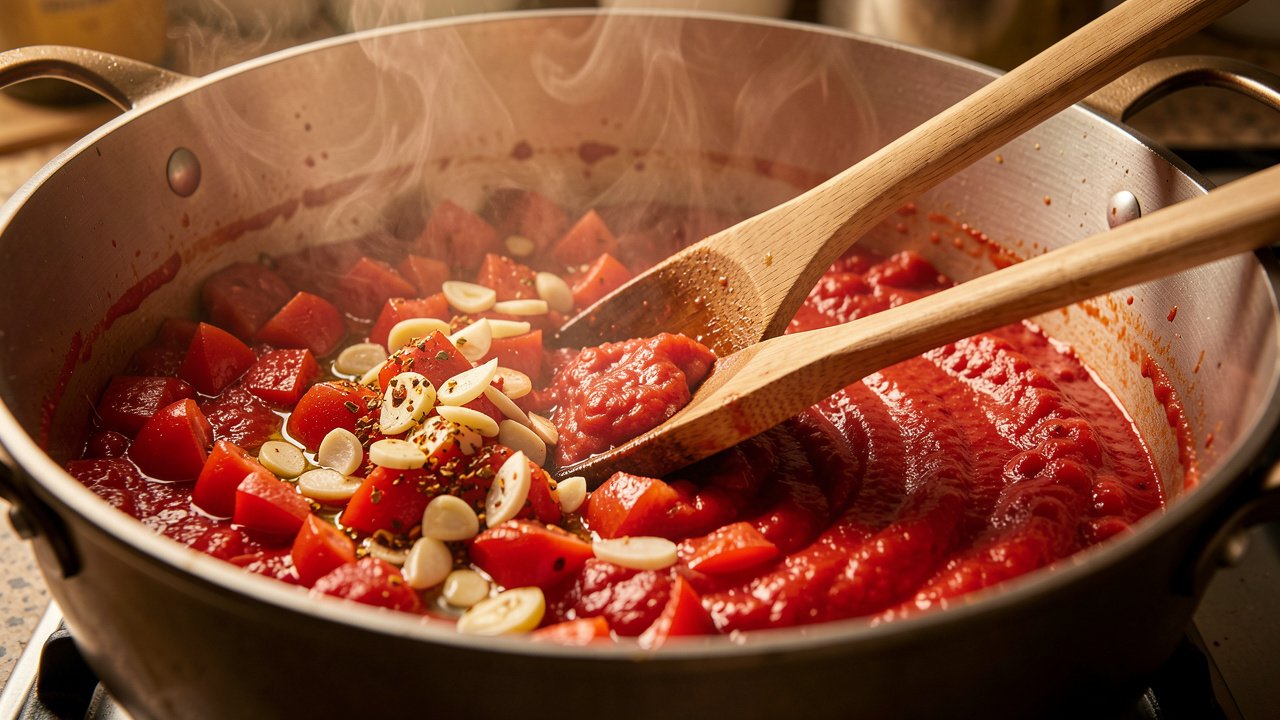
Warm 4 tablespoons of olive oil in the soup pot over medium-low heat and add the sliced garlic and pepper flakes. Let the garlic go pale gold and no further; scorched garlic turns the whole pot bitter and there is no fixing it. Add the tomatoes and a pinch of salt, raise the heat, and cook 12 to 15 minutes until they slump and darken and the watery edges disappear. Pour in the warm stock and the strained mussel liquor, add the basil, and simmer 5 minutes.
Add the Bread and Beat It Smooth
Stir in the torn bread and take the pot off direct heat for 10 minutes so it swells quietly. Return it to low heat and beat with a wooden spoon for a full minute, pressing the bread against the sides. The soup will go from soupy with lumps to thick and cohesive. Pour in the remaining olive oil while still beating and watch it disappear into the bread instead of floating; that glossy, slightly heavy look means the emulsion has taken. Season now, tasting carefully, since the liquor was already salty.
Fold in the Mussels and Serve
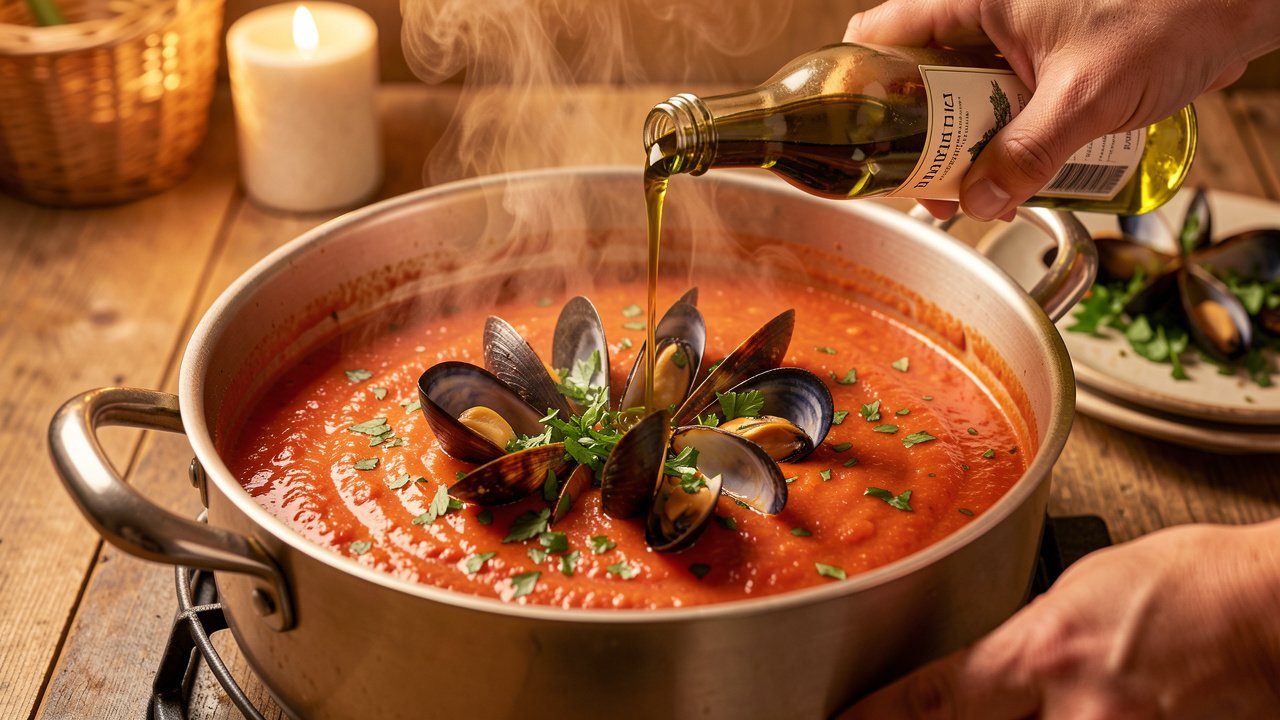
Stir the shelled mussels through the hot soup and give them 60 seconds, no more; they are already cooked and only need warming. Ladle into wide bowls, arrange the reserved shell-on mussels on top, and scatter the parsley. Finish each bowl with a hard pour of raw olive oil and a lemon wedge on the side. Serve immediately, while the bread still has some body.
Chef’s Tips From Real Kitchen Testing
Hold back a handful of bread until after the resting period. Loaves vary wildly in dryness, and it is far easier to add bread to a thin soup than to thin a stodgy one.
Line the sieve even if the liquor looks clean. Fine sand is invisible in dark liquid and you will only discover it between your teeth at the table.
Taste for salt only after the liquor and the bread are both in. Bread mutes saltiness noticeably, so a base seasoned to taste early will land bland in the bowl.
Recipe Variations
Serving Suggestions
- A cold, sharp sparkling lemonade
- Grilled bread rubbed with raw garlic
- A bitter chicory salad with lemon
- An empty bowl for the shells
Nutrition Facts
Values are estimates per serving and vary with your bread, your oil, and how salty the mussel liquor runs.
Make-Ahead Tips
Make the tomato base a day ahead and refrigerate it without bread or mussels. Its flavor deepens and the garlic mellows. On the night, reheat the base, steam fresh mussels, and only then add the bread, because bread that sits in liquid overnight loses the texture the whole dish is built on. Mussels are not a make-ahead ingredient; buy them the day you cook them.
Storage, Freezing & Reheating
Common Mistakes to Avoid
Troubleshooting
Soup too thick? Loosen it with warm stock a splash at a time over low heat, beating as you go. Water works but dilutes the flavor.
Soup too thin? Tear in more stale bread, rest it 5 minutes off the heat, and beat again. Never reach for flour.
Tastes flat despite salt? It is missing acid and fat. A squeeze of lemon and another pour of raw olive oil will lift it more than salt will.
Gritty? The liquor was not strained carefully. There is no rescue, which is exactly why the sieve step matters.
A Note on Tuscan Peasant Cooking
Pappa al pomodoro belongs to cucina povera, the Tuscan tradition of building good food from what would otherwise be waste. Its sibling, ribollita, does the same with bread, beans, and cabbage. Traditional Tuscan bread is baked without salt, which makes it dull to eat fresh but perfect as a soup thickener once it hardens. The mussels are a coastal liberty, drawn from Livorno’s seafood cooking rather than the inland farmhouse, but the logic holds: cheap ingredients, treated with attention. Browse more in our tomato recipe collection.