Tunisian Recipes
Spicy Tomato and Egg Skillet with Halal Beef Merguez
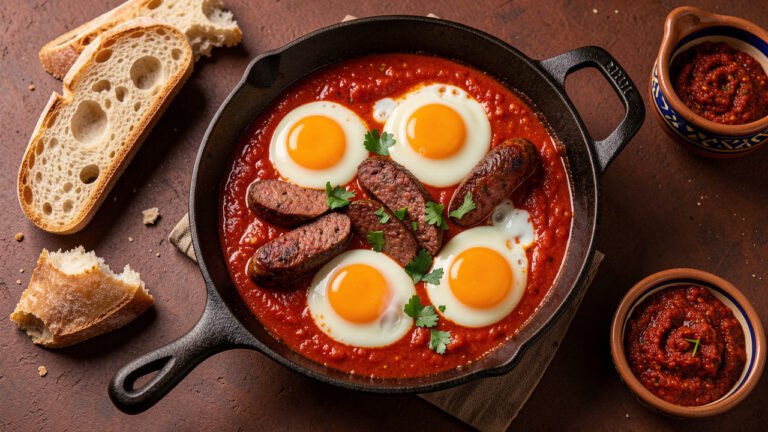
Ojja is the dish Tunisian cooks reach for when they want something fast, loud with flavour, and made in one pan. Sauce, sausage and egg share the same skillet, each seasoning the others. It is a weeknight dinner in Tunis, a late breakfast, and a next-morning cure.
What separates it from other tomato-and-egg pans is the spicing. Harissa brings smoke and chilli heat, ground caraway brings the warm, faintly aniseed note that signs every Tunisian dish, and the halal beef merguez leaks its spiced fat into the sauce as it cooks.
Why This Tunisian Ojja Works
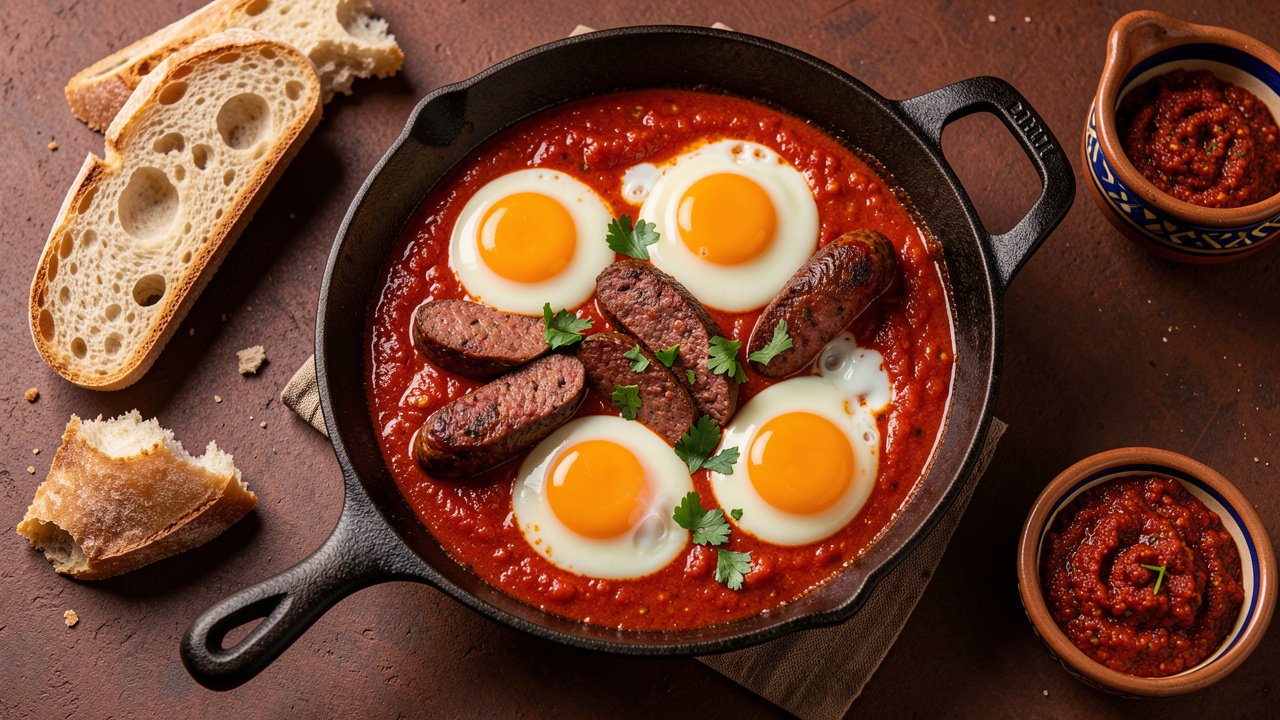
Most tomato-and-egg pans go wrong in the same place: the sauce is too loose, so the eggs slide around and the dish turns watery. This version reduces hard first. The sauce is ready only when a spoon dragged across the pan leaves a track that holds.
The heat is layered rather than dumped in. Harissa is stirred into hot oil with the tomato paste so the chilli blooms and loses its raw edge, and the caraway and coriander follow. Cooking spices in fat gives ojja a roasted backbone instead of a sour front note.
Halal beef merguez does quiet work here. Browning the slices renders their paprika-red fat into the pan, and that fat cooks everything after. Restaurant ojja tastes richer for exactly this reason: the sausage is a seasoning, not a topping.
Pro observation: The sauce is ready for the eggs when it stops looking wet and starts looking glossy, with a thin ring of red oil at the pan edge. If free liquid is pooling anywhere, give it three or four minutes more uncovered.
Ingredients
Kitchen Measurement Converter
Convert between common cooking measurements without leaving the recipe. Pick a category and enter a value.
Ingredient Notes & Substitutions
Tomatoes
Deeply ripe, soft tomatoes break down fast and taste sweet rather than sharp. Roma or plum types give the thickest sauce. Out of season, swap in a 28-ounce can and halve the added water.
Halal Beef Merguez
Look for halal beef merguez at a halal butcher or a North African grocer. Halal lamb merguez works equally well. Slice into thick coins rather than crumbling, so the pieces stay juicy against the soft sauce.
Harissa
Brands vary enormously in heat. Start with one tablespoon if yours is fierce and stir in more before the eggs go in. Rose harissa is milder and slightly floral; plain harissa is sharper and smokier.
Caraway and Tabil
Ground caraway is what makes this taste Tunisian rather than generally North African. If you can find tabil, the local blend of coriander, caraway, garlic and chilli, use two teaspoons in place of both spices.
Equipment
- Wide 12-inch skillet
- Tight-fitting lid
- Sharp knife and board
- Wooden spoon
- Small bowl for eggs
- Measuring spoons
Before You Start
1. Choose the right pan. A wide skillet with a lid is essential, or the eggs crowd each other. Twelve inches is ideal for six eggs.
2. Crack the eggs into a cup first. Slipping each egg from a bowl into its well gives you control and keeps stray shell out of the sauce.
3. Warm the bread now. Ojja waits for nobody once the eggs are in, so have the bread sliced, the parsley chopped and the table set first.
Step-by-Step Instructions
Prep Everything First
Slice the halal beef merguez into coins half an inch thick. Chop the onion, dice the peppers, mince the garlic, and chop the tomatoes small so they collapse quickly. Measure the spices into one bowl and crack the eggs into individual cups.
Brown the Halal Beef Merguez
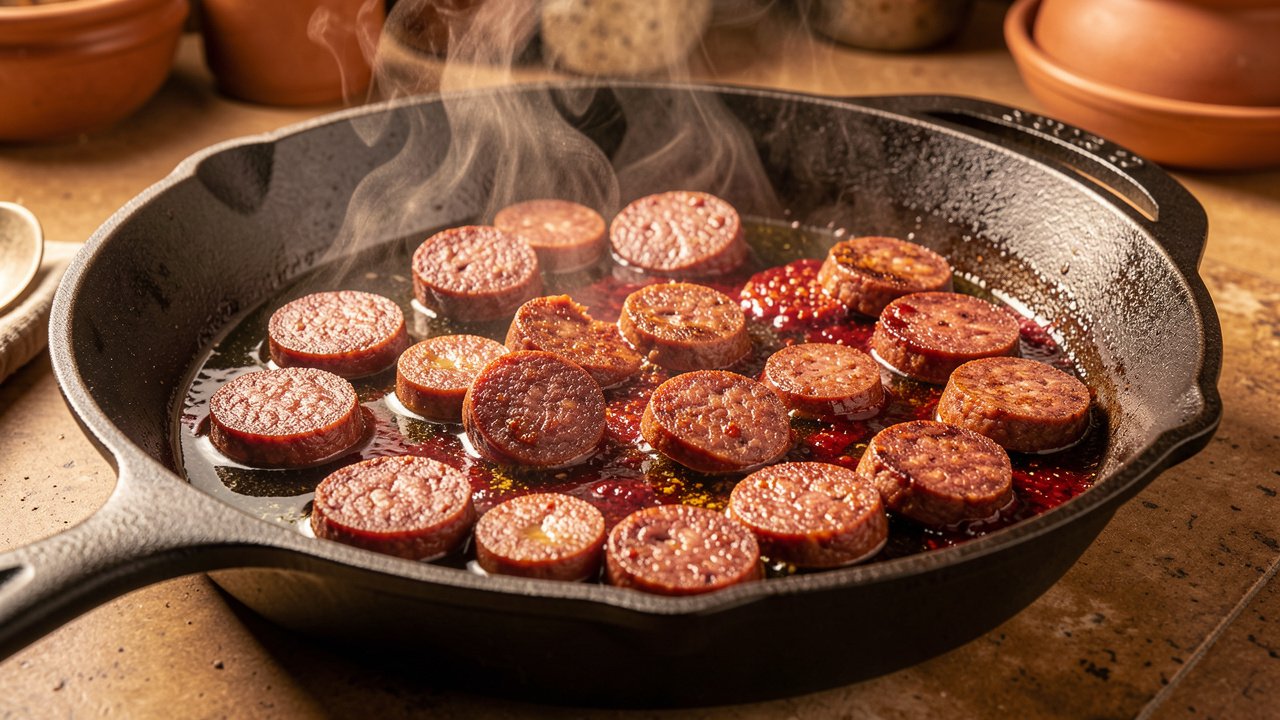
Warm the olive oil in a wide skillet over medium heat and add the halal beef merguez slices in a single layer. Let them sit two minutes so they take on colour, then turn for two minutes more. Lift them onto a plate and leave every drop of the spiced red fat behind.
Soften the Peppers and Onion
Add the onion and peppers to the same pan and cook seven to eight minutes over medium heat, until the peppers slump and the onion turns translucent with golden edges. Stir in the garlic for one minute, just until it smells sweet. Do not let it brown, or it turns bitter under the chilli.
Bloom the Harissa and Reduce the Tomatoes
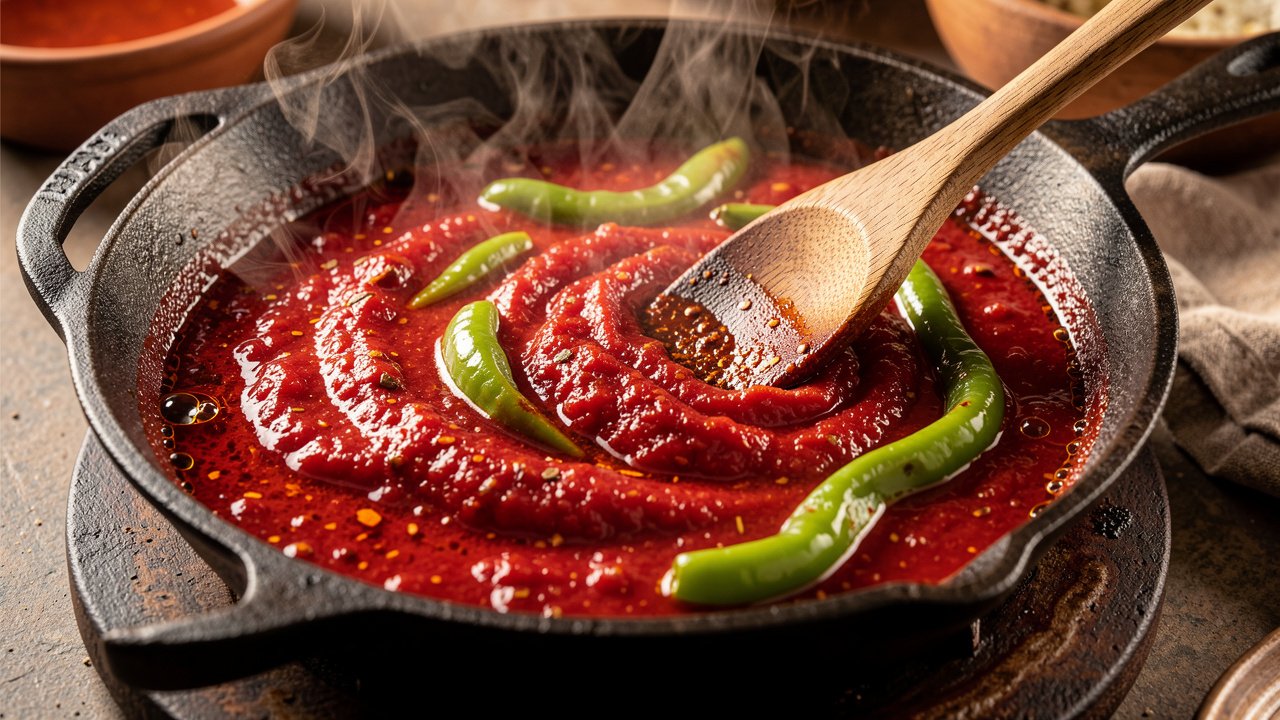
Push the vegetables aside, add the tomato paste and harissa, and fry about a minute until the paste darkens from bright red to brick. Stir in the caraway, coriander, paprika, salt and pepper, then add the tomatoes and water. Simmer uncovered twelve to fifteen minutes, mashing the tomatoes, until the sauce is thick and glossy with oil beading at the edge.
Return the Halal Beef Merguez and Set the Eggs
Stir the browned halal beef merguez back in with any juices from the plate, and taste for salt and heat. Turn the heat to low, press six shallow wells into the surface with the back of a spoon, and slip one egg into each. Season, cover, and cook six to eight minutes.
Check Doneness and Serve
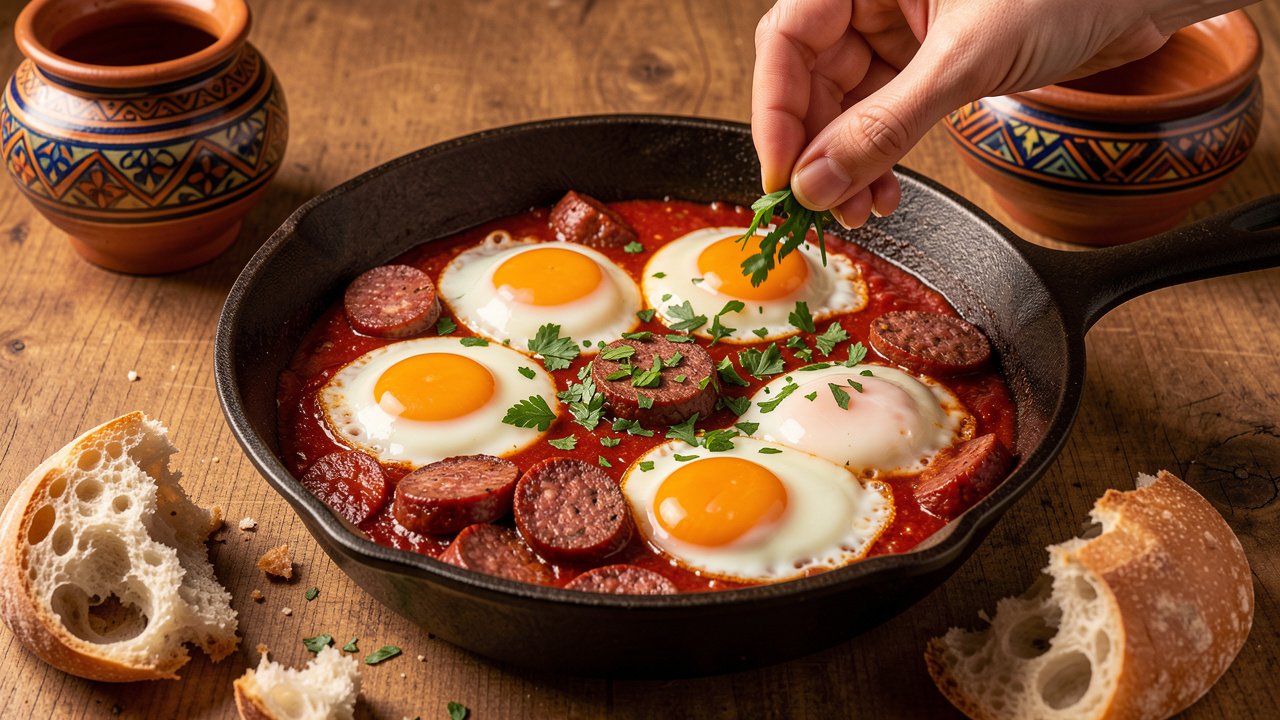
Lift the lid: the whites should be fully opaque with no clear jelly, while the yolks still wobble when you nudge the pan. That is the classic ojja set, at roughly seven minutes. Add two minutes for jammy yolks, four for firm. The halal beef merguez should be piping hot with no pink at the centre. Scatter the parsley and serve with crusty bread.
Chef’s Tips From Real Kitchen Testing
Cook the eggs on the lowest heat your stove holds, lid on. Steam sets the whites from above while the sauce barely moves underneath, which is how you avoid bouncy whites.
Taste for heat before the eggs go in, never after. Once they are in place you cannot stir in more harissa without wrecking them.
Pull the pan off the heat thirty seconds before the eggs look done. A heavy skillet keeps cooking them all the way to the table.
Recipe Variations
Serving Suggestions
- Thick slices of crusty baguette or tabouna bread
- A sharp salad of cucumber, tomato and mint
- Olives, capers and a wedge of preserved lemon
- Sweet mint tea to cool the harissa heat
Nutrition Facts
| Nutrient | Amount per serving |
|---|---|
| Calories | 430 |
| Protein | 27 g |
| Carbohydrates | 16 g |
| Fat | 29 g |
| Saturated Fat | 9 g |
| Fiber | 4 g |
| Sugar | 9 g |
| Sodium | 890 mg |
Values are estimates per serving, excluding the bread, and vary by brand.
Make-Ahead Tips
The tomato base improves for the wait. Cook the sauce through step four, cool it, and keep it covered in the fridge up to three days while the harissa and caraway settle in.
To serve, warm the sauce until it bubbles, brown the halal beef merguez separately, stir the slices in, then press the wells and add the eggs. Cold sauce to dinner is about twelve minutes. Never make the eggs ahead.
Storage, Freezing & Reheating
Common Mistakes to Avoid
Troubleshooting
Whites still runny but yolks setting? The heat is too low or the lid is not sealing. Clamp it on and raise the heat a fraction, because trapped steam cooks the tops of the whites.
Sauce too thin under the eggs? Spoon the loose liquid out, or lift the eggs onto a plate, boil the sauce hard for three minutes, and slide them back in.
Too fiery to eat? Stir plain yogurt into each portion at the table. A chopped fresh tomato added to the pan also softens the heat.
Flat and dull? It wants salt and a squeeze of lemon. An under-salted tomato base tastes tinny no matter how much harissa is in it.
A Note on Tunisian Cooking
Harissa is the axis Tunisian cooking turns on: a paste of dried red chillies pounded with garlic, salt, caraway and coriander, sealed under a film of olive oil, appearing at nearly every meal either cooked into the pot or spooned alongside. Tunisia is widely described as the most chilli-loving kitchen in North Africa, and harissa is why.
Caraway is the other signature, ground into harissa, folded into the spice blend called tabil, and dusted over soups and grilled meats. That warm, slightly bitter, aniseed-adjacent note is what most people cannot quite place the first time they taste Tunisian food.
How does ojja differ from shakshuka? They are cousins. Shakshuka leans on cumin and sweet peppers and is usually meatless. Ojja is sharper and hotter, built on harissa and caraway, always carries green peppers, and traditionally includes something substantial such as halal beef merguez or shrimp.
For more one-pan ideas built on the same foundation, browse the full library of tomato recipes.
Frequently Asked Questions
More Tomato Recipes to Try
Last updated: September 29, 2026