North Indian Recipes
A Tangy Tomato and Onion Curry for Roti or Rice
Last updated: November 4, 2026
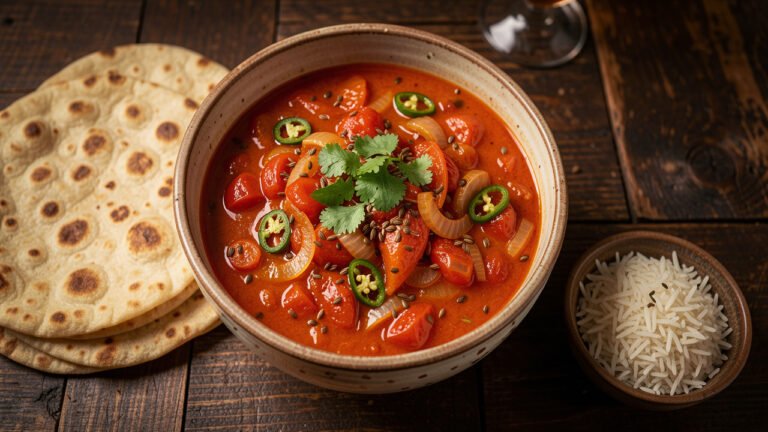
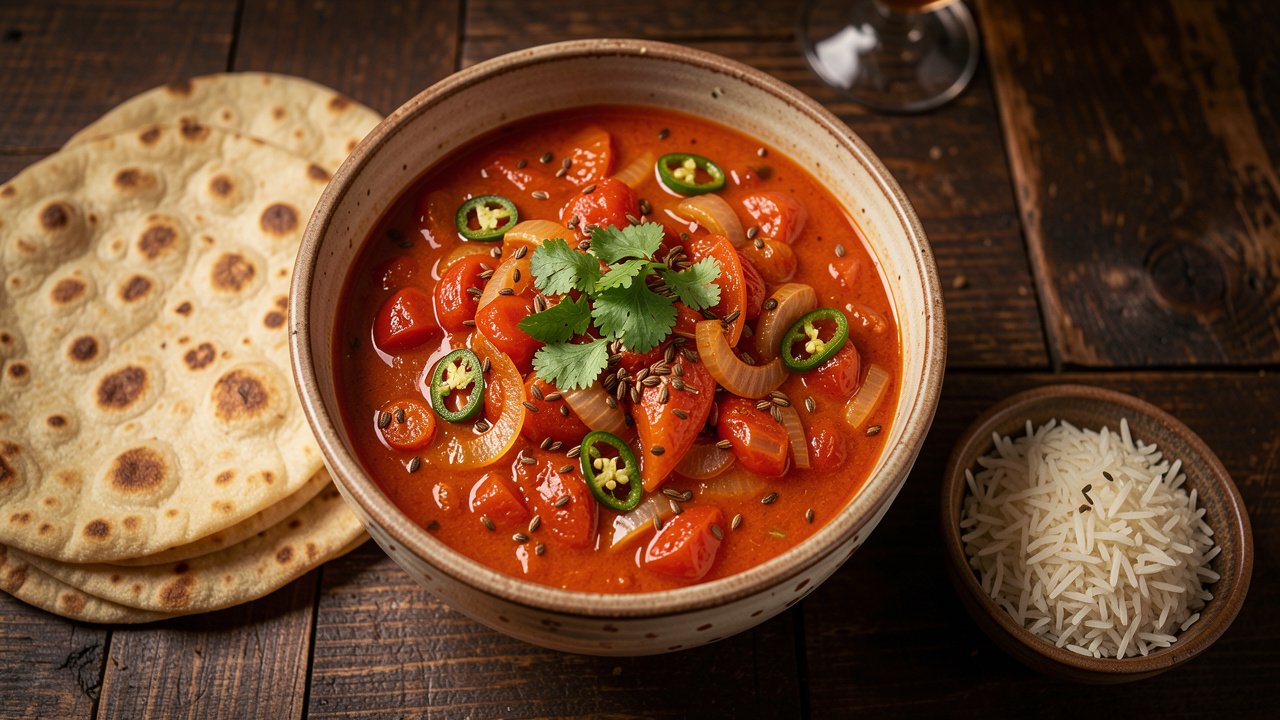
Tamatar ki sabzi is the dish a North Indian kitchen turns to when the fridge is nearly empty but the tomatoes are ripe. A handful of pantry spices, an onion, some ginger and garlic, and a pile of tomatoes become a bright, tangy gravy in the time it takes to roll out a few rotis. It is humble, fast, and endlessly comforting.
The whole thing happens in one pan. You temper cumin seeds in hot oil, soften an onion with ginger, garlic, and green chili, bloom the ground spices, then pile in the tomatoes and let them collapse into a glossy, spoonable sauce. Finish with fresh cilantro and you have a curry that tastes far richer than its short ingredient list suggests.
Why This Tamatar ki Sabzi Works
Great tamatar ki sabzi is really two things done well: aromatics that are properly softened, and tomatoes cooked long enough to lose their raw sharpness and turn into a mellow, tangy gravy. Get those two right and the curry practically makes itself. The recipe here tempers the spices first, then gives the tomatoes the time they need to break down into a sauce that clings to a piece of roti.
The base starts the way most good North Indian cooking does, with whole cumin seeds crackling in hot oil, then onion softened until golden and ginger, garlic, and green chili stirred in. Ground turmeric, red chili, and coriander bloom in that oil for a few seconds so their flavor turns deep and rounded rather than dusty and flat.
Cooking the tomatoes is the heart of the method. They go in roughly chopped and are left to collapse over a gentle heat until the oil begins to separate at the edges of the pan, which is the classic Indian sign that a tomato masala is done. Mashing a few pieces against the pan thickens the gravy without any flour or cream.
It is also genuinely flexible. Tamatar ki sabzi was born as a use-what-you-have dish, so you can lean it sweeter, spicier, or more soupy depending on your tomatoes and your mood. Keep the tempering and the long tomato cook constant, and you will get a bright, homey curry every single time.
Pro observation: Tamatar ki sabzi is naturally vegan and fully halal as written, with no forbidden ingredients. All of its depth comes from the tempered cumin, the bloomed spices, and the natural sweetness the tomatoes release as they cook down, so you never miss a thing.
Ingredients
Kitchen Measurement Converter
Need to convert an amount while you measure? Pick a category, enter a value, and the result updates instantly.
Ingredient Notes & Substitutions
Tomatoes
Use the ripest tomatoes you can find; this is a dish that lives or dies by them. Deep red, slightly soft Roma or vine tomatoes give the best balance of sweetness and tang. If your tomatoes are pale or out of season, a tablespoon of tomato paste stirred in will restore the color and depth.
Onion, Ginger & Garlic
Finely chop the onion so it melts into the gravy rather than staying crunchy. Fresh ginger and garlic do the heavy lifting here; a spoonful of ready ginger-garlic paste is a fine shortcut. Adjust the green chili to your heat tolerance, or leave the chilies whole and lift them out at the end.
Spices
Whole cumin seeds, turmeric, red chili, and ground coriander are the backbone. A pinch of garam masala or a crushed dried red chili at the end lifts everything. Toasting the ground spices in the oil for just a few seconds is what turns them from dusty to deep, so do not skip that step.
Oil & Finish
A neutral oil keeps it everyday; mustard oil, heated until it just smokes and then cooled slightly, gives a more traditional North Indian pungency. Fresh cilantro at the end is essential for brightness. This recipe is naturally dairy-free, though a small knob of plant butter stirred in makes it richer.
Equipment
- Kadai or heavy frying pan
- Lid for the pan
- Wooden spoon or spatula
- Sharp knife and board
- Grater for the ginger
- Small bowl for the spices
Before You Start
1. Chop the tomatoes small and keep their juice. Smaller pieces collapse faster and the released juice is the base of your gravy, so tip the whole cutting board, liquid and all, into the pan rather than draining anything away.
2. Measure the ground spices into one small bowl first. They bloom in the oil in only a few seconds before they scorch and turn bitter, so there is no time to fetch jars mid-cook; have turmeric, chili, and coriander ready to go in together.
3. Soften the onion until it is genuinely golden, not just translucent. A pale, undercooked onion leaves a raw bite that no amount of simmering fixes later, while a golden one dissolves into the gravy and sweetens the whole curry.
Step-by-Step Instructions
Tamatar ki sabzi moves fast once the tempering starts, so have everything chopped and measured first. Chop the tomatoes and onion, grate the ginger, mince the garlic, slit the chilies, and set the ground spices in one bowl so the whole curry reaches the table in half an hour.
Prep the Tomatoes and Aromatics
Roughly chop the tomatoes and keep all their juice, finely chop the onion, grate the ginger, and mince the garlic. Slit the green chilies lengthwise. Measure the turmeric, red chili powder, and ground coriander together into one small bowl so they are ready to go in at once.
Temper the Cumin and Aromatics
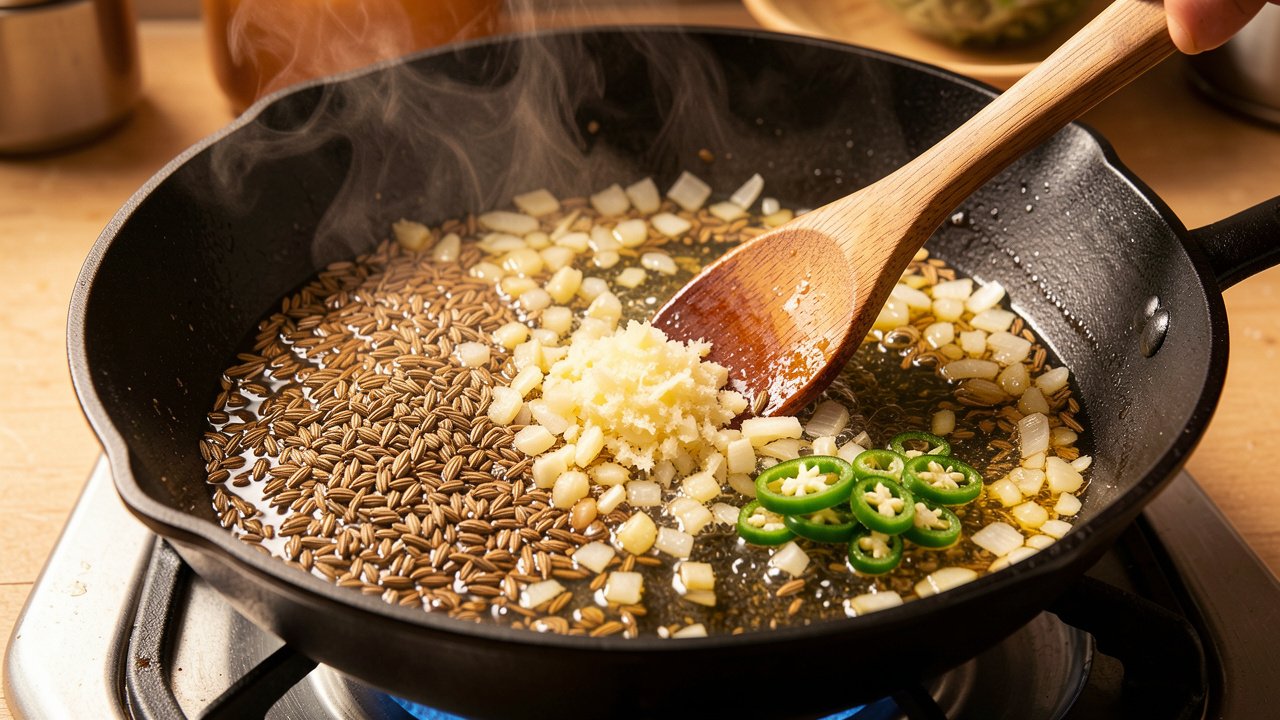
Warm the oil in a kadai or heavy pan over medium heat. Add the cumin seeds and let them sizzle and darken for a few seconds, then add the onion with a pinch of salt and cook 5 to 6 minutes until golden. Stir in the ginger, garlic, and green chilies and cook for another minute until fragrant.
Bloom the Ground Spices
Lower the heat and tip in the turmeric, red chili powder, and ground coriander. Stir constantly for just a few seconds so the spices toast in the oil and turn deep and aromatic without scorching. If the pan feels dry, add a small splash of water to keep the spices from catching and burning.
Add the Tomatoes
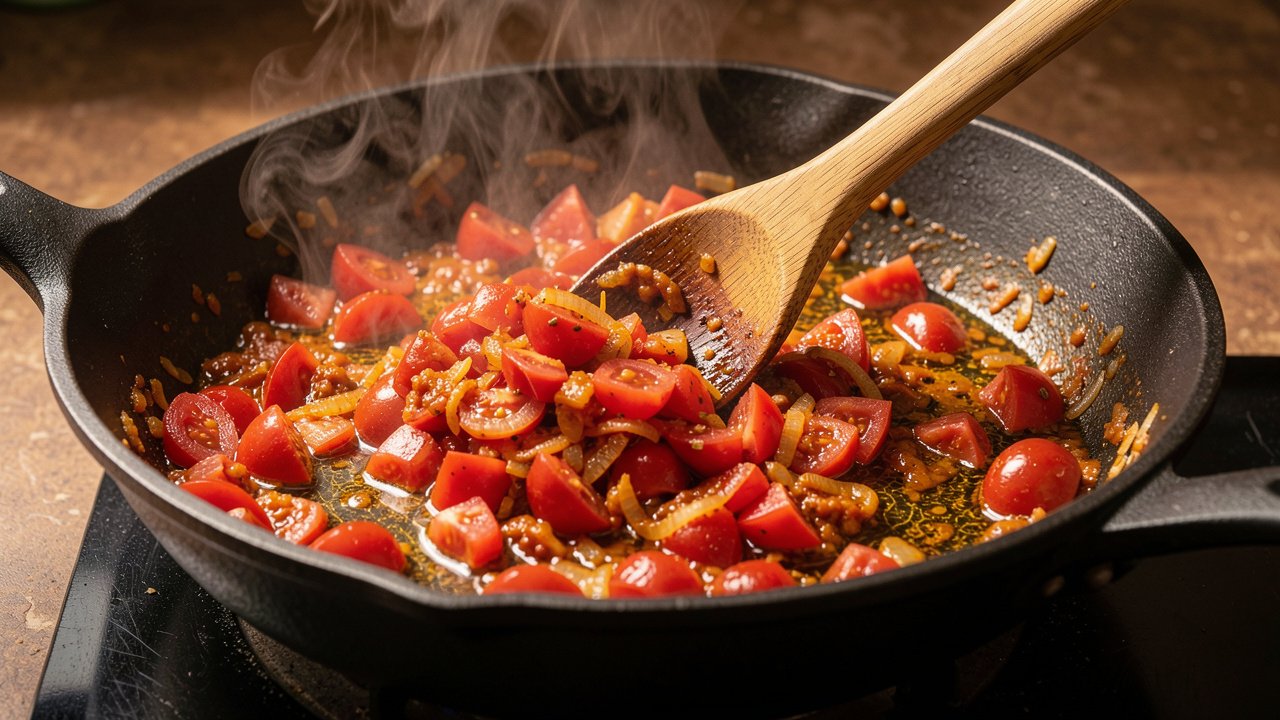
Add the chopped tomatoes with all their juice and the rest of the salt. Stir to coat everything in the spiced oil, then raise the heat to bring it to a lively simmer. Cook uncovered 10 to 12 minutes, stirring now and then, until the tomatoes slump and soften into a loose, saucy mass.
Simmer into a Gravy
Mash a few of the softened tomato pieces against the side of the pan to thicken the sauce. Lower the heat, cover, and simmer another 6 to 8 minutes until the gravy turns glossy and the oil just begins to separate at the edges, the classic sign a tomato masala is fully cooked. Taste and adjust the salt and chili.
Finish and Serve
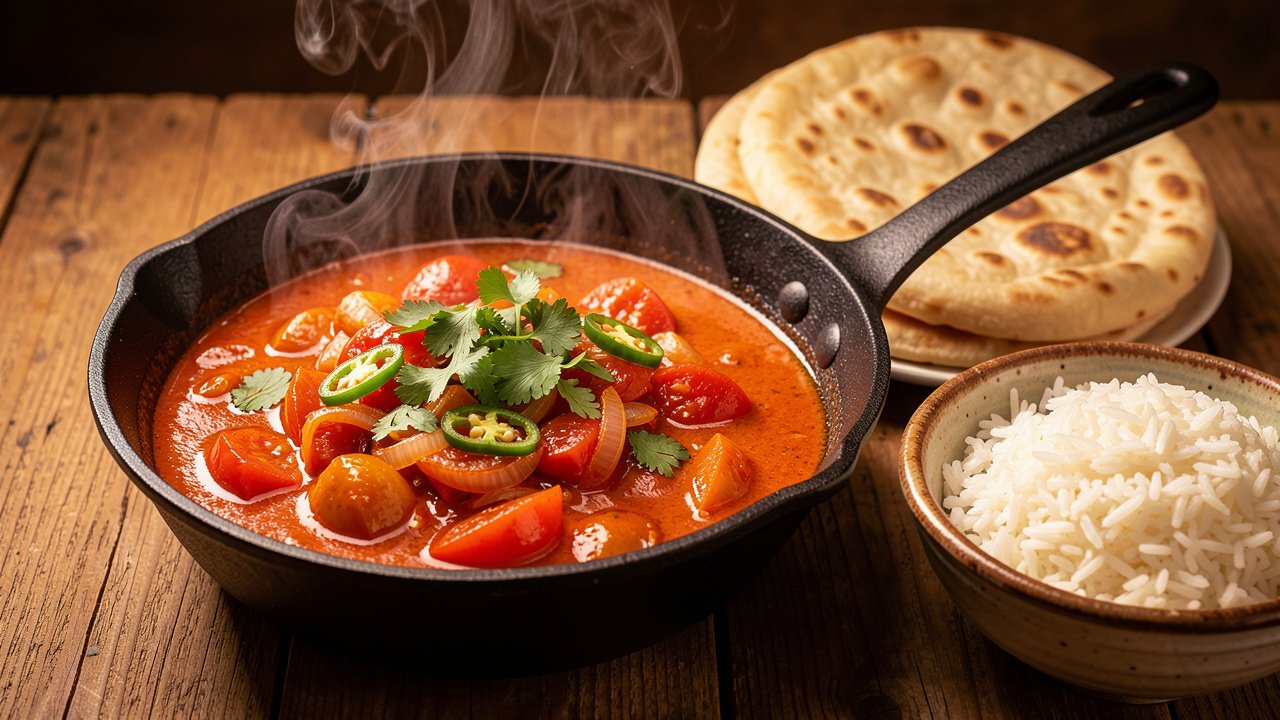
Take the pan off the heat and stir in most of the chopped cilantro. If you like a looser gravy, splash in a little hot water and warm through for a moment. Scatter the remaining cilantro over the top and serve right away with hot roti, paratha, or a bowl of steamed rice.
Chef’s Tips From Real Kitchen Testing
Wait for the oil to separate at the edges of the pan before you call the masala done. That glossy ring is the signal the tomatoes have fully cooked and the raw, sour edge is gone.
Bloom the ground spices for only a few seconds on lowered heat. They go from fragrant to bitter in moments, so keep stirring and add a splash of water the instant the pan looks dry.
Control the texture with water at the very end, not during the cook. Simmer the tomatoes down fully for flavor first, then loosen the finished gravy to the consistency you want for roti or rice.
Recipe Variations
Serving Suggestions
- Hot, soft roti or phulka for scooping
- A bowl of steamed basmati rice or jeera rice
- Flaky paratha for a heartier plate
- Plain yogurt or a plant yogurt on the side to cool the heat
Nutrition Facts
| Nutrient | Amount per serving |
|---|---|
| Calories | 150 |
| Protein | 3 g |
| Carbohydrates | 12 g |
| Fat | 11 g |
| Saturated Fat | 1.5 g |
| Fiber | 3 g |
| Sugar | 7 g |
| Sodium | 600 mg |
Values are estimates per serving and vary with the exact tomatoes, oil, and brands you use.
Make-Ahead Tips
Tamatar ki sabzi is actually better after a short rest, as the spices settle into the tomatoes. Cook it through completely, cool, and refrigerate. When you are ready to eat, reheat gently with a splash of water to loosen the gravy, then stir in fresh cilantro just before serving so it tastes bright again.
Storage, Freezing & Reheating
Common Mistakes to Avoid
Troubleshooting
Gravy too sour? The tomatoes needed longer; keep simmering until the oil separates, or add a small pinch of sugar to balance the acidity.
Gravy too thin? Simmer uncovered a few more minutes to reduce, or mash more of the tomato pieces against the pan to thicken it naturally.
Spices taste harsh or bitter? They likely scorched. Next time lower the heat before adding the ground spices and bloom them for only a few seconds with a splash of water on hand.
A Note on North Indian Cooking
The name is as plain as the dish is comforting: in Hindi, tamatar means tomato and ki sabzi means vegetable dish, so tamatar ki sabzi is, quite literally, “a dish of tomatoes.” It belongs to the everyday repertoire of North Indian home kitchens, the kind of quick sabzi cooked when the pantry is bare but a few good tomatoes are on hand, eaten the same day it is made with fresh roti.
It is worth saying clearly what this dish is not: it is not a chutney or a preserve. A tomato chutney is cooked down sweet and sharp, often with sugar and vinegar, and kept to spoon alongside other food in small amounts. Tamatar ki sabzi is a spiced, saucy curry eaten as a main part of the meal, scooped up by the plateful while it is fresh. It sits comfortably next to other North Indian tomato-forward favorites like a smoky baingan bharta or a pot of chana masala, and it shares the same onion-tomato masala backbone that anchors a hearty rajma.
What has kept tamatar ki sabzi on the table for generations is exactly what created it: it is cheap, fast, and forgiving. Use what is ripest, temper your spices with care, and give the tomatoes the time they need, and you have a bright, homey curry that turns a handful of pantry staples into a proper meal.