Filipino Recipes
Tender Beef Braised in Tomato Sauce
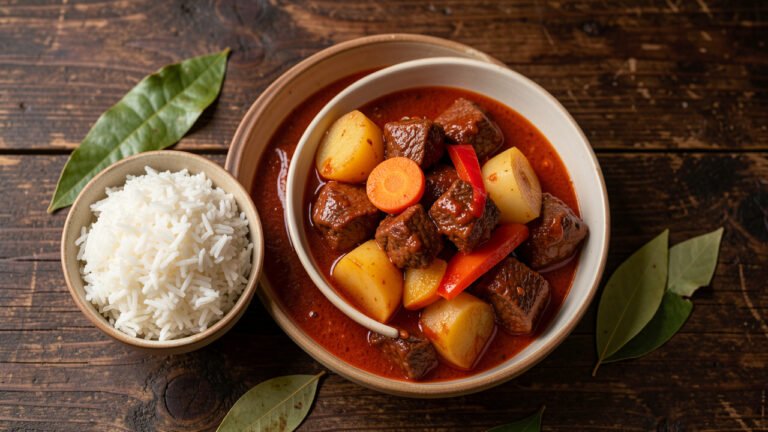
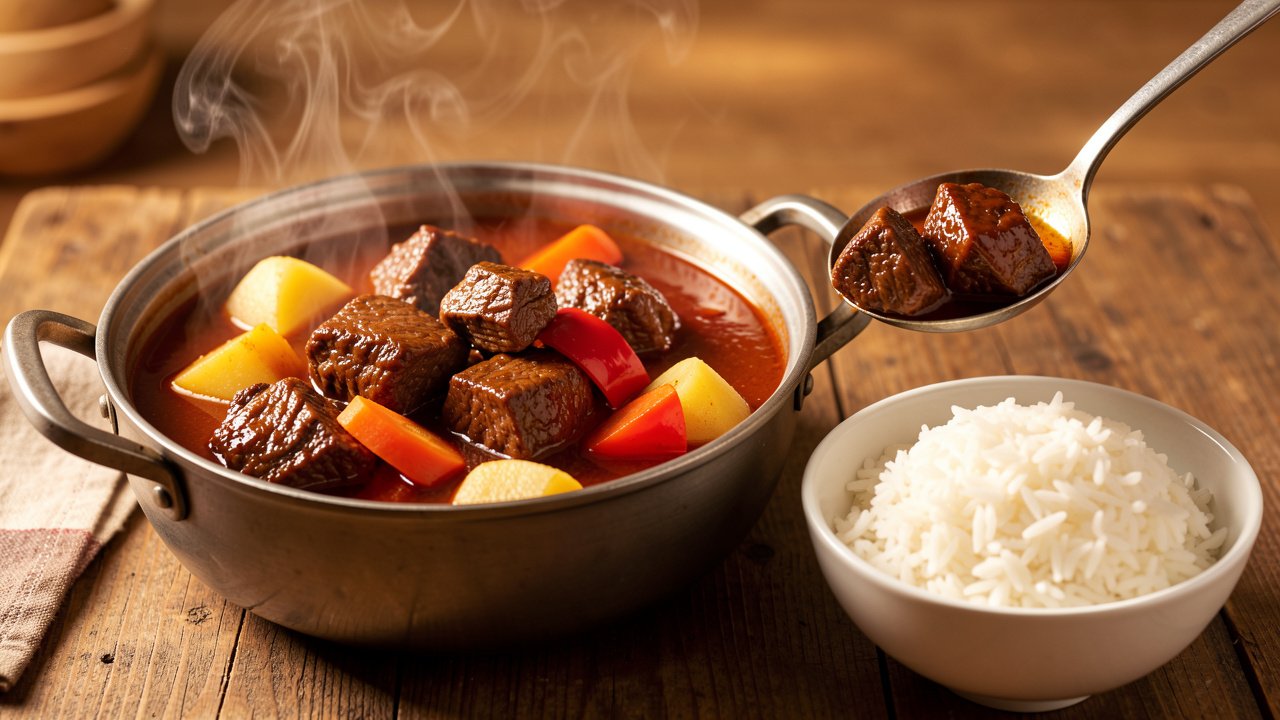
Mechado is the kind of dish that fills the whole house with the smell of tomatoes, soy, and slowly softening beef. It looks humble in the pot, but a good mechado has real depth: the sauce is savory and lightly sweet, brightened by a squeeze of calamansi, with bay leaf running quietly underneath. The first time I rushed it, the beef came out chewy and the sauce tasted thin, and that taught me the one rule that matters most: mechado is not a dish you hurry.
Why This Filipino Mechado Works
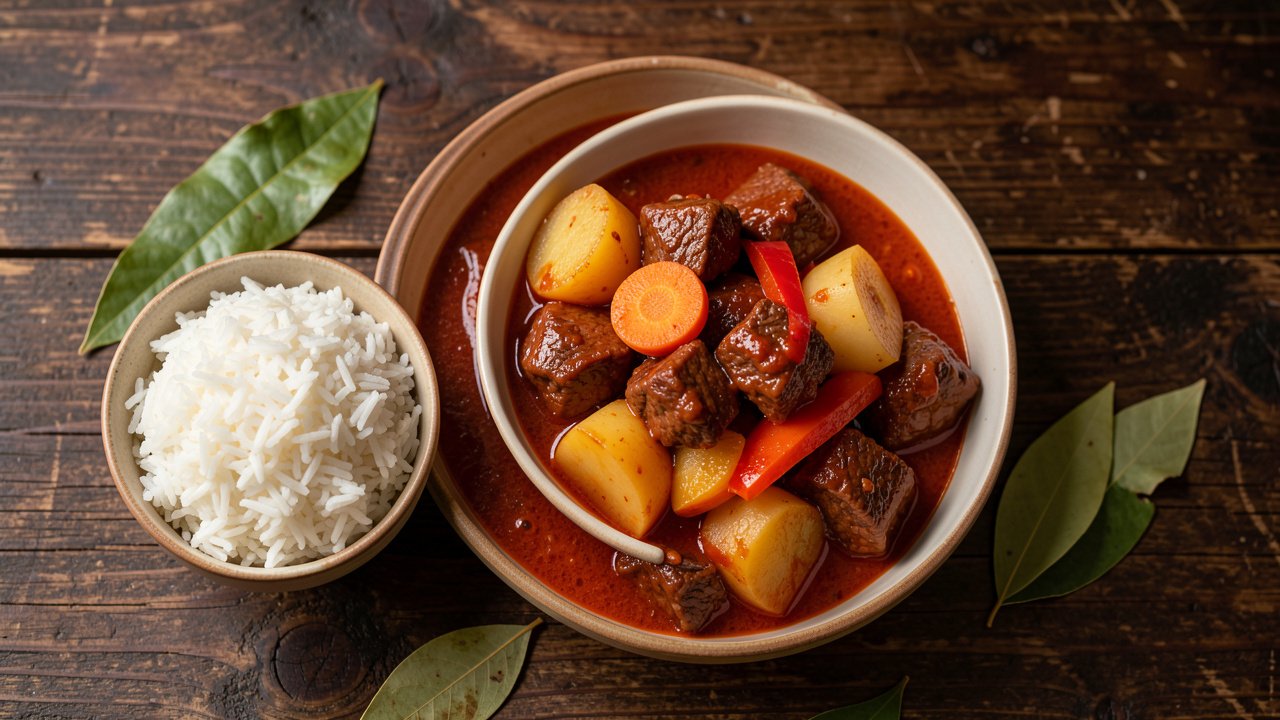
Mechado works because it does so much with a short, everyday list of ingredients. Tomato sauce and fresh tomatoes give it body and a sweet-tart backbone, soy sauce brings savory depth and color, and calamansi or lemon cuts through the richness so each spoonful stays bright instead of heavy. Bay leaf ties the whole braise together with a soft, herbal note.
The single most important factor is time. Beef chuck is full of connective tissue, and only a long, gentle simmer melts that tissue into softness and turns the sauce silky. Rush it and the meat stays tight and dry; give it the full braise and it pulls apart under a fork. There is no shortcut that replaces patience here.
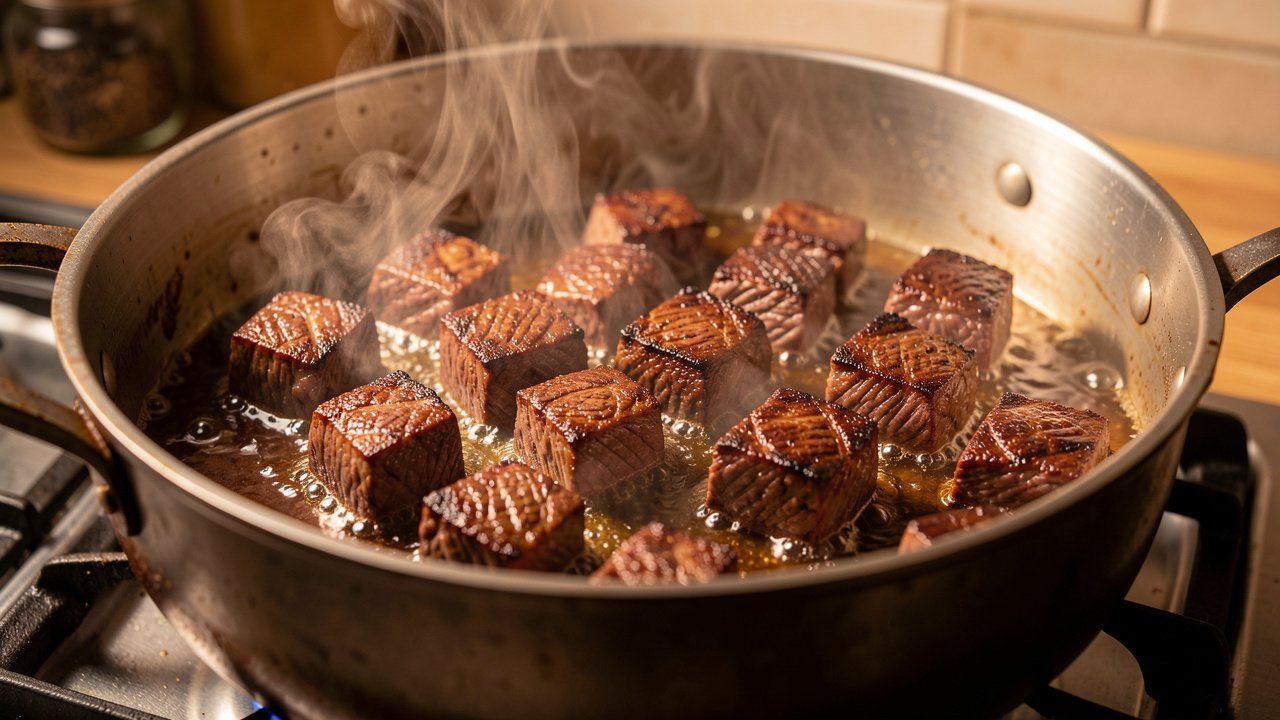
Browning the beef first is the other quiet secret. Searing the cubes builds a deep, roasted flavor on the surface that seasons the entire pot once the liquid goes in. Skipping this step is the difference between a mechado that tastes flat and one that tastes like it simmered all afternoon at your grandmother’s stove.
It is also forgiving and adaptable. The same tomato-soy base welcomes chicken instead of beef, extra sauce for the rice lovers, or a spoonful of chili for people who like heat. Once you know the method, you can turn a few pantry staples into a satisfying dinner without ever reaching for a packaged sauce mix.
Pro observation: The braise is close to done when the sauce coats the back of a spoon and a piece of beef slides off a fork with almost no resistance. If it still feels springy, it simply needs more time on low heat.
Ingredients
Kitchen Measurement Converter
Quickly convert between common cooking measurements without leaving the recipe. Pick a category, enter a value, and the result updates instantly.
Ingredient Notes & Substitutions
Beef
Use halal beef chuck, brisket, or shank. These well-worked cuts have the connective tissue that braising turns silky. Leaner cuts like sirloin dry out over a long simmer, so save those for quick cooking.
Tomato Sauce & Tomatoes
Plain canned tomato sauce gives a smooth, consistent base. Fresh chopped tomatoes add brightness and body. If tomatoes are out of season, an extra splash of tomato sauce keeps the flavor full.
Soy Sauce & Calamansi
Soy sauce carries the savory backbone and deep color. Calamansi gives the signature Filipino tang, but fresh lemon or lime juice is a fine everyday swap. Add the citrus near the end so it stays bright.
Potato & Carrot
Waxy or all-purpose potatoes hold their shape best. Add potatoes and carrots partway through so they cook until just tender without falling apart into the sauce. Fry them briefly first for extra flavor if you like.
Equipment
- Heavy pot or Dutch oven
- Wooden spoon or tongs
- Sharp knife and board
- Measuring cups and spoons
- Small bowl for marinade
- Ladle for serving
Before You Start
1. Marinate the beef early. Toss the cubes in the soy sauce and calamansi and let them sit while you chop the rest. Even 20 minutes helps the flavor reach past the surface.
2. Pat the beef dry before searing. Lift the cubes out of the marinade and blot them so they brown rather than steam. Save the leftover marinade to pour into the pot later.
3. Cook your rice alongside. Mechado is meant to be eaten over hot steamed rice, so start a pot of rice once the braise settles into its long, quiet simmer.
Step-by-Step Instructions
Marinate the Beef
Put the beef cubes in a bowl with the soy sauce and calamansi or lemon juice. Toss to coat and set aside for at least 20 minutes while you chop the onion, garlic, tomatoes, potatoes, and carrots. Lift the beef out and pat it dry, but keep the marinade to add later.
Sear the Beef
Heat the oil in a heavy pot over medium-high heat. Working in batches so the pot is not crowded, brown the beef cubes on all sides until they have a deep, roasted crust, about 6 to 8 minutes per batch. Set the seared beef aside on a plate.
Build the Aromatic Base
Lower the heat to medium and add the chopped onion to the same pot. Cook 3 to 4 minutes until soft, then stir in the garlic and cook 1 minute until fragrant. Add the chopped tomatoes and cook, mashing gently, for 4 to 5 minutes until they collapse into a soft, saucy base.
Braise Until Tender
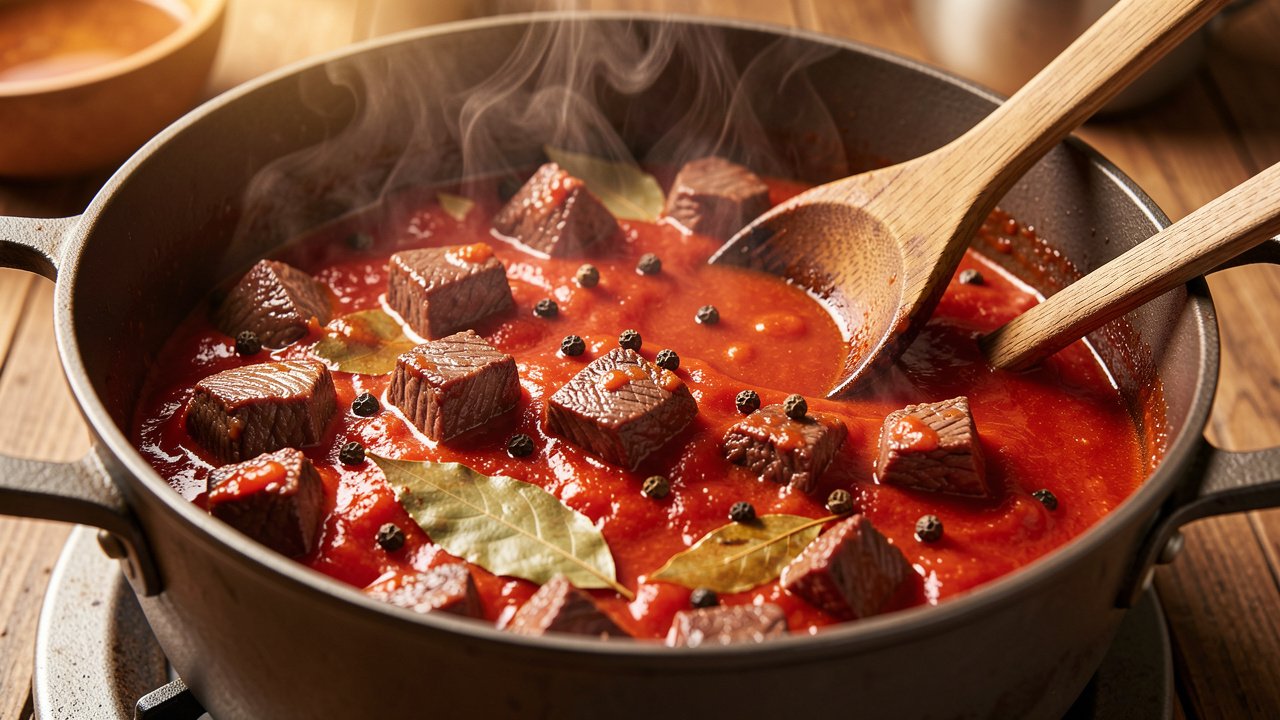
Return the beef and its resting juices to the pot. Pour in the tomato sauce, the reserved marinade, the beef broth, bay leaves, and whole peppercorns. Bring to a boil, then lower to a gentle simmer, cover, and cook 1 hour to 1 hour 20 minutes, stirring now and then, until the beef is fork-tender.
Add the Vegetables
When the beef is nearly tender, add the quartered potatoes and carrot chunks. Simmer uncovered 15 to 20 minutes until they are soft when pierced. Stir in the sliced red bell pepper in the last 5 minutes so it keeps a little bite and its bright color.
Season, Finish, and Serve
Add the salt and sugar, then taste. Adjust with more salt, a little more soy sauce for depth, or a squeeze of calamansi for tang. If the sauce is thin, simmer a few minutes uncovered to thicken. Fish out the bay leaves and serve hot over steamed rice.
Chef’s Tips From Real Kitchen Testing
Do not crowd the pot when you sear. Beef packed too tightly steams instead of browning, and you lose the roasted flavor that makes the sauce taste rich. Work in batches.
Keep the braise at a bare simmer, never a hard boil. Gentle heat is what dissolves the connective tissue into softness, while a rolling boil can leave the beef tight and stringy.
Add the calamansi in stages, tasting as you go. A little wakes up the sauce; too much makes it sharp. You can always add more, but you cannot pull the sourness back out.
Recipe Variations
Serving Suggestions
- A generous mound of hot steamed white rice
- Garlic fried rice for weekend meals
- A simple side of steamed or sauteed greens
- Calamansi or lemon wedges on the side
Nutrition Facts
| Nutrient | Amount per serving |
|---|---|
| Calories | 420 |
| Protein | 32 g |
| Carbohydrates | 22 g |
| Fat | 22 g |
| Saturated Fat | 7 g |
| Fiber | 4 g |
| Sugar | 6 g |
| Sodium | 780 mg |
Values are estimates per serving and vary with the exact ingredients and brands you use.
Make-Ahead Tips
Mechado is a wonderful make-ahead dish because the flavors settle and deepen after a night in the fridge. Braise it a day early, cool, and refrigerate, then reheat gently on the stove. If the sauce has thickened, loosen it with a splash of broth or water. Many cooks say the second-day mechado tastes even better than the first, which makes it ideal for gatherings and busy weeknights.
Storage, Freezing & Reheating
Common Mistakes to Avoid
Troubleshooting
Beef still tough? It simply needs more time. Keep it at a low simmer with the lid on and check every 15 minutes until a fork slides in easily.
Sauce too thin? Uncover the pot and simmer to reduce, or lift out the meat and vegetables and boil the sauce down before returning them.
Tastes flat or dull? It usually needs salt and a squeeze of calamansi. A small pinch of sugar can also balance an overly sharp tomato edge.
A Note on Filipino Cooking
Mechado belongs to a beloved family of Filipino tomato-based beef braises that also includes kaldereta and afritada, and home cooks often debate where one ends and the next begins. In practice, mechado leans on the tomato-soy-citrus balance and traditionally featured a strip of fat larded through the beef, which is where its name comes from. Kaldereta tends to be richer and often spicier, sometimes with liver spread, while afritada is usually lighter and brighter with more bell pepper. What ties them together is the Filipino love of that sweet, savory, and tangy sauce spooned over rice.
The soy-and-citrus seasoning is the fingerprint of so much Filipino cooking, and it is what keeps mechado from tasting like a plain tomato stew. If you enjoy building meals around ripe tomatoes, browse our wider collection of tomato recipes for more ideas that share the same comforting, tomato-forward character.
A Note on Beef Food Safety
Keep raw beef refrigerated until you are ready to cook, and use a clean board and knife just for the raw meat so it does not touch ready-to-eat foods. Wash your hands, tools, and surfaces with hot soapy water after handling it. When you marinate the beef, do it in the fridge rather than on the counter, and discard any marinade that has touched raw meat unless you boil it hard first, which this recipe does when it goes into the braise.
Braising takes the beef well past a safe internal temperature and holds it there for a long time, so tenderness, not doneness, is your finish line here. Cool leftovers within about two hours, store them in a shallow airtight container, and reheat until piping hot all the way through before serving again.
Frequently Asked Questions
More Tomato Recipes to Try
Last updated: September 29, 2026