Vegetable Mains
Roasted, Never Watery
Last updated: September 29, 2026
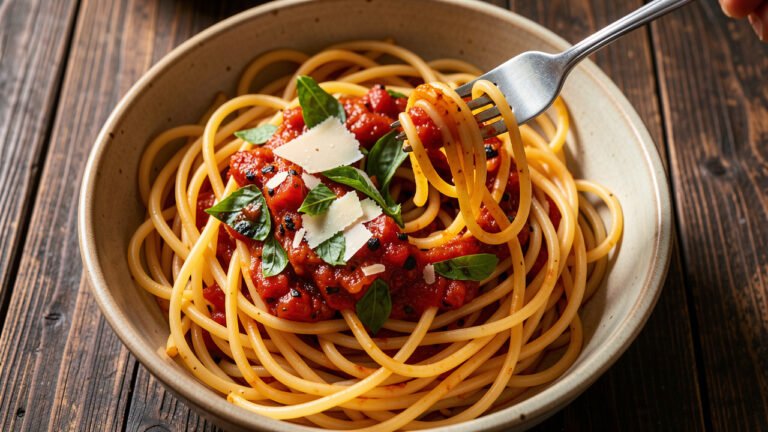
Almost every complaint about spaghetti squash is the same: it comes out wet and limp, and the sauce slides off into a puddle at the bottom of the bowl. That is a cooking problem, not a squash problem, and two steps fix it. The fire-roasted tomatoes then bring the smoky backbone plain canned tomatoes never manage.
Why This Spaghetti Squash Recipe Works
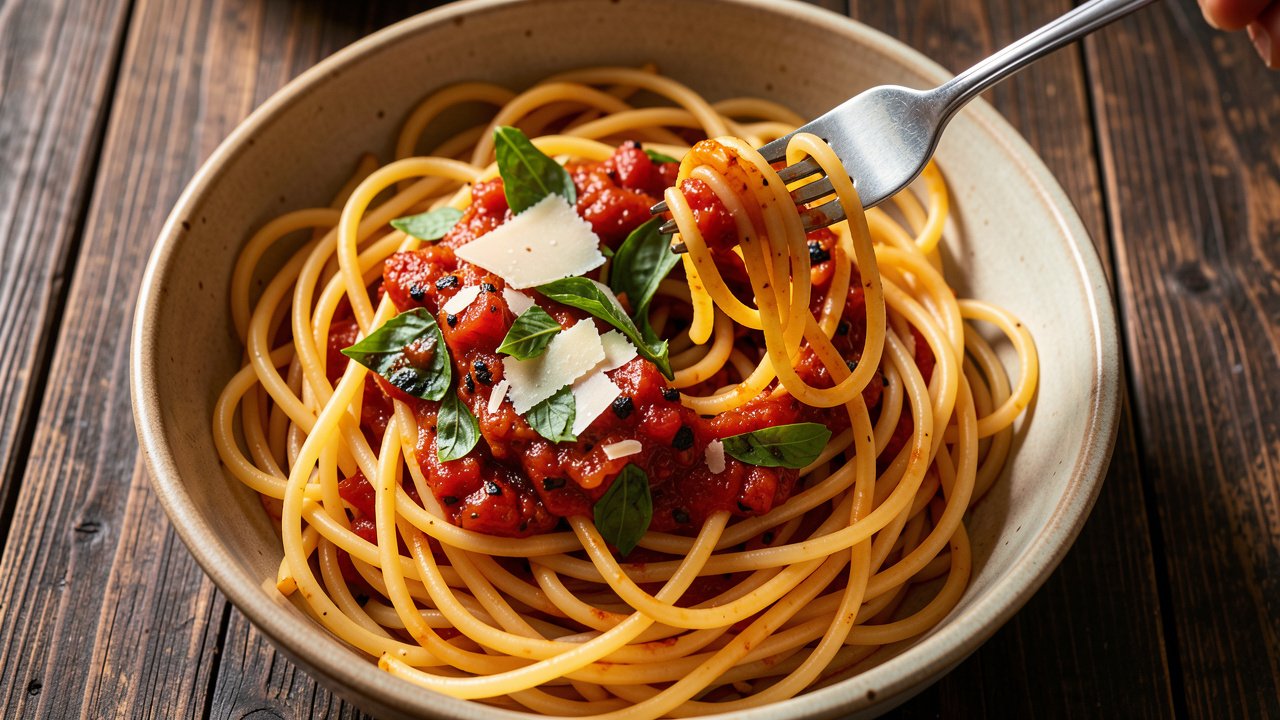
Spaghetti squash is mostly water. Cook it gently in a covered dish and that water has nowhere to go, so it stays trapped in the strands and leaks out the moment sauce hits it. Everything here is built to push that water out instead of locking it in.
First, the heat is high. Roasting at 425F with the cut face pressed against the sheet pan lets steam escape underneath while the exposed sugars caramelize. A low, covered bake does the opposite; it steams the squash in its own juice and gives you the mush people complain about.
Second, the strands get salted and drained after shredding. Salt pulls moisture from the cell walls in about ten minutes, and a firm squeeze removes several tablespoons of liquid you would otherwise be eating. This is the single biggest fix for watery spaghetti squash, and almost nobody does it.
Third, the sauce carries flavor of its own. Fire-roasted tomatoes are blistered over a flame before canning, so char and smoke are already built in. Against a vegetable this mild, that smoke does the heavy lifting plain diced tomatoes cannot.
Pro observation: When the squash is done, the cut face against the pan will be browned in patches and the shell will give slightly under your thumb. If the shell is still rigid, the strands will be crunchy and stubborn no matter how long you scrape.
Ingredients
Kitchen Measurement Converter
Quickly convert between common cooking measurements without leaving the recipe. Pick a category, enter a value, and the result updates instantly.
Ingredient Notes & Substitutions
Spaghetti Squash
Pick one that feels heavy for its size with a hard, matte, deep-yellow shell and a dry stem still attached. Pale or glossy skin means it was picked early, and those strands stay thin and watery. A 3-pound squash yields about 4 cups of strands.
Fire-Roasted Tomatoes
Canned fire-roasted diced tomatoes are charred over an open flame before canning, which is where the smoke comes from. Plain diced tomatoes are not a like-for-like swap. If that is all you have, see the fresh-tomato workaround below.
Fresh Tomato Version
Halve 2 pounds of ripe plum tomatoes, oil them, and broil cut-side up until the skins blister and blacken in spots, about 8 minutes. Chop them, skins and all. It is not identical to canned, but the char is real.
Parmesan and Butter
A knob of butter and grated Parmesan at the end give the sauce body so it clings to the strands. For a vegan version, skip both and finish with 2 tablespoons of olive oil and a spoonful of nutritional yeast instead.
Equipment
- Heavy chef’s knife
- Rimmed sheet pan
- Large skillet
- Sturdy spoon for seeds
- Colander
- Clean kitchen towel
Before You Start
1. Microwave before you cut. A raw spaghetti squash is hard, round, and slippery, and knives skate off it. Pierce it several times and microwave 3 to 4 minutes to soften the shell just enough that the blade bites instead of sliding.
2. Make a flat base. Slice a thin piece off one long side so the squash sits still on the board and cannot roll into your knuckles mid-cut. This is the difference between an easy job and an emergency room story.
3. Heat the oven fully. Get it to 425F before the squash goes in. Sliding it into a still-warming oven gives you a slow, steamy start, which is exactly the cooking style this recipe is trying to avoid.
Step-by-Step Instructions
Soften and Steady the Squash
Heat the oven to 425F. Pierce the squash 8 to 10 times with a paring knife so steam can escape, then microwave it 3 to 4 minutes. It should be warm to the touch but nowhere near cooked. Trim a thin slice off one long side and set it down on that flat face so it stops rolling.
Cut It Crosswise into Rings
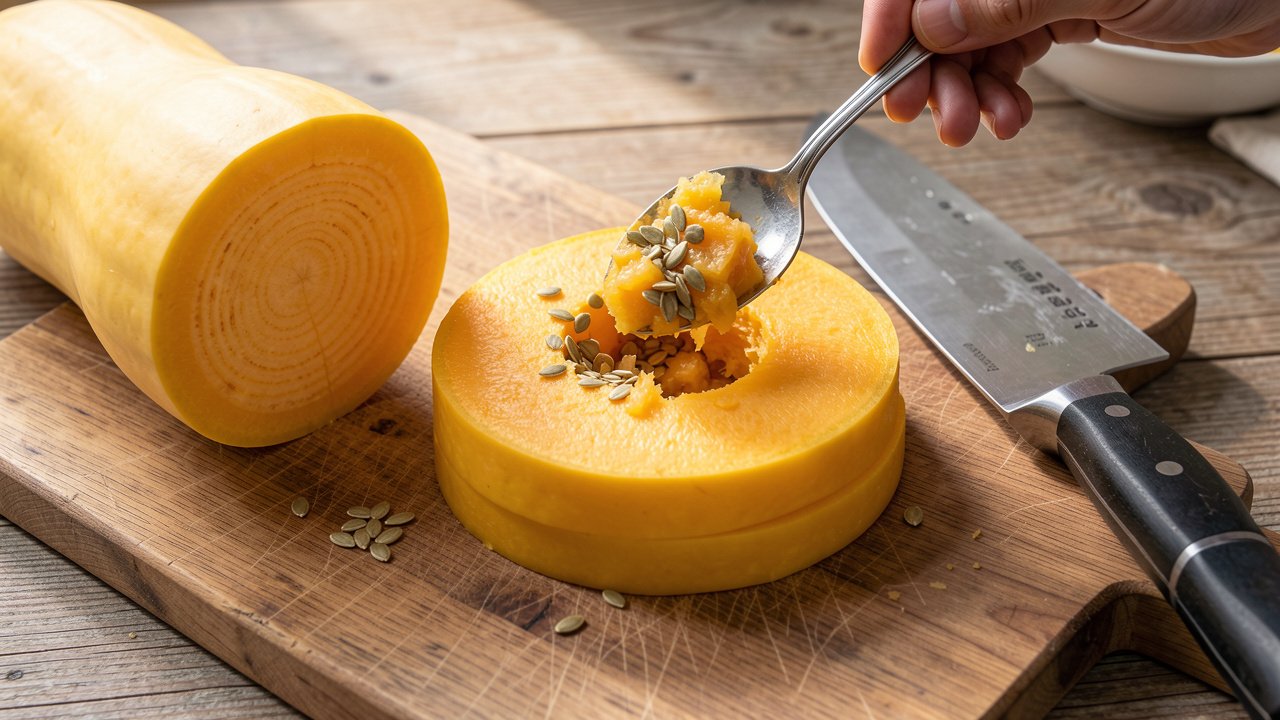
Here is the part most recipes get wrong. The strands run in rings around the circumference, not end to end. Halving it lengthwise cuts every strand in half, which is why so many people end up with short, stubby pieces. Cut it crosswise instead, into rings about 1.5 inches thick, and each ring holds strands that run its full circle. Scoop the seeds and stringy pulp from the center of each ring.
Roast Hot, Cut Face Down
Rub both cut faces of each ring with olive oil and season with salt and pepper. Lay the rings flat on a rimmed sheet pan so one cut face is pressed against the metal. Roast 35 to 45 minutes depending on the size of the squash. Do not cover the pan and do not add water; the whole point is to let steam leave.
Test at 35 minutes. The strands should separate under light fork pressure and the shell should give a little when you press it. If the fork meets resistance, give it 5 more minutes. If the strands collapse into paste, it went too far, and no amount of draining brings that back.
Build the Fire-Roasted Tomato Sauce
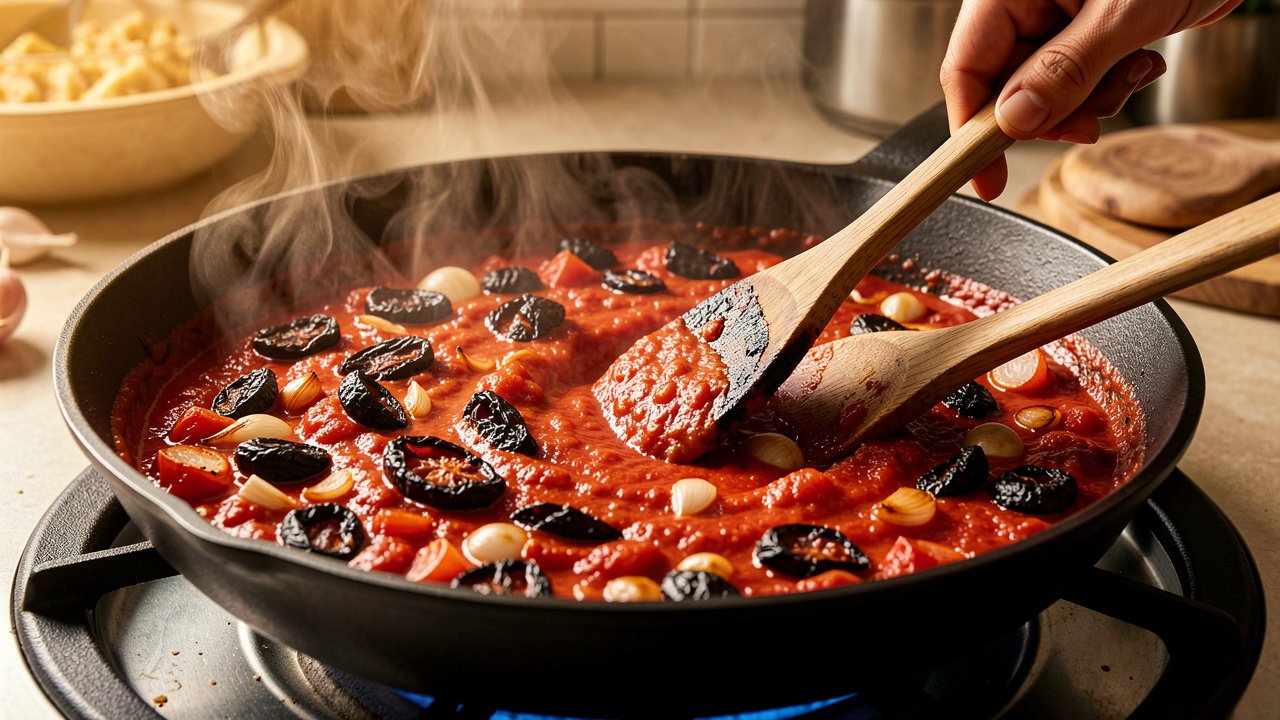
While the squash roasts, warm the remaining olive oil in a large skillet over medium heat. Cook the onion 5 to 6 minutes until soft and translucent, then add the garlic and red pepper flakes and cook 1 minute more, just until fragrant. Stir in the tomato paste and let it darken for 30 seconds; that brief toast deepens the tomato flavor considerably.
Add the fire-roasted tomatoes with their juice, the oregano, and a pinch of salt. Simmer 12 to 15 minutes, uncovered, until a spoon dragged across the pan leaves a trail that fills in slowly. Stir in the balsamic vinegar at the end to sharpen the smoke.
Shred, Salt, and Drain
Let the rings cool 5 minutes, then run a fork around the inside of each ring and lift the strands free of the peel in long ribbons. Pile them into a colander, toss with a teaspoon of salt, and leave them 10 minutes. You will see liquid start beading and dripping through almost immediately.
Now press the strands firmly against the colander with the back of a spoon, or gather them in a clean towel and squeeze. A 3-pound squash gives up a surprising amount of water here. Skip this and the sauce you just spent 15 minutes thickening will thin right back out on the plate.
Toss and Serve
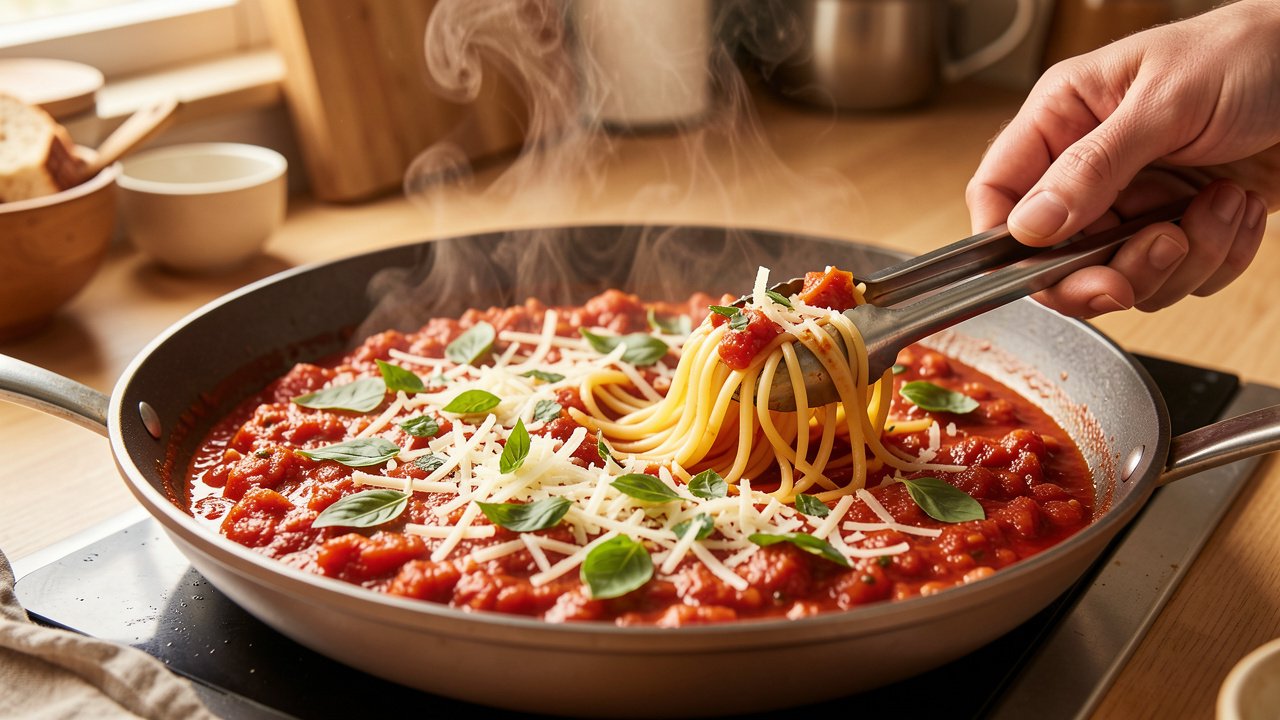
Add the drained strands straight into the skillet with the sauce, off the heat or over low heat, and fold gently with tongs rather than stirring hard, which shreds them. Add the butter and Parmesan and toss until everything is glossy and coated. Taste and adjust the salt, keeping in mind the squash already carries some. Finish with torn basil and serve right away, while the strands still have bite.
Chef’s Tips From Real Kitchen Testing
Smaller squash cook faster and taste sweeter. A 2-pound squash can be done at 30 minutes, while a 4-pound one may need close to 50. Go by the fork test, not the clock.
Scrape the strands from the peel with the tines pointing along the ring, following the direction of the fibers. Raking across them shortens every strand you touch.
If you want a firmer, almost al dente result, pull the squash 5 minutes early. It keeps cooking on the hot pan, and the salting step softens it a little further.
Recipe Variations
Serving Suggestions
- Serve it in shallow bowls, not deep ones, so any stray liquid does not collect
- A green salad with a sharp vinaigrette to cut the smoke
- Toasted garlic bread for anyone who wants the carbs after all
- White beans or a fried egg on top to make it a full meal
Nutrition Facts
Values are estimates per serving and shift with the size of your squash and how much salt drains away.
Make-Ahead Tips
The two components keep better apart than together. Roast, shred, salt, and drain the squash up to two days ahead and store the strands loosely covered in the fridge, where they keep shedding a little moisture. The sauce can be made three days ahead. Combine only when you are ready to eat, because squash sitting in sauce softens and waters down overnight.
Storage, Freezing & Reheating
Common Mistakes to Avoid
Troubleshooting
Still watery after draining? The squash was probably overcooked, which ruptures the cells and floods the strands. Return them to a dry hot skillet for 3 to 4 minutes to cook the excess off.
Strands crunchy and hard to scrape? It is undercooked. Put the rings back on the pan for 5 to 8 more minutes and test again with a fork.
Sauce tastes flat? Fire-roasted tomatoes need salt and acid to bring the smoke forward. Add a pinch of salt and another splash of balsamic before you reach for more herbs.
What Fire-Roasting Actually Does
Fire-roasted canned tomatoes are run over an open flame before packing, which blisters and blackens the skins. That char is not just color; it creates compounds that read as smoke on the palate and concentrates the sugars in the flesh. Against something as mild as squash, the difference is obvious side by side. If you want no char at all, our fresh tomato sauce without sugar is the cleaner counterpart, and tomato basil pasta shows the same logic on actual noodles.