Appetizers
Party Appetizer That Holds Its Shape
Last updated: September 29, 2026
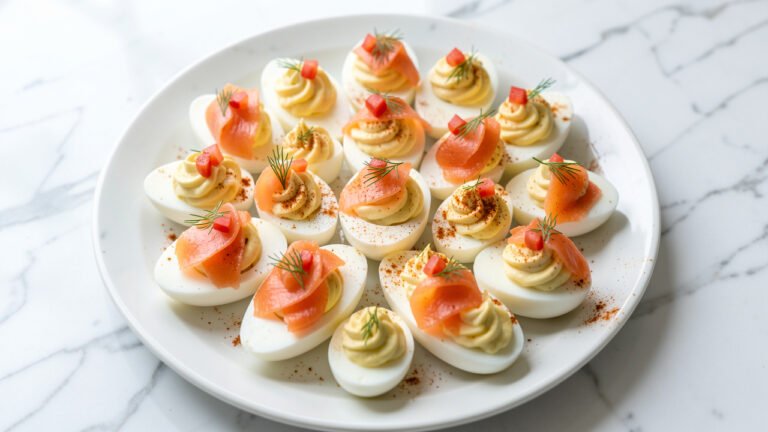
The gap between a passable deviled egg and a genuinely good one comes down to about three decisions, none of them hard. I have made these badly enough times to know where they go wrong: overcooked yolks, shells that tear the whites to shreds, and wet tomato that turns the filling to soup by the time guests arrive.
Why These Smoked Salmon Deviled Eggs Work
The whole recipe rests on egg cookery, and egg cookery rewards a timer more than instinct. Eleven minutes from a rolling boil, then straight into ice water, gives a yolk that is fully set but still tender and bright yellow through the middle. That is the texture that whips smooth instead of turning to paste.
The second decision is the sieve. Pressing the cooked yolks through a fine mesh strainer breaks up every lump before any liquid goes in. Mashing with a fork leaves grains you can feel on your tongue, and extra mayonnaise does not fix them. This is the clearest line between home deviled eggs and the ones people ask you about.
The third is moisture control. Tomato brings acidity and a fresh contrast to rich egg and salty fish, but its seeds and gel are almost entirely water. Dice it, scrape out the seeds, salt it briefly, and drain it, and it stays a bright accent rather than a leak. Smoked salmon handles the rest: it is already cured, so it arrives seasoned, which is why salt comes last here.
Pro observation: A green-grey ring where the yolk meets the white means the egg cooked too long. Sulfur compounds in the white migrate to the iron in the yolk and form ferrous sulfide. It is harmless to eat, but it tells you the yolk is chalky and faintly sulfurous, which is exactly what a good deviled egg should not taste like.
Ingredients
Kitchen Measurement Converter
Quickly convert between common cooking measurements without leaving the recipe. Pick a category, enter a value, and the result updates instantly.
Ingredient Notes & Substitutions
Eggs
Reach for the older carton, not the freshest one. As an egg ages its white loses carbon dioxide and the pH climbs, which loosens the bond between the inner membrane and the shell. Eggs about two weeks old peel far more cleanly than farm-fresh ones.
Smoked Salmon
Cold-smoked salmon is cured at low temperature, so it stays silky and translucent and slices into ribbons. Hot-smoked is cooked through and flakes apart. Both work; cold-smoked folds in smoothly, hot-smoked gives savory flecks.
Tomatoes
Use a firm Roma or plum tomato, which has thicker walls and less gel than a slicing tomato. Cherry tomatoes work if you quarter and seed them. Avoid anything overripe; it will not hold a clean dice.
Mayonnaise
Full-fat mayonnaise carries the flavor and gives the filling body. Greek yogurt or sour cream can replace up to half of it for a lighter result, but going all yogurt makes the mixture loose and sour once chilled.
Equipment
- Saucepan with a lid
- Slotted spoon
- Large bowl for ice water
- Fine mesh sieve
- Flexible spatula
- Piping bag or zip-top bag
Before You Start
1. Build the ice bath before the eggs go in the water. Ten seconds of hunting for ice trays is ten more seconds of carryover cooking, and that is where the grey ring starts.
2. Set an actual timer. The difference between a tender yolk and a chalky one is roughly ninety seconds.
3. Prep and drain the tomato first. It needs a few minutes sitting in a sieve, so start it now and it will be ready when the filling is.
Step-by-Step Instructions
Seed and Drain the Tomato
Halve the tomato lengthwise and scrape the seeds and watery gel out with a teaspoon, leaving just the firm outer flesh. Cut that into a small, even dice, toss with a pinch of salt, and leave it in a sieve set over a bowl. The salt draws out surface moisture while you cook the eggs, and you will be surprised how much collects underneath.
Cook the Eggs
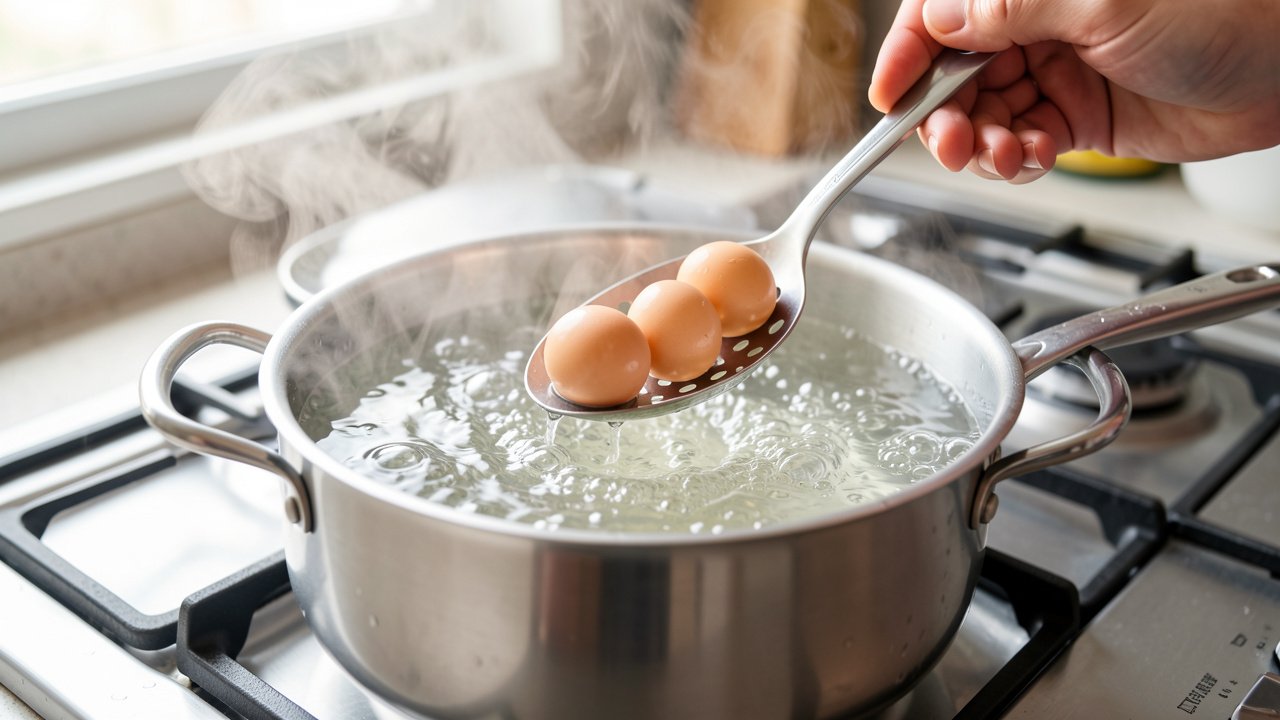
Bring a saucepan of water to a rolling boil, then lower the eggs in gently with a slotted spoon. Starting them in already-boiling water rather than cold water sets the outermost white fast and helps it release from the membrane later. Adjust the heat to a steady simmer and cook 11 minutes for a firm, fully set yolk, or 10 minutes if you like the center slightly jammy.
Shock and Peel
The moment the timer sounds, move the eggs into the ice water. This stops the cooking dead and contracts the egg away from the shell, which is half the reason peeling gets easier. Leave them five minutes until cold to the center, then crack each one all over on the counter and peel under a thin stream of running water, starting at the fat end where the air pocket sits. The water works under the membrane and lifts the shell off in sheets.
Sieve the Yolks
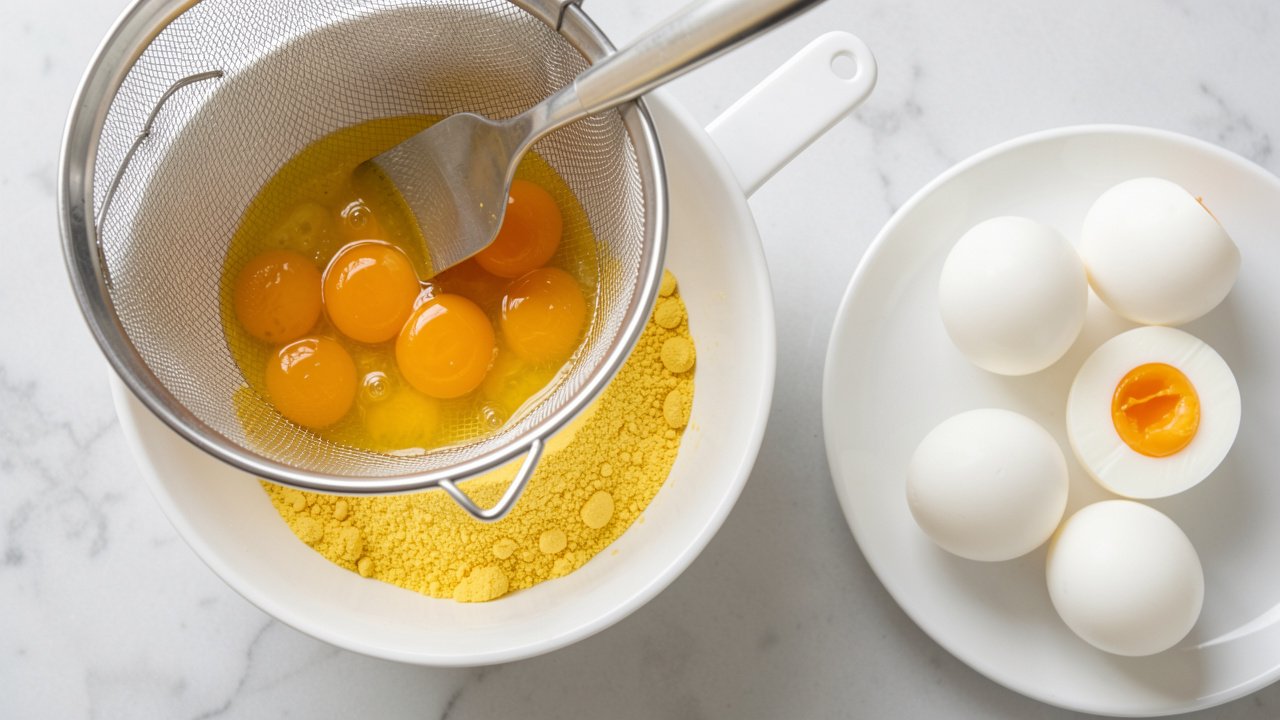
Halve each egg lengthwise with a clean, wet knife and pop the yolks into a fine mesh sieve set over a bowl. Press them through with the back of a spoon. What lands below is a light, sandy powder with no lumps at all. Set the whites cut side up on a plate. Add the mayonnaise, Dijon, lemon juice, hot sauce, and black pepper to the sieved yolks and beat until glossy and thick enough to hold a soft peak.
Fold in the Salmon, Then Season
Chop most of the smoked salmon finely, reserving a few strips for the top, and fold it into the filling along with the capers, dill, and chives. Now taste. The salmon and capers are both cured and salty, so the filling may already be seasoned enough. Add salt only if it needs it, and adjust the lemon if it tastes flat. Fold in about two-thirds of the drained tomato last, with a light hand, and save the rest for garnish.
Pipe, Garnish, and Serve
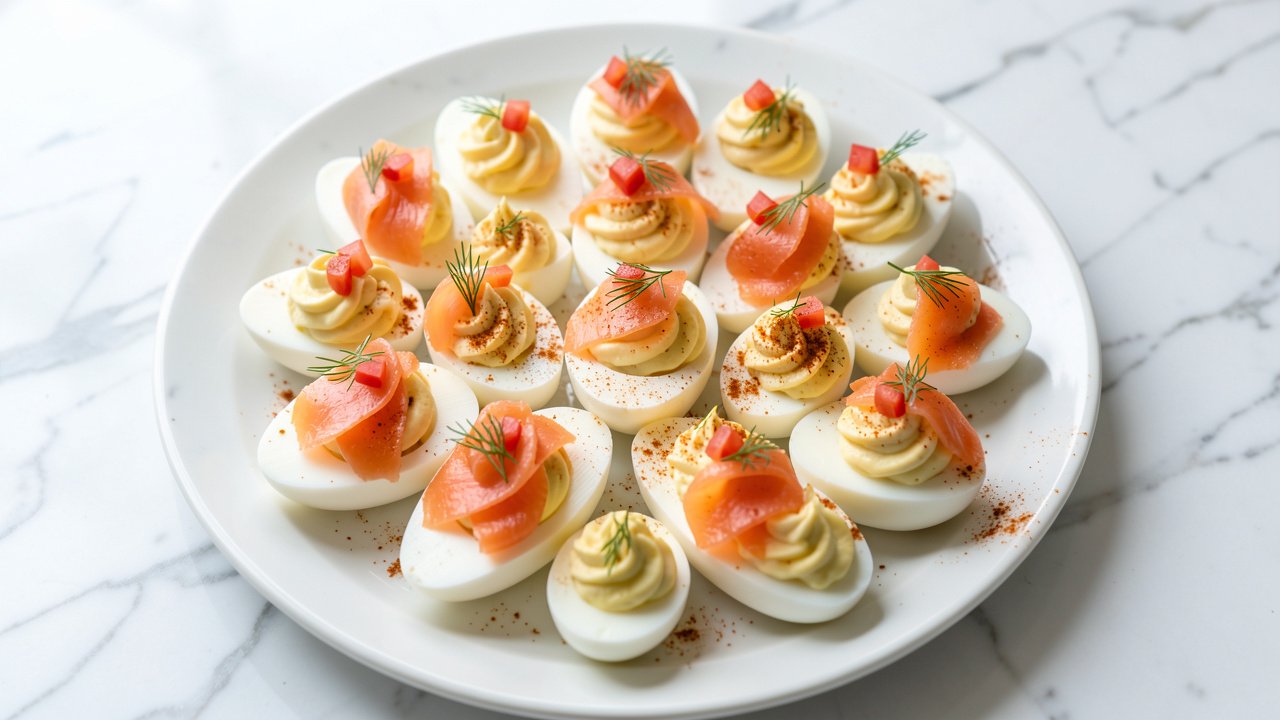
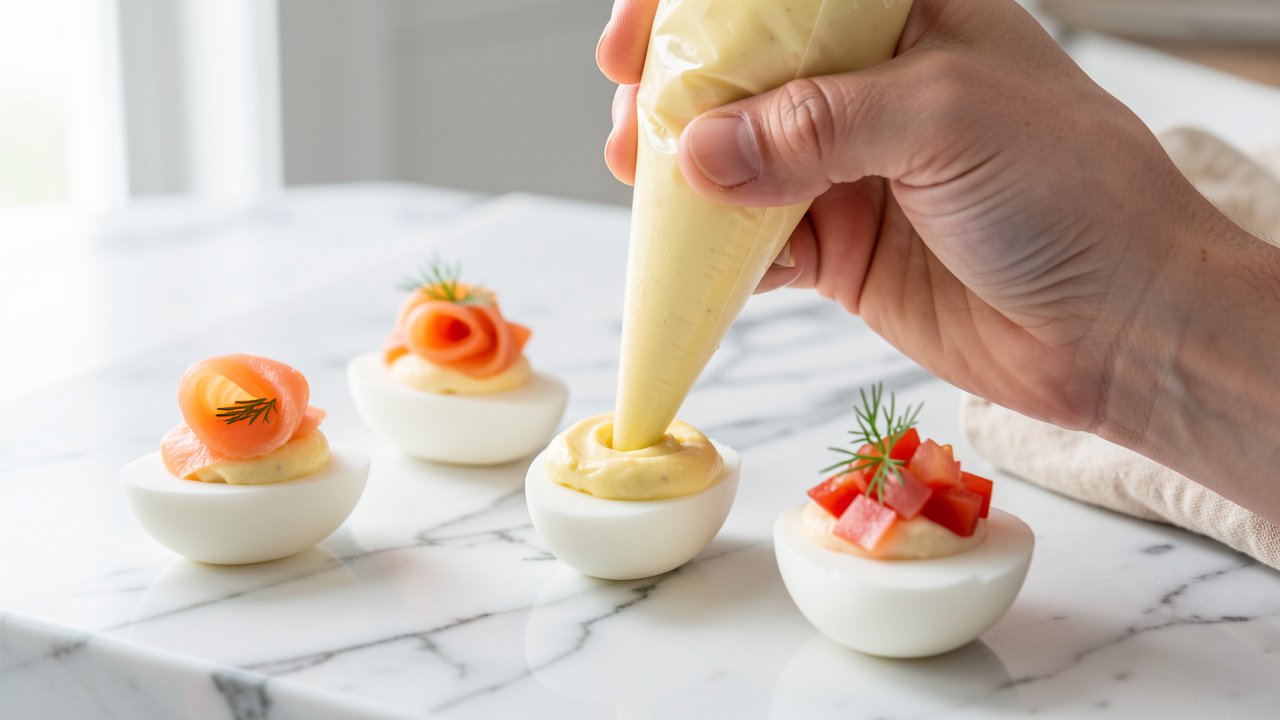
Spoon the filling into a piping bag, or a zip-top bag with a corner snipped off, and pipe it into the whites in a generous swirl that sits proud of the rim. Top each with a curl of reserved salmon, the remaining tomato, a frond of dill, and a dusting of smoked paprika. Serve within an hour or two, while the filling still holds its lines.
Chef’s Tips From Real Kitchen Testing
Steaming beats boiling if peeling is your nemesis. Set the eggs in a steamer basket over an inch of boiling water, cover, and steam 12 to 13 minutes. Steam penetrates the shell more gently and the whites release almost every time.
Cut a paper-thin sliver off the rounded bottom of each white half. The eggs sit flat instead of rocking on the platter, which matters more than it sounds when you are carrying a full tray.
Peel one test egg before you commit to the batch. If that first shell fights you, peel the rest fully submerged in the ice water bowl rather than under the tap; the water helps float the membrane free.
Recipe Variations
Serving Suggestions
- Chilled sparkling water or lemonade
- Buttered rye or pumpernickel toast points
- Cornichons, capers, and thin red onion
- A green salad to cut the richness
Nutrition Facts
Values are estimates per filled half and vary with the mayonnaise and the saltiness of the salmon you use.
Make-Ahead Tips
Deviled eggs are a make-ahead dish only if you keep the parts separate. Filled eggs weep within a few hours as salt draws moisture out of the whites, and the piped swirl slumps. Store the whites covered and the filling in a piping bag, both refrigerated, and they hold for up to two days.
Pipe on the day, ideally within an hour of serving, and let the bag of filling sit at room temperature for ten minutes first so it pipes smoothly instead of tearing. Add the tomato and dill garnish last.
Storage, Freezing & Reheating
Common Mistakes to Avoid
Troubleshooting
Whites tearing as you peel? The eggs are too fresh. Finish the batch submerged in water, use the ragged ones for egg salad, and buy the carton a week ahead next time.
Filling too loose? Chill it 20 minutes in the piping bag. If it is still slack, press through one extra hard-cooked yolk to soak up the excess.
Filling too stiff or crumbly? Beat in the reserved tomato liquid or a teaspoon of lemon juice, a little at a time, until it turns glossy.
Tastes flat despite the salmon? It is almost always acid, not salt. Another squeeze of lemon sharpens it.
A Note on Deviled Eggs
The word “deviled” entered British cooking around the eighteenth century to describe food made hot and highly seasoned, usually with mustard or cayenne. The dish is far older: Romans served boiled eggs with spiced sauces, and stuffed eggs turn up across medieval Europe. Mustard is the one ingredient that never left, which is why it stays here even though the salmon does most of the talking.
Pairing eggs with tomato is a newer, sunnier idea, and it works for the same reason it works in a tomato mozzarella salad: acidity cutting through fat. If you like that contrast, the briny direction of our tomato and artichoke salad with capers plays on the same axis.