Italian-American Recipes
San Francisco Seafood Stew in Tomato Broth
Last updated: September 30, 2026
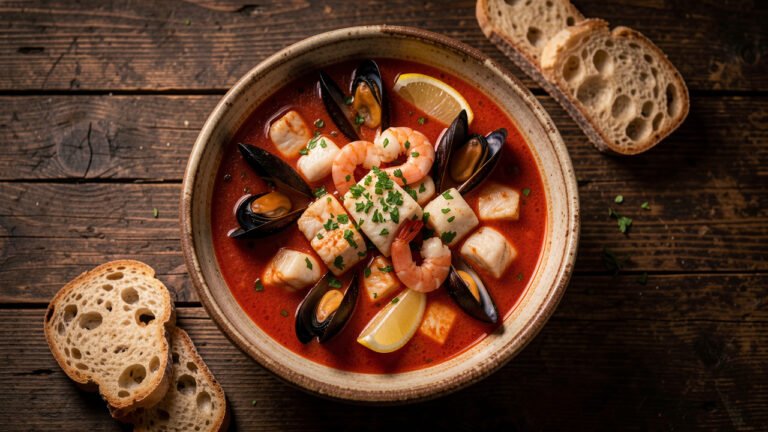
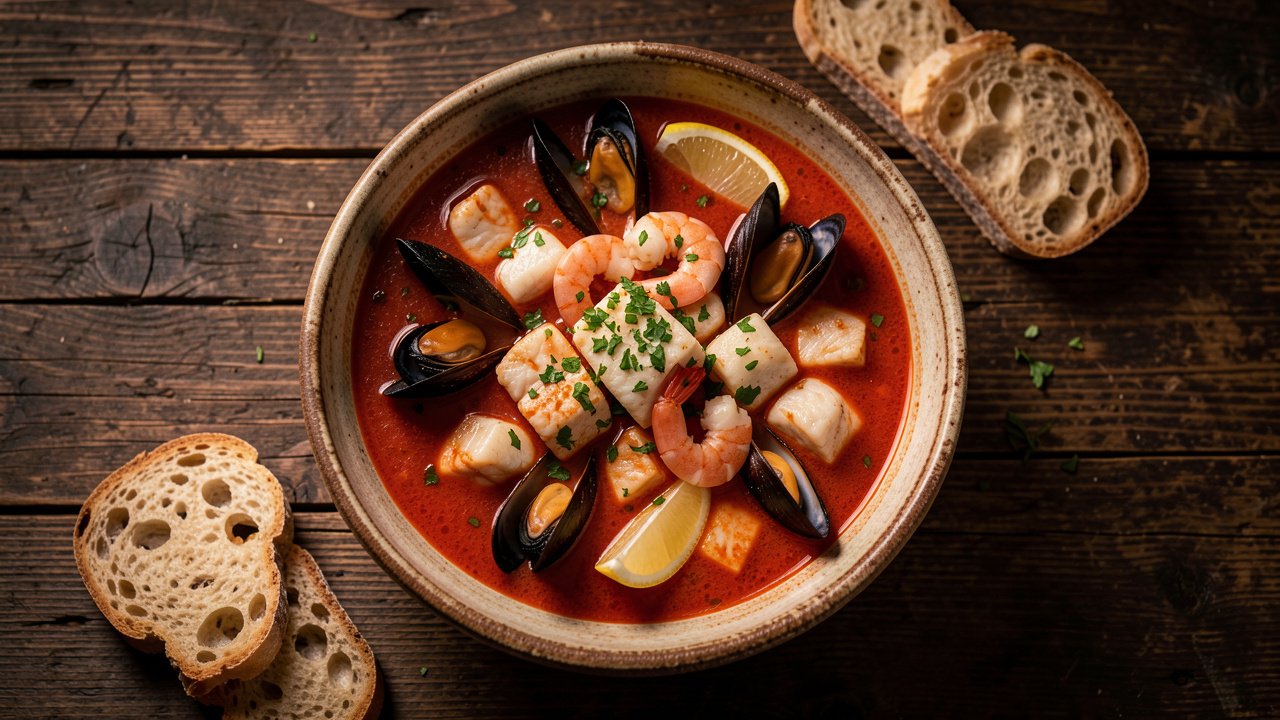
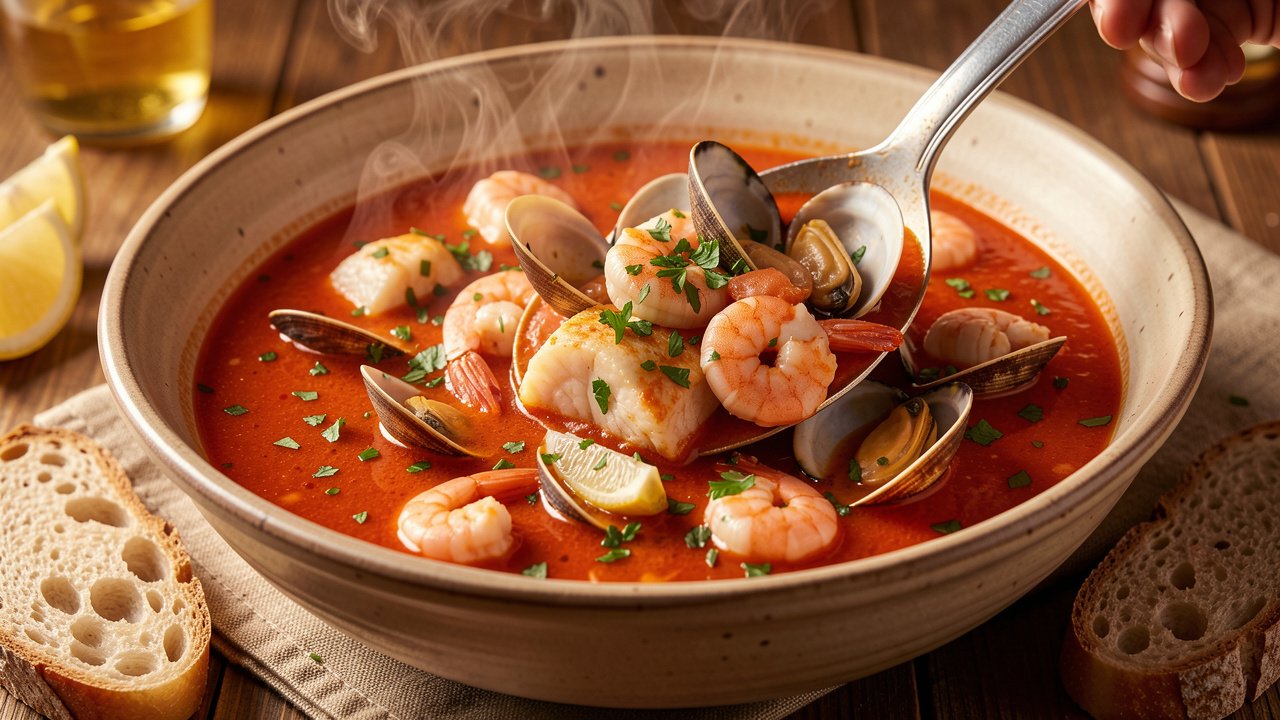
Cioppino is what happens when a wharf full of fishermen empties the day’s catch into one big pot of tomato broth. It is a stew of contrasts: sweet shrimp, briny clams and mussels, and tender white fish, all pulled together by a garlicky, herb-scented tomato base that tastes of the sea. Nothing about it is fussy, yet a bowl of cioppino feels like an occasion.
The whole thing is built in a single pot. You make a quick tomato broth, add the shellfish so it steams open and flavors the liquid, then slip in the fish and shrimp at the very end so they poach gently and stay silky. Serve it with a loaf of bread on the table and let everyone dig in with their hands.
Why This Cioppino Works
Great cioppino is really two things done well: a broth with deep tomato and garlic flavor, and seafood cooked just to the point of tenderness and no further. Get those two right and everything else takes care of itself. The recipe here builds a fast but full-flavored broth, then treats each type of seafood on its own timeline so nothing turns rubbery.
The base starts the way most good tomato cooking does, with onion and a generous amount of garlic softened in olive oil, then tomato paste stirred in and toasted for a minute to concentrate its sweetness. Crushed tomatoes and a good seafood or vegetable broth join to make a loose, brothy stew rather than a thick sauce, because cioppino is meant to be eaten with a spoon and mopped up with bread.
Timing the seafood is the heart of the method. Clams and mussels go in first, because they need a few minutes with the lid on to steam open and, as they do, they season the whole pot with their briny juices. Fish and shrimp go in last and poach gently in the hot broth for just a few minutes, so they stay silky instead of drying out.
It is also endlessly adaptable. Cioppino was born as a use-what-you-have dish, so the exact mix of seafood is up to you. Keep the broth and the garlic constant, swap the seafood to whatever is freshest, and you will get a pot that tastes like it belongs on Fisherman’s Wharf every single time.
Pro observation: Cioppino is fully halal as written, with no forbidden ingredients. The broth gets all of its depth from tomato, garlic, herbs, and the natural juices the shellfish release as they open, so you never miss a thing.
Ingredients
Kitchen Measurement Converter
Need to convert an amount while you measure? Pick a category, enter a value, and the result updates instantly.
Ingredient Notes & Substitutions
White Fish
Choose a firm fish that holds together in the broth: cod, halibut, sea bass, or snapper all work well. Cut it into large chunks so the pieces stay intact and do not flake apart. Any sustainable, firm white fillet from a trusted counter is a fine swap.
Shrimp
Large or jumbo shrimp keep a pleasant bite once cooked. Peeling them makes the stew easier to eat, though leaving the tails on looks handsome. Sea scallops make a lovely addition or substitute; add them at the same late stage as the shrimp.
Mussels & Clams
Buy them live, with tightly closed shells, and keep them cold until you cook. Scrub the shells, pull the wiry beard off the mussels, and discard any that stay open when tapped. Littleneck or Manila clams are ideal; use whatever your fishmonger recommends.
Tomatoes & Broth
Crushed tomatoes give a smooth, brothy base, while tomato paste deepens the color and flavor. A good seafood stock is traditional, but a light vegetable broth keeps things simple and works beautifully. Add a squeeze of lemon at the end for brightness.
Equipment
- Large heavy pot or Dutch oven
- Lid for the pot
- Wooden spoon
- Sharp knife and board
- Ladle
- Colander for the shellfish
Before You Start
1. Scrub and sort the shellfish first. Under cold water, scrub the clams and mussels and pull the wiry beards off the mussels. Tap any that gape open and toss the ones that will not close, because a dead shellfish going into the pot can spoil the whole batch.
2. Cut the fish into big, confident chunks. Small pieces disintegrate in the broth and leave you with a gritty stew instead of clean bites. Cut the fillet into two-inch pieces that can poach for a few minutes and still hold their shape on the spoon.
3. Season the broth before a single shell goes in. Once the seafood is nestled in you can barely stir without shredding the fish, so get the salt, pepper, and tomato depth exactly where you want them while the pot is still just broth.
Step-by-Step Instructions
Cioppino comes together quickly once the seafood goes in, so prep everything first. Scrub the shellfish, cut the fish into chunks, peel the shrimp, and warm the bread while the broth simmers so the whole meal reaches the table together.
Prep the Seafood and Aromatics
Scrub the mussels and clams under cold water, pull the beards off the mussels, and discard any shells that stay open when tapped. Cut the fish into large chunks, peel and devein the shrimp, and keep all the seafood cold. Finely chop the onion and mince the garlic so they are ready to go.
Build the Aromatic Base
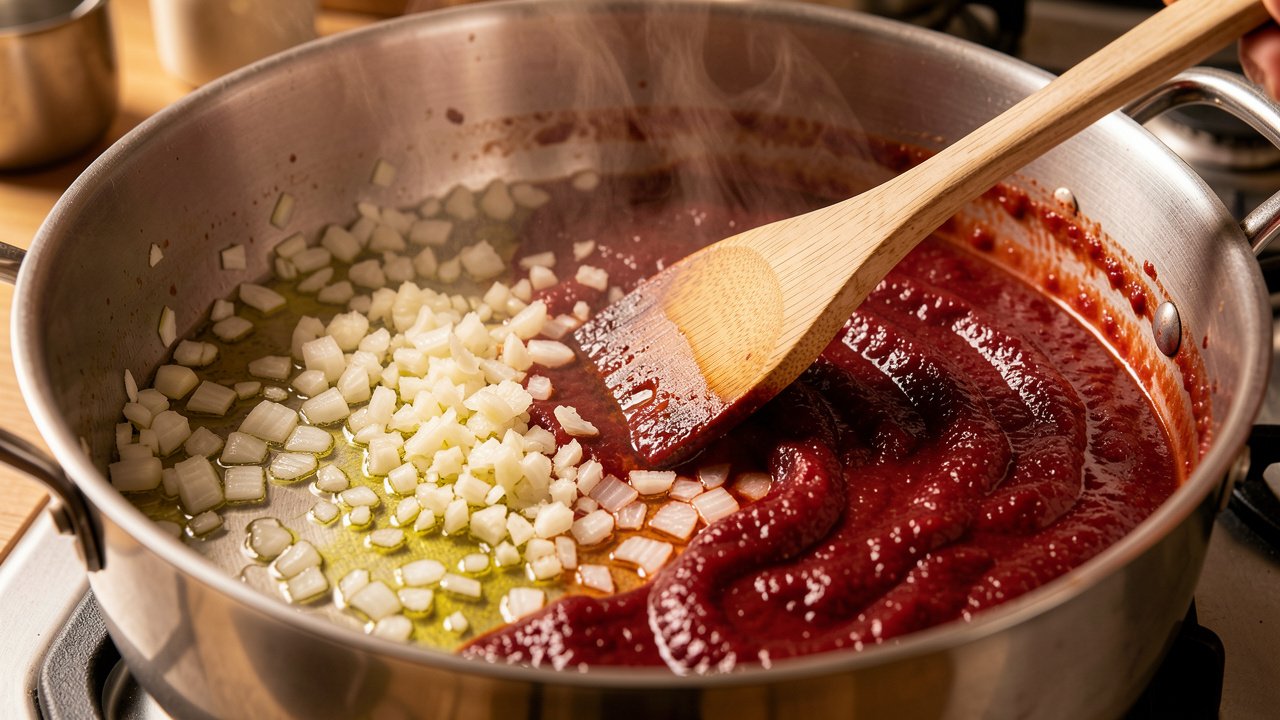
Warm the olive oil in a large heavy pot over medium heat. Add the onion with a pinch of salt and cook 4 to 5 minutes until soft, then stir in the garlic and cook for 1 minute until fragrant. Add the tomato paste and stir it around the pot for another minute so it darkens slightly and loses its raw edge.
Simmer the Tomato Broth
Pour in the crushed tomatoes and the seafood or vegetable broth, then stir in the dried oregano and a good pinch of salt and black pepper. Bring to a gentle simmer and let it cook, uncovered, for about 15 minutes so the flavors marry and the broth thickens slightly. Taste and adjust the seasoning now, before any seafood goes in.
Add the Clams and Mussels
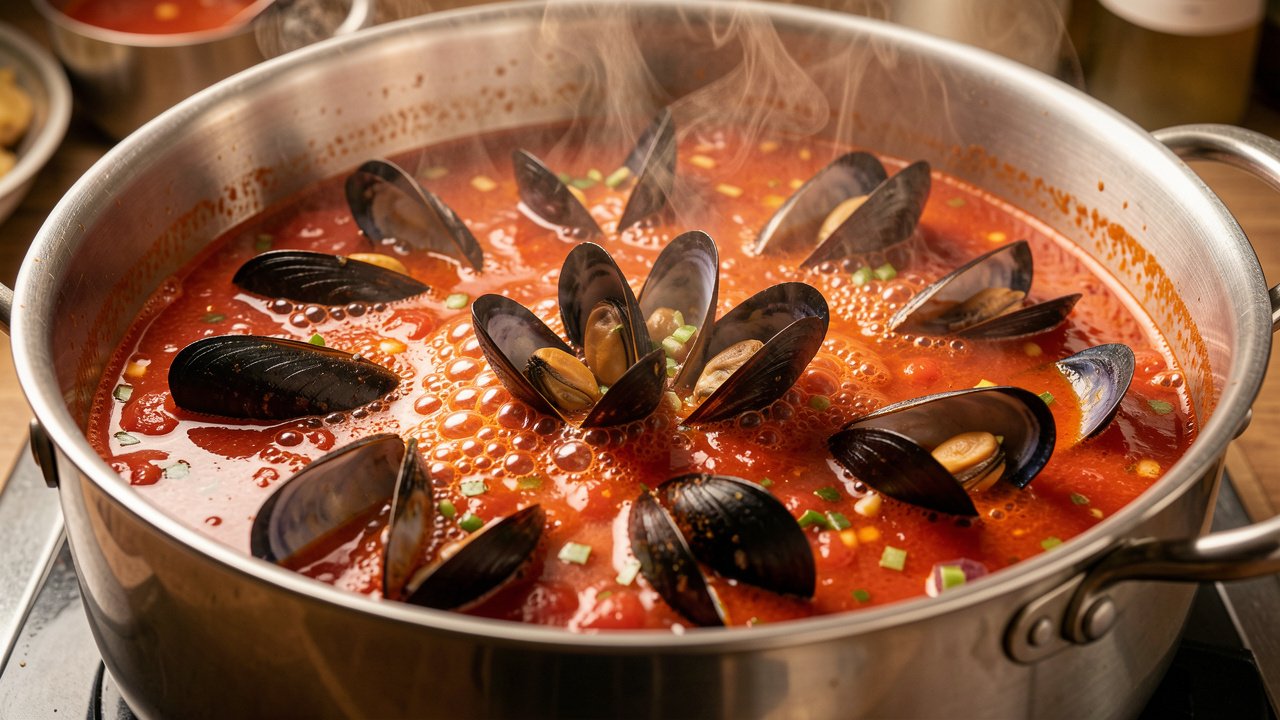
Nestle the clams and mussels into the simmering broth, cover the pot, and cook 5 to 7 minutes, until the shells open. As they open they release their briny juices into the broth, which is what gives cioppino its flavor of the sea. Discard any shellfish that refuse to open after cooking.
Add the Fish and Shrimp
Slip the fish chunks and shrimp into the broth, tucking them just under the surface. Lower the heat so the liquid barely simmers, cover, and cook 4 to 5 minutes, until the fish turns opaque and flakes easily and the shrimp curl and turn pink. Poach gently here; a hard boil will toughen the delicate seafood.
Finish and Serve
Take the pot off the heat as soon as the fish and shrimp are just cooked through. Stir in the chopped parsley and a squeeze of fresh lemon, then taste and add a little more salt if it needs it. Ladle into wide bowls, making sure everyone gets a mix of seafood and broth, and serve right away with plenty of crusty bread.
Chef’s Tips From Real Kitchen Testing
Cook each type of seafood on its own timeline. Shellfish first to open and season the broth, then fish and shrimp at the very end so they poach gently and stay tender.
Season and taste the broth before any seafood goes in. Once the delicate fish and shellfish are added, you want to stir as little as possible so nothing breaks apart.
Keep the pot at a gentle simmer, never a rolling boil. High heat turns shrimp rubbery and makes fish fall apart, while a soft simmer keeps everything silky.
Recipe Variations
Serving Suggestions
- Thick slices of warm, crusty bread for the broth
- A simple green salad with lemon dressing
- Extra lemon wedges for squeezing over each bowl
- Toasted garlic bread rubbed with olive oil
Nutrition Facts
| Nutrient | Amount per serving |
|---|---|
| Calories | 320 |
| Protein | 42 g |
| Carbohydrates | 18 g |
| Fat | 9 g |
| Saturated Fat | 1.5 g |
| Fiber | 4 g |
| Sugar | 8 g |
| Sodium | 900 mg |
Values are estimates per serving and vary with the exact seafood and brands you use.
Make-Ahead Tips
The tomato broth is even better made a day ahead. Cook it through the simmer stage, cool, and refrigerate. When you are ready to eat, reheat the broth to a simmer and add the seafood fresh, so it is never overcooked.
Storage, Freezing & Reheating
Common Mistakes to Avoid
Troubleshooting
Broth too thin? Simmer it a few minutes longer before the seafood goes in, or stir in an extra spoonful of tomato paste to thicken and deepen it.
Seafood tough or rubbery? It cooked too long or too hot. Add the fish and shrimp only at the end, keep the heat low, and pull the pot off as soon as they are just done.
Shells did not open? A few stubborn ones are normal; discard any that stay shut after cooking, as they were not good to begin with.
A Note on Italian-American Cooking
Cioppino was born in San Francisco in the late 1800s, in the kitchens and boats of Italian immigrant fishermen, many of them from the Ligurian coast around Genoa. After a day on the water they would build a communal stew from the unsold catch, each cook adding a share to the pot. The name is thought to come from the Ligurian word “ciuppin”, a humble fish stew from the old country, reshaped in California into the tomato-rich, garlicky bowl we know today.
It sits in a big family of Mediterranean seafood stews. The one it is most often confused with is bouillabaisse: where bouillabaisse is Provencal and built around saffron and fennel, cioppino is tomato-forward and unmistakably garlicky. It is closer in spirit to the tomato-and-seafood cooking of Italy, like a brothy acqua pazza or a pot of steamed mussels with fennel and tomatoes, and it shares a soul with dishes like the Basque marmitako and the Mexican chilapachole crab soup, all of them fishermen’s pots that turn the day’s catch into something generous.
What has kept cioppino alive for well over a century is exactly what created it: it is forgiving, communal, and endlessly adaptable. Use what is freshest, keep the tomato and garlic constant, and put a loaf of bread on the table, and you have a meal that still tastes of the wharf.