Filipino Recipes
Beef and Potato Braised in a Sweet-Savory Tomato Sauce
Last updated: November 4, 2026
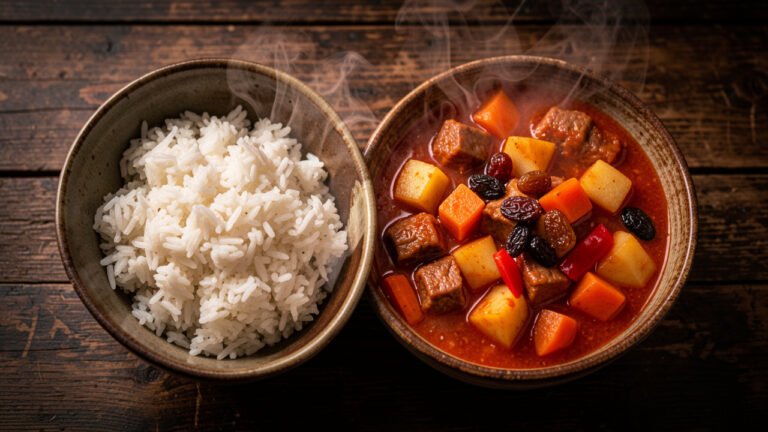
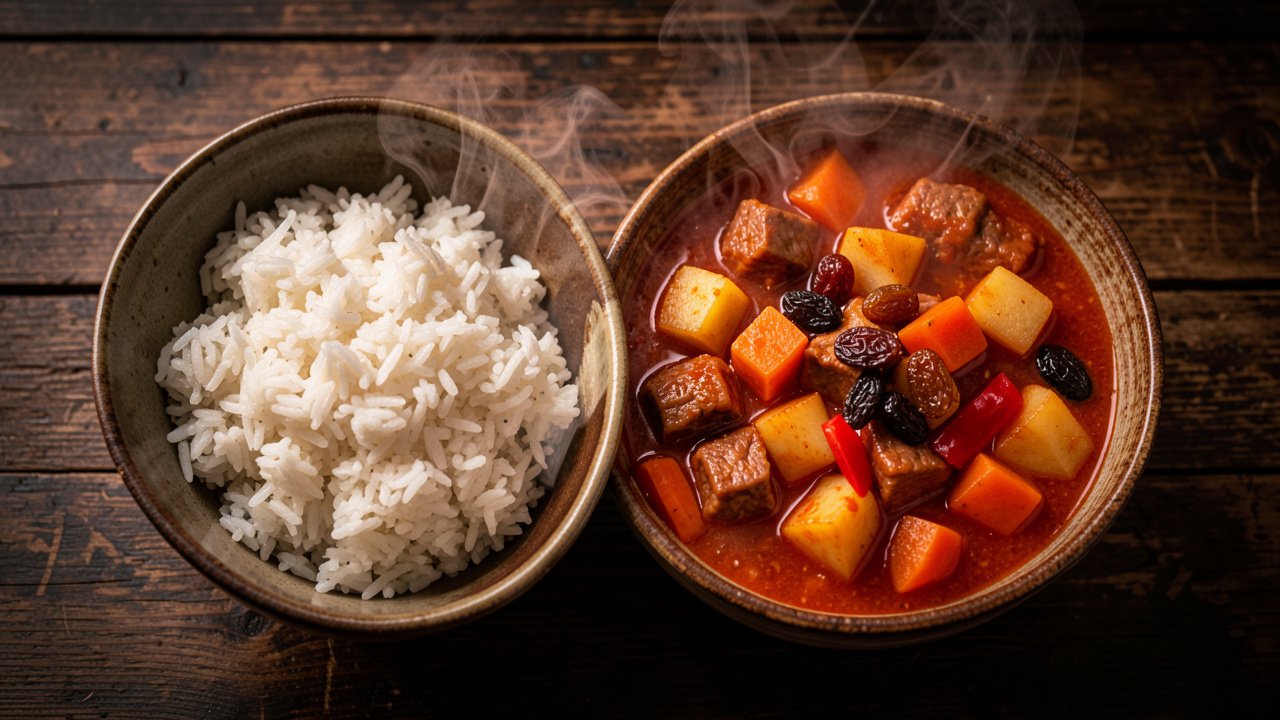
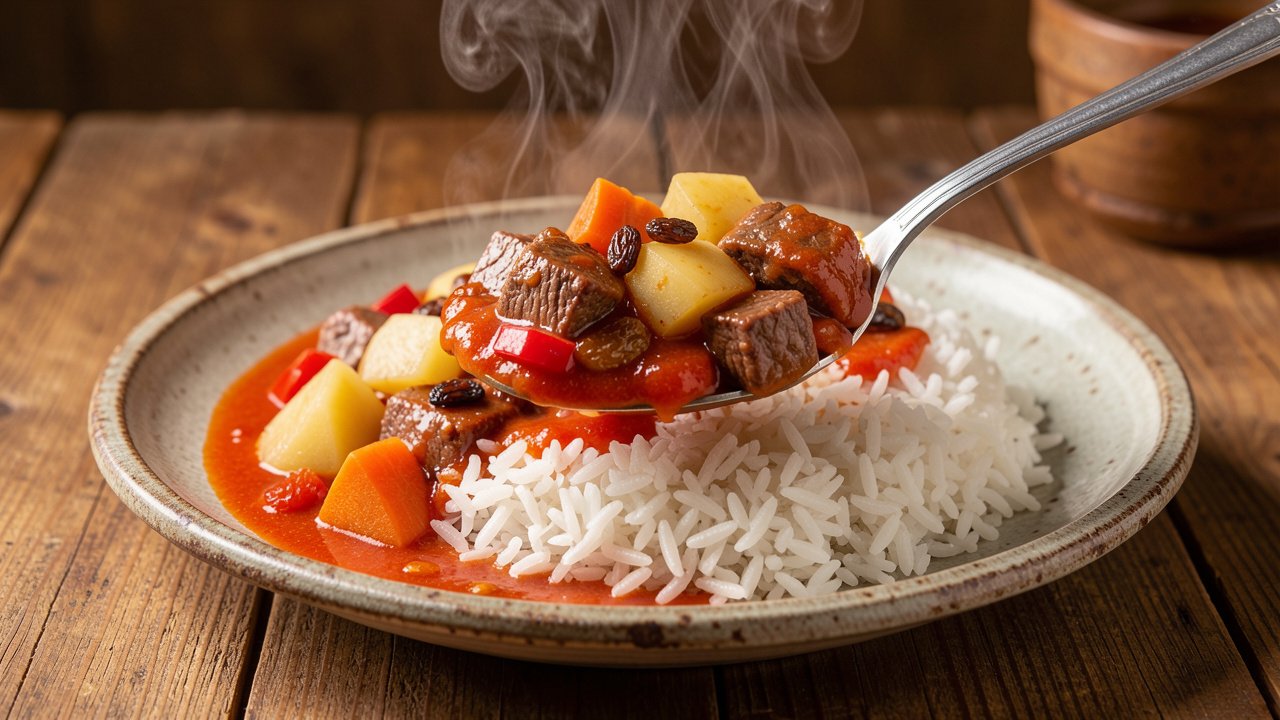
Filipino menudo is the dish that fills the biggest pot at every fiesta: little cubes of beef and potato braised slow in a glossy, sweet-savory tomato sauce, studded with carrot, red bell pepper, and plump raisins. One important thing before you start cooking, because it trips up almost everyone searching for it: this is not the Mexican tripe soup of the same name. Filipino menudo is a thick tomato-sauce stew of small-diced meat and potato spooned over rice, with no broth to slurp and nothing in common beyond the word.
The whole thing is built in a single pot. You brown the beef for a deep, savory base, braise it low with tomato sauce until it turns tender, then add the potato and carrot to soak up the sauce before the bell pepper and raisins go in at the end for color and a gentle sweetness. Set a bowl of hot rice beside it and dinner is done.
Why This Filipino Menudo Works
Great menudo is really two things done well: beef that is braised until it is fork-tender, and a tomato sauce that balances savory depth against a touch of sweetness. Get those two right and the rest of the pot falls into place. The recipe here browns the meat first for a rich base, braises it low and slow, and times the vegetables so each one lands at the right texture.
The sauce starts with onion and garlic softened in oil, then tomato sauce and diced tomatoes that cook down into a clingy, glossy coat rather than a thin broth. Soy sauce brings a salty, savory backbone, while the raisins melt slightly and lend the sweet-savory edge that makes Filipino menudo instantly recognizable at the table.
Timing the vegetables is the heart of the method. The beef gets a long head start because it needs the most time to turn tender. Potato and carrot go in once the meat is nearly there, so they cook through without collapsing, and the bell pepper and raisins join at the very end so the pepper keeps a little bite and the sauce stays bright.
It is also a forgiving, generous dish. Menudo was made to stretch a modest amount of meat across a big family gathering, so it reheats beautifully and only tastes better the next day. Keep the beef, tomato, and sweet-savory balance constant and you get a pot that tastes like a Filipino kitchen every single time.
Pro observation: This Filipino menudo is fully halal as written, built entirely on tender beef so there are no forbidden ingredients and nothing is lost. Browning the beef, the toasted tomato, the soy sauce, and the raisins give the sauce all of its depth and its signature sweet-savory character.
Ingredients
Kitchen Measurement Converter
Need to convert an amount while you measure? Pick a category, enter a value, and the result updates instantly.
Ingredient Notes & Substitutions
Beef
Use a cut that rewards a slow braise: chuck, round, or beef for stew, cut into small half-inch cubes so it turns tender in the time the sauce needs. Boneless short rib or brisket work beautifully too. Dice it small, the way the name intends, so every spoonful carries meat.
Potato & Carrot
Waxy or all-purpose potatoes hold their shape best; cut them and the carrot the same size as the beef so everything looks and eats in harmony. Add them once the meat is nearly tender, since potato left to simmer too long breaks down and turns the sauce starchy.
Tomato & Soy Sauce
Tomato sauce gives the clingy body, while a can of diced tomatoes adds freshness and a little texture. Soy sauce is the savory backbone; a drizzle of it plus a squeeze of calamansi or lemon at the end keeps the sweet-savory balance lively and stops the sauce tasting flat.
Raisins & Extras
Raisins are classic and melt into gentle sweetness; leave them out if you prefer a savory pot, or swap in a little sugar. A handful of green peas or a can of drained chickpeas is a common, fully halal addition stirred in near the end for extra heartiness.
Equipment
- Large heavy pot or Dutch oven
- Lid for the pot
- Wooden spoon
- Sharp knife and board
- Ladle
- Measuring cups and spoons
Before You Start
1. Cut the beef into even half-inch cubes. Menudo is defined by small, uniform pieces, and uneven cubes mean some shreds to mush while others stay chewy at the same braise time. A steady dice gives you meat that all reaches tender together.
2. Pat the beef dry and brown it in batches. Crowding the pot traps steam and the meat turns gray instead of searing, which robs the sauce of the deep savory base it is built on. A dry surface and a little breathing room give you real color.
3. Hold the potato back until the beef is nearly tender. Potato added at the start collapses into the sauce and turns it gluey and starchy long before the meat is done. Slip it in during the last stretch so it cooks through while still holding its shape.
Step-by-Step Instructions
Menudo is a slow braise, so get your mise en place ready before the pot goes on. Cube the beef, dice the potato, carrot, and bell pepper, chop the onion, mince the garlic, and measure the sauces so each goes in at the right moment while the meat simmers toward tender.
Prep the Beef and Vegetables
Cut the beef into small, even half-inch cubes and pat the pieces dry. Peel and dice the potatoes and carrot to roughly the same size, and dice the red bell pepper. Chop the onion, mince the garlic, and measure out the tomato sauce, diced tomatoes, soy sauce, and raisins so everything is within reach.
Brown the Beef
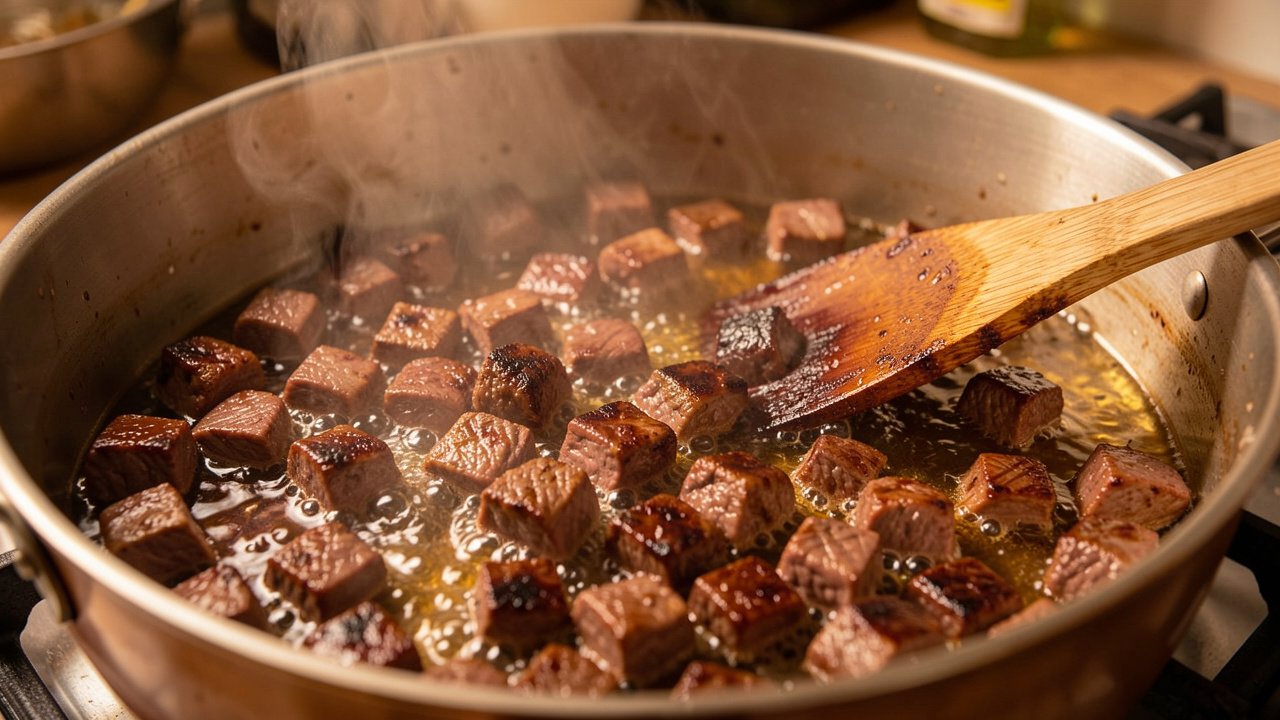
Warm the cooking oil in a large heavy pot over medium-high heat. Working in batches so you never crowd the pot, sear the beef cubes until they are browned on the outside, then set them aside. This step builds the deep, savory foundation that the tomato sauce clings to later.
Braise the Beef in Tomato Sauce
Lower the heat to medium and soften the onion in the same pot, then add the garlic and cook for a minute until fragrant. Return the beef, stir in the tomato sauce, diced tomatoes, soy sauce, and bay leaves, and add a cup of water. Bring to a gentle simmer, cover, and cook about 40 minutes, until the beef is nearly fork-tender.
Add the Potato and Carrot
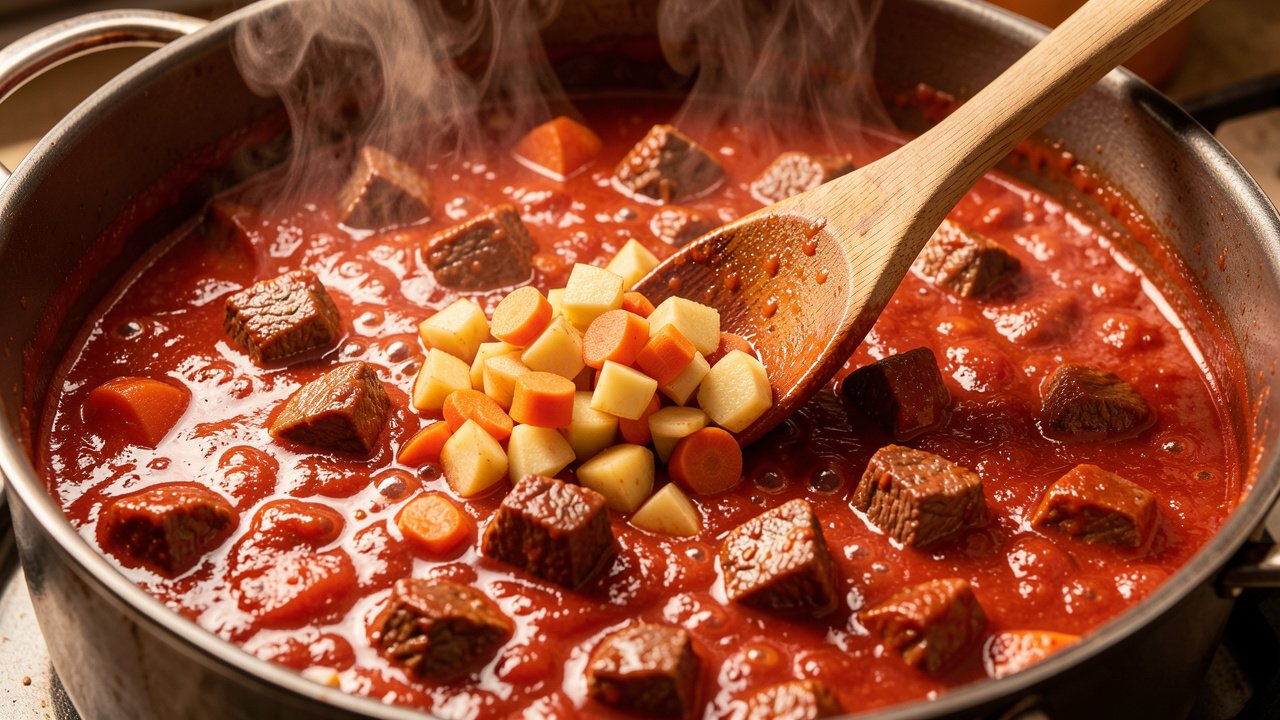
Stir in the diced potatoes and carrot, nestling them under the sauce. Cover and simmer 12 to 15 minutes, until they are tender and have soaked up the color of the sauce. If the pot looks dry, add a splash of water; if it looks loose, leave the lid off so it reduces and thickens.
Add the Bell Pepper and Raisins
Stir in the diced red bell pepper and the raisins and simmer, uncovered, for about 5 minutes. The pepper keeps a gentle bite, while the raisins plump and melt slightly into the sauce, giving menudo its signature sweet-savory finish. Taste and adjust the soy sauce and seasoning now.
Finish and Serve
Fish out the bay leaves and check the sauce: it should coat the back of a spoon and the beef should be meltingly tender. Add a squeeze of calamansi or lemon for brightness if you like, then spoon the menudo over hot steamed rice and serve right away while everything is glossy and hot.
Chef’s Tips From Real Kitchen Testing
Give the beef its full head start. The meat needs far longer than the vegetables, so braise it until nearly tender before anything else goes in, and the potato and carrot will finish perfectly without turning to mush.
Brown the beef in batches, never all at once. A crowded pot steams the meat and you lose the savory crust, which is the single biggest flavor you build into the sauce.
Balance sweet against savory at the end. Taste after the raisins melt in, then correct with a little more soy sauce for salt or a squeeze of citrus for brightness so the sauce sings rather than sits flat.
Recipe Variations
Serving Suggestions
- Steaming white rice to soak up the sauce
- Garlic fried rice for a heartier plate
- Atchara, the tangy pickled green papaya relish
- Soft bread rolls on the side for the sauce
Nutrition Facts
| Nutrient | Amount per serving |
|---|---|
| Calories | 420 |
| Protein | 28 g |
| Carbohydrates | 32 g |
| Fat | 20 g |
| Saturated Fat | 6 g |
| Fiber | 5 g |
| Sugar | 14 g |
| Sodium | 820 mg |
Values are estimates per serving and vary with the exact cut of beef and brands you use.
Make-Ahead Tips
Menudo is a make-ahead dream and genuinely tastes better the next day, once the sauce has had time to settle into the beef. Cook it through completely, cool, and refrigerate; the flavors deepen overnight. Reheat gently with a splash of water to loosen the sauce, and cook the rice fresh so the plate tastes just-made.
Storage, Freezing & Reheating
Common Mistakes to Avoid
Troubleshooting
Beef still tough? It simply needs more time. Keep the heat at a gentle simmer, cover, and braise another 15 to 20 minutes with a little extra water until the cubes turn fork-tender.
Sauce too thin? Simmer uncovered for a few minutes to reduce, or mash one piece of cooked potato into the pot to thicken it naturally and give the sauce more body.
Tastes too tart? The tomato can read sharp; stir in a pinch of sugar or a few extra raisins and let it simmer a minute, which softens the acidity into the signature sweet-savory sauce.
A Note on Filipino Cooking
Menudo is one of the dishes the Philippines absorbed from more than three centuries of Spanish influence, and the name itself comes from the Spanish menudo, meaning “small”, a nod to the little diced cubes of meat and vegetables that define the dish. Over generations Filipino cooks reshaped it into a sweet-savory tomato braise brightened with soy sauce and raisins, a style you also find echoed in its close cousin Filipino pochero.
Here is the disambiguation worth repeating, because it sends so many people to the wrong recipe: Filipino menudo is not the Mexican menudo, which is a brothy soup of tripe and hominy simmered for hours. They share only a Spanish name. The Filipino dish is a thick tomato-sauce stew of small-diced meat and potato eaten over rice, with no soup to it at all.
It belongs to a wider family of tomato-braised meat dishes around the world that stretch a little meat into a generous, saucy pot. It sits alongside cousins like the soy-sweet Indonesian semur and the Cuban ropa vieja, all of them built for feeding a crowd. Keep the beef, the tomato, and the sweet-savory balance constant, set out a pot of rice, and you have a dish that still tastes of a Filipino fiesta table.