Indonesian Recipes
Sweet, Spiced Beef Braised in Tomato and Kecap Manis
Last updated: September 30, 2026
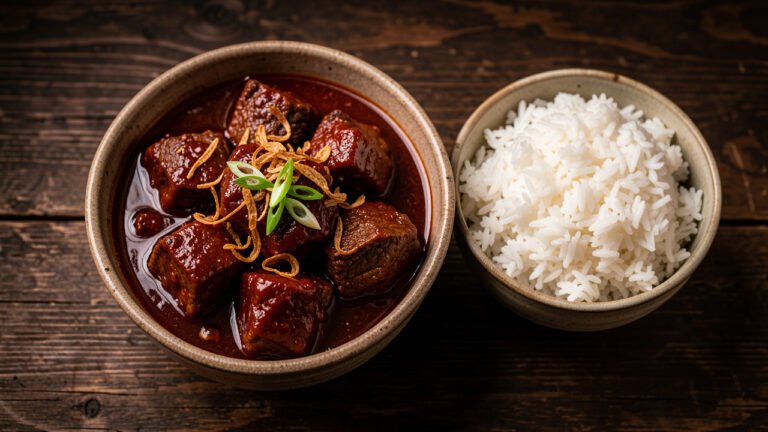
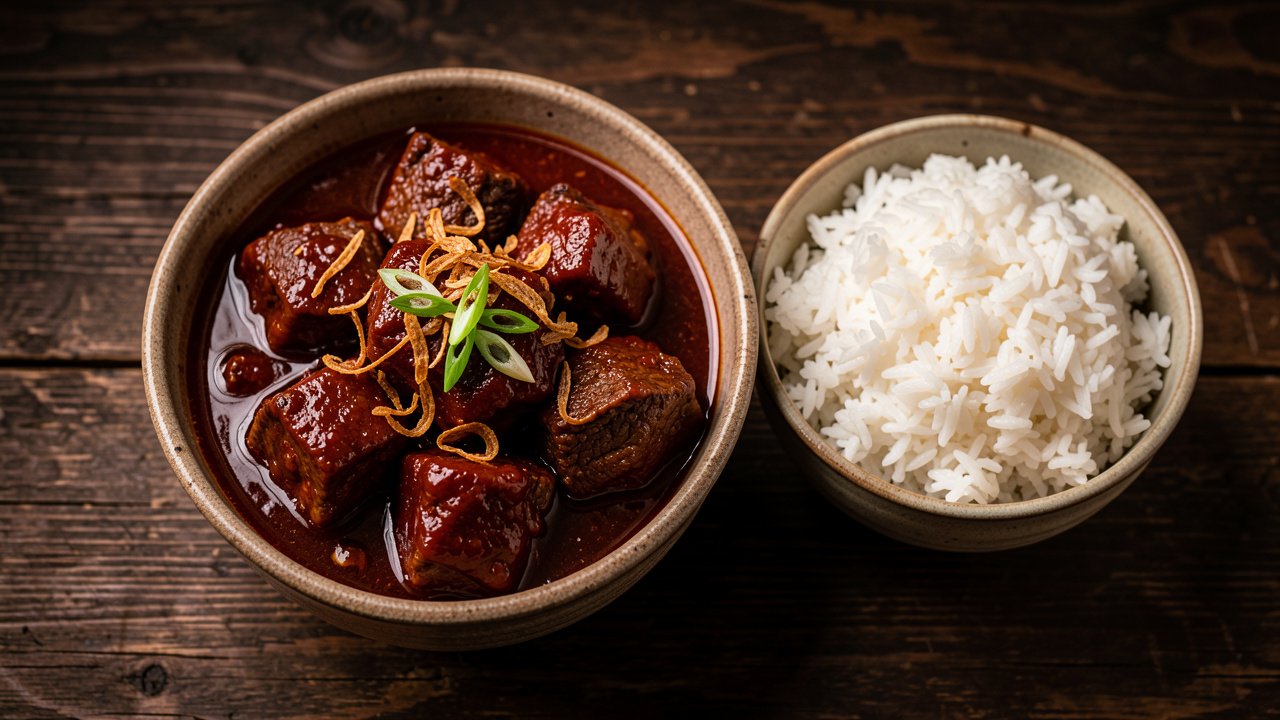
Semur is Indonesia’s answer to a Sunday braise: chunks of beef cooked slowly in a dark, glossy sauce that is sweet from kecap manis, tangy from tomato, and perfumed with nutmeg and clove. It smells of a home kitchen on a slow afternoon, and one spoonful over rice explains why it turns up at family tables and celebrations across the archipelago.
Everything happens in one pot. You fry an aromatic base of onion, garlic, and ginger, toast a few whole spices to wake them up, brown the beef, then let it braise gently in tomato and kecap manis until the meat gives way and the sauce clings to every piece. It is patient, forgiving cooking, and the reward is deep flavor from a short list of ingredients.
Why This Semur Works
Great semur is really two things done well: an aromatic base that is properly fried and bloomed, and beef braised slowly enough that its connective tissue melts into the sauce. Get those two right and the rest is patience. The recipe here builds a deep, dark base first, then gives the beef the low, unhurried heat it needs to turn tender.
The sauce starts the way most good Indonesian cooking does, with onion, garlic, and ginger softened in oil until sweet and fragrant. Whole spices, a few cloves and a piece of cinnamon with a grating of nutmeg, are toasted in the warm oil so their oils release into the pot rather than sitting dull in the liquid. Chopped tomato and a little tomato paste bring brightness and body, and kecap manis, the thick sweet soy of Indonesia, gives semur its signature dark color and sweet-savoury balance.
Timing the kecap manis is the heart of the method. Because it is sugary and thick, it can scorch and turn bitter if it hits a dry hot pan, so it goes in after the beef has browned and there is enough liquid to keep it moving. From there the pot just simmers gently, the beef slowly surrendering while the sauce reduces around it.
It is also forgiving and flexible. Semur is home cooking, so the exact spicing bends to the cook: more clove here, a knob of palm sugar there, potatoes or eggs added to stretch it further. Keep the tomato, the kecap manis, and the slow braise constant, and you will get a glossy, deeply flavored pot every time.
Pro observation: Semur is fully halal as written, with no forbidden ingredients. Beef is naturally halal, and kecap manis, the sweet soy sauce at the heart of the dish, is simply fermented soybeans and palm sugar, so nothing needs to be swapped or left out.
Ingredients
Kitchen Measurement Converter
Need to convert an amount while you measure? Pick a category, enter a value, and the result updates instantly.
Ingredient Notes & Substitutions
Beef
Choose a well-marbled braising cut: chuck, brisket, or shin all reward long cooking, their connective tissue melting into the sauce for body and shine. Cut into even chunks so the pieces cook at the same pace. Boneless short rib is a richer swap, and cubed lamb works beautifully too.
Kecap Manis
This thick, sweet soy sauce is the soul of semur, giving it dark color and its sweet-savoury balance. Look for it at any Asian grocer or the international aisle. In a pinch, thin regular soy sauce with a spoonful of palm or brown sugar until syrupy, though the bottled kind is worth seeking out.
Tomatoes & Aromatics
Ripe fresh tomatoes bring brightness and a little acidity to cut the sweetness, while tomato paste deepens the color and body. Onion, garlic, and ginger form the fragrant base; shallots are traditional and can stand in for the onion if you have them.
Warm Spices
Nutmeg and clove are the classic warmth of semur, with a stick of cinnamon rounding them out. Add a bruised stalk of lemongrass or a star anise for extra fragrance if you like. Keep the spicing gentle; it should perfume the beef, not overpower the sweet-savoury sauce.
Equipment
- Heavy pot or Dutch oven
- Lid for the pot
- Wooden spoon
- Sharp knife and board
- Box grater or microplane
- Ladle
Before You Start
1. Cut the beef into even chunks from a marbled cut. Use chuck, brisket, or shin and trim it into pieces about an inch and a half across. Lean cuts dry out over a long braise, while the collagen in a marbled cut melts into the sauce; uneven pieces finish unevenly, some falling apart while others are still tough.
2. Measure the kecap manis into a cup before the pan is hot. It is thick and sugary and will scorch in seconds if you pour it straight from the bottle onto bare metal. Having it pre-measured lets you stir it into the liquid quickly, so it sweetens the braise instead of catching and turning bitter.
3. Count out the whole spices and have them ready. The cloves, cinnamon, and grated nutmeg go in at a precise early moment so their oils have the full braise to infuse the pot. Hunting for them once the beef is already browning means they land too late to flavor the sauce properly.
Step-by-Step Instructions
Semur rewards a little order, so prep before you cook. Cut the beef, slice the onion, mince the garlic and grate the ginger, chop the tomatoes, count out the whole spices, and pre-measure the kecap manis. With everything ready, the braise runs smoothly from base to finish.
Prep the Beef and Aromatics
Pat the beef chunks dry so they will brown rather than steam, and season them lightly with salt. Thinly slice the onion, mince the garlic, and grate the ginger. Chop the tomatoes, and set out the whole cloves, cinnamon stick, and nutmeg along with the pre-measured kecap manis so everything is within reach.
Toast the Spices and Fry the Base
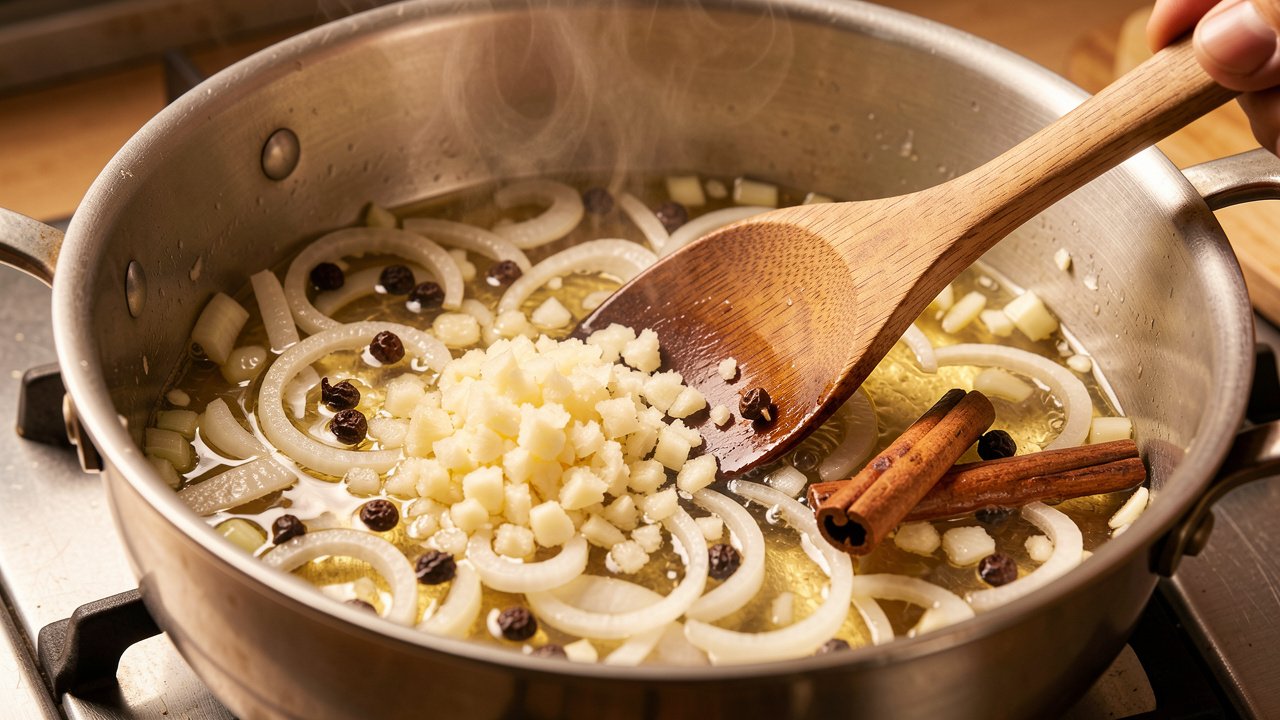
Warm the oil in a heavy pot over medium heat. Add the whole cloves and cinnamon stick and let them sizzle for about 30 seconds until fragrant, then add the onion and cook 4 to 5 minutes until soft and golden. Stir in the garlic, ginger, and nutmeg and cook another minute, until the base smells deeply aromatic.
Brown the Beef and Add the Tomato
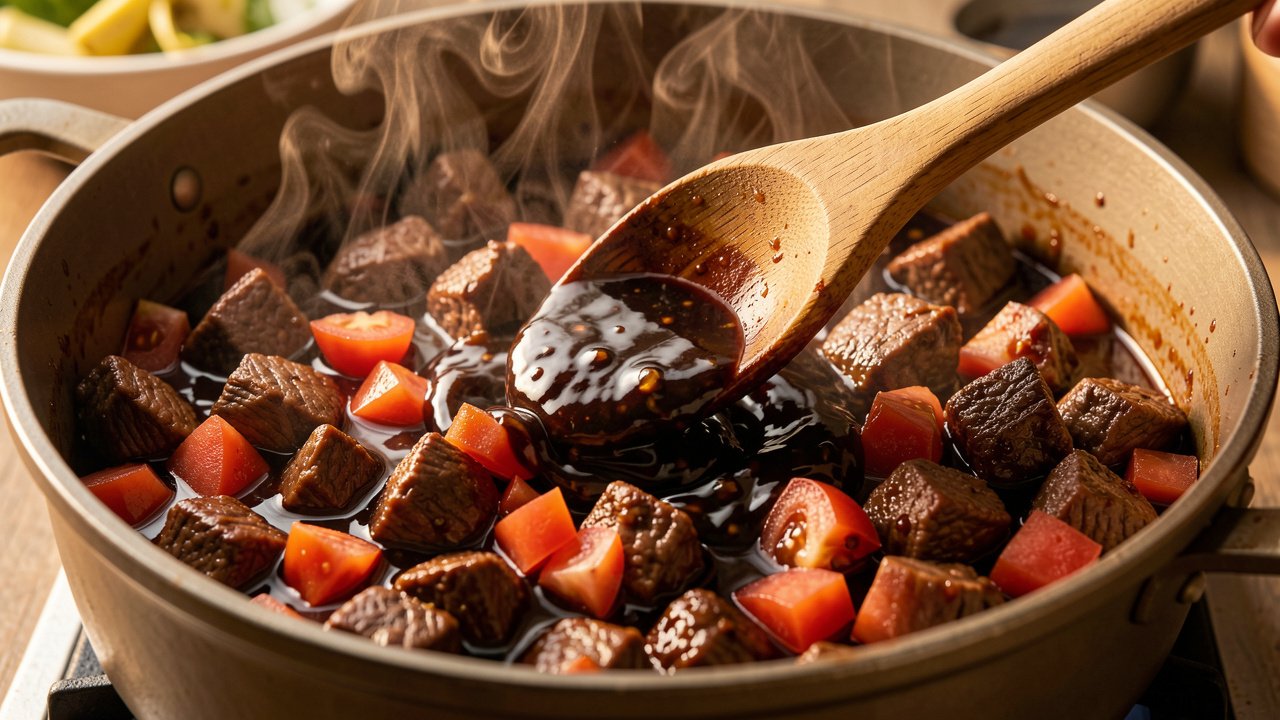
Push the base to one side, raise the heat, and add the beef in a single layer. Let it brown on a couple of sides without stirring too much, about 5 minutes, to build a deep savory foundation. Stir in the tomato paste and cook it for a minute, then add the chopped tomatoes and let them break down and soften.
Add the Kecap Manis and Liquid
Now stir in the pre-measured kecap manis, coating the beef, then pour in the beef broth or water and scrape up any browned bits from the bottom. Bring it to a gentle simmer. Adding the kecap manis at this point, once there is liquid to move it around, keeps its sugar from scorching on the hot pot.
Braise Low and Slow
Cover the pot, lower the heat to keep the liquid at a bare, lazy simmer, and braise for about 1 hour and 30 minutes, stirring now and then. The beef is ready when a fork slides in with no resistance. Keep the heat gentle throughout; a hard boil seizes the meat and leaves it stringy instead of tender.
Reduce Until Glossy and Serve
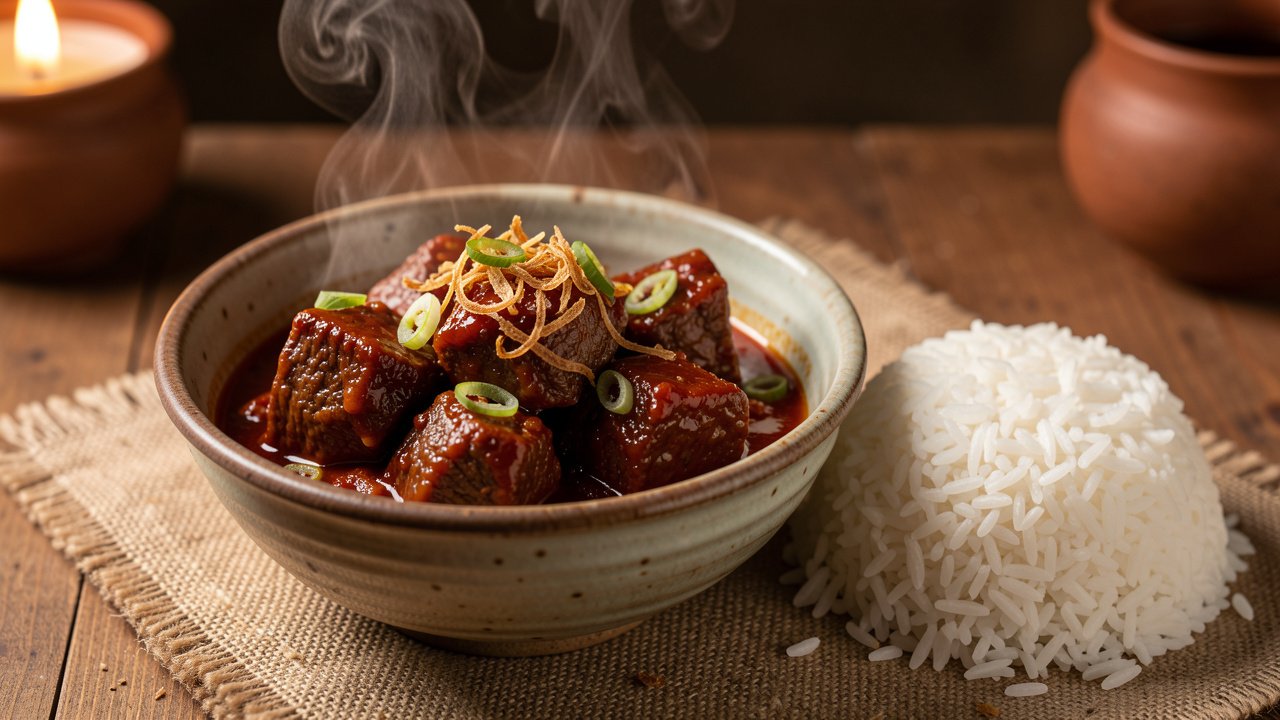
Uncover the pot and simmer for a final 8 to 10 minutes to reduce the sauce until it turns dark and glossy and clings to the beef. Taste and balance with a pinch of salt or a squeeze of lime if it is too sweet. Fish out the cinnamon stick and cloves, then serve over steamed rice, scattered with fried shallots and scallion.
Chef’s Tips From Real Kitchen Testing
Brown the beef properly before the liquid goes in. A good crust on each chunk builds the deep savory base that balances the sweetness of the kecap manis; skip it and the sauce tastes flat.
Add the kecap manis only after there is liquid in the pot. Its sugar catches and turns bitter on a dry hot surface, so stir it into the tomato and broth where it can dissolve and sweeten the braise safely.
Keep the braise at a bare simmer, never a rolling boil. Gentle heat is what dissolves the collagen and leaves the beef fork-tender, while a hard boil tightens the meat and dries it out.
Recipe Variations
Serving Suggestions
- A generous mound of steamed white rice
- Crisp fried shallots and sliced scallion on top
- Sliced fresh tomato and cucumber on the side
- A spoonful of sambal for those who want heat
Nutrition Facts
| Nutrient | Amount per serving |
|---|---|
| Calories | 430 |
| Protein | 38 g |
| Carbohydrates | 22 g |
| Fat | 21 g |
| Saturated Fat | 7 g |
| Fiber | 2 g |
| Sugar | 14 g |
| Sodium | 780 mg |
Values are estimates per serving and vary with the exact cut of beef and brands you use.
Make-Ahead Tips
Semur is even better the next day. Braise it through completely, cool, and refrigerate; overnight the flavors deepen and the sauce thickens as it rests. Reheat gently on the stove with a splash of water to loosen the sauce, and it will taste like you made it fresh.
Storage, Freezing & Reheating
Common Mistakes to Avoid
Troubleshooting
Sauce too thin? Uncover and simmer harder to reduce it, or lift the beef out and boil the sauce down on its own until it turns dark and glossy, then return the meat.
Beef still tough? It simply needs more time. Keep braising gently until a fork slides in easily; toughness means the collagen has not finished breaking down yet, and rushing the heat will not fix it.
Too sweet? Balance it with a squeeze of lime, a splash of the tomatoes’ acidity, or a pinch of salt. The sweetness from kecap manis is easy to temper once the braise is done.
A Note on Indonesian Cooking
Semur carries its history in its name. The word is thought to come from the Dutch “smoor”, meaning to braise or stew, a trace of the colonial kitchens where the technique took root before Indonesian cooks made it entirely their own. What began as a plain braise became something sweeter and more fragrant, built on kecap manis and warm spices, and today semur appears in countless regional forms from Betawi Jakarta to Aceh, at everyday dinners and at feasts alike.
It sits in a big family of sweet-savoury braises, and the one it is most often set beside is rendang. Where rendang is dry and coconut-rich, cooked down until the sauce all but disappears into the meat, semur stays saucy and glossy, its flavor leaning on soy and tomato rather than coconut. It shares a spirit with other slow-simmered tomato dishes across the region and beyond, from a Vietnamese canh chua to a Malaysian asam pedas, each one turning humble ingredients into something deeply comforting over rice.
What has kept semur on the table for generations is exactly what makes it worth cooking: it is forgiving, adaptable, and generous. Keep the tomato, the kecap manis, and the slow braise constant, add potatoes or eggs to stretch it, and you have a pot that feels like home in every spoonful.