
Greek Recipes
Mussels Steamed in a Fennel and Tomato Broth
This is a fast dish with one serious rule attached: the mussels must be alive when they go in the pot. Get that part right and the rest is easy, because the mussels season the broth themselves as their shells pop open.
Fennel and fennel seeds both carry the same gentle anise note, so they build on each other, and the tomatoes keep the broth from tasting thin. Have the bread cut before you start. This is a dish you eat the minute it is done.
Last updated: September 29, 2026
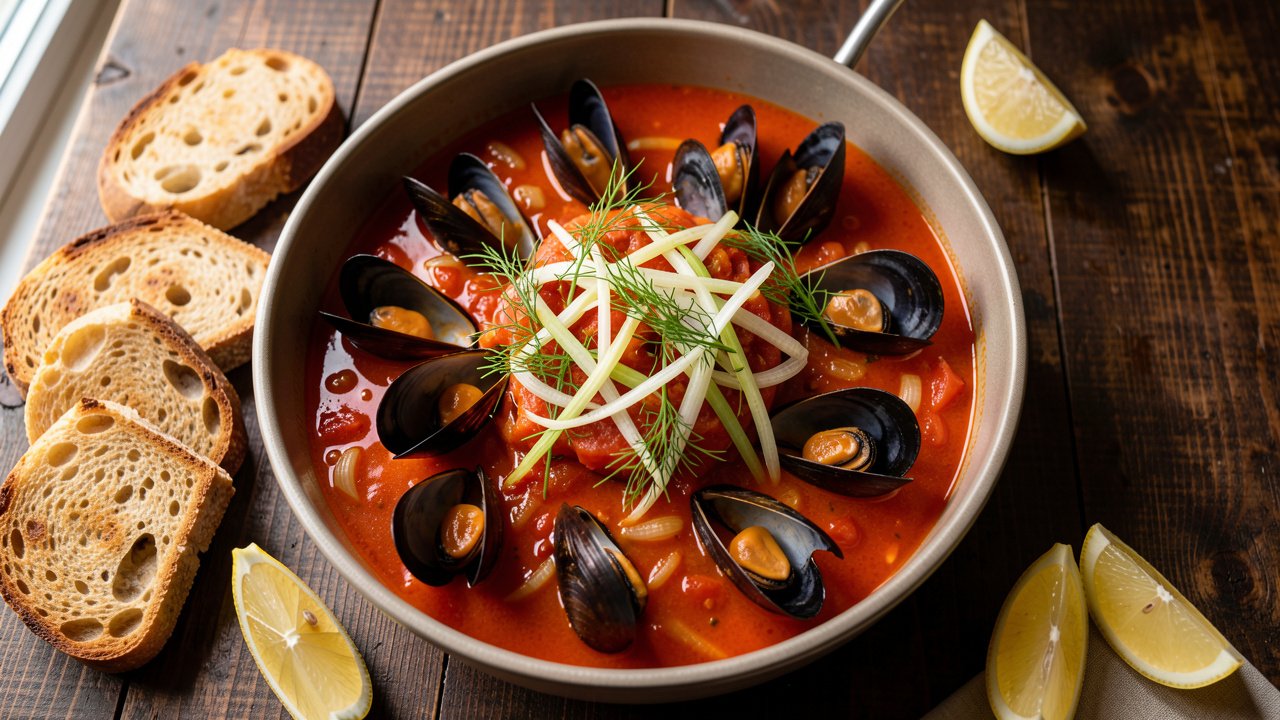
Why Steamed Mussels with Fennel and Tomatoes Work
Mussels come with their own seasoning. Trapped inside every shell is a spoonful of salty juice, called the liquor, and it pours into the pot the moment the shell opens. That liquor is why this broth tastes like the sea without any stock.
Fennel is the bridge. Sliced thin and sweated slowly in oil, it turns soft and sweet, and its faint anise note carries all the way through the broth. Rushed fennel stays stringy and raw-tasting, and the whole broth suffers for it.
Tomato does the structural work. Mussel liquor plus stock is sharp and watery on its own, so the tomatoes add acid, a little sweetness, and enough body to cling to bread. Without them you have salty broth; with them you have a sauce.
A squeeze of lemon goes in last and stays a bright top note. It lifts the licorice scent of the fennel and makes people ask what is in the pot. A little is plenty, because lemon is sharp and will bully everything else if you add it with a heavy hand.
Pro observation: Taste the broth before you serve it, not before you steam. Four pounds of mussels can add a startling amount of salt, and a broth that tasted flat at the start is often seasoned perfectly by the time the shells are open.
How to Buy and Store Live Mussels
Buy mussels live, on the day you plan to cook them if you can. At the counter, look for shells that are closed. Some will gape a little, and that is normal.
Here is the test that matters. Tap an open shell against the counter or squeeze it shut with your fingers, and a live mussel will slowly pull itself closed. A raw mussel that stays open after a tap is dead, and you throw that one away.
Storing Them at Home
Mussels are alive, and they breathe. Put them in a bowl in the fridge, no lid, and lay a damp cloth or damp paper towel over the top. Set the bowl on the lowest shelf.
Never seal them in a plastic bag, and never store them sitting in water. Both will suffocate them, and dead mussels are what you are trying to avoid. Cook them within a day or two of buying.
Do not clean them early. Scrub the shells and pull the beards right before you cook, not hours ahead. Debearding kills the mussel, so a batch you cleaned in the morning is a batch of dead shellfish by dinner.
Ingredients
Kitchen Measurement Converter
Quickly convert between common cooking measurements without leaving the recipe. Pick a category, enter a value, and the result updates instantly.
Ingredient Notes & Substitutions
Mussels
Farmed rope-grown mussels are the easy choice. They are cleaner, they have barely any beard, and they are usually free of grit. Wild mussels taste stronger but need more scrubbing.
Fennel
Pick a firm, pale bulb with the green fronds still attached, because the fronds are your garnish. Slice the bulb thin, and save a small handful of fronds for the end.
Broth and Lemon
Vegetable or seafood broth gives the mussels a savory liquid to open into, and a squeeze of fresh lemon at the end lifts everything. Lean on extra fennel and a pinch of crushed fennel seeds for the gentle anise note that ties the dish together.
Tomatoes
Ripe fresh tomatoes are lovely in summer. Off season, one 14-ounce can of chopped tomatoes is the better choice, since pale winter tomatoes give you water instead of flavor.
Equipment
- Wide pot with a lid
- Stiff brush or scourer
- Colander
- Fine sieve
- Sharp knife and board
- Slotted spoon
Before You Start
1. Cut the bread now. Once the mussels open you have minutes, not hours. Slice and toast the bread while the fennel is sweating.
2. Use a wide pot, not a tall one. Mussels steam best in a shallow layer. A wide pot with a tight lid opens them evenly instead of cooking the bottom ones to rubber.
3. Clean the mussels last. Do the scrubbing and debearding while the fennel and tomatoes are already cooking, so the mussels go straight from the sink to the pot.
Step-by-Step Instructions
Slice the Fennel and Aromatics
Cut the fennel bulb in half through the root, cut out the tough core, and slice the halves as thin as you can. Thin slices melt; thick ones stay crunchy and stringy. Chop the fronds and set them aside, then slice the garlic and shallot.
Sweat the Fennel Slowly
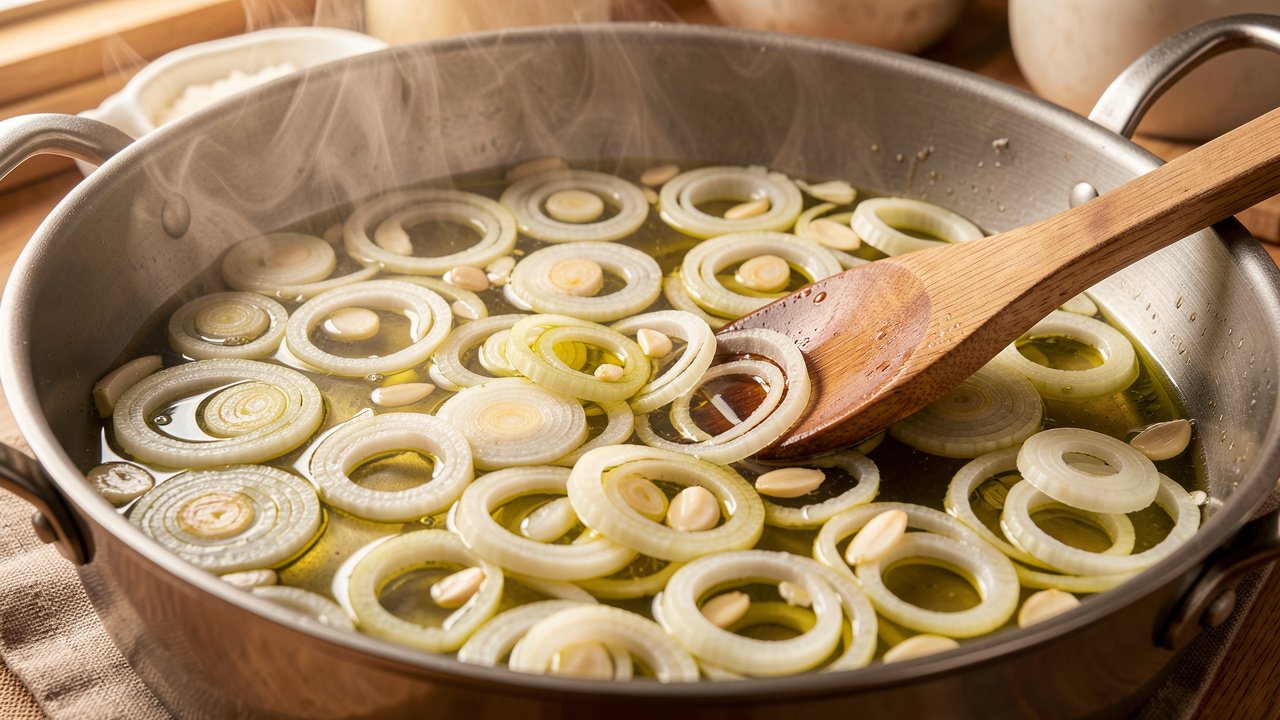
Warm the olive oil in a wide pot over medium-low heat and add the fennel, shallot, and a crushed pinch of fennel seeds. Cook 10 to 12 minutes, stirring now and then. You want it limp and sweet with no color, so if it starts to brown, turn the heat down and add a spoonful of water.
Add the garlic and pepper flakes for the last minute, just until you can smell the garlic. Do not let it brown, because burnt garlic turns the whole broth bitter.
Clean the Mussels
Tip the mussels into a colander and rinse under cold running water. Scrub each shell with a stiff brush to knock off any barnacles or mud. Tap any gaping shells and set aside any that refuse to close, along with any with cracked shells, and throw those away.
To debeard, grab the wiry tuft poking from the shell and pull it firmly toward the hinge, not toward the opening. Pulling the wrong way can tear the mussel. Many farmed mussels have almost no beard at all.
Build the Tomato Broth
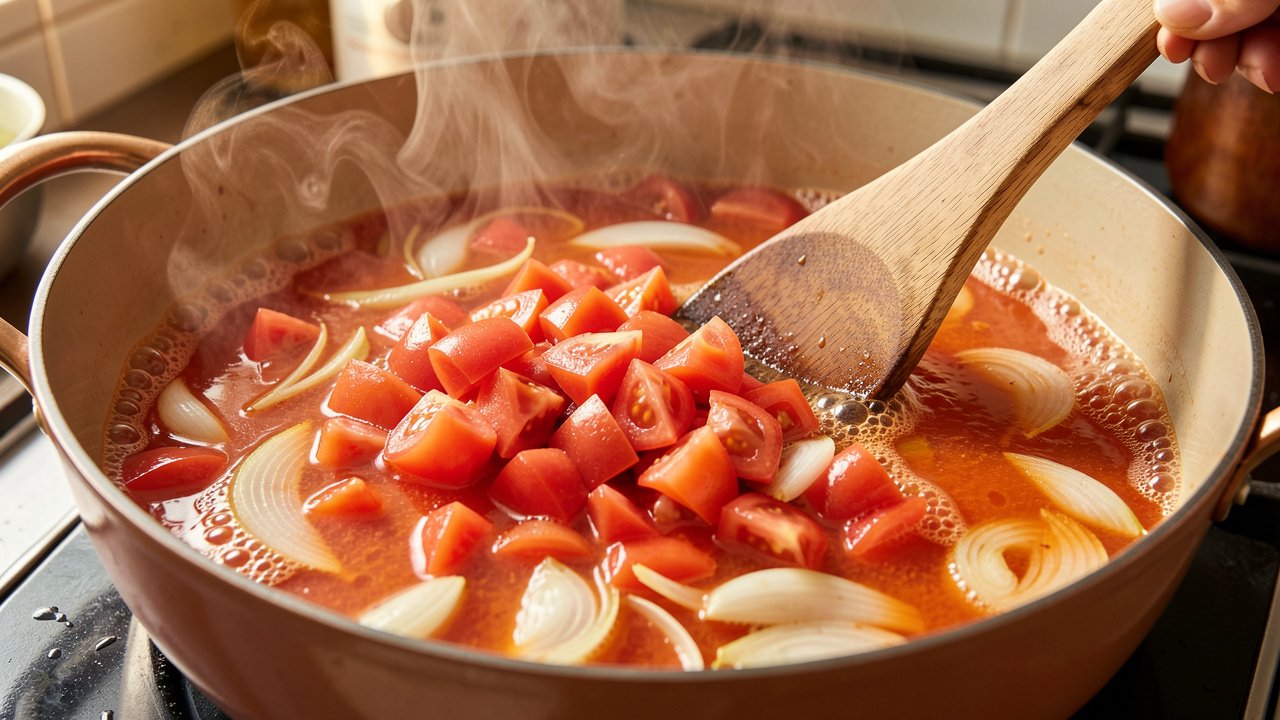
Add the chopped tomatoes to the softened fennel and cook 5 minutes until they slump and start to look saucy. Pour in the vegetable or seafood broth, turn the heat to medium-high, and let it bubble hard for 2 minutes to pull the flavors together.
Grind in black pepper, but hold the salt. The mussels have not gone in yet, and they are the salt.
Steam the Mussels Open
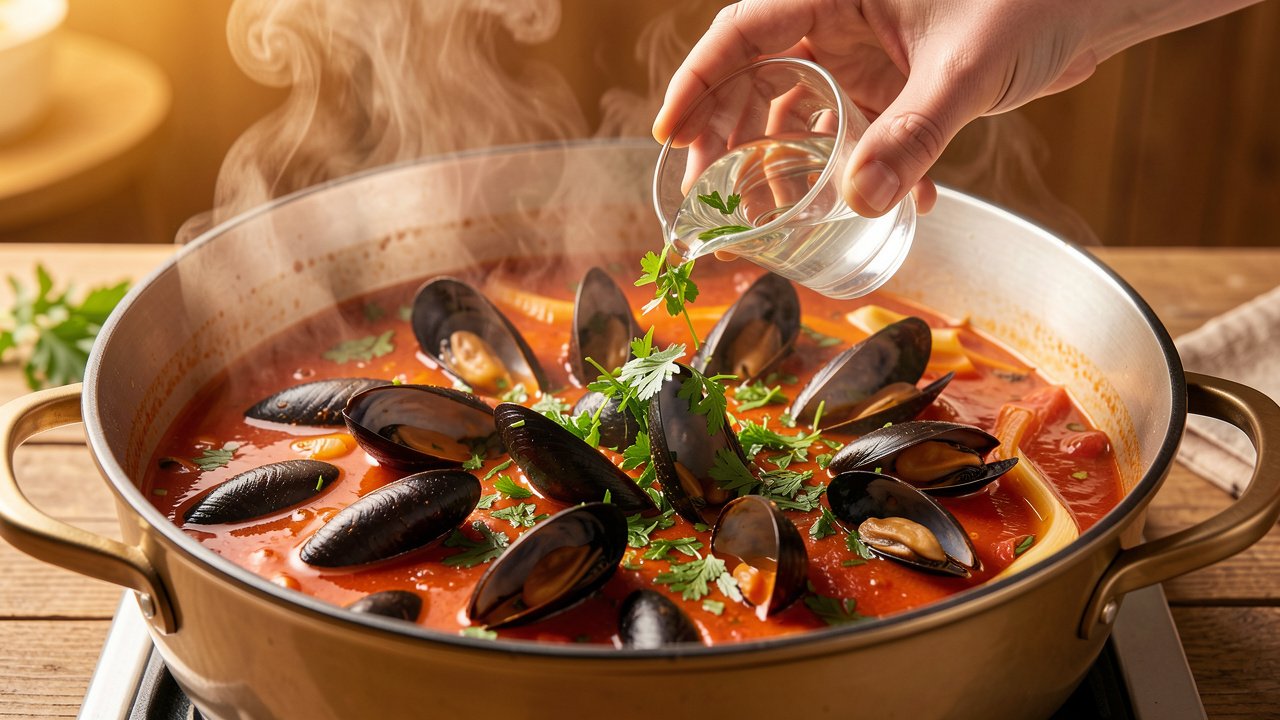
Tip the cleaned mussels into the pot, clamp the lid on, and leave it on medium-high. Give the pot a shake every couple of minutes to move the bottom ones up. Peek at 5 minutes.
They are done when most of the shells have swung open, usually 5 to 7 minutes. Pull the pot off the heat the moment that happens. Mussels left to cook past this point shrink into small rubbery pebbles, and there is no way back.
Finish with Lemon and Serve
With the pot off the heat, squeeze in the fresh lemon juice and swirl it through. Adding it off the heat matters, because it keeps the brightness sharp instead of cooking it flat. Stir in the butter until the broth turns glossy.
Now go through the pot and throw away every mussel that is still shut. Do not pry it open and do not eat it. Taste the broth, add salt only if it needs it, then scatter the fennel fronds and parsley over the top and take it to the table with bread and lemon.
Chef’s Tips for Steaming Mussels in Tomato Broth
If your mussels were sandy, lift them out with a slotted spoon and pour the broth through a fine sieve or a cloth before returning them. Grit sinks, so the last inch of broth is where it hides.
Cook in two batches if your pot is crowded. A deep pile means the top mussels are still shut while the bottom ones are already tough.
Keep an empty bowl on the table for shells. It sounds obvious, but four pounds of mussels produce a mountain, and nobody wants them going back in the pot.
Recipe Variations
Serving Suggestions
- Thick crusty bread, toasted, for the broth
- A cold glass of sparkling water with a wedge of lemon
- Lemon wedges to squeeze over the shells
- A simple green salad dressed with lemon and olive oil
Nutrition Facts
Values are estimates per serving, without bread, and vary with how salty your mussels are.
Storage: Why This Dish Cannot Wait
Say this one plainly: steamed mussels are not a make-ahead dish and they do not reheat. Warming cooked mussels a second time turns them tough and chewy, and reheated cooked shellfish is a food safety gamble nobody needs to take.
Cook only what you will eat that night. If you truly have leftovers, pull the meat from the shells, refrigerate it right away, and eat it cold within a day, stirred into a salad or spooned onto toast.
Common Mistakes to Avoid
Troubleshooting Your Mussel Broth
Broth too salty? Add a splash of water or a few more chopped tomatoes and warm it through briefly. Serve with plenty of bread, which soaks up the salt.
Broth tastes thin? Lift out the mussels, boil the broth down for 2 or 3 minutes, then pour it back over. Reducing with the mussels still in overcooks them.
Too much licorice? A squeeze of lemon cuts anise fast. Next time use half the fennel seeds.
Fennel still crunchy? It went in on heat that was too high or came out too soon. Nothing fixes it now, so give it the full slow sweat next time.
Fennel, Lemon and the Greek Table
Fennel and anise belong to the world of mezedes, the small plates Greeks eat slowly and share around the table. Seafood and anise are an old pairing there, and a pot of mussels in the middle of the table is exactly that idea scaled up for dinner.
Tomatoes arrived in Greek cooking from the Americas and quickly took over, which is why so many dishes across the region now start with them. If you like this kind of Mediterranean cooking, our spicy tomato shrimp pasta and tomato mozzarella salad sit at the same table.